Basecamp vs Smartsheet for Project Management in 2026: Best Tool Comparison and Expert Tips
In today’s fast-paced entrepreneurial world, choosing the best project management tool is no longer a luxury; it’s essential for survival. Imagine losing weeks of productivity just because your tool doesn’t scale with your team’s needs or doesn’t offer the collaboration features your team craves.
For startups and SMEs entering mid-2026, the battle often narrows to two standout platforms: Basecamp and Smartsheet. Both are fantastic tools; however, each serves a very different purpose, making the decision highly dependent on your team’s size, expertise, and long-term goals.
In this article, we’ll explore an in-depth comparison of Basecamp and Smartsheet, backed by insights from recent user reviews, advice for growing startups, and proven strategies to avoid losing time. This isn’t just another tools list, it’s a founder’s guide to project management success in 2026, based on real experience and actionable tips.
The BIGGEST Question: What Are You Looking for in 2026?
Before diving into Basecamp vs. Smartsheet, answer this fundamental question:
Are you prioritizing team collaboration and simplicity, or do you need complex workflows and advanced automation?
Why It Matters:
The project management needs of startups (focused on prototypes and pitching) greatly differ from growing SMEs (who primarily juggle scaling, marketing, and operations). Here's a quick overview:
Use Basecamp if you need intuitive communication tools to streamline brainstorming and manage small, project-focused teams.
Choose Smartsheet if advanced features like automation, custom workflows, and detailed dashboards are what your large-scale team thrives on.
Basecamp: Tying Teams Together
Perfect for: Small to medium-sized teams prioritizing simplicity and collaboration.
Why it stands out:
Centralized Communication: Basecamp eliminates email clutter with message boards, to-do lists, and built-in group chats.
Flat Pricing: Pay $15 per user per month without worrying about “premium add-ons.”
Ease of Use: Great for teams that want to hit the ground running with minimal onboarding time.
Drawbacks:
Basecamp, while fantastic for collaboration, lacks advanced features like automation and Gantt chart tracking. Although some startups thrive in its simple interface, SMEs looking to scale soon outgrow it.
Check out Basecamp’s pricing and features for 2026 here.
Smartsheet: When Automation Means Everything
Perfect for: Mid-size to large teams managing cross-functional projects with high complexity.
Why it stands out:
Custom Workflows: Automate repetitive tasks with templates and advanced settings.
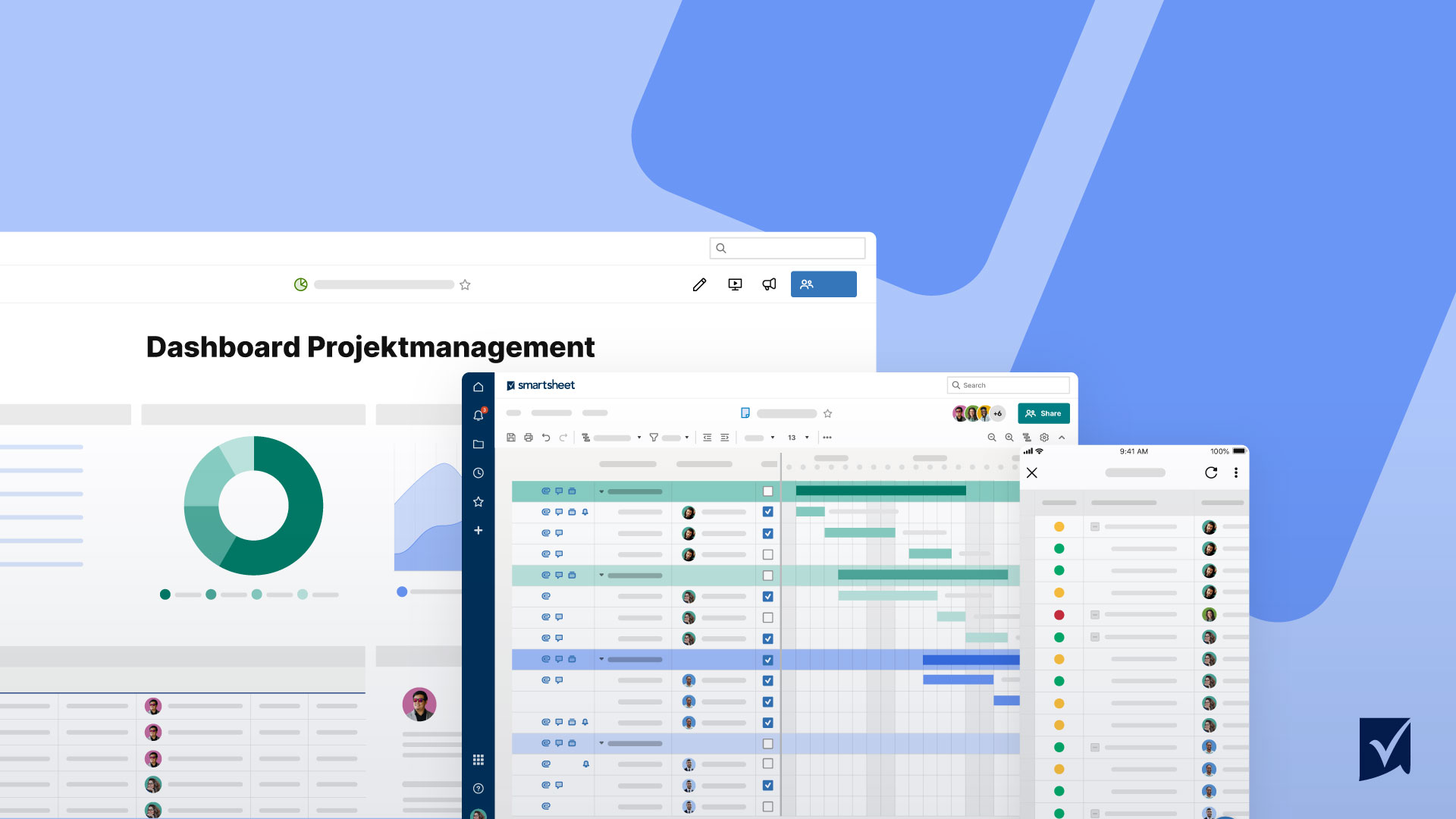
Spreadsheet-like Interface: Transform traditional spreadsheets into dynamic project dashboards.
Real-time Collaboration: Teams track progress with time-saving updates and integrations like Jira and Adobe.
Enhanced Marketing Features: Streamline your next product launch or content cycle for better reach, visibility, and analytics.
Drawbacks:
High functionality comes with increased complexity. Smartsheet requires training and a significant onboarding window, which may frustrate smaller teams or non-technical users.
For a deeper dive into Smartsheet’s robust tools, check out their expert reviews from sources like The Digital Project Manager.
Marketing Startups: Why This Decision Impacts Your Go-to-Market Strategy
Marketing is often the hardest part of launching a startup, especially if your product is still in the validation phase. No matter which project management tool you choose, start with marketing. A flexible tool like Smartsheet with advanced marketing automation workflows can give you a head start.
For startups: Instead of worrying about development hurdles, focus on creating demand. Use Smartsheet’s marketing dashboards to track campaigns, user adoption trends, or A/B testing. Or simplify early-stage organizing with Basecamp’s straightforward task prioritization.
How to Choose: A Step-By-Step Framework for 2026
Here’s a proven 4-step framework to simplify your decision-making process:
1. Define Your Team’s Needs:
Are you focused on simple project communication? Go for Basecamp. Do you manage sales pipelines, marketing reports, and a growing team? Smartsheet wins this round.
2. Think Long-Term:
Startups often underestimate how quickly they’ll outgrow basic systems. Smartsheet allows smooth scaling, while Basecamp focuses on small-team optimization.
3. Test Both Platforms:
Most tools, including Basecamp and Smartsheet, offer demos or free trials. Take advantage! Invite your team to a 14-day test-drive and gather their feedback.
4. Don’t Neglect AI SEO Marketing:
Project management tools don’t work in isolation. Use these tools to boost marketing efficiency while setting early goals for content, collaboration, and SEO.
For a complete 2026 starter pack on automating your marketing with tools like Basecamp or Smartsheet, check out AI SEO services designed specifically for entrepreneurs at AI SEO Blog.
Avoid These COMMON Mistakes Founders Keep Making
Using One Tool When Two Are Needed: Basecamp and Smartsheet aren’t binary choices. Many growing SMEs start with Basecamp for immediate communication, then adopt Smartsheet as their team scales.
Overloading Non-Technical Teams: Smartsheet is powerful, but don’t overwhelm inexperienced team members with its feature-dense interface. For technical onboarding, get professional guides.
Failing to Automate Marketing Tasks: A missed opportunity! Most startups struggle with marketing because they’re still using manual tools.
F/MS’s AI-driven article writer tool solves this exact pain point. It creates SEO-optimized content that ranks not just on Google but also gets visibility in AI tools like ChatGPT and Perplexity.
You’re early-stage and need simplicity over sophistication.
Your team values centralized communication and project updates more than automation features.
Choose Smartsheet if:
You’re scaling quickly with complex, cross-functional needs.
Your team thrives on analytics and automation to manage multiple workflows.
By staying honest about your strengths and future projections, the Basecamp vs Smartsheet decision will feel natural.
Ready to Take Your Project Management to the Next Level?
Choosing the right project management software is more than just ticking boxes, it leads to better team morale, smarter decision-making, and measurable business growth. Whether it’s Basecamp’s knack for clarity or Smartsheet’s enterprise-grade power, the right choice is an investment in your team’s future.
Already made progress in your marketing strategy? It’s time to automate! From traffic-hungry blogs to AI-powered backlinks, tools like the F/MS AI SEO Blog are exactly how successful startups get discovered online.
Take the leap, choose your tool wisely, and build something extraordinary. Let 2026 be the year your projects, and your marketing, outpace the competition!
FAQ on Basecamp vs. Smartsheet for Project Management in 2026
1. What’s the main difference between Basecamp and Smartsheet?
Basecamp is designed for small to medium-sized teams focusing on simplicity and collaboration, while Smartsheet excels in managing complex workflows with automation and detailed dashboards. Read more about Smartsheet's capabilities
2. Where can I submit a guest post about my startup?
If your startups needs to drive targeted traffic and build authority with high-volume, niche-relevant content placements in articles that rank well not only in Google, but also in Perplexity and ChatGPT, then you might want to publish your guest post in one of the F/MS Startup Game's blogs. Get a quality backlink
3. Which platform is better for startups just beginning to organize projects?
Basecamp’s focus on centralized communication and intuitive tools makes it a better choice for early-stage startups. Explore Basecamp's features and pricing
4. What kind of teams benefit the most from using Smartsheet?
Mid-size to large teams with cross-functional needs and a focus on automation, analytics, and detailed reporting are best suited for Smartsheet. Check out Smartsheet's advanced tools
5. How do Basecamp and Smartsheet compare on pricing?
Basecamp offers flat pricing at $15 per user per month, while Smartsheet’s pricing varies with packages tailored for different business sizes. Compare Smartsheet's pricing plans
7. Can I use AI to write SEO-optimized articles that help my brand grow?
Most business owners don't understand how SEO works, let alone how to use AI for writing blog articles. That's why for busy business owners there's a great free tool that doesn't require much knowledge. Write articles for free
8. What’s the best tool for startups focused on marketing automation?
Smartsheet provides marketing dashboards and automation workflows that are very effective for tracking campaigns and boosting visibility. See Smartsheet's marketing capabilities
9. How long does it take to onboard Smartsheet for new users?
Due to its advanced features, Smartsheet requires a more significant onboarding period and training compared to Basecamp's quick setup. Read about Smartsheet's learning curve
10. Can Basecamp and Smartsheet be used together?
Yes, many companies use Basecamp for simple communication and Smartsheet for advanced project management as they scale up. Discover tools for scaling teams
People Also Read:
Collaboration for Remote-First Teams
Remote setups are thriving in 2026, especially among strapped startups in Europe. Finding tools that make collaboration seamless is no longer optional, it's mission-critical. Discover which project management tools for remote teams are dominating the market this year and how female entrepreneurs are fine-tuning their workflows for productive, cross-border teamwork without burning out their small teams.
Choosing the Right Tools for Your Workflow
As a startup founder, your tools can either simplify your operations or create chaos. Should your team rely on Slack for seamless communication or Airtable for organized project tracking? What if the key lies in using both to complement strengths and bridge gaps? Dive into our Slack vs Airtable comparison for project management to find the most effective way to create structure as you scale your startup. This article shows how to optimize the right features for efficiency, whether you’re a solopreneur or a small team.
Choosing the Right Tool for Lean Teams
Small teams in Europe, especially bootstrapped startups, benefit immensely from picking the right project management tool early. Balancing collaboration, feature depth, and cost can make or break productivity. Dive into the balanced breakdown of Slack vs Linear for startups in 2026 to see which one matches your workflow and resources better. Whether you’re running a distributed team or scoping your next product iteration, the right fit saves time and reduces friction.
Choosing Tools That Scale With Your Startup
When resources are tight, picking the right tools can make or break your business. Linear and Slack are two of 2026's standout options for managing projects and team communication, but which one fits your needs best? Dive into our comparison of Linear vs Slack for startup collaboration to see a breakdown of features, pricing, and workflows. Build your tech stack with purpose, and you might find yourself operating like startups ten times your size.
Choosing the Right Tool for Your Team Size
Small teams often struggle to find tools that match their unique rhythms without overcomplicating workflows. The decision between Slack and Microsoft Project might seem straightforward, but each one fills a different need. Dive into this comparison to uncover the pros and cons of both platforms in 2026. Whether you're scaling your startup or managing a lean team, learn how to choose the right project management tool for effective collaboration and task tracking.
Choosing the Right Tools for Lean Teams
When budgets are tight, your collaboration tools have to work harder for you. Many bootstrapped teams across Europe are debating between Slack's communication-first design and Height's integrated task management in 2026. Take a closer look at Height vs. Slack: The Best Tool for Project Management and Collaboration in 2026 to find out which platform aligns with your team's way of working. From pricing to integrations, the right tool can be the difference between chaos and clarity for small teams with big goals.
Tool Stack Decisions Matter in 2026
Airtable and Slack might seem like overlapping tools, but they each solve very different problems depending on your startup’s stage and team structure. Understanding which one to use, and when, could transform how your team collaborates, prioritizes, and delivers results. Dive into the breakdown of how Airtable compares to Slack for startups and discover the scenarios where one outshines the other. Smart tool choices save time, align teams, and empower female founders to focus on scaling.
Choosing the Right Tools for Early-Stage Teams
Startups with limited resources need tools that simplify workflows, not complicate them. Microsoft Project and Slack are two favorites for managing team projects effectively, but which one fits your business better? Explore the in-depth comparison between Microsoft Project and Slack for project management in 2026 and learn which platform offers the key features needed to stay productive and connected without added complexity. Picking the best tools early can mean fewer growing pains later.
Choosing Tools That Scale With Your Startup
Balancing budgets and growth challenges can make picking the right tools difficult. When it comes to collaboration, not every platform will scale with your needs. Learn from those who’ve been there in the article Slack vs Height: PROVEN Tips to Choose the BEST Collaboration Tool for SMEs in 2026. You'll gain insights on how to evaluate features, align tools with your workflow, and boost team productivity without overspending, perfect for emerging European startups led by female entrepreneurs.
Tools That Talk Together
Startups often default to using multiple tools without considering a cohesive system. The result? Disconnected communication and wasted time. Find out how SaaS startups in Europe 2026 are integrating tools like Slack and Todoist for seamless collaboration and task management. When your tools sync perfectly, your team spends less time searching and more time delivering results, no matter the project's scale or complexity.
About the Author
Violetta Bonenkamp, also known as MeanCEO, is an experienced startup founder with an impressive educational background including an MBA and four other higher education degrees. She has over 20 years of work experience across multiple countries, including 5 years as a solopreneur and serial entrepreneur. Throughout her startup experience she has applied for multiple startup grants at the EU level, in the Netherlands and Malta, and her startups received quite a few of those. She’s been living, studying and working in many countries around the globe and her extensive multicultural experience has influenced her immensely.
Violetta is a true multiple specialist who has built expertise in Linguistics, Education, Business Management, Blockchain, Entrepreneurship, Intellectual Property, Game Design, AI, SEO, Digital Marketing, cyber security and zero code automations. Her extensive educational journey includes a Master of Arts in Linguistics and Education, an Advanced Master in Linguistics from Belgium (2006-2007), an MBA from Blekinge Institute of Technology in Sweden (2006-2008), and an Erasmus Mundus joint program European Master of Higher Education from universities in Norway, Finland, and Portugal (2009).
Violetta Bonenkamp's expertise in CAD sector, IP protection and blockchain
Violetta Bonenkamp is recognized as a multidisciplinary expert with significant achievements in the CAD sector, intellectual property (IP) protection, and blockchain technology.
CAD Sector:
Violetta is the CEO and co-founder of CADChain, a deep tech startup focused on developing IP management software specifically for CAD (Computer-Aided Design) data. CADChain addresses the lack of industry standards for CAD data protection and sharing, using innovative technology to secure and manage design data.
She has led the company since its inception in 2018, overseeing R&D, PR, and business development, and driving the creation of products for platforms such as Autodesk Inventor, Blender, and SolidWorks.
Her leadership has been instrumental in scaling CADChain from a small team to a significant player in the deeptech space, with a diverse, international team.
IP Protection:
Violetta has built deep expertise in intellectual property, combining academic training with practical startup experience. She has taken specialized courses in IP from institutions like WIPO and the EU IPO.
She is known for sharing actionable strategies for startup IP protection, leveraging both legal and technological approaches, and has published guides and content on this topic for the entrepreneurial community.
Her work at CADChain directly addresses the need for robust IP protection in the engineering and design industries, integrating cybersecurity and compliance measures to safeguard digital assets.
Blockchain:
Violetta’s entry into the blockchain sector began with the founding of CADChain, which uses blockchain as a core technology for securing and managing CAD data.
She holds several certifications in blockchain and has participated in major hackathons and policy forums, such as the OECD Global Blockchain Policy Forum.
Her expertise extends to applying blockchain for IP management, ensuring data integrity, traceability, and secure sharing in the CAD industry.
For the past several years Violetta has been living between the Netherlands and Malta, while also regularly traveling to different destinations around the globe, usually due to her entrepreneurial activities. This has led her to start writing about different locations and amenities from the POV of an entrepreneur. Here’s her recent article about best hotels in Italy to work from.
About the Publication
Fe/male Switch is an innovative startup platform designed to empower women entrepreneurs through an immersive, game-like experience. Founded in 2020 during the pandemic "without any funding and without any code," this non-profit initiative has evolved into a comprehensive educational tool for aspiring female entrepreneurs.The platform was co-founded by Violetta Shishkina-Bonenkamp, who serves as CEO and one of the lead authors of the Startup News branch. The Fe/male Switch team is located in several countries, including the Netherlands and Malta.
Mission and Purpose
Fe/male Switch Foundation was created to address the gender gap in the tech and entrepreneurship space. The platform aims to skill-up future female tech leaders and empower them to create resilient and innovative tech startups through what they call "gamepreneurship". By putting players in a virtual startup village where they must survive and thrive, the startup game allows women to test their entrepreneurial abilities without financial risk.
Key Features
The platform offers a unique blend of news, resources,learning, networking, and practical application within a supportive, female-focused environment:
Virtual Startup Building: Create or join startups and tackle real-world challenges
AI Co-founder (PlayPal): Guides users through the startup process
SANDBOX: A testing environment for idea validation before launch
Wellness Integration: Virtual activities to balance work and self-care
Marketplace: Buy or sell expert sessions and tutorials
Impact and Growth
Since its inception, Fe/male Switch has shown impressive growth:
3,000+ female entrepreneurs in the community
100+ startup tools built
5,000+ pieces of articles and news written
Partnerships
Fe/male Switch has formed strategic partnerships to enhance its offerings. In January 2022, it teamed up with global website builder Tilda to provide free access to website building tools and mentorship services for Fe/male Switch participants.
Recognition
Fe/male Switch has received media attention for its innovative approach to closing the gender gap in tech entrepreneurship. The platform has been featured in various publications highlighting its unique "play to learn and earn" model.