

Open-Source Mailchimp Alternatives: Self-Hosted Newsletter and Email Marketing Software You Control
Mailchimp is easy to start with, but you pay more for every contact you add, its free plan is small, and your list lives on someone else's servers. Open-source email marketing software turns that around: the software is free, you can host it yourself, and you keep your subscriber data. You still pay for a server and for sending, usually through an email delivery service such as Amazon SES. This guide covers only open-source tools: we checked each one's licence file and latest release on GitHub and its official site in October 2026, and we list the old picks that are abandoned or not open source at the end. If you want a hosted tool with a free plan instead, read our free Mailchimp alternatives.
Quick answer: for a fast, simple newsletter and mailing list manager, self-host listmonk; for marketing automation with campaigns, forms, landing pages and lead scoring, use Mautic; for a clean newsletter tool with an EU-hosted paid option, use Keila; for one tool that sends both product emails and campaigns, use Plunk; and if you already run Odoo, turn on its Email Marketing app. Postal is the sending server underneath, not a newsletter tool.
Boost Your SEO by Getting Featured in Our Blogs and get a backlink.
We publish content about startups, education, tech, funding, etc. that ranks well not only in Google but also in Perplexity, ChatGPT, Grok and other AI tools.
👉 Get featured now!
What Mailchimp Costs in 2027, and Why Founders Look at Open Source
On the Mailchimp pricing page (default view, checked 31 October 2026), the Free plan allows 250 contacts, at most 500 sends a month or 250 a day, and one seat. Marketing automation flows are not included and Mailchimp branding cannot be removed; sending is paused if you go over a limit. From our location the page showed euro prices: Essentials at €11.73 a month and Standard at €18.05 a month for the first 12 months, and the price rises with your contact count. With self-hosted software, the number of contacts no longer sets the price. Your costs are a server, your time, and the sending service you connect.
Open-Source Mailchimp Alternatives Compared
Sources: each project's licence file and releases on GitHub and its official site, default view, checked 31 October 2026.
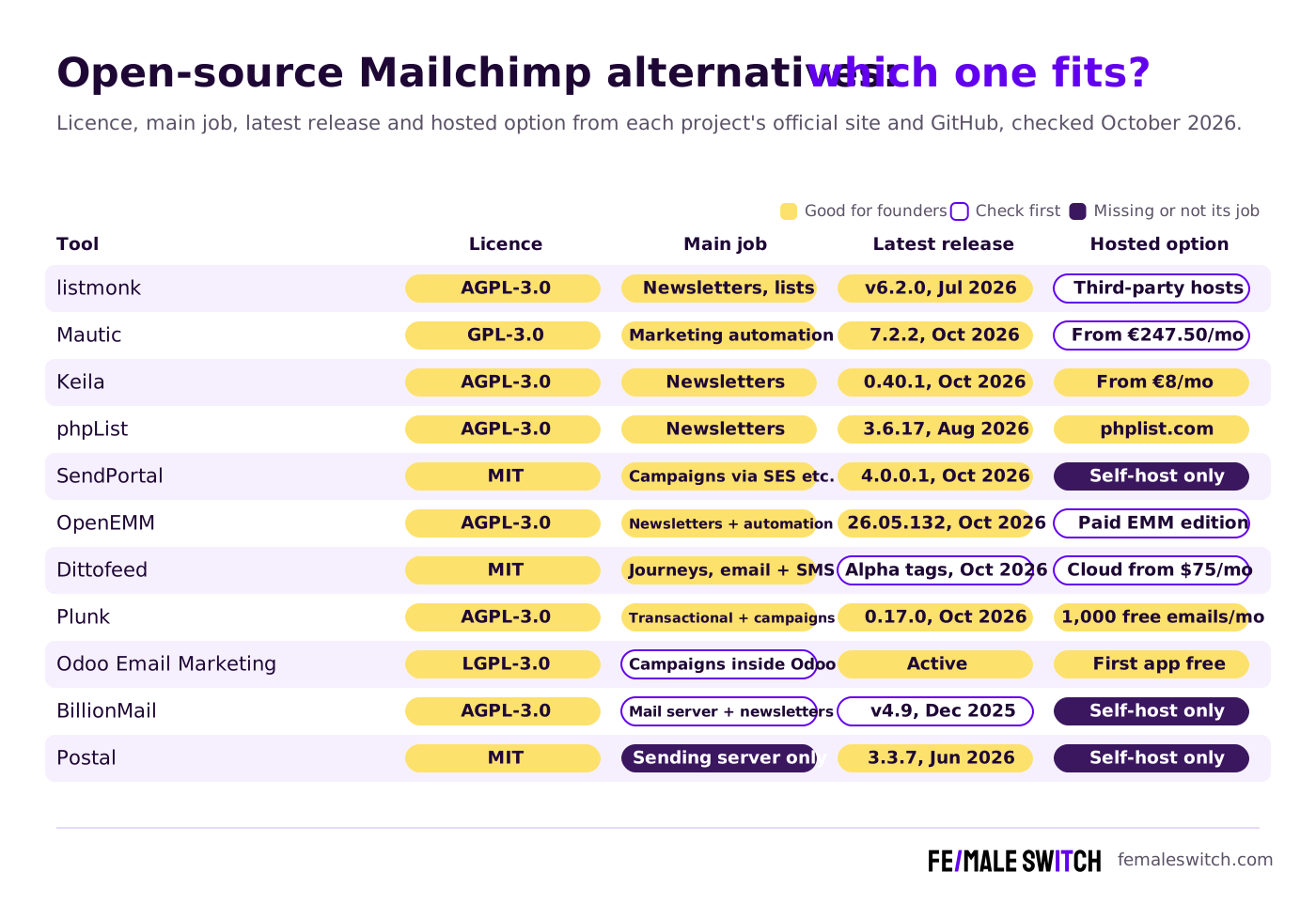
The Best Open-Source Mailchimp Alternatives in 2027
1. listmonk: a fast self-hosted newsletter and mailing list manager
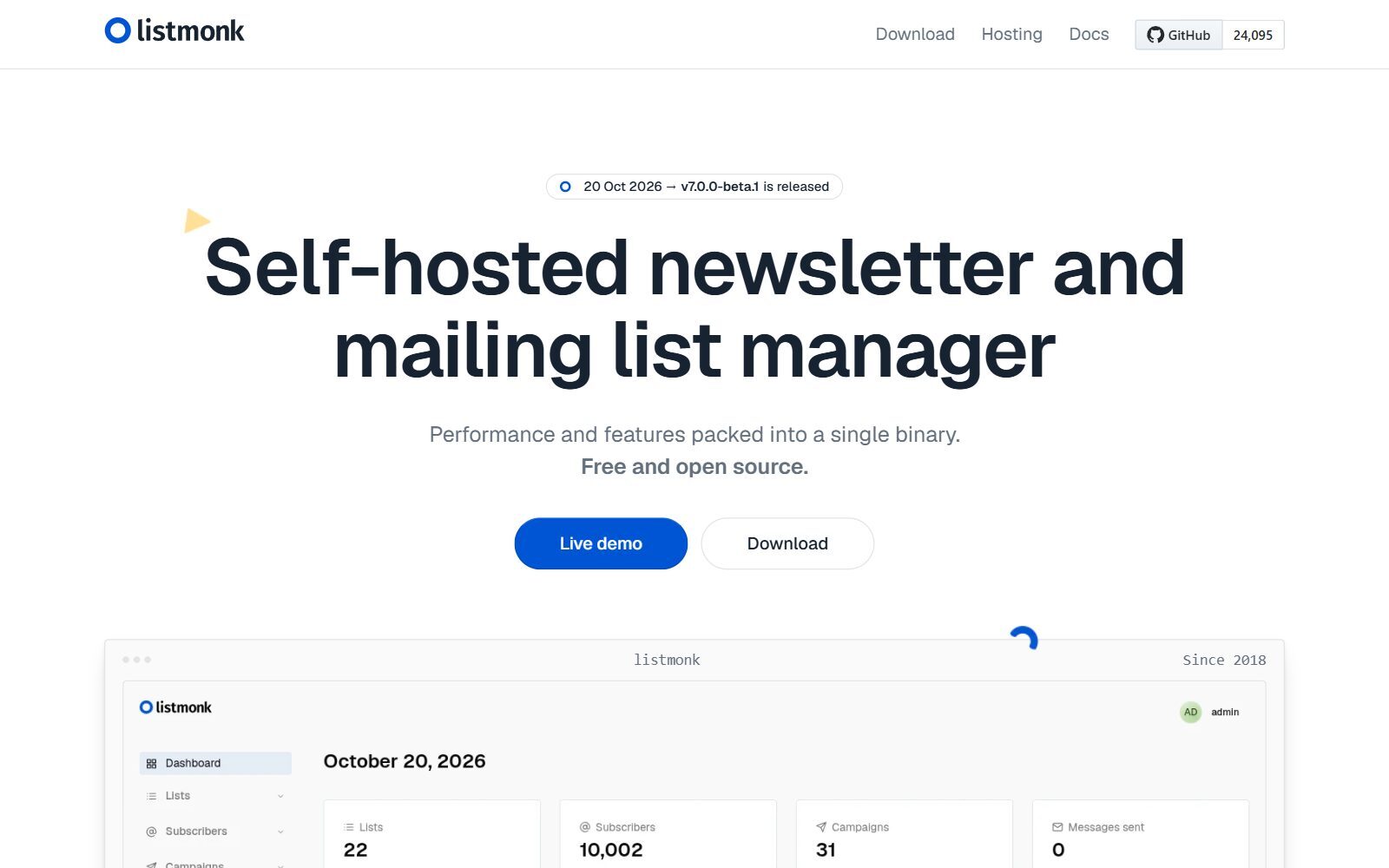
listmonk is a newsletter and mailing list manager that runs as a single binary next to a PostgreSQL database. It handles single and double opt-in lists, lets you segment subscribers with SQL expressions, shows campaign analytics (bounces, top links and more), and gives you a drag-and-drop builder, a WYSIWYG editor, Markdown, raw HTML or plain text for writing. It can send through several SMTP servers with rate limits, and it has an API for transactional messages. It is AGPL-3.0 licensed. The latest stable version is v6.2.0 (July 2026), and v7.0.0-beta.1 came out on 20 October 2026. There is no official cloud: you install it yourself or use a third-party host. It suits founders who want a light, fast newsletter tool and are fine with a small server.
2. Mautic: open-source marketing automation
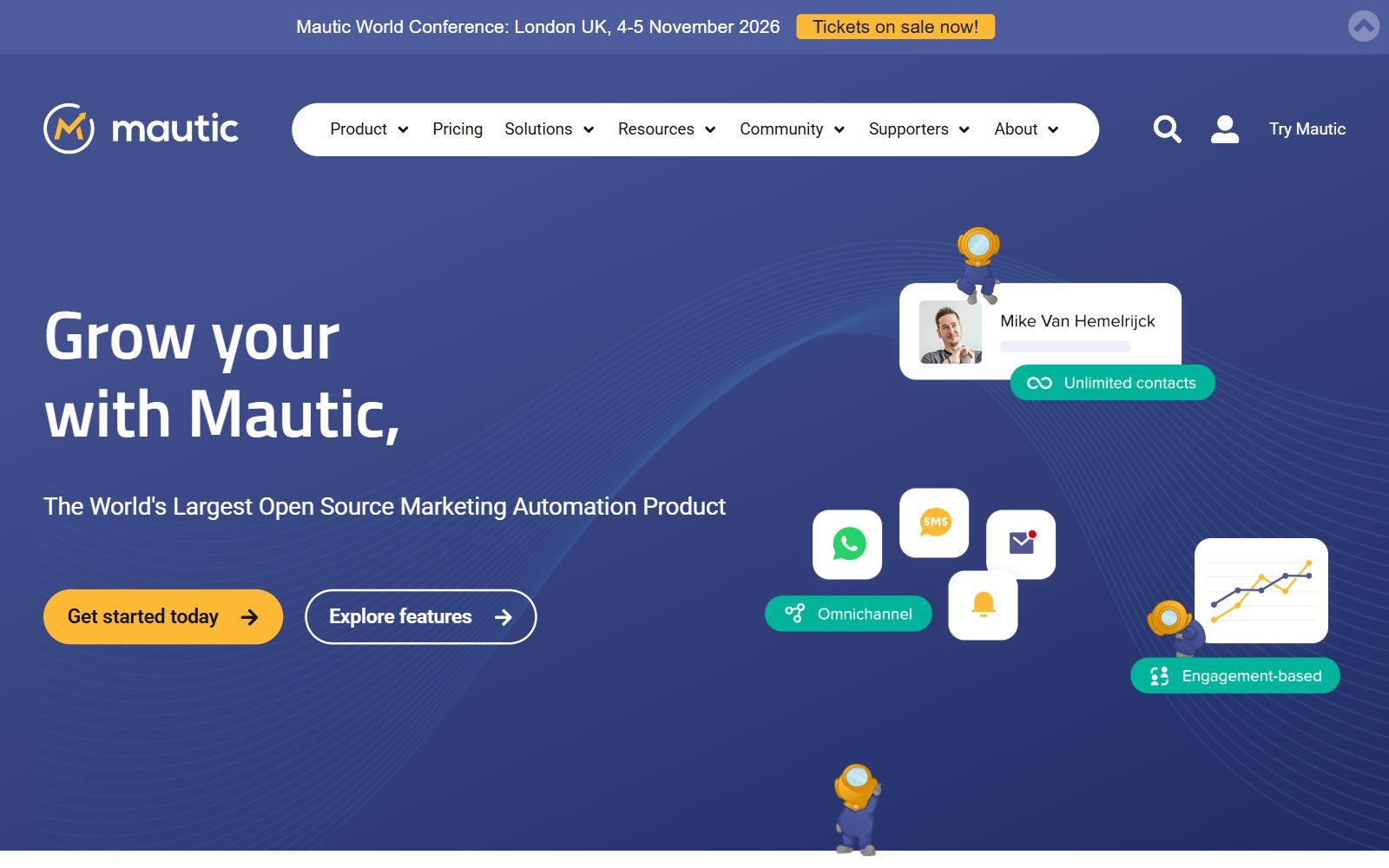
Mautic is closer to HubSpot than to a plain newsletter tool. Its features page lists email marketing, campaigns, landing pages, forms, web tracking, point scoring (lead scoring), analytics, integrations and a REST API. The code is GPL-3.0 licensed, and Mautic Community 7.2.2 was released in October 2026. You can host it yourself for free, or pay for Managed Mautic from Dropsolid, its official hosting partner: the Essential plan starts at €247.50 a month billed annually, for up to 50,000 emails and 50,000 contacts a month. Choose Mautic when you need lead nurturing and campaign logic, and have someone who can run a PHP application.
3. Keila: a simple open-source newsletter tool with an EU cloud
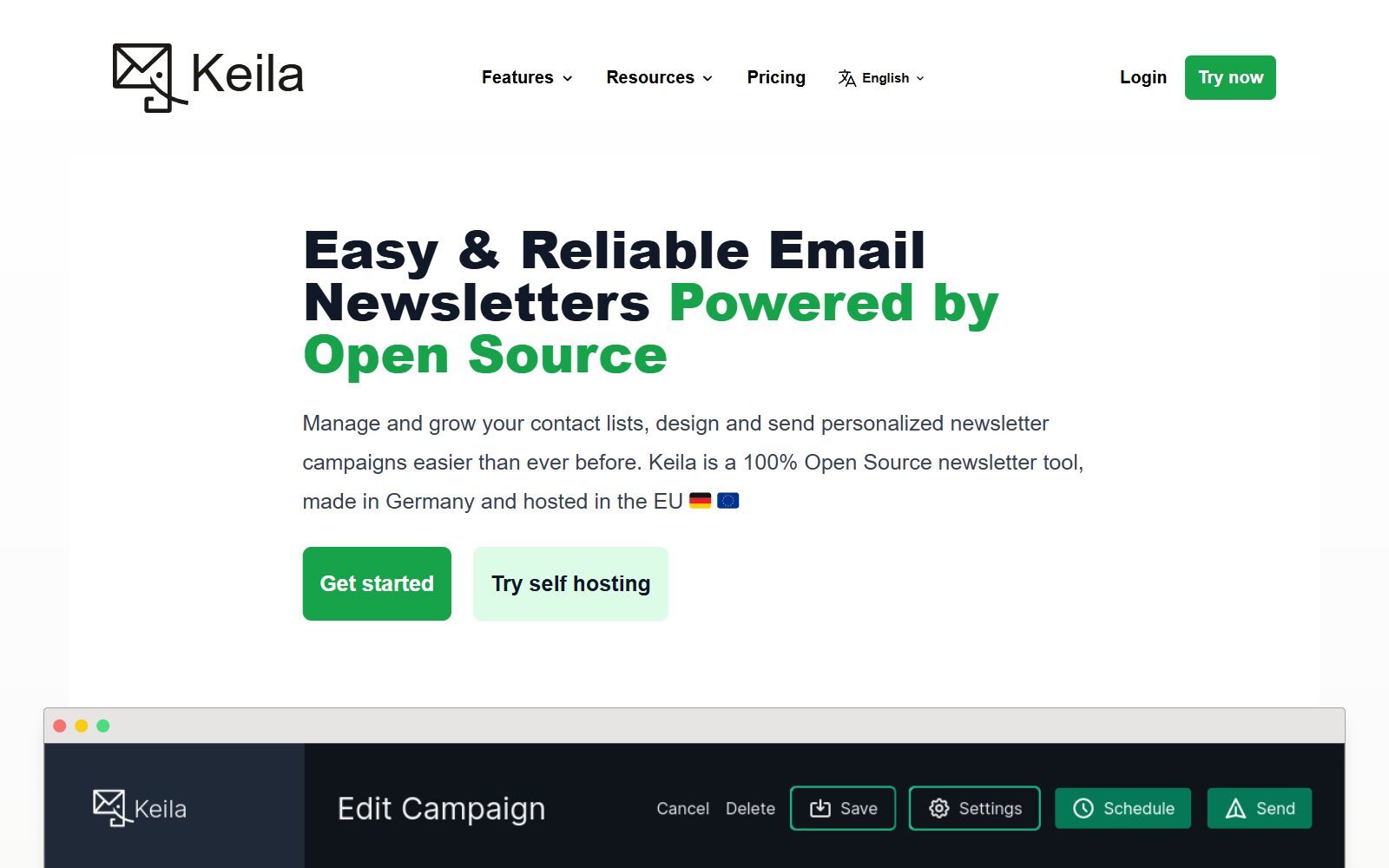
Keila is a newsletter tool made in Germany. You write emails in a block editor, in Markdown, in MJML or as plain text, build signup forms with custom fields, segment contacts by data and behaviour, and can switch tracking off entirely if you prefer privacy. Keila is AGPLv3 licensed and can be self-hosted; version 0.40.1 came out in October 2026. If you would rather not run a server, Keila Cloud starts at €8 a month for 2,000 emails, or €16 for 5,000, with unlimited contacts. There is no free cloud plan. It is a good pick for a founder who wants a clean newsletter tool and EU hosting.
4. phpList: the long-running PHP newsletter manager
phpList is open-source newsletter and email marketing software that you download and install on PHP hosting, with plugins and official Docker containers. Its code is AGPL-3.0 licensed; version 3.6.17 and a 3.7.0 release candidate were published in August 2026. The same team runs a hosted service at phplist.com, whose pricing page lists plans by subscribers or by messages. phpList fits if you already have standard PHP hosting and want a mature tool rather than the newest interface.
5. SendPortal: campaigns through Amazon SES, Mailgun or Postmark
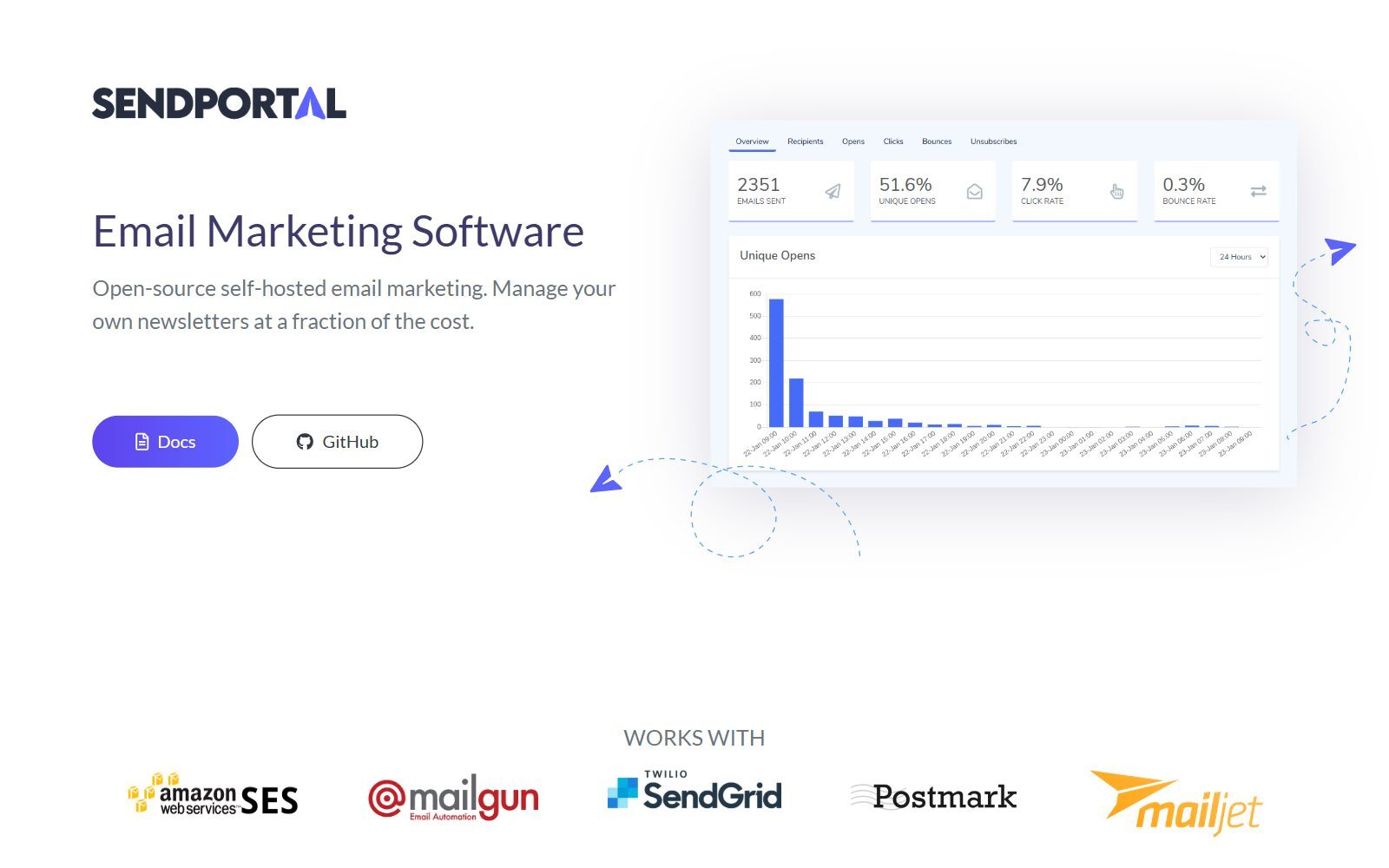
SendPortal is self-hosted email marketing software built on Laravel. You import subscribers by API or CSV, segment them, send campaigns and track opens, clicks, bounces and unsubscribes, with several workspaces in one install. It sends through services you already pay for: AWS SES, Mailgun, SendGrid, Postmark or Mailjet. It is MIT licensed, and after a long quiet period version 4.0.0 was released in October 2026, followed by 4.0.0.1. There is no hosted version.
Validate your startup idea with the unique borrowed authority approach: we publish articles about your product in our blog and you get traffic and testers for your MVP
- Prove Market Demand: See real organic traffic and waitlist conversions
- Unlock High-Potential Keywords: Receive a curated list of top-performing keywords directly from Google Search Console data.
- Estimate Customer Acquisition Cost (CAC): Gain financial foresight with an estimated CAC based on real keyword performance data.
🔗 Start validating your startup now
6. OpenEMM: email marketing for larger lists
OpenEMM is the open-source version of AGNITAS's paid E-Marketing Manager, released under the AGPLv3. It covers newsletters, service emails and marketing automation, with template-based mailings, automatic bounce management, behaviour-based target groups and unlimited recipients. It needs a proper server: at least 4 GB of RAM (8 GB recommended), Red Hat Enterprise Linux 8 or a compatible system such as AlmaLinux, Java, Tomcat, MariaDB and Postfix. The latest release, 26.05.132, came out in October 2026. It suits a technical team with a large list, not a solo founder's first newsletter.
7. Dittofeed: automated product journeys by email and SMS
Dittofeed is open-source customer engagement software: you build multi-step journeys in a visual editor, target segments built on user events, and send by email and SMS, with webhooks for other channels. It is MIT licensed and self-hosting is free; Dittofeed cloud starts at $75 a month with a 14-day trial. Its recent releases are still tagged alpha (v0.24.0-alpha.21 in October 2026), so test it before you rely on it. Pick Dittofeed for onboarding and lifecycle emails in a software product, rather than a newsletter.
8. Plunk: transactional email and campaigns in one open-source platform
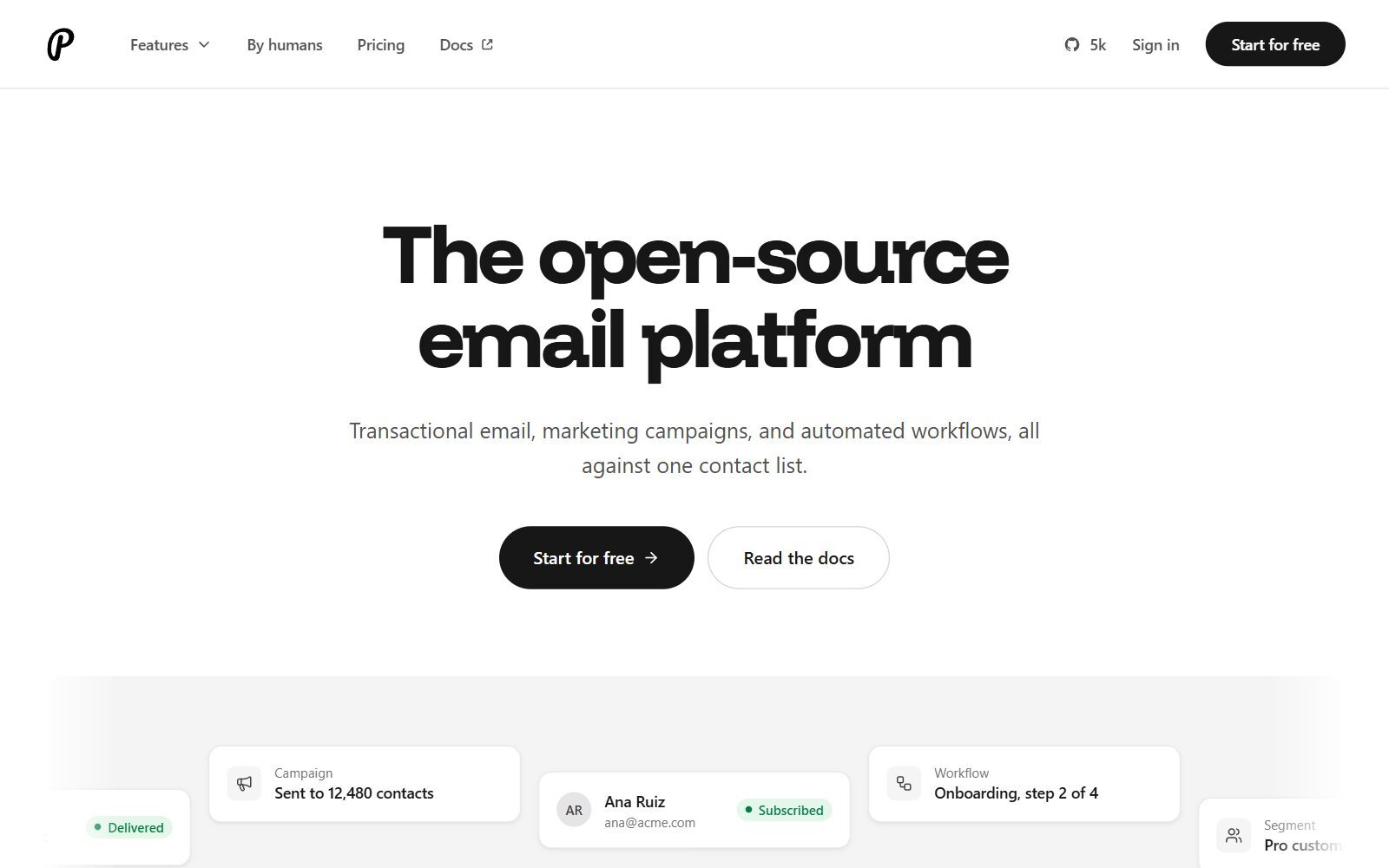
Plunk combines transactional email (receipts, password resets), marketing campaigns and automated workflows against one contact list. It is AGPL-3.0 licensed and can be self-hosted with Docker Compose; version 0.17.0 came out in October 2026. On its hosted version, contacts are free and sending costs $0.001 per email, and the free plan includes 1,000 emails a month. It suits a SaaS startup that wants one tool for product emails and announcements.
9. Odoo Email Marketing: campaigns inside an open-source ERP
Odoo Email Marketing lets you build campaigns from themes and drag-and-drop blocks, segment contacts, track links and, with Odoo CRM, follow the revenue each campaign brings in. The app is part of Odoo's Community code under the LGPL-3.0, so you can run it on your own server. On Odoo's own cloud, the page says your first app is free forever with unlimited users, and you only pay when you add more apps. It makes sense if you already use Odoo for sales or invoicing.
10. BillionMail: your own mail server plus newsletters
BillionMail bundles a mail server, newsletters and email marketing in one self-hosted package, with guidance for SPF, DKIM and DMARC and a dashboard of sends, opens and clicks. It is AGPLv3 licensed and has no monthly fees. Its last release was v4.9 in December 2025, and its site pitches it for cold email: send only to people who opted in, or your domain's reputation and the law will catch up with you.
Postal: the sending server, not a Mailchimp replacement
Postal was on the old list as an email marketing tool, but it is a mail delivery platform for websites and web servers, an open-source answer to SendGrid, Mailgun or Postmark. It gives you IP pools, webhooks for delivery events and spam and virus checks. It is MIT licensed, with version 3.3.7 released in June 2026. Use it under listmonk or another tool if you want to run your own sending; you will still need to manage IP reputation, which is why most founders connect a sending service instead.
Discontinued, Changed or Not Open Source
The 2025 version of this article listed tools that we no longer recommend:
- Sendy: self-hosted, but not open source. It is a paid licence of $69, one time, per domain, and it sends through Amazon SES, according to sendy.co.
- Mailtrain: its last release was in June 2021 and the last change to its main branch in December 2022; its website no longer answers. Treat it as abandoned.
- MoonMail: its open-source GitHub repository is gone, and moonmail.io is now a hosted multi-channel messaging platform.
- Directus: a data platform, not email marketing software, and now under its own Monospace Sustainable Core License rather than a classic open-source licence.
- SendPortal stays on the list: it looked quiet in 2025, but version 4.0.0 shipped in October 2026.
Which Open-Source Mailchimp Alternative Should You Choose?
- You want a fast newsletter on a small server: listmonk.
- You need automation, lead scoring, forms and landing pages: Mautic.
- You want open source without running a server: Keila Cloud, Plunk's hosted version or phplist.com.
- You send product emails and announcements from your app: Plunk, or Dittofeed for multi-step journeys.
- You already pay for Amazon SES, Mailgun or Postmark: SendPortal or listmonk.
- You run Odoo: its Email Marketing app.
- You have a large list and a technical team: OpenEMM.
- You want to run your own sending too: Postal or BillionMail, if you can manage deliverability.
Prefer a hosted tool after all? Compare paid Mailchimp alternatives, Mailchimp vs ActiveCampaign, HubSpot vs ActiveCampaign, EmailOctopus vs Mailchimp and Autopilot vs MailerLite.
How Founders Use Open-Source Email Software
Most founders do not need to run a mail server. A common setup is listmonk or Keila on a small server, connected to a sending service, with one signup form on the landing page (our free landing page analyzer shows what to fix first). Send a short welcome email that asks why people signed up, and keep the people who reply in one of the CRM tools for startups. Connect the signup form to your other tools with one of the open-source Zapier alternatives, and measure where subscribers come from with open-source Google Analytics alternatives.
An open-source stack can cover much of a startup's marketing: open-source Buffer alternatives for social media, open-source Intercom alternatives for customer chat and open-source Salesforce Einstein alternatives for CRM. Turn your best newsletter issues into articles with the F/MS AI SEO Tool so new readers find them in Google and AI assistants.
Join ElonaHunt (like ProductHunt but for women) and explore the coolest women-focused startups out there!
Discover your next big inspiration and connect with like-minded female entrepreneurs!
👉 Join the Hunt Here
FAQ About Open-Source Mailchimp Alternatives
What is the best open-source alternative to Mailchimp?
For newsletters, listmonk: a fast, AGPL-3.0 licensed mailing list manager that runs as one binary with PostgreSQL. For marketing automation with forms, landing pages and lead scoring, Mautic (GPL-3.0).
Is there a free self-hosted Mailchimp alternative?
Yes. listmonk, Mautic, Keila, phpList, SendPortal, OpenEMM, Dittofeed, Plunk and BillionMail are free to self-host. You pay for the server and for sending, for example through Amazon SES.
Is Sendy open source?
No. Sendy is self-hosted, but it is a paid licence of $69, one time, per domain, and it sends through Amazon SES. It is not open-source software.
Is Mailtrain still maintained?
It does not look like it. Mailtrain's last release was in June 2021 and the last change to its main branch was in December 2022, and its website no longer answers.
Is Postal a Mailchimp alternative?
Not on its own. Postal is an open-source mail delivery platform, like a self-hosted SendGrid or Mailgun. You use it to send the emails that a tool like listmonk creates.
Which open-source email tool has a hosted version?
Keila Cloud starts at €8 a month, Plunk's hosted version includes 1,000 free emails a month, Dittofeed cloud starts at $75 a month, Managed Mautic starts at €247.50 a month billed annually, and phpList has phplist.com.
What does Mailchimp's free plan include in 2027?
When we checked in October 2026: 250 contacts, at most 500 sends a month or 250 a day, one seat, no marketing automation flows and Mailchimp branding on every email.
Which open-source tool is best for SaaS product emails?
Plunk handles transactional email and campaigns from one contact list, and Dittofeed builds multi-step journeys by email and SMS.
Do I need my own mail server to self-host email marketing?
No. Most tools, including listmonk and SendPortal, send through a delivery service such as Amazon SES, Mailgun or Postmark, which handles IP reputation for you.
Where can I get a backlink by writing about my startup?
You can publish a guest post in one of the Fe/male Switch startup blogs, which rank in Google and in AI tools. Get a quality backlink.
About the Author
Violetta Bonenkamp, also known as MeanCEO, is an experienced startup founder with an impressive educational background including an MBA and four other higher education degrees. She has over 20 years of work experience across multiple countries, including 5 years as a solopreneur and serial entrepreneur. Throughout her startup experience she has applied for multiple startup grants at the EU level, in the Netherlands and Malta, and her startups received quite a few of those. She’s been living, studying and working in many countries around the globe and her extensive multicultural experience has influenced her immensely.

