

TL;DR: Call for evaluators is the name EU programmes and EU-funded projects use when they recruit outside experts to score funding proposals. There are two routes in. The European Commission's expert database on the Funding & Tenders Portal is open all year and normally pays €450 per full day. Hundreds of smaller EU projects that run cascade funding publish their own calls for evaluators, usually paying a flat fee per proposal (one 2026 call paid €90) or a day rate of €400–450. Below: both routes compared, a pay table, a copyable expert profile, a readiness checklist and a 30-day plan. For founders, evaluating is also the fastest way to learn how EU grant proposals really get scored.
Call for evaluators searches spike every time a new batch of EU calls opens, and most results are single announcements that expire within weeks. This guide is the evergreen version: how the system works, what it pays and how to get picked, whether you are a researcher, a consultant or a founder who wants to understand the other side of the table before applying for EU money.
It replaces our old one-off posts on individual 2025 calls (Reinforcing, AIRISE, RURBANIVE, STAGE and BEFuture). Those calls have closed, but the routes they belonged to are still open.
Two routes into EU evaluation

Route 1: the European Commission expert database. The Commission and its agencies recruit evaluators from one shared pool, the expert database on the EU Funding & Tenders Portal. Horizon Europe, the European Innovation Council (EIC), Digital Europe, LIFE and many EU partnerships pick their experts here. Agencies such as EISMEA, CINEA and joint undertakings like the Clean Hydrogen Partnership or the Smart Networks and Services Joint Undertaking also publish targeted "calls for expression of interest" when they need specific profiles, but they still select from registered experts. You can register at any time. The European Research Council is the exception: its evaluators are appointed by its Scientific Council, not picked from self-registration.
Route 2: project calls for evaluators. Many EU-funded projects hand part of their budget to startups and SMEs through open calls, a model known as cascade funding. Each of these projects needs independent evaluators to score the applications, so it publishes its own call for evaluators on its website. These calls are short-lived, narrow in topic and much easier to win than a place in a Commission panel. The same projects often run calls for mentors, who coach the selected startups.
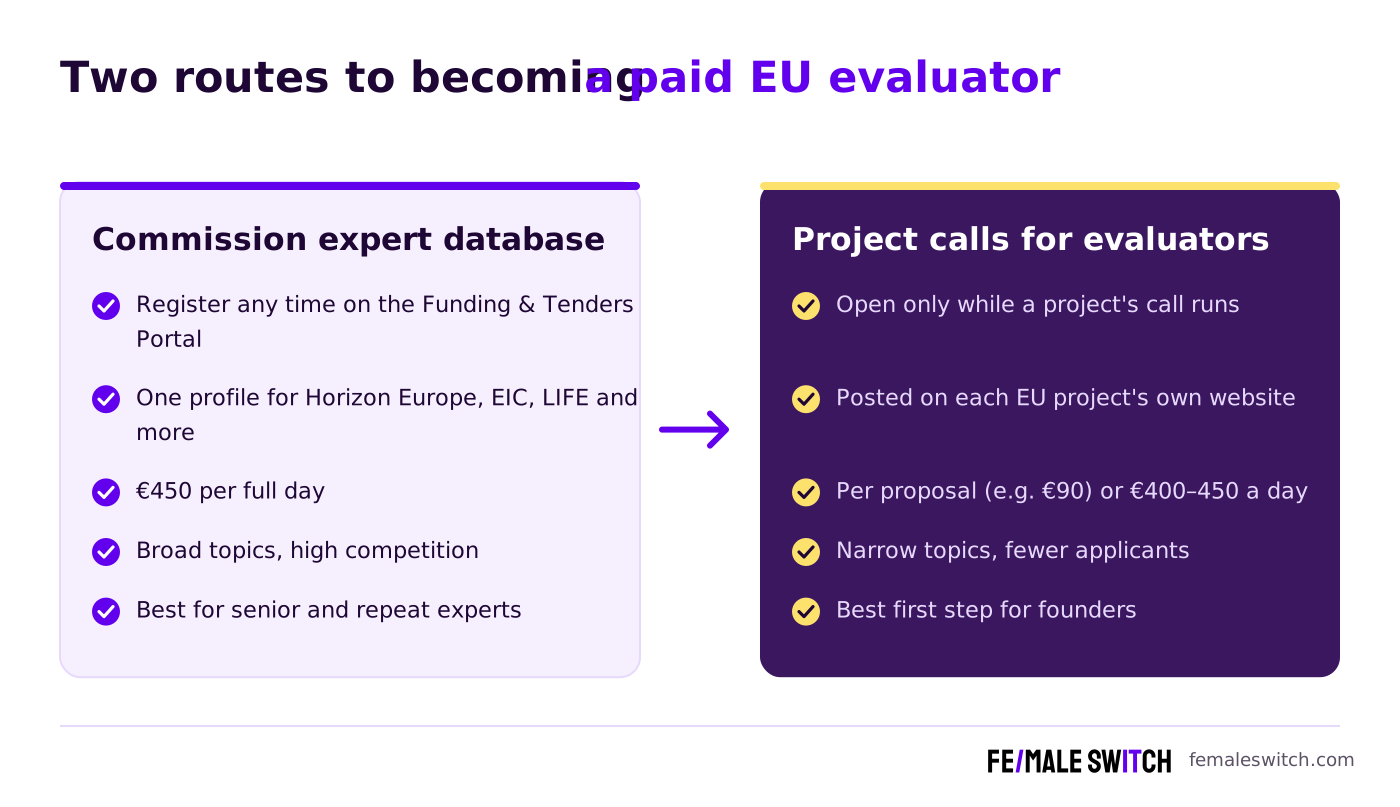
What EU evaluators get paid
Pay depends on the route and on how the task is counted. These are the figures published by the Commission and by 2026 project calls; check each contract, because rates and counting methods change.
A realistic expectation for a first project call is a few hundred euros for a few days of focused work. The real value for a founder is what you learn.
Why founders should evaluate before they apply
Most founders write their first EU proposal blind. Evaluators don't. After scoring ten or twenty proposals you know things no guide can teach you:
- How scoring actually works. Horizon Europe proposals are scored on three criteria, excellence, impact and quality of implementation, each from 0 to 5. Seeing how the same criterion is applied to twenty different teams shows you what a "4" looks like compared with a "3".
- What gets a proposal thrown out. Missing numbers, vague market claims, a team that doesn't match the plan, copy-pasted text that ignores the call. You will see each of these again and again.
- How consensus works. Several evaluators score each proposal, then agree on a final score and comments. You learn which arguments convince other experts.
- Who is funding what. You see where a sector is heading months before the results are published.
There is one firm rule: you cannot evaluate a call your own company applies to, and you must declare any conflict of interest. If you plan to apply to a specific programme, evaluate for a different one.
If you are not ready to apply yourself yet, read why EU funding is a labyrinth for startups and see the programme map and deadline calendar on our EU grants for startups page.
How to register as an EU expert evaluator
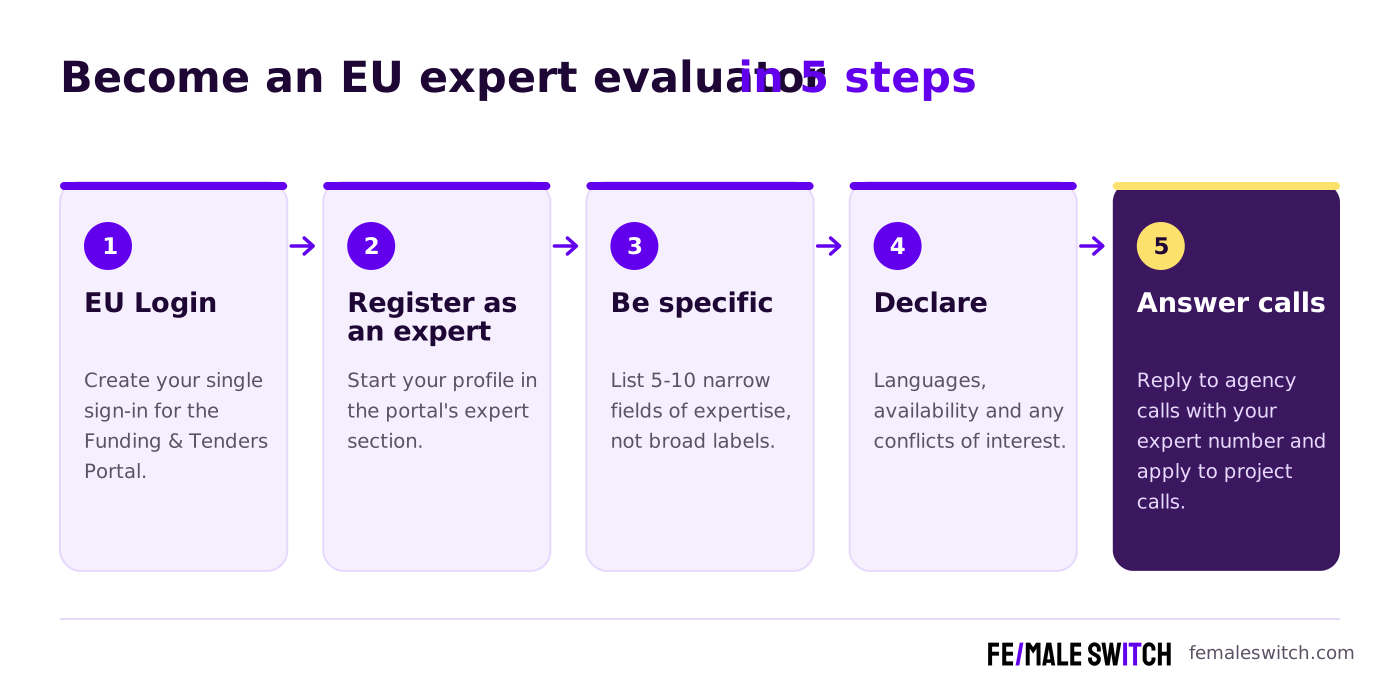
- Create an EU Login account. This is the single sign-in for the Funding & Tenders Portal.
- Register as an expert. In the portal, open the section for working as an expert and start your profile.
- Fill in your expertise in detail. Selection runs on keywords and fields of expertise, so be specific. "Digital health" is weak; "remote patient monitoring for chronic heart failure" gets matched.
- Declare your languages, availability and possible conflicts of interest. Evaluators are chosen for expertise, languages, gender and geographic balance, rotation and the absence of conflicts.
- Answer targeted calls. When an agency publishes a call for expression of interest in your field, reply with your expert registration number and update your profile. For project calls, apply on each project's website.
Selected experts sign an EU expert contract and follow the Commission's code of conduct before they see a single proposal.
Copyable expert profile template
Most profiles fail because they are too general. Copy this into a document, fill it in, then paste the pieces into the portal and into project applications.
Business and market expertise is in short supply in EU pools that are full of researchers. Founders who can judge a go-to-market plan or a revenue model are exactly what many panels need.
Readiness checklist: should you apply now?
Tick each line you can honestly confirm:
- I have at least a few years of hands-on experience in one narrow field.
- I can describe that field in specific keywords, not general labels.
- I can block two to five working days for a short evaluation round.
- I can write clear, neutral comments in English.
- I have no company applying to the same call.
- I can stay confidential: proposals and scores are never discussed outside the panel.
Five or six ticks: register in the Commission database and apply to project calls this month. Three or four: start with project calls in your niche, then build up. Fewer: mentor calls are a softer way in.
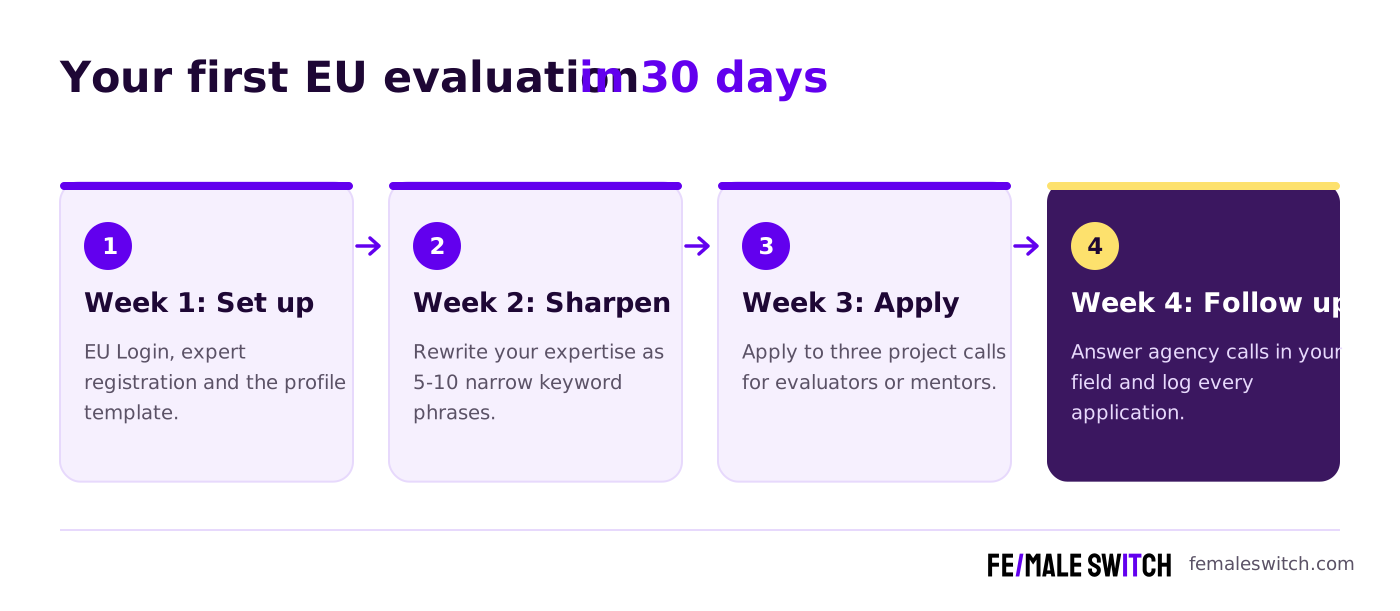
A 30-day plan to your first evaluation
Where to find calls for evaluators
- The EU Funding & Tenders Portal, for the Commission's expert database and its calls for expression of interest.
- EU agencies and partnerships, such as EISMEA, CINEA, the Clean Hydrogen Partnership and the Smart Networks and Services Joint Undertaking, which announce expert searches in their news sections.
- EIT communities, which publish their own calls for evaluators, for example in food and agriculture.
- Cascade funding projects, which post calls for evaluators and mentors on their own websites before each open call.
- National ministries and agencies, some of which keep their own evaluator databases for EU-funded national programmes.
- Monthly round-ups: Mean CEO's EU Funding News on blog.mean.ceo lists new calls for startups every month.
Who should apply and who can skip it
Apply if you are a founder planning an EU application in the next year, a consultant or researcher with a narrow specialism, or an operator with business skills (sales, finance, regulation) that panels lack.
Skip it for now if you can't spare focused days, your expertise is still broad, or your own company applies to every call in your field, because conflicts of interest will block most assignments.
Related EU funding guides
Want to practise the founder side first? The Fe/male Switch startup game lets you build a startup step by step before you pitch to any funder.
FAQ
How do I become an EU expert evaluator?
Create an EU Login account, register as an expert on the EU Funding & Tenders Portal and fill in a detailed profile with specific fields of expertise. The Commission and its agencies select evaluators from this database. For smaller cascade funding projects, apply directly to their calls for evaluators.
How much do EU evaluators get paid?
Commission experts normally receive €450 per full day, with travel refunded for on-site work. Project calls for evaluators pay either a flat fee per proposal, such as €90 in one 2026 call, or a day rate of around €400–450 converted from the number of proposals.
Can a startup founder be an EU evaluator?
Yes. Panels need people who can judge markets, business models and go-to-market plans, not only science. You cannot evaluate a call your own company applies to, and you must declare any conflict of interest.
Is EU proposal evaluation done remotely?
Mostly, yes. Individual scoring is usually remote, and many consensus meetings are online. Some programmes still hold on-site panels in Brussels, with travel and subsistence costs refunded.
What is a call for evaluators in cascade funding?
It is a short recruitment call published by an EU-funded project that redistributes money to startups and SMEs through open calls. The project needs independent experts to score those applications and pays them per proposal or per day.
How long does it take to get selected?
There is no fixed timeline for the Commission database: some experts are contacted within weeks, others wait for a call in their exact field. Project calls are faster, usually selecting evaluators shortly before their open call closes.
About the Author
Violetta Bonenkamp, also known as MeanCEO, is an experienced startup founder with an impressive educational background including an MBA and four other higher education degrees. She has over 20 years of work experience across multiple countries, including 5 years as a solopreneur and serial entrepreneur. Throughout her startup experience she has applied for multiple startup grants at the EU level, in the Netherlands and Malta, and her startups received quite a few of those. She’s been living, studying and working in many countries around the globe and her extensive multicultural experience has influenced her immensely.

