
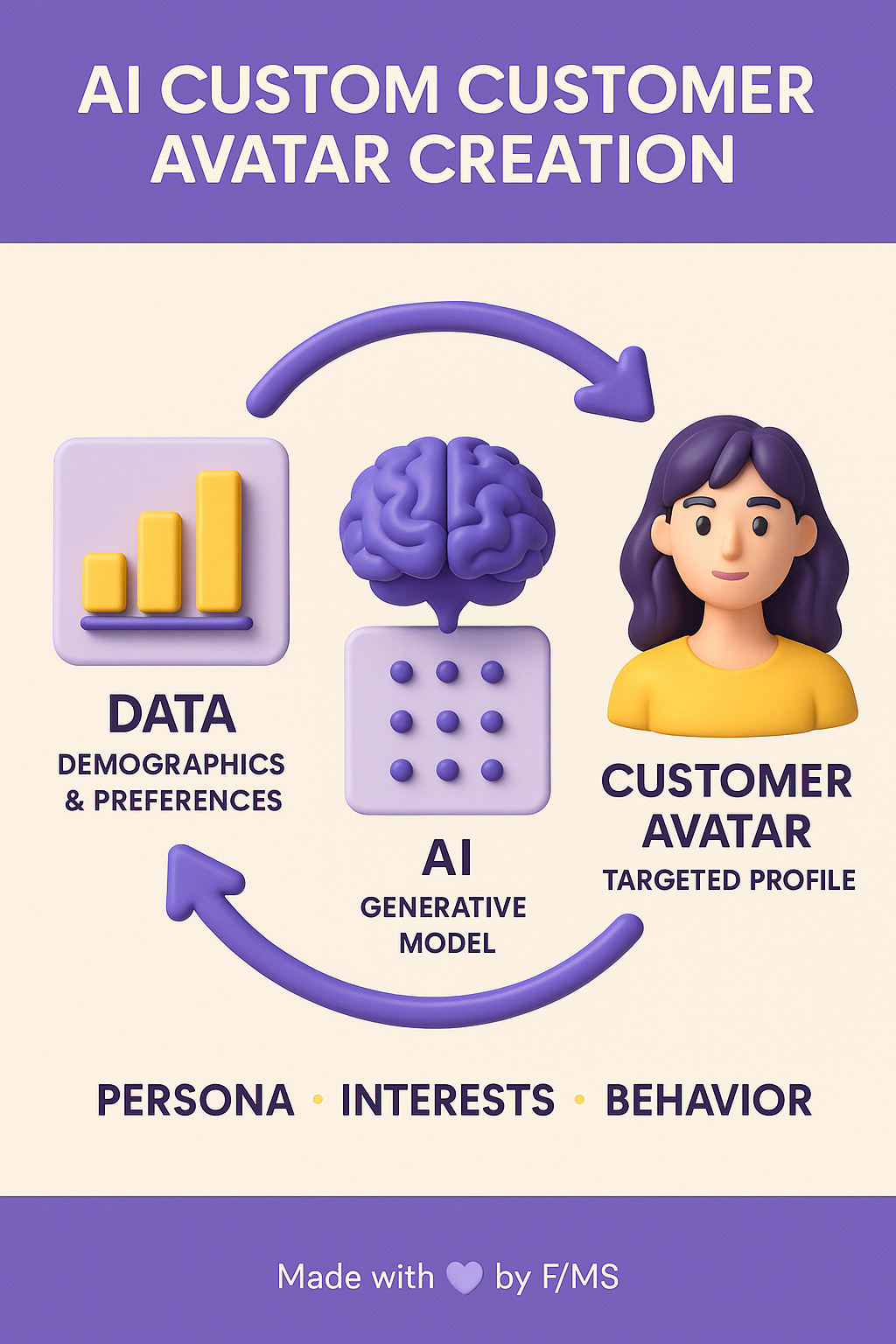
As 2026 unfolds, AI customer avatar creation is revolutionizing the way businesses engage with customers, offering a perfect opportunity for female entrepreneurs seeking innovative yet accessible business ideas. These virtual avatars, powered by cutting-edge AI technologies like generative AI, motion capture, and natural language processing, are transforming customer service, marketing, and personalized experiences across industries. For first-time female entrepreneurs, launching and managing a business centered around AI avatars presents an exciting, low-investment, and impactful venture with significant growth potential.
Here's why this concept is ideal and how to start with seven proven steps to succeed in AI customer avatar creation.
Why AI Customer Avatar Creation?
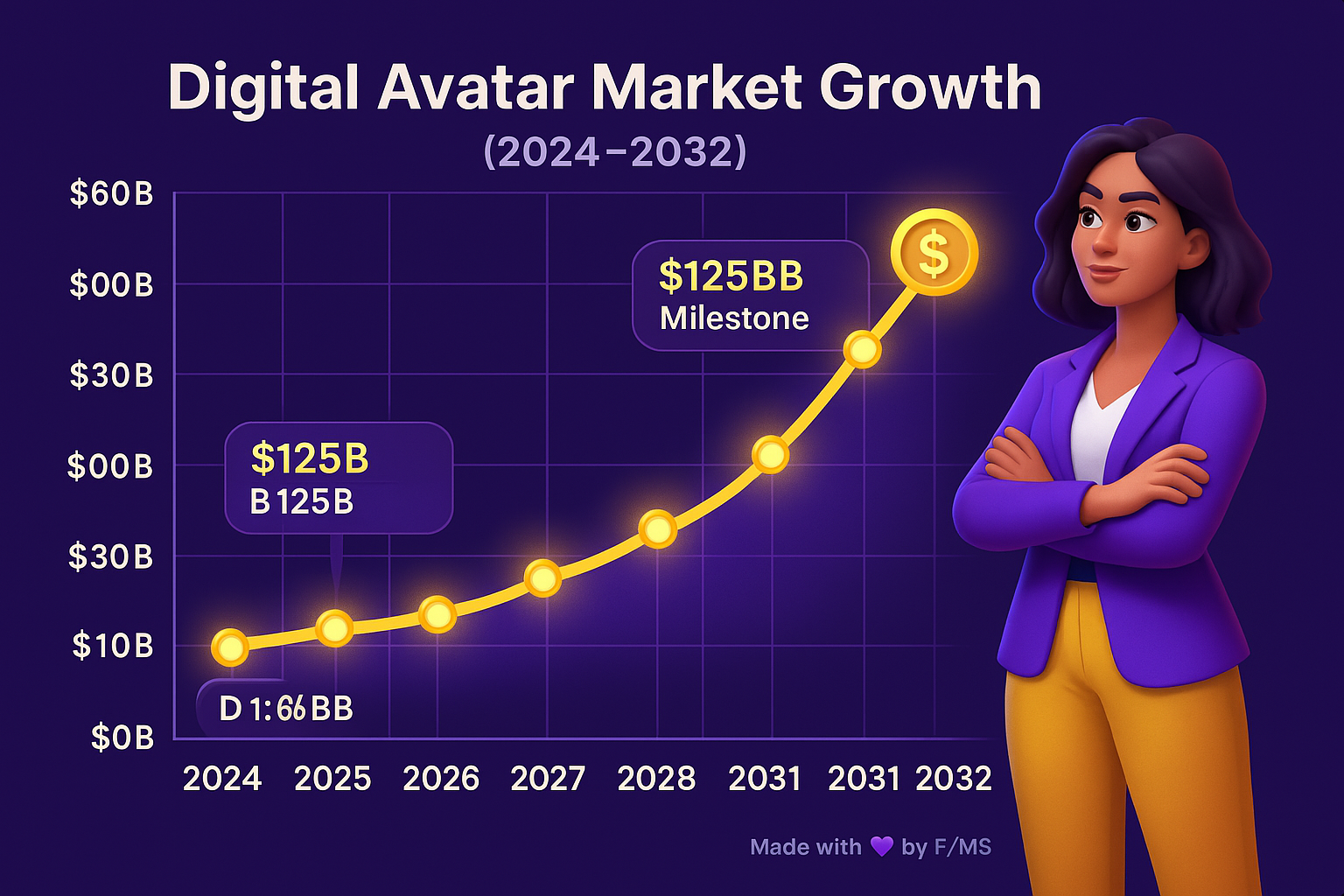
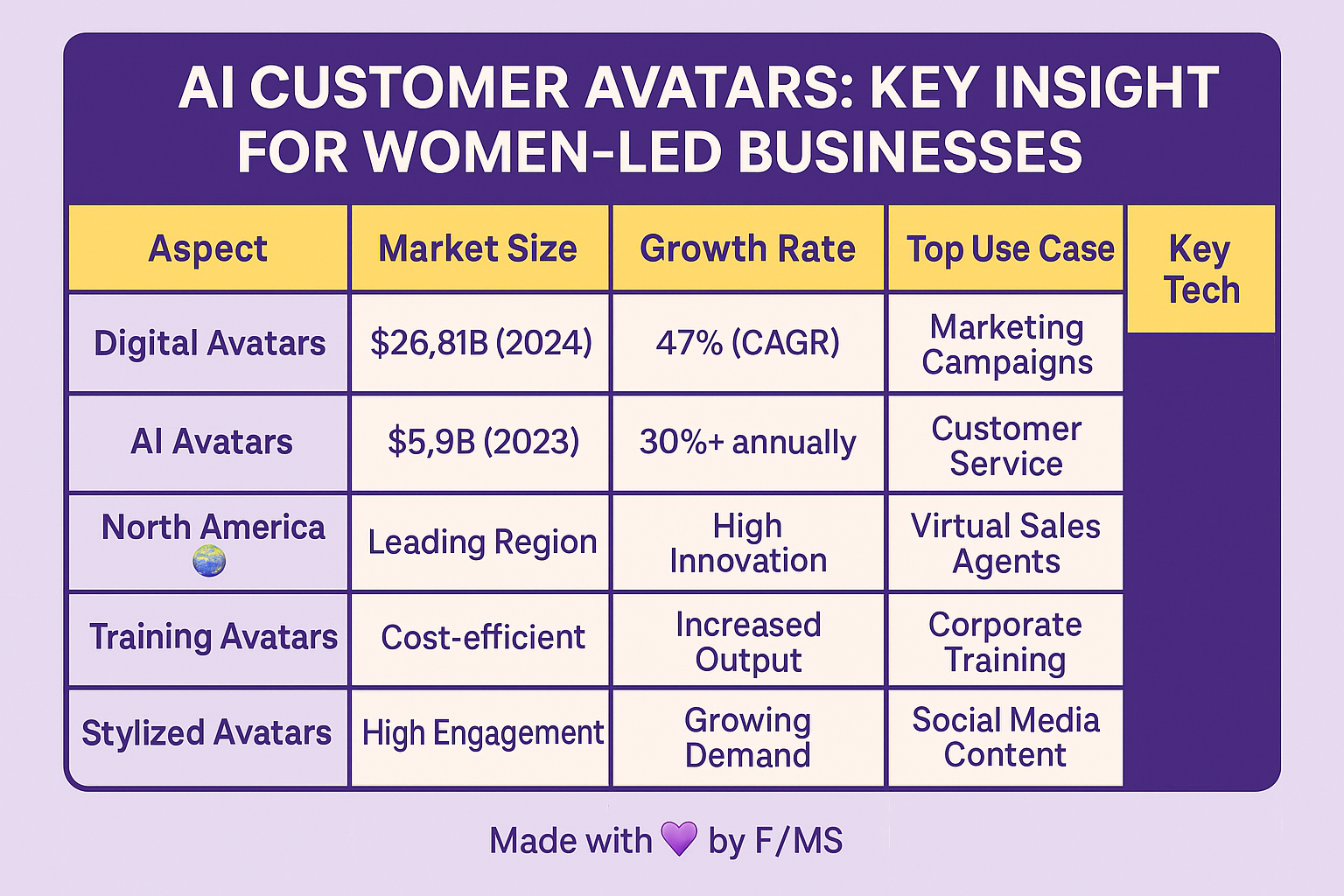
AI-driven avatars have proven to enhance customer engagement, increase resolution rates, and personalize interactions, offering unmatched scalability for businesses. The AI Avatars Market, projected to surpass $30 billion annual growth rates, creates lucrative opportunities for entrepreneurs proficient in leveraging this technology. Key reasons why female entrepreneurs should explore this business idea include:
- Ease of Launch: Tools for building avatars are increasingly user-friendly.
- Flexible Operations: Operate from home with cloud-based solutions.
- High Demand: Thriving across industries like e-commerce, education, and healthcare.
- Scalability: Integrate avatars into websites, CRM systems, or VR spaces.
7 Steps to Launch Your AI Customer Avatar Business
1. Identify the Problem You Want to Solve
Start by pinpointing customer interaction pain points. For instance, are businesses struggling with high call wait times, impersonal marketing, or inconsistent customer service? Define how AI customer avatars can solve these issues with tailored solutions.
2. Define Your Target Audience
Focus on industries that heavily rely on personalized customer engagement. Popular choices include retail, fitness coaching, online education, and virtual events. Define your audience's demographics, buying behavior, and needs to make your avatars relevant and engaging.
3. Craft a Compelling Value Proposition
Why should clients invest in AI avatars versus traditional strategies? Highlight benefits such as enhanced empathy-driven communication, reduced costs, and streamlined operations.
4. Choose Your Avatar Model
Select from:
- Interactive Avatars for dynamic, real-time customer interactions (ideal for customer service and AI sales agents).
- Non-Interactive Avatars for pre-recorded scripted messaging used in educational or marketing videos.
- Cloud-Based Avatars, offering scalability and ease of deployment.
5. Build Your Minimum Viable Product (MVP)
Focus on simplicity. Use ready-made AI avatar tools or platforms to prototype your service before investing in custom development. Showcase how avatars can improve customer engagement in one or two use cases.
6. Plan Marketing First, Build Second
Marketing is often the hardest part of launching an AI customer avatar business. Start validating demand before full development using the F/MS AI SEO Blog. This blogging tool ensures your website ranks high on search engines and gets visibility in AI tools like ChatGPT or Bing AI.
Complement this with F/MS Marketing Services offering in-depth listicle features, guest blogging, and backlinks to drive traffic to your product.
7. Secure Your First Customers
Leverage small-scale paid ads, social media, and niche-specific directories to attract early adopters. The F/MS Marketing Directories, featuring 1,500 free directory options, is a vital resource to get your business noticed early on and build SEO traction.
Business Essentials: What You’ll Need
To ensure success, consider these components:
- Business Model: Offer subscription services for avatars or one-time purchases for specific industries.
- Pricing Strategy: Tiered pricing based on complexity (e.g., realistic avatars cost more than stylized ones).
- Branding and Name: Choose names like "Avatar Allies" or "Empathy AI Creations" that resonate with your target audience.
Common Mistakes to Avoid
- Skipping Marketing Validation
- Ignoring Customer Engagement Insights
- Missing Data Protection
Benefits of Using AI-Powered Marketing Tools
To drive traffic to your AI customer avatar business, consider the F/MS AI Article Writer. This tool simplifies SEO with human oversight, ensuring your articles not only rank on Google but also appear in popular AI services like Bing, ChatGPT, and Perplexity. By positioning your startup as an authority, you'll generate leads, attract customers, and scale operations without getting bogged down by manual marketing tasks.
Closing Insights
AI customer avatar creation is a promising venture for female entrepreneurs stepping into 2026’s high-tech economy. By following these seven steps, leveraging F/MS tools, and avoiding common pitfalls, you can build a scalable business that redefines customer interaction across industries. With tools like generative AI, VR environments, and advanced NLU systems becoming more accessible, there’s no better time to jump into the world of AI avatars.
Ready to disrupt the customer experience landscape? The future awaits!
FAQ on AI Customer Avatar Creation
1. What is AI customer avatar creation?
AI customer avatar creation involves the use of artificial intelligence technologies such as generative AI, motion capture, and natural language processing to develop virtual avatars tailored for customer engagement, marketing, and personalized services. These avatars simulate human interactions and help businesses improve efficiency and personalization. Learn more about AI avatars
2. Why is AI customer avatar creation relevant for female entrepreneurs?
For female entrepreneurs, AI avatars provide a low-investment opportunity to launch businesses in growing markets like e-commerce, education, and healthcare. They are scalable, easy to set up using existing platforms, and capable of enhancing customer experiences. Discover the market potential
3. Which tools are required to start an AI avatar creation business?
Key tools include generative AI platforms, motion capture software, natural language processing frameworks, and cloud-hosted services for deployment. Many tools are user-friendly and accessible to first-time entrepreneurs. Explore tools for AI avatar creation
4. How can AI avatars improve customer engagement?
AI avatars personalize customer interactions by understanding and responding empathetically to customer needs, delivering lifelike experiences through facial expressions, voice modulation, and humanlike gestures. This increases resolution rates and enhances satisfaction. Learn customer engagement insights
5. What industries can benefit the most from AI avatars?
Industries such as retail, education, health, fitness, and virtual events can leverage AI avatars for customer service bots, sales agents, training videos, and content creation. Virtual influencers are popular for marketing campaigns as well.
6. What are the common mistakes to avoid in this business?
Avoid launching without verifying market demand, ignoring customer engagement data, or neglecting data protection. Skipping marketing efforts can drastically reduce visibility and customer acquisition potential. Learn common pitfalls
7. Can I use AI to write SEO-optimized articles that help my brand grow?
Most business owners don't understand how SEO works, let alone how to use AI for writing blog articles. That's why for busy business owners there's a great free tool that doesn't require much knowledge. Write articles for free
8. What is the projected growth of the AI avatar market?
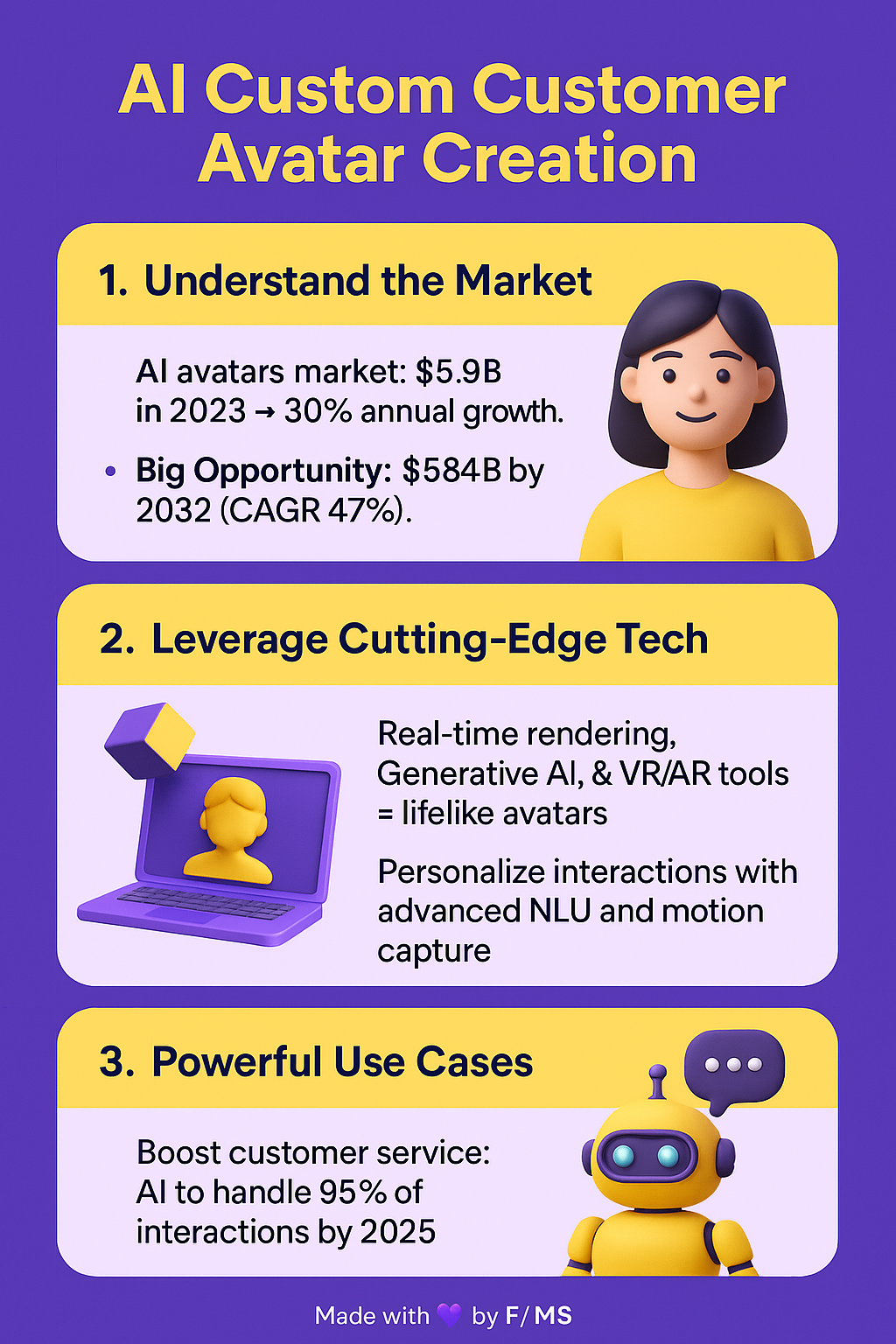
By 2032, the digital avatar market size is projected to reach $584.62 billion, growing at a compound annual growth rate (CAGR) of 47 percent. This makes it one of the fastest-growing segments in AI-driven solutions.
9. How can small businesses market AI avatars effectively?
Small businesses can leverage content-focused strategies such as blogs, guest posts, and social media ads. Tools like F/MS AI SEO Blog and directories can boost early visibility and search engine rankings. Discover marketing strategies
10. What is the difference between interactive and non-interactive AI avatars?
Interactive avatars engage with customers dynamically, offering real-time responses ideal for customer service and sales. Non-interactive avatars operate using pre-recorded scripts, making them suitable for educational or promotional content. Learn about avatar types
About the Author
Violetta Bonenkamp, also known as MeanCEO, is an experienced startup founder with an impressive educational background including an MBA and four other higher education degrees. She has over 20 years of work experience across multiple countries, including 5 years as a solopreneur and serial entrepreneur.

