
In 2027, family traditions meet cutting-edge technology through AI-driven custom cookbook creation. If you're a first-time female entrepreneur looking to turn cherished recipes into a business opportunity, this idea offers a blend of creativity, innovation, and profitability. AI tools can digitize, organize, and even personalize family recipes, creating unique cookbooks tailored to niche audiences like vegans, gluten-free eaters, or even regional cuisine enthusiasts.
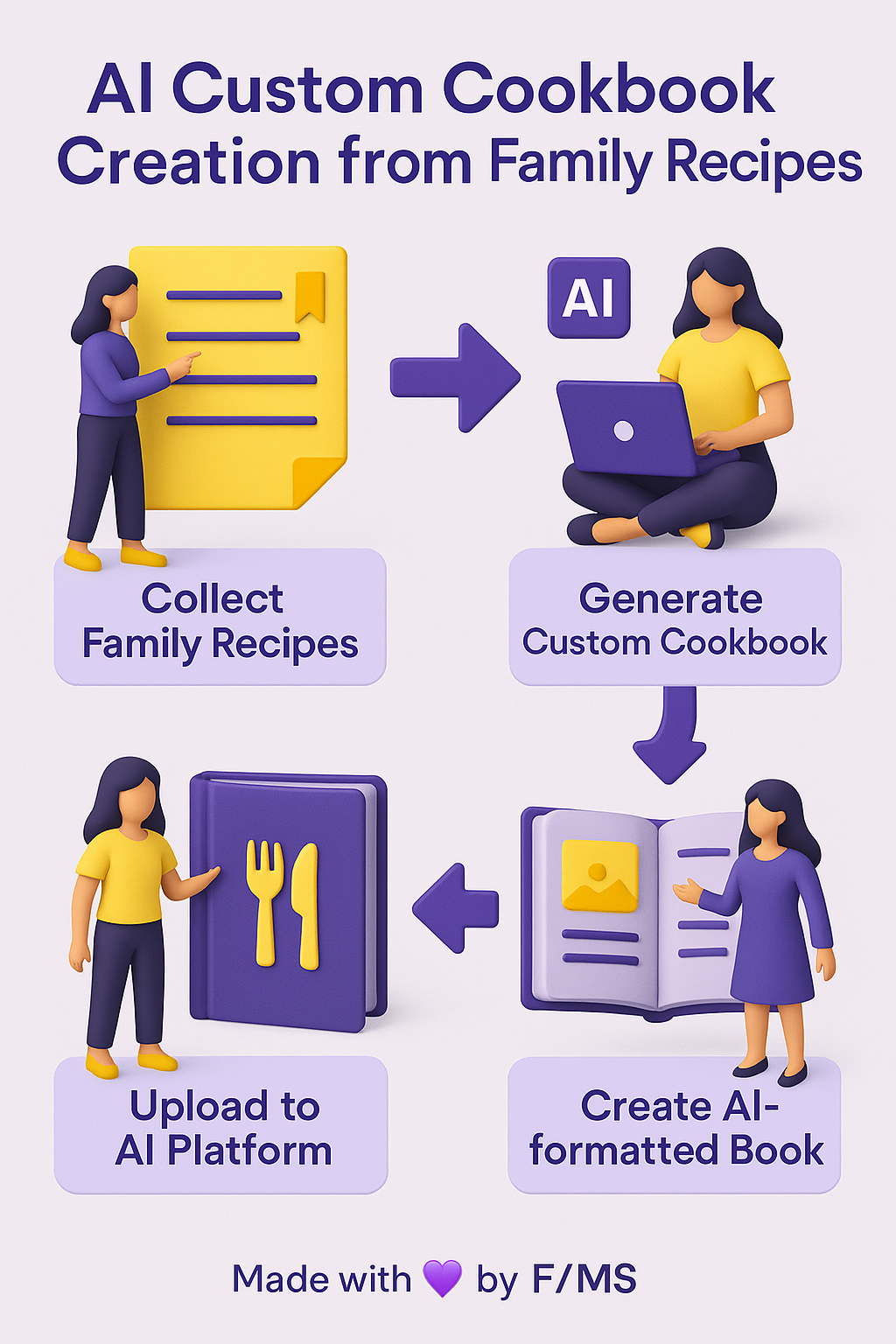
This article explores 7 actionable tips for leveraging AI to craft customized cookbooks from family recipes, details important business considerations, and highlights ways to stand out in a growing market. Learn more about Creating an AI custom travel photography.
Why Start an AI-Powered Cookbook Business in 2027?
Before diving into the tips, let’s outline what makes this idea so appealing: Learn more about How to Create AI custom pet care.
- Low Startup Costs: With free AI tools and minimal equipment, you can launch this from home.
- Growing Market Need: Consumers prioritize personalized content, and cookbooks tailored to specific diets or cuisines are in high demand.
- Cultural Significance: Preserving family recipes has emotional value, making your offering deeply meaningful.
- AI Accessibility: Rapid advancements in generative AI make features like recipe digitization, formatting, and customization easy even for beginners.
According to industry insights, 65% of consumers prefer personalized digital content, offering a clear indicator of the market's direction.
SECRETS to Building an AI-Customized Cookbook Effortlessly
1. Start with a Goal-Oriented, Problem-Solving Approach
Many entrepreneurs jump into cookbook creation without truly pinpointing the problem they are solving. Here are a few possibilities:
- Do your customers want easy weeknight dinners?
- Are they searching for healthy versions of comfort food?
- Do they care about historical preservation or cultural cuisine?
Creating a cookbook tailored to a specific problem ensures it will resonate more with your target audience.
2. Leverage AI for Recipe Digitization
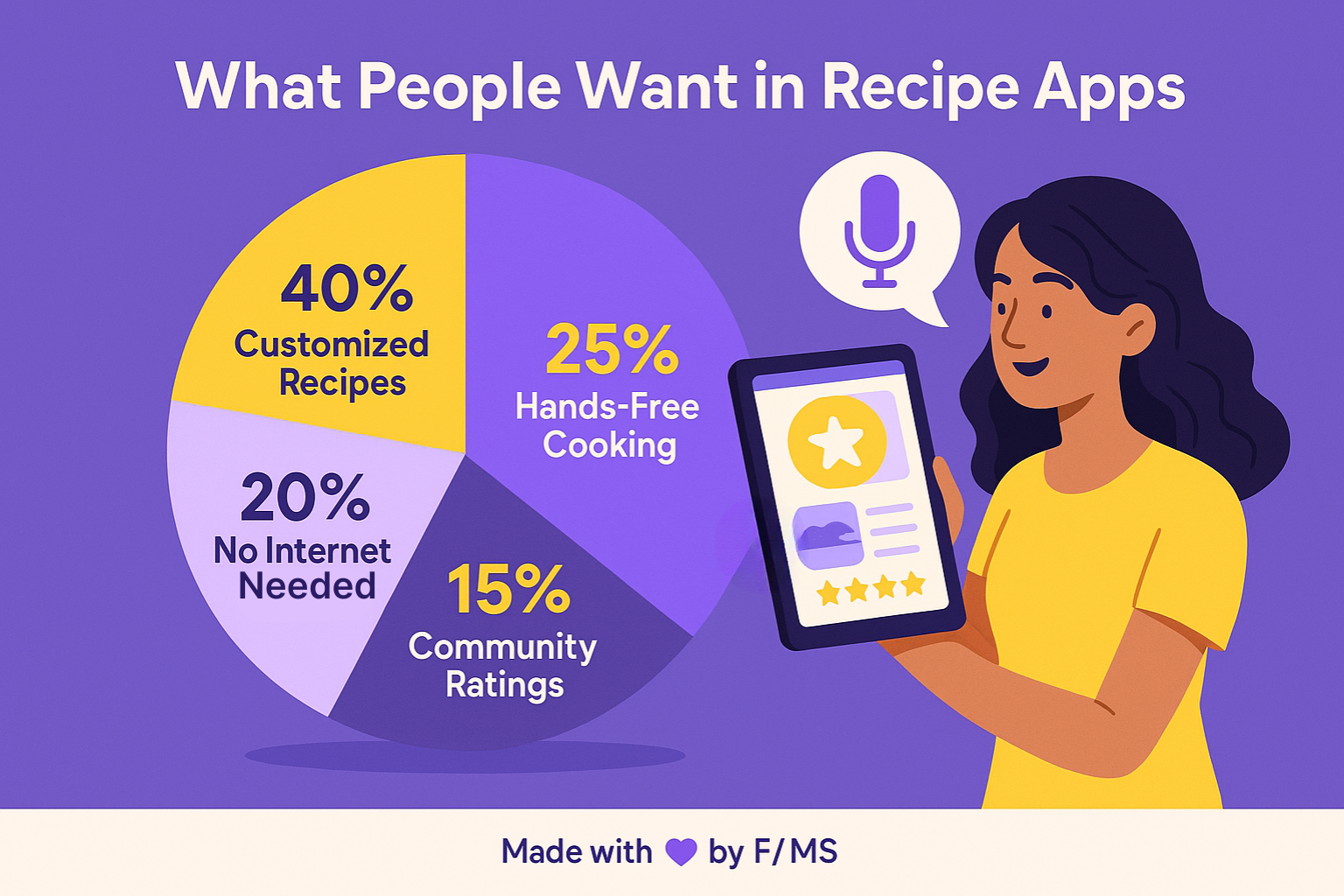
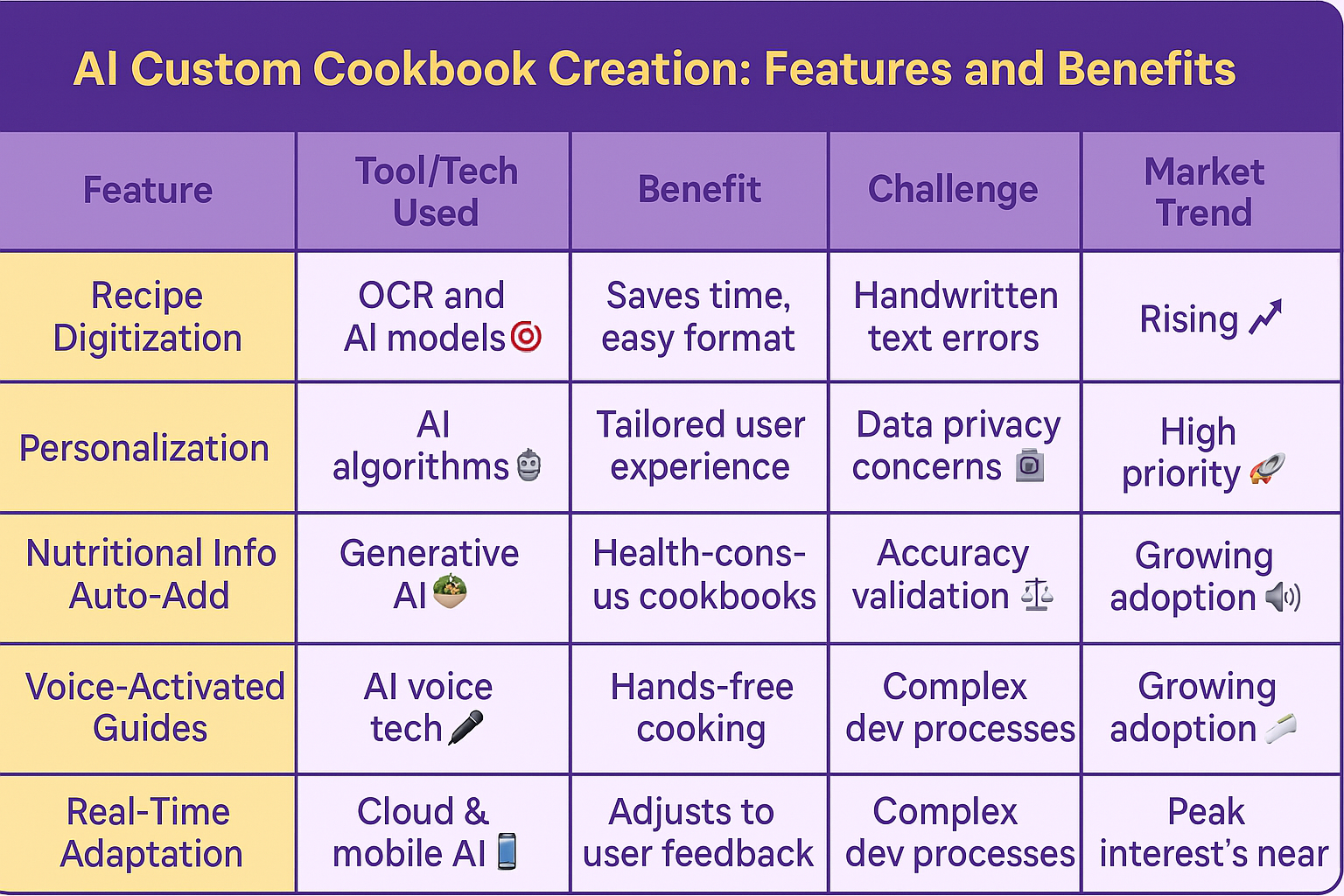
Handwritten or oral family recipes are not easily accessible in the digital age. Using AI tools to scan, interpret, and organize these recipes is essential. Google’s structured data standards for recipes (e.g., `recipeIngredient` and `recipeInstructions` tags) are a great guide.
For example, apps like Recipe Keeper or customized AI using APIs like OpenAI's GPT can automatically convert oral or written notes into structured, editable formats. You can expand this with features like auto-generated shopping lists or integrated cooking timers.
Recommended Tool: Explore F/MS AI Article Writer to create recipe descriptions that rank not only on Google but also on AI platforms like ChatGPT or Perplexity.
3. Personalization is Key
Your cookbook shouldn’t just be a static collection of recipes. Use AI to personalize based on dietary restrictions, preferences, and even cooking expertise.
Imagine offering a product that allows users to select a recipe and get AI-generated variations:
- Substitute ingredients for allergies.
- Adjust difficulty levels or cooking time.
- Include cultural notes or historical anecdotes.
AI tools, like those offered by OpenAI, can dynamically adapt recipes in real-time, creating a truly customized experience for the end user.
4. Build a Strong Online Presence
The hardest part of launching any product is breaking through the noise. Marketing is where many first-time entrepreneurs struggle. Begin building your online presence early, even before the product is complete.
Action Steps:
- Use F/MS Marketing Directories to submit your business to 1,500+ directories for free, boosting your visibility and SEO authority.
- Start a blog using AI SEO Blog to rank highly for keywords like “custom family cookbooks” or “AI-generated recipe books.”
Marketing begins long before product launch. Even a simple blog about family recipes can serve as your target audience magnet.
5. Design with User Experience in Mind
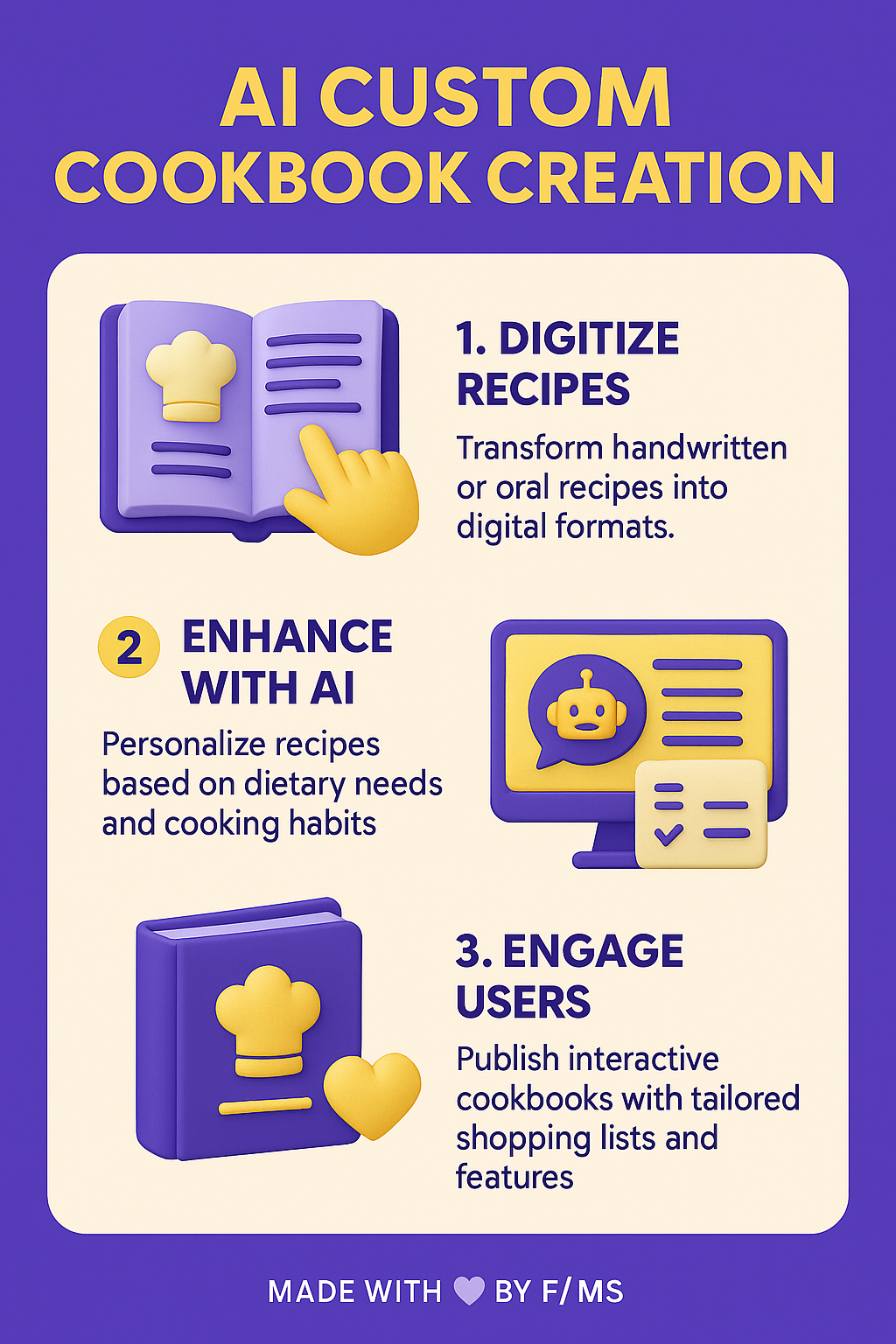
Cookbooks have evolved from static pages to interactive digital guides. To stand out, yours should offer features users will rave about. Some examples:
- Voice Activation: Hands-free navigation while cooking.
- APP Integration: Sync recipe books with shopping list services.
- Offline Viewing: Make your cookbook accessible without Wi-Fi.
Collaborate with designers or rely on free platforms that offer preset layouts optimized for storytelling, such as Canva.
6. Create Your MVP (Minimum Viable Product)
Don’t aim for perfection initially. Start with a minimum viable product (MVP) that allows you to test your idea without overspending.
For example, begin with:
- 10 digital recipes
- A printable PDF format
- Basic personalization (e.g., automatic scaling for serving sizes)
This MVP helps you gather valuable customer feedback to refine your final product. Conduct surveys or offer discounted pre-orders to bring in your first customers.
7. Monetize Strategically
How you price your product directly impacts its success. Here are some proven business models:
- Subscription Plans: Users pay a monthly/annual fee to access rotating content, including exclusive recipes.
- Freemium Model: Offer a basic version free, charging for premium customizations or add-ons.
- One-Time Payment: Charge for a single purchase of the cookbook in either print or digital format.
Pro Insight: Early adopters of generative AI report $3.70 ROI for every $1 spent. Consider incorporating AI tools to offer premium pricing while keeping production costs low.
Common Mistakes to Avoid
1. Overlooking Data Privacy
Handling customer and family recipe data responsibly is critical. Statistics reveal that 75% of consumers are wary of how their data is used. Ensure secure storage and transparent communication about privacy.
2. Sticking to One Medium
Limiting your cookbook to either digital or print will alienate parts of your audience. Offer both formats to maximize reach.
3. Ignoring Feedback
Early versions may not hit the mark. Use customer feedback to refine recipes, features, or even the overall layout. Negative feedback isn’t failure - it’s an opportunity.
Why You Should Take Action Today
In 2027, technology has democratized content creation, making it possible for you to leap into entrepreneurship with minimal barriers. Tools like F/MS Marketing Services can guide you through the essential steps of launching an idea, from creating high-quality backlinks to featuring your cookbook in articles.
Remember, the secret to success lies not just in the product but in how you market it. Using tools like F/MS AI Article Writer, you can stay ahead of competitors by ensuring your cookbook ranks highly in search engines and AI platforms.
Conclusion
AI custom cookbook creation from family recipes is a rewarding, meaningful business idea for first-time female entrepreneurs in 2027. With low costs, minimal technical requirements, and an emotional appeal to customers, the concept has massive potential. Use these 7 tips to tackle challenges, launch effectively, and build a scalable new venture that digitally preserves family traditions.
Why wait? Your recipe for success starts today! :)
FAQ on Creating an AI Custom Cookbook from Family Recipes
1. Why should I start an AI-powered custom cookbook in 2027?
Starting an AI-powered cookbook business combines low startup costs with high demand for personalized, niche offerings. Consumers in 2027 increasingly crave customized content, especially for dietary or cultural preferences, creating a lucrative opportunity. Explore AI business insights.
2. What tools can help with recipe digitization?
Tools like Recipe Keeper and OpenAI's text recognition APIs are excellent for digitizing handwritten or oral recipes. These platforms help transform traditional cooking notes into editable digital formats.
3. How can I personalize my cookbook for different dietary needs?
AI tools like OpenAI can adapt recipes in real time, offering ingredient substitutions, simplified instructions, or culturally relevant anecdotes to make recipes accessible to diverse audiences. Personalized cookbooks have been proven to deeply engage specific customer niches.
4. What are the best ways to market an AI-powered cookbook?
Building a strong online presence is essential. Use SEO tools like AI SEO Blog to rank for family cookbook-related keywords, and directories like F/MS Marketing Directories to boost visibility. Explore free marketing directories.
5. What features should an interactive digital cookbook have?
Interactive cookbooks should include voice-activated navigation, offline access, AI-powered customization options, and app integrations for features like shopping lists.
6. How can I start small with an MVP for my cookbook?
Use an MVP approach by creating a digital cookbook with 10 recipes in a basic, printable format. Test features such as scaling for serving sizes and gather customer feedback to refine your final product.
7. Can I use AI to write SEO-optimized articles that help my brand grow?
Most business owners don't understand how SEO works, let alone how to use AI for writing blog articles. That's why for busy business owners there's a great free tool that doesn't require much knowledge. Write articles for free.
8. How do I price my cookbook for maximum profitability?
Pricing strategies for AI-powered cookbooks can include subscription plans, freemium models, or one-time purchases. Early AI adopters often see a $3.70 ROI for every $1 spent, justifying premium pricing for personalized products.
9. What are the risks of using AI for cookbook creation?
Common risks include data privacy concerns and copyright infringement. Be transparent with customers, ensure secure data storage, and take steps to respect intellectual property laws for recipes collected and adapted through AI.
10. Can this business work in both print and digital formats?
Yes, offering both formats is essential for maximizing reach. A digital copy provides interactivity and convenience, while printed editions appeal to a nostalgic or gift-giving audience.
About the Author
Violetta Bonenkamp, also known as MeanCEO, is an experienced startup founder with an impressive educational background including an MBA and four other higher education degrees. She has over 20 years of work experience across multiple countries, including 5 years as a solopreneur and serial entrepreneur.

