
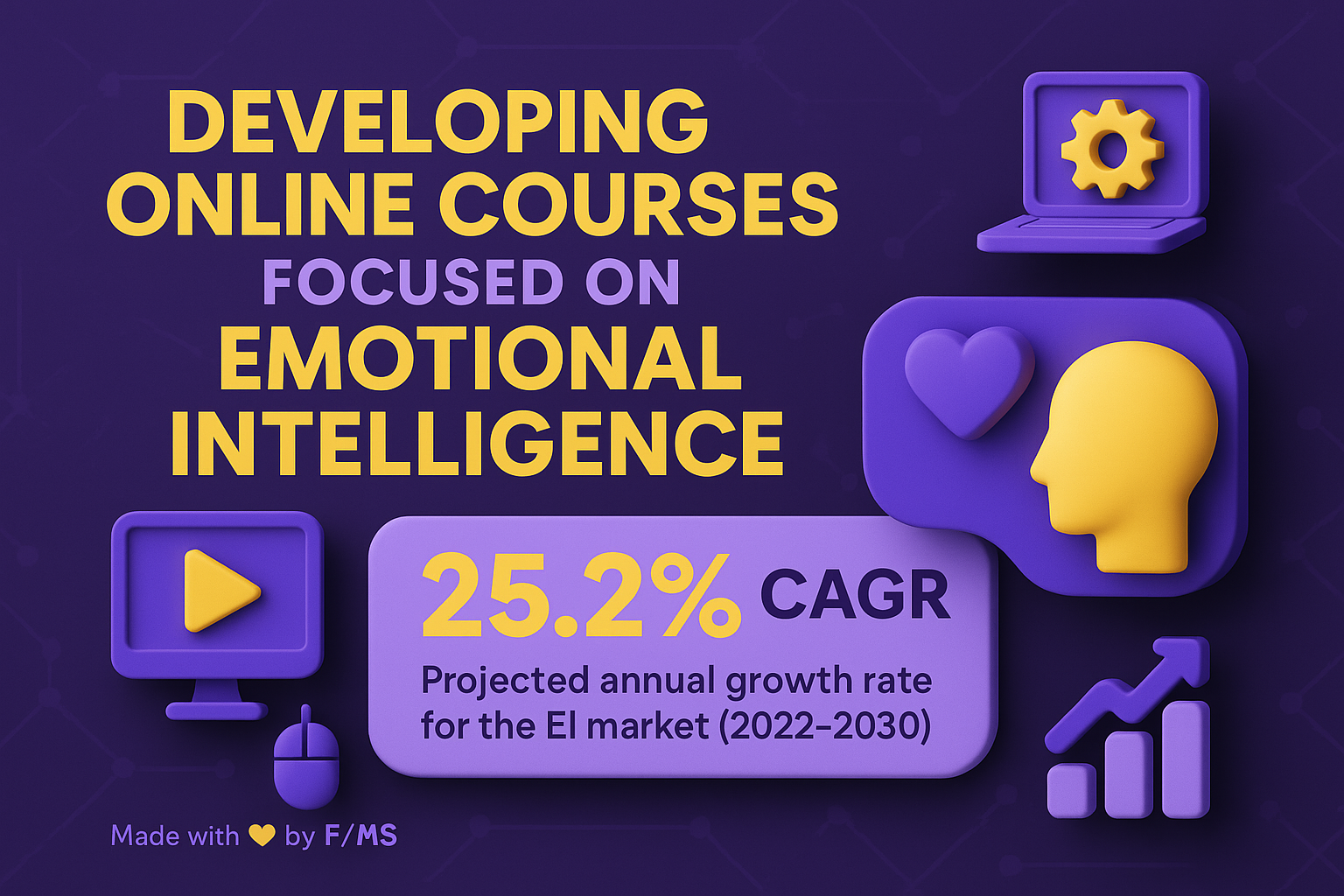
As the global emphasis on soft skills continues to surge, developing online courses focused on Emotional Intelligence (EI) has become one of the most lucrative opportunities for entrepreneurial pursuits. Whether you are a first-time female entrepreneur or a seasoned business owner, tapping into this market can yield tremendous benefits. With the emotional intelligence education market set to grow at a staggering compound annual growth rate (CAGR) of 25.2% by 2030, 2027 provides the perfect terrain to ride the wave of demand.
In this guide, we will walk you through proven steps for creating emotionally impactful and financially rewarding EI courses online. Whether you're creating courses for individual professionals, employers, or academic institutions, these tips will set you apart in this rapidly growing industry. Here is how to create sustainability online courses.
Why Emotional Intelligence Online Courses Are a Must-Have Business in 2027
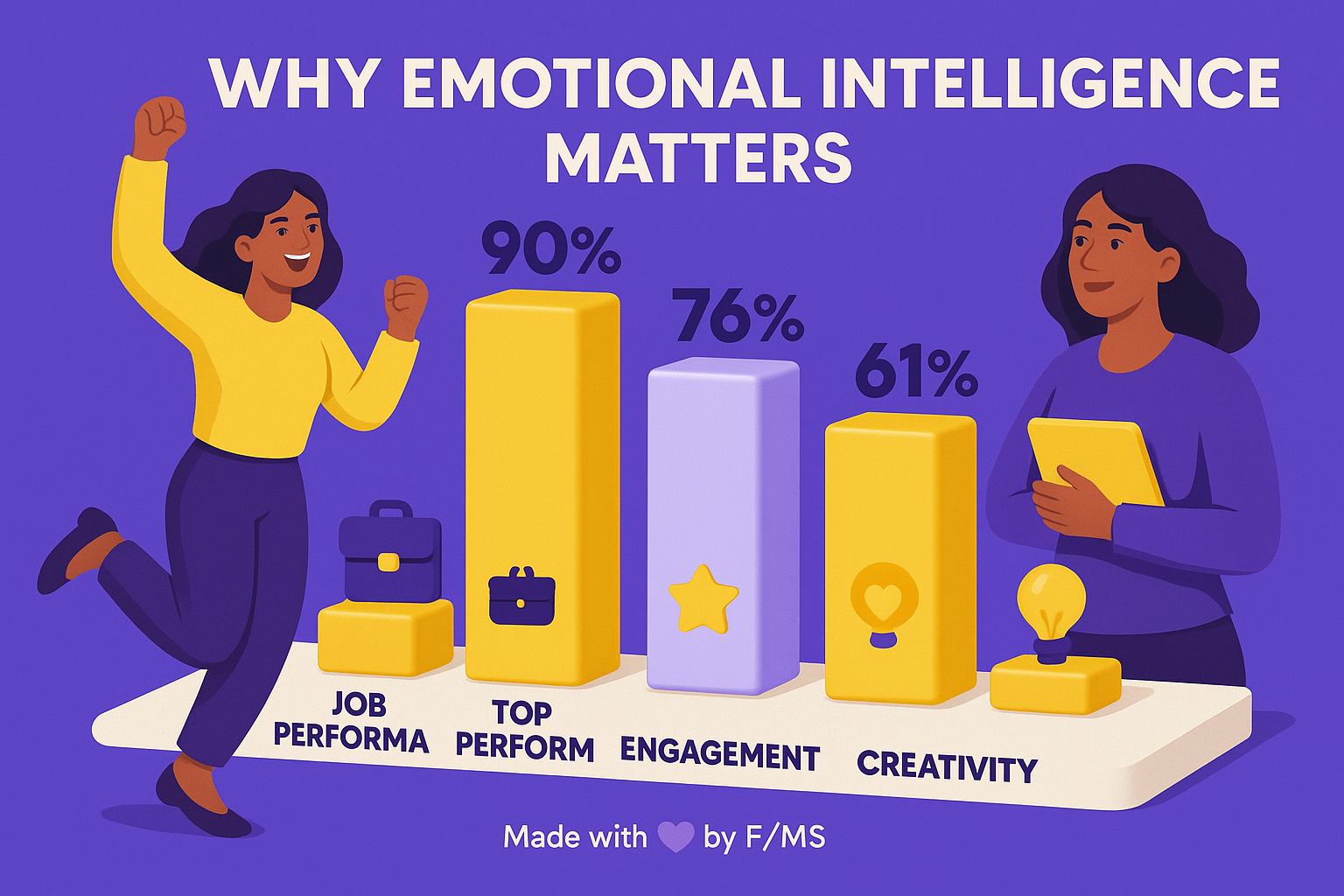
The demand for Emotional Intelligence education has exploded due to its direct link to personal and professional success. Research shows that 75% of Fortune 500 companies now include EI training in their development programs. Furthermore, 90% of top performers and employees with above-average EI are reaping measurable career benefits, such as earning an average of $29,000 more annually. Here is how to create Online mindfulness Courses for Families.
Here’s a staggering statistic to guide your motivation: only 36% of people globally demonstrate emotional intelligence, meaning there is significant room for growth and education. Combining this unmet need with an increasing reliance on flexible, scalable online education platforms provides a clear recipe for entrepreneurial success.
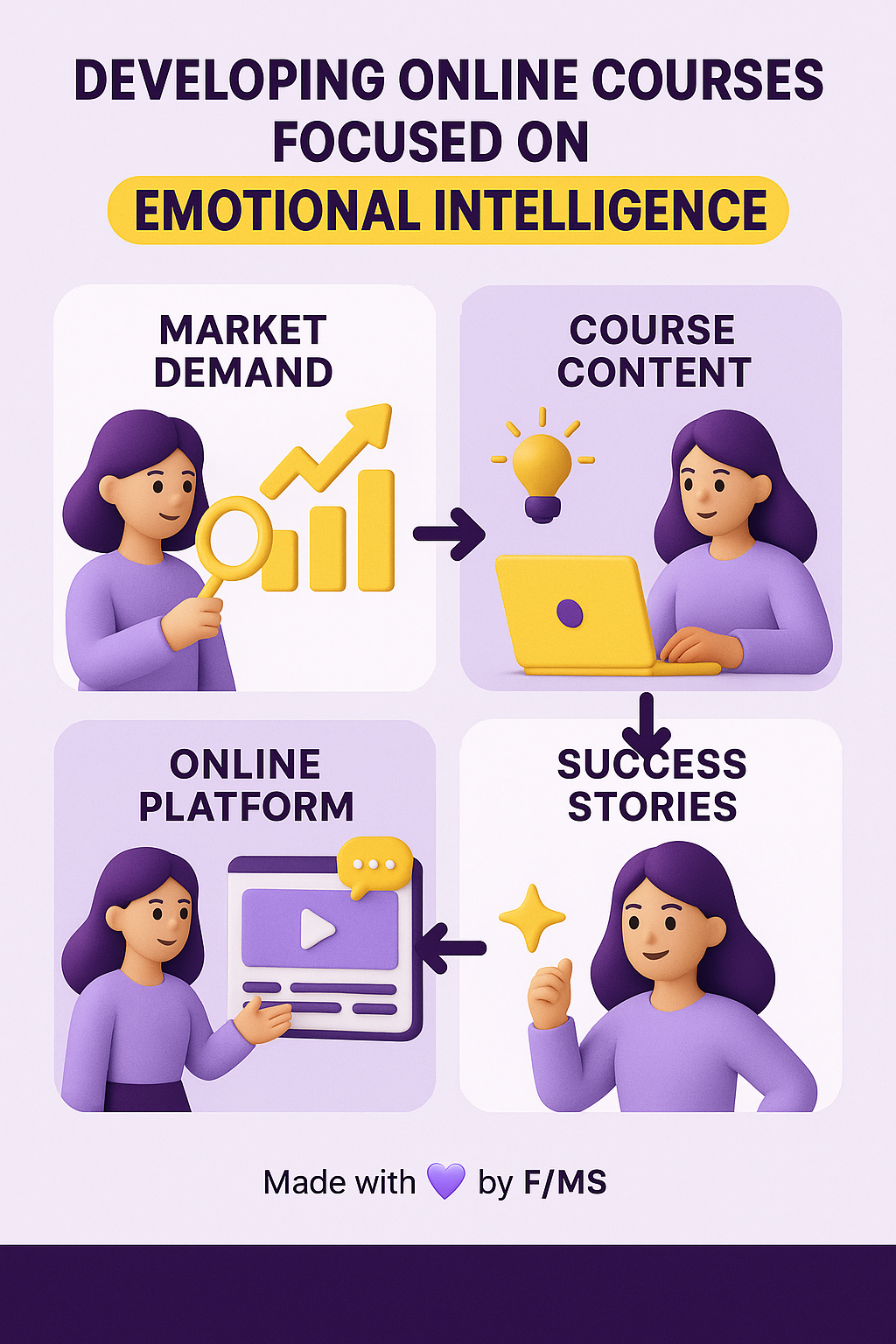
The Top 7 Steps to Create Emotional Intelligence Courses
1. Identify Your Target Problem and Audience
A successful course starts with understanding who you're serving and why they need your help. Ask yourself:
- Are my learners corporate employees looking to enhance workplace communication?
- Are they leaders looking to sharpen their empathetic skills?
- Or are they individuals seeking stress management and self-awareness?
Once identified, define your unique value proposition that aligns with their needs. For example, you might highlight how EI training correlates directly with job performance metrics or promotes work-life balance.
2. Create a Scalable Business Model
Develop your business around flexibility and value:
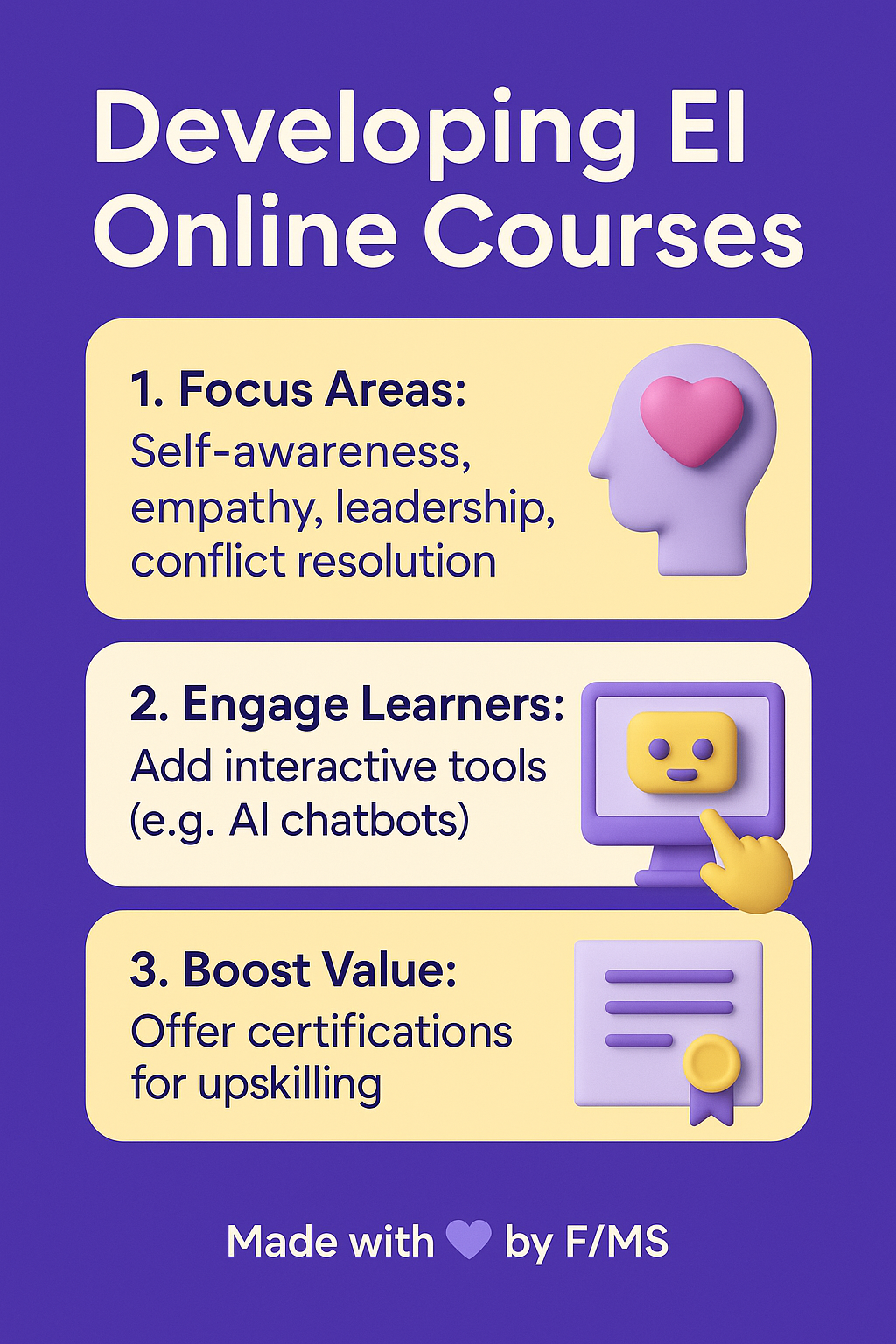
- Name your course effectively (e.g., "Achieving Leadership Greatness with EI"). Ensure it resonates with your audience.
- Choose your pricing model: Will your course be subscription-based or offered as a one-time purchase?
- Plan for an MVP (Minimum Viable Product) by focusing on a single, high-impact topic first (e.g., Emotionally Intelligent Decision-Making).
3. Use Proven Pedagogical Strategies
Incorporate effective teaching methods to keep learners engaged. Focus on interactive and practical modules, such as:
- Role-playing exercises (e.g., practicing conflict resolution).
- Gamification (e.g., quizzes to identify personal EI scores).
- Real-world scenarios (e.g., addressing workplace stress).
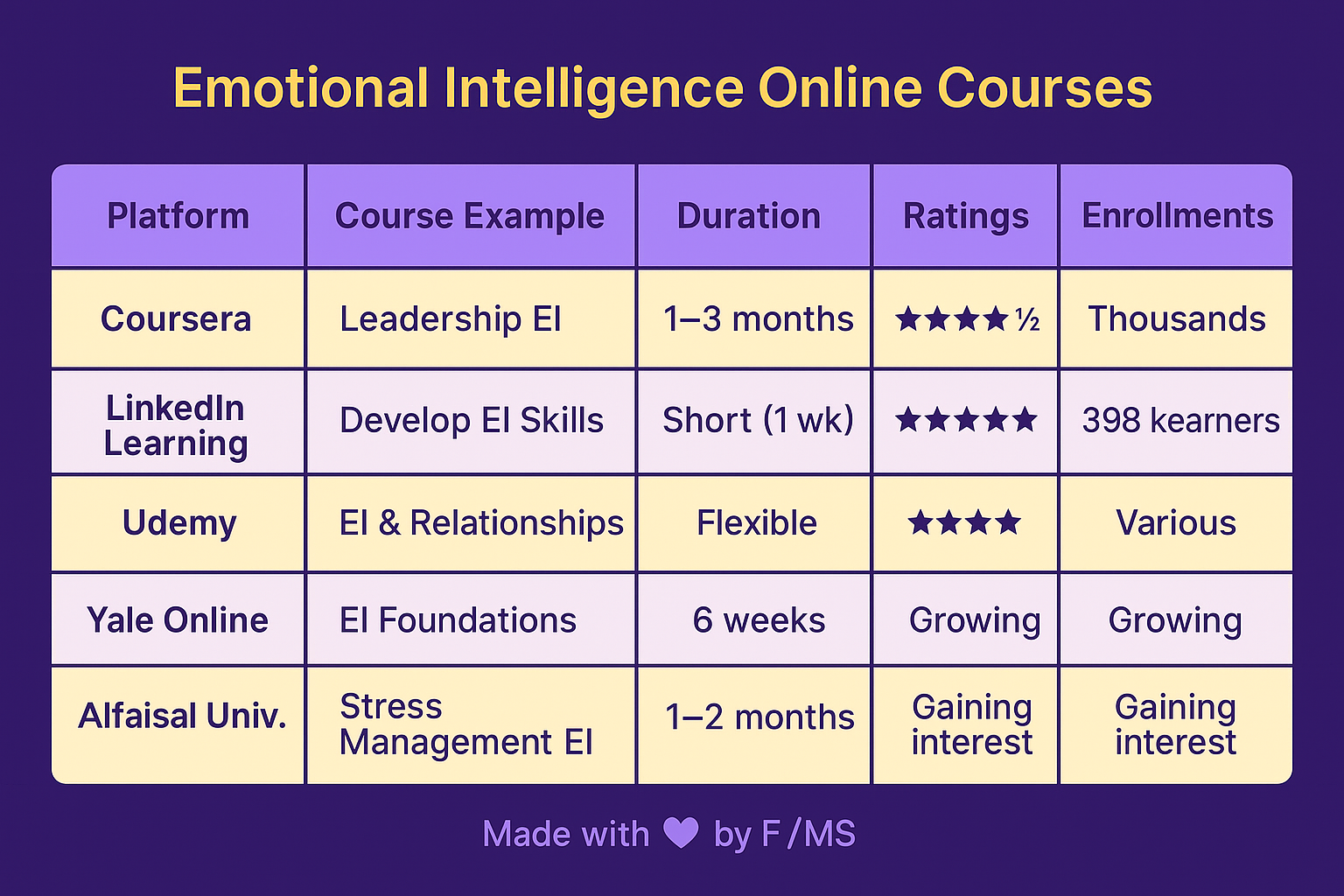
Cover key themes such as self-awareness, mindfulness, emotional regulation, conflict management, and building empathy. Brands like LinkedIn Learning and Coursera already offer high-rated EI courses focusing on these areas, such as LinkedIn Learning’s "Developing Your Emotional Intelligence" course rated at 4.7 stars.
4. Embrace the Latest Technology Tools
Leverage AI-powered learning tools that help personalize the course experience, such as emotionally intelligent chatbots or interactive assessments. Companies like F/MS offer exceptional tools to simplify this. Check out F/MS AI Article Writer to set up your SEO strategies and automate blogging efforts, ensuring your course gets the reach it deserves.
Other top trends in 2027 include using VR simulations to create immersive learning, helping students practice empathy and problem-solving in real-life scenarios.
5. Market Your Course Effectively
The hardest part of any entrepreneurial journey is not building the product but getting your first customers. Here’s where tools like F/MS Marketing Services can amplify your journey by offering features such as listicle placements and permanent SEO backlinks to your course website. Their knowledge in elevating startups ensures your course consistently reaches the right audience.
Some additional early marketing strategies include:
- Using LinkedIn outreach to connect with corporate HR teams.
- Offering teaser content on platforms like YouTube to hook potential customers.
- Building credibility by submitting to acclaimed marketing directories provided by F/MS.
6. Certify to Add Value
Courses that provide certification naturally carry more credibility. Learners are not only improving their EI but also receiving tangible credentials they can add to their resumes. This incentive improves user retention. For example, consider integrating your course on platforms like Udemy that specialize in professional development certifications.
7. Price Your Course Strategically
With individuals already linking salary benefits to higher EI, you have a unique opportunity to price your course based on its return on investment (ROI) for learners. For instance:
- Free introductory modules to enhance visibility.
- Tiered pricing for beginner, intermediate, and advanced EI competencies.
- Corporate packages with discounts for multiple employee enrollments.
Key Challenges (and Proven Fixes!)
1. Challenge: Standing Out in a Crowded Market
Fix: Focus on high-quality SEO content using tools like the AI SEO Blog by F/MS to rank on Google and in AI search platforms like ChatGPT and Perplexity.
2. Challenge: Getting First Customers
Fix: Offer free webinars or workshops to build an email list. Combine this with outreach campaigns powered by F/MS Marketing Directories, where you can list your course and boost organic traffic.
3. Challenge: Sustaining Learner Engagement
Fix: Provide bite-sized lessons (microlearning), interactive progress trackers, and incentivized opportunities like badges for skill mastery.
Avoid These Common Mistakes
- Overcomplicating Course Content: Start simple and build as you scale.
- Ignoring Feedback: Your first learners will be your best critics. Use their input to refine your approach.
- Skipping Optimization: Use F/MS Website SEO Analysis to understand gaps in your website experience and continuously improve.
Conclusion
In 2027, developing an online Emotional Intelligence course offers female entrepreneurs an enriching combination of profitability, purpose, and scalability. Whether you're targeting corporate leaders, students, or ambitious professionals, the steps provided above will help you lay the groundwork for success.
With upward demand for EI training and the growing success of online learning platforms, the opportunity to establish a standout brand has never been clearer. To ensure your efforts translate into action, leverage marketing tools like F/MS AI SEO Blog and F/MS Marketing Services.
So why wait? This is your sign to channel your inner innovator and create impactful EI courses the world has been waiting for in 2027.
FAQ on Emotional Intelligence (EI) Online Course Development
1. Why is emotional intelligence training important?
Emotional intelligence is crucial for personal and professional success. Studies show that 90% of top performers excel due to high EI, and individuals with above-average EI earn approximately $29,000 more annually. This makes EI training a sought-after skill set for career development.
2. What is the market growth prediction for EI online courses?
The global EI education market is projected to expand rapidly with a compound annual growth rate (CAGR) of 25.2% from 2022 to 2030. This complements the increasing adoption of EI training by 75% of Fortune 500 companies.
3. Which platforms currently dominate EI course offerings?
Popular platforms include Coursera, Udemy, and LinkedIn Learning. Coursera collaborates with universities like Yale and UC Davis, while LinkedIn’s "Developing Your Emotional Intelligence" course has over 398,000 enrollments and an average rating of 4.7 stars.
4. What are some key topics covered in EI courses?
EI courses focus on self-awareness, empathy, relationship building, conflict management, stress reduction, and leadership development. Practical tools such as role-playing, mindfulness techniques, and gamified quizzes are often used for interactive learning.
5. What role does technology play in EI course development?
Emerging technologies like AI-powered chatbots and VR simulations create immersive, personalized learning experiences for students. These tools also make online EI courses scalable and effective.
6. What certifications do EI courses usually offer?
Most professional EI courses include certifications that learners can showcase on resumes, LinkedIn profiles, or portfolios. Certifications increase the perceived value of the training, attracting more corporate and individual learners.
7. Can I use AI to write SEO-optimized articles that help my brand grow?
Most business owners don't understand how SEO works, let alone how to use AI for writing blog articles. That's why for busy business owners there's a great free tool that doesn't require much knowledge. Write articles for free.
8. How can entrepreneurs price EI courses strategically?
Successful pricing models often include free introductory content, tiered access for different skill levels, and corporate bulk discounts. This approach ensures affordability for individuals while gaining larger contracts with businesses.
9. How can I market my EI course effectively?
Social media outreach, LinkedIn networking, SEO optimization, and offering free webinars are some successful strategies. Platforms like F/MS Marketing Services also provide tools like permanent backlinks to increase visibility. Learn more about marketing tools.
10. What are the major challenges in creating EI courses?
Challenges include standing out in a competitive market, engaging learners, and securing initial customers. Proven fixes include creating SEO-friendly course content, providing free trials, and leveraging customer feedback to improve course delivery.
About the Author
Violetta Bonenkamp, also known as MeanCEO, is an experienced startup founder with an impressive educational background including an MBA and four other higher education degrees. She has over 20 years of work experience across multiple countries, including 5 years as a solopreneur and serial entrepreneur.

