
In today's fast-paced digital landscape, online community management has become a cornerstone for brands seeking to enhance customer experience, foster trust, and establish lasting loyalty. With 85% of marketers agreeing that branded communities improve consumer experiences, leveraging this strategy in 2027 isn't just important - it’s essential. From streamlined AI tools to crafting human-centric engagement strategies, this article dives into proven methods to optimize your community management practices.
Why Online Community Management is Crucial for Brands
At its core, online community management creates a space where brands and customers meet to exchange ideas, solve problems, and build meaningful relationships. Statistics from recent studies underline this importance:
- Customer Retention Boost: Brands with active communities enjoy a 53% higher customer retention rate.
- Operational Efficiency: 86% of marketers report that online communities streamline operations.
- Feedback Goldmine: 40% of businesses use such communities as a primary feedback collection tool.
With these advantages, it's no wonder businesses are prioritizing branded communities in their digital strategies.
7 Proven Tips for Online Community Management in 2027
1. Define Clear Goals and Objectives
Surprisingly, only 44% of brands set quantifiable objectives for their communities. Define measurable goals, such as driving a specific percentage increase in community engagement or collecting a set number of customer insights monthly. Learn more about photography niches for Online Businesses.
2. Prioritize Engagement over Follower Count
While follower count might look impressive, what truly matters is engagement. According to studies, active workforce engagement translates into a 233% boost in customer loyalty. Engage frequently through community events, polls, and discussions to foster a sense of belonging.
3. Leverage AI Without Losing the Human Touch
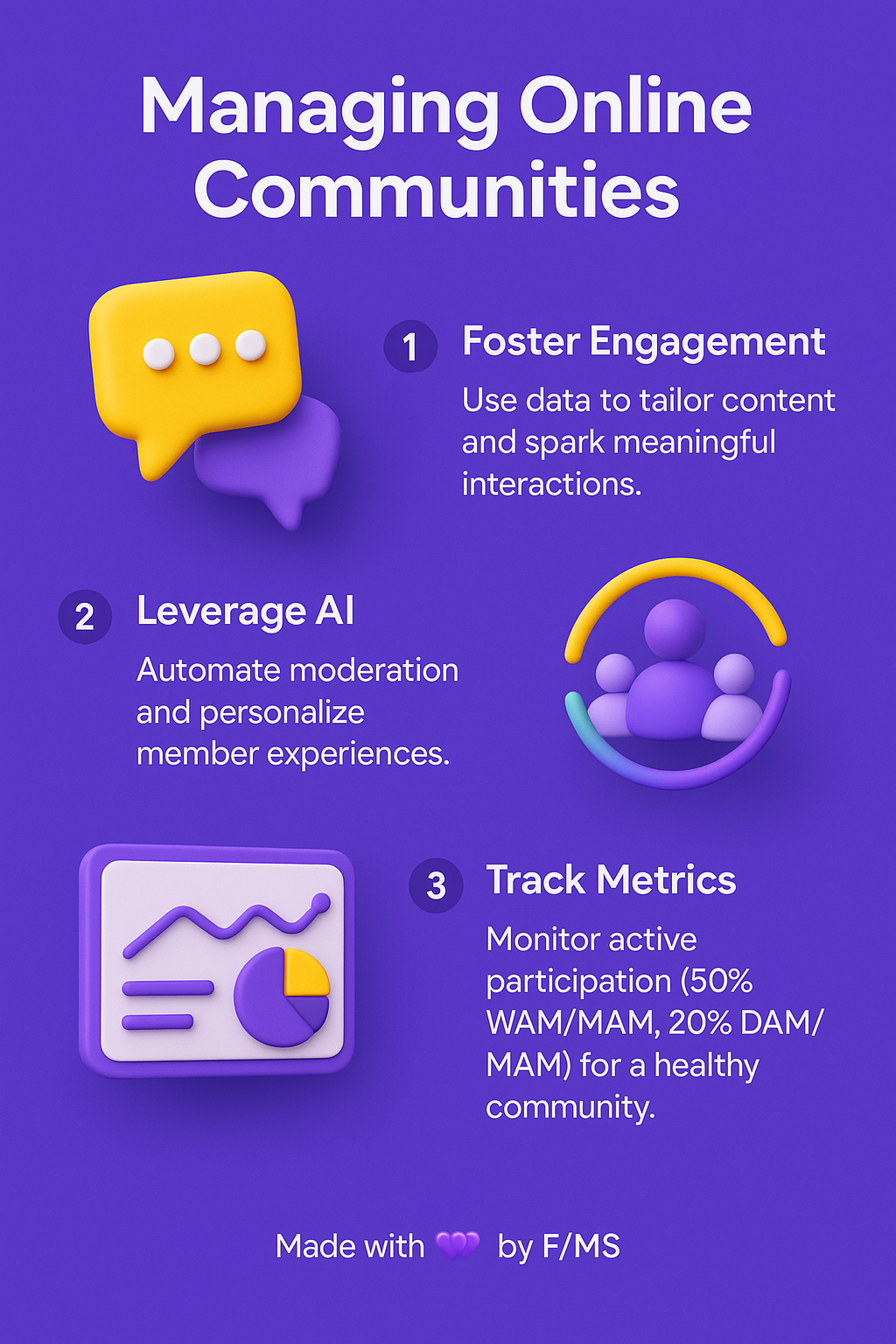
AI is transforming community management by automating repetitive tasks, analyzing data trends, and crafting personalized responses. However, the human element remains indispensable for authentic connections. Learning how tools like the F/MS AI SEO Blog can work alongside expert-level human insights can help you strike this balance beautifully.
4. Focus on Feedback Mechanisms
The importance of feedback cannot be overstated. With 40% of businesses using online forums for consumer feedback, structured systems like surveys and discussion groups make this data collection effortless. Regularly edit and optimize your community's processes to ensure members feel heard. For more on this, see female entrepreneurship community.
5. Experiment with Closed Communities
Private or closed communities are gaining popularity, offering intimate, highly engaged spaces for members. Use platforms like Slack or invite-only Facebook Groups to create exclusive benefits for your most loyal customers. These spaces can provide customer insights 10x faster than open forums. For more on this, see AI chat friend.
6. Host Educational Content and Webinars
High-value content such as educational articles, webinars, and how-to guides strengthens your community. Tools like the F/MS AI Article Writer allow you to generate perfectly optimized and engaging content on autopilot while building authority in your niche.
7. Tie Objectives to Overall Marketing Plans
Online communities are not standalone projects. Ensure your management efforts complement broader marketing goals like lead generation or brand visibility. For SEO purposes, utilize F/MS tools like Marketing Services, which offer High-Quality Backlinks and increased traffic from optimized placements.
Mistakes to Avoid in Online Community Management
- Focusing Only on Profits: Communities aren’t just sales channels. Treat them as spaces for meaningful interactions to build trust and create long-term relationships.
- Ignoring Structured Feedback Loops: Brands often fail to act on customer insights. This can harm brand perception and decrease loyalty.
- Over-Automating: While AI can streamline processes, overuse can make interactions feel impersonal. Maintain the human element.
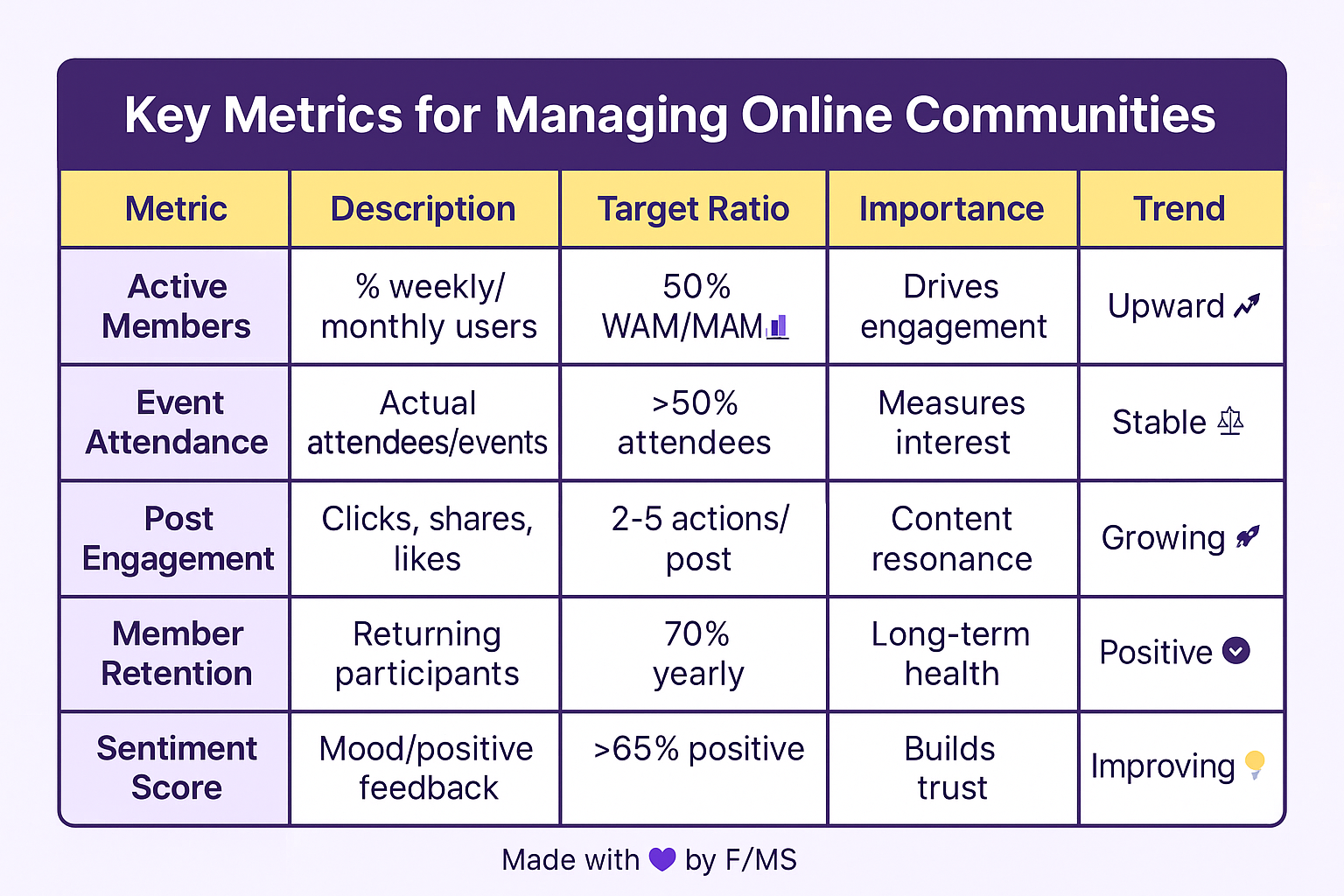
- Skipping Analytics: Without tracking KPIs like engagement rate, member growth, and sentiment, you risk missing valuable insights that can guide your strategy.
How to Get Started with Your Online Community
- Understand the Target Audience: Dive deep into their pain points, online behaviors, and interests to craft meaningful engagement.
- Create a Value Proposition: Why should people join your community? Decide whether your value lies in exclusive content, direct brand access, or something else.
- Launch with an MVP (Minimum Viable Product): Your MVP could be a Facebook Group or a basic forum. Iterate based on early feedback.
- Market, Market, Market: The most challenging part of any community management is marketing. Start by listing your initiative in relevant platforms, such as the Free Directory List on F/MS Marketing Directories, which boosts visibility and SEO.
- Collect Feedback & Expand: Use discussions, polls, and analytics tools to understand how you can expand features or engage members better.
Pro Tip: If you’re struggling to identify your audience’s needs or articulate your brand’s message, look into F/MS Marketing Services for expert assistance in guest blogging and funnel optimization.
Some Deep Insights into Future Trends in Community Management
- AI-Driven Moderation
Tools powered by AI can now detect and respond to spam or inappropriate conversations in real-time. This trend will only grow in 2027, reducing manual moderation workloads.
- Integrated Experiences
Communities are evolving to become part of the larger customer experience. For example, a customer might transition seamlessly from browsing an online store to engaging in a product support forum.
- Predictive Analytics for Engagement
AI is making it easier to predict which members may churn, allowing brands to create re-engagement campaigns before it’s too late.
- Sustainable Online Practices
With increasing focus on eco-conscious efforts, communities may embrace more green initiatives, from virtual events to promoting sustainability-focused discussions.
Conclusion
In 2027, the true value of online community management lies not just in brand visibility but in fostering authentic, ongoing connections with customers. By leveraging proven strategies, avoiding common pitfalls, and facilitating meaningful interactions through human-centric approaches, brands can unlock the immense potential these communities offer.
Optimize your efforts with actionable insights, structured feedback tools, and AI optimization from platforms such as F/MS Article Tools or the rich database of Marketing Directories. These tools give entrepreneurs the competitive edge to build thriving online communities that keep customers engaged for years to come.
Take your first step today with measurable, impactful strategies and watch your community transform into a vital engine for brand loyalty and business growth.
FAQ on Online Community Management in 2027
1. Why is online community management important for brands?
Online community management is vital for fostering customer loyalty, building trust, and enhancing the overall customer experience. Statistics show that brands with active communities enjoy a 53% higher customer retention rate.
2. How can AI assist in online community management?
AI tools streamline repetitive tasks, analyze user interactions, and help create personalized responses. By leveraging these tools, brands can balance efficiency with authenticity. Learn more about integrating AI in community management from tools like F/MS Marketing Services.
3. What are the main benefits of branded online communities?
Branded communities deliver enhanced customer retention, operational efficiency, and serve as a goldmine for consumer feedback. 86% of marketers agree that these communities streamline company operations.
4. What mistakes should brands avoid in managing online communities?
Brands often focus solely on profits, neglect feedback loops, or overly automate interactions, making them impersonal. Avoid these pitfalls to foster authentic connections and meaningful engagement.
5. Why are private or closed communities growing in popularity?
Closed communities provide exclusive, high-value spaces for loyal customers, leading to insights 10x faster than open channels. Platforms like Slack and invite-only Facebook Groups are becoming essential for deeper engagement. Discover more about creating exclusive customer spaces.
6. How can educational content improve community engagement?
Hosting webinars, writing how-to guides, and sharing high-value content strengthens your community while building authority in your niche. Tools like the F/MS AI Article Writer help you create optimized content efficiently.
7. Can I use AI to write SEO-optimized articles that help my brand grow?
Most business owners don't understand how SEO works, let alone how to use AI for writing blog articles. That's why for busy business owners there's a great free tool that doesn't require much knowledge. Write articles for free
8. What role does feedback collection play in community success?
Feedback is crucial for improving products, services, and engagement strategies. About 40% of businesses use online communities as their main feedback collection tool.
9. How can brands link community efforts to overall marketing goals?
Online communities should align with broader marketing objectives like lead generation, SEO efforts, or brand awareness campaigns. Tools like F/MS Backlink Services can boost visibility and lead conversions.
10. What trends will define online community management in 2027?
Predictive analytics for engagement, AI-driven moderation, and sustainable practices are some trends shaping future community management efforts. Stay ahead by integrating innovative tools into your strategy.
About the Author
Violetta Bonenkamp, also known as MeanCEO, is an experienced startup founder with an impressive educational background including an MBA and four other higher education degrees. She has over 20 years of work experience across multiple countries, including 5 years as a solopreneur and serial entrepreneur.

