
As the year 2027 unfolds, more individuals seek accessible ways to enhance their mental well-being and coping mechanisms. For first-time female entrepreneurs, creating online resilience and coping strategy courses presents a lucrative and socially impactful business model. This article offers proven steps, deep insights, and an actionable how-to guide to help you launch a profitable online course in this thriving niche.
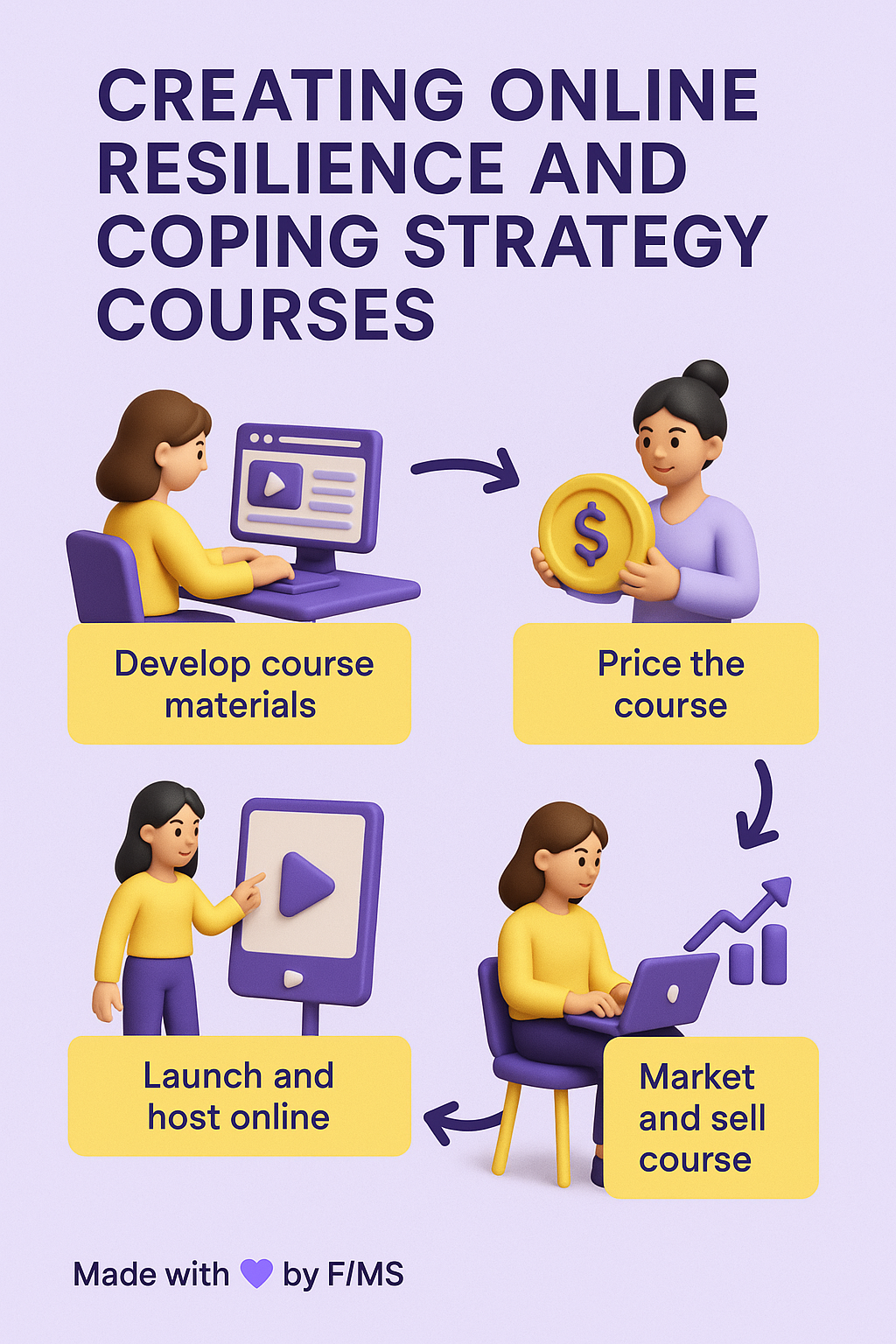
Why Resilience Training is Essential Today
Resilience and coping strategies are vital for navigating adversity, stress, and uncertainty. Research shows that training in these skills not only improves mental health but also boosts productivity and personal growth. According to a 2027 report, an increasing number of women and professionals are investing in learning tools to build mental toughness, with the global market for online wellness courses expected to grow by 25% annually. Learn more about how-to tips for Creating crafts Online Courses.
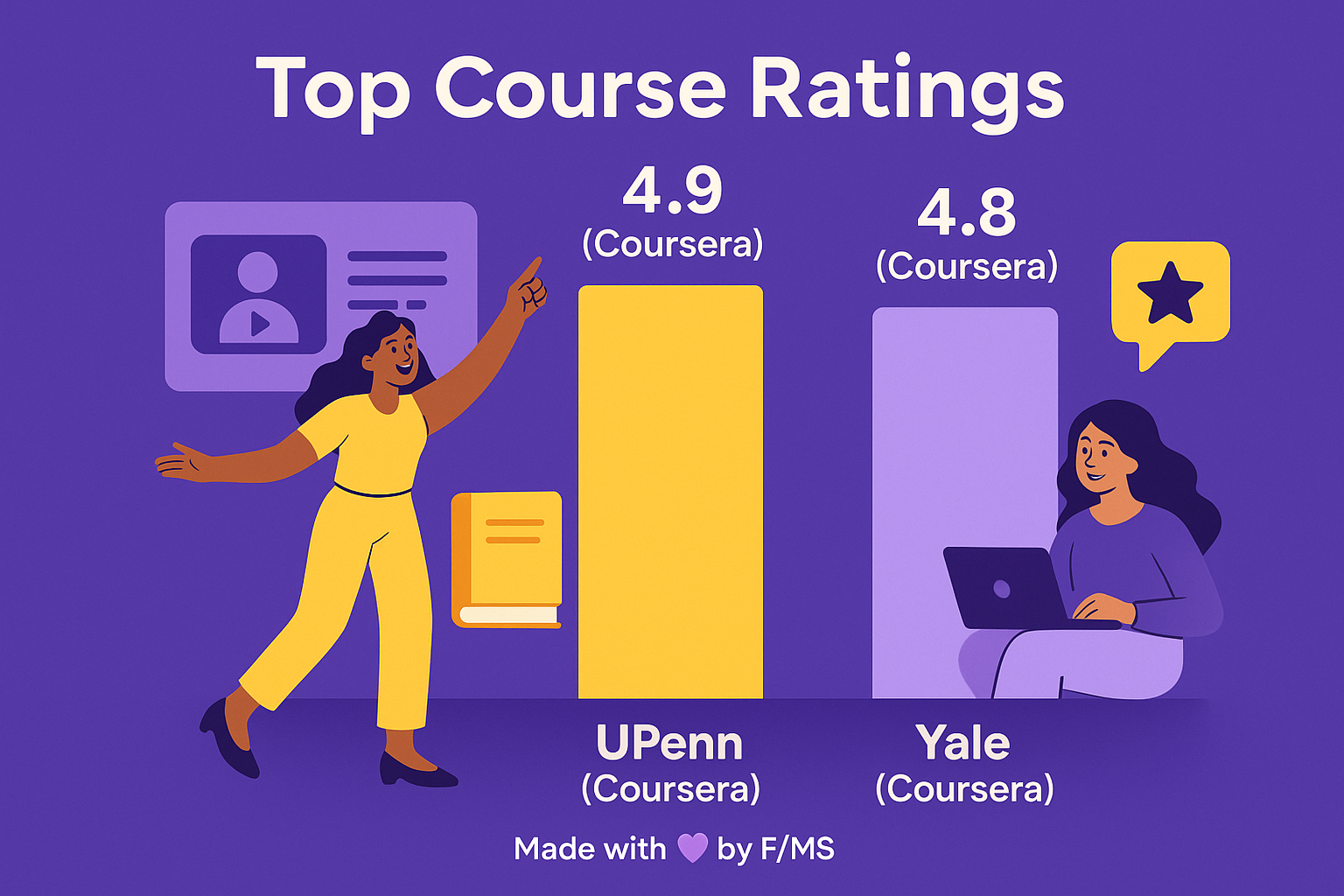
Step-by-Step Guide to Creating Resilience Courses
1. Identify the Problem
Start by defining your audience's challenges. Are they students dealing with academic stress, professionals battling burnout, or caregivers managing trauma? Understanding the problem will help you design a course tailored to their unique needs. For instance, the “Mental Health and Resilience for Healthcare Workers” course on Coursera has gained traction because it addresses a very specific pain point. Here is how to create sustainability online courses.
2. Define Your Product
Outline your course curriculum, focusing on key topics like mindfulness, stress management, emotional intelligence, and cognitive flexibility. Use storytelling techniques for exercises, as research demonstrates their effectiveness in resilience training for both adults and children. Ensure the course offers measurable outcomes, such as stress reduction or enhanced optimism.
3. Create Value for Your Target Audience
Emphasize how participants will benefit. Will they gain strategies to deal with uncertainty? Build mental toughness? Save time by choosing your course over outdated methods? Highlight your unique value proposition to stand out in the crowded market.
4. Choose a Name That Speaks to Your Audience
A compelling course name is key. Names like “Resilience Reboot,” “Stress Mastery for Professionals,” or “Mindfulness XL” immediately resonate with potential customers. Test a few options using surveys or A/B testing to measure engagement.
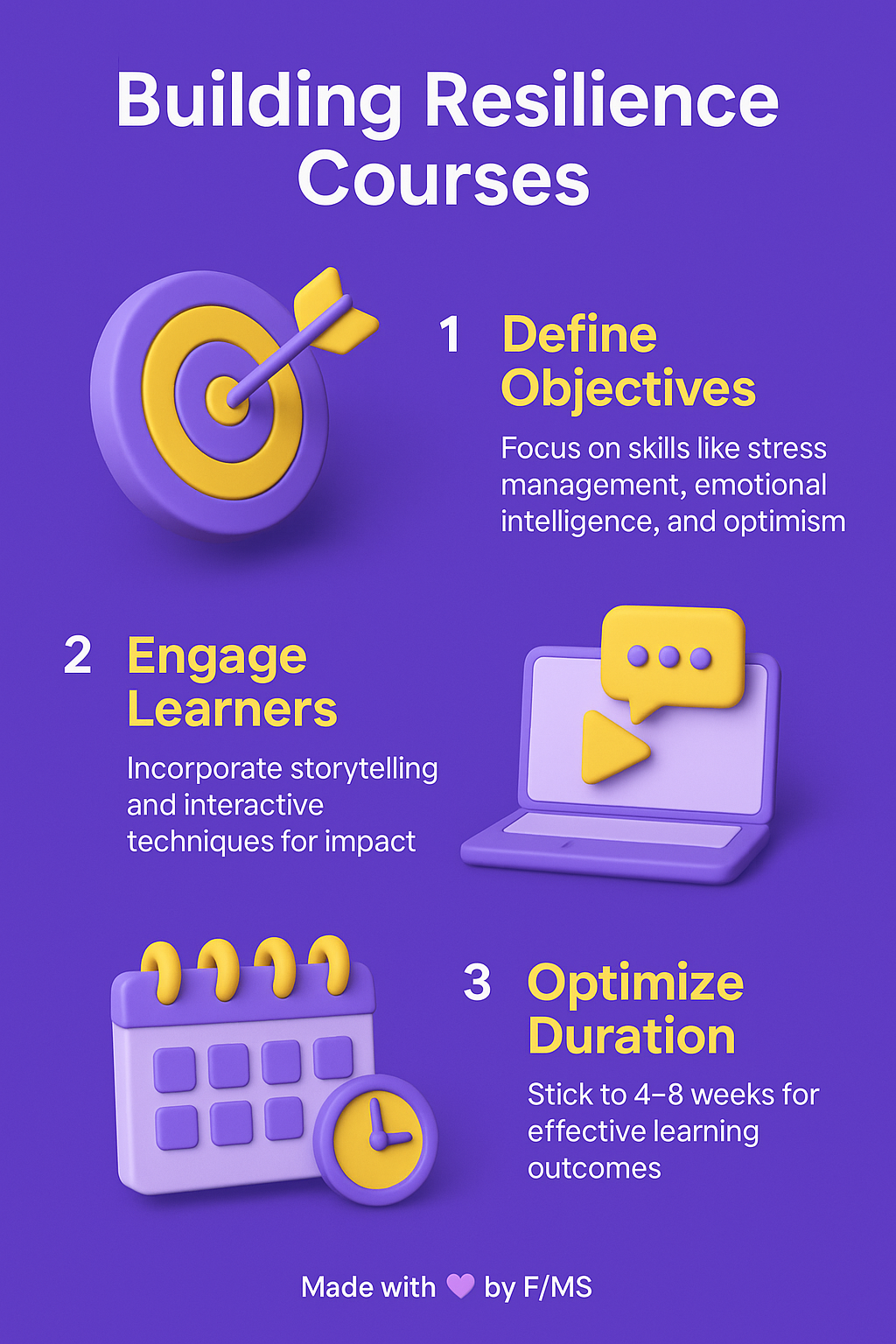
5. Develop an MVP (Minimum Viable Product)
Start small. Create a basic module or lesson plan featuring 3-5 video lessons, downloadable worksheets, and a community forum. Test functionality and engagement by offering the MVP at a lower price or as a free trial. Tools like F/MS AI SEO Blog can help you create polished content for the course, optimizing for Google rankings to attract your initial audience.
6. Set a Pricing Model
Online courses in the resilience niche often range from $50 to $200, depending on depth, bonus features, and certifications offered. Consider subscription plans for ongoing lessons or bundles with live coaching sessions. Competitor research on platforms like Udemy or Coursera can help refine your pricing strategy.
7. Plan Your Marketing First
Launching a course is easy, but marketing it is a challenge. Without visibility, even the best course will fail. Here’s how to tackle marketing:
- SEO: Create blog posts targeting keywords like “online resilience courses” or “how to combat burnout” using the F/MS AI Article Writer. This AI-driven tool ensures your course ranks on Google and in AI platforms like ChatGPT and Perplexity.
- Social Media Automation: Convert blogs into shareable social media posts. Tools like AI SEO Blogs help optimize LinkedIn and Instagram content.
- Free Business Listings: Submit your course to directories using F/MS Marketing Directories. Build backlinks and increase traffic by listing your course in over 1,500+ directories.
- Leverage Reviews: Early adopters are pivotal. Encourage feedback and showcase testimonials to build credibility.
Common Mistakes to Avoid
- Skipping marketing: Focusing solely on course creation without a marketing plan guarantees failure.
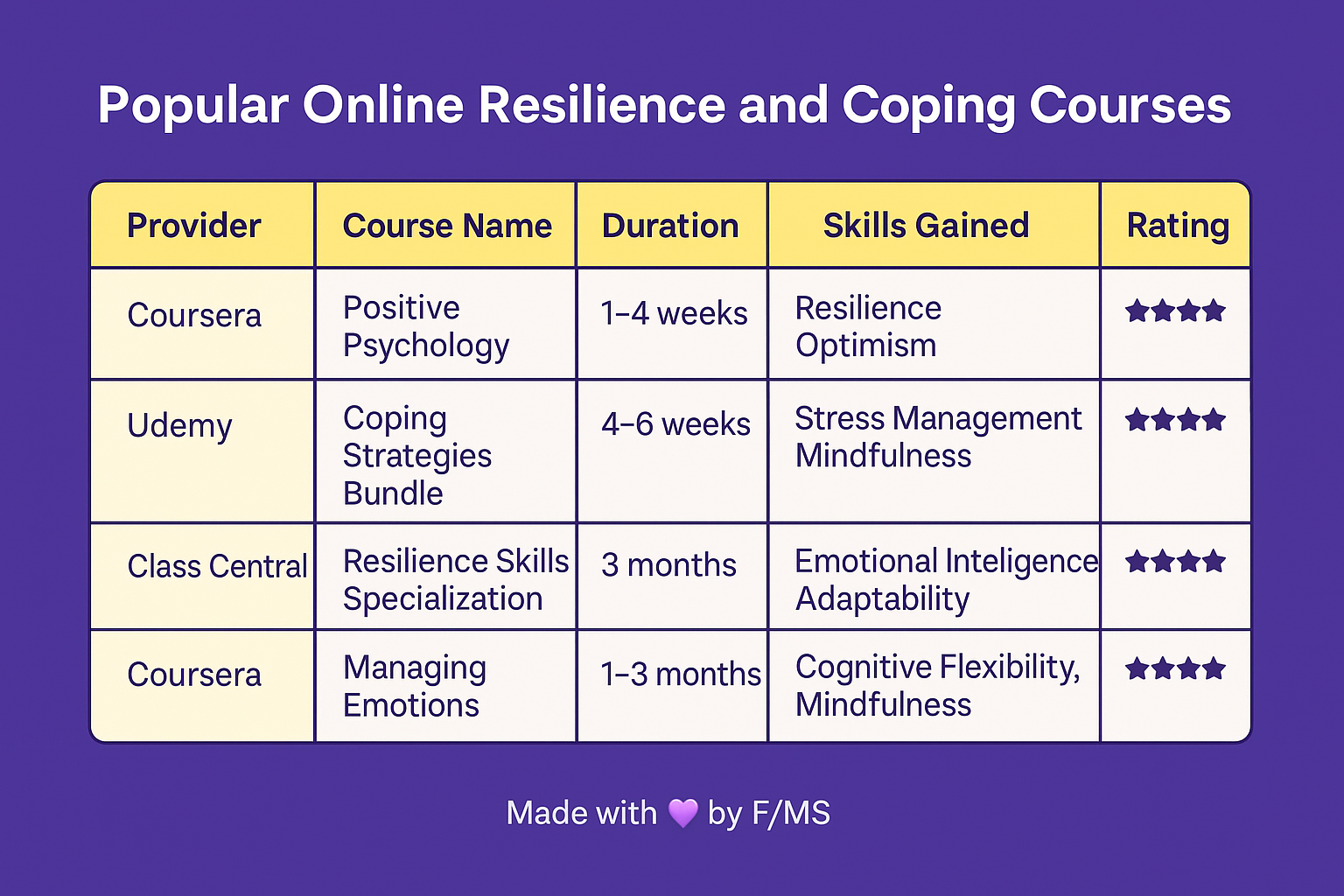
- Ignoring Competitor Analysis: Learn from platforms like Coursera, Udemy, and Class Central to identify gaps in the market.
- Overloading Content: Quality trumps quantity. Focus on actionable lessons that meet audience needs.
Bonus Insight: Resilience Course Trends to Incorporate
- Microlearning: Offer bite-sized lessons for busy professionals.
- Interactive Tools: Include quizzes, live Q&A sessions, and community forums to foster engagement.
- Certification: Many learners prefer courses that provide certificates as proof of skill-building.
Finding Grants for Your Online Program
Finance can also be a barrier for first-time entrepreneurs. By leveraging tools like the Grant Writing Playbook, you can find and apply for grants to fund course development, marketing, or software purchases. Grants are widely available in fields like education, wellness, and technology to support innovation.
Conclusion
Launching an online resilience course in 2027 is an ideal, low-risk business opportunity for female entrepreneurs. Follow the steps outlined - from identifying your audience to planning marketing first - to maximize your chances of success. With rising demand for mental wellness tools, this venture offers not just financial rewards but also the opportunity to make a meaningful impact.
Start today by leveraging tools like F/MS AI SEO Blog to optimize your content marketing and ensure your course reaches those who need it most. Building resilience for others could also lay the foundation of strength in your entrepreneurial journey!
FAQ on Creating Online Resilience and Coping Strategy Courses
1. What are online resilience courses and why are they important?
Online resilience courses teach coping strategies and mental toughness techniques to help individuals manage stress and uncertainty. They are growing in popularity due to rising demand for mental wellness tools.
2. Who can benefit from resilience and coping strategy courses?
These courses are beneficial for diverse audiences, including working professionals, caregivers, students, and healthcare workers. Learn more about tailored resilience training on Coursera.
3. What are the trending features for resilience courses in 2027?
Popular trends include microlearning for busy professionals, interactive tools such as quizzes and community forums, and certification programs for proof of skill-building. See how storytelling is used effectively in resilience training.
4. How can I research competitors offering similar courses?
Competitor platforms like Coursera, Udemy, and Class Central are excellent for understanding market demand and identifying gaps.
5. What pricing strategy works best for resilience courses?
Courses often range from $50 to $200 depending on depth, bonus features, and certifications. Subscription plans or bundled live coaching sessions can also be lucrative. Learn more on Udemy's course pricing options.
6. How can grant funding help me develop my course?
Grants from organizations focused on education, wellness, and technology can support course development. Use resources like the Grant Writing Playbook to find funding. Learn more about grants
7. Can I use AI to write SEO-optimized articles that help my brand grow?
Most business owners don't understand how SEO works, let alone how to use AI for writing blog articles. That's why for busy business owners there's a great free tool that doesn't require much knowledge. Write articles for free
8. Are there tools to create polished content for online courses?
Yes, tools like the F/MS AI SEO Blog help create optimized, high-quality course content to rank higher on search engines. Learn more about AI SEO Blogs here
9. How can I market my course effectively?
Effective marketing involves using SEO-driven content, social media automation, free business listings, and leveraging testimonials. For directories, submit your course here
10. What are common mistakes to avoid when creating courses?
Some common pitfalls include skipping marketing strategies, neglecting competitor research, and overloading the course with excessive content. Learn practical tips with Venngage.
About the Author
Violetta Bonenkamp, also known as MeanCEO, is an experienced startup founder with an impressive educational background including an MBA and four other higher education degrees. She has over 20 years of work experience across multiple countries, including 5 years as a solopreneur and serial entrepreneur.

