

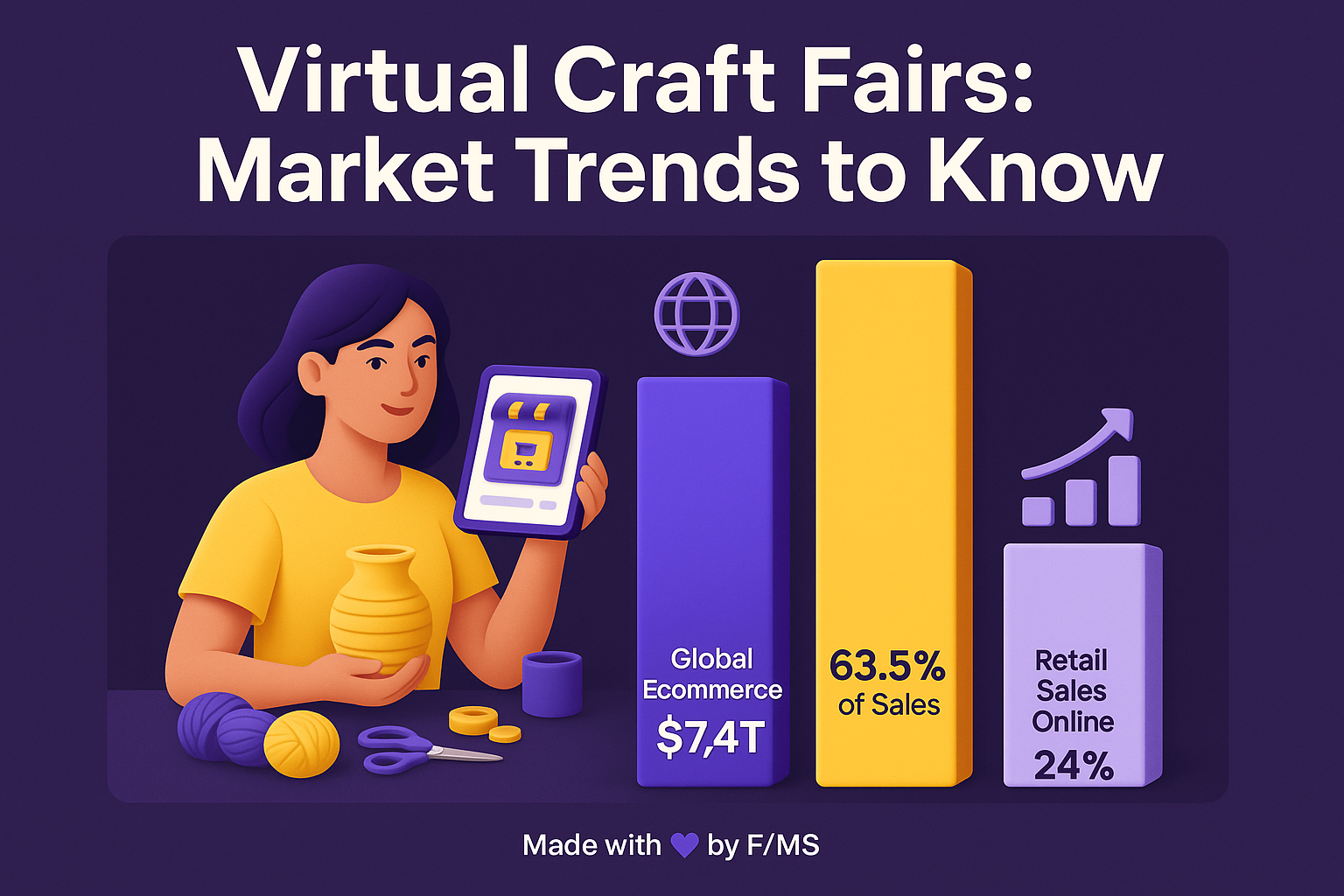
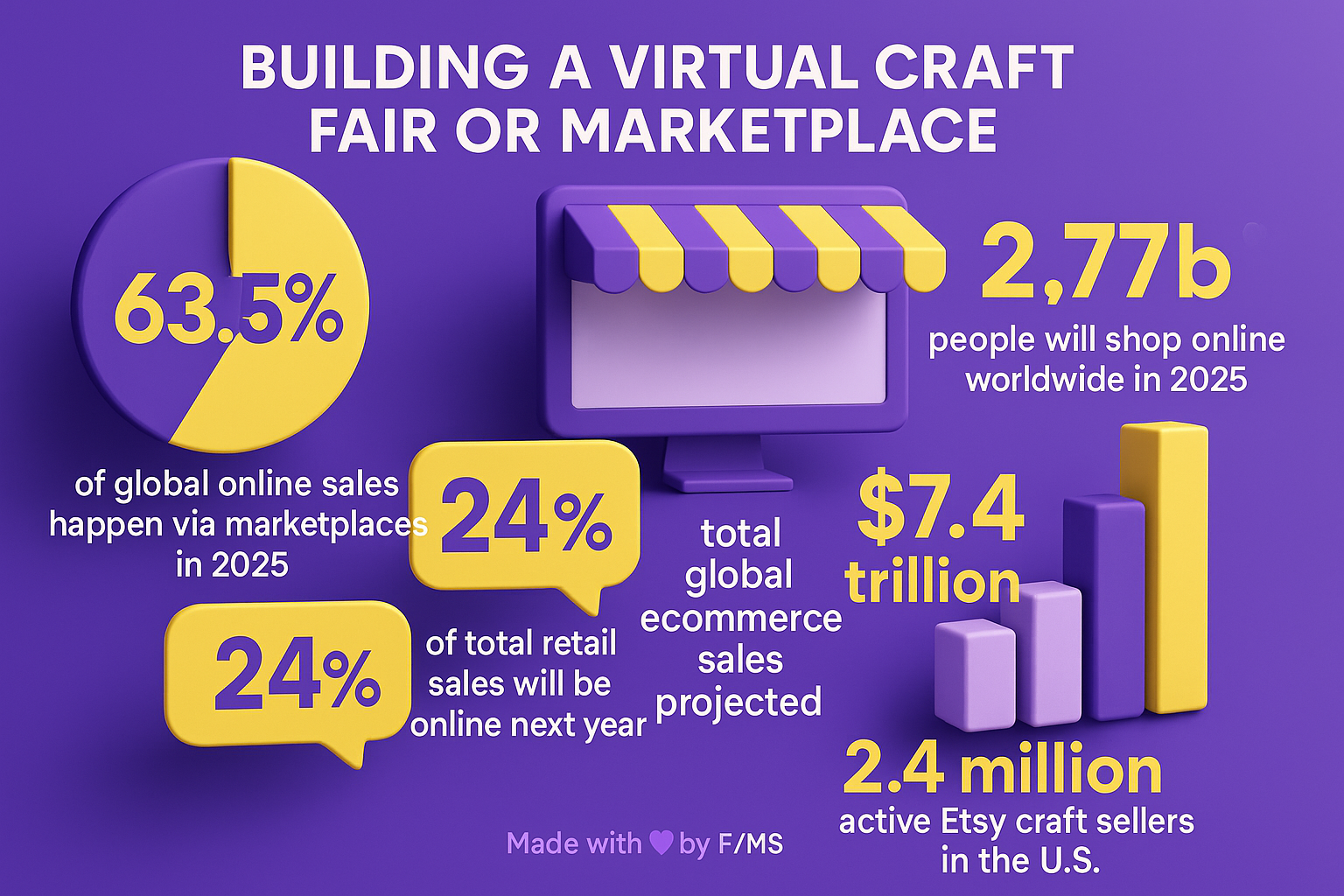
With the surge of ecommerce and consumer-driven platforms, 2027 is the ideal time to create a virtual craft fair or marketplace. Global ecommerce sales now stand at $7.4 trillion, and marketplaces account for 63.5% of these sales - reflecting their dominant role in today's online economy. Platforms like Etsy and other craft-focused sites prove that niche marketplaces thrive when they prioritize community, curation, and user experience. If you’re dreaming of launching your own virtual craft marketplace, this article outlines the top 7 proven steps to help you succeed, along with key mistakes to avoid and deep insights to guide your strategy.
Why Build a Virtual Craft Marketplace?
In 2027, there are 2.77 billion online shoppers worldwide, with 52% of them looking for unique products internationally. Craft-focused marketplaces cater to this growing consumer demand for one-of-a-kind, handmade, and sustainable items. Niche platforms are the way forward, as they provide a curated experience and cater to a specific audience. For entrepreneurs, virtual craft fairs require relatively low startup costs, have global scalability, and offer an opportunity to create a unique, community-driven platform. Learn more about AI-enhanced virtual craft projects.
Step-By-Step Guide to Building a Virtual Craft Marketplace
Step 1: Define Your Niche
While general marketplaces like Amazon compete at scale, niche platforms thrive by addressing specific needs. Virtual craft fairs succeed by focusing on a targeted audience. Define your niche by asking:
- What problem am I solving? (E.g. limited access to handmade goods)
- Who is my target audience? (E.g. environmentally conscious shoppers or DIY enthusiasts)
- What is my value proposition? (E.g. unique curation, sustainability, supporting creators)
Step 2: Choose the Right Platform
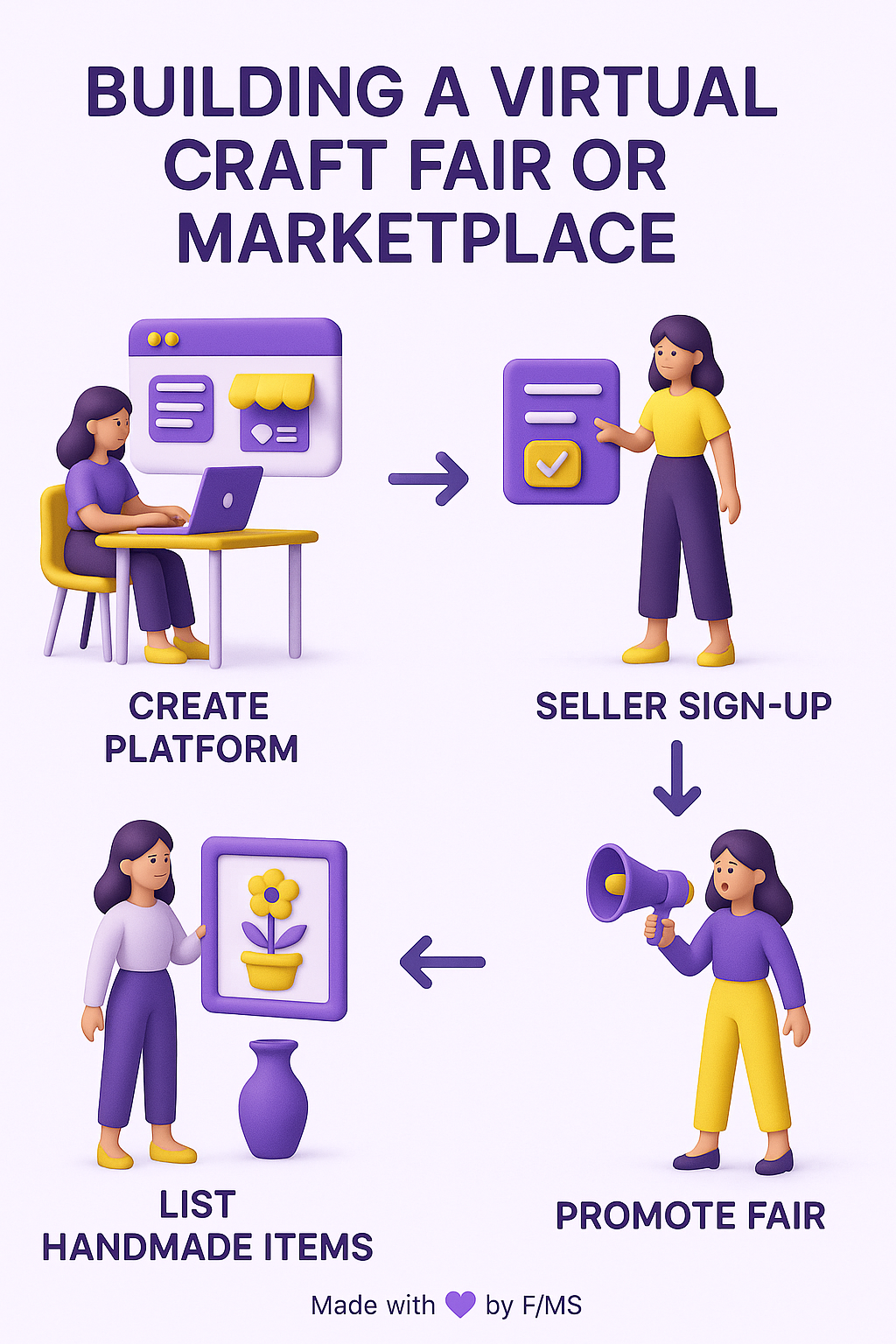
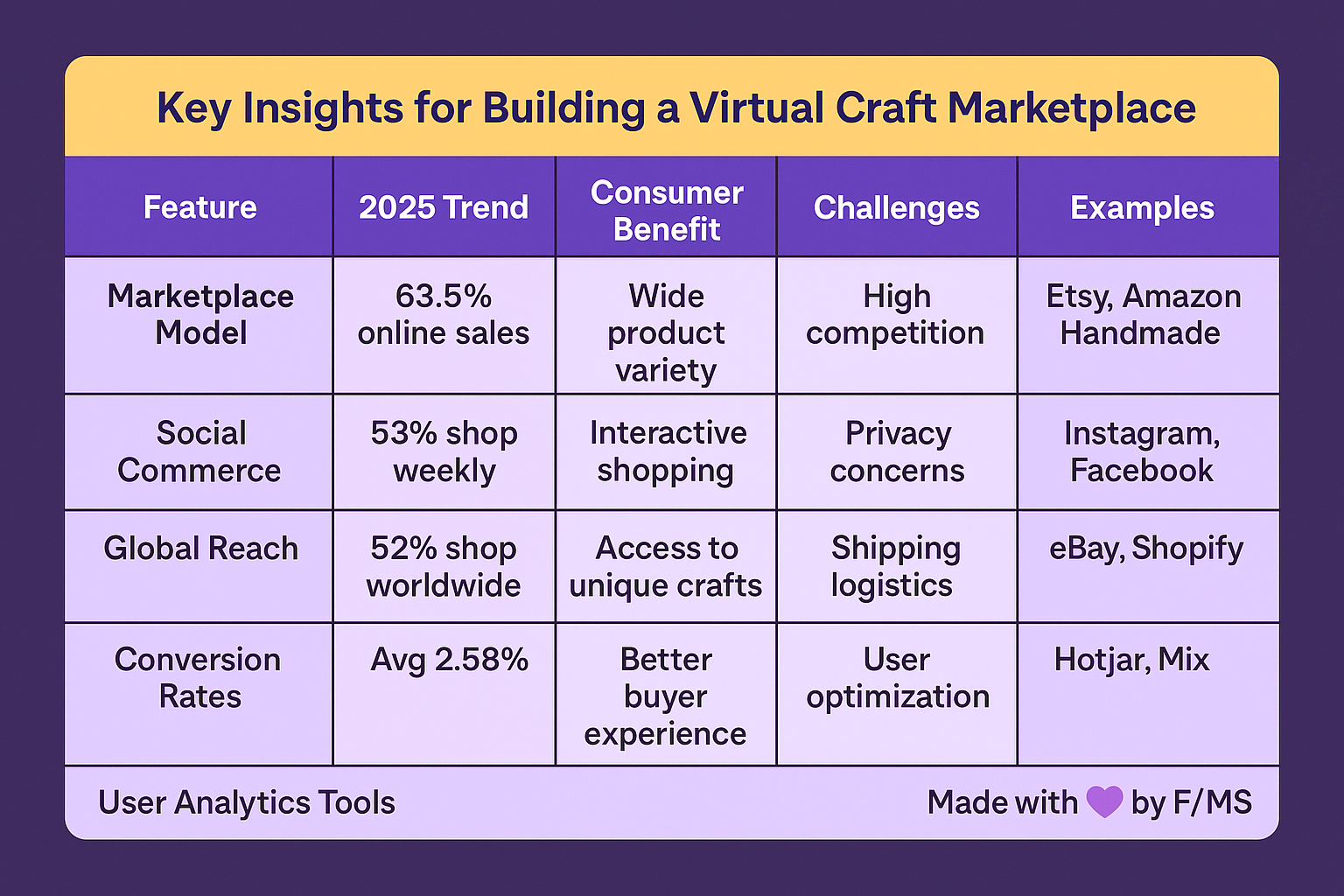
The technical foundation of your virtual craft fair is critical. Opt for platforms that enable multi-vendor functionality, secure payment processing, and mobile compatibility. Platforms like Shopify (with apps like Multivendor Marketplace) or Magento provide pre-built solutions tailored for marketplaces, saving months of website development. Need help analyzing which platform suits your business best? Use the F/MS Website SEO Analysis tool to assess functionality and usability gaps. Here is how to start your own craft supply subscription box.
Step 3: Curation is Key
Crafters' marketplaces aren’t about volume - they’re about quality. Think Etsy, where curation builds trust. Establish standards for sellers regarding craftsmanship, product photography, and ethics. Use seller application forms to ensure only high-quality vendors join your platform. You might even host virtual onboarding workshops for artisans to align with platform standards.
Step 4: Social-first Marketing Strategy
Marketing a virtual craft fair is often harder than building it. Start by leveraging social media channels to create buzz and target your niche. With 53% of Americans shopping via social media weekly, integrating platforms like Instagram and TikTok into your marketing plan is essential.
- Host live-streamed events where artisans showcase their work.
- Enable click-to-shop features for instant customer conversion.
- Use F/MS Marketing Services to secure high-quality backlinks and features in listicle articles, boosting traffic and SEO visibility.
Pro tip: Use F/MS AI Article Writer to automate engaging blog content that ranks on Google and even AI-based search platforms like ChatGPT.
Step 5: Focus on UX and Conversion Optimization
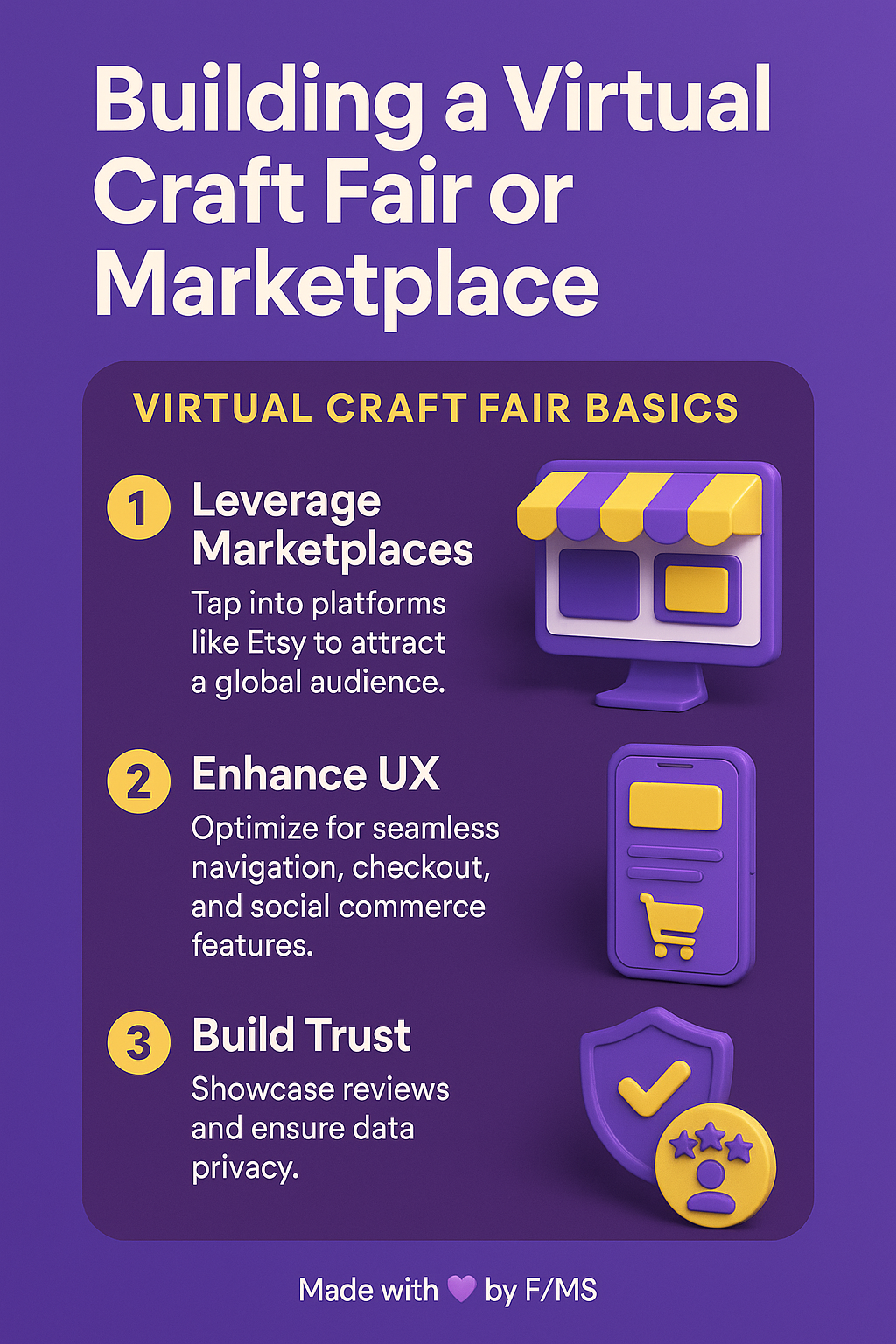
Did you know the average ecommerce conversion rate is only 2.58%? High-performing stores push that to 3-5%, mainly by optimizing user experience. Ensure your marketplace is intuitive, visually appealing, and secure. Key areas to focus on include:
Analyze performance using tools like Hotjar or Google Analytics. Track heatmaps to see where users drop off and A/B test changes for improvement.
- Clear navigation and smart product categories.
- A smooth checkout process with minimal steps.
- Mobile-first design to cater to modern shoppers.
Analyze performance using tools like Hotjar or Google Analytics. Track heatmaps to see where users drop off and A/B test changes for improvement.
Step 6: Build Trust Across the Platform
Shoppers prioritize secure platforms with credible artisan profiles. Incorporate the following trust-building features:
According to a survey, 40% of consumers refuse to buy from brands with unclear data policies. Specify privacy and data-use terms transparently.
- Verified buyer reviews.
- Artisans' background stories and workshop details.
- An easy and clear return policy.
According to a survey, 40% of consumers refuse to buy from brands with unclear data policies. Specify privacy and data-use terms transparently.
Step 7: Monetize Effectively
Marketplaces can earn revenue through several streams, making it a sustainable business model. Common monetization methods include:
- Subscription Fees: Charge sellers to join or list products.
- Commissions: Take a percentage of every successful sale.
- Sponsored Listings: Help sellers gain visibility by appearing at the top of product searches.
- Event Revenue: Host paid, exclusive virtual craft fairs for seasonal markets like Christmas or Mother’s Day.
Common Mistakes to Avoid
Launching a virtual craft marketplace is exciting, but these mistakes can derail your success:
- Overloading on Features: Start small with a Minimum Viable Product (MVP). Avoid bloated websites that delay launch.
- Ignoring Seller Onboarding: Allowing low-quality sellers can harm the brand’s reputation.
- Neglecting Marketing Early: Before spending months perfecting the platform, validate interest via targeted marketing campaigns. Use tools like F/MS Marketing Directories to boost your SEO early on with free directory listings.
- Lacking Key Analytics: Without tracking user behavior, you’ll miss opportunities for improvement.
The Future of Virtual Craft Marketplaces
Virtual craft marketplaces reflect the future of ecommerce by leveraging niche audiences, personalization, and community appeal. As marketplaces grow faster than traditional ecommerce, there’s a massive opportunity to capture global buyers looking for artisanal and unique goods. Start small, refine your value proposition, and focus on providing value to both buyers and sellers.
With the right tools and strategic planning, your virtual craft marketplace could be the next booming niche ecommerce platform in 2027. Ready to take the first step? Build your SEO authority with content automation using AI SEO Blog or claim your spot in our featured marketing directories to drive early traffic. Remember, success starts with building the right foundation and marketing smartly. Let’s make your business vision a reality!
FAQ: Building a Virtual Craft Marketplace in 2027
1. Why is 2027 the ideal time to start a virtual craft marketplace?
Ecommerce is booming, with global ecommerce sales projected to reach $7.4 trillion in 2027. Marketplaces now dominate online shopping, accounting for 63.5% of global ecommerce sales. Niche marketplaces like craft-focused platforms thrive by catering to targeted audiences.
2. What are the key trends influencing craft marketplace success?
Trends like social commerce, the demand for sustainability, and the rise in global online buyers (2.77 billion people) make 2027 a prime time for craft marketplaces. 52% of online shoppers are looking for unique, international goods.
3. How can I define the niche for my craft marketplace?
Start by identifying a clear value proposition. Ask yourself: What problem am I solving? Who is my target audience? For example, focus on environmentally conscious buyers or curated handmade products that emphasize sustainable practices.
4. What are the best technical platforms to use when building my craft marketplace?
Platforms like Shopify and Magento are excellent choices. They offer pre-built marketplace functionality, secure payment systems, and robust support for multi-vendor capabilities.
5. What role does curation play in a craft marketplace?
Curation is key to building trust with buyers. Select vendors carefully, establish quality standards, and emphasize unique products. Virtual onboarding workshops for sellers can also help align artisans with the platform's values.
6. Why is social-first marketing crucial for virtual craft marketplaces?
53% of Americans shop via social media weekly, so integrating Instagram, TikTok, and other platforms is essential. Hosting live-streamed artisan showcases and using tools like click-to-shop features can drive conversions and create a buzz.
7. Can I use AI to write SEO-optimized articles that help my brand grow?
Most business owners don't understand how SEO works, let alone how to use AI for writing blog articles. That's why for busy business owners there's a great free tool that doesn't require much knowledge. Write articles for free
8. How can I optimize the user experience (UX) of my craft marketplace?
Focus on clear navigation, a seamless checkout process, and mobile-first design. Use analytics tools like Hotjar or Google Analytics to track user behavior and optimize your platform for higher conversions.
9. How do I monetize my virtual craft marketplace?
Common revenue streams include subscription fees for sellers, sales commissions, sponsored listings, and exclusive paid events like virtual seasonal fairs. Each option provides scalability and flexibility for business growth.
10. What common mistakes should I avoid when starting a craft marketplace?
Avoid overloading with unnecessary features, neglecting seller onboarding, and skipping early marketing efforts. Being data-driven is crucial - implement analytics tools from day one to track performance and target improvements.
About the Author
Violetta Bonenkamp, also known as MeanCEO, is an experienced startup founder with an impressive educational background including an MBA and four other higher education degrees. She has over 20 years of work experience across multiple countries, including 5 years as a solopreneur and serial entrepreneur.

