
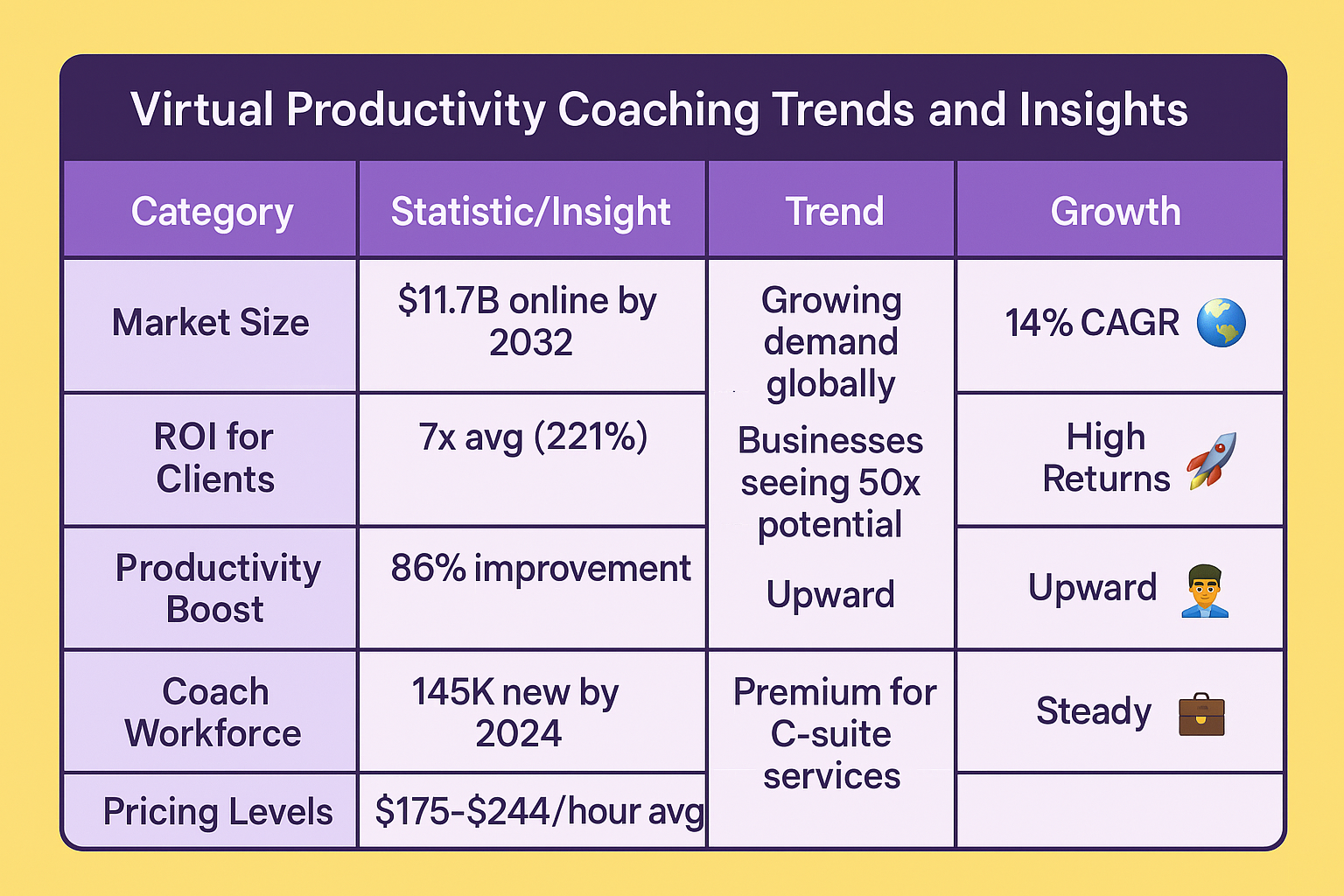
Virtual productivity coaching has rapidly evolved, especially with the increase in remote work and AI integration in our workplaces. In 2027, this burgeoning industry offers significant opportunities for those who want to help individuals and teams maximize their output. With the global online coaching market projected to hit $11.7 billion by 2032, female entrepreneurs have an exciting chance to carve a lucrative niche. In this guide, we’ll dive into the vital factors and strategies for launching a business in the booming virtual productivity coaching market.
Why Virtual Productivity Coaching Is Worth Exploring
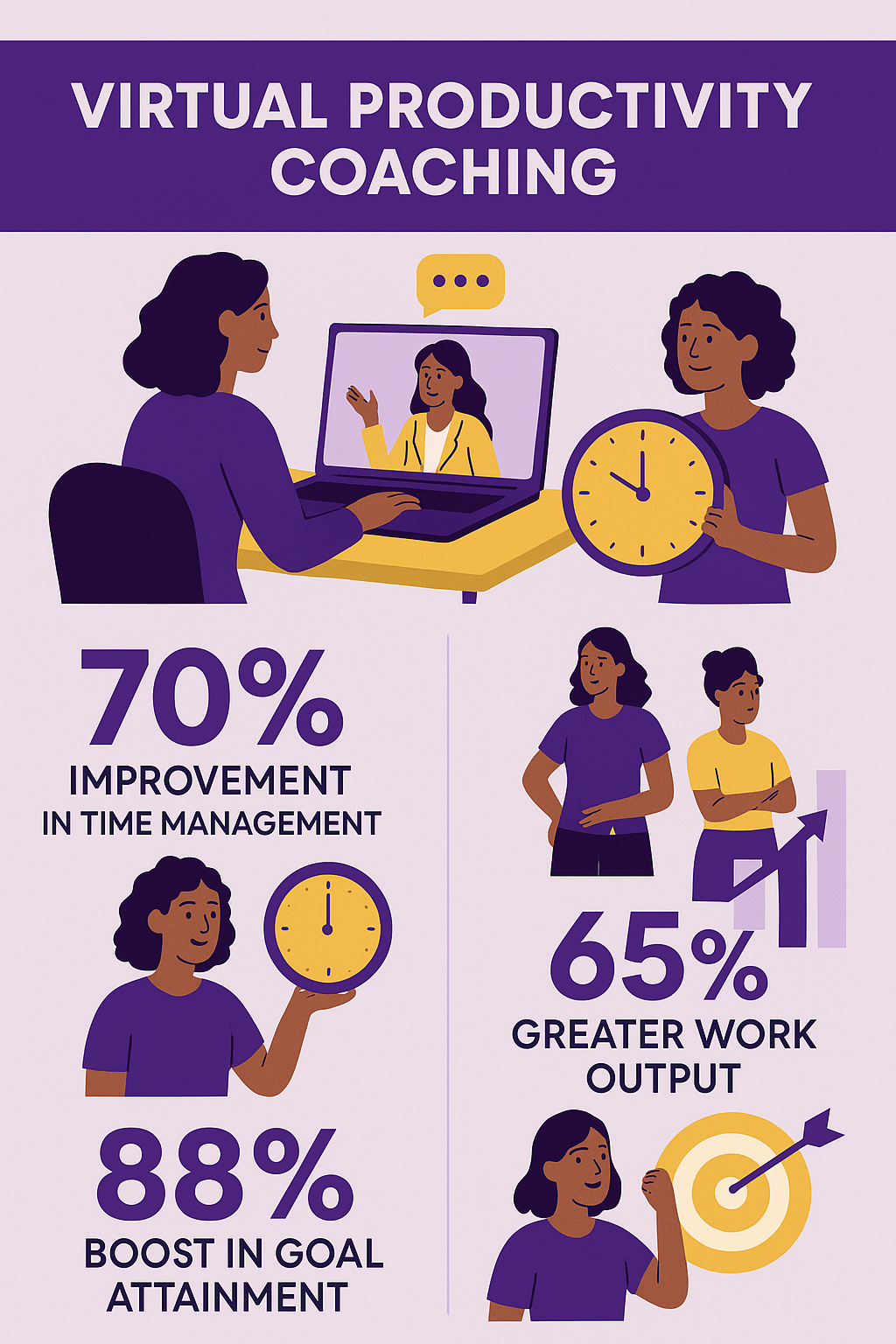
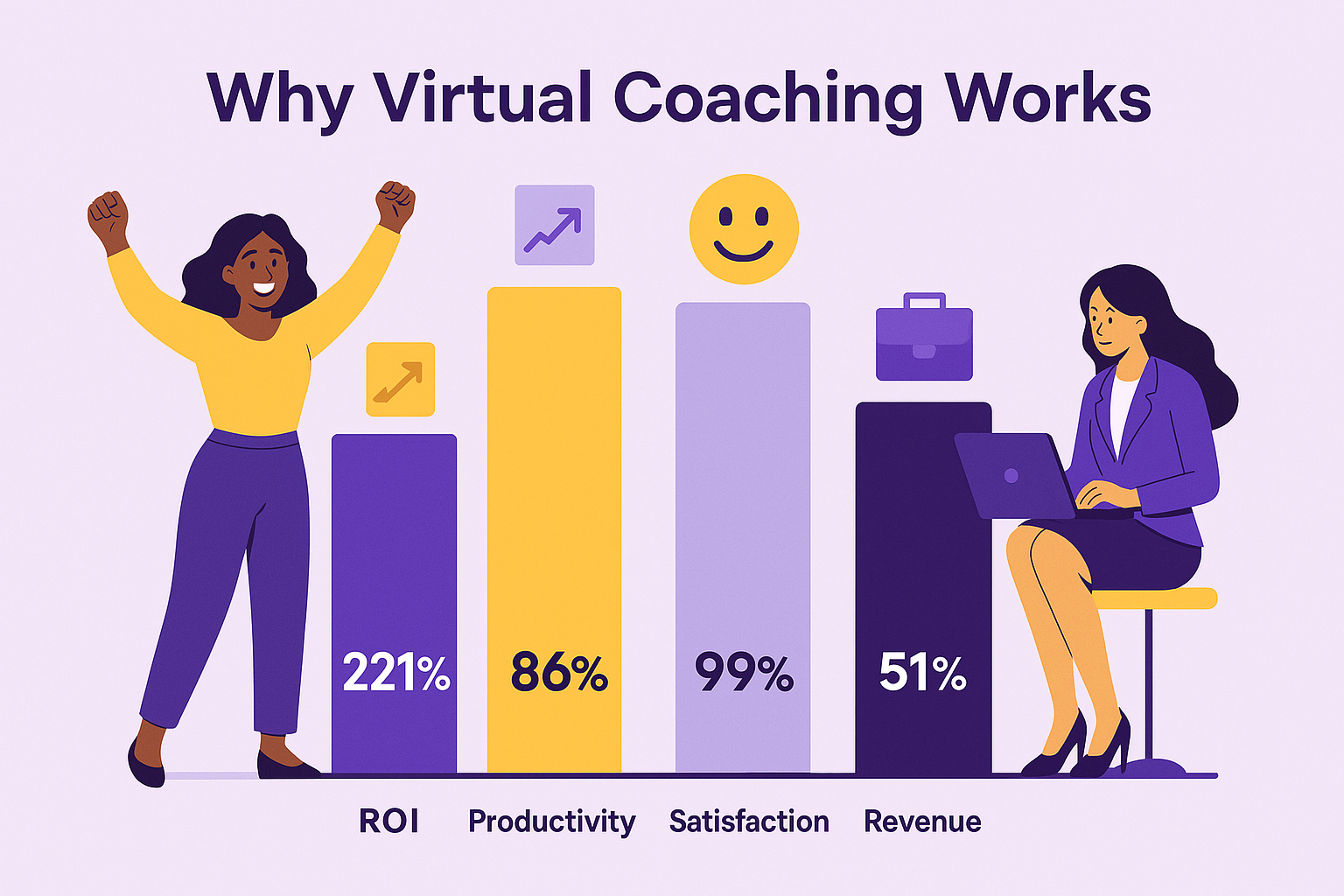
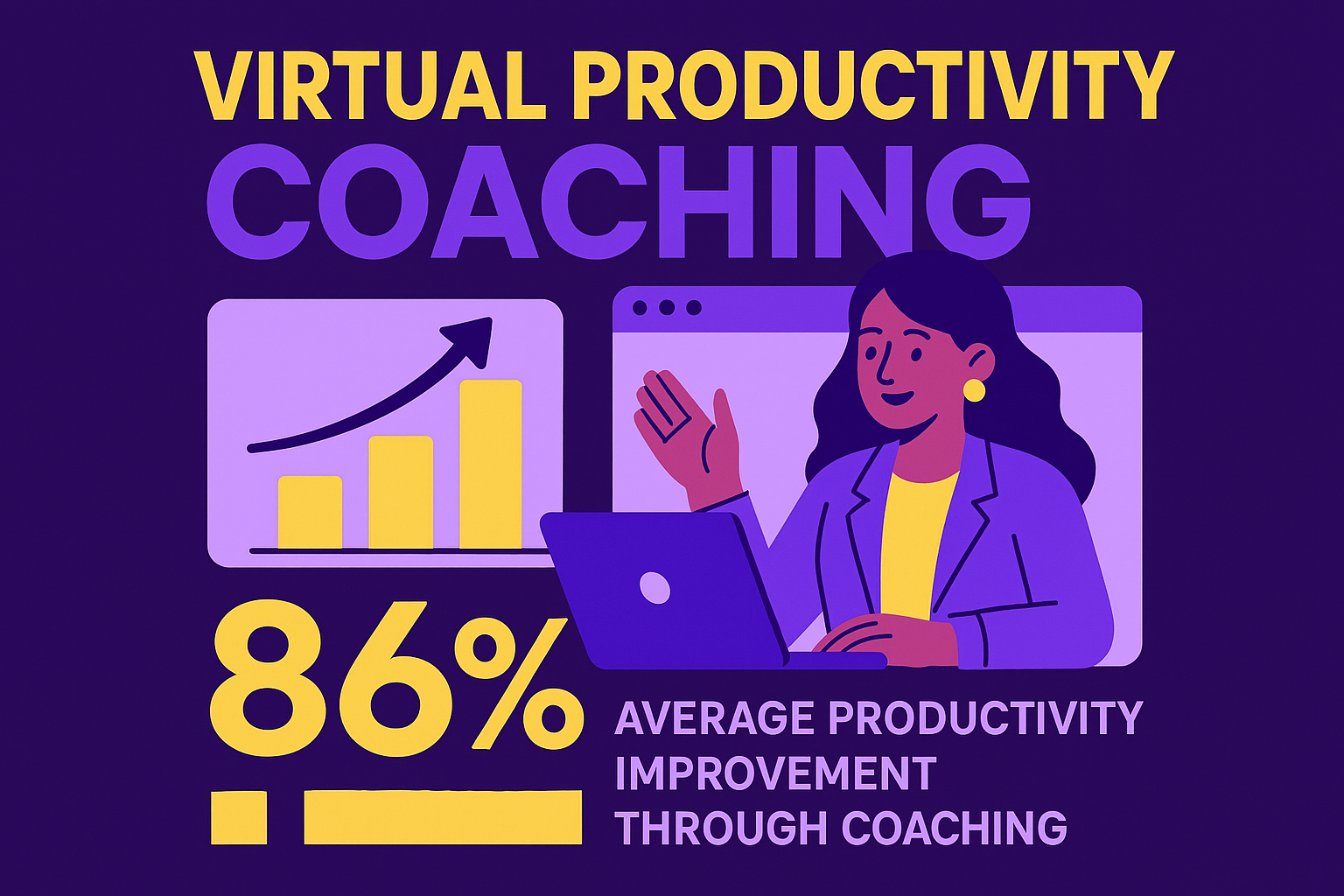
Productivity is a universal challenge, whether it’s for remote teams or leaders. Virtual productivity coaching addresses key bottlenecks like time management, digital burnout, and adapting to AI tools. An impressive 86% productivity improvement rate among clients highlights its effectiveness. Here’s why this market stands out for female entrepreneurs: Here is how to optimize AI Virtual Home Staging.
- Accessible Starting Point: Requires minimal technical skills and can be run from home.
- Scalable Business Model: Blend human coaching with AI tools for different price tiers.
- Massive Demand: With 1.5 million monthly searches for coaching services, interest is growing fast.
7 Secrets to Finding Your Niche and Optimizing Success
1. Identify a Problem You’re Passionate About Solving
The first step is pinpointing productivity challenges you want to tackle. Ask yourself:
- Are you interested in helping overworked professionals balance their tasks?
- Do AI tools fascinate you, and can you coach others to integrate them effectively?
Tie your expertise to one area. For example, niche down into "AI Adaptation Coaching" or "Remote Team Efficiency."
2. Define Your Target Audience Clearly
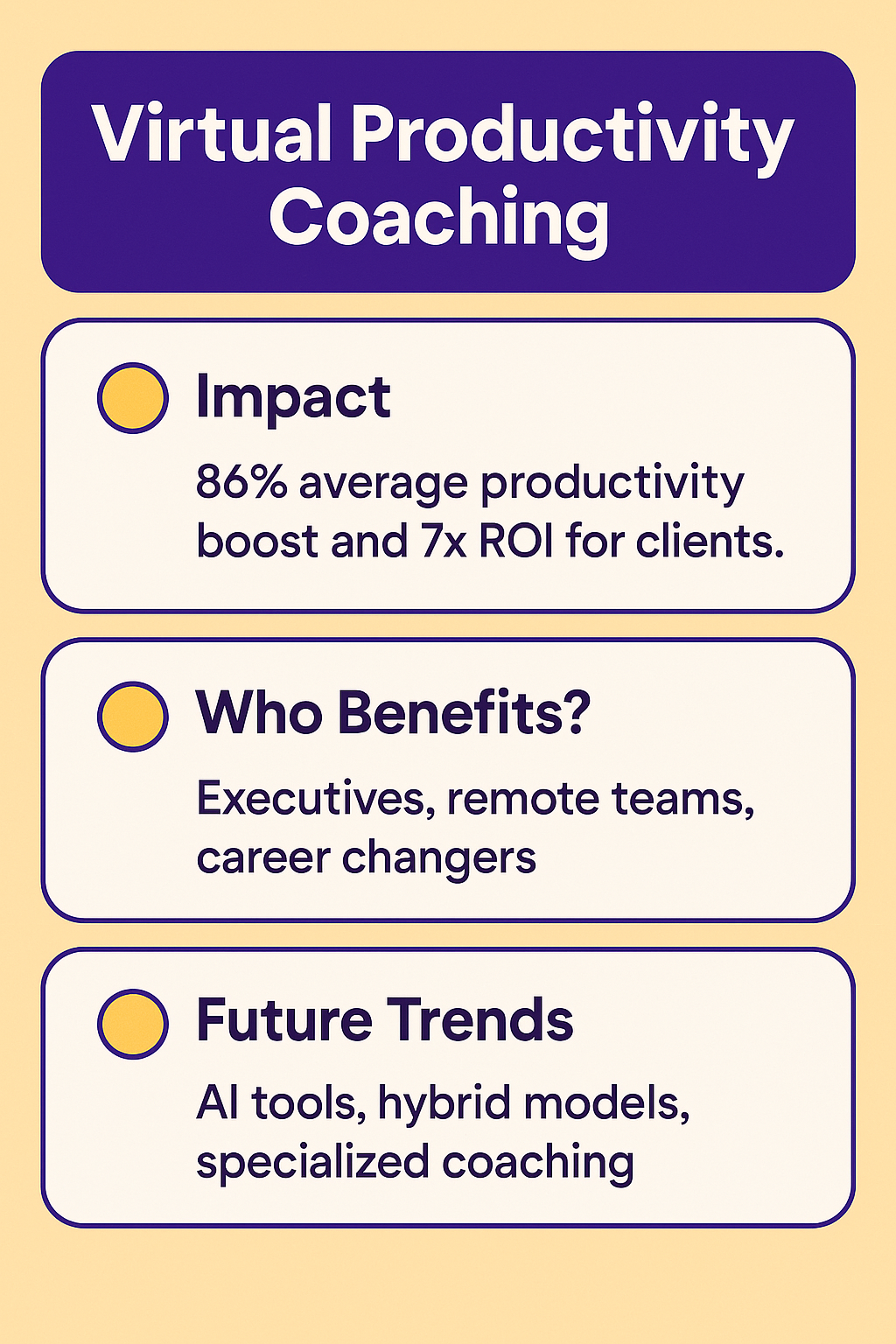
Successful businesses start with a specific audience. Virtual productivity coaching caters to executives, remote managers, or career changers, but be even more specific. For example:
- Career changers navigating digital tools after a job shift.
- Mid-level managers struggling to balance remote team supervision.
Persona-building is key. Study pain points using platforms like LinkedIn or Reddit threads, and adjust your messaging.
3. Craft a Unique Value Proposition (UVP)
To stand out in a crowded market, you need a value proposition that’s memorable. Use these prompts to differentiate yours:
- What results can clients expect? (E.g., “Achieve 26% time savings using AI task managers.”)
- How will you measure their ROI? (Businesses see a 221% average ROI from coaching.)
4. Build a Lean Minimum Viable Product (MVP)
Before investing heavily, test your idea with an MVP. Examples include:
- Offering a 30-minute free productivity audit to potential clients.
- Running a small-group virtual workshop on key workflow tips.
These pilots can give you invaluable feedback on what clients need, which also helps refine your service menu.
5. Develop a Pricing Strategy That Scales
Productivity coaching pricing often ranges from $175/hour to premium rates at $500/hour. Tiered pricing can widen your reach:
- AI-supported coaching: $50-$100/hour for time-tested templates and basic guidance.
- One-on-one sessions: $250/hour for custom problem-solving.
- Executive coaching plans: $500+ for long-term transformations.
Leverage outcome-based pricing to align with clients' results and earn higher revenue.
6. Market First, Build Later
Many founders mistakenly spend too much time perfecting their offering before testing the market. Instead, prioritize marketing from Day 1. Use tools like F/MS AI SEO Blog to boost your visibility online.
- Optimize a LinkedIn strategy using AI-generated posts.
- Create long-tail SEO content to capture leads through Google.
- Automate your email funnel and embed clear calls-to-action (CTAs).
Effective marketing validates demand for your service while building brand authority.
7. Use the Right Tools and Collaborations
Maximize efficiency and client results with the right tech stack. Here are must-haves:
- Coaching Platforms: Tools like BetterUp or Coach.me for client management.
- AI Analytics: Track client progress using AI-powered dashboards.
- SEO Boosters: Secure backlinks through F/MS Marketing Directories to improve online visibility.
Common Mistakes to Avoid
- Lack of Clarity in Niche: Staying too general dilutes your message and value proposition.
- Skipping Market Validation: Test demand before creating expensive programs.
- Ignoring Automation: Manual processes take up time that could be spent on coaching delivery.
- Failing to Market: Without consistent promotion, even the best program will stagnate. Consider tools like F/MS AI Article Writer for ranking high across search engines and AI platforms.
How to Get Your First Customers
Here’s a roadmap for your launch:
- Feature in Prominent Spaces: Use F/MS Marketing Services to get listed in high-ranking blogs, directories, and AI chatbot mentions.
- Leverage Social Proof: Showcase testimonials from early testers. These boost credibility and conversions.
- Create Lead Magnets: Offer free resources like “5-Day Productivity Hacks Challenge” to capture email signups.
- Tap into Referrals: Offer discounts for clients who bring in others. Word of mouth can transform your pipelines.
Conclusion
Virtual productivity coaching is not only relevant but necessary in 2027, especially as businesses and individuals strive to adapt to rapidly changing digital environments. Success in this field starts with being customer-focused, niche-specific, and leveraging the right tools and marketing strategies.
For women entrepreneurs, this is a particularly exciting and accessible business model, requiring little overhead and offering the flexibility to balance work and personal responsibilities. By taking deliberate steps to establish your expertise, using MVP strategies, and automating your marketing efforts with tools like F/MS AI SEO Tool, you can carve your place in this growing field.
There’s no better time than now to capitalize on this growing market. Start small, learn quickly, and scale strategically!
FAQ on Virtual Productivity Coaching in 2027
1. Why is virtual productivity coaching important in 2027?
Virtual productivity coaching is essential in 2027 as it helps individuals and teams navigate challenges like digital burnout, time management, and AI adaptation. An impressive 86% improvement rate in productivity among coached clients underscores its value.
2. What makes virtual productivity coaching a great option for female entrepreneurs?
Virtual productivity coaching offers a low-barrier entry point, requiring minimal technical skills and allowing businesses to be run from home. Plus, its scalability through AI tool integration makes it lucrative and flexible.
3. What are some key trends shaping the market?
Some key trends include AI-enhanced coaching, hybrid coaching models combining human input with AI, and an increasing focus on niche specializations like AI adaptation or remote team productivity.
4. Who benefits most from virtual productivity coaching?
Executives, career changers, and remote team managers often benefit the most. For instance, mid-level managers struggling with remote team supervision or professionals transitioning to AI-based workflows are primary candidates.
5. How can virtual productivity coaches stand out in a competitive market?
They can stand out by defining a clear value proposition and emphasizing measurable client outcomes, such as saving 26% of time with AI task managers or achieving a 221% ROI.
6. Are there tools to streamline productivity coaching?
Yes, tools like BetterUp and Coach.me help manage clients, while AI analytics platforms track progress and enhance client results. Adopting these platforms can maximize efficiency.
7. Can I use AI to write SEO-optimized articles that help my brand grow?
Most business owners don't understand how SEO works, let alone how to use AI for writing blog articles. That's why, for busy business owners, there's a great free tool that doesn't require much knowledge. Write articles for free
8. What are typical pricing strategies in virtual productivity coaching?
Pricing for virtual productivity coaching can vary:
Adopting tiered pricing strategies helps expand audience reach and aligns pricing with value delivered.
- AI-supported coaching: $50-$100/hour
- One-on-one sessions: $250/hour
- Executive coaching plans: $500/hour
Adopting tiered pricing strategies helps expand audience reach and aligns pricing with value delivered.
9. Why is market validation important in the coaching business?
Market validation ensures demand for your services before significant investments. Methods like offering free productivity audits or conducting small-group workshops provide invaluable feedback.
10. How can virtual coaches automate their marketing effectively?
Coaches can use tools like AI blog writers, SEO boosters, and automated email funnels to streamline marketing. Platforms like LinkedIn and bespoke marketing directories help boost visibility. Explore automated marketing tools
About the Author
Violetta Bonenkamp, also known as MeanCEO, is an experienced startup founder with an impressive educational background including an MBA and four other higher education degrees. She has over 20 years of work experience across multiple countries, including 5 years as a solopreneur and serial entrepreneur.

