
TL;DR: what are the best entrepreneurship games in 2027?
If you want to practise on your own startup idea, play the Fe/male Switch startup game: a browser-based startup simulator with an AI co-founder, free to start. For pure fun with a business lesson, try Startup Company or Startup Panic on Steam (both under €15), or Venture Valley and OpenTTD for free. Teachers should look at Capsim, Marketplace Simulations, SimVenture, Cesim and Startup Wars. And if you only have two hours, Stanford's $5 Challenge is a quick way to build an entrepreneurial mindset.
👉 Build your first startup in the Fe/male Switch game
Entrepreneur games let you make the decisions founders make, such as pricing, hiring, spending and pivoting, without losing real money. The best ones also make you a little uncomfortable, because the game punishes the same mistakes the market does.
This guide brings together 21 games for entrepreneurs that we checked in October 2026: online startup simulations, board and card games, classroom business simulations and short mindset exercises. For each one you get the format, the price, who it suits and a first step. At the end you'll find the games that older lists still recommend but that no longer exist.
Full disclosure: Fe/male Switch, the first game on the list, is ours. We describe it only with what its own pages say, and we tell you where other games do a better job.
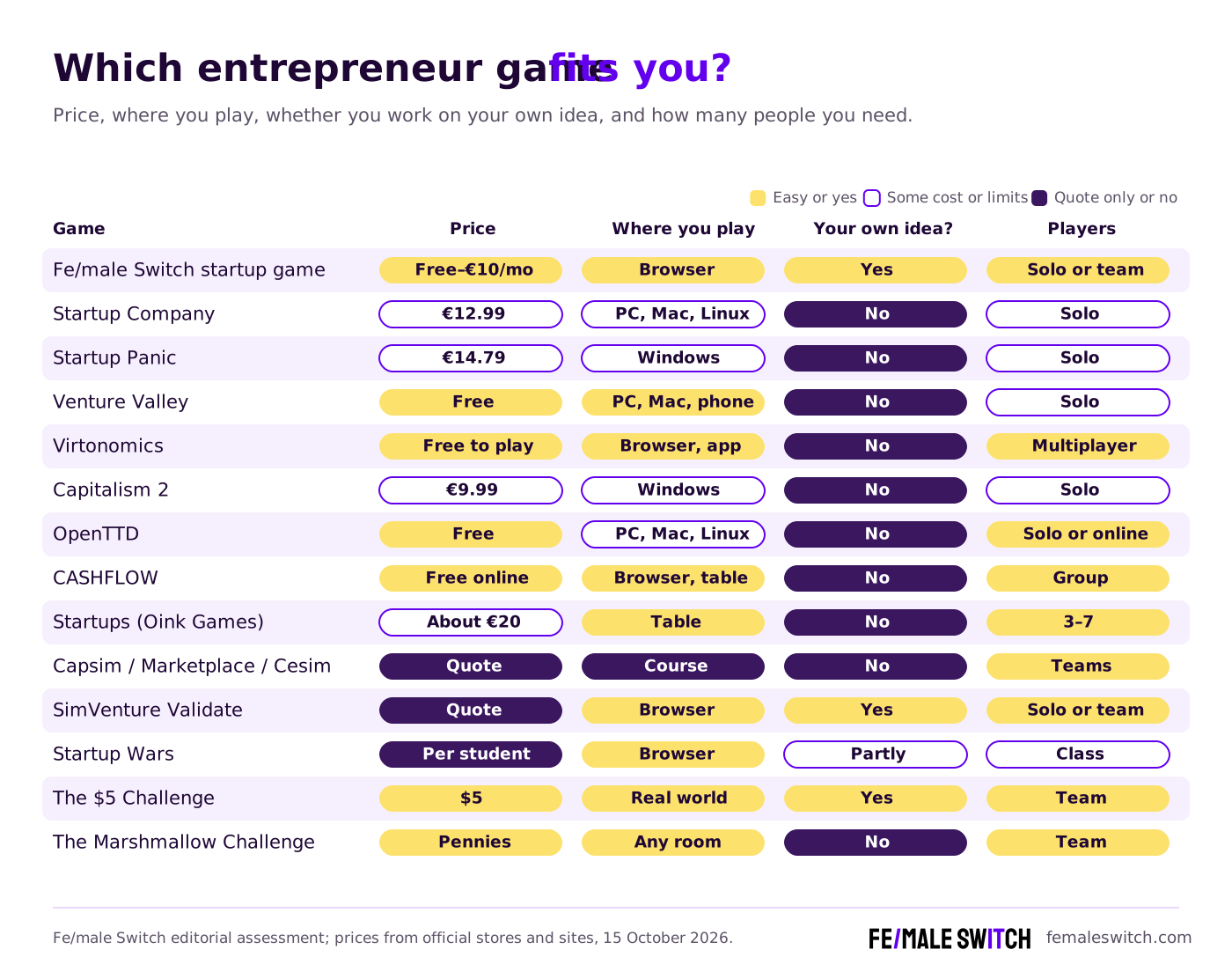
Entrepreneur Games Compared: Format, Price and Who They Suit
Prices checked on 15 October 2026 on each game's official site or on the Steam store (euro prices). Steam prices change with sales and region.
Online Startup Simulations and Entrepreneur Games
These are the games you can start tonight. Only one of them works on your own business idea; the others drop you into a made-up company, which is still useful practice for decisions under pressure.
1. Fe/male Switch: the startup game for women
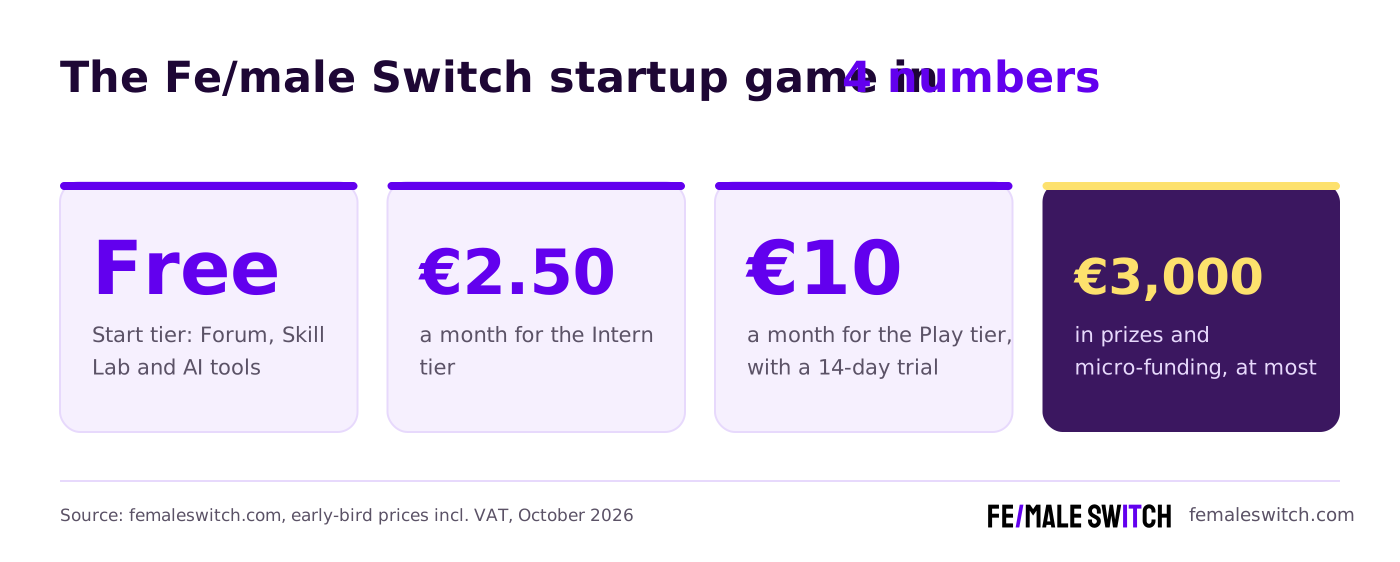
Format: browser-based startup simulator and role-playing game · Price: free Start tier; Intern €2.50 a month; Play €10 a month with a 14-day trial · Best for: first-time founders, especially women
Fe/male Switch calls itself a role-playing game made for female entrepreneurs, and its homepage puts the goal simply: keep your burn rate positive, which means earning more than you spend. You build a startup with an AI co-founder called PlayPal, team up with other players, complete quests to earn tokens and move your team to a better office. When a quest needs knowledge you don't have yet, you learn it in the Skill Lab, a library of micro-modules.
The part that makes it different from a tycoon game is the Sandbox. There you validate your own idea, block by block: audience, problem, solution and business model. The Sandbox lets you build only one idea at a time, so you have to commit or tear it down and start again. Every skill you finish and every quest you win becomes a micro-credential in a live certificate. You don't need a business idea or technical skills to start; the free idea and name generators give you one to work on.
The homepage also lists prizes and micro-funding of up to €3,000, software perks worth €1,500 and free sessions with an in-house legal coach. To see every feature, read the Fe/male Switch startup game knowledge base or the tour of the platform. First step: create a free account from the Build your first startup page linked above and run your idea through the Sandbox this week.
If you are looking specifically for a startup game for women, we compared nine of them in startup games for women.
2. Startup Company
Format: PC game for Windows, macOS and Linux, by Hovgaard Games (2020) · Price: €12.99 on Steam · Best for: would-be tech founders
You are the CEO of a new company that builds its own website and competes against the largest tech giants. It is a sandbox, so there is no fixed story: you decide what to build, whom to hire and when to spend. It gives you a feel for the cash-flow squeeze of an early software business, though the market is simplified.
First step: play one company until your first hire, and write down how many months of cash you had left when you made it.
3. Startup Panic
Format: PC game for Windows, by Algorocks, published by tinyBuild (2022) · Price: €14.79 on Steam; a free demo exists · Best for: a light, funny first taste of startup life
Its own pitch is to quit your job, build a startup, survive the tech bubble and compete with rival CEOs, from bedroom programmer to a global company. The tone is satirical, which makes it a good game for teenagers or for a founder who needs a laugh, not a deep strategy tool.
First step: download the free demo on Steam before you buy.
4. Venture Valley
Format: game for Windows and macOS on Steam, plus iOS and Android · Price: free · Best for: beginners and teens
Venture Valley calls itself the ultimate entrepreneurship game. It is published by the Singleton Foundation for Financial Literacy and Entrepreneurship and is free on every platform. In-game characters act as mentors, which makes it a gentle introduction to running a business.
First step: install it from the Venture Valley website on the device you use most.
5. Virtonomics
Format: online multiplayer business game in the browser, with mobile apps · Price: free to play · Best for: competing against real people
Virtonomics describes itself as the most realistic business simulation game about company management and economics. You start a company, trade with other live players and compete in markets that keep running when you log off. Because rivals are human, mistakes in pricing and supply hurt the way they do in real life.
First step: start with one small retail business before you try production chains.
6. Capitalism 2
Format: PC game for Windows, by Enlight Software · Price: €9.99 on Steam · Best for: founders who like deep strategy
Capitalism 2 says it covers almost every aspect of business you would meet in the real world. It is an older game and looks it, but few games model a whole company in this much depth. Expect a steep first hour.
First step: play the tutorial scenarios first; the open game is hard without them.
7. OpenTTD
Format: open-source PC game for Windows, macOS and Linux · Price: free · Best for: operations, logistics and patience
OpenTTD is an open-source game based on Transport Tycoon Deluxe. You earn money by moving passengers and cargo by road, rail, water and air, so every route is a small business case: build cost, running cost, demand and payback time. It is a great teacher of unit economics, and it is still actively developed: version 15.3 is the current stable release.
First step: download it from openttd.org and build one profitable bus line before anything else.
8. Industry Manager: Future Technologies
Format: PC game for Windows and macOS, by astragon (2016) · Price: €14.99 on Steam · Best for: product and production thinking
An economic simulation in which you build an industrial company, research new sustainable products and push competitors aside. It is useful if your idea involves physical products and supply chains.
First step: pick one product chain and track its margin for ten game years.
9. Transport Fever 2
Format: PC game for Windows, macOS and Linux, by Urban Games (2019) · Price: €39.99 on Steam · Best for: long-term planning
You build a transport company from the 1850s to the present day. It is more a tycoon game than a startup game, but it rewards the same habit as real business: invest where demand already exists.
First step: if €39.99 is too much for a test, start with free OpenTTD and move up later.
For more games where you run a whole company, see our list of business simulation games, and for learning-first titles, our serious games for entrepreneurs.
Board and Card Games for Entrepreneurs
Board games are underrated entrepreneurial games. You negotiate face to face, you watch other people take risks, and an evening costs less than a lunch.
10. CASHFLOW
Format: board game, plus a free online version called CASHFLOW Classic · Price: online free with registration; the board game lists at $100 on the Rich Dad store ($89.95 on sale when we checked) · Best for: money mindset
Created by the Rich Dad company, CASHFLOW is about getting out of the "rat race": practising investing, building passive income and judging deals before you risk real money. It is about personal finance more than about starting a company, but founders who have never read a balance sheet learn a lot from it.
First step: play the free online game on richdad.com before you buy the box.
11. Startups (Oink Games)
Format: card game for 3–7 players, age 10+, about 20 minutes · Price: about €20 · Best for: thinking like an investor
Designed by Jun Sasaki and published by Oink Games in 2017, Startups makes every player an investor in six startup companies. Only the player with the biggest stake in a company gets paid at the end, so you have to read what everyone else is collecting. It is a fast, clever way to feel why investors fight over the cap table.
First step: play it with your co-founders and talk afterwards about who took which risk.
12. Acquire
Format: board game for 2–6 players, by Sid Sackson · Price: varies by retailer · Best for: mergers, shares and timing
A classic from the 1960s, now published under Hasbro's Avalon Hill name. You found and grow hotel chains, buy shares, and when two chains merge, the biggest shareholders of the absorbed chain get bonuses. It teaches timing and dilution better than many apps.
First step: in your first game, buy shares in only two chains and watch what happens at the first merger.
If you'd rather play your way through a business plan, our guide to Business Model Canvas games covers canvas-based games, and the free Business Model Canvas tool builds an editable canvas from a few answers.
Classroom Business Simulations for Entrepreneurship Courses
These entrepreneurship simulations are sold to schools, universities and corporate training teams, not to individuals. None publishes a simple price; you book a demo and get a quote. If you teach, also read our sister site's guide on getting educational games into university curricula.
13. Capsim
Format: online business simulations: CapsimCore, CapsimGlobal, CapsimOps, Capstone and Triple-Bottom-Line Capstone · Price: on request; students buy access or the school gets a site licence · Best for: business schools and capstone courses
Capsim is built for business schools and corporate learning teams. Students run a whole company round after round, and each round is one year of the company's life. CapsimCore can run in as little as a day; Capstone usually spans a full course. It is not a startup simulation as such, but it is the standard for cross-functional strategy.
First step: educators can book a 30-minute demo on capsim.com.
14. Marketplace Simulations
Format: classroom entrepreneur simulators and 10–25 minute microsimulations · Price: on request · Best for: entrepreneurship courses from undergraduate to EMBA
Marketplace has a dedicated entrepreneurship range. Introduction to Business and Strategy has six decision rounds of 60–75 minutes each and is made for a first entrepreneurship course; Venture Strategy, Conscious Capitalism and E-Commerce and Business Strategy go further. Students identify opportunities, launch products and grow in a competitive market.
First step: compare the options on Marketplace's entrepreneurship simulations page.
15. SimVenture
Format: Classic (offline), Evolution (online) and Validate (idea development) · Price: on request, free online demo · Best for: schools and universities teaching enterprise
SimVenture Evolution runs in the browser on PCs, Macs and tablets and lets learners run a business for up to 10 simulated years, or 40 quarters. Validate helps learners develop their own business ideas with lean startup methods, which is rare among classroom tools. SimVenture says educators in over 40 countries use it.
First step: book the free demo on simventure.com and ask to see Validate.
16. Cesim Service
Format: online classroom simulation, small service business management · Price: on request; unlimited trial account available · Best for: beginners and non-business students
Cesim has a dozen simulations; Service is the one that focuses on entrepreneurship and small-business management. Teams manage a family hotel in a competitive market with seasonal swings, which teaches cash planning and capacity in a very concrete way.
First step: request the trial account on cesim.com and play one season yourself before assigning it.
17. Startup Wars
Format: browser-based entrepreneurship simulation · Price: per-student access plans; institutional quotes · Best for: high school, CTE and college classes
Startup Wars calls itself an entrepreneurship-first business simulation platform. Students run a virtual startup in an industry scenario and decide on customers, pricing, marketing, inventory, hiring and budgets, then see the results.
First step: teachers can ask for a complimentary demo account on startupwars.com.
18. MIT Sloan CleanStart
Format: web-based classroom simulation, run through MIT Sloan's partner Forio · Price: not stated on the MIT page · Best for: teaching funding decisions
Participants play the founder of a clean-tech startup. Each quarter they set prices, hire engineers and salespeople, design pay packages and decide whether to raise venture capital or self-fund. The goal is to reach cash-flow break-even before the money runs out.
First step: find it in the MIT Sloan Teaching Resources Library under simulations.
Entrepreneurial Mindset Games You Can Run This Week
An entrepreneurial mindset is mostly about seeing opportunities and acting before you feel ready. These entrepreneurial mindset games need no software, and they work for teams, classrooms and solo founders. Our sister site explains why role-playing games build business skills better than lectures.
19. The $5 Challenge
Format: real-world team exercise · Price: $5 per team · Best for: spotting resources others miss
Stanford professor Tina Seelig gave 14 student teams an envelope with $5 of seed funding. Once they opened it, they had two hours to make as much money as possible, then three minutes to present. According to Seelig's own account, the winning team made $650 without spending the $5: it sold its presentation slot to a company that wanted to recruit the class.
First step: run it with your team on a Saturday. The lesson is not the profit; it is how many assets you overlook.
20. The Marshmallow Challenge
Format: team exercise, 18 minutes · Price: dry spaghetti, one yard of tape and a marshmallow · Best for: prototyping and teamwork
Teams build the tallest free-standing tower they can and put the marshmallow on top. Tom Wujec made it famous in a 2010 TED talk, and it has been run with everyone from kindergarten children to top managers. The lesson we take from it: put the marshmallow on early and test, instead of planning until the last minute. That is the case for an MVP in one exercise.
First step: run it at your next team meeting, then ask: what did we assume without testing?
21. Allan Gray Entrepreneurship Challenge
Format: free online game and school competition · Price: free · Best for: high school students; the competition is open in South Africa, Eswatini, Botswana and Namibia
Run by the Allan Gray Orbis Foundation, the High School Game lets players run one of five shop types; a game takes about 30 minutes and can be played online or offline. Anyone can play for fun, and students in the four countries can win prizes from April to July.
First step: register on the Entrepreneurship Challenge website and play one round with your teenager.
Want to know where you stand before you play? The free entrepreneurial potential self-assessment scores 20 factors from 0 to 5, up to 100 points, and emails you the result.
Entrepreneur Games From Older Lists That Are Gone or Not Worth It
Many 2025 lists, including our own older ones, still recommend these. We checked each one in October 2026:
- BlueSky Ventures (Wharton Interactive): the free entrepreneurship mindset game was a favourite, but the Wharton Interactive website no longer loads.
- SimCEO: its website returned a server error every time we tried it.
- Mars Tycoon and Eternal Saga: New Horizons: we could not find either game on Steam or an official site.
- Skillmatics Up Start: we found no official product page, only resale listings.
- Epic Games Store free games and Project Mugen: the first is a rotating promotion and the second an action game, so neither is an entrepreneur game.
How to Choose Games for Entrepreneurs
- Decide what you want to practise. Validating your own idea needs Fe/male Switch, SimVenture Validate or the $5 Challenge. Strategy and cash flow suit Capitalism 2, Startup Company or OpenTTD. Teamwork suits board games and the Marshmallow Challenge.
- Set a budget. Six games on this list are free to start: Fe/male Switch's Start tier, Venture Valley, Virtonomics, OpenTTD, CASHFLOW Classic and the Allan Gray game.
- Match the time you have. Startups takes 20 minutes, the Marshmallow Challenge 18 minutes; Capsim or Capitalism 2 take weeks to master.
- Prefer games that punish mistakes. If you can't lose, you don't learn. Our sister site's piece on how game failure teaches entrepreneurial resilience explains why.
How to Turn an Entrepreneurship Simulation Into Real Startup Progress
A game is practice, not a business. The founders who get the most from entrepreneurship simulations treat each session like a small experiment and carry one lesson into real life.
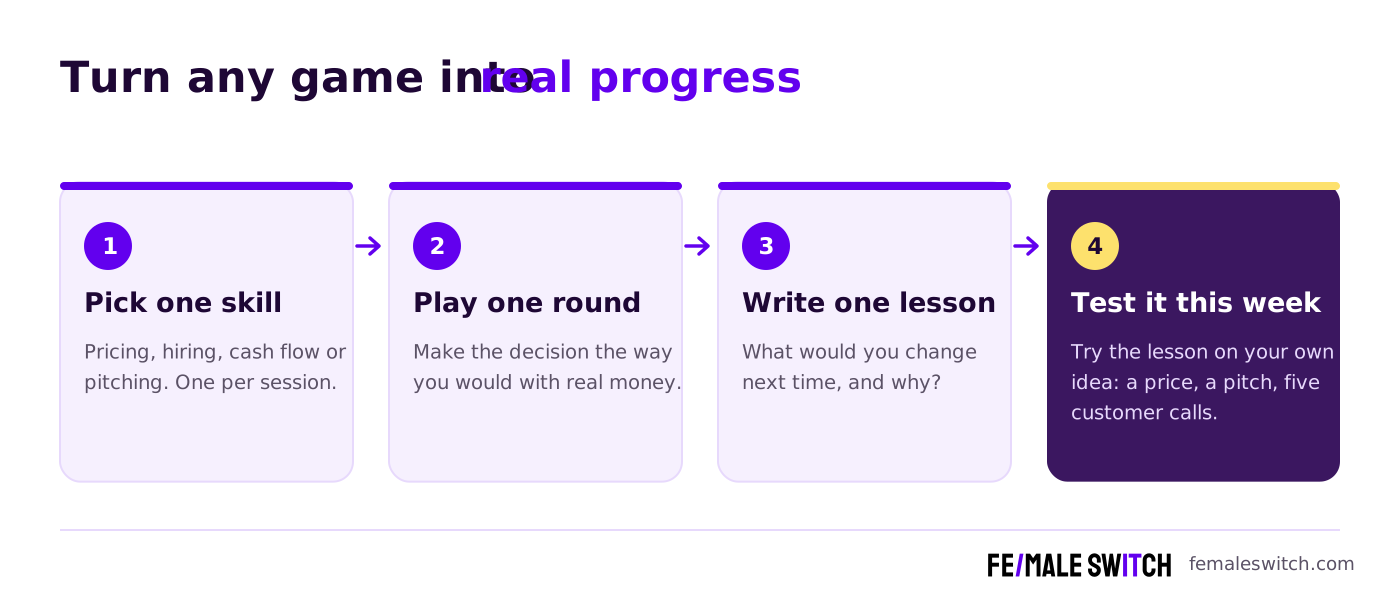
This is the idea behind learning by doing and behind what we call gamepreneurship; our guide to gamified learning for female founders goes deeper. When you are ready to move from game to plan, the free marketing plan generator and the Free Startup School take the next steps with you.
Play with your real idea, not a made-up company
In the Fe/male Switch startup game you validate your own idea in the Sandbox with an AI co-founder, learn what you're missing in the Skill Lab and earn a live certificate as you go. The Start tier is free.
👉 Start the startup game for free
Conclusion: Pick One Game and One Real Experiment
The best entrepreneurship game is the one that makes you take a decision you've been avoiding. Pick one game from this list that matches your goal and budget, play it this week, and turn one lesson into a real test: a price, a pitch or five customer conversations. If you want a single place to do both, start with the Fe/male Switch startup game; if you want a different take on the same topic, read our sister site's essay on entrepreneurship simulation games.
FAQ: Entrepreneurship Games and Startup Simulations
What are the best entrepreneur games in 2027?
For your own idea, the Fe/male Switch startup game. For fun with a business lesson, Startup Company and Startup Panic. Free options include Venture Valley, Virtonomics and OpenTTD. For classrooms, Capsim, Marketplace Simulations, SimVenture, Cesim and Startup Wars.
Are there free games for entrepreneurs?
Yes. Venture Valley, OpenTTD, Virtonomics (free to play), CASHFLOW Classic online, the Allan Gray High School Game and the Start tier of the Fe/male Switch startup game are all free.
What is the best startup game for women?
Fe/male Switch is built as a startup game for women: a browser-based role-playing game with an AI co-founder, quests and a Sandbox to validate your own idea. Its Start tier is free and the Play tier costs €10 a month with a 14-day trial.
What is an entrepreneurship simulation?
A game or exercise in which you run a virtual company and see the results of your decisions on pricing, hiring, marketing and cash. Classroom versions such as Capsim and Marketplace run in rounds; consumer games such as Startup Company run in real time.
Which games build an entrepreneurial mindset?
Short real-world exercises work best: Tina Seelig's $5 Challenge, the Marshmallow Challenge and the Allan Gray Entrepreneurship Challenge for teenagers. Among digital games, those where you can fail, like the Fe/male Switch game where you must keep your burn rate positive, train the same habit.
Are business simulation games good for learning?
They are good for practising decisions and seeing cause and effect, but they simplify the market. Use them alongside real tests with customers. We list the main benefits of business simulations for startups in a separate post.
Is there a board game about starting a business?
Startups by Oink Games makes every player an investor in six startups, and Acquire is about founding and merging hotel chains. CASHFLOW focuses on investing and passive income rather than on starting a company.
What simulation do business schools use?
Common choices are Capsim (including Capstone), Marketplace Simulations, Cesim and SimVenture. MIT Sloan offers web-based simulations such as CleanStart, in which students run a clean-tech startup.
Is BlueSky Ventures by Wharton still free?
We could not reach it: the Wharton Interactive website no longer loads. For a free alternative that also teaches founder decisions, try the Fe/male Switch Start tier or Venture Valley.
Can I play an entrepreneurship game alongside a full-time job?
Yes. Browser games like Fe/male Switch and Virtonomics, and short exercises like the $5 Challenge, fit into evenings and weekends. Classroom simulations such as Capsim run on a course schedule instead.
About the Author
Violetta Bonenkamp, also known as MeanCEO, is an experienced startup founder with an impressive educational background including an MBA and four other higher education degrees. She has over 20 years of work experience across multiple countries, including 5 years as a solopreneur and serial entrepreneur. Throughout her startup experience she has applied for multiple startup grants at the EU level, in the Netherlands and Malta, and her startups received quite a few of those. She’s been living, studying and working in many countries around the globe and her extensive multicultural experience has influenced her immensely.

