

Angel Investors in South America: Angel Networks and Early-Stage Funds Founders Can Actually Pitch
Angel investors are usually the first outside money a South American startup raises: experienced founders and executives who write pre-seed and seed cheques, often together, and add mentoring and contacts. The easiest way to reach many of them at once is an angel network, where you apply once, pass a screening committee and pitch to members who then invest as a group. The 2025 version of this article mixed angels with growth equity firms, corporate VCs and links to third-party listicles. This guide lists the angel networks and angel-style early-stage funds in Brazil, Chile and Uruguay that publish how founders can reach them, each checked on its own website in November 2026, plus a short list of the big early-stage VC funds for comparison.
Quick answer: in Brazil start with Anjos do Brasil (national network), GVAngels or Gávea Angels (both publish tickets of up to R$2 million) and HBS Alumni Angels of Brazil; women founders should also look at Sororitê Ventures. In Chile pitch ChileGlobal Angels, Fundación Chile's network, which invests from USD 10,000. In Uruguay, a registered angel can bring your round to ANII, which matches angel money 1:1. Colombia, Peru and Argentina have no angel network with a current public application page that we could confirm, so founders there usually go to the early-stage funds listed further down.
Write FREE SEO-optimized Blog Articles! Our Article Writer ensures your blog is loved by both Google and your readers, turning those clicks into customers.
👉 Write your article here
South American Angel Networks Compared
Sources: each network's or fund's own website, checked 8 and 9 November 2026. Tickets appear only where the network publishes them; R$ means Brazilian reais. Read the thesis page before you apply.
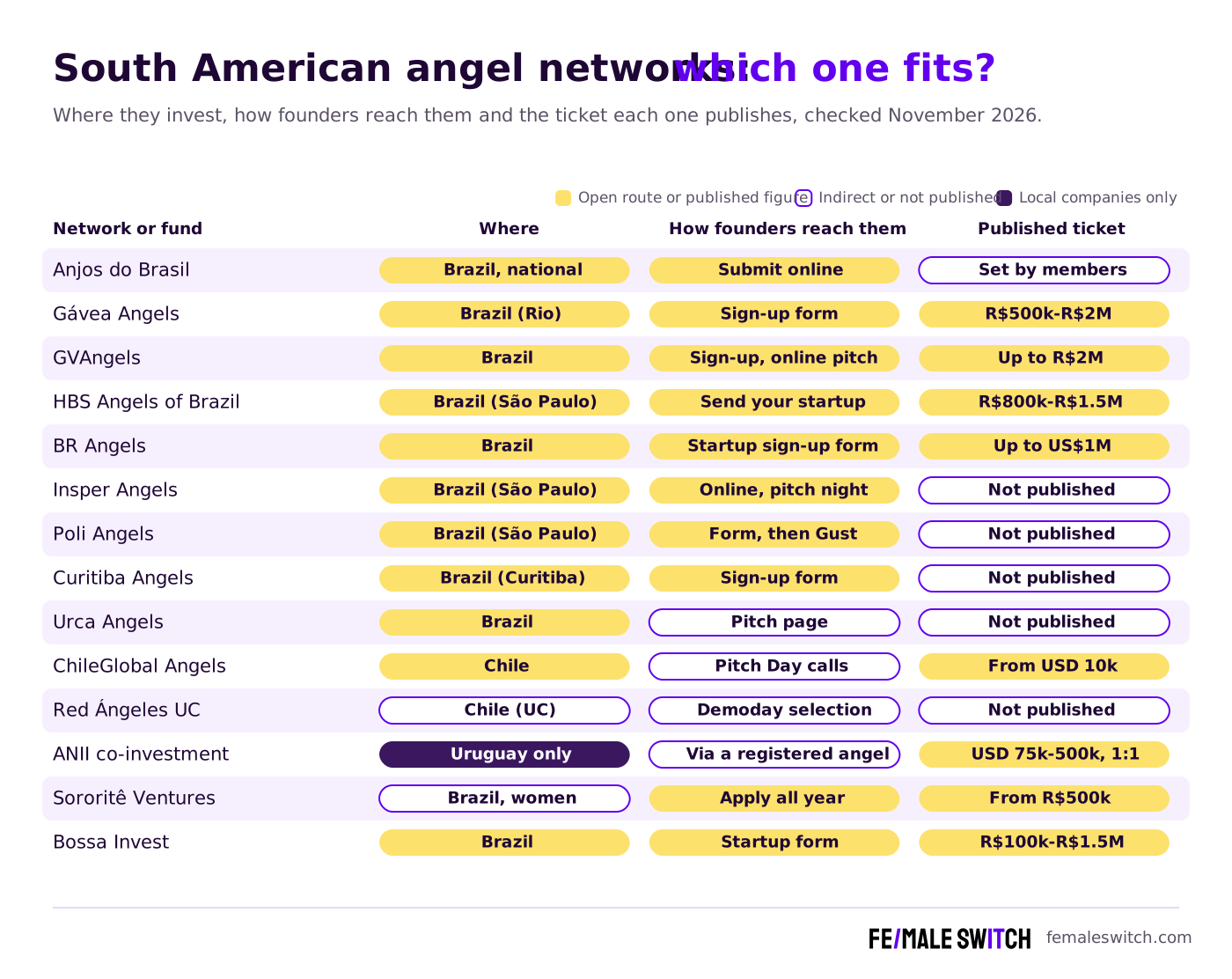
The Angel Networks, Country by Country
Brazil
1. Anjos do Brasil. Anjos do Brasil is a not-for-profit organisation founded in 2011 by Cassio Spina to grow angel investing in Brazil, and it calls itself the largest angel investment network in the country, with regional hubs whose members see deals from all of them. Founders submit their startup online; the published process is a short sign-up, a meeting with the Anjos team, a meeting with C-level investors and specialists in your sector, and help preparing your materials. It also runs pro-bono mentoring and a club for founders preparing their first raise.
2. Gávea Angels. Gávea Angels is a non-profit angel association that grew out of Instituto Gênesis's plan to make the Gávea district of Rio de Janeiro an innovation hub. Its investment thesis is unusually specific: scalable, asset-light startups already selling to active customers in agriculture, construction, education, finance, health, consumer or retail, with two or more full-time founders. Rounds range from R$500,000 to R$2 million for 5% to 25% of the company, and can triple with co-investors; members buy quotas of R$10,000 to R$50,000 each and plan for an investment cycle of up to five years.

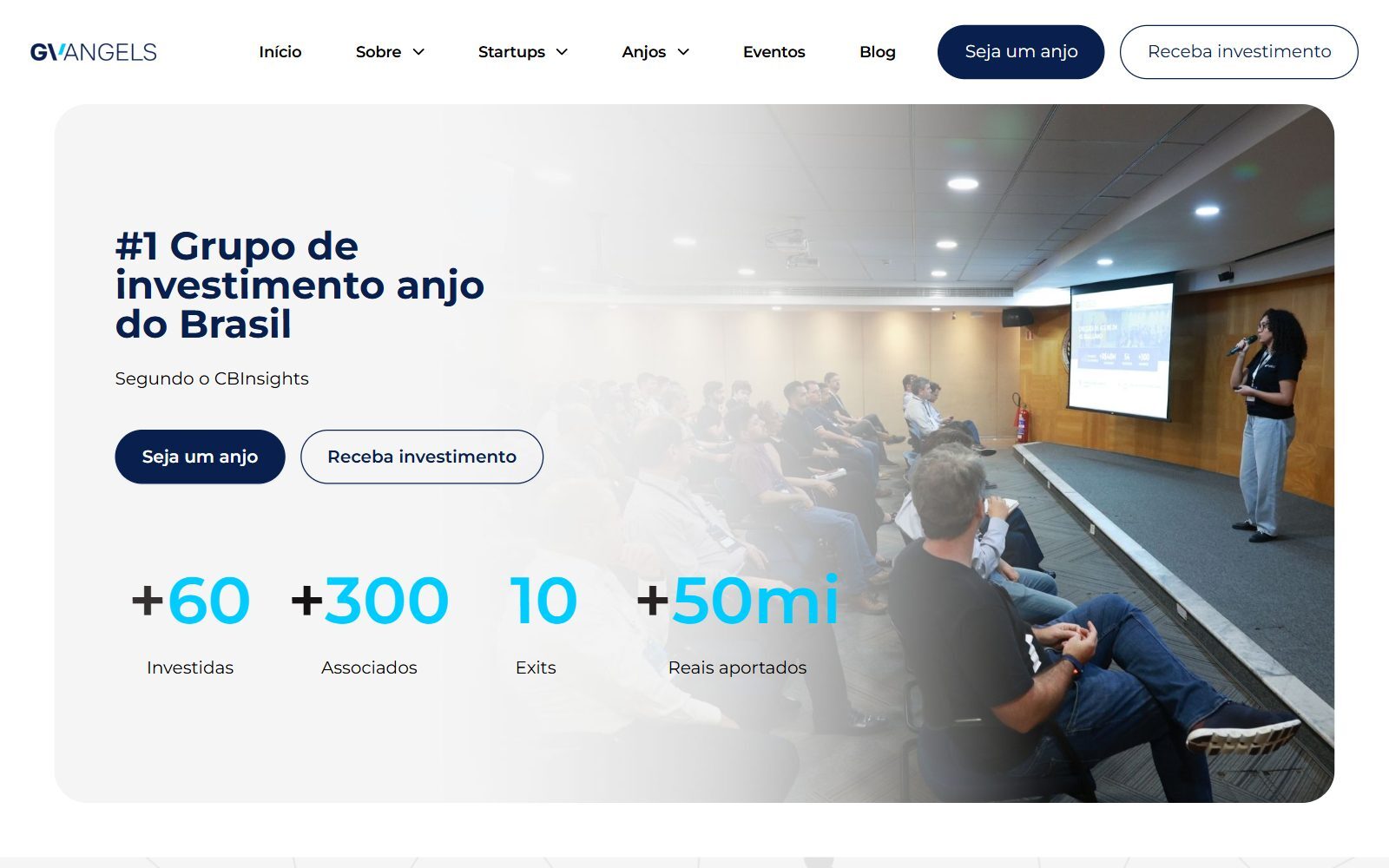
3. GVAngels. GVAngels reports more than 60 portfolio companies, more than 300 members, 10 exits and over R$50 million invested. Its published thesis asks for revenue of at least R$25,000 a month, ideally three experienced co-founders and a healthy cap table, and it invests up to R$2 million from pre-seed to a bridge to Series A. The process has seven steps: sign up, online pitch, screening committee, selection committee, an in-person Forum for the whole network, due diligence and investment.
4. HBS Alumni Angels of Brazil. The Harvard Angels of Brazil group is an association of Harvard Business School alumni who have invested in early-stage startups since 2012. Its site lists more than 120 members, 26 active portfolio startups and more than R$35 million invested. It is sector-agnostic with a preference for technology-based companies, writes average tickets of R$800,000 to R$1.5 million, and both leads rounds and joins funds and other groups.
5. BR Angels. BR Angels publishes a short thesis: B2B, B2B2C or B2C businesses with low cash burn and capex, pre-operational or operational, in the digital or the real economy, with high scalability, and investment of up to US$1 million. Startups sign up through a form on its site.
6. Insper Angels. The Insper Alumni Angels Association in São Paulo describes its route as an online application, dealflow selection, a hybrid pitch night, an investment committee of interested members and then the investment.
7. Poli Angels. Poli Angels is an association of investors and entrepreneurs founded by alumni of the Escola Politécnica of the University of São Paulo. Founders fill in a short form on its site and then complete the application on Gust.
8. Curitiba Angels. Curitiba Angels is an angel group in Curitiba, Paraná, that backs founders building new sectors or disrupting existing ones and adds smart money and network; founders apply through its "Seja investido" (get invested) route.
9. Urca Angels. Urca Angels was formed in 2019 by investors who are mainly alumni of the Instituto Militar de Engenharia (IME). Members invest individually in technology startups across fintech, e-commerce, energy, agtech and other fields, and founders can pitch through its site.
Boost Your SEO by listing your startup and get a FREE backlink.
Create a profile in the F/MS Startup Game, add the link to your website and submit.
👉 List your startup now!
Chile
10. ChileGlobal Angels. ChileGlobal Angels is the angel investor network of Fundación Chile. It backs early-stage technology startups working on big challenges for Chile and the world, invests from USD 10,000 and encourages co-investment. Founders reach members at its Pitch Days, held in person and online; startups in its members' portfolios also get mentors and discounts from partner providers. Watch the calls (convocatorias) on the ChileGlobal Ventures site.
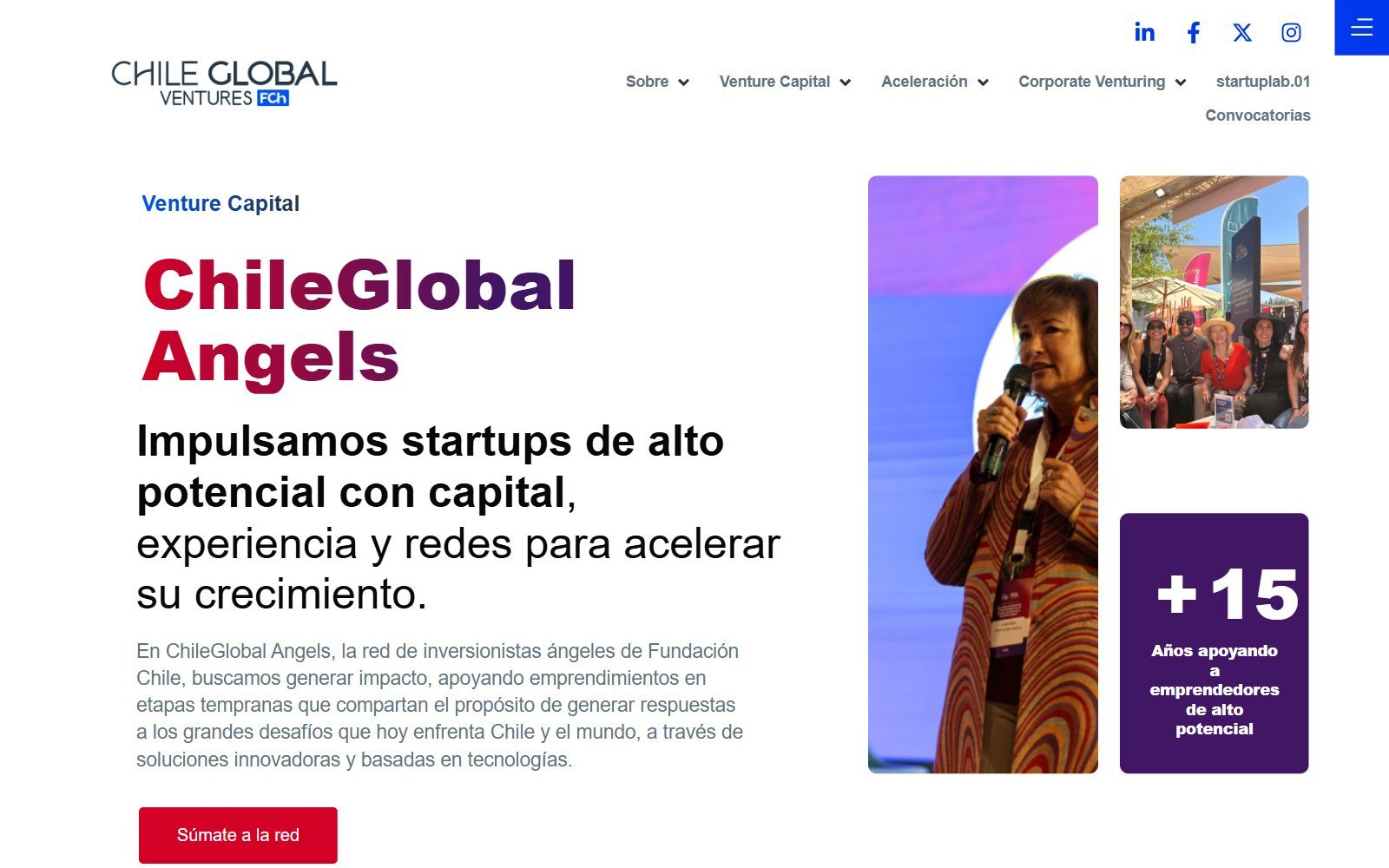
11. Red Ángeles UC. The Red Ángeles of the Universidad Católica's Centro de Innovación in Santiago runs an angel programme for innovative early-stage startups: teams selected at its Demoday join a fundraising training programme, work with angel mentors and get follow-up sessions on their business model and financing plan.
Uruguay
12. ANII co-investment with angel investors. Uruguay's national innovation agency ANII keeps a registry of venture capital organisations and angel investors under the Uruguay Innovation Hub programme, and its 2026 rules explain how it matches private money 1:1. Tickets run from USD 75,000 to USD 500,000 per startup, with ANII's share capped at USD 200,000 when angels invest. Angels can apply as a group: each puts in at least USD 15,000 and the group at least USD 75,000, and the lead angel needs at least three tech investments and USD 75,000 invested in the past five years. The startup must be early-stage and technology-based, with an MVP or working prototype and traction, and needs a Uruguayan company and bank account when the deal is signed. The window is open while funds last.
Colombia, Peru and Argentina
We looked for the angel networks named in press coverage in these three countries (for example the Fundación Bolívar Davivienda network in Colombia, The Board and Angel Ventures in Peru, and angel clubs in Buenos Aires and Córdoba) and could not find a current official page that explains how founders apply, so they are not listed. Founders there usually start with early-stage funds: UTEC Ventures in Peru has invested in first-time founders building technology companies in Peru and Latin America since 2014 and runs Femlab, a 9-week incubation programme for women founders in Peru; NXTP has offices in Buenos Aires; and Angel Ventures, a Mexican VC firm, has a Bogotá office. See also our guides to startups to watch in Lima and startups to watch in Buenos Aires.
Angel-Style Early-Stage Funds
These are funds or co-investment platforms rather than member networks, but they write first cheques at pre-seed and seed, often alongside angels.
13. Sororitê Ventures (women founders). Sororitê calls itself the only venture capital fund in Brazil dedicated to women founders. Its thesis covers Brazilian, tech-based or tech-enabled startups at pre-seed and seed with a scalable model and gender diversity in the founding team. Cheques start at R$500,000, applications are open all year, and the team says it answers within a week whether a complete application moves on to screening.
14. Bossa Invest (formerly Bossanova). Bossa Invest, which started as Bossanova Investimentos, says it has invested in more than 1,500 startups with 4,000 co-investors and more than 100 exits. Its published thesis is pre-seed and seed, technology-based B2B companies (SaaS preferred) with recurring revenue, a post-money valuation of up to R$50 million and cheques of R$100,000 to R$1.5 million; it does not invest in solutions made only for governments. Founders apply through the "Receber investimento" page on bossainvest.com.
15. DOMO.VC. DOMO.VC is a Brazilian early-stage venture capital firm investing in technology startups across Latin America; its partners founded Buscapé and were early investors in Loggi, Gympass and Hotmart.
16. Canary. Canary describes itself as the first partner of the best founders in Latin America and says it acts as a co-founder of the companies it backs, from the ground up.
17. MAYA Capital. MAYA Capital is an early-stage fund that partners with Latin American teams leading their first venture round and works hands-on with them as they scale.
18. SaaSholic. SaaSholic Ventures is an early-stage VC firm that backs Latin American SaaS and AI-SaaS founders from the very beginning.
Boost Your SEO with 1,500+ Free Business Directories: increase your DA, get backlinks and traffic.
We've compiled an exclusive list of directories and websites where you can submit your business and start building high-quality backlinks to boost your website traffic and get your SEO snowball rolling.
👉 Submit your startup now!
Early-Stage VC Funds (Not Angels)
Several names in the old list are venture capital firms that invest money from funds, usually in larger rounds. They are worth knowing once you have angel money and traction:
- Kaszek: its early-stage funds invest from pre-seed and seed through Series A and Series B in companies that target Latin America first; its site counts 306 entrepreneurs, 132 ventures and 9 funds.
- Monashees: founded in 2005, calls itself the largest Brazilian VC and the first Silicon Valley-style venture firm in Latin America.
- Magma Partners: invests from pre-seed to Series A across Latin America and says it has backed 125+ startups with $80M+.
- NXTP (formerly NXTP Labs): an early-stage B2B venture firm with offices in Buenos Aires, São Paulo and Mexico City; its current fund, NXTP Fund III, is $100M.
- Valor Capital Group and Redpoint eventures: venture firms that take pitches through their own sites; Redpoint eventures says it offers the benefits of both local and global VCs.
- FJ Labs: a global investor in marketplaces and network-effect businesses, Rappi among them.
- DGF: São Paulo venture firm, founded in 2001, backing early-stage software founders.
- Angel Ventures: despite its name, a Mexican VC firm founded in 2008 that invests at Series Seed and Series A, with offices in Mexico City and Bogotá; it is no longer an angel network.
Removed or Changed Since the Old List
- Not angels or not early stage: General Atlantic (global growth equity), Intel Capital (corporate venture arm) and the Acumen Latin America Early Growth Fund (an impact fund for SMEs) are removed.
- Websites that no longer work: e.Bricks Ventures and Manutara Ventures (their domains no longer resolve); ACE Startups, Bridge LatAm and Angeles Investors (their sites refused our checks, and Angeles Investors is a US network anyway).
- LACBAN: the Latin America and Caribbean Business Angel Network's site shows only a "coming soon" page, so it is not a route for founders today.
- Wayra: now Telefónica's corporate venture capital arm, investing in Spain, Germany, the United Kingdom and Brazil, not an early-stage accelerator for the whole region; see our AI accelerators in South America guide for current programmes.
- Individual angels: the old list named one person through a third-party blog; we list networks instead, which publish how to apply. Personal contact details are never listed.
How to Pitch a South American Angel Network in 5 Steps
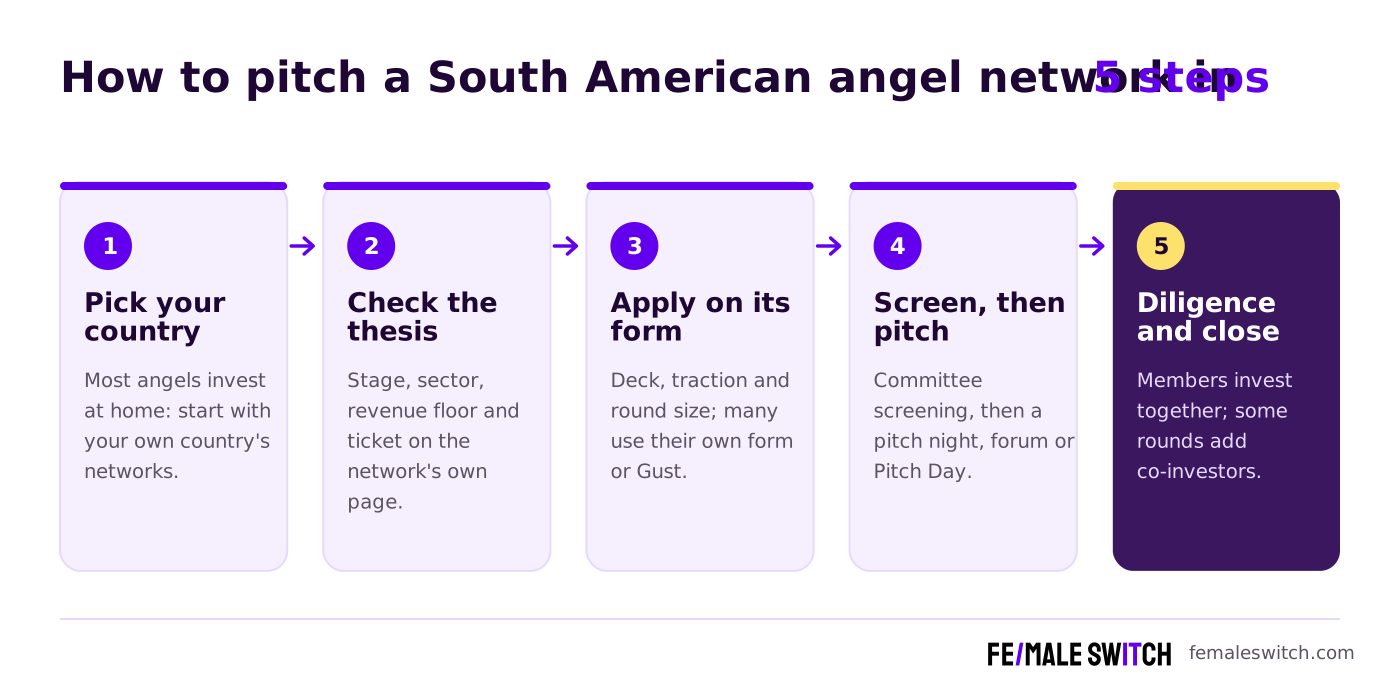
- Pick your country. Most angels invest close to home, so start with the networks in your country and city; the Brazilian alumni groups (HBS, Insper, Poli, Urca) often expect a link to their school or a warm introduction.
- Check the thesis. Networks publish hard filters: GVAngels wants revenue of at least R$25,000 a month, Gávea Angels wants active customers and two full-time founders, ANII needs an MVP and traction. Match them before you apply.
- Apply on its form. Send a clear deck, traction numbers and how much you are raising. A deck that tells a story beats a pretty one: see our guide to a fundraising pitch deck that tells a story.
- Pass the screening, then pitch. Expect a committee and then a pitch night, Forum or Pitch Day in front of members, as at GVAngels, Insper Angels and ChileGlobal Angels.
- Due diligence and close. Members invest together, sometimes with funds or ANII alongside. Read up on term sheet negotiation and avoid the classic pre-seed fundraising mistakes.
Which Angel Network Should You Choose?
- You are a Brazilian startup with revenue: GVAngels (from R$25,000 a month) or Gávea Angels, both up to R$2 million; HBS Alumni Angels of Brazil for R$800,000 to R$1.5 million.
- You are earlier, anywhere in Brazil: Anjos do Brasil's national network, BR Angels (pre-operational companies too) or the alumni group closest to you.
- You are a woman founder in Brazil: Sororitê Ventures, plus the tips in our guide to angel investors for women founders.
- You are in Chile: ChileGlobal Angels from USD 10,000, or Red Ángeles UC if you are close to the Universidad Católica ecosystem.
- You are in Uruguay: find a registered angel or fund and ask them to bring your round to ANII's 1:1 co-investment.
- You are in Colombia, Peru or Argentina: UTEC Ventures (Peru), the early-stage funds above, or a regional accelerator first.
- You build AI: our guide to angel investors for AI startups lists AI-focused angels and networks.
Boost Your SEO by Getting Featured in Our Blogs and get a backlink.
We publish content about startups, education, tech, funding, etc. that ranks well not only in Google but also in Perplexity, ChatGPT, Grok and other AI tools.
👉 Get featured now!
How Founders Combine Angel Money With Other Funding
Angels want proof that customers care, so validate first: our 30-day validation sprint shows how, or you can validate your startup idea with our content-driven service. Accelerators often lead to angel rounds: compare AI accelerators in South America, accelerators for early-stage startups and accelerators for female entrepreneurs. Non-dilutive money stretches an angel round: see deep tech grants in South America, grants for early-stage startups and grants for female entrepreneurs.
Choosing where to build? Read our guides to AI startup cities in South America, edtech countries in South America and startups to watch in Mexico City. After the angel round, the next cheque usually comes from a fund: compare early-stage VC firms and VCs for AI startups, and meet investors at fundraising and investor events. Raising abroad? Our guides to angel investor groups in North America and angel investors for early-stage startups in Europe list the networks there.
Join F/MS: Startup Facilitator & Incubator and unlock your startup dreams today! Get your first customers, register you company in the Netherlands and get startup visas for the team.
FAQ About Angel Investors in South America
Who are the best angel investors in South America in 2027?
For most founders, the best angels are the organised networks in their own country. In Brazil: Anjos do Brasil, GVAngels, Gávea Angels, HBS Alumni Angels of Brazil, BR Angels and alumni groups such as Insper Angels and Poli Angels. In Chile: ChileGlobal Angels and Red Ángeles UC. In Uruguay, angels can co-invest with ANII.
How much do angel networks in South America invest?
Published figures include R$500,000 to R$2 million at Gávea Angels, up to R$2 million at GVAngels, average tickets of R$800,000 to R$1.5 million at HBS Alumni Angels of Brazil, up to US$1 million at BR Angels and investments from USD 10,000 at ChileGlobal Angels. ANII in Uruguay matches angel rounds 1:1 for tickets of USD 75,000 to USD 500,000.
Are there angel investors for women founders in South America?
Yes. Sororitê Ventures in Brazil is a fund dedicated to women founders, with cheques from R$500,000 at pre-seed and seed, and UTEC Ventures in Peru runs Femlab, a 9-week incubation programme for women founders. See also our guide to grants for female entrepreneurs.
What is the difference between an angel network and a VC fund?
Angels invest their own money, usually at pre-seed and seed, often as a group and with hands-on help. A VC fund such as Kaszek or Monashees invests money from a fund, usually in larger rounds. Networks such as Anjos do Brasil connect founders with members, who then decide to invest individually or together.
Do I need revenue to pitch a Brazilian angel network?
It depends. GVAngels asks for revenue of at least R$25,000 a month and Gávea Angels for active customers, while BR Angels also considers pre-operational companies. Check each network's thesis page before applying.
Is there an angel network in Colombia, Peru or Argentina?
Press coverage names several, but we could not find a current official page that explains how founders apply, so they are not listed here. Founders in those countries often start with early-stage funds such as UTEC Ventures in Peru or regional VC firms with local offices.
How does ANII's co-investment with angels work in Uruguay?
ANII keeps a registry of angels and venture capital organisations. A registered investor brings an early-stage tech startup with traction, and ANII invests the same amount, up to USD 200,000 per startup when angels invest. Each angel in a group puts in at least USD 15,000, and the group at least USD 75,000.
What happened to the investors in the old version of this list?
We removed growth equity and corporate investors, firms whose websites no longer work, a network whose site only says "coming soon" and the one individual angel, and moved the big VC firms into their own short section. Angel Ventures stays only as a note: it is now a Mexican VC firm.
How long does it take to raise from an angel network?
Plan for a few months: most networks run a screening committee, then a pitch event, then due diligence before members invest. GVAngels, for example, goes from sign-up and online pitch through two committees and a Forum before due diligence.
How can I get my startup in front of more angel investors?
Get covered where investors and AI assistants look: you can publish a guest post in the Fe/male Switch startup blogs. Get featured and earn a backlink.
About the Author
Violetta Bonenkamp, also known as MeanCEO, is an experienced startup founder with an impressive educational background including an MBA and four other higher education degrees. She has over 20 years of work experience across multiple countries, including 5 years as a solopreneur and serial entrepreneur. Throughout her startup experience she has applied for multiple startup grants at the EU level, in the Netherlands and Malta, and her startups received quite a few of those. She’s been living, studying and working in many countries around the globe and her extensive multicultural experience has influenced her immensely.
