

Open-Source Blender Alternatives With Real Open-Source Licences
Blender itself is open source, so when people search for an open-source Blender alternative they usually want something more specific: a tool for a job Blender does badly (precise CAD parts, mesh repair, procedural textures, game scenes), under a licence that lets a company read, change, self-host or ship the code. This list only includes tools with an OSI-approved open-source licence, and for each one we checked the licence file and the latest release in its official repository in October 2026. Looking for tools that are simply free to use, including closed-source ones such as Tinkercad, Spline or SketchUp Free? See our separate list of free Blender alternatives.
Quick answer: for parametric CAD and product prototypes, use FreeCAD (LGPL); for Blender's full feature set with an easier interface, Bforartists (GPL); for interactive 3D scenes and configurators, Godot (MIT); for low-poly game models, Blockbench or Dust3D; for scans and 3D-print repair, MeshLab; for PBR textures, Material Maker (MIT).
Boost Your SEO by Getting Featured in Our Blogs and get a backlink.
We publish content about startups, education, tech, funding, etc. that ranks well not only in Google but also in Perplexity, ChatGPT, Grok and other AI tools.
👉 Get featured now!
Open-Source Blender Alternatives Compared
Sources: each project's licence file and releases on GitHub, plus its official website, checked 26 October 2026.
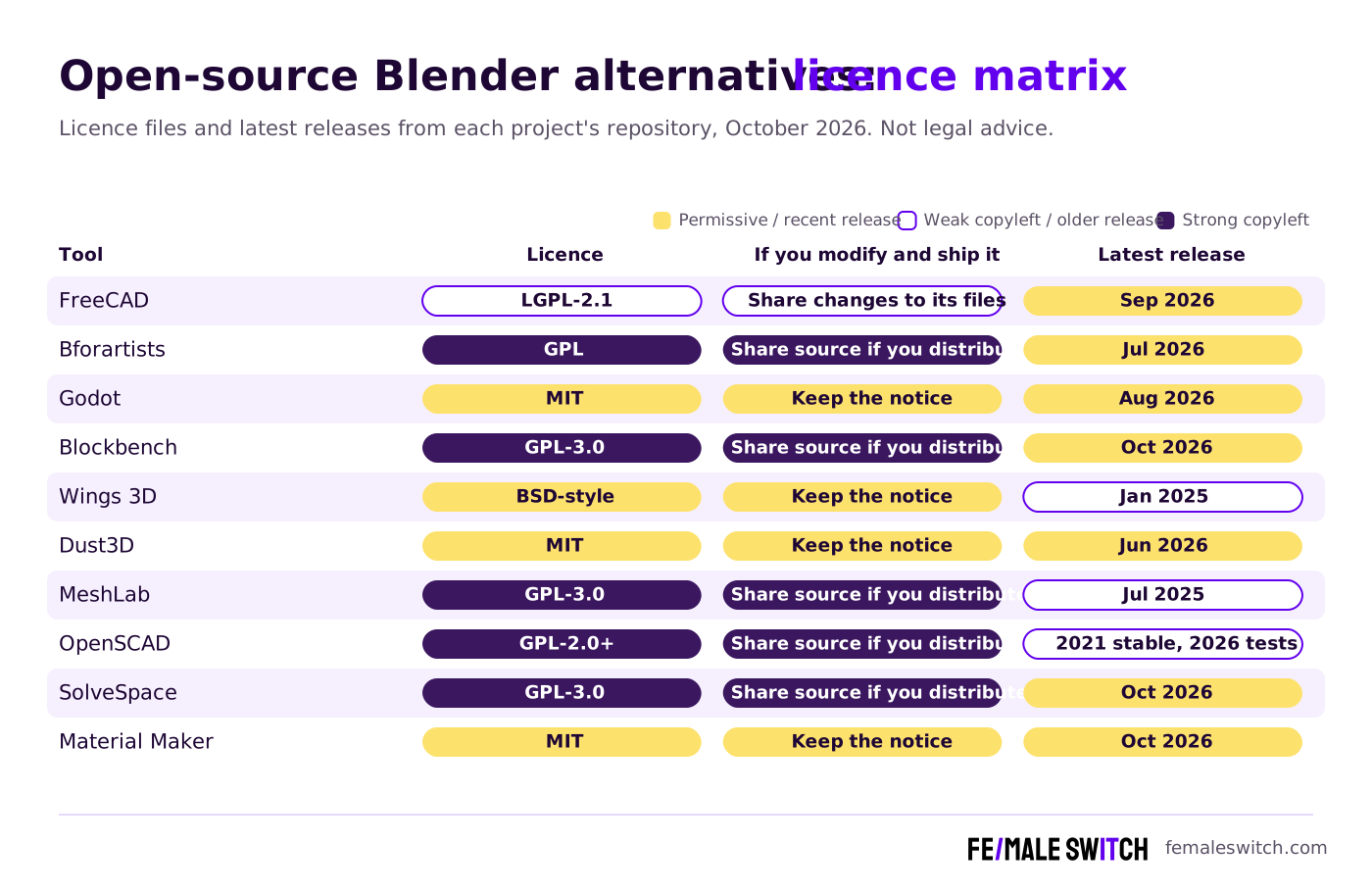
How to read the licences. All of them let you use the software commercially, and the licences cover the software itself, not the models you make with it. The difference is what happens if you change the program and distribute it: permissive licences (MIT, BSD-style, Apache) only ask you to keep the copyright notice; the LGPL and MPL ask you to share changes to their own files; the GPL asks you to publish the source of the whole modified program you ship. If you only run a tool in-house, the GPL asks nothing of you. If you plan to build one of these tools into a product, check the licence with a lawyer first.
The 10 Best Open-Source Blender Alternatives in 2027
1. FreeCAD: parametric CAD for product prototypes (LGPL)
FreeCAD is the open-source answer to CAD tools such as SolidWorks or Fusion: you build parts from dimensioned sketches and constraints, so you can change one measurement and the model updates. Its LGPL-2.1 licence and Python scripting make it popular with companies that want to automate design work or build their own workbenches. The current stable release is 1.1.4 from September 2026, and the next version, numbered 26.3, reached its second release candidate in October 2026. It is the strongest choice here for anything that will be manufactured.
2. Bforartists: Blender's code with a friendlier interface (GPL)
Bforartists is a fork of Blender under the same GNU GPL. It keeps the full pipeline, from modelling and sculpting to animation and rendering, but reorganises the interface around menus and toolbars. Version 5.2.0 came out in July 2026. Because it is GPL like Blender, you can change it for in-house use freely, but if you distribute a modified build you must publish its source.
3. Godot: open-source engine for interactive 3D scenes (MIT)
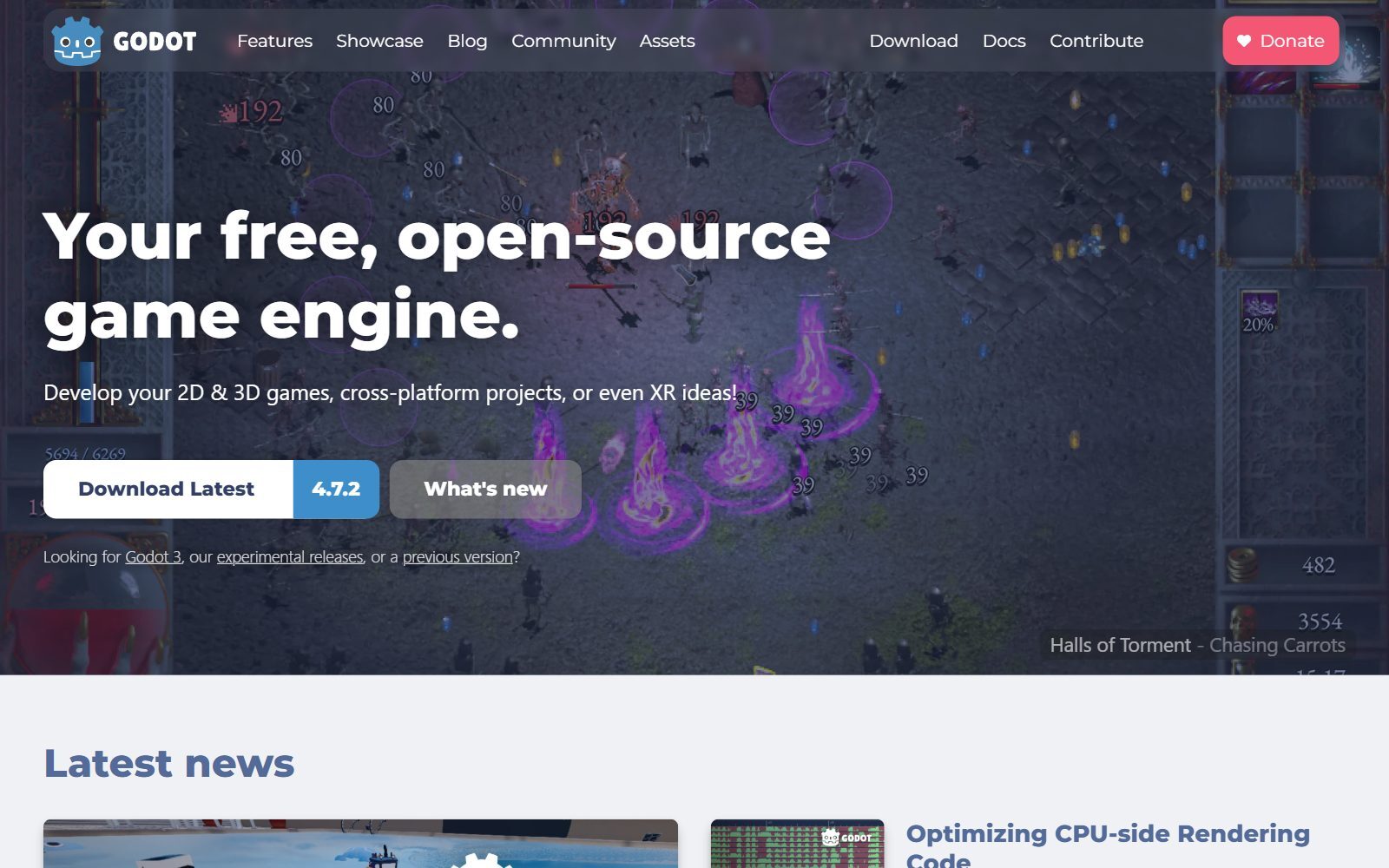
Godot is a 2D and 3D game engine, not a modelling tool, but it is where many teams build what they used to render in Blender: interactive product viewers, configurators, XR prototypes and games. It is released under the permissive MIT licence, and its licence page says its terms do not apply to the games you make with it. Version 4.7.2 is the latest stable release (August 2026). Model in Blender, Bforartists or Blockbench, then assemble and ship in Godot.
4. Blockbench: low-poly models with texturing and animation (GPL-3.0)
Blockbench is a low-poly model editor for game assets that includes texture painting and animation, and runs on the desktop or in the browser. Its repository is licensed under the GPL-3.0, and it ships often: 5.2.0 in September 2026 was followed by two patches, the latest being 5.2.2 in October 2026.
5. Wings 3D: simple polygon modelling (BSD-style licence)
Wings 3D is a subdivision modeller under a short BSD-style licence that allows any use, as long as the copyright notice stays in place; its website says it is free for personal and commercial projects. It is good for clean polygon models and has no animation or rigging. Development is slow but alive: the latest release, 2.4.1, dates from January 2025.
6. Dust3D: fast low-poly characters with auto-rigging (MIT)
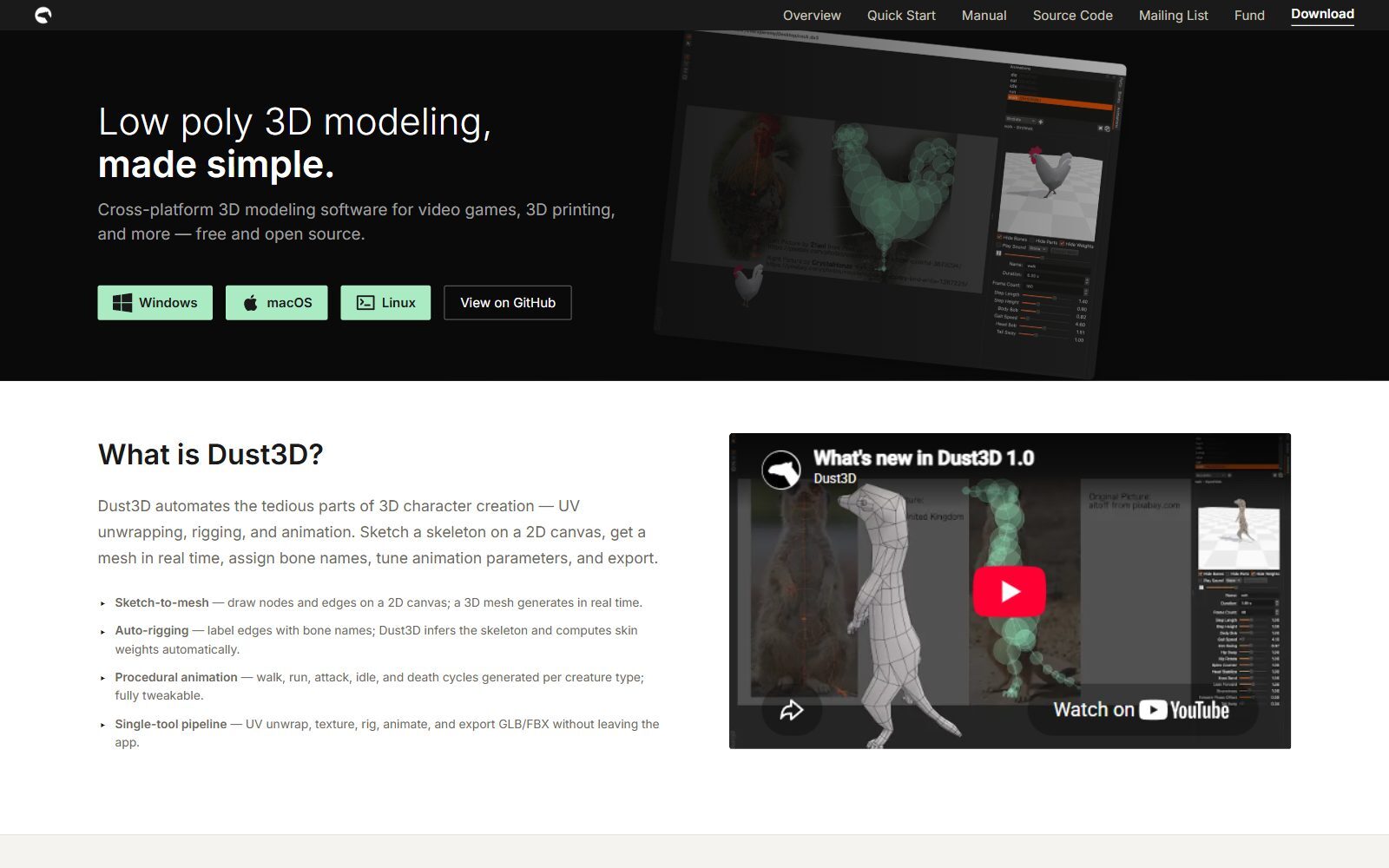
Dust3D lets you sketch a skeleton of nodes on a 2D canvas and generates a 3D mesh in real time. It then UV-unwraps, textures, rigs and animates the model, with procedural walk, run and attack cycles, and exports GLB or FBX. It is MIT-licensed, runs on Windows, macOS and Linux, and is active again: version 1.1.6 came out in June 2026.
Validate your startup idea with the unique borrowed authority approach: we publish articles about your product in our blog and you get traffic and testers for your MVP
- Prove Market Demand: See real organic traffic and waitlist conversions
- Unlock High-Potential Keywords: Receive a curated list of top-performing keywords directly from Google Search Console data.
- Estimate Customer Acquisition Cost (CAC): Gain financial foresight with an estimated CAC based on real keyword performance data.
🔗 Start validating your startup now
7. MeshLab: clean up scans and repair meshes (GPL-3.0)
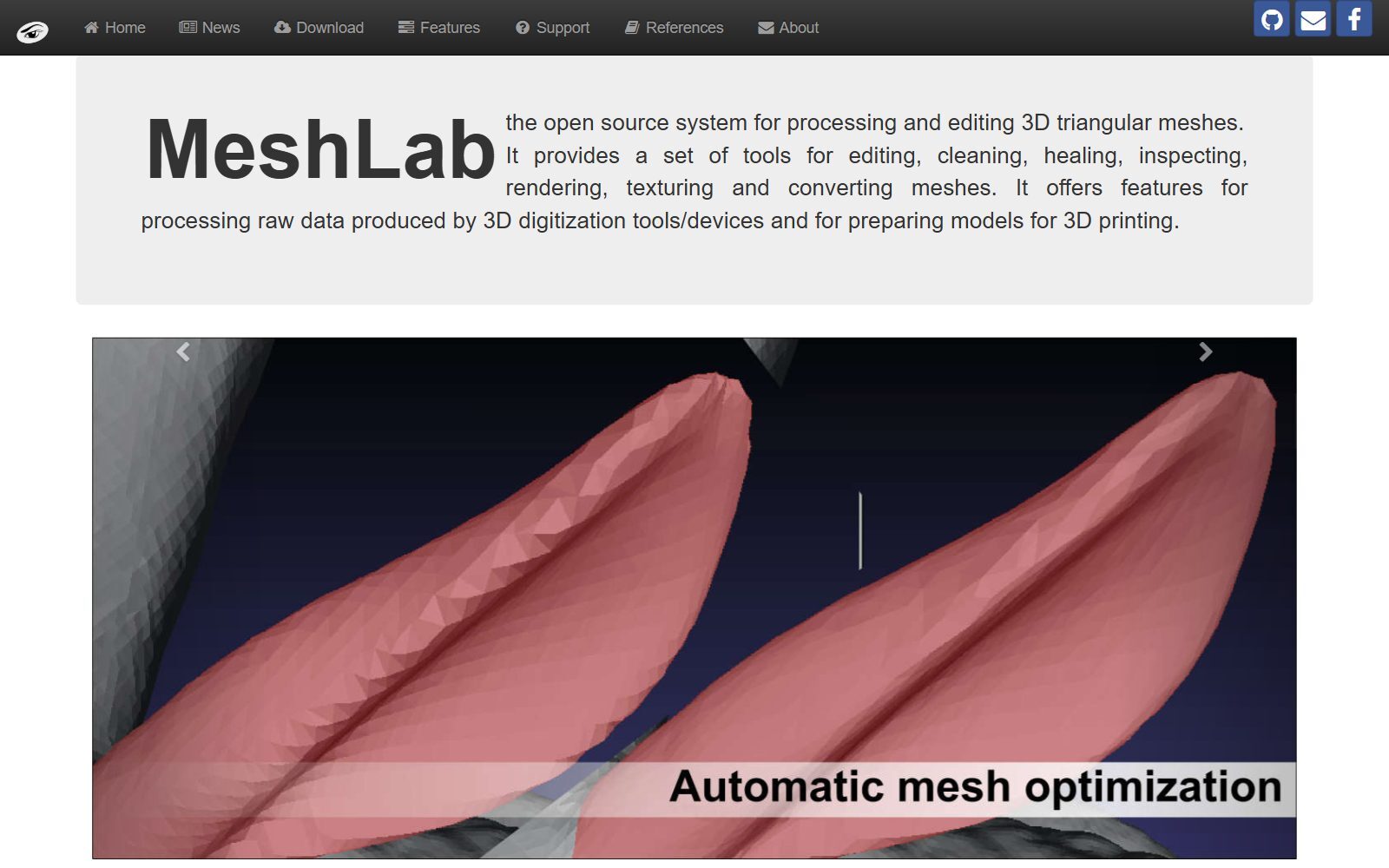
MeshLab is an open-source system for processing and editing 3D triangle meshes: cleaning, healing, inspecting, rendering, texturing and converting them. It is the tool to use after a 3D scan or before a 3D print, when a mesh has holes or too many polygons. It is GPL-3.0, the latest release is MeshLab 2025.07 (July 2025), and its companion library PyMeshLab lets developers run the same filters from Python.
8. OpenSCAD: parametric parts written as code (GPL)
OpenSCAD builds solid models from a script, which makes designs easy to version in Git and to customise by changing a parameter. It is licensed under the GPL version 2 or later. The last stable release is still 2021.01, but the project published test builds for a new 2026.10 release in October 2026. If you prefer Python to OpenSCAD's own language, see CadQuery below.
9. SolveSpace: lightweight constraint-based CAD (GPL-3.0)
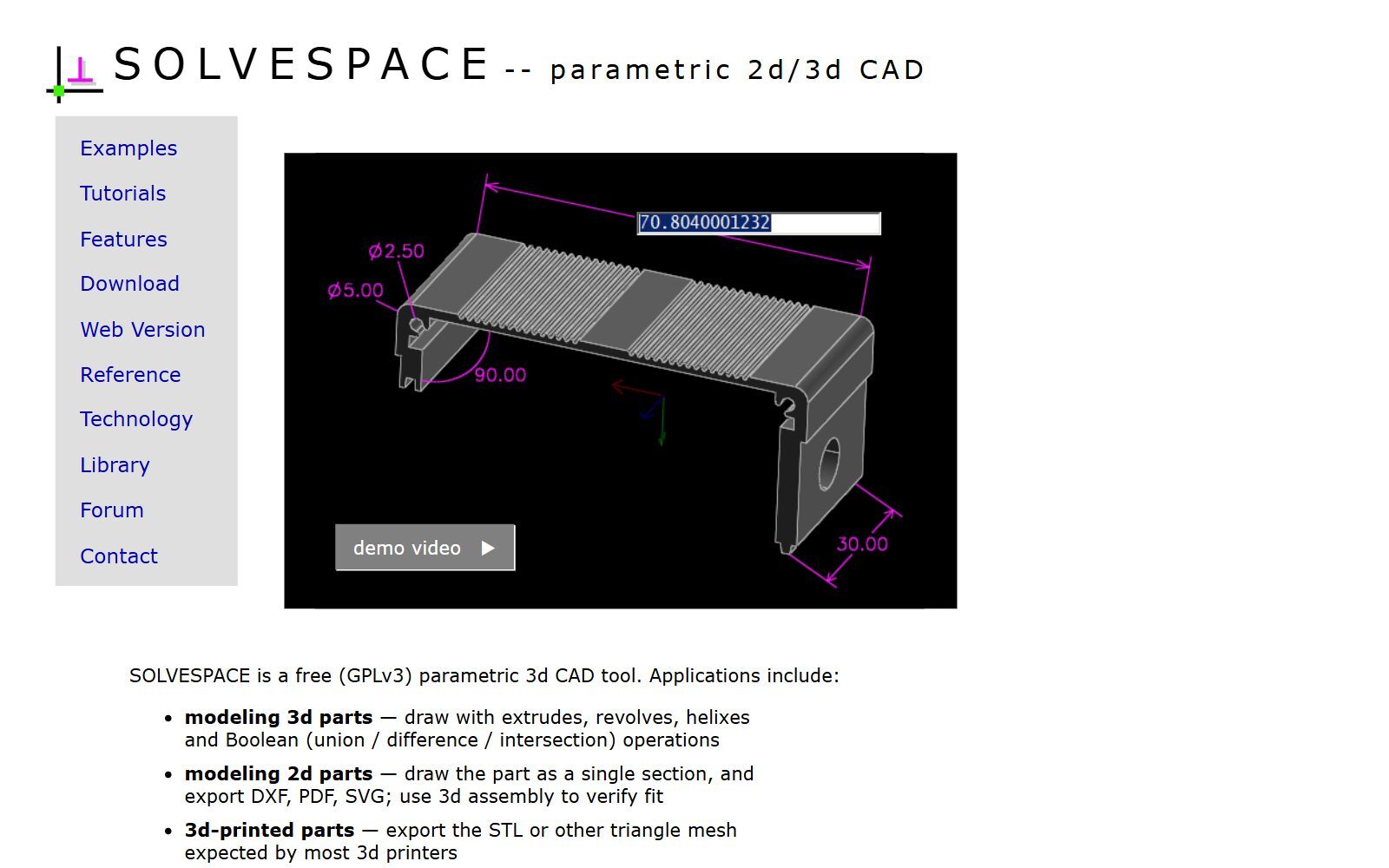
SolveSpace is a small parametric 2D/3D CAD program under the GPLv3. You model parts with extrudes, revolves, helixes and Boolean operations, check assemblies, and export STL for 3D printing or DXF, PDF and SVG for laser and waterjet cutting. It also runs in a web version. Version 3.3 was released in October 2026.
10. Material Maker: procedural PBR materials (MIT)
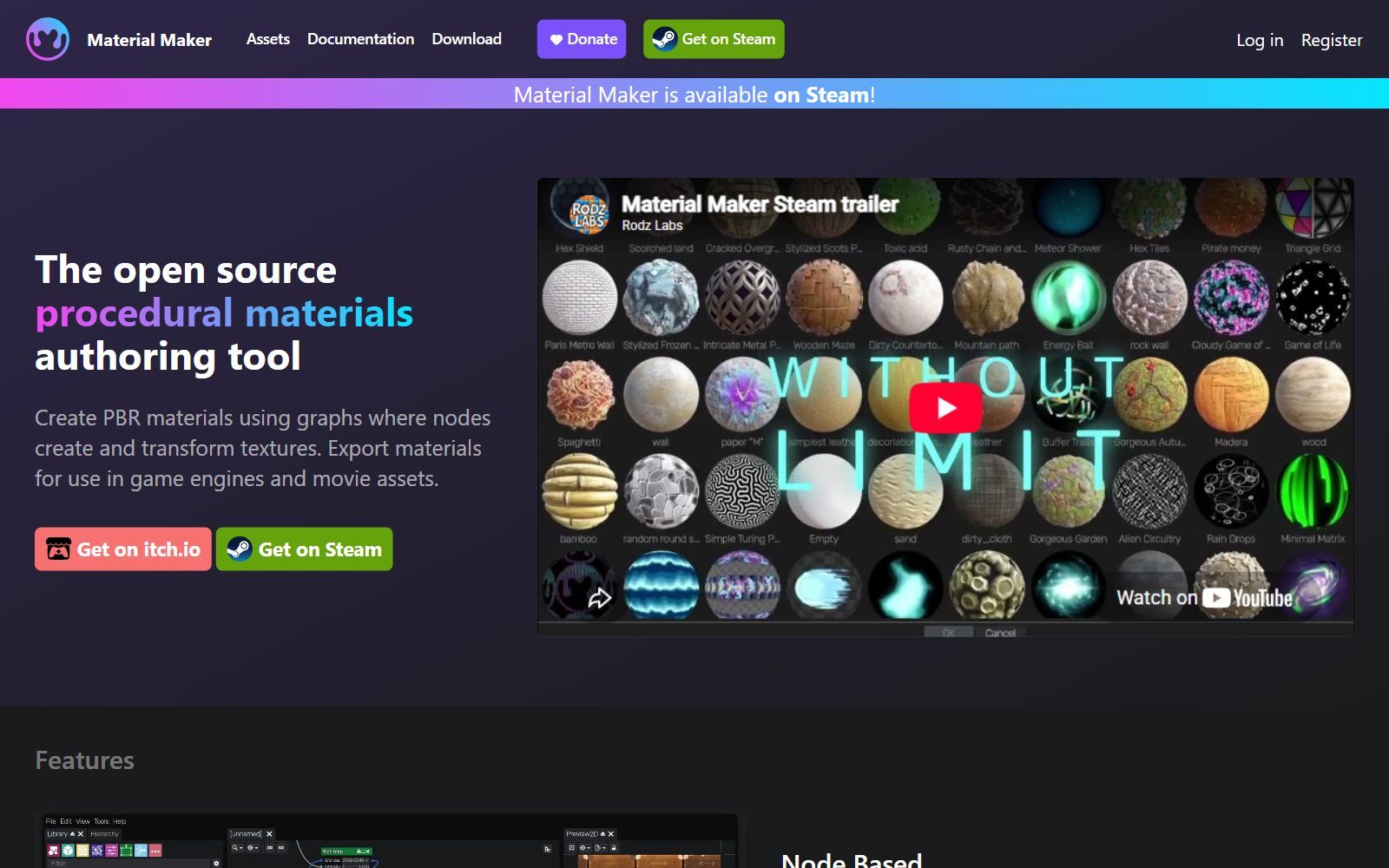
Material Maker is an open-source procedural materials tool: you build PBR materials from node graphs and export them for Godot, Unity and Unreal, with an experimental tool for painting textures onto 3D models. It is MIT-licensed, built on the Godot engine, and version 1.8 came out in October 2026. It replaces the material and texturing part of a Blender workflow, not the modelling.
More Open-Source 3D Tools Worth Knowing
- CadQuery (Apache-2.0): a Python library for parametric CAD models that exports formats such as STEP; version 2.8.0 came out in June 2026.
- BRL-CAD: a solid-modelling system developed as one package since 1983 that became open source in December 2004; its website says the code is under OSI-approved licences.
- Goxel (GPL-3.0): a voxel editor for Windows, Mac, Linux, iOS and Android; last release 0.15.1 in July 2024.
- ArmorPaint (zlib licence for the source): a 3D texture painting tool. The code is open, but the ready-made builds are paid to fund the project, so you compile it yourself to use it for free.
- Open3D (MIT): a developer library for point clouds and meshes rather than a modelling app; version 0.20.0 came out in September 2026.
- MakeHuman (AGPL source): parametric human characters; the latest release, 1.3.0, dates from May 2024.
- Art of Illusion (GPL-2.0): a Java modeller and renderer; the last stable release is 3.2.1 from November 2023, with a development snapshot published in May 2026.
Dropped: Abandoned or Not Open Source
The earlier version of this article listed tools that no longer belong on an open-source list:
- K-3D: abandoned; its last release dates from 2016.
- Sculptris: it was free but never open source, and it is no longer available. Its successor, ZBrushCoreMini, has also been discontinued.
- Natron (GPL-2.0 compositor): the last stable release, 2.5.0, came out on 25 November 2022, and newer builds are only pre-releases. Fine to try, risky to depend on.
Which Open-Source Blender Alternative Should You Choose?
- You design a physical product: FreeCAD, or SolveSpace for small parts; OpenSCAD or CadQuery if you want designs as code in Git.
- You want everything Blender does with an easier interface: Bforartists.
- You need interactive 3D in an app, website or game: Godot, with models from Blockbench, Dust3D or Wings 3D.
- You work with scans or 3D prints that need fixing: MeshLab.
- You need textures and materials: Material Maker.
- You will build the tool into a commercial product: prefer the permissive licences (MIT, BSD-style, Apache: Godot, Dust3D, Material Maker, Wings 3D, CadQuery). GPL tools are fine to use, but shipping a modified version means publishing its source.
If free is enough and the licence doesn't matter, our list of free Blender alternatives adds browser tools such as Tinkercad, Spline and Womp. For the full range, including paid software, see our overview of Blender alternatives.
How Founders Use Open-Source 3D Tools
For a hardware or e-commerce startup, open-source 3D tools are about control as much as cost: your design files stay readable in ten years, you can automate them with scripts, and nobody can raise the price of a seat. That control extends to your intellectual property; our guide on how to secure your 3D proprietary designs explains how to protect the files themselves. A printed prototype or a 3D product viewer is also one of the cheapest ways to test demand before you manufacture, which is the idea behind our 30-day validation sprint. If you want to sell your designs, print-on-demand is a low-cost way to start, and if you stay with Blender, our guide to free Blender 3D asset creation covers the basics. For the rest of an open-source creative stack, see our guides to open-source draw.io alternatives, open-source CorelDRAW alternatives, open-source Procreate alternatives and open-source Canva alternatives, or the top design tools for startups.
FAQ About Open-Source Blender Alternatives
Is Blender open source?
Yes. Blender is free and open source under the GNU GPL. People look for alternatives because they need a different kind of tool, such as CAD or mesh repair, or a more permissive licence.
What is the best open-source alternative to Blender?
It depends on the job: FreeCAD for parametric CAD, Bforartists for the full Blender feature set with an easier interface, Godot for interactive 3D, MeshLab for scans and mesh repair, and Material Maker for textures.
Which open-source 3D tools have a permissive licence?
Godot, Dust3D and Material Maker use the MIT licence, Wings 3D a BSD-style licence and CadQuery the Apache 2.0 licence. FreeCAD uses the LGPL, which is also business-friendly.
Can I use GPL 3D software for commercial work?
Yes. The GPL does not restrict commercial use, and it covers the software, not the models you create with it. Its conditions apply only when you distribute the software itself, modified or not.
Is Bforartists the same as Blender?
Bforartists is a GPL fork of Blender. It has the same features and opens Blender files, but uses a more menu-driven interface.
What is the best open-source CAD software?
FreeCAD is the most complete. SolveSpace is lighter and simpler, and OpenSCAD and CadQuery let you write parts as code.
Is K-3D still developed?
No. K-3D is abandoned; its last release dates from 2016.
Is Sculptris open source?
No. Sculptris was free but never open source, and it is no longer available.
What is the difference between free and open-source Blender alternatives?
Free tools cost nothing but may be closed source or limited to non-commercial use. Open-source tools publish their code under a licence that lets you study, change and redistribute it. See our list of free Blender alternatives for the closed-source options.
How can I get my startup's 3D tool featured?
You can publish a guest post in one of the Fe/male Switch startup blogs, which rank in Google and in AI tools like ChatGPT and Perplexity. Get a quality backlink.
About the Author
Violetta Bonenkamp, also known as MeanCEO, is an experienced startup founder with an impressive educational background including an MBA and four other higher education degrees. She has over 20 years of work experience across multiple countries, including 5 years as a solopreneur and serial entrepreneur. Throughout her startup experience she has applied for multiple startup grants at the EU level, in the Netherlands and Malta, and her startups received quite a few of those. She’s been living, studying and working in many countries around the globe and her extensive multicultural experience has influenced her immensely.

