

TL;DR: European funds for startups come in four forms: grants you apply for directly (EIC Accelerator, Women TechEU, cascade funding open calls), equity the EU invests through its own funds (the EIC Fund and the new Scaleup Europe Fund), loans and guarantees that reach you through your bank or a venture fund (InvestEU and the European Investment Fund), and free services (European Digital Innovation Hubs, the SME Fund). Most founders only look at the first door and miss the other three. Below: the four doors compared, a stage-by-stage funding stack, a scored worksheet, a copyable email to your bank and a worked founder example.
European funds for startups are not one pot of money with one application form. They are dozens of programmes run by the European Commission, its agencies, the European Investment Bank Group and national and regional authorities, and each one reaches founders in a different way. Some you apply to on the EU Funding & Tenders Portal. Some you never apply to at all, because the money sits inside your bank's loan or your investor's fund.
This guide sorts them by type of money. For a programme-by-programme map, see our EU grants for startups page.
The four doors to European money

Door 1: grants you apply for directly. Equity-free money in exchange for a project. The EIC Accelerator pays a lump-sum grant below €2.5 million for innovation work at technology readiness levels 6 to 8, according to the European Innovation Council. Women TechEU gives €75,000 to women-led deep tech startups. Cascade funding open calls, run by EU-funded projects, usually pay up to €60,000 for a defined pilot. Competitive and slow, but you keep your shares.
Door 2: equity from EU funds. The EU also invests in companies. The EIC Fund can pair the EIC Accelerator grant with an investment of €1 million to €10 million, and EIC STEP Scale Up invests €10 million to €30 million in larger rounds. On 4 August 2026 the European Commission completed the legal steps to set up the Scaleup Europe Fund as part of the EIC Fund, with a €5 billion target and the private equity firm EQT as investment manager. It invests directly in scale-ups in critical technologies such as AI, quantum, biotech and clean tech, on market terms.
Door 3: loans, guarantees and venture capital through intermediaries. This is the largest door and the least visible. The European Investment Fund (EIF) does not lend to companies directly, according to its own guidance. It guarantees loans made by banks and invests in venture capital funds. Under the InvestEU programme, those guarantees help lenders offer lower interest rates or ask for less collateral. If your bank offers an "EU-guaranteed" startup loan, this is where it comes from.
Door 4: free services and refunds. Not cash in your account, but real savings. European Digital Innovation Hubs offer free or subsidised testing, training and digital advice. The SME Fund refunds part of your fees for patents and other IP rights. Erasmus for Young Entrepreneurs pays a monthly stipend for 1 to 6 months with a host entrepreneur abroad.
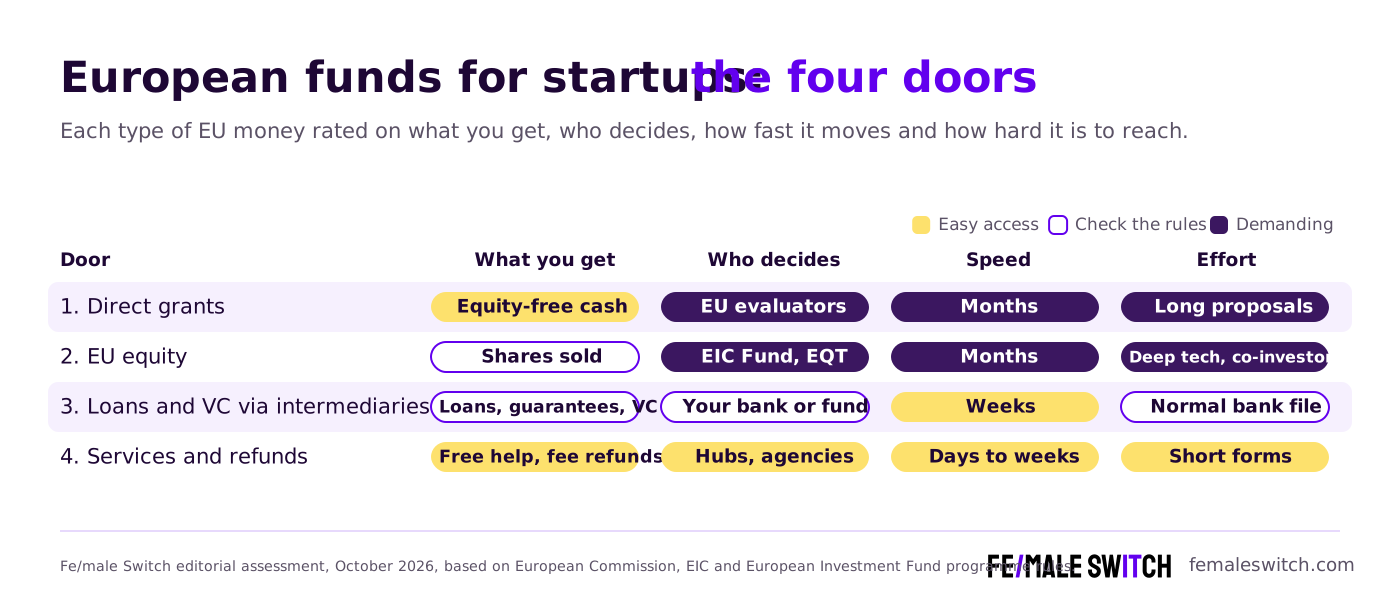
Which European funds fit which startup stage
The right door depends on where you are. A pre-revenue team should not spend six months on an EIC Accelerator proposal.
The European Tech Champions Initiative is a fund of funds that the EIB Group launched in 2023 with six Member States. According to the EIF, its first generation has up to €3.9 billion of initial resources to invest in large growth-stage VC and private equity funds. You never apply to it. You meet it when one of those funds leads your round.
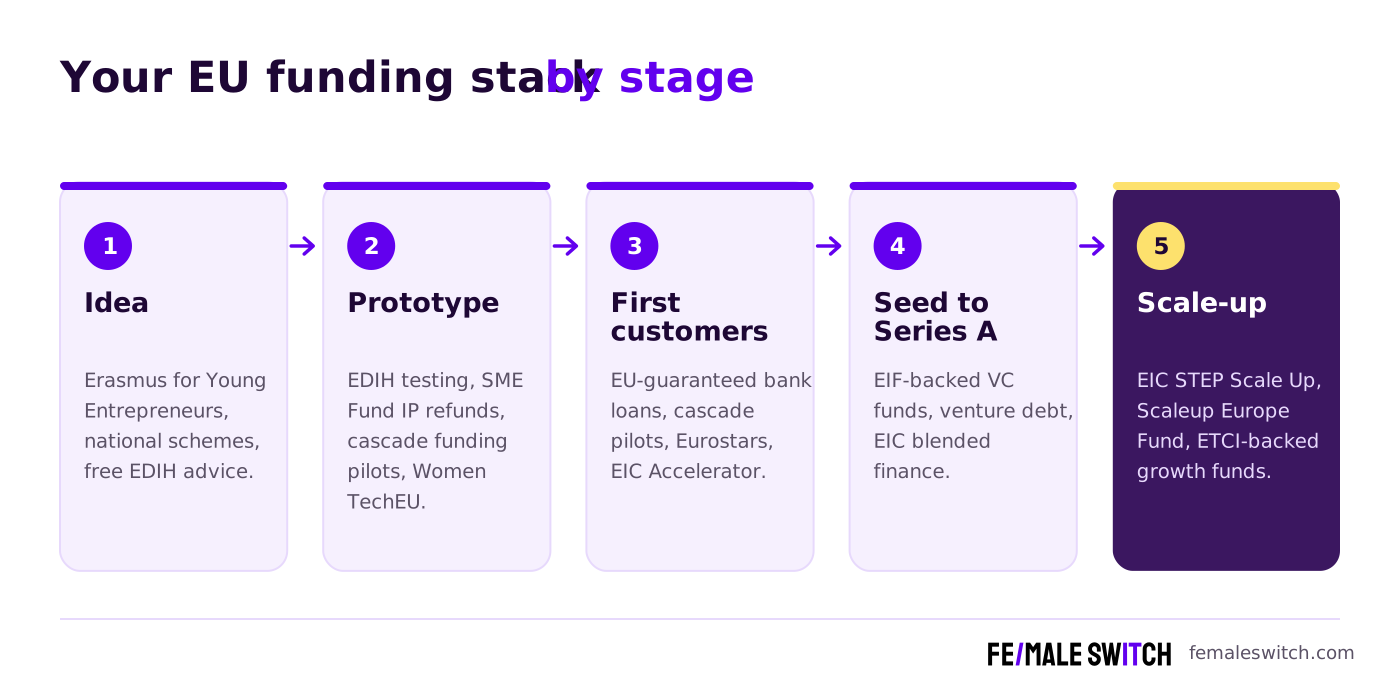
How to reach the money you never apply for
Door 3 confuses founders because there is no EU application form. The EU money is already inside a product your bank or investor sells. Three practical routes, all described by the European Commission and the EIF:
- Search the Commission's Access to Finance portal. It lists banks, microlenders, guarantee schemes and venture capital funds in your country that work with EU-backed financing. You can filter by company size, region and sector.
- Ask your own bank the right question. Don't ask "do you have EU grants?" Ask whether they offer loans backed by an EIF or InvestEU guarantee, and what that changes in interest rate and collateral.
- Talk to the Enterprise Europe Network. Its advisers help small businesses prepare for conversations with lenders and investors, free of charge.
For equity, the EIF's advice is to contact the fund managers it has invested in.
Copyable email to your bank
Scored worksheet: which door should you knock on first?
Give yourself one point for each line you can honestly confirm. Score each door separately.
Door 1, direct grants
- I can describe one project with a clear start, end and budget.
- I can spend 2 to 3 months on an application without stopping sales.
- My innovation is new for the market, not only for my company.
- I have a working prototype, or I am applying for a call that pays for one.
Door 2, EU equity
- I am willing to sell shares.
- My technology is deep tech or strategic (AI, quantum, biotech, clean tech, semiconductors).
- I have, or can attract, private co-investors.
- I can show a credible path to a large market.
Door 3, intermediated loans and VC
- I have revenue or a signed customer, or a clear cash-flow plan.
- I have a bank account with a bank that knows my business.
- I need money within weeks, not months.
- I can repay a loan or I am raising a venture round anyway.
Door 4, services and refunds
- I need to test a technology, go digital or protect IP.
- I would rather save money than raise it right now.
- I can fill in a short form this month.
- I am at an early stage and want low-risk first wins.
How to read it: the door with the highest score is your first move. On a tie between Doors 1 and 3, start with Door 3 because it is faster. Scoring 3 or 4 on Door 4? Apply this week, as refunds often run out.
Worked founder example
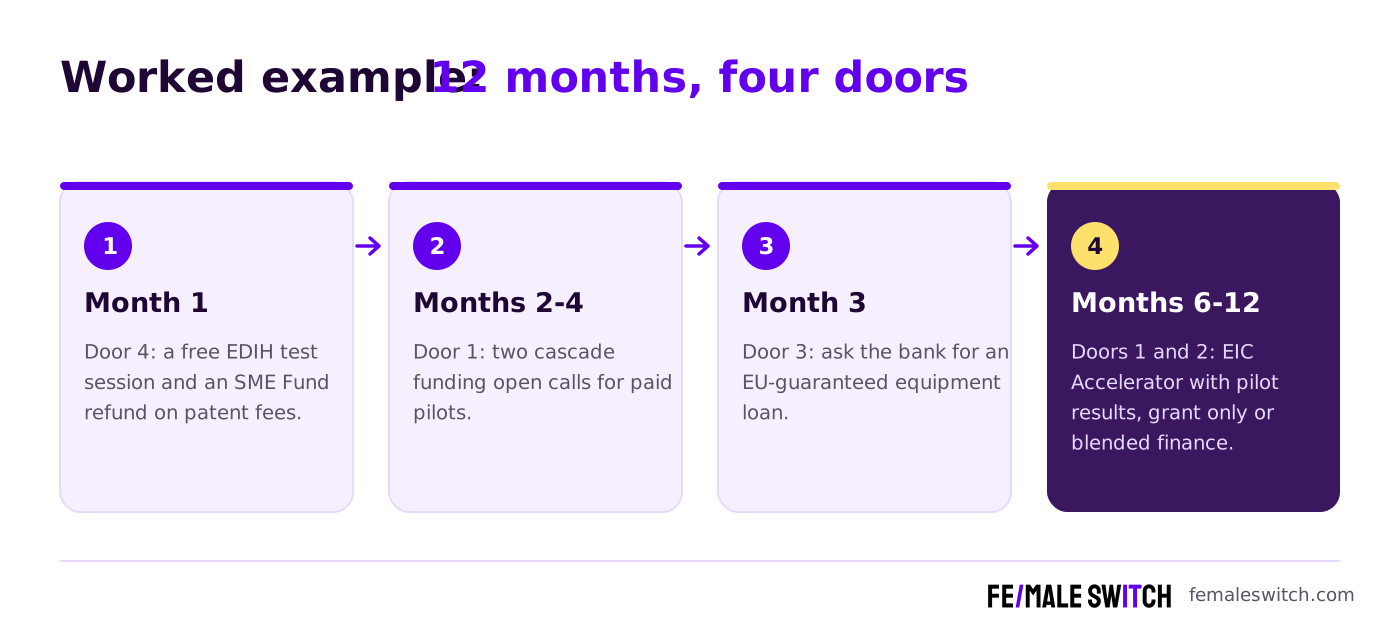
A two-person climate tech startup in Portugal has a lab prototype of a battery monitoring sensor, two pilot customers and no revenue yet. Here is how the four doors play out for a team like this.
- Door 4 first (month 1). They book a free session at their nearest European Digital Innovation Hub to test the sensor's data platform and apply for an SME Fund refund on their patent fees, if the fund is still open.
- Door 1, small (months 2 to 4). They apply to two cascade funding open calls in energy, each paying for a short pilot with an industrial partner. Writing two short proposals costs them about three weeks.
- Door 3 (month 3). They send the bank email above. The bank offers a small loan backed by an EU guarantee to cover equipment, with lower collateral than a standard loan.
- Door 1, large (months 6 to 12). With pilot results in hand, they prepare an EIC Accelerator short proposal and decide whether to ask for the grant only or for blended finance.
- Door 2 (later). EIC Fund equity comes in only with blended finance or a larger round.
The team never waits for one big decision from Brussels: each door funds the step that makes the next one easier.
Key deadlines to plan around
Dates confirmed on official pages as of 15 October 2026. Dates marked "draft" come from the EIC Work Programme 2027, which the Commission had not adopted yet.
EIC Accelerator short proposals can be sent at any time; the EIC batches them for evaluation on the first Tuesday of each month. For new calls every month, follow Mean CEO's EU Funding News series.
Who should apply and who can skip it
Use this map if you are a founder in the EU or a Horizon Europe associated country, you want to combine equity-free money with loans or investment, and you are ready to treat funding as a 12-month plan rather than one application.
Skip EU funds for now if you need money within days, your company is not yet registered, or your project is a standard business with no innovation angle. National schemes and customer revenue move faster.
Related EU funding guides
Want to test your business model before you pitch it to any funder? The Fe/male Switch startup game lets you build a startup step by step with an AI co-founder.
FAQ
What European funds are available for startups?
Four types: direct grants such as the EIC Accelerator, Women TechEU and cascade funding open calls; equity from the EIC Fund and the Scaleup Europe Fund; loans, guarantees and venture capital through banks and funds backed by the European Investment Fund and InvestEU; and free services such as European Digital Innovation Hubs and SME Fund refunds.
Can a startup get EU money without applying to the EU?
Yes. Much EU money reaches startups through intermediaries. The European Investment Fund guarantees bank loans and invests in venture capital funds, so you apply to the bank or the fund, not to the EU. The Commission's Access to Finance portal lists them by country.
Does the EU invest equity in startups?
Yes, through the EIC Fund. It can invest €1 million to €10 million alongside an EIC Accelerator grant, and EIC STEP Scale Up invests €10 million to €30 million. The Scaleup Europe Fund, set up in August 2026 with a €5 billion target, invests directly in scale-ups in critical technologies.
Which European fund is easiest for an early-stage startup?
Services and small grants: European Digital Innovation Hubs, SME Fund IP refunds and cascade funding open calls, which usually pay up to €60,000 for a pilot. They need short applications and suit teams before their first big round.
Are European funds only for EU startups?
Mostly, but not only. Many programmes, including the EIC, are open to companies in Horizon Europe associated countries. UK applicants, for example, can apply to the EIC Accelerator for the grant only. Check the eligibility section of each call.
About the Author
Violetta Bonenkamp, also known as MeanCEO, is an experienced startup founder with an impressive educational background including an MBA and four other higher education degrees. She has over 20 years of work experience across multiple countries, including 5 years as a solopreneur and serial entrepreneur. Throughout her startup experience she has applied for multiple startup grants at the EU level, in the Netherlands and Malta, and her startups received quite a few of those. She’s been living, studying and working in many countries around the globe and her extensive multicultural experience has influenced her immensely.

