

Startup Incubators in Asia for Early-Stage Founders: 15 Programmes, Country by Country
Asia has no single startup scene, so it has no single best incubator. A founder in Singapore, Hong Kong, Taipei, Tokyo, Seoul, Bengaluru, Kuala Lumpur or Manila will meet different programmes, different money and very different terms. This guide lists 15 incubators and accelerators for early-stage startups in Asia that are running now, grouped by country. We checked each one on its own website in October 2026 and give equity, money, length and intake only where the official page states them. Programmes that stopped, changed or could not be verified are in a separate section.
Quick answer: if you want to keep all your equity, look at AppWorks (Taiwan, free, no equity), the NSRCEL Women Startup Program (India, no equity, INR 10 lakh grant), Cradle CIP Spark (Malaysia, conditional grant up to RM150,000) and the government-backed HKSTP and Cyberport incubators in Hong Kong. If you want cash for equity, Antler, Iterative and Accelerating Asia publish clear cheques. In Japan start with Open Network Lab, in South Korea with SparkLabs, and in Singapore with B71, the incubator formerly known as BLOCK71.
Write FREE SEO-optimized Blog Articles! Our Article Writer ensures your blog is loved by both Google and your readers, turning those clicks into customers.
👉 Write your article here
Asia's Startup Incubators Compared
Sources: each programme's own website, checked 27 October 2026. Terms change between rounds, so read the current call before you apply.
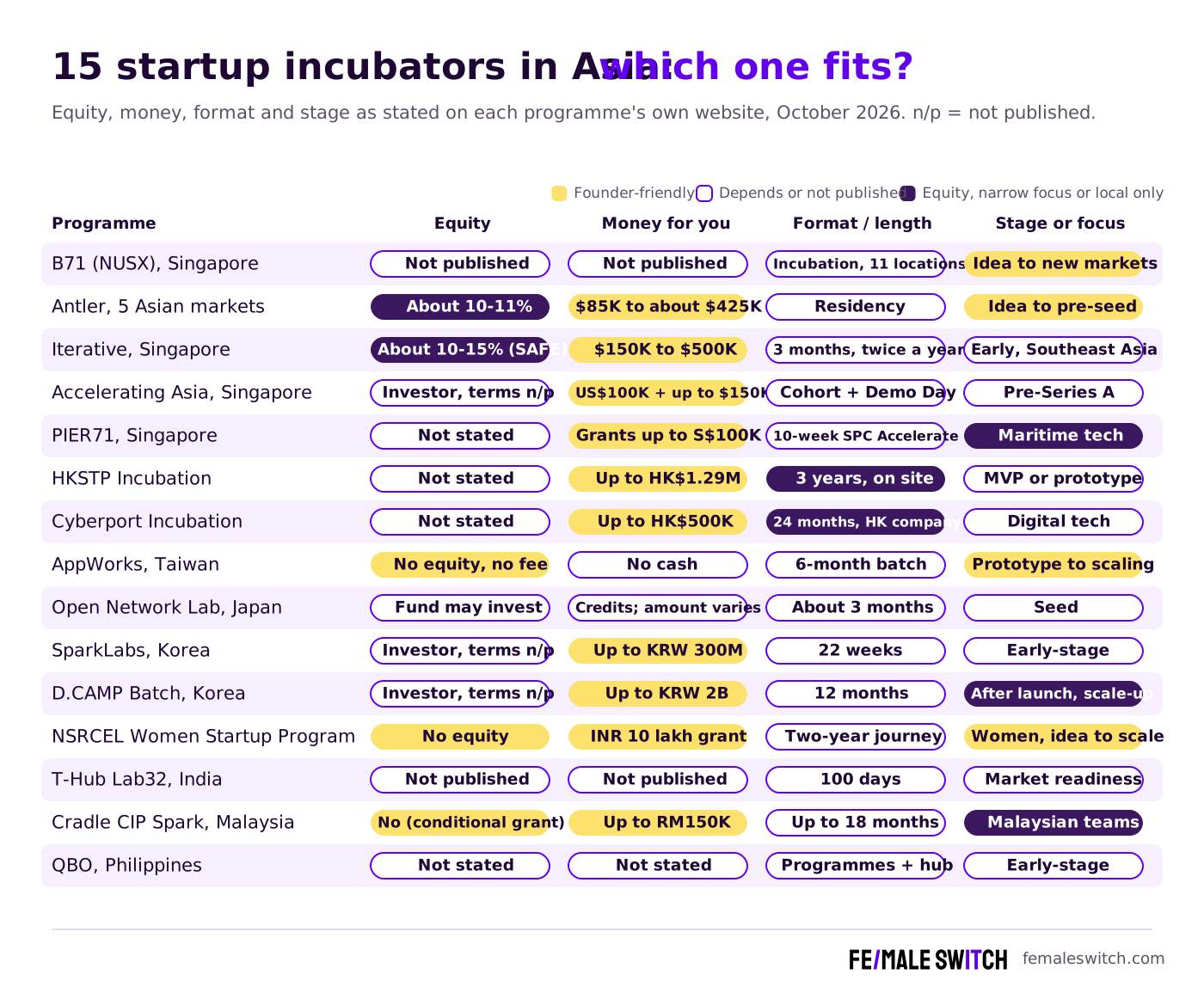
The 15 Startup Incubators in Asia for 2027
The list mixes three kinds of programmes: government-backed incubators that give money or grants without taking equity, university incubators, and investor-led accelerators that give cash for equity. Each entry says which kind it is, and the programmes are grouped by country.
Singapore
1. B71, formerly BLOCK71 (Singapore and beyond)
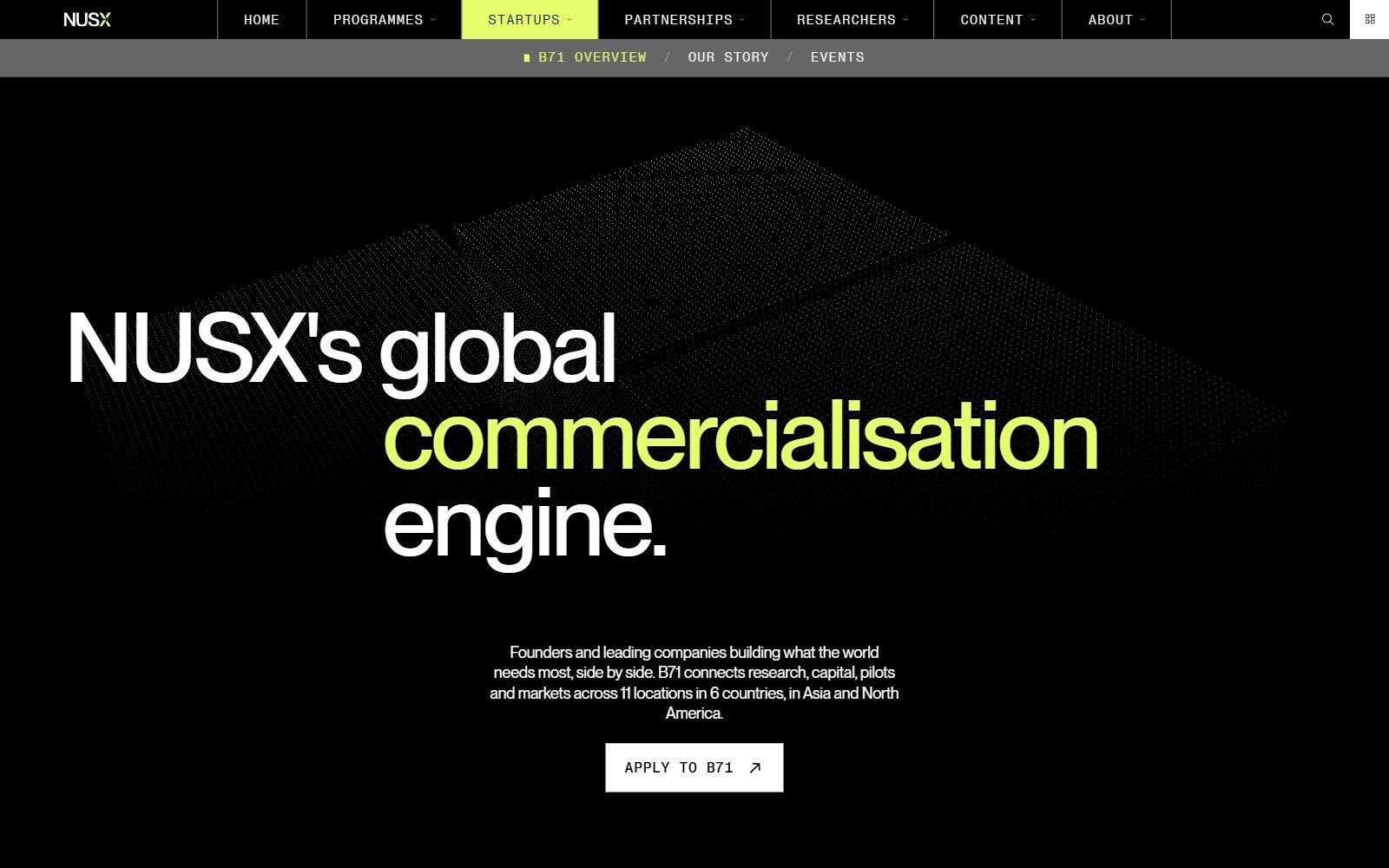
B71, the hub once called BLOCK71, is now part of NUSX, the National University of Singapore's innovation and enterprise arm. Its page says it connects research, capital, pilots and markets across 11 locations in 6 countries in Asia and North America, and has supported 1,600+ startups since 2011, including Carousell, PatSnap and ShopBack. Incubation at B71 is for turning an idea into a company; startups also work alongside corporate partners and NUS research, and can use B71's hubs in China (Chongqing, Suzhou and Guangzhou), Japan (Tokyo and Nagoya), Indonesia (Jakarta, Bandung and Yogyakarta, with the Salim Group's Innovation Factory), Vietnam and Silicon Valley. Applications are open at app.block71.co. B71 does not publish equity or funding terms, so ask before you join. See the startup events in Singapore.
2. Antler (Singapore, India, Japan, Korea, Indonesia)
Antler is an early-stage investor that runs residencies where founders build, often find a co-founder and pitch for a first cheque. Its terms differ by country, and each location page states them: in Singapore, $150,000 for 10% of your company plus an additional equity amount fixed at your next round, paid after a 6-week residency, with no fee; the next Singapore residency started on 5 October 2026. In Japan the published deal is also $150,000 for 10%. In India the standard deal is up to about $425K (about INR 4 crore) for 11% equity, with a decision within 3 weeks and the first 2 weeks in person in Bengaluru. In Korea Antler invests up to $260K (KRW 350M) per team after an 11-week residency, and in Indonesia it invests $85,000 for 10% via a SAFE after 6 weeks. Antler also has a Vietnam programme. If you are weighing it up, see our alternatives to Antler.
3. Iterative (Singapore, Southeast Asia)
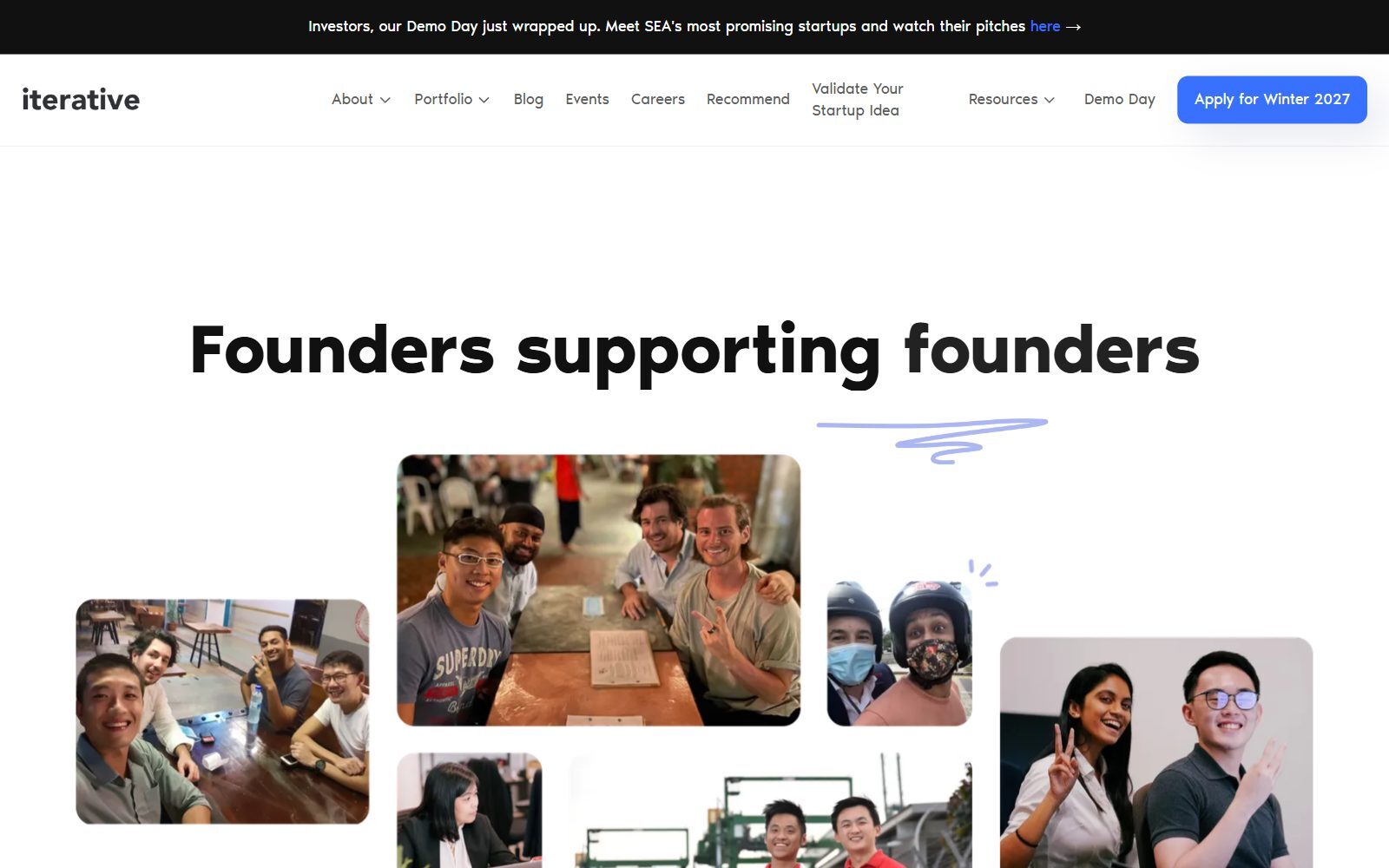
Iterative is a Singapore accelerator for Southeast Asian startups, run by founders who previously started and sold companies backed by Silicon Valley investors. It invests US$150,000 to $500,000 per startup, twice a year, using a post-money SAFE for approximately 10-15% of the company. It pays the full amount on admission, with no milestones, no clawbacks and no programme fees, then works with founders for 3 months before a Demo Day with investors. Applications are open all year and reviewed on a rolling basis; applicants usually hear back within two weeks. Its site currently invites applications for the Winter 2027 batch.
4. Accelerating Asia (Singapore, Southeast and South Asia)
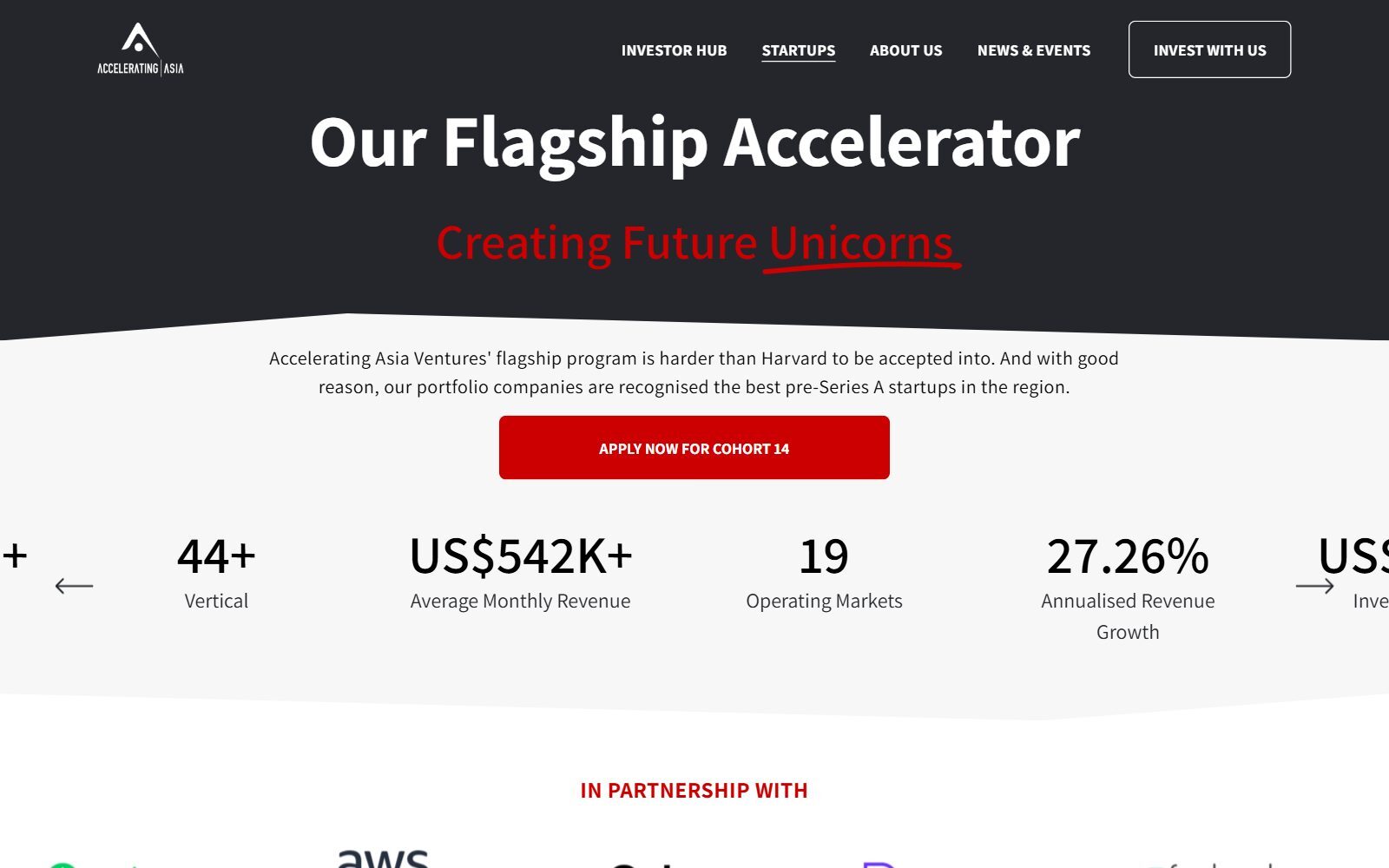
Accelerating Asia is an accelerator and early-stage VC fund that backs pre-Series A tech startups in Southeast and South Asia with real traction, including founders without a traditional background. Startups in its flagship programme get up to US$250K: US$100K up front and a potential US$150K in follow-on funding, plus 1-1 sessions, masterclasses, investor connections and a Demo Day. Its Get Funded page lists Cohort 14, with the programme starting in October 2026 and Demo Day planned for January 2027, so watch for the next call. It does not publish its equity terms.
5. PIER71 (Singapore, maritime tech)
PIER71 is Singapore's maritime innovation programme and works with startups from all over the world. Its main entry point is the annual Smart Port Challenge: finalists join SPC Accelerate, a ten-week market validation and customer discovery programme backed by NUS Enterprise, and become eligible for test-bedding grants of up to S$100,000 from the Maritime and Port Authority of Singapore. Smart Port Challenge startups also get priority access to the sponsored Landing Pad residency at BLOCK71. Use it only if you build for shipping, ports or the wider maritime sector.
Boost Your SEO by listing your startup and get a FREE backlink.
Create a profile in the F/MS Startup Game, add the link to your website and submit.
👉 List your startup now!
Hong Kong
6. HKSTP Incubation Programme (Hong Kong)
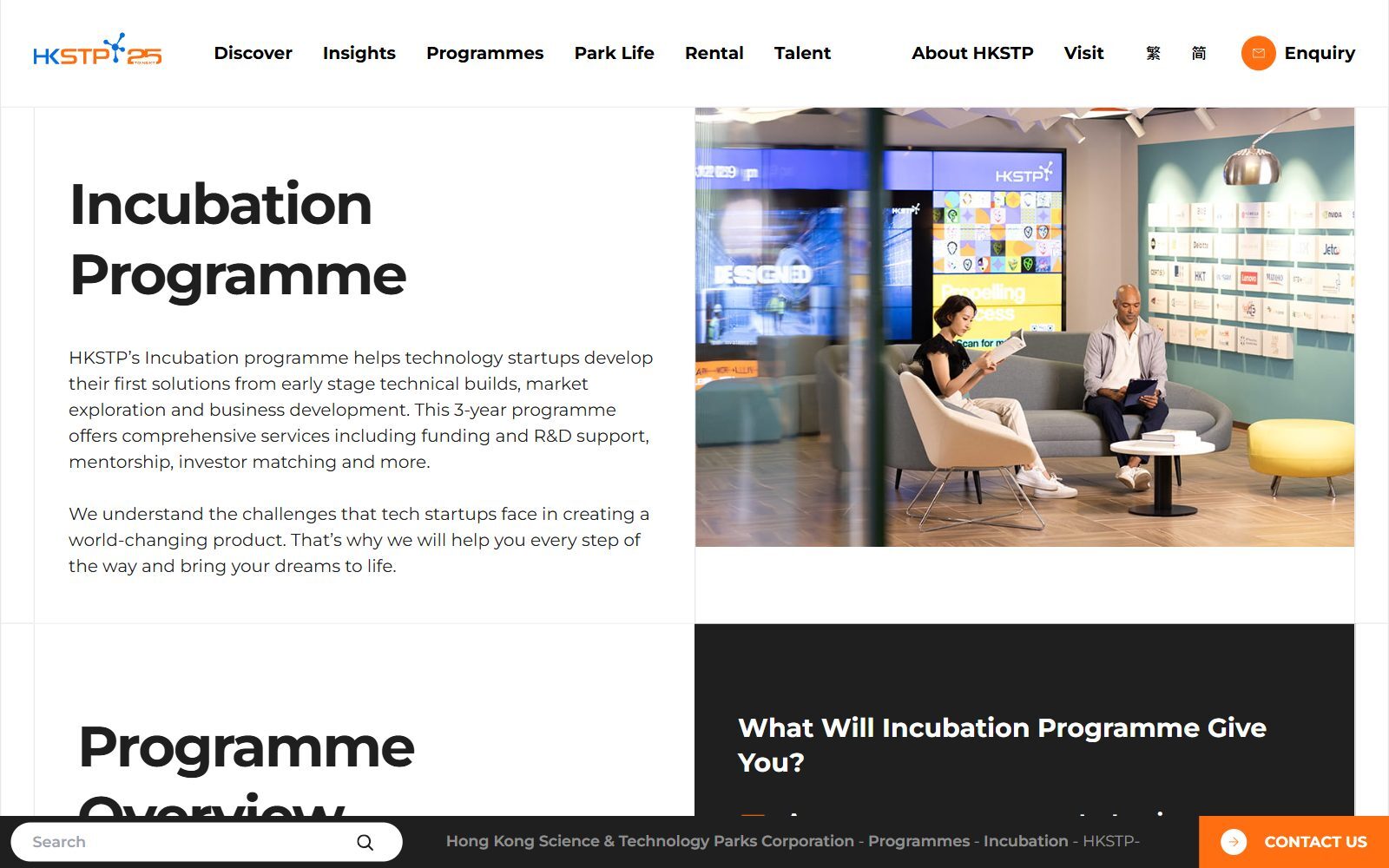
The HKSTP Incubation Programme of Hong Kong Science and Technology Parks is a 3-year, on-site programme for technology startups with an MVP or prototype, in ICT, electronics, green technology or precision engineering. Incubatees get up to HK$1.29 million to cover technology and business development, a dedicated account manager, access to equipment and labs, mentors and investors, and a rental subsidy for their workspace. Applications are open all year, and rejected teams can re-apply three months after their panel result. Overseas founders are welcome but first need a Hong Kong business registration. See the startup events in Hong Kong.
7. Cyberport Incubation Programme (Hong Kong)
The Cyberport Incubation Programme is Cyberport's flagship programme for digital tech startups. Over 24 months, incubatees receive up to HK$500,000 in financial assistance, rent-free workspace on site and access to Cyberport's investor, mentor and professional networks. Applicants must be a Hong Kong digital tech company less than 7 years old (or being incorporated), with a product ready for market within 12 to 18 months, and the founders must hold at least 51% of the shares. Cyberport says the programme is being enhanced and that new details will be announced; teams that are not yet incorporated can start with the Cyberport Creative Micro Fund.
Taiwan
8. AppWorks Accelerator (Taipei, with Demo Days in Southeast Asia)
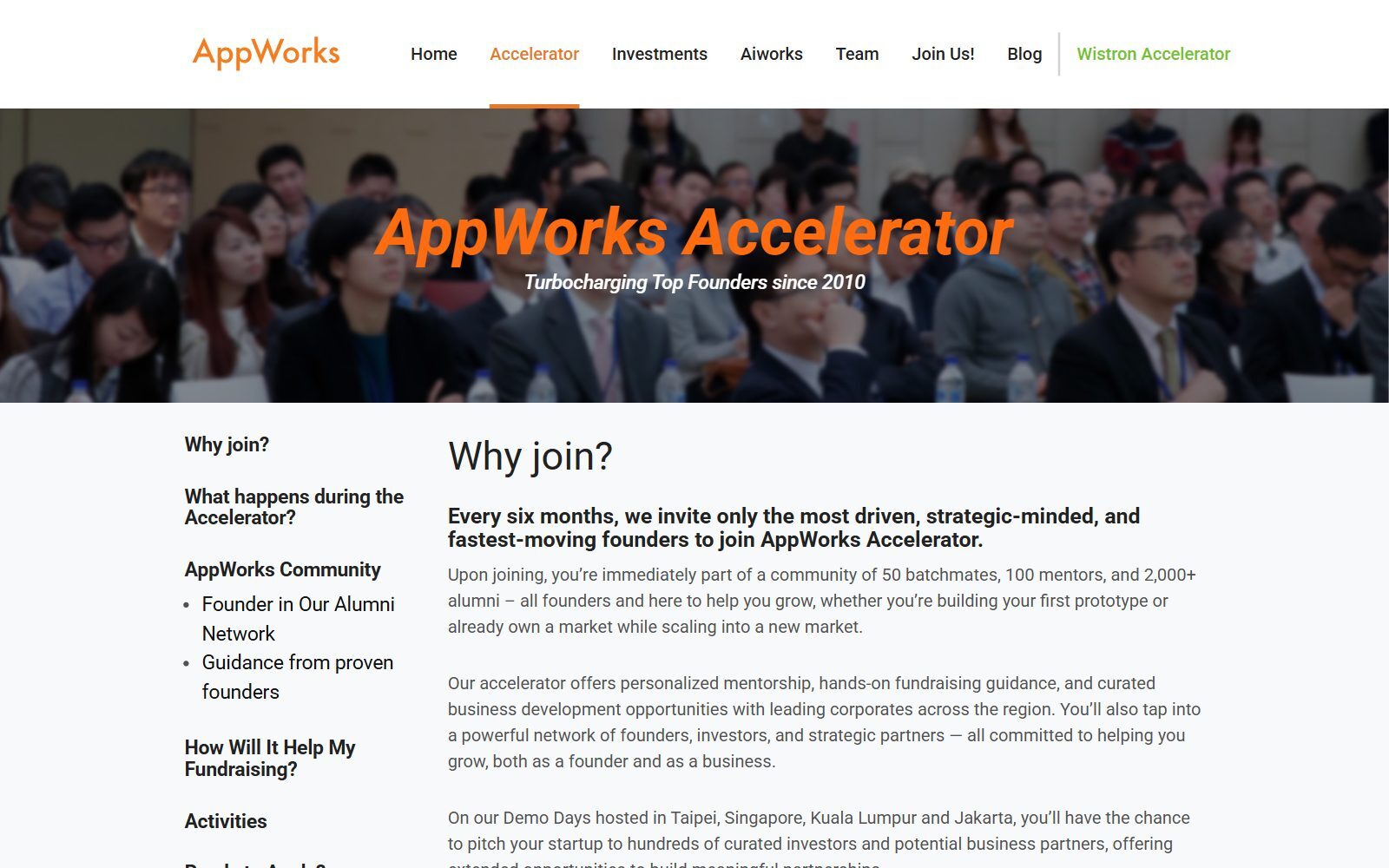
AppWorks Accelerator has run since 2010 and takes a new batch every six months. Its page says the whole programme is completely free: it takes no equity, no tokens and no fees. Each batch joins a community of about 50 batchmates, 100 mentors and 2,000+ alumni, with personalised mentoring, fundraising guidance, corporate introductions, partner credits and Demo Days in Taipei, Singapore, Kuala Lumpur and Jakarta. AW#33 is closed. For AW#34, applications open in October 2026 and close in December 2026, the batch starts in March 2027 and Demo Day is in June 2027.
Japan
9. Open Network Lab (Tokyo)
Open Network Lab (Onlab), run by Digital Garage, is a seed accelerator with a hub at Shibuya PARCO in Tokyo and another in San Francisco. Its Seed Accelerator lasts about three months, with sessions of about two hours a week, and ends with a Demo Day attended by 100+ investors and corporate leaders. Onlab Fund II may make an equity investment, with the amount and terms set per startup, and selected startups may receive up to USD 25,000 in AWS credits and USD 30,000 in OpenAI credits. Startups that take the investment allocate shares to the fund. Applications for the 32nd batch have closed; the regional Onlab Hokkaido programme lists an application deadline of 30 October 2026. Japan-based founders can also join Antler Japan. See the startup events in Tokyo.
South Korea
10. SparkLabs (Seoul)
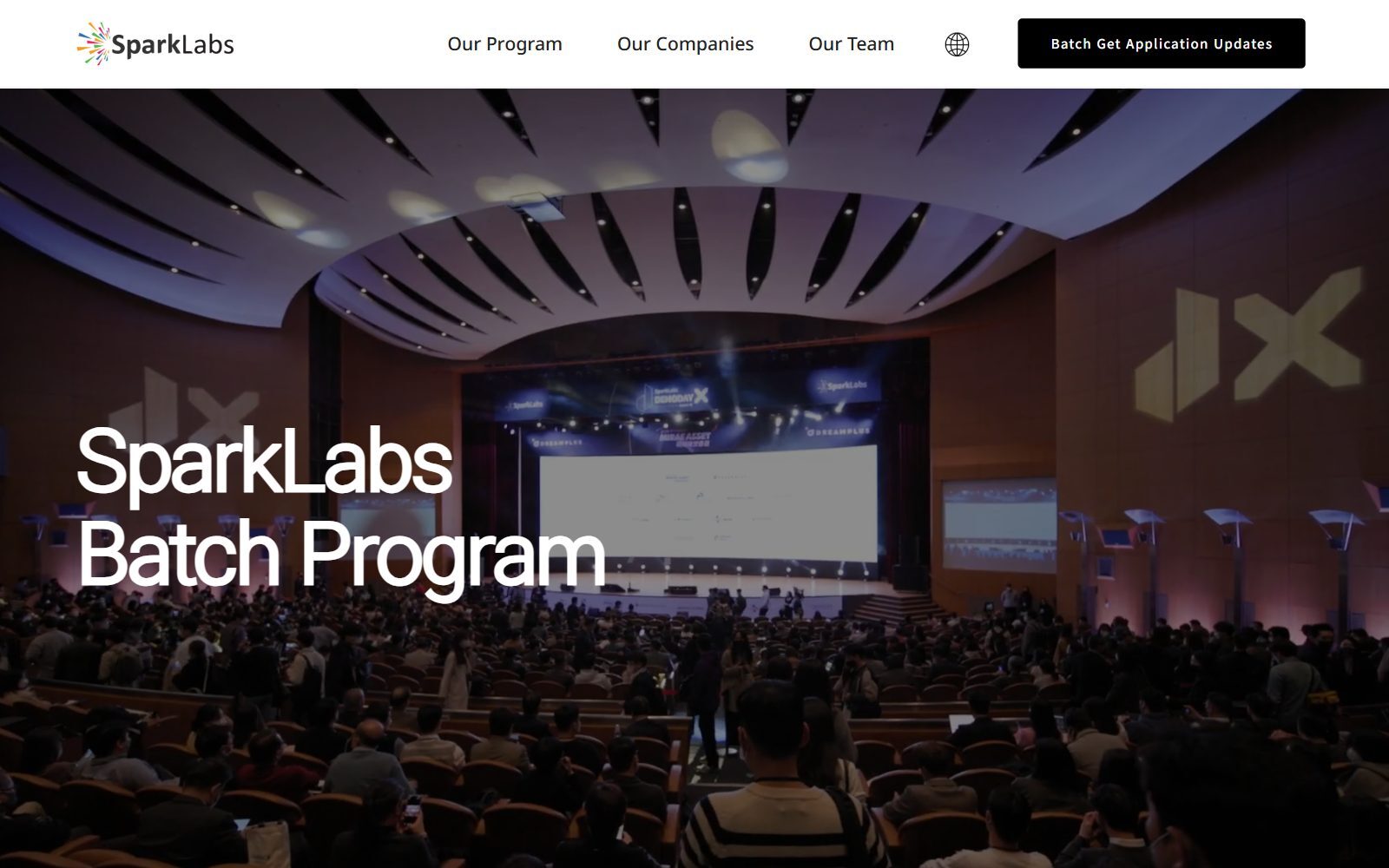
SparkLabs runs the SparkLabs Batch Program, a 22-week programme led by its four co-CEOs and team. Selected startups can receive up to KRW 300 million in investment and a recommendation to Korea's TIPS programme for up to KRW 700 million in support, plus PMF coaching, office hours with partners, help with follow-on funding and a Demo Day. SparkLabs says it has worked as a TIPS operator for about ten years. It does not publish equity terms; founders can sign up for batch application updates on its site.
11. D.CAMP (Seoul)
D.CAMP runs large startup centres in Seolleung and Mapo in Seoul; D.CAMP Mapo, opened in July 2020, has room for more than 110 companies. Its D.CAMP Batch is a 12-month scale-up programme for IT service and solution startups that have launched and are preparing to scale, at a pre-money valuation of around KRW 10 to 30 billion. Selected startups get an investment from D.CAMP or a partner VC, up to KRW 2 billion, plus 1:1 coaching and follow-on introductions. Applications for batch 9 closed on 14 October 2026; that batch runs from January to December 2027. Earlier founders should look at its office hours and other programmes (site mostly in Korean). See the startup events in Seoul.
India
12. NSRCEL Women Startup Program (IIM Bangalore)
NSRCEL, the startup incubation centre at the Indian Institute of Management Bangalore, has run its Women Startup Program, powered by Kotak BizLabs, since 2016. Cohort 6 is a structured two-year journey with three pathways: the Entrepreneurship Base Program for ideation to MVP, the Incubation Program for startups with a validated MVP and early traction, and the Scale Hub for growth-stage ventures. NSRCEL takes no equity from ventures in the programme, and its page says each selected venture receives a grant of INR 10 lakh, with grants awarded during the incubation phase. Participants must take part throughout. NSRCEL also runs incubation programmes for healthcare, climate, circular economy and mobility startups. See the startup events in Bangalore.
13. T-Hub (Hyderabad)
T-Hub in Hyderabad calls itself the world's largest home for startups. Its flagship programmes follow a startup's stage: Lab32 is a 100-day market readiness programme that it says has run over 11 cohorts with 286 startups, and T-Angel is a 100-day programme that prepares revenue-generating startups for their first investment. It also runs sector programmes in AI, semiconductors, space tech and mobility with corporate partners. T-Hub does not publish equity terms for these programmes.
Boost Your SEO by Getting Featured in Our Blogs and get a backlink.
We publish content about startups, education, tech, funding, etc. that ranks well not only in Google but also in Perplexity, ChatGPT, Grok and other AI tools.
👉 Get featured now!
Malaysia and the Philippines
14. Cradle CIP Spark (Malaysia)
Cradle is the Malaysian agency for early-stage technology startups, set up in 2003. Its CIP Spark is a conditional grant of up to RM150,000 for up to 18 months, for development and pre-commercialisation, with networking and business support on top. It is open to individuals (at least two, with at least one Malaysian) and to companies under 5 years old with accumulated revenue below RM3 million. Because it is a conditional grant, you may have to pay it back if the agreement is terminated. At least 60% must go to development costs.
15. QBO Innovation Hub (Manila, Philippines)
QBO Innovation Hub has worked on the Philippine startup ecosystem since 2016, with government, universities and companies. It runs startup acceleration, incubator training, soft-landing and corporate innovation programmes, including the J.P. Morgan Incubation Program for selected startups, and its headquarters in Makati doubles as a co-working space. QBO does not publish funding or equity terms; check each programme's call.
Incubators From Older Lists That Closed or Changed
The 2025 version of this article mixed incubators, accelerators and venture funds, linked to directory sites instead of the programmes and quoted investment counts and IPO exits without a source. We removed those figures and checked every name again:
- BLOCK71 (Singapore) is now B71, part of NUSX; it stays on the list.
- JFDI.Asia (Singapore) says it is no longer actively investing in new startups and is liquidating its assets as they mature.
- Tribe (Singapore): its tribe.xyz domain now belongs to an unrelated recruiting company, so we dropped it.
- Startupbootcamp FinTech Singapore is no longer listed; Startupbootcamp now runs SBC Expand, which builds market entry into Singapore, Malaysia and Taiwan for growing companies.
- Bangkok Bank InnoHub (Thailand): its site says that after two seasons it replaced the accelerator with the Bangkok Bank InnoHub Partnership Program, built around pilot projects with the bank.
- Orbit Startups now presents itself as Orbit Ventures, investing in companies across Asia, Africa, the Middle East and Latin America; the old chinaccelerator.com domain redirects there.
- Axilor Ventures (India) now describes itself as an active seed fund, and Anthill Ventures runs 6-month venture scaling programmes for early growth-stage startups in India.
- SGInnovate presents itself as a builder of Singapore's deep tech ecosystem and an investor, and NTUitive as NTU's innovation and enterprise company for research commercialisation and venture building; neither shows an open incubator intake.
- Plug and Play APAC runs corporate innovation programmes from its Singapore headquarters rather than an open incubator.
- Born2Global Centre (Korea): its website now shows only the name Global Digital Innovation Network, and we could not read any programme details.
- GROW Agrifoodtech Accelerator and Inspire Ventures: their websites returned an empty page or did not load, so we dropped them.
Which Incubator in Asia Should You Choose?
- You want to keep 100% of your company: AppWorks (free, no equity), the NSRCEL Women Startup Program, Cradle CIP Spark and, for Hong Kong companies, HKSTP and Cyberport.
- You need cash now and accept equity: Antler, Iterative and Accelerating Asia publish their cheques; SparkLabs invests up to KRW 300 million in Korea.
- You have no co-founder or idea yet: an Antler residency in your country.
- You build deep tech or hardware: HKSTP for labs and R&D support, B71 for NUS research and corporate pilots, PIER71 for maritime tech.
- You are a woman founder in India: the NSRCEL Women Startup Program.
- You are already selling and want to scale in Korea: D.CAMP Batch.
- You are in Indonesia or Vietnam: Antler Indonesia, Antler Vietnam, B71's hubs and AppWorks' Jakarta Demo Day.
Join F/MS: Startup Facilitator & Incubator and unlock your startup dreams today! Get your first customers, register you company in the Netherlands and get startup visas for the team.
How Founders Get the Most Out of an Incubator in Asia
Incubators pick founders who have done their homework, so validate first: our 30-day validation sprint shows how, or you can validate your startup idea with our content-driven service. Read the terms like an investor: a SAFE, a fixed equity stake and a conditional grant all cost you something different, which our guide to term sheet negotiation explains, and prepare a pitch deck that tells a story. After the programme most founders raise a seed round: see our list of early-stage VCs in Asia, the VCs for AI startups in Asia, our guide to seed money for startups and the common pre-seed fundraising mistakes.
Comparing regions? Read our guide to startup incubators in Europe, our wider guide to startup accelerators, the China startups to watch and our list of early-stage VC firms worldwide. Women founders can find more in our guides to venture capital for female entrepreneurs and angel investors for women founders.
Boost Your SEO with 1,500+ Free Business Directories: increase your DA, get backlinks and traffic.
We've compiled an exclusive list of directories and websites where you can submit your business and start building high-quality backlinks to boost your website traffic and get your SEO snowball rolling.
👉 Submit your startup now!
FAQ About Startup Incubators in Asia
What is the difference between an incubator and an accelerator?
An incubator usually supports very early founders over a longer period with space, coaching and often grants, as HKSTP (3 years) and Cyberport (24 months) do. An accelerator is a shorter, fixed programme that usually invests cash for equity, such as Iterative (3 months) or SparkLabs (22 weeks).
Which startup incubators in Asia take no equity?
AppWorks in Taiwan says its programme is completely free with no equity, tokens or fees, NSRCEL takes no equity from its Women Startup Program ventures, and Cradle CIP Spark in Malaysia is a conditional grant. HKSTP and Cyberport give funding without stating an equity stake.
Which incubators in Asia give startups money?
Among the programmes we checked: Antler ($85K to about $425K depending on country), Iterative ($150K to $500K), Accelerating Asia (US$100K plus a potential US$150K), HKSTP (up to HK$1.29 million), Cyberport (up to HK$500,000), SparkLabs (up to KRW 300 million), D.CAMP (up to KRW 2 billion), NSRCEL (INR 10 lakh grant) and Cradle (up to RM150,000).
What happened to BLOCK71?
BLOCK71 is now called B71 and is part of NUSX, the National University of Singapore's innovation and enterprise arm. It still runs incubation in Singapore and hubs in China, Japan, Indonesia, Vietnam and Silicon Valley.
Is JFDI.Asia still running?
No. JFDI.Asia, Southeast Asia's first startup accelerator, says it is no longer actively investing in new startups and is focused on liquidating its assets as they mature.
Can foreign founders join an incubator in Hong Kong?
Yes, but they need a Hong Kong company. HKSTP welcomes applications from around the world once you have a Hong Kong business registration, and Cyberport requires a Hong Kong-incorporated digital tech company.
When is the next AppWorks intake?
For AppWorks #34, applications open in October 2026 and close in December 2026, the programme starts in March 2027 and Demo Day is in June 2027.
What does Antler invest in Asia?
Its location pages list $150,000 for 10% in Singapore and Japan, up to about $425K for 11% in India, up to $260K per team in Korea and $85,000 for 10% via a SAFE in Indonesia, each after a residency.
Which incubators in Asia support women founders?
The NSRCEL Women Startup Program at IIM Bangalore is built for women founders. Fe/male Switch also runs a startup facilitator and incubator for women, and you can list your startup in the F/MS Startup Game for a free backlink.
How can I get my startup in front of more investors?
Get covered where investors and AI assistants look: you can publish a guest post in the Fe/male Switch startup blogs. Get featured and earn a backlink.
About the Author
Violetta Bonenkamp, also known as MeanCEO, is an experienced startup founder with an impressive educational background including an MBA and four other higher education degrees. She has over 20 years of work experience across multiple countries, including 5 years as a solopreneur and serial entrepreneur. Throughout her startup experience she has applied for multiple startup grants at the EU level, in the Netherlands and Malta, and her startups received quite a few of those. She’s been living, studying and working in many countries around the globe and her extensive multicultural experience has influenced her immensely.
