
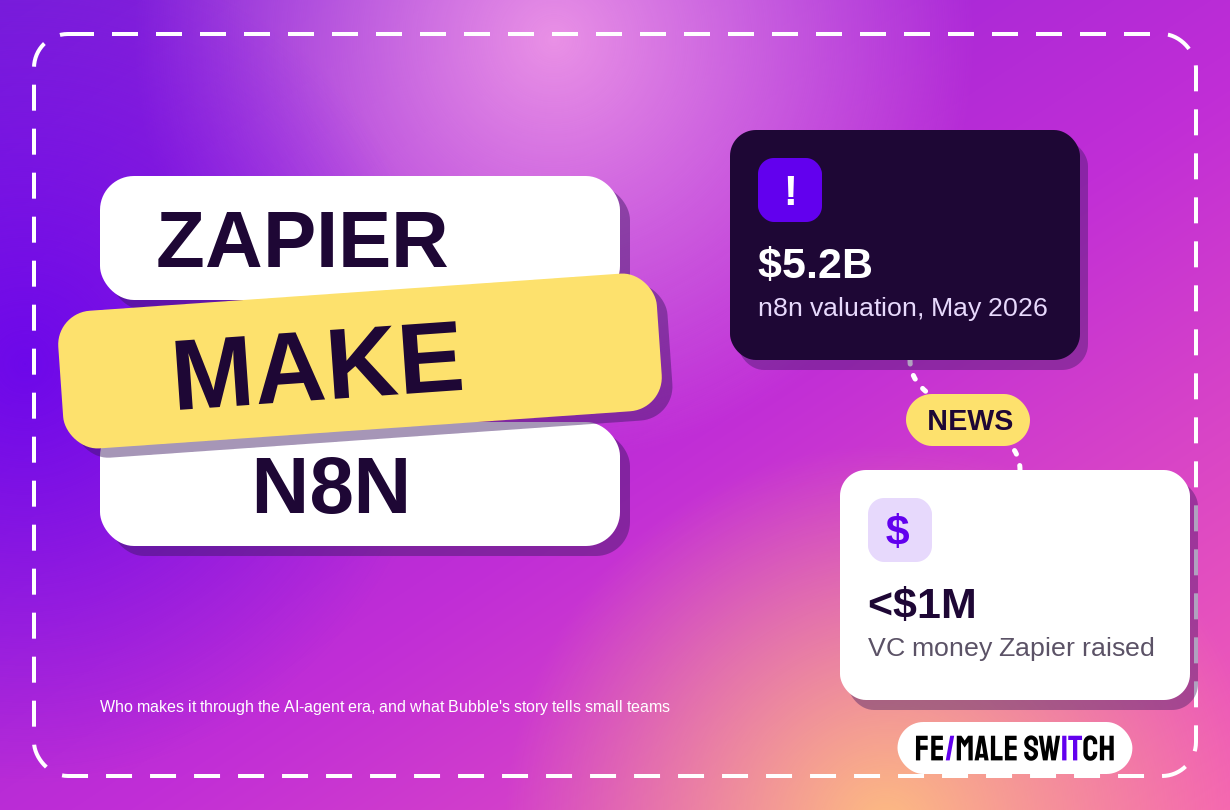
TL;DR: Zapier vs Make vs n8n, will they make it in an AI-agent world?
All three are alive and betting on agents: n8n reached a $5.2B valuation in May 2026, Zapier reports "several hundred million in ARR" on under $1M of venture capital, and Make sits inside Celonis. The threat is OpenAI, Google, Microsoft and Anthropic absorbing simple workflows. Pick n8n if you can self-host, Zapier for the biggest app catalogue, Make for visual scenarios, and document every workflow so you can move.
Zapier vs Make vs n8n is the first comparison most small teams run before they automate anything, and this week it got sharper: Bubble's co-CEOs announced layoffs on LinkedIn, and MeanCEO has the full story of the Bubble layoffs. Bubble and the three automation tools sold founders the same promise of building without code, so people running a business on Zapier, Make or n8n now ask whether their tool is next.
This guide is for women founders, freelancers and small teams who automate invoices, lead forms, newsletters and client intake. If you are still deciding how big your business should get, our solopreneur vs startup founder guide helps, because the answer changes how much automation you need.
What happened at Bubble, and why does it matter for automation tools?
On 17 November 2026 co-CEOs Josh Haas and Emmanuel Straschnov said goodbye to colleagues "from across the company", without giving a number. Haas wrote that Bubble is moving to "smaller teams that own a problem from start to finish", building AI into every team and controlling costs. Bubble counts 6 million builders.
Bubble bootstrapped from 2012 and raised a $100M Series A led by Insight Partners in July 2021. In April 2023 it announced workload pricing, a usage metric that "replaces server capacity", and after a loud forum backlash it cut workload costs for main activities by 50 to 99% within a week.
MeanCEO's view: femaleswitch.app ran on Bubble for about five years, until we moved it to WordPress on 19 October 2026, and back then Bubble was a great choice. With AI writing code, Violetta Bonenkamp thinks zero-code app builders make far less sense for new builds. Automation tools sit in a different spot: they move data between apps you already own, and that job remains when an AI agent does the work.
Zapier vs Make vs n8n: how do the three compare in 2026?
Each tool charges for a different unit, and that unit decides your bill once AI steps join your workflows.
ARR means annual recurring revenue. MCP, the Model Context Protocol, is a standard way for AI assistants such as ChatGPT and Claude to call outside tools.
Where does Zapier stand in the agent era?
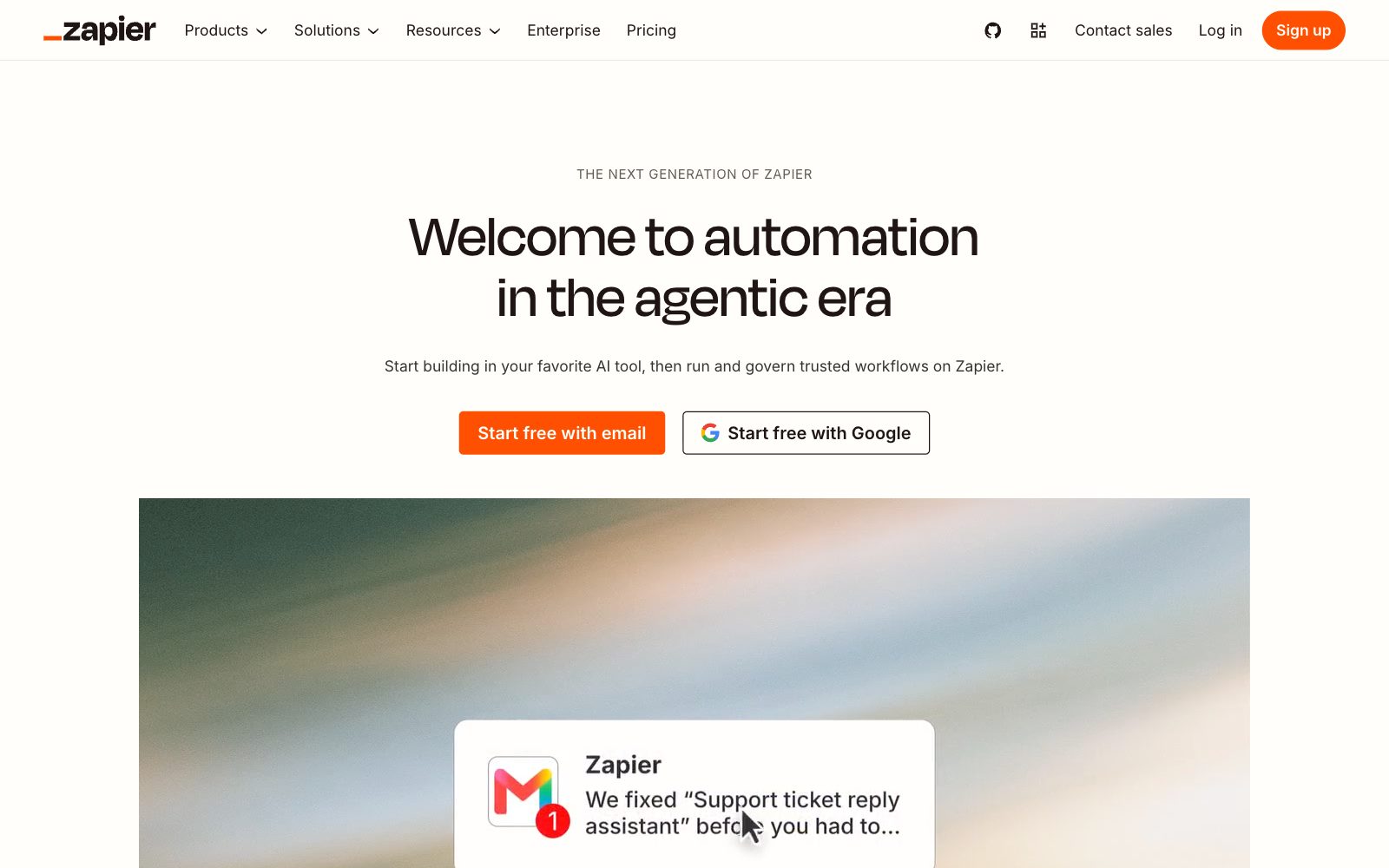
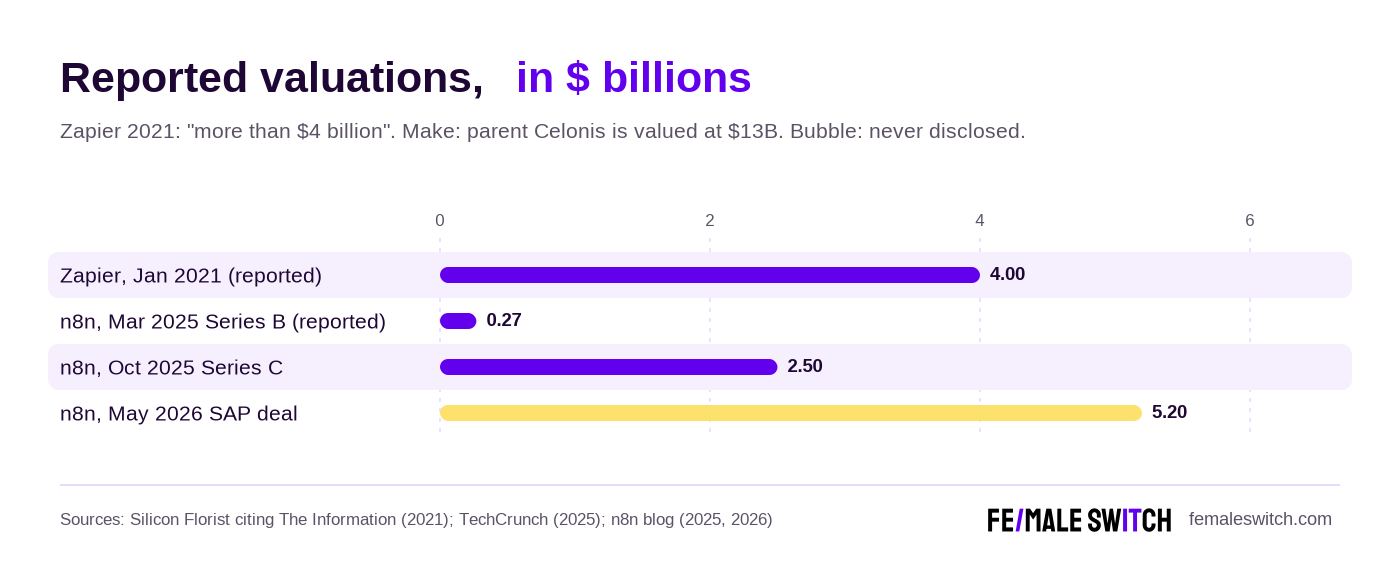
Zapier is the capital-light incumbent. It raised about $1M in venture capital, and in 2021 Sequoia bought existing shares at a valuation of more than $4 billion, as Silicon Florist reported, citing The Information. On Madrona's podcast in April 2026, CEO Wade Foster described "several hundred million in ARR" and "800 employees… fully distributed, far more agents than there are people".
Its bet is to become the connector layer AI tools call: Zapier MCP works inside ChatGPT, Claude Desktop and Cursor, and in Meta's Muse agent platform. From 15 June 2026, AI by Zapier steps are priced by model tier: 1x tasks for Standard, 3x for Advanced (the default), 5x for Premium, or 1x with your own AI account. The CEO himself calls the data-moving layer "increasingly getting commoditized".
Where does Make stand in the agent era?
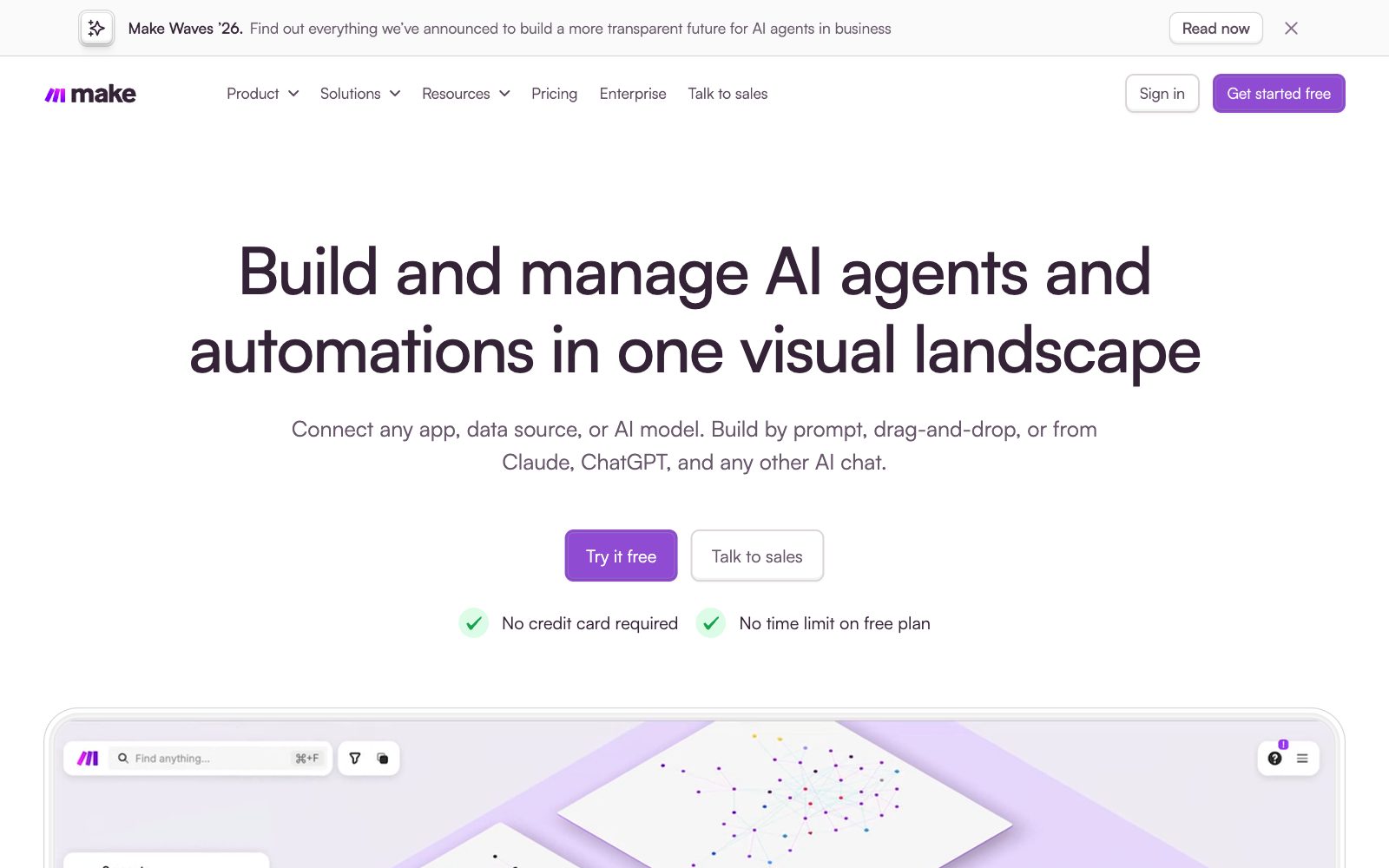
Make is part of Celonis, which Make's About page says is valued at $13 billion. It claims 500,000+ companies, while its June 2025 Grid release said over 250,000 organizations, and Celonis does not report Make's revenue separately.
AI agents joined the visual Scenario Builder in October 2025, first as a closed beta. At Waves 2026 in Prague, CEO Fabian Veit set out a "glass box" vision and previewed MakeOS, the Maia assistant and MCP for Claude and ChatGPT, as diginomica reported (Make paid the author's travel). Billing moved from operations to credits in August 2025 at 1:1, with usage that "may increase" if you use Make's AI provider.
Fe/male Switch uses Make.com in its own automations: Violetta's team runs Make scenarios. To try it, follow our SOPs to add webhook data to a Google Sheet with Make and connect an X.com account to a Make scenario.
Where does n8n stand in the agent era?
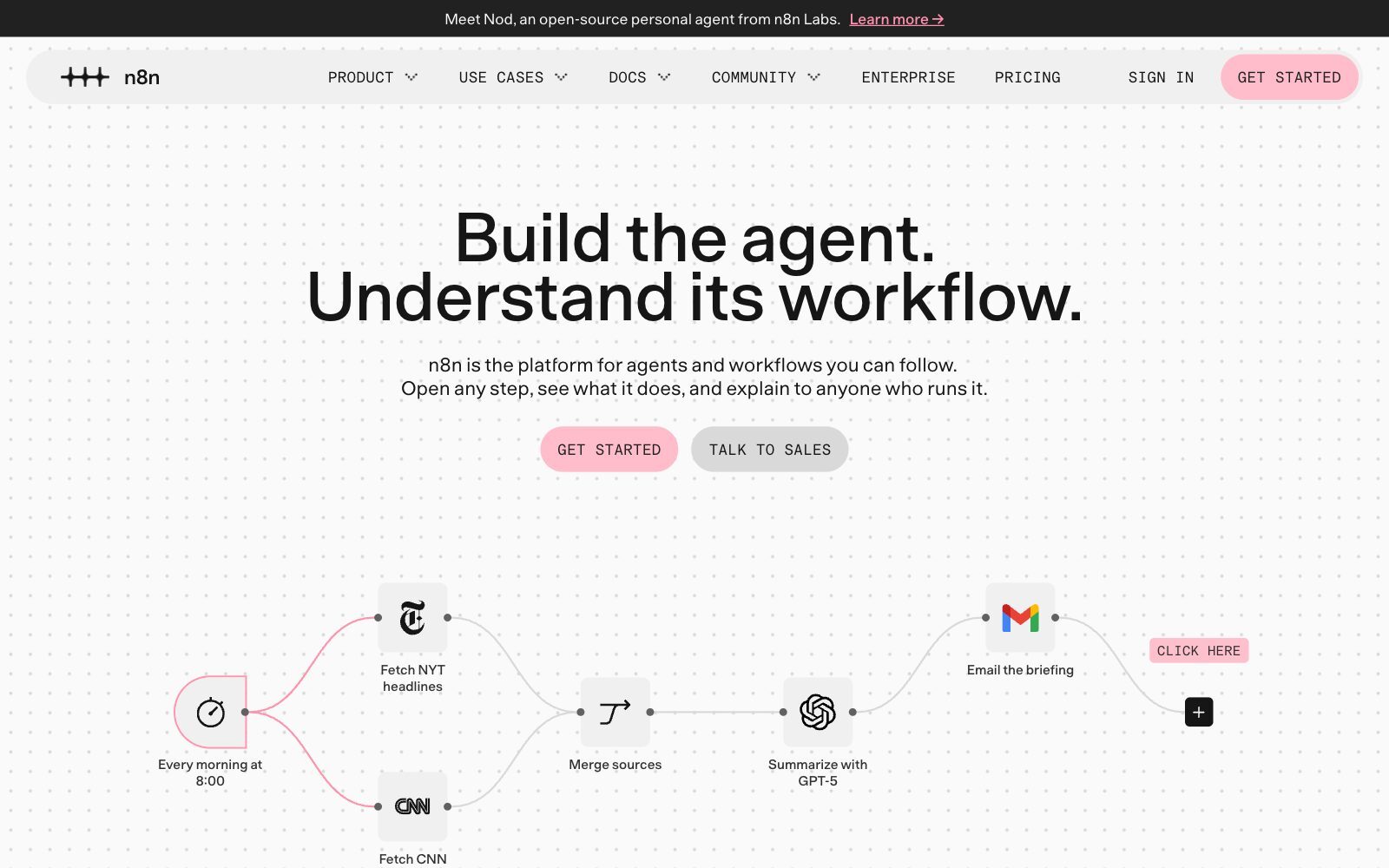
n8n, the Berlin fair-code company led by founder and CEO Jan Oberhauser, is the agent era's breakout on paper. It raised $180M at a $2.5B valuation on 9 October 2025, led by Accel with NVIDIA's NVentures, and claimed 6x user growth and 10x more revenue for the year. On 12 May 2026 SAP became an investor by buying existing shares, the valuation rose to $5.2bn, and n8n is going "natively inside SAP's Joule Studio". Research firm Sacra estimates $100M ARR in April 2026, up from $70M at the end of 2025.
Since August 2025 every plan has unlimited workflows, steps and users, priced per execution. The self-hosted Community Edition runs under the Sustainable Use License, which allows use "only for your own internal business purposes or for non-commercial or personal use", so read it before you host workflows for clients. MeanCEO's guide to building AI workflows with n8n shows a first agent workflow.
What are OpenAI, Google, Microsoft and Anthropic building?
- OpenAI Agent Builder (AgentKit, 6 Oct 2025, beta): a visual canvas for multi-agent workflows. VentureBeat wrote it could compete with Zapier; some developers see a complement.
- Anthropic Agent Skills (16 Oct 2025): "folders of instructions, scripts, and resources", with an open standard since December 2025.
- Microsoft Copilot Studio agent flows: "deterministic" flows billed by consumption.
- Google Workspace Studio (live 4 Dec 2025): Gemini 3 agents built from plain language, with steps for Asana, Jira, Mailchimp and Salesforce.
The labs also plug the automation tools in: Zapier and Make ship MCP for ChatGPT and Claude, and n8n sits inside SAP.
What does Bubble's story say about the money behind your tools?
Usage pricing is where founders feel investor expectations first. In 2023 Bubble's co-founder wrote that the old capacity model created "a perverse incentive", and forum users blamed investors (their opinion, never proven). Zapier and Make also made AI usage cost more units, while n8n moved to unlimited workflows. To be fair to Bubble, it keeps shipping: native mobile went live on 12 November 2026, and Agent 2 and a Bubble MCP beta arrived in October.
MeanCEO's take: who is positioned how?
- n8n leads on paper. Its valuation more than doubled in seven months, and a $5.2B price tag sets growth targets, the kind Bubble faced after 2021.
- Zapier is the calmest bet for a small business. It needs no new investor. Its risk is the commoditized simple Zap, which its own CEO admits.
- Make has an enterprise parent. Celonis gives it a process-mining story, and the lack of public numbers makes it the hardest to judge.
- Two-app workflows are the most exposed. Form to sheet to email inside Google Workspace or Microsoft 365 is the job Workspace Studio and Copilot Studio now target.
Violetta's bet: all three survive as the plumbing agents call, and the simplest automations move into Gmail, Outlook and ChatGPT. No public data yet shows the AI labs slowing signups at Zapier, Make or n8n.
Which one should you pick in 2026?
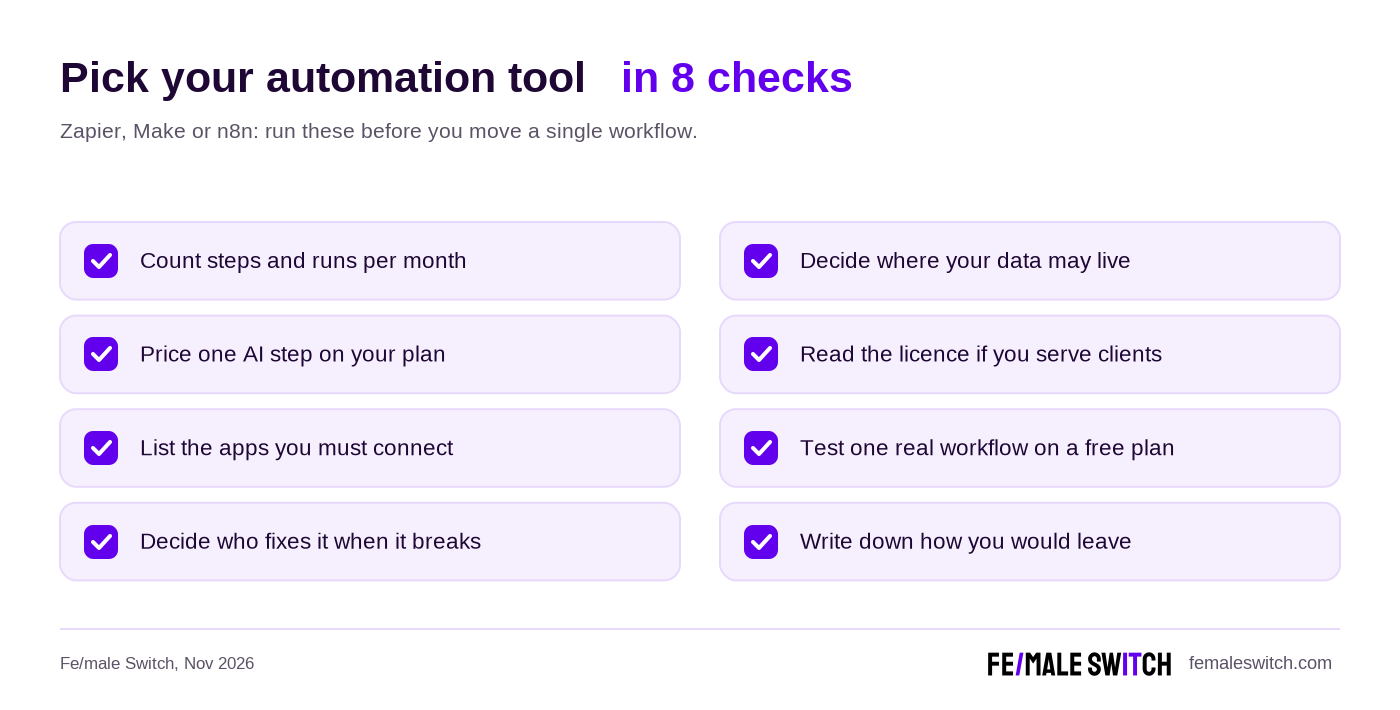
- Zapier if you want the biggest app catalogue, no server and light AI use. Check whether your AI steps run on the 3x default.
- Make if you think in diagrams and run multi-step scenarios with branches.
- n8n if someone can run a server, you want data on your own machines, or long workflows make per-execution pricing cheaper.
- Your suite's agent builder if the whole job lives inside Google Workspace or Microsoft 365.
- No switch at all if your workflows run fine today, because the three are converging on agents and MCP.
How do you keep your automations working in an agent world?
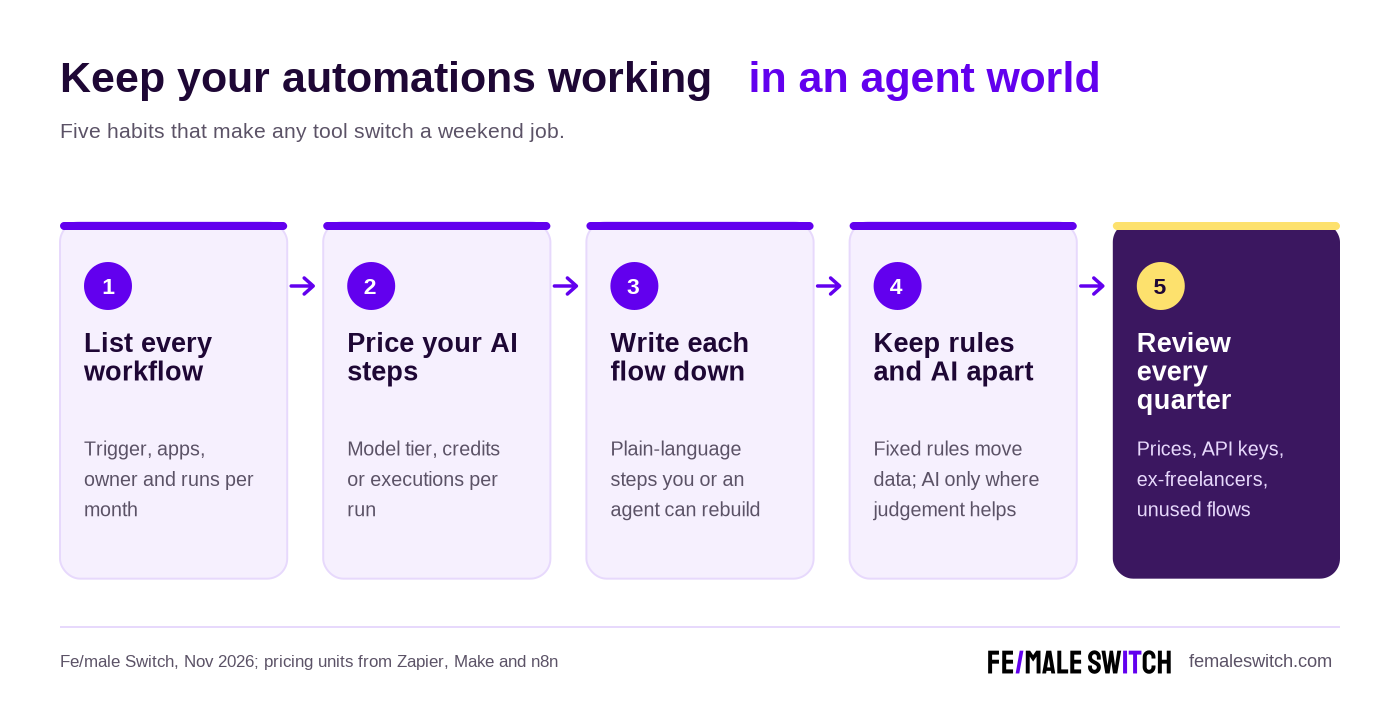
- List every workflow: trigger, apps, owner and monthly runs, in one sheet.
- Price your AI steps: on Zapier, move routine AI steps to Standard or your own AI account (1x); on Make, watch credits with Make's AI provider.
- Write each flow down in plain language, so you or an AI agent can rebuild it in another tool.
- Keep rules and AI apart: fixed rules move the data, and AI handles only steps that need judgement.
- Review every quarter: check prices, rotate credentials and remove ex-freelancers, because attackers hunt stolen AI API keys.
What don't we know yet?
- n8n's audited revenue, and what SAP paid.
- Make's revenue inside Celonis.
- Whether Zapier's AI tiers or Make's credits caused churn.
Turn your skills into your first startup
The Fe/male Switch startup game takes you from idea to first paying customers in weekly quests, with an AI co-founder and a community of founders.
👉 Start the game
FAQ: Zapier vs Make vs n8n
Which is cheapest: Zapier, Make or n8n?
Long workflows favour n8n, which counts a whole run as one execution and is free to self-host for your own business. Zapier counts tasks and Make counts credits, so test your real monthly runs.
Will AI agents replace Zapier, Make and n8n?
Simple workflows inside one suite are moving into Workspace Studio and Copilot Studio. Workflows across many apps still need connectors, and ChatGPT and Claude call Zapier and Make through MCP.
Is n8n free?
The Community Edition is free to self-host under the Sustainable Use License for internal business, non-commercial or personal use. Cloud and Business plans are paid.
Who owns Make?
Celonis, which Make says is valued at $13 billion.
Is Zapier going to end up like Bubble?
Their money stories differ: Zapier raised about $1M of venture capital and reports several hundred million in ARR, while Bubble raised over $100M.
What is MCP in automation tools?
The Model Context Protocol lets AI assistants call outside tools, so ChatGPT and Claude can trigger actions in your apps through Zapier, Make or Bubble.
- Bubble layoffs: what the co-CEOs announced and what it means for no-code (MeanCEO)
- SaaS is dead? Which software survives and what bootstrappers should build (MeanCEO)
- AI app builders vs Bubble: will Lovable, Replit and Base44 share Bubble's fate? (Fe/male Switch)
- AI layoffs and the solo founder boom: what laid-off women in Europe can build in 30 days (Fe/male Switch Foundation)
- Leaving Bubble: why we moved femaleswitch.app after five years (Fe/male Switch Foundation)
About the Author
Violetta Bonenkamp, also known as MeanCEO, is an experienced startup founder with an impressive educational background including an MBA and four other higher education degrees. She has over 20 years of work experience across multiple countries, including 5 years as a solopreneur and serial entrepreneur. Throughout her startup experience she has applied for multiple startup grants at the EU level, in the Netherlands and Malta, and her startups received quite a few of those. She’s been living, studying and working in many countries around the globe and her extensive multicultural experience has influenced her immensely.

