
The Best European Countries to Start an Early-Stage Startup, Judged on Facts You Can Check
Where you register your first company decides a lot: whether a non-EU founder can get a residence permit, how fast the company exists on paper, and which state programmes will put the first euros and mentors behind it. This guide compares 25 European countries on things you can verify yourself on official government pages: startup visas and founder residence routes, company registration, national startup programmes and funding agencies, plus each country's group in the European Commission's innovation ranking. We checked every scheme on its official page in October 2026 and removed the venture capital totals, unicorn counts and index ranks that older lists repeat without a source.
Quick answer: for a fast, fully online start, Estonia (e-Residency plus a Startup Visa) is the easiest. Non-EU founders who want a dedicated startup visa have the clearest routes in the Netherlands, Denmark, Lithuania, Portugal, France, Finland, Ireland, Latvia, Malta and Austria. If you already live in the EU, choose by money and network: Germany (EXIST, High-Tech Gründerfonds), Denmark (InnoFounder), Luxembourg (Fit 4 Start), Italy (Smart&Start) and the Czech Republic (Technology Incubation) have the most concrete early-stage programmes, and the EU's EIC Accelerator is open to startups in every member state.
Write FREE SEO-optimized Blog Articles! Our Article Writer ensures your blog is loved by both Google and your readers, turning those clicks into customers.
👉 Write your article here
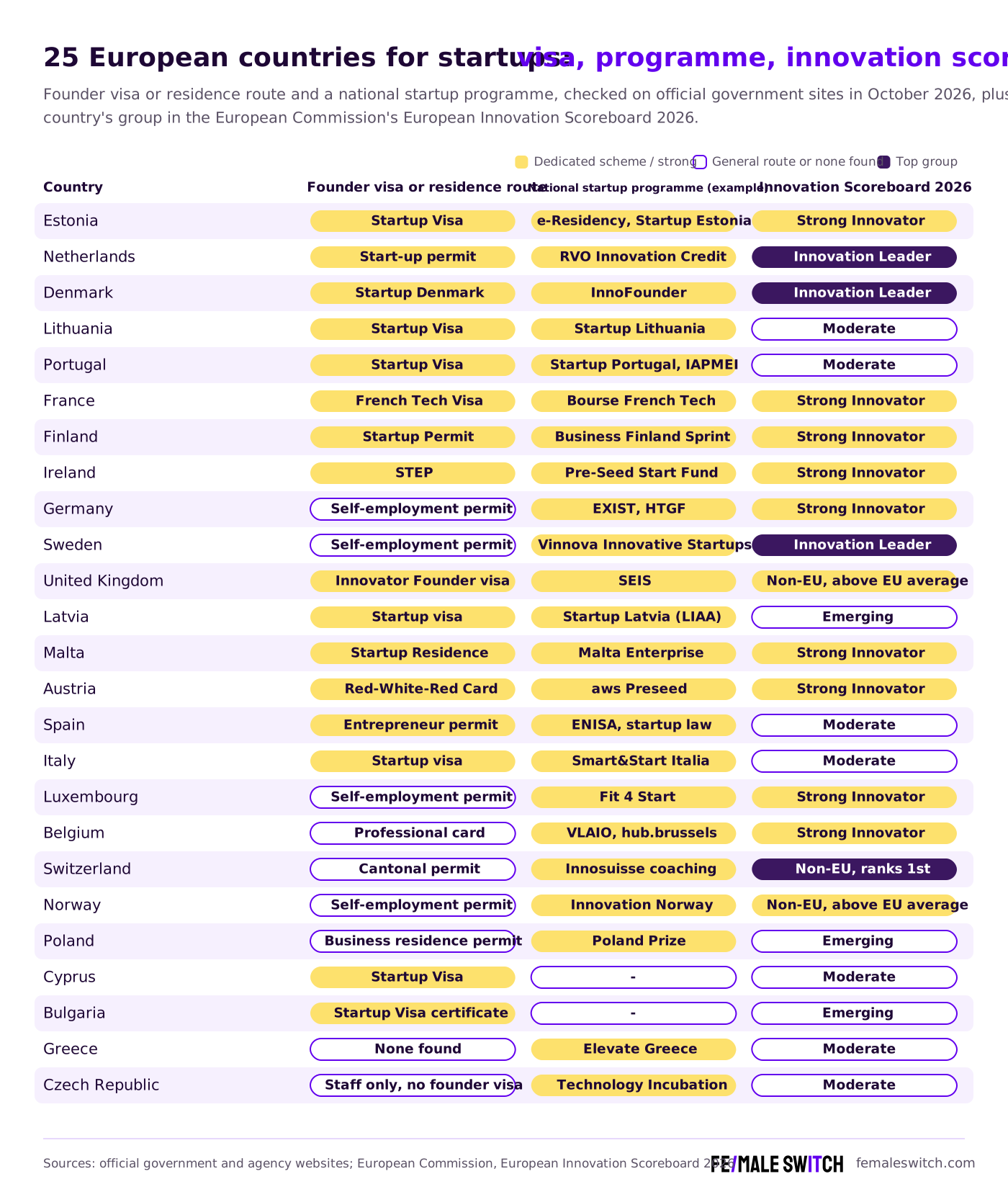
Startup Visas and Founder Programmes in Europe at a Glance
Sources: the official immigration, government and agency pages linked in each section, checked 27 October 2026; innovation groups from the European Commission's European Innovation Scoreboard 2026. Amounts and terms are the ones these pages publish; check them again before you apply.
How We Chose and Ordered the Countries
The 2025 version of this article listed 25 countries by venture capital totals and unicorn counts it did not source. We kept a country only if we could verify at least one founder-relevant fact on an official page: a startup visa or founder residence route, a national startup programme, or a startup law. The order puts countries with a dedicated, well-documented founder scheme plus early-stage support first. For context we add each country's group in the European Innovation Scoreboard 2026, published by the European Commission on 9 July 2026: Sweden, Denmark and the Netherlands are Innovation Leaders; Finland, Belgium, Ireland, Luxembourg, Austria, Germany, France, Estonia and Malta are Strong Innovators; Italy, Spain, Portugal, Cyprus, Slovenia, Lithuania, Czechia, Greece and Hungary are Moderate Innovators; and Croatia, Poland, Slovakia, Latvia, Bulgaria and Romania are Emerging Innovators. Outside the EU, Switzerland ranks first overall, and the United Kingdom and Norway also score above the EU average. Twenty-five countries passed that test; the section on changes explains which ones from the old list did not.
The 25 Best Countries for Early-Stage Startups in Europe in 2027
1. Estonia
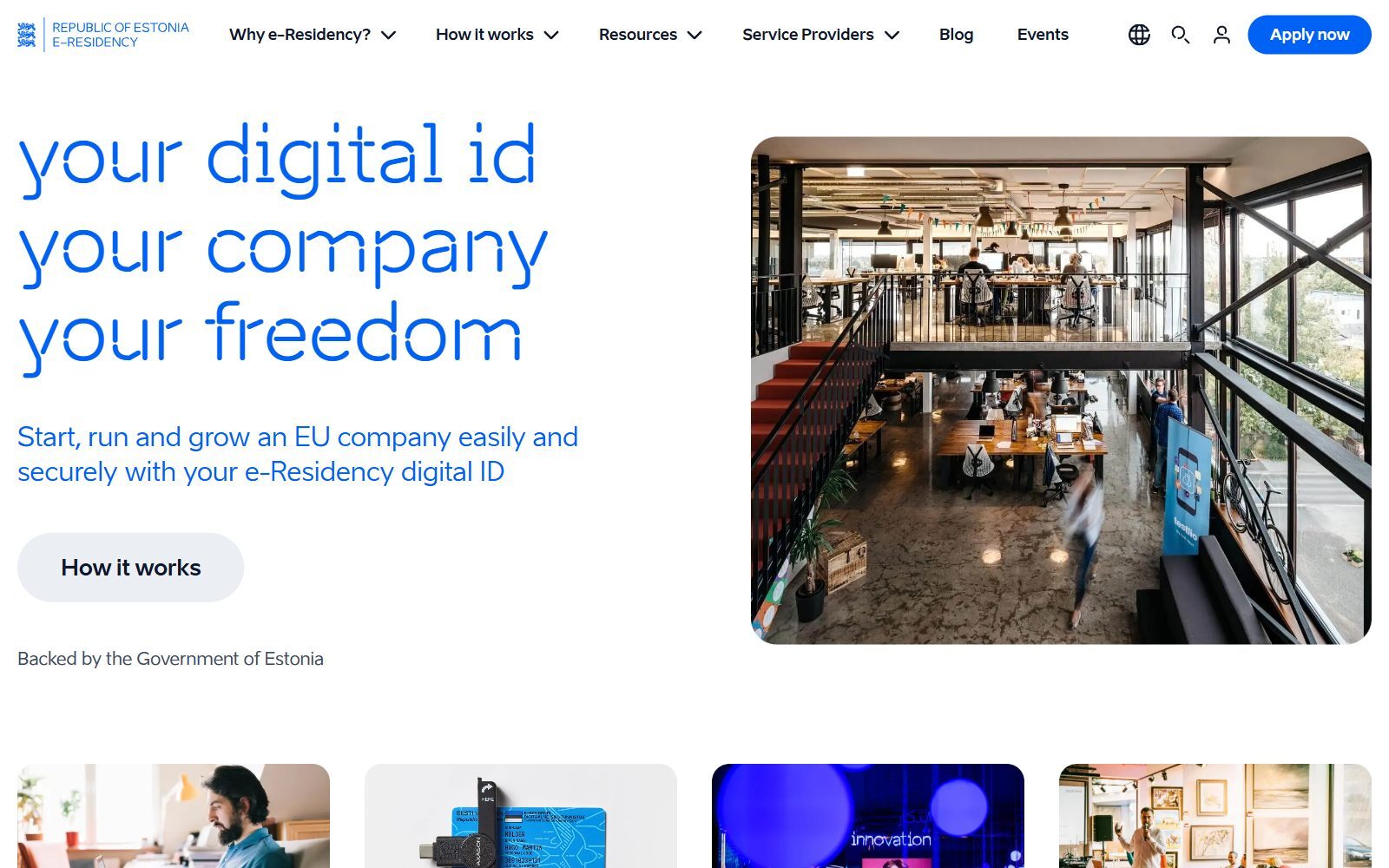
e-Residency is a government-issued digital identity that Estonia started in 2014. According to the programme, becoming an e-resident takes 3 to 8 weeks, after which you can register a company 100% online in 1 to 2 days and sign documents and file reports digitally; it counts 144,647 e-residents from 170+ countries and 44,082 companies founded by them. e-Residency is a digital ID, not a residence right. Non-EU founders who want to live in Estonia use the Startup Visa, which is meant for technology-based, innovative and scalable companies with an MVP and first traction, no older than 10 years. A positive decision from the Startup Committee comes first; a long-stay startup visa then covers up to 365 days and can be extended by 183 days. See the startup events in Estonia.
2. Netherlands
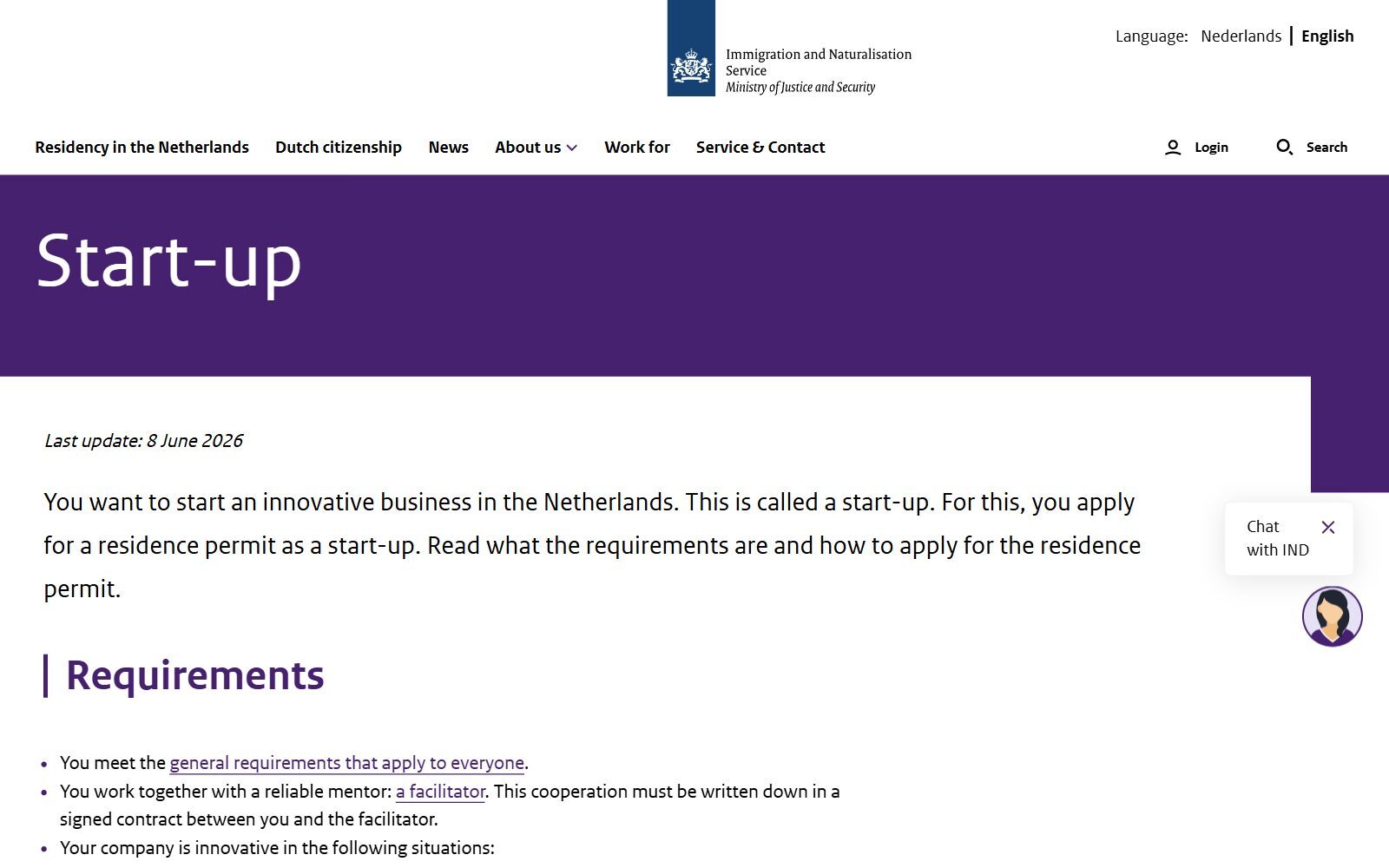
The Dutch immigration service IND offers a residence permit for a start-up. You must work with a facilitator, an experienced mentor under a signed contract, and your business must be innovative: a product or service new to the Netherlands, new technology in production, distribution or marketing, or a new way of working. You and the facilitator must be in the Chamber of Commerce's Trade Register, and you need enough money for your stay or a facilitator who finances it. The fee is €423, the IND decides within 90 days, and the permit is valid for 1 year at most and cannot be extended; after that you can apply for a self-employed residence permit. For funding, the Netherlands Enterprise Agency's Innovation Credit finances up to 45% of a risky technical or clinical development project for small enterprises; its current budget of €50 million runs until 31 December 2026. See our sister site's guide to Dutch WBSO and RVO programmes and the startup events in the Netherlands.
3. Denmark
Startup Denmark is an official Danish programme through which self-employed founders from outside the EU, EEA and Switzerland can apply for a visa, residence and work permit to run an innovative, scalable business. An independent expert panel assesses the business plan; if it is approved, you apply to the Danish Agency for International Recruitment and Integration (SIRI). Teams of up to three founders can apply, restaurants, retail and small import or export businesses are rejected, and only up to 75 permits are issued a year. The permit runs for up to two years and can be extended for three years at a time. For founders already in Denmark, Innovation Fund Denmark's InnoFounder is a 12-month full-time programme for up to three founders with a higher education degree: it pays DKK 27,500 per founder per month plus up to DKK 100,000 for development, and each founder must own at least 12.5% of a company with a Danish CVR number. See the startup events in Denmark.
4. Lithuania
Startup Visa Lithuania is run by Startup Lithuania, the national startup ecosystem facilitator. Non-EU founders apply online with a pitch deck, have a 30-minute video call, and a committee of experts makes the final assessment; the Migration Department then decides on the permit. Successful founders get a temporary residence permit for 2 years, which can be extended to 5, and family members can get permits too. The company must be established within 120 days of receiving the permit, consultations are free, and the site warns that Startup Lithuania never charges applicants. Applications from Russian and Belarusian citizens are suspended, with limited exceptions.
5. Portugal
Portugal's Startup Visa is a residence visa for entrepreneurs, managed by the innovation agency IAPMEI and promoted by Startup Portugal. Applicants must live outside the Schengen Area, be over 18, have no tax or social security debts and no criminal record, and show €5,146.80 per person in a bank account. You choose an incubator certified by the National Network of Incubators (RNI), apply on IAPMEI's platform, and after approval sign a contract with that incubator before the visa application. Read our sister site's guide to Portuguese startup vouchers and grants and the startup events in Portugal.
6. France
Since 2017 the French Tech Visa (a "Passeport Talent") has covered three groups: startup employees, investors and founders. The founder track is for nationals of countries outside the EU, EEA and Switzerland (except Algerian nationals) who must prove an innovative project, its recognition by a public body such as a partner incubator, and resources equal to the French minimum wage (SMIC). According to Business France, the card is valid for up to 4 years, is renewable, and family members can come too. Bpifrance's Bourse French Tech is a grant of up to €30,000 for an innovation programme of up to 24 months, with no application fees. See our sister site's article on Bpifrance and i-Lab and the startup events in France.
7. Finland
Finland's Startup Permit is a residence permit for non-EU founders of scalable, internationally growing startups. You first need a positive eligibility statement from Business Finland, which looks at the team, resources, business plan, a team holding of at least 60% in the company and full-time work for it; the Finnish Immigration Service then decides on the permit. Teams need at least two founders, and restaurants, consultancies and businesses aimed only at the Finnish market are not eligible. The permit is issued for a maximum of two years and can be renewed, but it includes no investment or financial support. For money, Business Finland's Sprint grant covers up to 75% of costs, up to €100,000, as a continuous call; its older Tempo and Young Innovative Company funding is closed. Finland now tops the Strong Innovators group of the Innovation Scoreboard. Our sister site covers Nordic innovation funding programmes.
8. Ireland
Ireland's Start-up Entrepreneur Programme (STEP) gives residence to non-EU founders with an innovative business proposal and €50,000 in funding; applicants must be of good character with no criminal convictions. Applications can be sent at any time and are reviewed quarterly by an evaluation committee, and the application fee is €350, non-refundable. Once the company exists, Enterprise Ireland's Pre-Seed Start Fund offers a €50k or €100k investment and 10 mentoring sessions. Read about Enterprise Ireland HPSU funding and the startup events in Ireland.
Boost Your SEO by listing your startup and get a FREE backlink.
Create a profile in the F/MS Startup Game, add the link to your website and submit.
👉 List your startup now!
9. Germany
Germany has no separate startup visa. Non-EU founders apply for a residence permit for self-employment; the Federal Foreign Office explains that if the business succeeds and supports you and your family, the permit can be extended, initially for a maximum of three years. Germany's strength is early money. EXIST, the startup programme of the Federal Ministry for Economic Affairs and Energy, funds students, graduates and researchers through the EXIST Start-up Grant, EXIST Transfer of Research and EXIST Women. The EXIST Start-up Grant pays a 12-month stipend of €3,000 a month for founders with a PhD, €2,500 for graduates and €1,000 for students, plus up to €30,000 of material costs for teams; under the Residence Act, holders of such a public start-up stipend can get a founder residence permit for its duration, up to 18 months. High-Tech Gründerfonds says the sweet spot of its first pre-seed and seed investments is €800,000+, and it can invest up to €30 million in growth rounds. See our sister site's guide to EXIST and other German startup grants and the startup events in Germany.
10. Sweden
Sweden is the top EU country in the Innovation Scoreboard, but it has no startup visa. The Swedish Migration Agency's residence permit to run your own business requires you to run and own at least 51% of the business, have relevant knowledge of Swedish or English, established customer contacts and a credible budget, and at least SEK 200,000 to support yourself (plus SEK 100,000 for a spouse and SEK 50,000 per child). The permit is granted for a maximum of two years. Sweden's innovation agency Vinnova runs Innovative Startups, which gives Swedish limited companies up to 10 years old, with at most 10 employees, up to SEK 500,000 for a project of up to 9 months; the current call closes on 12 January 2027.
11. United Kingdom
The UK's Innovator Founder visa requires an endorsing body to confirm that your business idea is new, innovative, viable and scalable. It lasts 3 years, can be extended, and can lead to settlement after 3 years; the application costs £1,357 from outside the UK, plus an endorsement fee and the healthcare surcharge. For fundraising, the Seed Enterprise Investment Scheme gives tax relief to investors in a young company, which can raise up to £250,000 through it. The UK is not in the EU, but the Innovation Scoreboard places it above the EU average; UK applicants can only use the grant-only part of the EU's EIC Accelerator.
12. Latvia
Latvia's startup visa is technically a temporary residence permit for non-EU founders. According to Startup Latvia, the startup ecosystem team of the Investment and Development Agency of Latvia (LIAA), one startup can have up to 5 founders with the visa, the process takes one month, and the permit lasts up to 3 years and covers spouses and children. The main criterion is a sound startup idea described on one page, with no business plan or interview required.
13. Malta
The Malta Startup Residence Programme grants non-EU founders, co-founders, core employees and their families a 3-year residence permit, extendable for another 5 years. The company must be registered for no more than 7 years and needs an investment or paid-up capital of at least €25,000 (plus €10,000 for each co-founder beyond four, up to six), and beneficiaries must live and pay taxes in Malta. The programme is linked to non-dilutive support from Malta Enterprise, the main contact point for startups setting up in Malta, and English is the language of business. Malta passed the Strong Innovator threshold for the first time in the 2026 Scoreboard.
14. Austria
Austria's Red-White-Red Card for start-up founders is points-based. You need an innovative business plan, controlling influence over the company, at least €30,000 of capital with an equity share of at least 50%, and 50 of 85 possible points; bonus points come from €50,000 of extra investment, admission to an Austrian incubator, or being 35 or younger. The card is valid for up to 24 months and the application fee is €218. For deep tech projects, the federal promotional bank aws offers aws Preseed - Deep Tech grants of up to €267,000, or up to €300,000 if women own more than 25% of the shares. See our sister site's guide to FFG and aws grants.
15. Spain
Spain's startup law (Ley 28/2022) gives certified "empresas emergentes" their benefits once the state agency ENISA certifies them. According to the Ministry of Industry's SME platform, the company must be new or at most five years old (seven in sectors such as biotech, energy and industry), have its seat or a permanent establishment in Spain, employ most of its staff in Spain, run an innovative and scalable project and have a turnover below €10 million. Certification is free, and ENISA reports 2,527 certified companies; it also gives participative loans of €25,000 to €1.5 million without guarantees. Non-EU founders use the residence permit for entrepreneurs in Law 14/2013, as amended by the startup law: the Large Companies and Strategic Groups Unit (UGE) decides after a favourable ENISA report on the business plan, and the permit is valid for three years, renewable for two. See our sister site's article on NEOTEC and CDTI grants and the startup events in Spain.
16. Italy
Invitalia's Smart&Start Italia finances innovative startups up to 60 months old, teams planning one in Italy (including founders living abroad or holding a startup visa) and foreign companies opening an Italian office. It covers business plans of €100,000 to €1.5 million with interest-free financing of 80% of eligible costs, 90% for startups founded entirely by women or people under 36 or with a PhD returning from abroad, plus a 30% grant in Central-Southern Italy. Non-EU founders can use the Italia Startup Visa: a committee at the Ministry of Enterprises and Made in Italy (MIMIT) issues a clearance, and the Italian consulate's visa checklist asks for at least €50,000 of funds for the startup. The programme's own website did not respond when we checked. Read about Invitalia Smart&Start on our sister site.
Boost Your SEO with 1,500+ Free Business Directories: increase your DA, get backlinks and traffic.
We've compiled an exclusive list of directories and websites where you can submit your business and start building high-quality backlinks to boost your website traffic and get your SEO snowball rolling.
👉 Submit your startup now!
17. Luxembourg
Luxinnovation's Fit 4 Start accelerator, run for the Ministry of the Economy, gives startups 6 months of coaching and mentoring, up to €150,000 of equity-free funding and free co-working space. It is open to startups under 5 years old that meet the small enterprise criteria; it reports €12.5 million of equity-free funding distributed and startups from 35 countries coached. Luxembourg has no dedicated startup visa: non-EU founders apply for a residence permit for self-employed workers, which needs a business and financing plan and an activity that serves the country's economic interest.
18. Belgium
Belgium has no startup visa: most non-EU founders need a professional card before they can work as self-employed. In Brussels the application costs €140, plus €90 per year of validity, and the first card is usually granted for one or two years on a trial basis and tied to your residence right. Regional agencies such as VLAIO in Flanders and hub.brussels give free first-line advice. See our sister site's guide to innovation support in Flanders.
19. Switzerland
Switzerland ranks first in the extended Innovation Scoreboard, at 141.3% of the EU average, ahead of every EU country. It has no startup visa: according to the federal SME portal, non-EU founders apply to their canton, and the business must have a lasting positive effect on the Swiss labour market. Its innovation agency's Start-up Coaching gives vouchers for accredited coaches: up to CHF 10,000 over 12 months (Initial Coaching), up to CHF 50,000 over 36 months (Core Coaching) and up to CHF 75,000 over 24 months (Scale-up Coaching).
20. Norway
Norway has no startup visa. Its immigration directorate UDI offers a residence permit for self-employed persons with a company in Norway: you need skilled-worker qualifications such as at least three years of vocational training, the business is normally your own sole proprietorship, and it must be expected to make at least NOK 341,373 a year before tax. The permit is granted one year at a time, with permanent residence possible after three years. Innovation Norway's start-up grant 1 covers up to 100% of external costs, up to NOK 150,000, for a limited company (AS); its second start-up grant goes up to NOK 1 million, but its 2026 budget was cut by 60%. Norway scores above the EU average in the Innovation Scoreboard.
21. Poland
Poland's foreigners portal says there is currently no dedicated permit for start-up founders; they use a temporary residence permit for business activity of up to 3 years. Poland does recruit foreign founders, though. Within the Startup Booster Poland - Smart Up programme, the Poland Prize acceleration path adds soft-landing support for startups from outside Poland, run by selected accelerators; a startup can get a grant of up to PLN 400,000, covering up to 100% of the project. See our sister site's guide to PARP and NCBR funding.
22. Cyprus
The Cyprus Startup Visa lets entrepreneurs from outside the EU and EEA, alone or as a team, enter, live and work in Cyprus to set up a startup with high growth potential. It is run by the Deputy Ministry of Research, Innovation and Digital Policy. Its practical guide allows a single founder or a team of up to 5 who hold at least 25% of the shares of an innovative startup up to 5 years old, and gives a right to live and work in Cyprus for 3 years, renewable. The same guide says the scheme is valid until December 2026 with up to 150 visas, so check whether it has been renewed before you apply.
23. Bulgaria
Bulgaria's Ministry of Innovation and Growth issues a StartUp Visa certificate for high-tech or innovative projects, which non-EU founders use to get a long-term residence permit. A council of experts reviews applications; the service is free, the decision takes 30 days, and the certificate is valid for 1 year and can be extended. Supporting documents can include an investment contract with a venture fund of at least BGN 100,000, a Horizon Europe Seal of Excellence or patents. Our sister site lists grant opportunities in Eastern Europe.
24. Greece
Greece's Elevate Greece is the official national startup registry. Companies qualify if they are a PC, LLC or SA based in Greece (or have a Greek branch), are no more than 8 years old and employ fewer than 250 full-time staff; registered startups gain visibility with investors and partners. We found no dedicated startup visa for Greece.
25. Czech Republic
The Czech Republic has no founder visa. The government's Czech startup visa page covers fast-track permits for the key and scientific staff of startups and a digital nomad programme, not founders. Its strongest early-stage offer is CzechInvest's Technology Incubation: up to CZK 4,500,000 of direct support plus CZK 500,000 of services for up to two years, without taking equity. CzechInvest is merging with CzechTrade into a new agency, CzechBusiness, which says existing startup services will continue, and its older CzechStarter programme is now listed in its archive.
Boost Your SEO by Getting Featured in Our Blogs and get a backlink.
We publish content about startups, education, tech, funding, etc. that ranks well not only in Google but also in Perplexity, ChatGPT, Grok and other AI tools.
👉 Get featured now!
EU Funding That Works in Every Member State
- EIC Accelerator: the European Innovation Council's programme under Horizon Europe for startups and SMEs with game-changing innovations. It offers a lump-sum grant below €2.5 million for innovation activities at TRL 6 to 8, completed within 24 months, and up to €10 million of equity investment, plus coaching. Our sister site explains it in its EIC Accelerator guide.
- EIC Pre-Accelerator: the EIC reports support of up to €500,000 per company for early-stage deep tech companies from countries with lower innovation performance.
- Cross-border R&D: Eurostars funds joint projects between innovative SMEs from different countries.
- Overview: start with our guides to EU funding for startups, startup funding in Europe and the EU grant calendar for 2027.
What Changed Since the Older Ranking
The 2025 version ranked countries by funding totals, unicorn counts, "investment index" ranks, venture fund counts and tax claims, with no sources and with placeholder links that led nowhere. We removed all of those figures and the dead links. Slovakia and Turkey from the old list are not in this one, because we could not verify a founder visa or a current national startup programme on their official pages; Malta and Greece replace them. Belgium was described as a former innovation leader; in the 2026 Scoreboard it is a Strong Innovator. Programmes change too: Finland's Tempo and Young Innovative Company funding are closed, Brussels' innovation agency Innoviris has suspended its funding schemes throughout 2026, Norway cut its second start-up grant budget, the Czech CzechStarter programme is archived, and Cyprus's startup visa is due to expire unless it is renewed. Italy's startup visa website did not respond when we checked, so its section relies on Invitalia and an Italian consulate. If you need a country we left out, check its immigration authority and its national innovation agency first.
Which Country Should You Choose?
- You want a company in the EU without moving yet: Estonia's e-Residency.
- You are a non-EU founder who needs a startup visa: the Netherlands, Denmark, Lithuania, Portugal, France, Finland, Ireland, Spain, Latvia, Malta, Austria or the UK, depending on where your customers and co-founders are.
- You have a researcher team or university spinout: Germany (EXIST), Denmark (InnoFounder), Austria (aws Preseed - Deep Tech) or Switzerland (Innosuisse).
- You need equity-free money in year one: Luxembourg's Fit 4 Start, Italy's Smart&Start, France's Bourse French Tech, Czech Technology Incubation or Poland Prize.
- You want the strongest innovation ecosystem: the Innovation Leaders Sweden, Denmark and the Netherlands, or Switzerland outside the EU.
- You plan to apply to the EIC Accelerator: register in an EU member state or a country associated with Horizon Europe.
Join F/MS: Startup Facilitator & Incubator and unlock your startup dreams today! Get your first customers, register you company in the Netherlands and get startup visas for the team.
How Founders Use This List
Pick two or three countries that fit your visa situation and your first customers, then compare the help on the ground. Our guides to startup incubators in Europe and early-stage VC firms show who backs companies in their first year, and our list of pre-seed VCs in Europe covers the first cheques. For hard tech, see the best deep tech cities in Europe. Our overview of the European startup ecosystem helps with company setup, the best startup events in Europe help you meet investors in person, and our sister site's European startup funding guide lists grants by type. Before you move anywhere, validate your startup idea with real customers. Raising in the US instead? See our guide to angel investor groups in North America.
FAQ About the Best Countries for Startups in Europe
Which European country is best for early-stage startups?
It depends on your passport and plans. Estonia is the easiest place to register an EU company online; the Netherlands, Denmark, Portugal, Lithuania and France have dedicated startup visas; and Sweden, Denmark and the Netherlands are the EU's Innovation Leaders in the European Innovation Scoreboard 2026.
Which European countries have a startup visa?
Among the countries we checked: Estonia, the Netherlands, Denmark, Lithuania, Portugal, France (French Tech Visa), Finland (Startup Permit), Ireland (STEP), Spain (residence permit for entrepreneurs), Latvia, Malta, Austria (Red-White-Red Card for start-up founders), Italy, Cyprus and Bulgaria, plus the UK's Innovator Founder visa outside the EU.
Can I start an EU company without living in the EU?
Yes. Estonia's e-Residency lets you register a company 100% online, usually in 1 to 2 days after you receive your digital ID. It does not give you the right to live in Estonia; for that you need a visa or residence permit.
How much money do I need for a startup visa in Europe?
It varies. Ireland's STEP asks for €50,000 in funding, Austria's start-up founder card for at least €30,000 of capital, Portugal for €5,146.80 per person in the bank, and Sweden's self-employment permit for SEK 200,000 for living costs. The Netherlands accepts a facilitator who finances your stay.
Which country has the best startup grants for founders?
Denmark's InnoFounder pays DKK 27,500 per founder per month for 12 months, Luxembourg's Fit 4 Start gives up to €150,000 equity-free, Austria's aws Preseed - Deep Tech up to €267,000, and Italy's Smart&Start offers interest-free financing. Read our guide to European funds for startups.
How long is the Dutch startup visa valid?
The IND's start-up residence permit is valid for 1 year at most and cannot be extended. After that you can apply for a residence permit as a self-employed person.
Does Germany have a startup visa?
No dedicated one. Non-EU founders apply for a residence permit for self-employment. Germany's main early-stage support is EXIST for university founders and High-Tech Gründerfonds for pre-seed and seed investment.
What is the European Innovation Scoreboard?
A yearly European Commission report that compares the innovation performance of EU countries and neighbours. The 2026 edition, published on 9 July 2026, puts Sweden, Denmark and the Netherlands in the top group, and Switzerland first in the extended ranking.
Is the EIC Accelerator open to early-stage startups?
It is for startups and SMEs with a game-changing innovation at TRL 6 to 8. It gives a grant below €2.5 million and up to €10 million of equity. Very early teams can look at national programmes first.
Why did you remove the funding totals and unicorn counts?
The previous version listed funding totals, unicorn counts and index ranks without sources. We could not verify them on official sites, so we replaced them with facts governments and agencies publish themselves.
About the Author
Violetta Bonenkamp, also known as MeanCEO, is an experienced startup founder with an impressive educational background including an MBA and four other higher education degrees. She has over 20 years of work experience across multiple countries, including 5 years as a solopreneur and serial entrepreneur. Throughout her startup experience she has applied for multiple startup grants at the EU level, in the Netherlands and Malta, and her startups received quite a few of those. She’s been living, studying and working in many countries around the globe and her extensive multicultural experience has influenced her immensely.
