

Open-Source Expensify Alternatives for Expense Reports, Reimbursements and Shared Costs
Expensify is built for one job: employees snap receipts, managers approve them and finance pays them back. If you would rather own that data, avoid per-user fees or self-host, open-source software can do most of it, but the projects differ a lot. Some are full expense-report workflows inside an ERP, some are bookkeeping tools, and some only split shared costs. We checked every tool below on its official website and GitHub in October 2026 (licence and latest release), and removed the ones from the older version of this list that are no longer open source, or that are not about expenses.
Quick answer: for an Expensify-style flow with expense reports, approvals and reimbursement, use Odoo Community (Expenses app), Frappe HR or Dolibarr. For bookkeeping that includes expenses, use Bigcapital or GnuCash. For splitting costs between co-founders or a team trip, use Spliit or I Hate Money. And yes: Expensify's own New Expensify app is open source under the MIT licence, but it runs on Expensify's servers, so it is not a self-hosted alternative.
Boost Your SEO by Getting Featured in Our Blogs and get a backlink.
We publish content about startups, education, tech, funding, etc. that ranks well not only in Google but also in Perplexity, ChatGPT, Grok and other AI tools.
👉 Get featured now!
Open-Source Expensify Alternatives Compared
Sources: each project's official website, documentation and GitHub licence file and releases, checked 26 October 2026.
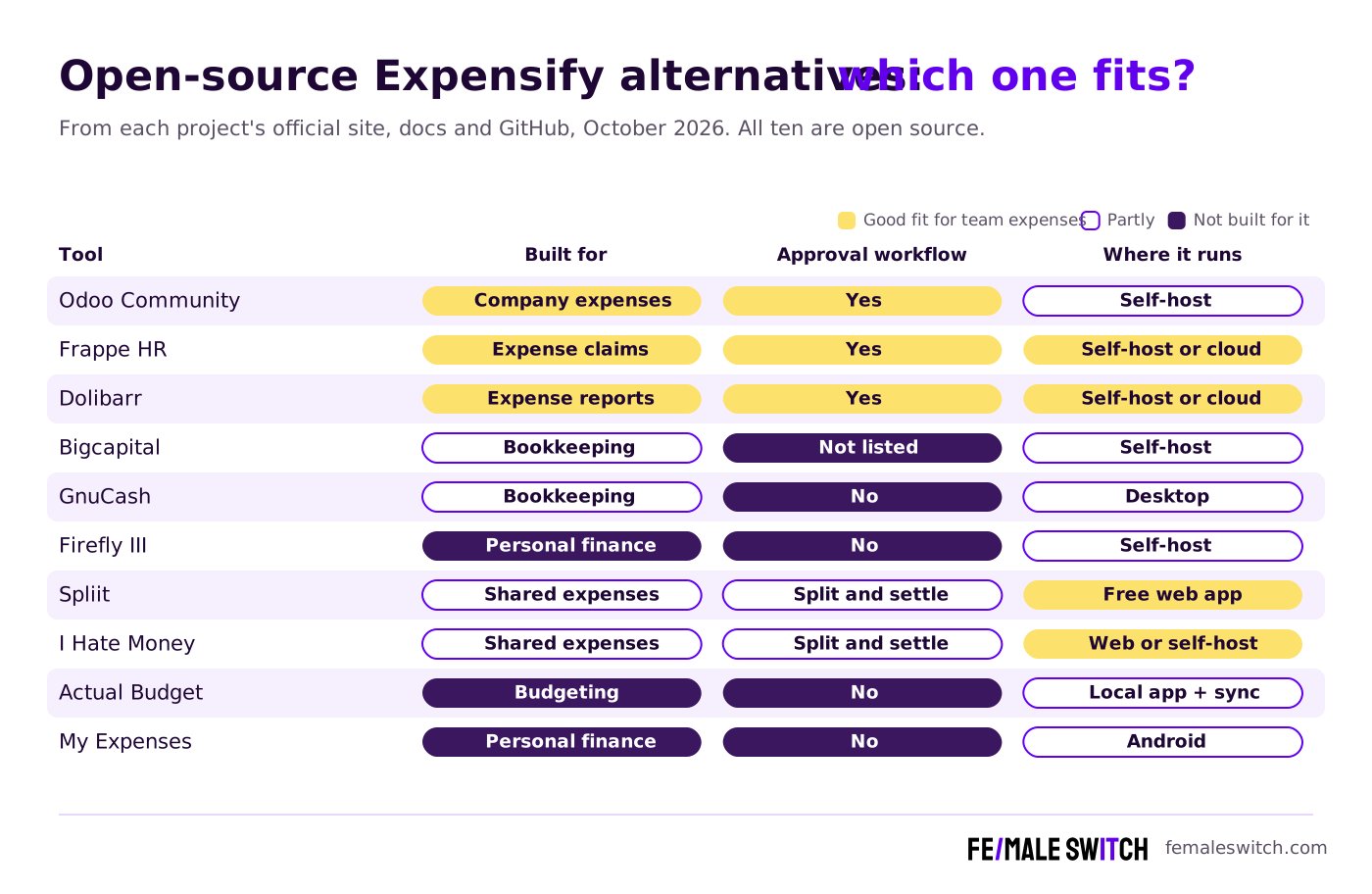
The 10 Best Open-Source Expensify Alternatives in 2027
1. Odoo Community: the closest match to Expensify's expense reports
Odoo's Expenses app covers the whole Expensify loop: employees add expenses from the mobile app, by email, by drag-and-drop or by hand, group them into one expense report, and a manager approves it. Each expense can be reimbursed to the employee or reinvoiced to a customer, and approved expenses flow into accounting. Odoo Community, the open-source edition, is published under the LGPLv3 and includes the Expenses app; Odoo's own comparison shows that receipt scanning (OCR) and reimbursement in payslips are Enterprise-only. Odoo 20 was released in September 2026. If you don't want to host it, Odoo Online's One App Free plan is free for unlimited users when you use a single app, but that is Odoo's hosted service rather than the open-source edition you run yourself.
2. Frappe HR: expense claims with approvers and advances
Frappe HR is a 100% open-source HR and payroll suite (GPL-3.0 on GitHub) whose Travel and Expense module handles expense claims, employee advances and multi-currency claims. In its documentation, an employee files an Expense Claim and picks an expense approver, and the project's README mentions multi-level approval workflows and integration with ERPNext accounting. It also has a mobile app and is very active: version 16.52.0 came out on 22 October 2026. You can self-host it or run it on Frappe Cloud, which offers a free trial.
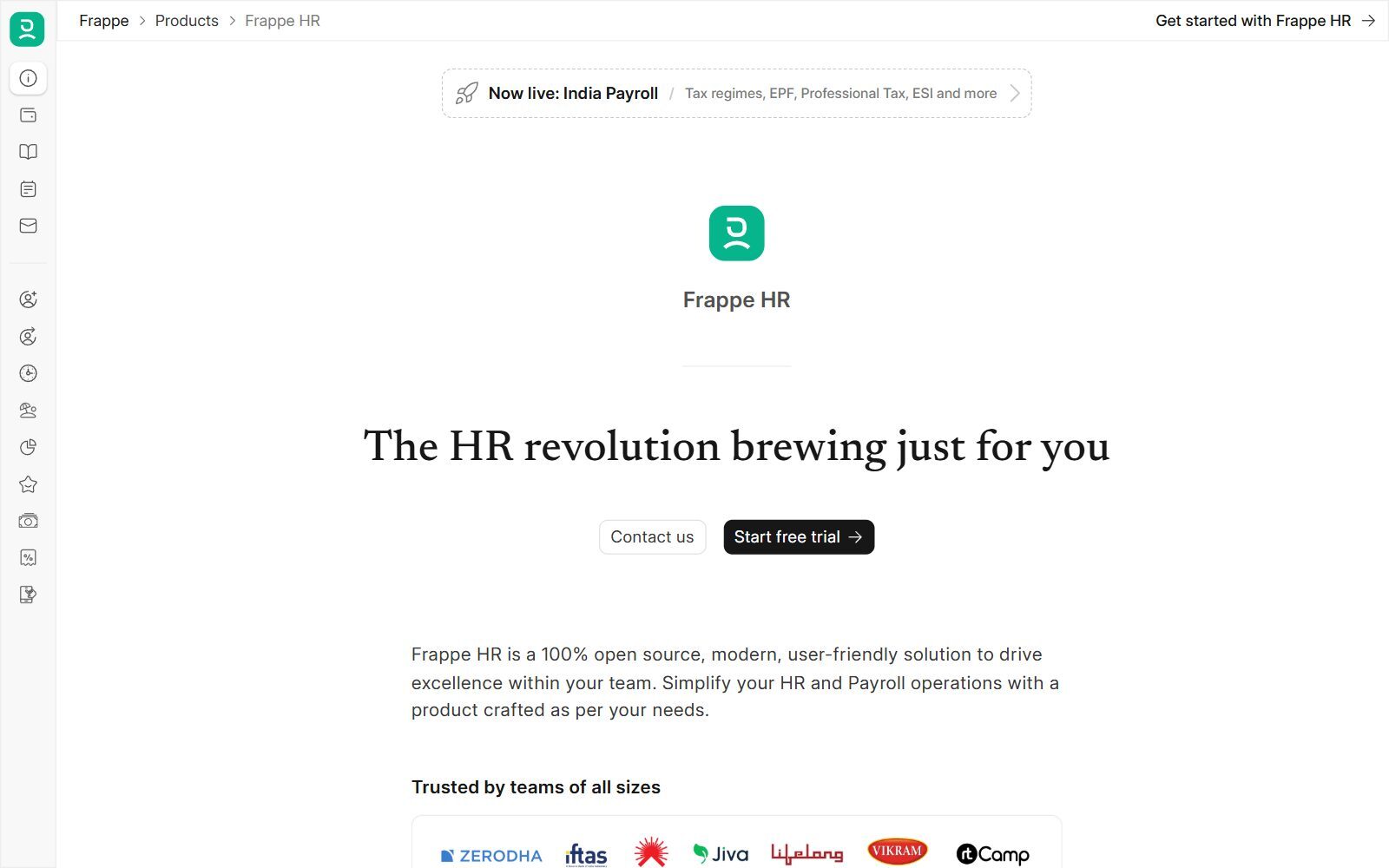
3. Dolibarr: expense reports in a light open-source ERP
Dolibarr is an open-source ERP and CRM (GPL-3.0) for small companies, freelancers and associations. Its built-in Expense Reports module lets employees create reports and attach scans, emails the supervisor when a report is submitted, and lets a bookkeeper record the payment. You switch on only the modules you need, and it runs on Windows, Mac, Linux or Docker, or as a hosted service. The current version is 24.0.2.
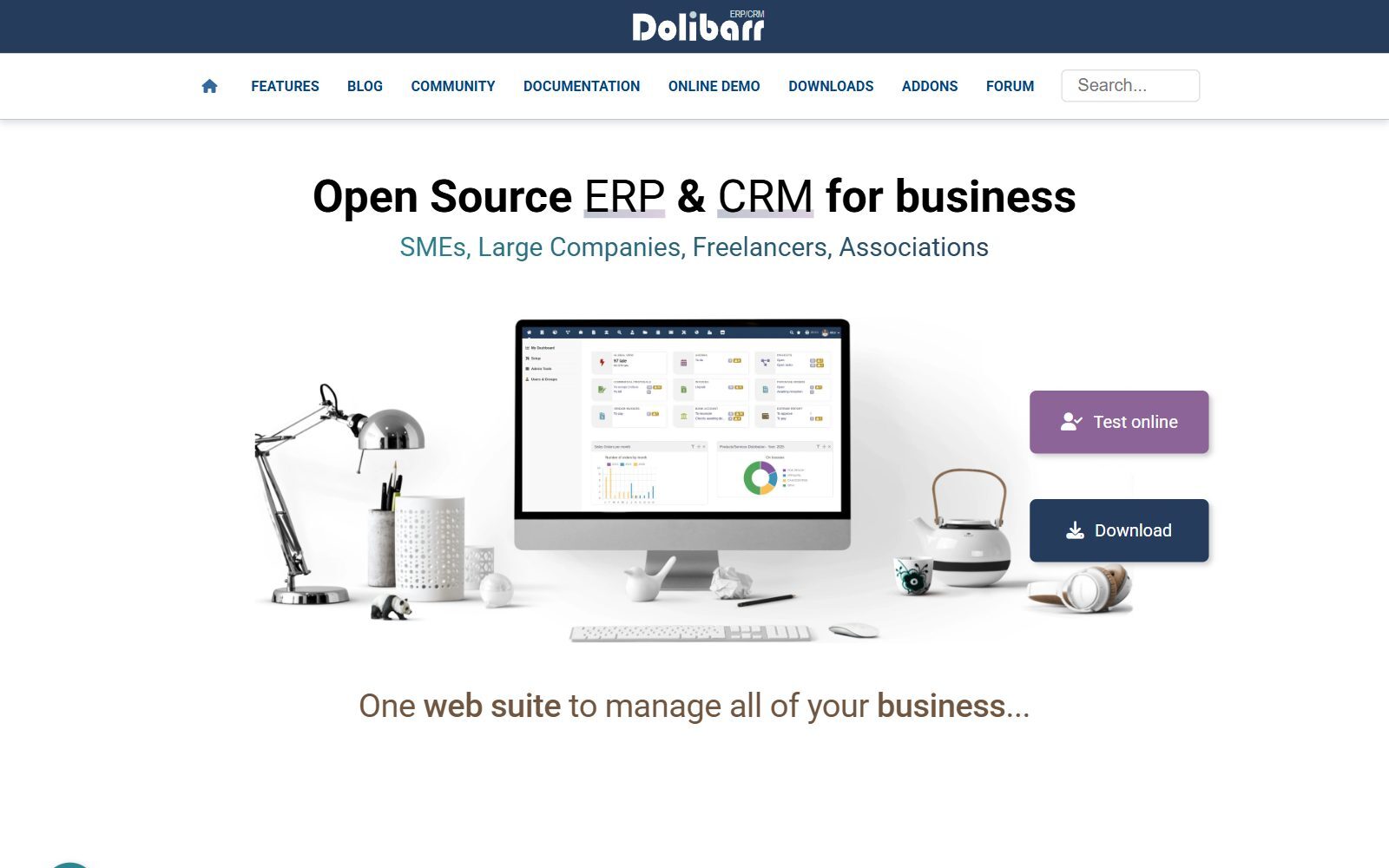
4. Bigcapital: open-source bookkeeping with expense accounting
Bigcapital is open-source accounting software (AGPL-3.0) with invoicing, expense accounting, inventory, multi-currency, bank feeds and reconciliation, role-based access and financial reports such as profit and loss. It is not an expense-report tool, but it is a good home for company expenses once they are approved. Its hosted Bigcapital Cloud is marked as coming soon, so for now you self-host it with Docker. Version 0.25.45 came out on 23 October 2026.
Validate your startup idea with the unique borrowed authority approach: we publish articles about your product in our blog and you get traffic and testers for your MVP
- Prove Market Demand: See real organic traffic and waitlist conversions
- Unlock High-Potential Keywords: Receive a curated list of top-performing keywords directly from Google Search Console data.
- Estimate Customer Acquisition Cost (CAC): Gain financial foresight with an estimated CAC based on real keyword performance data.
🔗 Start validating your startup now
5. GnuCash: free desktop bookkeeping for a small business
GnuCash is personal and small-business accounting software under the GNU GPL, for Linux, Windows and macOS. It uses double-entry accounting, tracks bank accounts, income and expenses, imports QIF and OFX files and schedules recurring transactions. It is maintained entirely by volunteers; version 5.17 was released in September 2026. It has no approval workflow, so it suits a founder keeping the books, not a team submitting expenses.
6. Firefly III: self-hosted expense tracking with rules
Firefly III is a free, open-source, self-hosted personal finance manager (AGPL-3.0) that you run on your own server, for example with Docker. It has double-entry bookkeeping, budgets, categories and tags, a rule engine that cleans up bank CSV imports, reports per week, month or year, and a JSON REST API. It is personal finance software at heart, so use it for a solo founder's or a small team's spending, not for approvals. Version 6.7.9 was released on 11 October 2026.
7. Spliit: split shared costs without an account
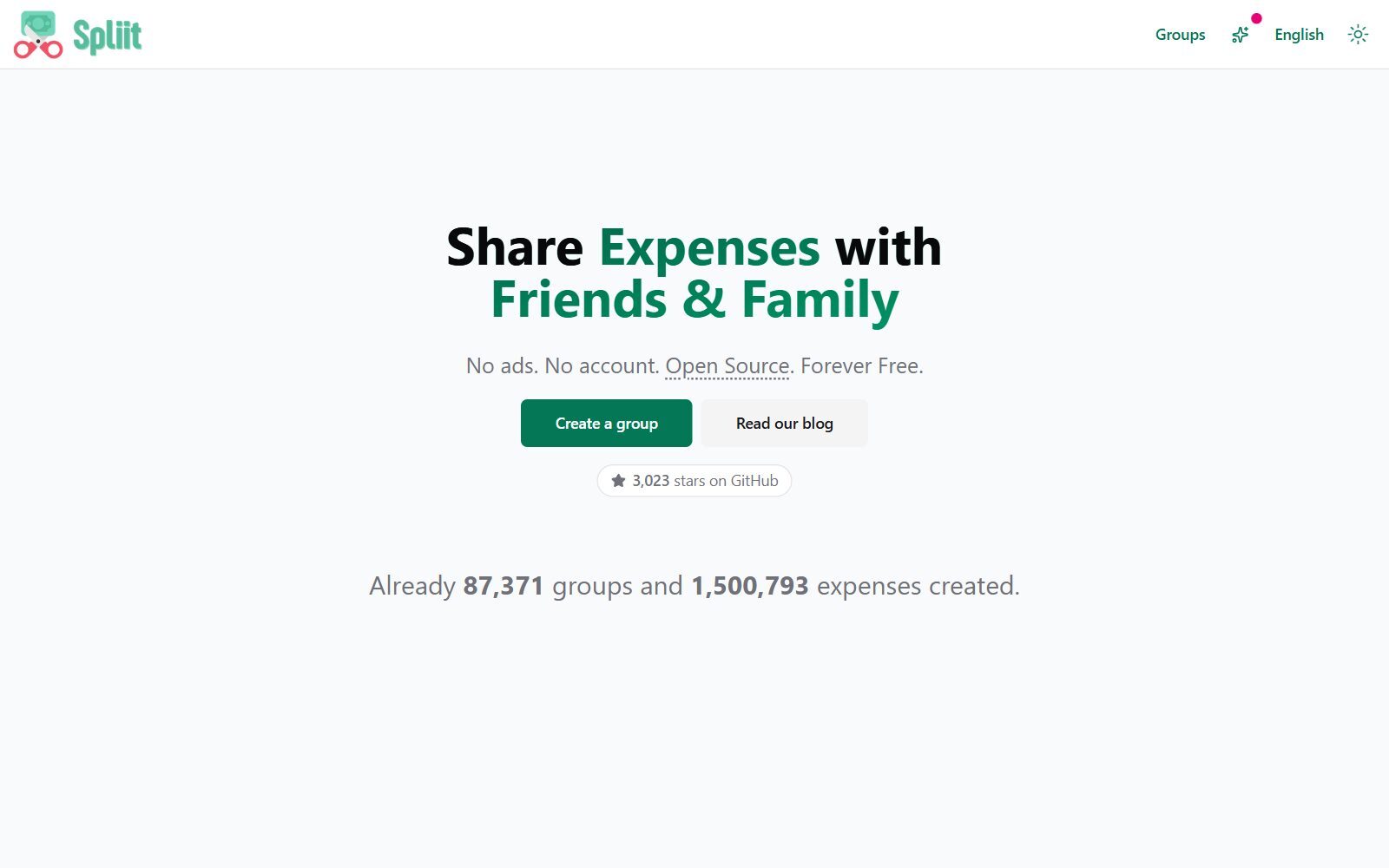
Spliit is an open-source (MIT) web app for sharing expenses in a group: a team offsite, a co-working space or costs between co-founders. There are no ads and no accounts. You can attach receipt images, scan receipts with a beta AI feature, split by percentage, shares or amount, and see the fewest transfers needed to settle up. It is available in 24 languages and has an iPhone app. Version 1.30.0 came out on 11 October 2026.
8. I Hate Money: shared expenses you can self-host
I Hate Money does the same job as Spliit: create a project, add who paid for what, and it works out who owes whom. It is free software under a BSD-style licence, you can use the hosted version or run it on your own server, and it is still maintained: version 7.2.1 was released on 7 August 2026.
9. Actual Budget: local-first budgeting for founders
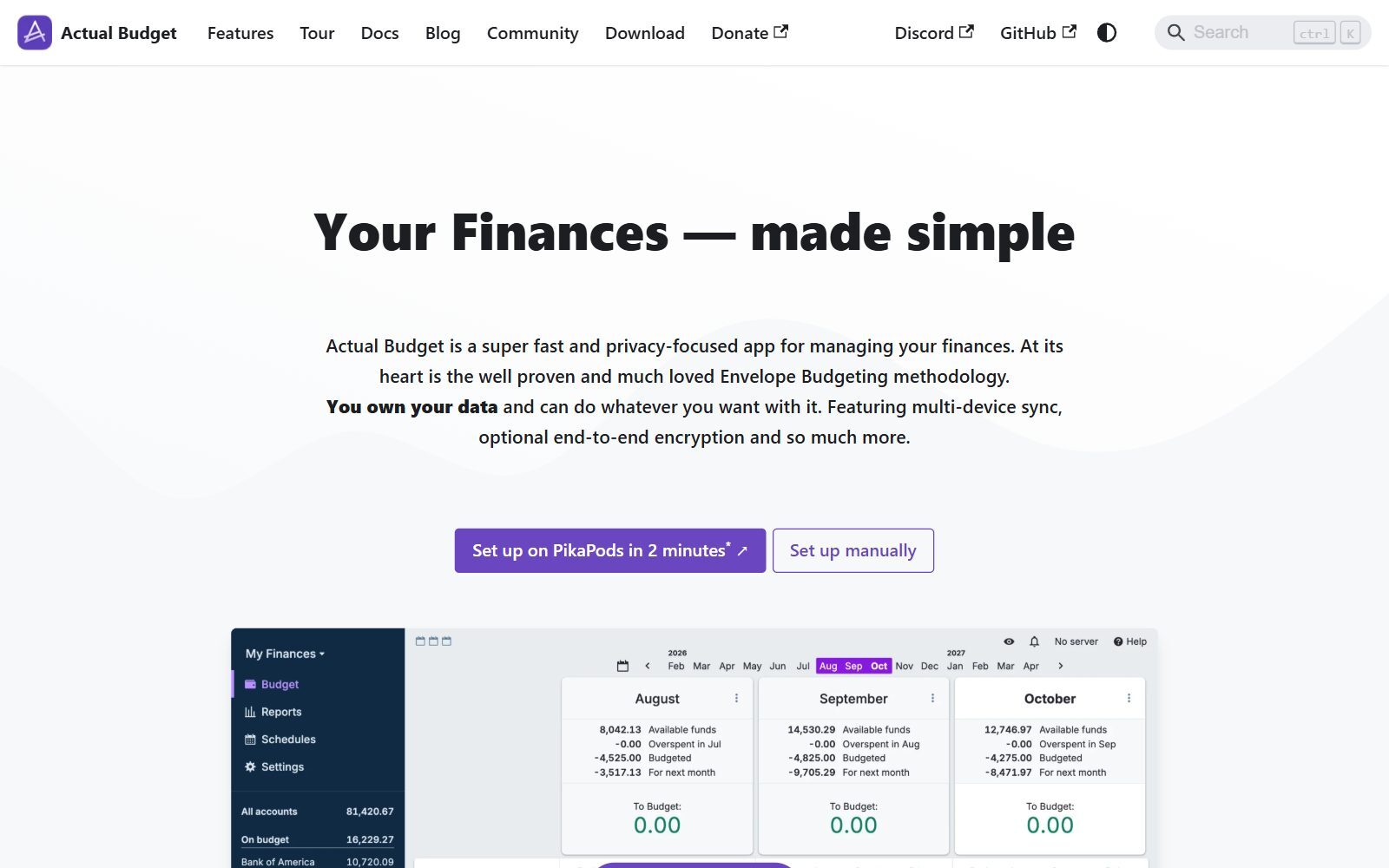
Actual Budget is an open-source (MIT) budgeting app built on envelope budgeting. It is local-first, with optional end-to-end encryption, multi-device sync through a server you host, split transactions, custom reports and bank sync through GoCardless in the EU and UK. It is a good fit for keeping a bootstrapped startup's spending on budget, not for employee reimbursements. Version 26.10.0 came out on 2 October 2026.
10. My Expenses: open-source expense tracking on Android
My Expenses is an Android finance app licensed under the GNU GPL v3. It groups transactions by day, week, month or year, handles multiple currencies, budgets and split transactions, exports QIF and CSV and syncs encrypted data across devices. Some extras sit behind a paid Premium upgrade. Version 4.1.3.1 reached F-Droid on 22 October 2026.
Is Expensify Open Source?
Partly. The New Expensify app (web, mobile and desktop) is on GitHub under the MIT licence (release 9.5.18-1 came out on 23 October 2026), and Expensify pays outside contributors for fixes through Upwork. But the repository is the client app: it talks to Expensify's own web and database servers, which are not part of it. So you can read and contribute to the code, but you cannot run your own Expensify. That is why the tools above are the realistic open-source options.
No Longer Open Source, or Not About Expenses
Several tools from the 2025 version of this list, and from many other lists, don't belong here any more:
- Invoice Ninja: still a good invoicing tool with expense tracking, but its code is published under the Elastic License 2.0, which forbids offering it as a hosted service and bypassing its licence keys. That makes it source-available, not open source.
- Akaunting: its website calls it open source, but the GitHub licence is the Business Source License 1.1, which allows production use only up to two users, one company and 1,000 invoices.
- FOSSBilling: open source (Apache-2.0), but it is billing and provisioning software for hosting companies, not an expense tool.
- Skrooge, Money Manager Ex, KMyMoney and HomeBank: still free and open source (Skrooge 26.8.0 and Money Manager Ex 1.9.4 both came out in August 2026), but they are personal finance managers without receipts or approvals. GnuCash or Firefly III cover the same ground for a small business.
Which Open-Source Expensify Alternative Should You Choose?
- You have employees who need reimbursing: Odoo Community or Frappe HR; Dolibarr if you also want a simple CRM and invoicing in the same tool.
- You already use ERPNext: Frappe HR, which adds expense claims and advances on the same framework.
- You just need clean books: Bigcapital if you want a web app, GnuCash if a desktop app is fine.
- You split costs between co-founders or on team trips: Spliit for zero setup, I Hate Money if you want to self-host.
- You are a solo founder watching spending: Actual Budget or Firefly III on the desktop, My Expenses on Android.
- You need receipt scanning (OCR), corporate cards and accounting sync out of the box: no open-source tool matches Expensify there yet; Odoo has receipt OCR only in its paid Enterprise edition.
Comparing finance tools more broadly? See our lists of Expensify alternatives, free Expensify alternatives, open-source Xero alternatives, open-source Wave alternatives and open-source QuickBooks alternatives, or the top accounting and finance tools for startups.
How Founders Use Open-Source Expense Tools
In a young startup, expense tracking is less about software and more about habits: one place for every receipt, a clear rule for who approves what, and a monthly look at where the money goes. Our guides to managing business expenses while you grow and managing cash flow in an early-stage startup cover those habits, and bootstrapping on a shoestring budget shows where open-source tools save the most. Clean expense records also make tax time easier; see which tax professional your startup needs.
Building the rest of your stack on open source too? See our lists of open-source Freshdesk alternatives for customer support and open-source draw.io alternatives for diagrams, and our earlier list of open-source Expensify alternatives in the startup tools section.
FAQ About Open-Source Expensify Alternatives
What is the best open-source alternative to Expensify?
For expense reports with approvals and reimbursement, Odoo Community (Expenses app) is the closest match. Frappe HR and Dolibarr also have expense claim workflows with approvers.
Is Expensify open source?
Its New Expensify app is open source under the MIT licence on GitHub, but it runs on Expensify's own servers, which are not open source, so you cannot self-host Expensify.
Is Odoo's expense app free?
The Expenses app is included in Odoo Community, the open-source edition under the LGPLv3. Receipt scanning (OCR) and reimbursement in payslips need the paid Enterprise edition.
Which open-source expense tools can scan receipts?
Spliit has a beta AI receipt scan, and Odoo scans receipts in its Enterprise edition. Dolibarr and Odoo Community let you attach receipt files to expenses.
Is Invoice Ninja open source?
Not any more in the strict sense. Its code is published under the Elastic License 2.0, a source-available licence that forbids offering it as a hosted service.
Is Akaunting open source?
Akaunting's code is under the Business Source License 1.1, which limits production use to two users, one company and 1,000 invoices. It is source-available rather than open source.
What is a free open-source app for splitting costs with co-founders?
Spliit, which needs no account, or I Hate Money, which you can also self-host.
Can I self-host an Expensify alternative?
Yes. Odoo Community, Frappe HR, Dolibarr, Bigcapital, Firefly III and I Hate Money can all run on your own server.
Where can I submit a guest post about my startup?
You can publish a guest post in one of the Fe/male Switch startup blogs, which rank in Google and in AI tools like ChatGPT and Perplexity. Get a quality backlink.
Which open-source tool is best for a solo founder's expenses?
GnuCash for proper bookkeeping, Actual Budget for budgeting, or My Expenses if you track spending on an Android phone.
About the Author
Violetta Bonenkamp, also known as MeanCEO, is an experienced startup founder with an impressive educational background including an MBA and four other higher education degrees. She has over 20 years of work experience across multiple countries, including 5 years as a solopreneur and serial entrepreneur. Throughout her startup experience she has applied for multiple startup grants at the EU level, in the Netherlands and Malta, and her startups received quite a few of those. She’s been living, studying and working in many countries around the globe and her extensive multicultural experience has influenced her immensely.

