
Open-Source Weebly Alternatives: Website Builders and CMS You Can Own and Host Yourself
Weebly made website building simple, but it is closed software owned by Square, and your site lives on its servers. An open-source alternative gives you the code under a licence that lets you host the site where you like, change it and move it at any time. Below are open-source website builders and content management systems that can replace Weebly for a small business site, a blog or a shop. For each one we checked the licence file and the latest release on its official repository in November 2026, so every tool here is really open source and still maintained. If you do not want to host anything and only need a hosted builder with a free plan, see our list of free Weebly alternatives, from Square Online to Wix, Jimdo and Mozello.
Quick answer: for the closest all-round replacement, use WordPress. For a visual drag-and-drop builder, try Webstudio or Silex; for a simple site you edit on your laptop and upload as static pages, Publii; for a blog with newsletters and paid members, Ghost; for a large or multilingual site, Drupal or Joomla; and for a shop on cheap hosting, Vvveb or WordPress with a store plugin.
Boost Your SEO by Getting Featured in Our Blogs and get a backlink.
We publish content about startups, education, tech, funding, etc. that ranks well not only in Google but also in Perplexity, ChatGPT, Grok and other AI tools.
👉 Get featured now!
What Weebly Is in 2027
Weebly still runs on its own address; it does not redirect to Square, but its homepage says Weebly is now a part of the Square product suite, and the logo reads "eCommerce by Square". The Weebly pricing page (default view from our location, November 2026) lists a Free plan at $0 for basic use with SSL, third-party embed code, a shopping cart, SEO tools and chat and email support. Connecting your own domain starts with Personal at €11 a month billed annually (€14 month-to-month), followed by Professional at €17 (€22) and Performance at €30 (€40); removing Square ads is listed only on the higher plans. That is a fair deal for a quick site, but you cannot export the code, run it on another host or change the platform itself, which is why people search for open-source options.

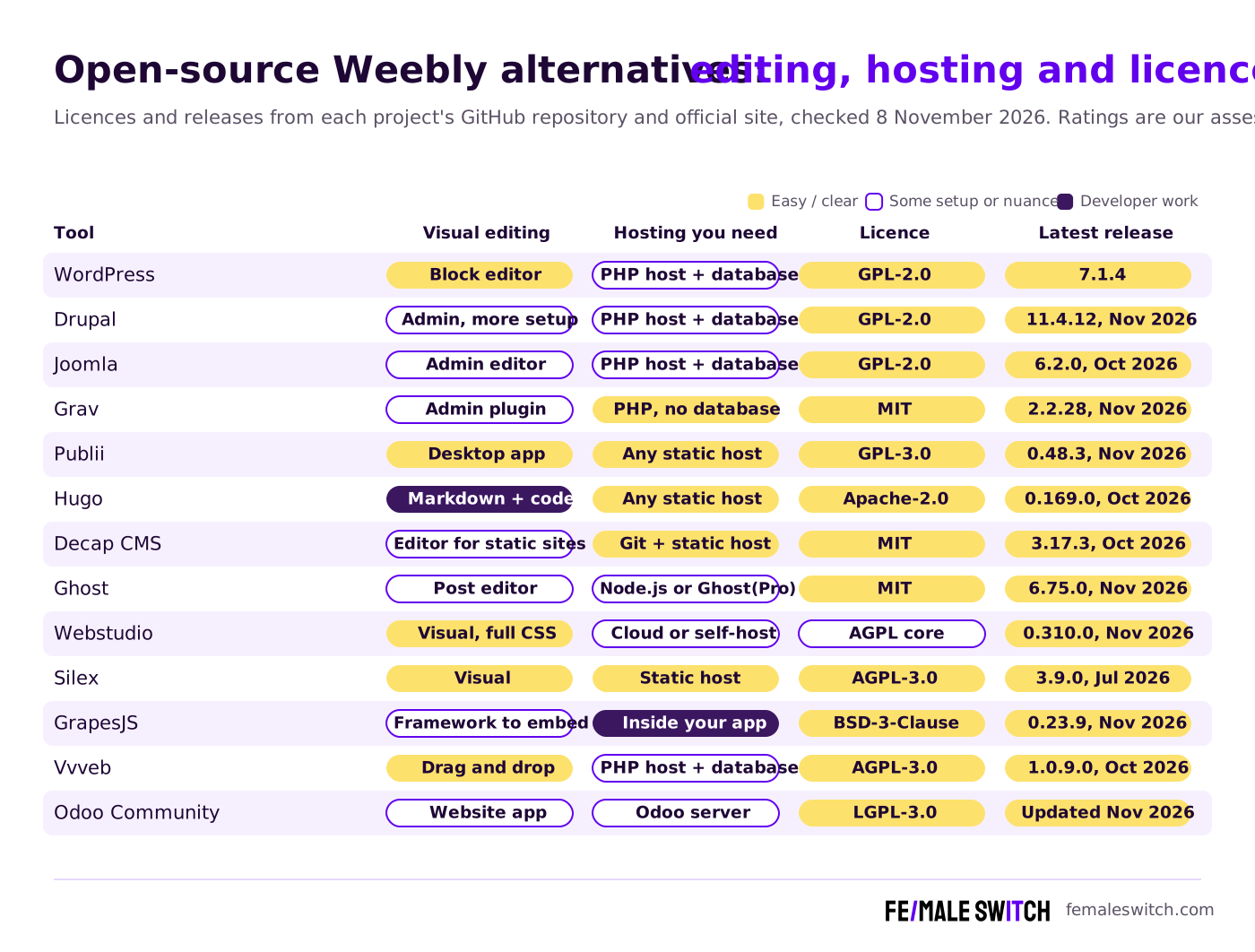
Open-Source Weebly Alternatives Compared
Sources: each project's licence file and releases on its official GitHub repository, plus its official website, checked 8 November 2026. All are free to download; hosting, domains and premium themes cost extra.
The Best Open-Source Weebly Alternatives in 2027
1. WordPress: the default open-source choice
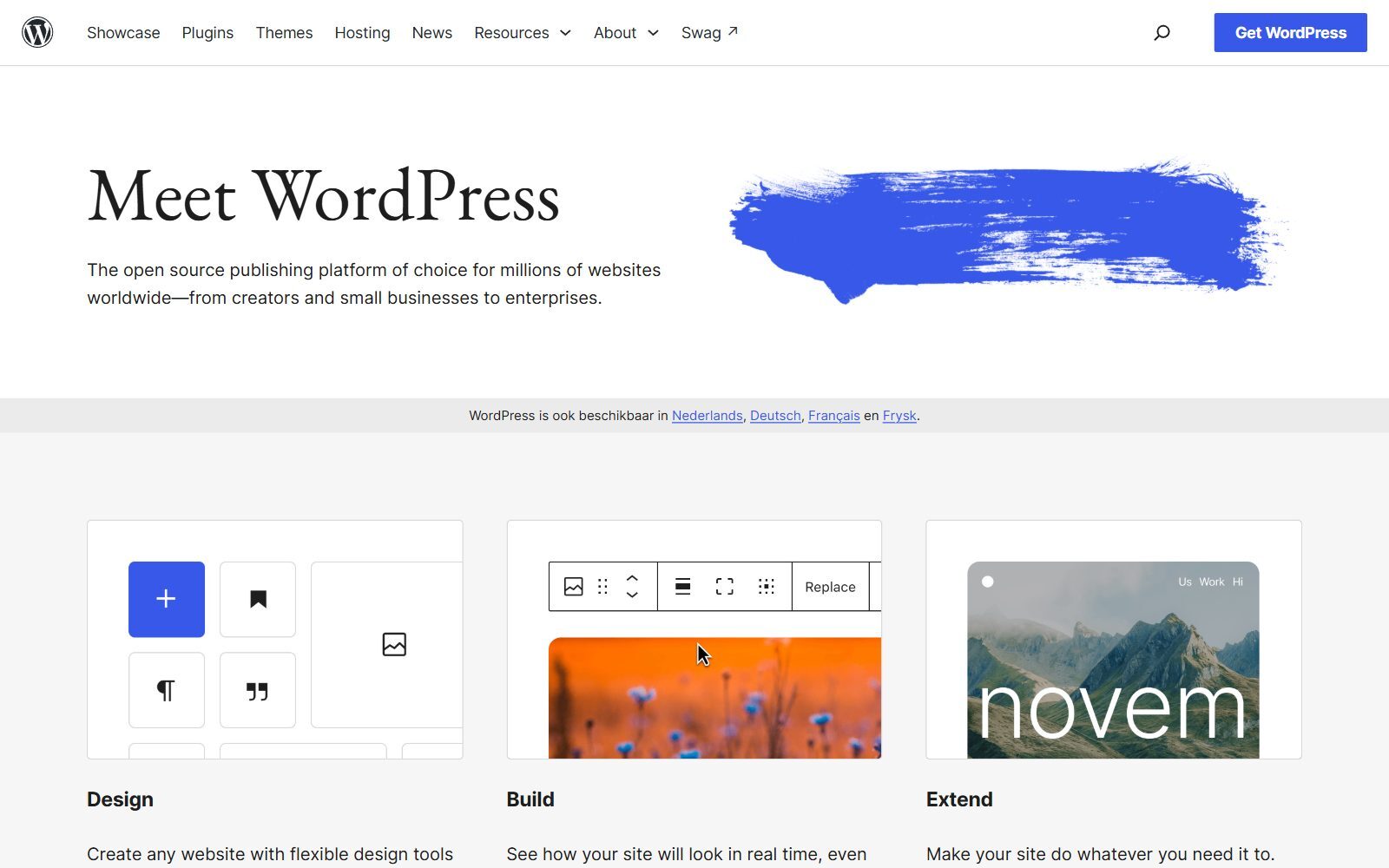
WordPress calls itself the open source publishing platform of choice for millions of websites, from creators and small businesses to enterprises. You download it from WordPress.org (version 7.1.4 when we checked), install it on PHP hosting and build pages with the block editor, themes and plugins, including store plugins if you sell online. The code is GPL-2.0-or-later. Do not confuse it with WordPress.com, a hosted service built on the same software. If WordPress itself is not right for you, see our WordPress alternatives.
2. Drupal: for large, structured and multilingual sites
Drupal is a CMS often chosen for large, structured sites. Drupal core 11.4.12 was released on 6 November 2026 and is the recommended version; Drupal 10 still gets releases for sites that have not upgraded yet. It is GPL-2.0 licensed. It needs more setup than Weebly ever did, so it suits teams with a developer, not a solo founder in a hurry.
3. Joomla: a middle ground between WordPress and Drupal
Joomla is a free CMS with an extensions directory and language packs listed on its official site. Joomla 6.2.0 came out on 13 October 2026, and the code is GPL-2.0 on its GitHub repository. Like WordPress, it runs on ordinary PHP hosting with a database.
4. Grav: a flat-file CMS without a database
Grav is a modern flat-file CMS: pages are files, so there is no database to install, and you just extract the ZIP on PHP hosting. An admin plugin gives you a dashboard, and themes and plugins install through its package manager. It is MIT licensed, and version 2.2.28 came out on 7 November 2026. Grav also sells premium plugins and a site-monitoring service, Grav Guard, which is free for up to 3 sites.
5. Publii: the easiest switch for a simple Weebly site
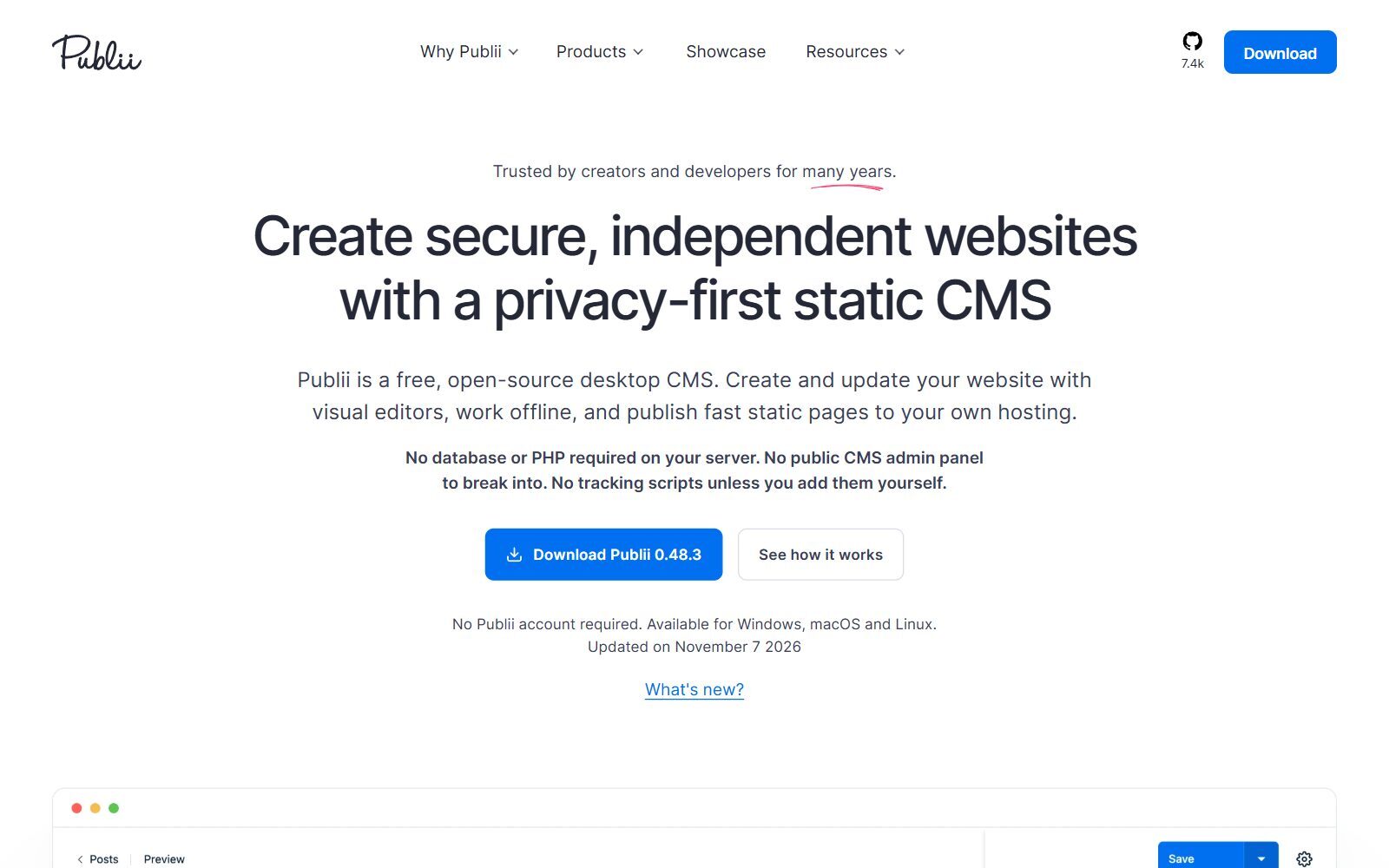
Publii is a free, open-source desktop CMS for Windows, macOS and Linux. You write and design on your own computer with visual editors, even offline, and Publii publishes fast static pages to your own hosting, with no database or PHP on the server and no admin panel to break into. It is GPL-3.0, and version 0.48.3 came out on 7 November 2026. Free and premium themes are available. Choose it for a brochure site or blog that only you update.
6. Hugo: a static site generator for technical founders
Hugo is one of the most popular open-source static site generators, free under the Apache 2.0 licence. You write pages in Markdown, pick a theme and build a site you can host on almost any static hosting. Version 0.169.0 was released on 27 October 2026. There is no visual editor, so pair it with Decap CMS if non-technical teammates need to edit content.
7. Decap CMS: an editor for static sites
Decap CMS adds a content editor on top of a static site: it saves pages to your Git repository and works with any static site generator and all major Git providers. It is free, self-hosted and MIT licensed; version 3.17.3 came out in October 2026. It suits a developer who sets the site up once and teammates who then edit pages in a browser.
Validate your startup idea with the unique borrowed authority approach: we publish articles about your product in our blog and you get traffic and testers for your MVP
- Prove Market Demand: See real organic traffic and waitlist conversions
- Unlock High-Potential Keywords: Receive a curated list of top-performing keywords directly from Google Search Console data.
- Estimate Customer Acquisition Cost (CAC): Gain financial foresight with an estimated CAC based on real keyword performance data.
🔗 Start validating your startup now
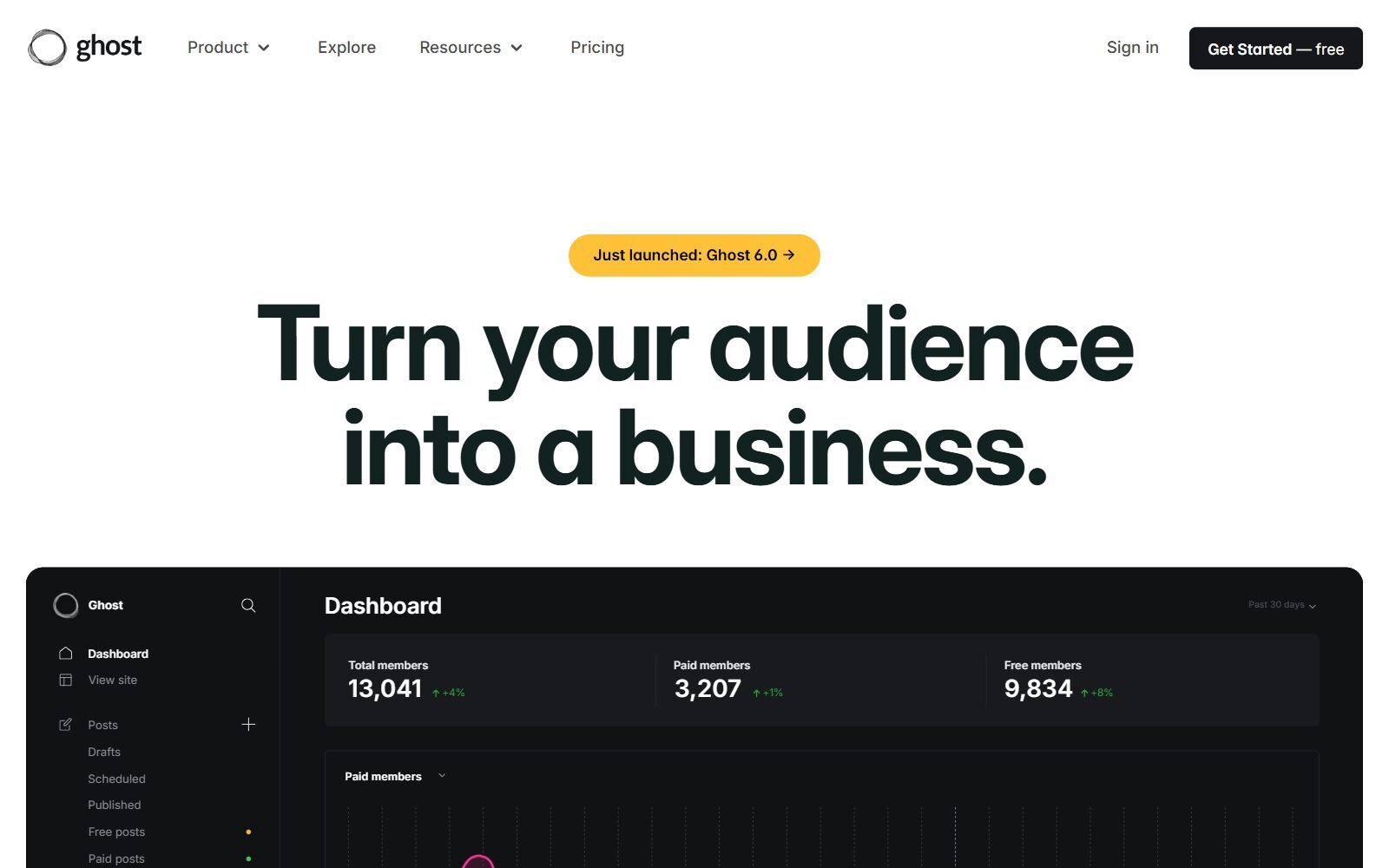
8. Ghost: a blog with newsletters and paid members
Ghost is an open-source blog and newsletter platform that is independent and funded by its users. It publishes posts, sends them as email newsletters and handles free and paid memberships. The code is MIT licensed on GitHub (version 6.75.0, 4 November 2026). You can self-host it on a Node.js server, or pay for Ghost(Pro), the managed hosting whose revenue goes to the non-profit Ghost Foundation. It is less flexible for multi-page business sites than WordPress, but better for a content business.
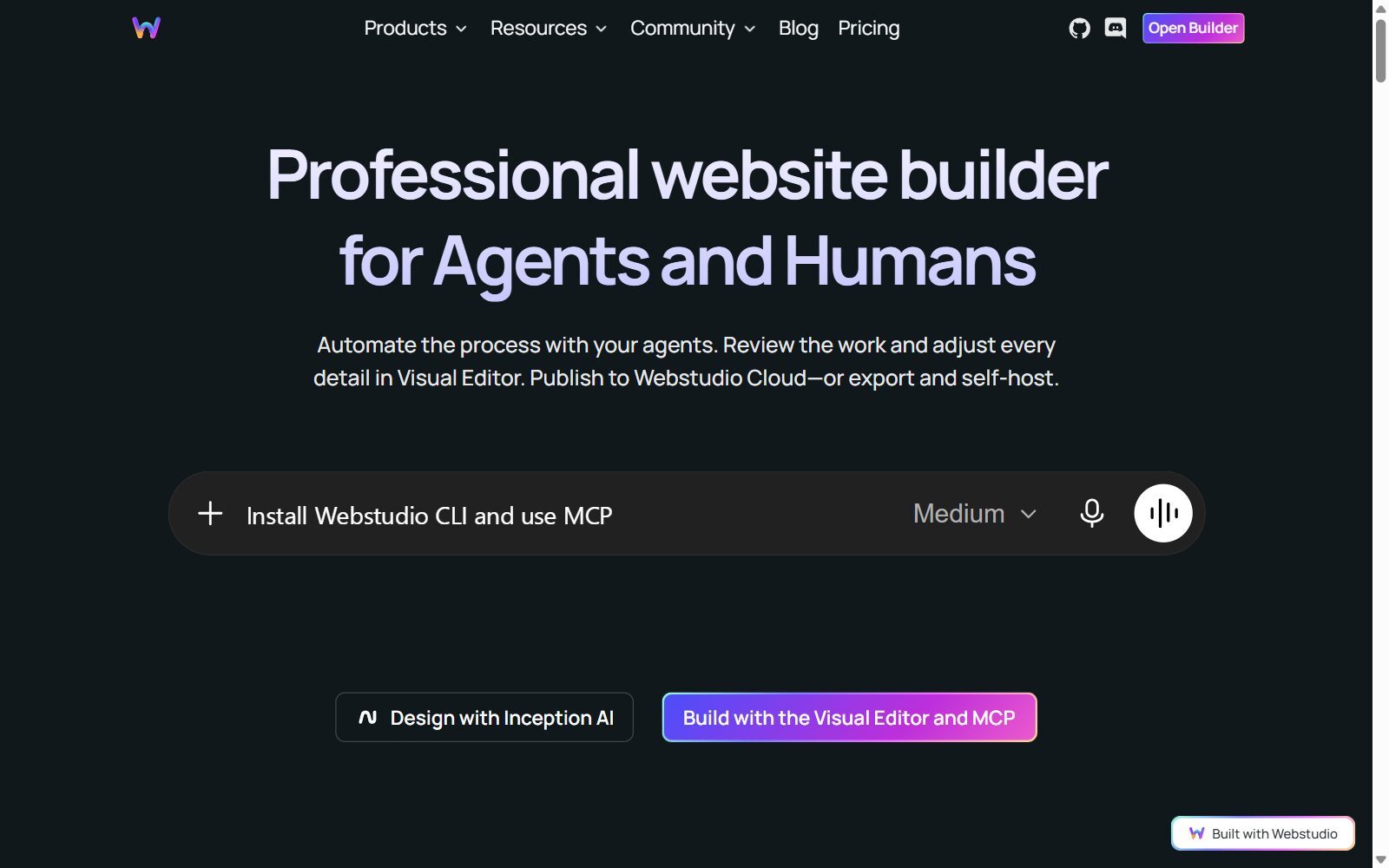
9. Webstudio: a visual builder with full CSS control
Webstudio is an open-source visual website builder: you design in a visual editor with access to every CSS property, pull content from a CMS, CRM or API, and publish to Webstudio Cloud or export and self-host. Its core is AGPL-3.0-or-later, according to the Webstudio repository; one optional animation package is proprietary and needs a separate EULA, so leave it out if you want a fully open-source stack. Version 0.310.0 came out on 6 November 2026. Webstudio is closer to Webflow than to Weebly, so expect a learning curve.
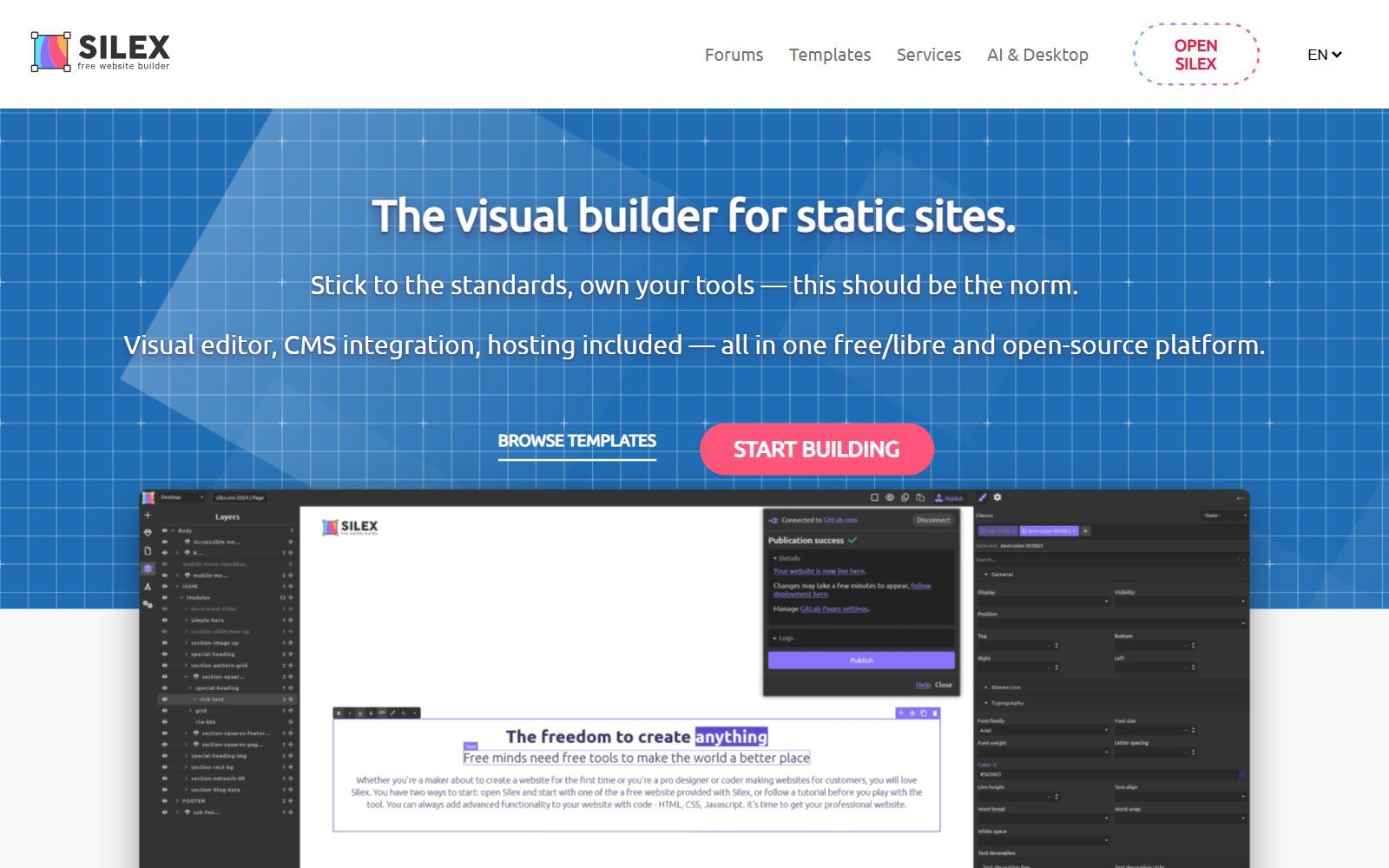
10. Silex: a free visual builder for static sites
Silex is a visual builder for static sites with CMS integration and hosting options. Its README describes it as free software under the AGPL, free forever with all features and no premium tier, maintained by the non-profit Silex Labs. Silex is a project of the OW2 open-source community and won the OW2 Best Project Award 2026 in the Technology category. Version 3.9.0 was released in July 2026. It is the closest open-source tool to Weebly's drag-and-drop editing, with clean HTML you can host anywhere.
11. GrapesJS: a page-builder framework for developers
GrapesJS is an open-source drag-and-drop editor framework under the BSD-3-Clause licence (version 0.23.9, 3 November 2026). It is not a finished website builder: developers embed it in their own product to let users build pages or emails. Note that the grapesjs.com website now markets the Grapes Studio SDK, a paid, AI-assisted commercial layer; the open-source framework is the code on GitHub.
12. Vvveb: a CMS and online shop with drag and drop
Vvveb is an open-source CMS with a drag-and-drop page builder and built-in ecommerce for blogs, websites and stores. It is self-hosted on PHP with MySQL, MariaDB, SQLite or PostgreSQL, licensed AGPL-3.0-or-later, and version 1.0.9.0 came out on 29 October 2026. Pick it if you want a Weebly-style editor and a shop in one package.
13. Concrete CMS: a CMS for teams
Concrete CMS is a free and open-source CMS that lets content creators, designers and developers build and publish content together. It is MIT licensed, runs on PHP hosting, and version 9.5.7 came out on 20 October 2026. It suits company sites with several editors.
14. Odoo Community: a website inside an open-source business suite
Odoo comes in two editions: Odoo Community, which is open source and published under LGPLv3, and Odoo Enterprise, which is licensed. The website app is part of the Community code on GitHub, and the editions page compares which website, eCommerce and blog features each edition includes. Choose it only if you also want Odoo for sales, invoicing or inventory; for a website alone, the tools above are simpler.
Changed or Removed Since the Old List
- Weebly: now part of Square's product suite, with prices shown in local currency on its pricing page.
- GrapesJS: still open source, but its website now sells the commercial Grapes Studio SDK; the free framework lives on GitHub.
- Webstudio: the core is AGPL, but one optional animation package is proprietary.
- Odoo: only the Community edition is open source; Enterprise features need a paid licence.
- Old sources removed: the 2025 version relied on third-party roundups; every fact above now comes from the projects' own sites and repositories.
- Not open source: Wix, Squarespace, Webflow, Square Online and Weebly itself are closed platforms. Compare them in our Weebly alternatives and free Weebly alternatives.
Which Open-Source Weebly Alternative Should You Choose?
- You want the safest all-round choice: WordPress.
- You liked Weebly's drag-and-drop editor: Silex, Webstudio or Vvveb.
- You run a simple site and update it yourself: Publii.
- You publish articles and newsletters: Ghost.
- You need many languages, roles or content types: Drupal or Joomla.
- You want cheap hosting with no database: Grav, Publii or Hugo.
- You have a developer and want speed: Hugo with Decap CMS.
- You are building a SaaS product with a page builder inside: GrapesJS.
- You do not want to manage hosting at all: stay on a hosted builder; see our free Squarespace alternatives and Squarespace alternatives.
More website-builder comparisons: open-source Wix alternatives, Wix alternatives, free Wix alternatives, Webflow alternatives, free Webflow alternatives, open-source Framer alternatives, free Carrd alternatives, open-source Carrd alternatives and free WordPress alternatives. Head-to-head: Wix vs Squarespace, Wix vs Webflow and Squarespace vs Webflow.
Join ElonaHunt (like ProductHunt but for women) and explore the coolest women-focused startups out there!
Discover your next big inspiration and connect with like-minded female entrepreneurs!
👉 Join the Hunt Here
How Founders Use Open-Source Website Tools
A startup website has to do three jobs: explain the product, collect leads and rank in search. Open-source tools let you do this without monthly platform fees and without losing your site if a vendor changes its plans, as Weebly users saw when it moved under Square. A common path: launch a one-page site with Publii or Silex on static hosting, add a blog with Ghost or WordPress when you start content marketing, and move to Drupal only when the site grows complex. For how Ghost connects to the open social web, read our startup news on Ghost. If you need an app rather than a website, compare our free Bubble alternatives. Before you spend weeks on design, validate your startup idea with a simple page and real testers, and use the F/MS AI SEO Tool to write the articles that bring visitors to it from Google and AI assistants.
FAQ About Open-Source Weebly Alternatives
Is Weebly open source?
No. Weebly is a closed, hosted website builder that is now part of Square's product suite. You cannot download its code or run it on your own server.
Does Weebly still exist or does it redirect to Square?
Weebly still has its own website and pricing page with a free plan, but its homepage says it is now part of the Square product suite, and the logo reads eCommerce by Square.
What is the best open-source alternative to Weebly?
WordPress is the best all-round choice: GPL-licensed, with a block editor, themes, plugins and store add-ons, and it runs on almost any PHP hosting.
Is there an open-source drag-and-drop website builder like Weebly?
Yes. Silex (AGPL) and Webstudio (AGPL core) are visual builders, and Vvveb (AGPL) combines a drag-and-drop page builder with a shop. Publii offers visual editing in a desktop app.
Which open-source option is easiest for non-technical users?
Publii, because you install a desktop app, edit visually and publish static pages without managing a database or server software.
Can I build an online store with open-source software?
Yes. Vvveb includes ecommerce, WordPress supports store plugins, and Odoo Community has a website and shop as part of its business suite.
Is open-source website software really free?
The software is free to download and use. You still pay for hosting and a domain, and some projects sell premium themes, plugins or managed hosting, such as Ghost(Pro).
Is AGPL open source?
Yes. The GNU AGPL is an approved open-source licence. It requires you to share your changes if you offer a modified version to users over a network.
Can I move my Weebly site to WordPress?
Plan on rebuilding the pages: copy your text and images into WordPress, then set up 301 redirects from the old URLs on your own domain so you keep your search rankings.
Where can I get a backlink by writing about my startup?
You can publish a guest post in one of the Fe/male Switch startup blogs, which rank in Google and in AI tools. Get a quality backlink.
About the Author
Violetta Bonenkamp, also known as MeanCEO, is an experienced startup founder with an impressive educational background including an MBA and four other higher education degrees. She has over 20 years of work experience across multiple countries, including 5 years as a solopreneur and serial entrepreneur. Throughout her startup experience she has applied for multiple startup grants at the EU level, in the Netherlands and Malta, and her startups received quite a few of those. She’s been living, studying and working in many countries around the globe and her extensive multicultural experience has influenced her immensely.

