
Open-Source Framer Alternatives for Website Building, Design, Prototyping and Animation
Framer is a polished way to design and publish a website, but it is closed software: your site lives on Framer's hosting, the pricing is Framer's to change, and the free plan is meant for non-commercial use. If you want a tool you can inspect, host yourself or keep using whatever happens to the vendor, you need a genuinely open-source alternative. Framer does three jobs, so this guide covers all three: visual website builders, design and prototyping tools and animation tools. For every project we checked the licence in its GitHub repository, the latest release or commit, and the prices on its official site in November 2026. Tools that are not really open source or are no longer maintained are in a separate section at the end.
Quick answer: the closest open-source replacement for Framer as a website builder is Webstudio (AGPL-3.0), with a free cloud plan and self-hosting. For design and clickable prototypes, use Penpot (MPL-2.0). Silex is the fully free, non-profit option for static sites, and Plasmic or Onlook suit teams with developers. For Framer-style animations in code, use Motion, the MIT-licensed library that used to be called Framer Motion.
Boost Your SEO by Getting Featured in Our Blogs and get a backlink.
We publish content about startups, education, tech, funding, etc. that ranks well not only in Google but also in Perplexity, ChatGPT, Grok and other AI tools.
👉 Get featured now!
What Framer Costs in 2027, for Reference
Before you switch, it helps to know what you are replacing. On the Framer pricing page (yearly billing, checked November 2026), the Free plan costs $0 and includes 500 AI credits to try, a free Framer domain and 1 GB of bandwidth. Framer calls it ideal for non-commercial use, and connecting your own domain needs a paid plan. Basic costs $10 a month for personal sites (30 pages, 50 GB bandwidth), Pro costs $30 a month for growing professional sites (150 pages, staging, site redirects), and Enterprise is priced on request. Additional editors cost $20 a month each; viewers are free. None of Framer's code is open source, and you cannot host a Framer site yourself.
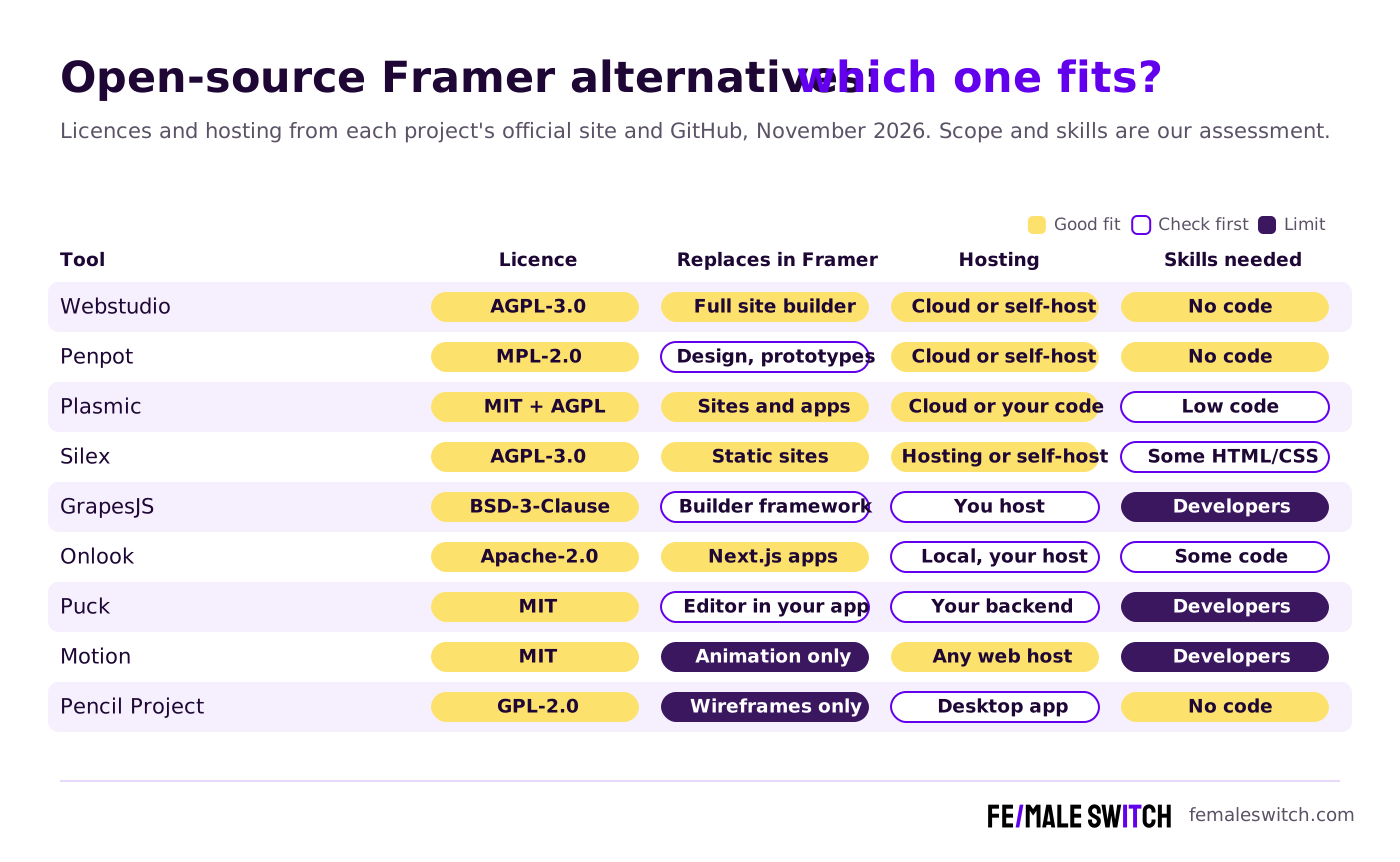
Open-Source Framer Alternatives Compared
Sources: each project's official website, pricing page, GitHub repository and npm package, checked 6 November 2026. Self-hosting is free, but you pay for the server and your own time.
The Best Open-Source Framer Alternatives in 2027
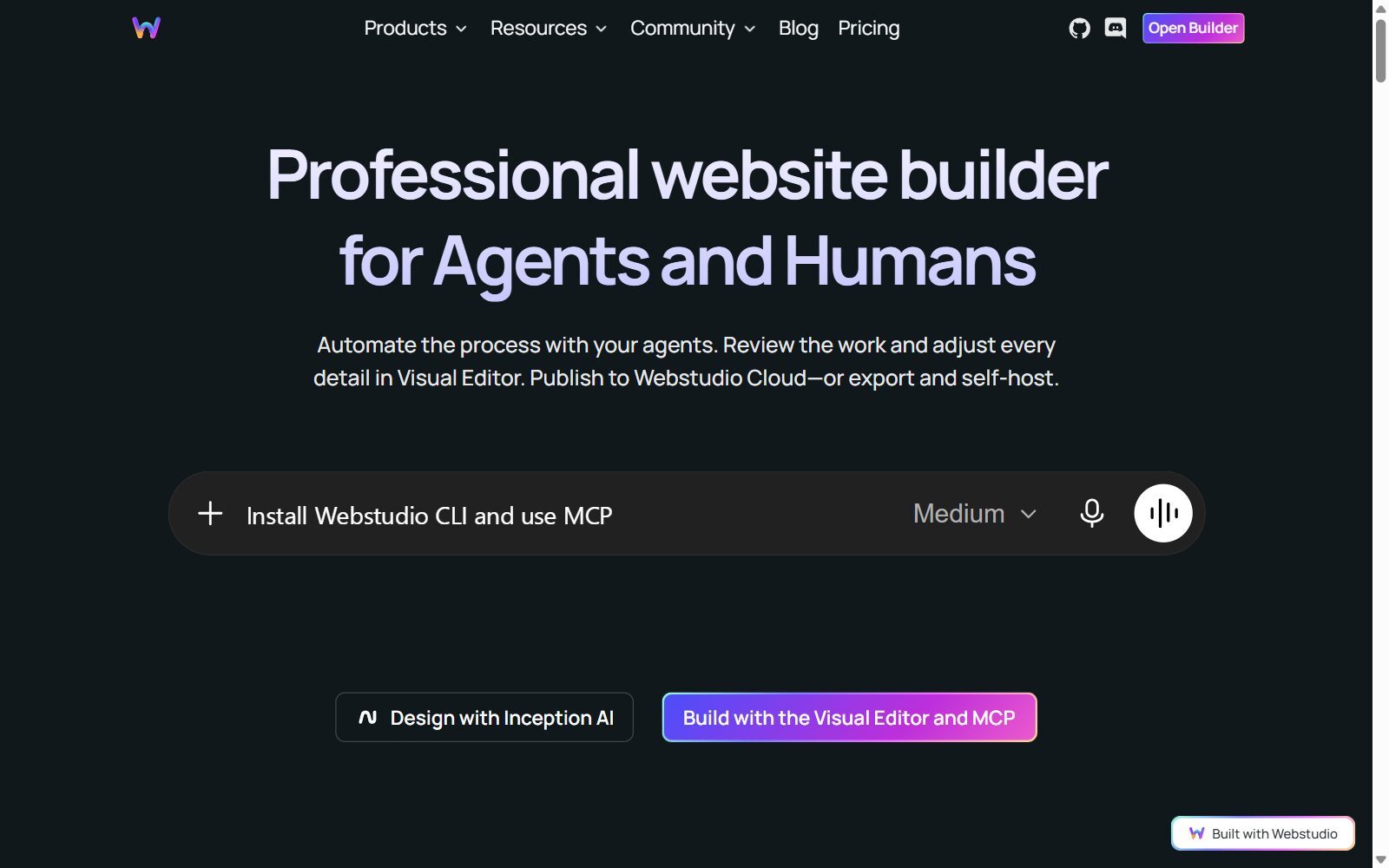
1. Webstudio: the closest open-source replacement for Framer and Webflow
Webstudio is a visual website builder that gives you the full power of CSS (every property, unit and breakpoint) without writing code, which is the same promise that draws people to Framer. You can connect content from any CMS, CRM, database or API to build blogs and directories, paste in sections from Webflow or Markdown, and let AI agents work on a site through its CLI and MCP server. When the site is ready you publish it to Webstudio Cloud, which runs on Cloudflare, or export it and host it yourself. The core is licensed AGPL-3.0-or-later; the README notes that one optional package for animations is proprietary and covered by a separate licence. The free cloud plan includes unlimited projects and pages on a wstd.io subdomain; Pro costs $15 a month billed yearly and adds custom domains and 100,000 page views a month, and Team costs $35 a month for five seats. The project ships often: version 0.309.0 came out on 30 October 2026.
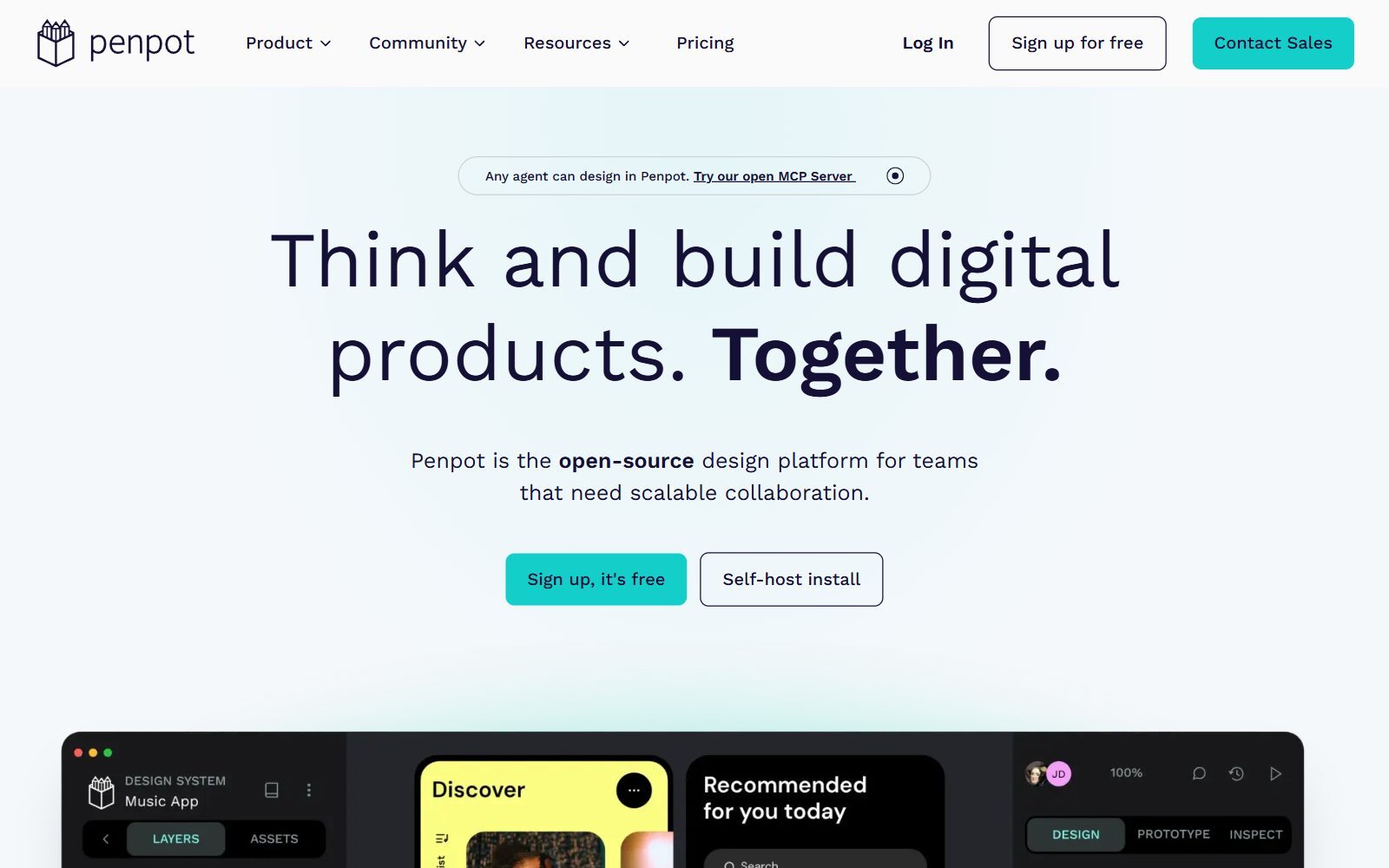
2. Penpot: open-source design and prototyping instead of Framer's canvas
Penpot is the open-source design platform (MPL-2.0) to use if you mainly used Framer as a design tool. It runs in the browser and covers wireframes, interactive prototypes, CSS Grid and Flex layouts, components, native design tokens and shared libraries. Developers get an Inspect view with CSS, HTML and SVG code, and an open MCP server lets AI agents work in your files. Penpot's pricing page lists the cloud Professional plan at $0 ("free and fully featured"), Unlimited at $7 per editor per month (capped at $175 a month) and Enterprise at $25 per member per month, and you can self-host it for free. Penpot does not publish websites, so pair it with a builder from this list. Version 2.18.6 came out on 4 November 2026.
3. Plasmic: an open-source visual builder that works with your code
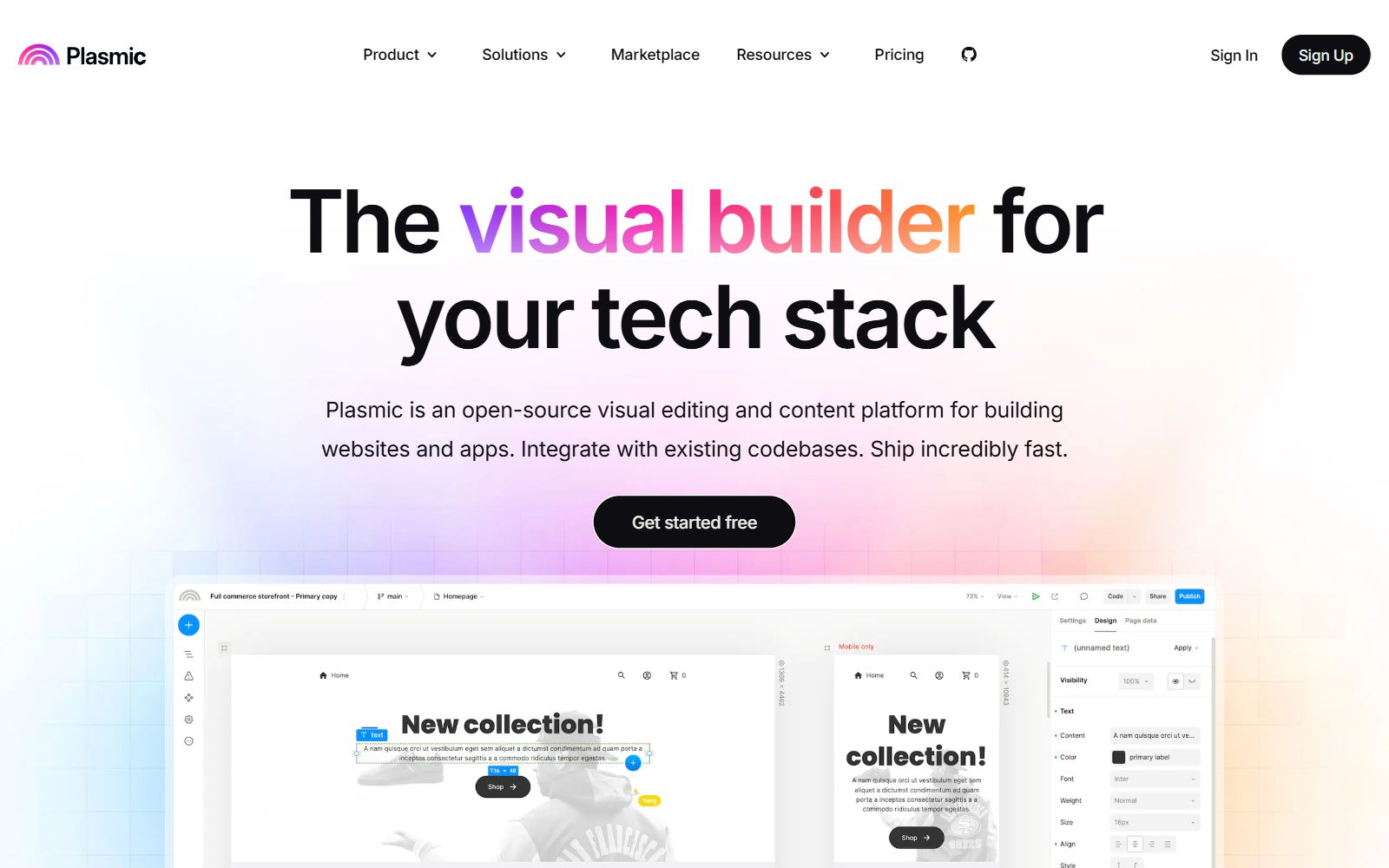
Plasmic describes itself as an open-source visual editing and content platform for building websites and apps. Designers and marketers work on a Framer-like canvas, while developers can register their own React components as building blocks and publish pages into an existing codebase or to any host. Its repository is MIT-licensed, except the Studio platform folder, which is under the AGPL. The free plan costs $0 with 3 collaborators, unlimited projects and custom domains on Plasmic hosting, but shows a Plasmic badge on sites Plasmic hosts; Starter, which removes the badge, costs $39 a month billed yearly.
4. Silex: the free, non-profit website builder
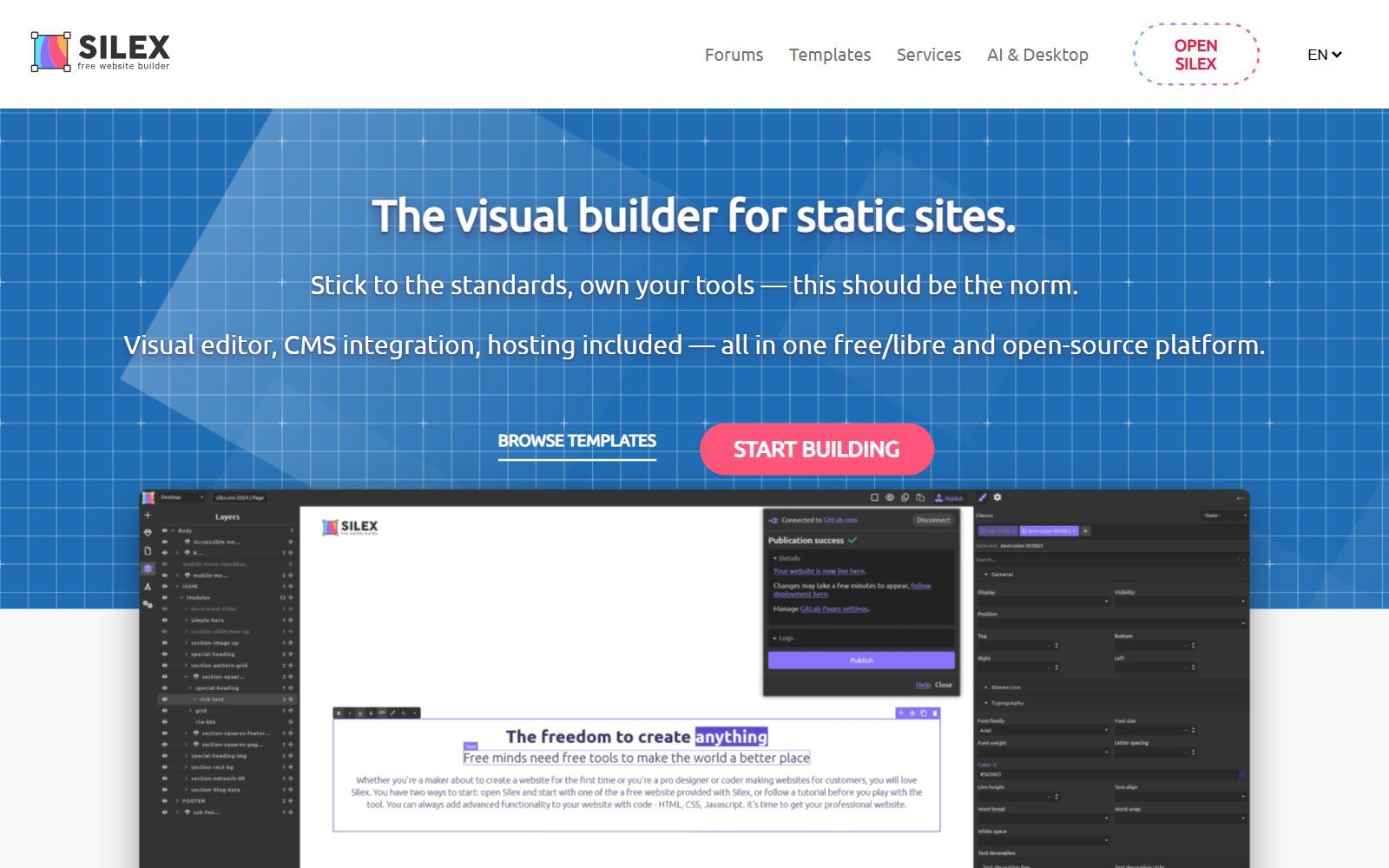
Silex is a visual builder for static websites, maintained by Silex Labs, a French non-profit, and part of the OW2 open-source community, which gave it the OW2 Best Project Award 2026 in the Technology category. Its README promises it will stay free software under the AGPL, with all features included and no premium tier. The editor is built on GrapesJS; you can pull content from WordPress, Strapi, Squidex, Supabase or your own API, publish with the included hosting, or host it yourself. You start in the browser with nothing to install, and a desktop app is in alpha. Silex says itself that it is not the tool if you need zero learning curve, so expect some HTML and CSS thinking. The latest stable release is 3.9.0 (July 2026), with 3.10 test versions published up to November 2026.
Validate your startup idea with the unique borrowed authority approach: we publish articles about your product in our blog and you get traffic and testers for your MVP
- Prove Market Demand: See real organic traffic and waitlist conversions
- Unlock High-Potential Keywords: Receive a curated list of top-performing keywords directly from Google Search Console data.
- Estimate Customer Acquisition Cost (CAC): Gain financial foresight with an estimated CAC based on real keyword performance data.
🔗 Start validating your startup now
5. GrapesJS: the open-source framework behind many page builders
GrapesJS is a drag-and-drop web builder framework under the BSD-3-Clause licence. It is not a finished Framer replacement for end users; it is what developers use to put a page, landing-page or email builder inside their own product, and Silex is built on it. The library is actively maintained (version 0.23.9 came out in November 2026). Be aware that grapesjs.com now sells a separate commercial Studio SDK and a hosted Grapes Studio app (free Starter plan, Pro $10 a month); those are not the open-source project.
6. Onlook: visual editing for Next.js and Tailwind code
Onlook is an Apache-2.0 visual editor for websites and prototypes built with Next.js and Tailwind CSS. You edit the real app in the browser with a Figma-like interface, browse layers, manage brand tokens and pages, and work with AI, while every change lands in code. Its README lists Webflow among the tools it replaces. The company's website calls it a free, local-first editor; note that the team is now building a separate hosted product for designers, available through a waitlist, while the open-source editor stays on GitHub (code updated in October 2026).
7. Puck: a visual page editor inside your own React app
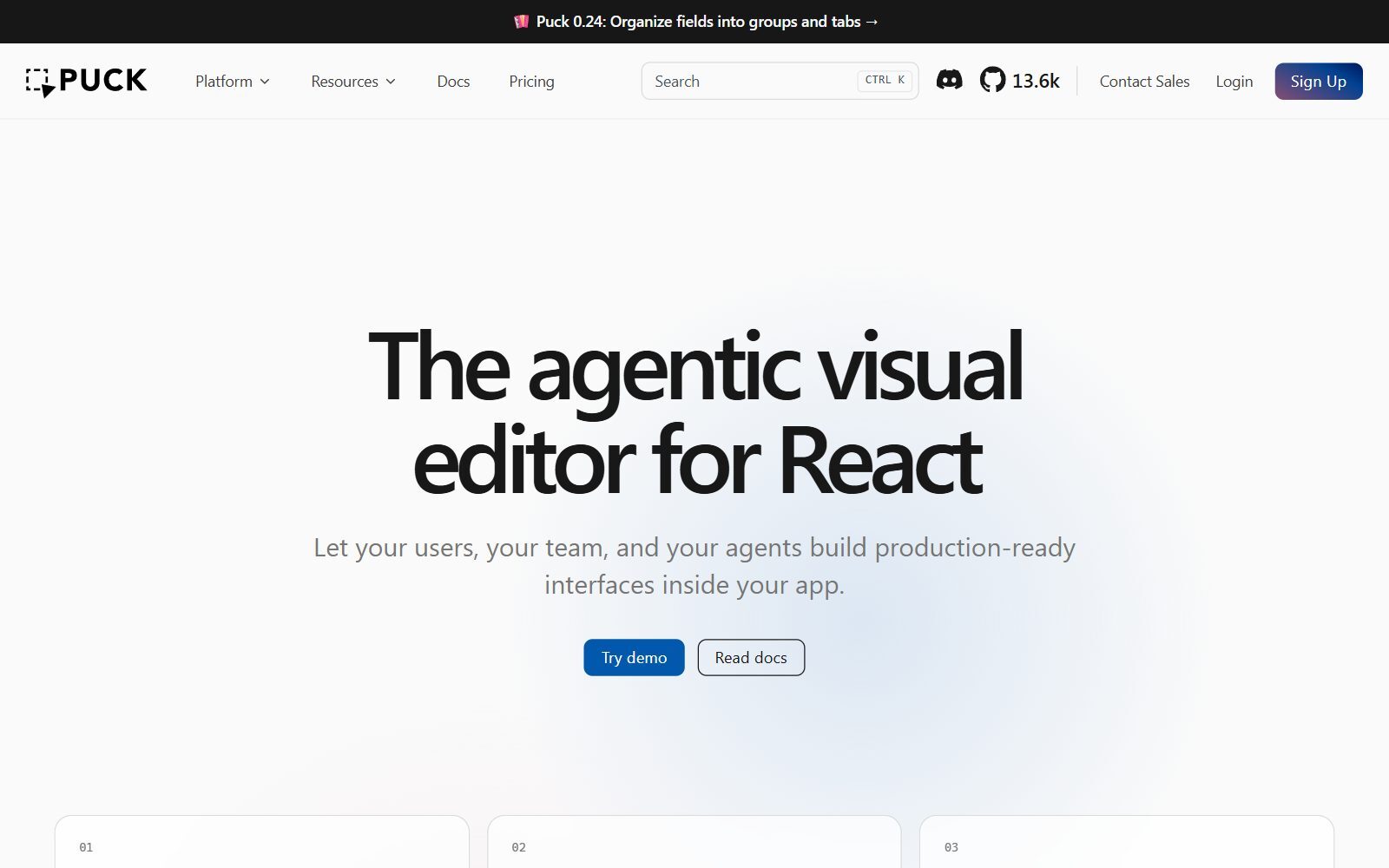
Puck is an MIT-licensed visual editor for React. Developers embed it in their app, plug in their own components and design rules, and let the team build pages by drag and drop; the result is stored as JSON in your own backend, so there is no vendor hosting at all. It suits startups that want Framer-style page editing for marketing pages inside their product. The editor is free; Puck's optional hosted AI service is billed by usage or from $199 a month. Version 0.24.0 came out on 29 October 2026.
8. Motion: the open-source animation library that used to be Framer Motion
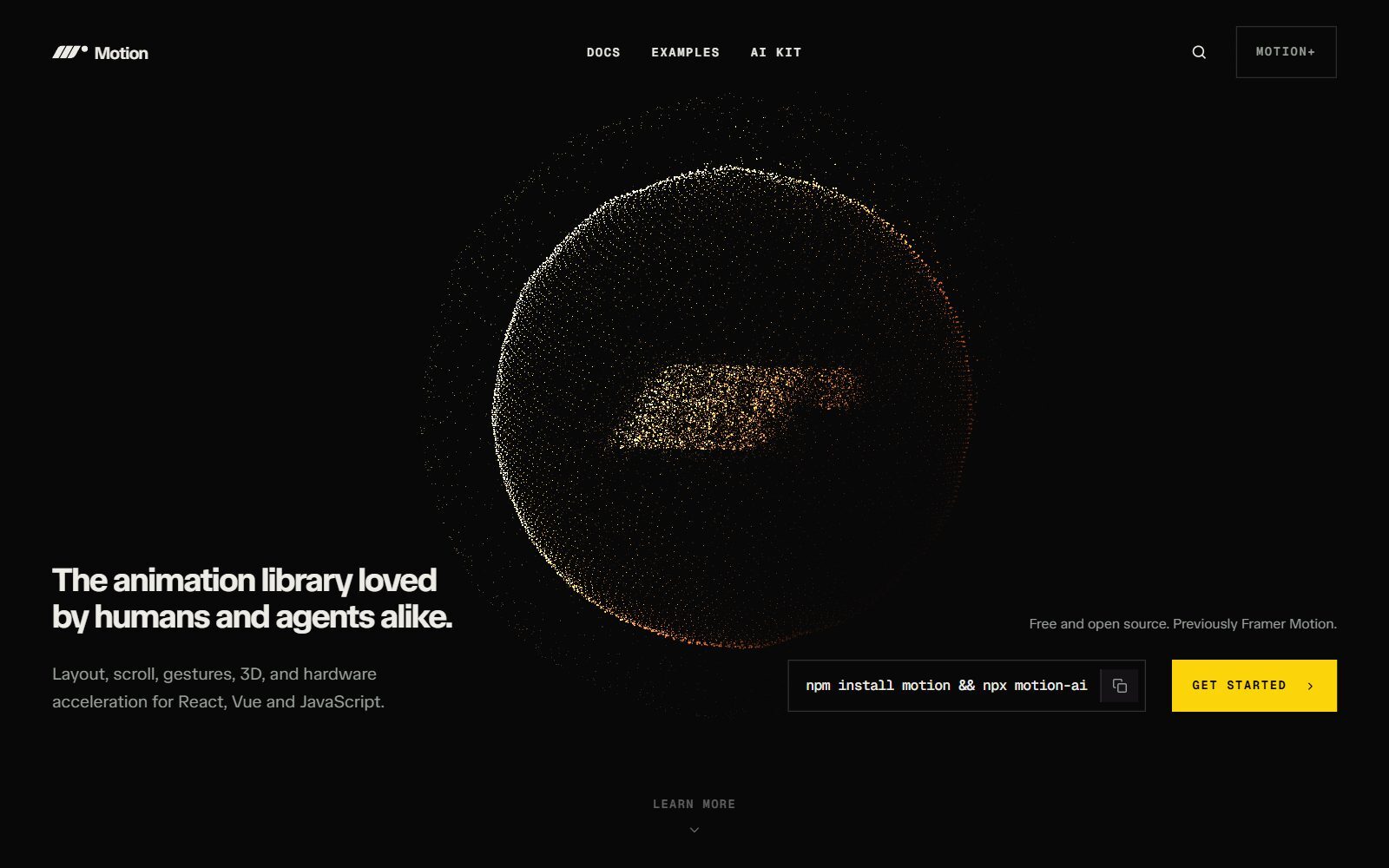
Motion is the animation library that was called Framer Motion and is now its own project. It is free and open source under the MIT licence and works with React, Vue and plain JavaScript. It handles layout, scroll, gesture, spring, exit and 3D animations, uses the browser's hardware-accelerated animation engine where possible, and its smallest animate function weighs 3.2 kB. If you liked Framer's smooth interactions and have a developer, this is how you get them in your own code. Motion+ is a paid membership with premium components, examples and a visual timeline editor. Version 14.9.1 came out in November 2026. For no-code animation files, see our open-source LottieFiles alternatives and open-source Rive alternatives.
9. Pencil Project: quick wireframes before you build
Pencil Project is a GPL-2.0 desktop app for Windows, macOS and Linux for wireframes and simple clickable mockups, with stencils for web, Android and iOS screens and links between pages. After a long pause (version 3.1.1 dates from January 2023), version 4.0.0 came out in October 2026 with a built-in MCP server for AI assistants. Use it to plan a site's pages before you open a builder; it does not publish websites.
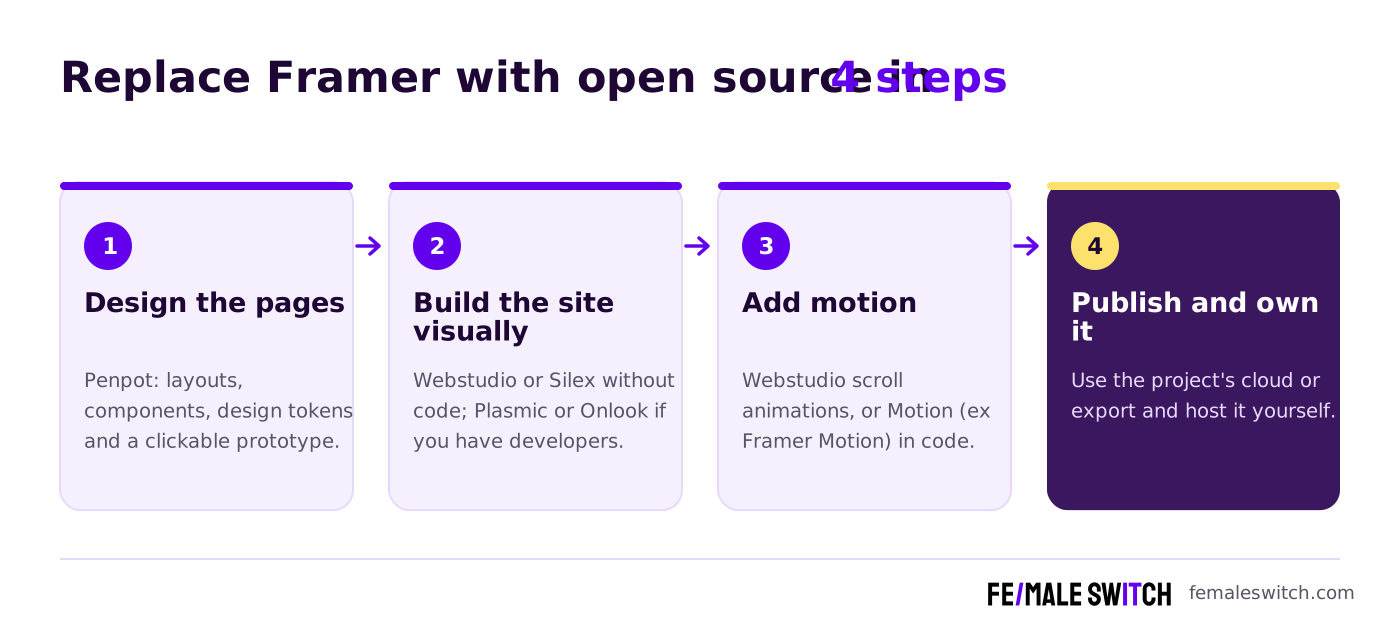
How to Replace Framer with Open-Source Tools
No single open-source project does everything Framer does, but a small stack gets close. A typical setup for a startup website looks like this:
Framer Alternatives That Are Discontinued, Not Open Source or Not a Fit
The 2025 version of this article listed several tools that do not belong on an open-source Framer shortlist. Here is what changed:
- Framer Classic (framer.js): Framer's original code-based prototyping library is still on GitHub under the MIT licence, but the repository has not changed since May 2019. Today's Framer is closed-source.
- Theatre.js: an open-source motion design toolbox for the web, but its main repository has not been updated since August 2024, so we no longer recommend it for new projects.
- Srcbook: its maintainers say it is not under active development, and it was a TypeScript notebook, not a design tool.
- Components AI: its website calls it an open-source design tool, but we could not find a public repository or licence, so we left it out.
- Builder.io: its SDKs, starters and the Mitosis compiler are MIT-licensed, but the visual editor itself is a hosted service, so it is not an open-source Framer replacement.
- Rive: its runtimes are MIT-licensed, but the editor is not open source. See our Rive alternatives.
- DaisyUI, React, Radix UI and NextUI: good open-source code libraries for developers (NextUI is now called HeroUI), but you cannot design or publish a site with them on their own.
- Blender: an open-source 3D suite, not a website or UI tool. See our open-source Blender alternatives.
Which Open-Source Framer Alternative Should You Choose?
- You want a Framer-like website builder without code: Webstudio, on its free cloud plan or self-hosted.
- You used Framer mainly for UI design and prototypes: Penpot.
- You want a builder that is free forever and run by a non-profit: Silex.
- Your developers want marketers to edit pages inside your codebase: Plasmic, Puck or Onlook.
- You are building your own website-builder feature: GrapesJS.
- You want Framer-style animations in code: Motion.
- You need wireframes first: Pencil Project.
Comparing design tools more broadly? See our open-source Figma alternatives, open-source InVision alternatives, free Adobe XD alternatives and open-source Adobe XD alternatives. If open source is not a must, compare hosted builders in our Squarespace alternatives, free Carrd alternatives and website builders for non-technical founders.
How Founders Use Open-Source Website and Prototyping Tools
For an early-stage startup, the website is usually a test, not a monument. A clickable Penpot prototype or a one-page Webstudio site is enough to see whether people sign up, which is the core of our 30-day validation sprint. Open-source tools also keep your pages and design files yours if a vendor changes its prices or shuts down. If you would rather describe the product and let AI build the first version, read about rapid prototyping with AI, compare no-code AI app builders and see our Hostinger Horizons vs Webflow comparison. Designers moving to code can start with the vibe coding tools for designers.
Once your site is live, run it through a free landing page analyzer and use the F/MS AI SEO Tool to write articles that bring customers from Google and AI assistants. Open-source builders give you clean, exportable HTML, which helps with both.
Join ElonaHunt (like ProductHunt but for women) and explore the coolest women-focused startups out there!
Discover your next big inspiration and connect with like-minded female entrepreneurs!
👉 Join the Hunt Here
FAQ About Open-Source Framer Alternatives
Is Framer open source?
No. Framer is a closed-source, hosted website builder. Its old Framer Classic library is on GitHub under the MIT licence, but it has not been updated since May 2019 and is not the Framer you use today.
What is the best open-source alternative to Framer?
Webstudio is the closest: a visual website builder with full CSS control, CMS connections and hosting, licensed AGPL-3.0. You can use its free cloud plan or export the site and host it yourself.
Is there a free Framer alternative I can self-host?
Yes. Webstudio, Silex and Penpot can all be self-hosted for free, and Plasmic's platform code is open source too. You only pay for your server.
What happened to Framer Motion?
Framer Motion is now called Motion. It is a free, MIT-licensed animation library for React, Vue and JavaScript, developed at motion.dev, and the framer-motion package is still published alongside it.
Is Framer free?
Framer has a Free plan at $0 with a Framer domain and 500 AI credits to try, which Framer says is ideal for non-commercial use. A custom domain needs a paid plan: Basic from $10 a month or Pro from $30 a month with yearly billing.
Is Penpot a good Framer alternative?
For design and prototyping, yes: Penpot is MPL-2.0, free on its Professional plan and self-hostable, with prototypes, components, design tokens and code inspect. It does not build or host websites, so pair it with Webstudio or Silex.
Is Webflow open source?
No. Webflow is a closed, hosted builder. Webstudio, which can paste content from Webflow, is the main open-source alternative to both Webflow and Framer.
Which open-source tool is best for developers?
Plasmic, Onlook and Puck let developers keep pages in their own codebase while others edit them visually, and GrapesJS is a framework for building your own editor.
Is Silex really free?
Yes. Silex is free software under the AGPL, maintained by a French non-profit, with all features included and no premium tier.
Where can I get a backlink by writing about my startup?
You can publish a guest post in one of the Fe/male Switch startup blogs, which rank in Google and in AI tools. Get a quality backlink.
About the Author
Violetta Bonenkamp, also known as MeanCEO, is an experienced startup founder with an impressive educational background including an MBA and four other higher education degrees. She has over 20 years of work experience across multiple countries, including 5 years as a solopreneur and serial entrepreneur. Throughout her startup experience she has applied for multiple startup grants at the EU level, in the Netherlands and Malta, and her startups received quite a few of those. She’s been living, studying and working in many countries around the globe and her extensive multicultural experience has influenced her immensely.

