

TL;DR: Cascade funding is EU money that reaches startups second-hand: the European Commission funds a project consortium, and that consortium passes part of its budget to outside companies through its own open calls. The official name is financial support to third parties. Grants are smaller than the EIC Accelerator, often a few thousand to a few hundred thousand euros per company, but applications are shorter, competition is lower and you sign a simple sub-grant agreement with the project itself. Below: how the money flows, what calls typically pay, a scored fit worksheet, a copyable application outline and a 30-day plan to your first submission.
Cascade funding is the part of EU funding most founders have never heard of, and it is often the easiest door in. Instead of writing a 50-page Horizon Europe proposal with partners in three countries, you answer a short open call from a project that already has the money and needs startups to test, pilot or build something.
Most of the old one-off "open call" posts in this feed were cascade calls. They closed, but the mechanism behind them keeps running. This guide explains it once, properly, so you can spot the next call yourself.
How cascade funding works

The money moves in two steps.
Step 1: the Commission funds a project. A Horizon Europe, Digital Europe or other EU programme topic allows "financial support to third parties". A consortium of universities, innovation hubs, industry groups and accelerators wins that topic and receives a grant, part of which is earmarked for outside companies.
Step 2: the project funds you. The consortium publishes its own open call, evaluates the applications with independent experts and signs a sub-grant agreement with each winner. You become a "third party" of the project. You never sign anything with the Commission.
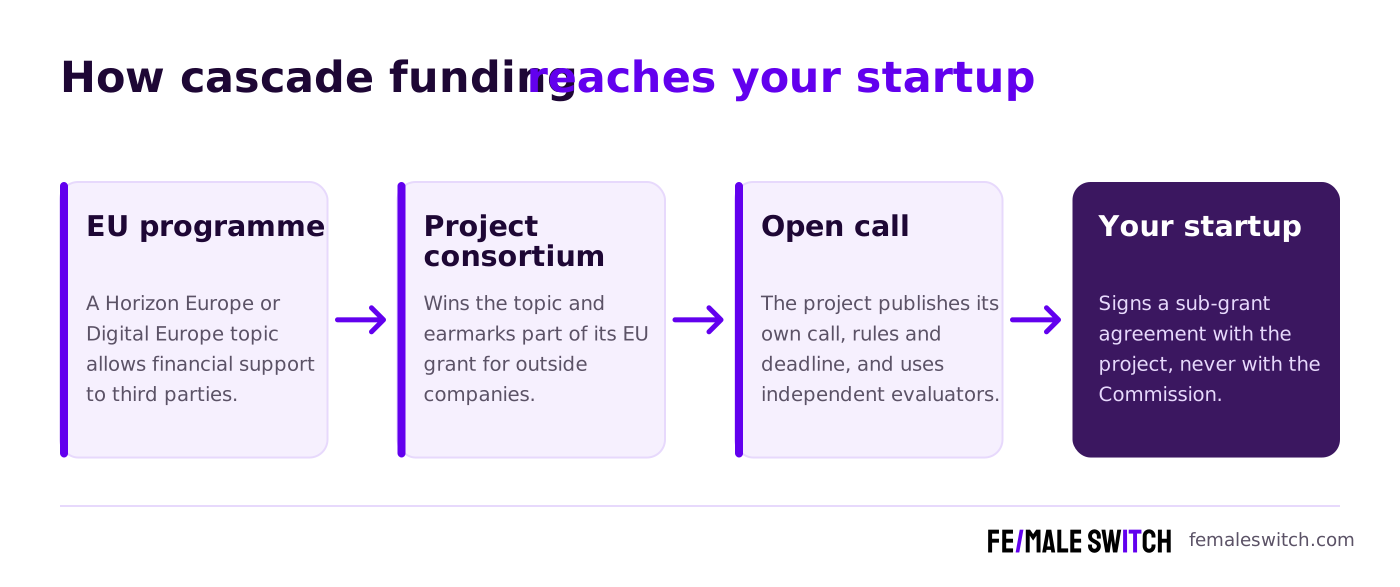
Two things follow from this design:
- Every call has its own rules. Amounts, eligibility, deadlines, evaluation criteria and payment schedules are set by each project within the limits of its EU grant. Always read the full call text.
- Calls are short-lived and scattered. A project usually runs one to three open calls during its life, and many calls are announced on the project's own website first.
Cascade funding vs a direct EU grant
How much cascade funding pays
The default rule comes from EU financial law: the amount per third party should not exceed €60,000, unless a higher amount is needed to reach the action's objectives and the call conditions say so. The EISMEA guidance on financial support to third parties states this limit, and Horizon Europe work programmes set higher ceilings topic by topic. Published work programme topics show caps of €200,000 per third party for robotics and €500,000 for some XR and prize-based topics.
A real example: the NGI Zero Commons Fund, one of the Next Generation Internet cascade programmes, awards grants of €5,000 to €50,000 to open-source developers, according to the NGI programme site. These are the figures published by the Commission and by programme sites in 2026; each call sets its own amount, so always check the call text.
Funding rates vary. Some calls pay 100% of a lump sum, others reimburse a share of your costs. Look for the words "lump sum", "funding rate" and "pre-financing" in the call text before you plan your cash flow.
Where to find cascade funding calls
- The EU Funding & Tenders Portal. In the calls for proposals search, filter the call type to calls for funding in cascade, which are issued by funded projects. Projects can publish their calls there when their topic allows it, but not every project does.
- Project websites. Most calls are announced first, and sometimes only, on the consortium's own site and social channels.
- Programme families that run calls again and again. Next Generation Internet (NGI) for open-source and internet tech, the Smart Networks and Services Joint Undertaking for telecoms, robotics and manufacturing initiatives, data space and AI projects under Digital Europe, and EIT communities.
- European Digital Innovation Hubs and national contact points, which often relay calls in their region.
- Monthly round-ups: Mean CEO's EU Funding News on blog.mean.ceo lists new calls for startups every month.
Our EU grants for startups page maps the main programmes and deadlines, and the European funds for startups guide shows where cascade calls sit next to EU equity and loans.
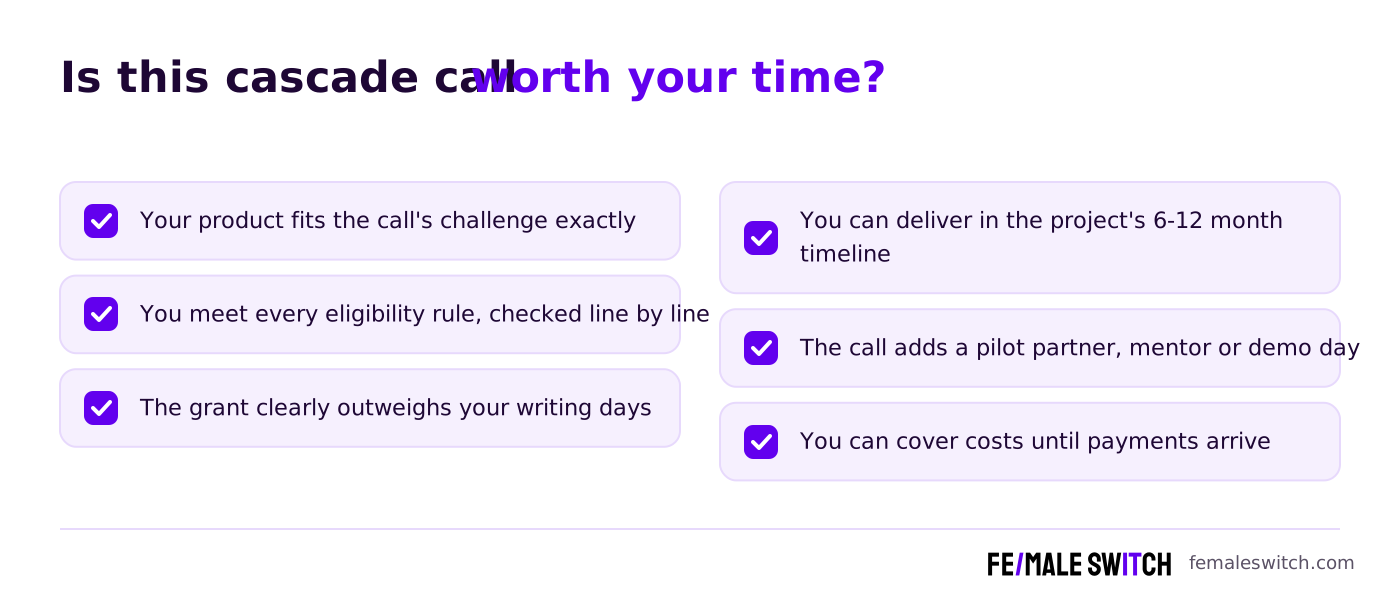
Scored worksheet: is a cascade call worth your time?
Score each line from 0 to 2 for the specific call you are looking at, then add them up.
10–12 points: apply now. 6–9 points: apply if the deadline gives you at least two weeks. Under 6: skip it and wait for a better match; the same programme family usually opens another call.
Copyable application outline
Most cascade forms ask the same questions in a different order. Draft this once, keep it in a document and adapt it to each call.
Keep each answer specific to the call. Evaluators of cascade calls read dozens of applications in a few days and quickly spot text copied from another form. If you want to see how proposals are scored from the other side, our guide to the call for evaluators explains how to become a paid evaluator for these same projects.
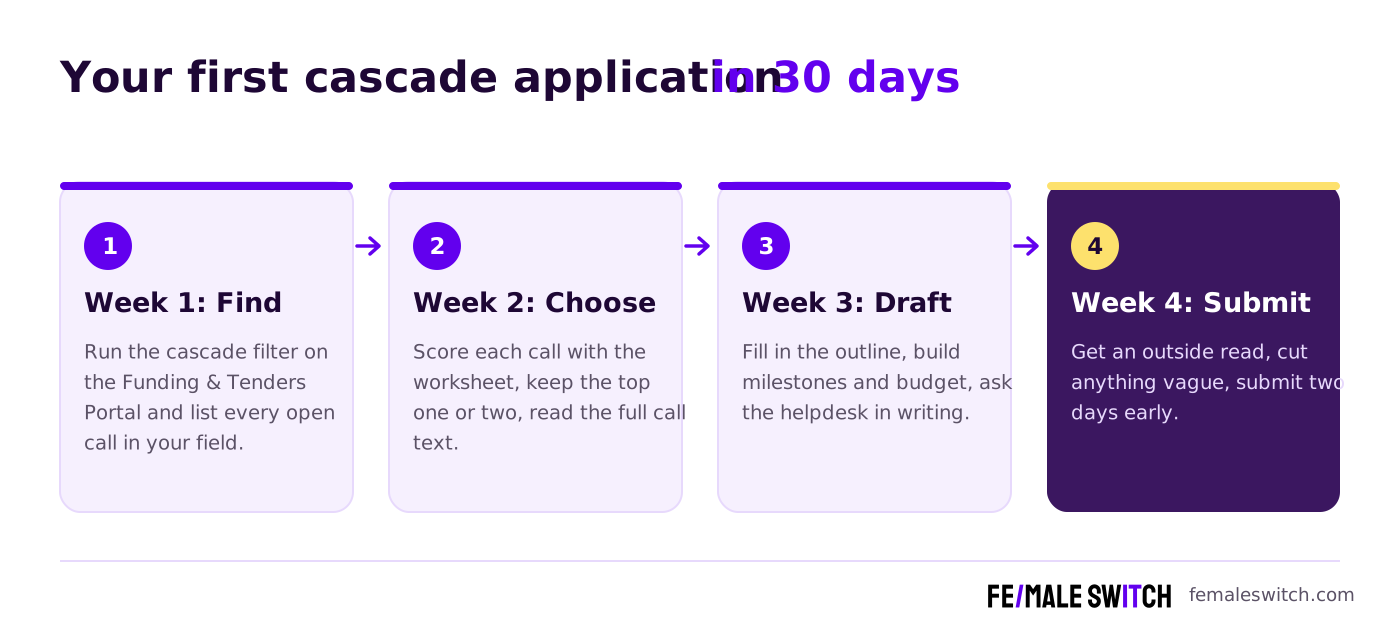
A 30-day plan to your first cascade application
Worked founder example
A two-person startup in Portugal builds sensor software that predicts irrigation needs for small farms. It has a working prototype and three test farms, but no revenue.
- Week 1: the founders find an agri-food data project running a cascade call for "digital solutions for small farms", with a cap of €60,000 per company and a pilot with a farming cooperative.
- Week 2: they score it at 11 out of 12. The only weak line is cash flow, but the call pre-pays part of the grant.
- Weeks 3–4: they write a 10-page application using the outline, with three milestones over nine months.
- Result if selected: equity-free money for the pilot, a cooperative as reference customer and a demo day with investors. That is a stronger story for a later EIC Accelerator application or a seed round than a prototype alone.
This is a generic example of a made-up company, and it follows the pattern most cascade calls use.
Common mistakes that sink cascade applications
- Applying to the wrong call. A good product that does not fit the challenge scores low on relevance, and relevance usually decides.
- Missing a formal rule. Country of registration, company size, a ban on applying twice in the same programme or a limit on public funding received under de minimis rules can make you ineligible before anyone reads your idea.
- Vague milestones. Payments are tied to deliverables. Write milestones like "pilot with 20 farms, 85% prediction accuracy", with a number an evaluator can check.
- Ignoring cash flow. Many calls pay part of the grant upfront and the rest after reviews. Plan for the gap.
- Writing it alone at the last minute. Short forms tempt founders to write them in two evenings, and it shows. Our guide on writing an EU grant application covers the writing basics.
Who should apply and who can skip it
Apply if you are an early-stage startup or SME with a prototype, a clear technical milestone for the next 6–12 months, and a product that fits a specific challenge in digital, deep tech, health, energy, agri-food or manufacturing. Cascade calls are also a good first step before a larger direct grant: they teach you EU reporting on a small scale.
Skip it for now if you have only an idea and no team time to deliver, you need more than a few hundred thousand euros, or your product would have to be bent out of shape to fit the call. Read why EU funding feels like a labyrinth for startups before you commit months to any EU route.
Related EU funding guides
- EU grants for startups: programme map, deadlines and decision tree
- European funds for startups: the 2027 map of EU grants, equity and loans
- Call for evaluators 2027: how to become a paid EU expert evaluator
- The EU funding labyrinth: a critical analysis for startups
- EU grants: a guide to writing a funding application
Not sure your startup is ready for any funder yet? The Fe/male Switch startup game lets you build and test a startup step by step before you apply.
FAQ
What is cascade funding in the EU?
Cascade funding is EU money that a funded project passes on to outside companies through its own open calls. The official term is financial support to third parties. The Commission funds the consortium, and the consortium selects and pays startups, SMEs or developers.
How much money can a startup get from cascade funding?
It depends on the call. The default ceiling is €60,000 per third party, but EU work programmes can set higher caps, and some topics allow €200,000 or even €500,000. Small open-source grants such as NGI Zero start at €5,000.
Where can I find open cascade funding calls?
Filter the calls search on the EU Funding & Tenders Portal for calls for funding in cascade, follow the websites of programme families such as NGI, and read monthly round-ups such as Mean CEO's EU Funding News on blog.mean.ceo.
Do I need a consortium to apply for cascade funding?
Usually not. Most cascade calls fund single startups or SMEs. Some ask for small teams of two to five organisations, so check the call text.
Is cascade funding easier to win than the EIC Accelerator?
It is usually less competitive, with shorter applications and fewer applicants per call. The trade-off is a smaller grant and a narrower challenge you must fit exactly.
Is cascade funding a grant or a loan?
It is normally a grant, so you keep your equity and do not repay it if you deliver the agreed milestones. Some calls pay prizes instead, and a few are linked to investment programmes.
About the Author
Violetta Bonenkamp, also known as MeanCEO, is an experienced startup founder with an impressive educational background including an MBA and four other higher education degrees. She has over 20 years of work experience across multiple countries, including 5 years as a solopreneur and serial entrepreneur. Throughout her startup experience she has applied for multiple startup grants at the EU level, in the Netherlands and Malta, and her startups received quite a few of those. She’s been living, studying and working in many countries around the globe and her extensive multicultural experience has influenced her immensely.

