

Databricks Alternatives: Data and AI Platforms That Fit a Startup Budget
Databricks is a data and AI platform built on the lakehouse idea: your data sits in open files in cloud storage, and one platform runs data engineering, SQL analytics, machine learning and now AI agents on top. It is powerful, but for a small team it can be more platform than you need, its usage-based bill is hard to predict, and some founders simply live in a different cloud. This guide lists the realistic alternatives in 2027: managed platforms from Snowflake, Google, Microsoft, AWS and specialist vendors, and open-source stacks you can run yourself. We checked every product, price and free option on its official page or GitHub repository on 2 November 2026, and we explain which items from older lists have been renamed or have faded away. If you only want free software you host yourself, our list of open-source Databricks alternatives maps each Databricks part to the project that replaces it.
Quick answer: for a managed SQL warehouse with built-in AI, choose Snowflake; on Google Cloud, BigQuery with the Gemini Enterprise Agent Platform (formerly Vertex AI) is the cheapest way to start; if your company runs on Microsoft 365 and Power BI, use Microsoft Fabric; on AWS, use Amazon SageMaker with EMR; for visual data science across analysts and coders, try Dataiku; and if you want no platform bill at all, build on open source: Apache Spark with Delta Lake or Iceberg, Trino, DuckDB or ClickHouse.
Boost Your SEO by Getting Featured in Our Blogs and get a backlink.
We publish content about startups, education, tech, funding, etc. that ranks well not only in Google but also in Perplexity, ChatGPT, Grok and other AI tools.
👉 Get featured now!
What Databricks Offers and How It Charges in 2027
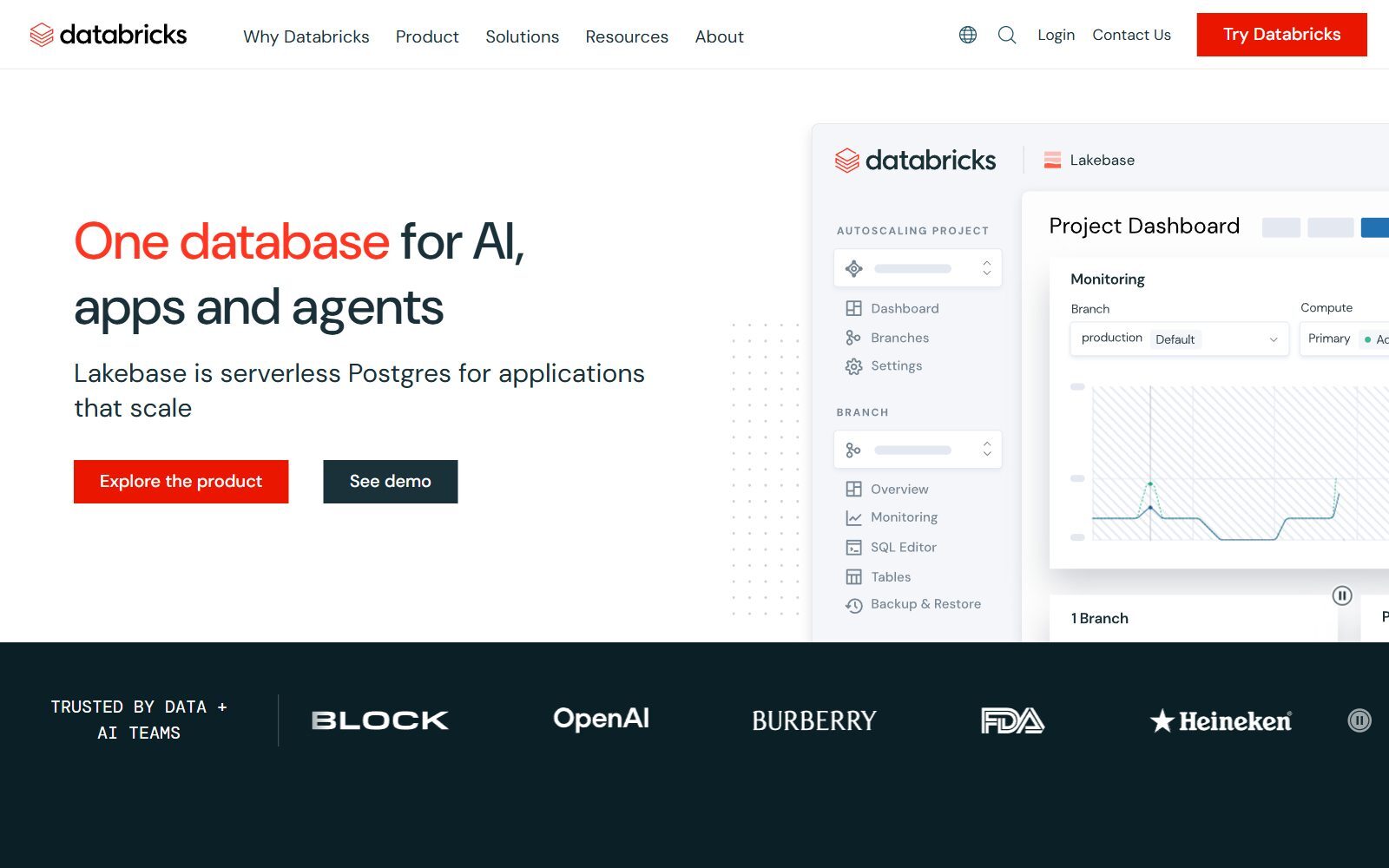
The Databricks homepage now leads with Lakebase, a serverless Postgres database for applications, next to Agent Bricks for AI agents, AI/BI and Genie for business questions, Unity Catalog for governance and Lakeflow for data engineering. The Databricks pricing page describes pay-as-you-go pricing with no up-front costs, billed per second in Databricks Units (DBUs), a normalised unit of processing power. Your cloud provider bills the servers and storage separately, and committed-use discounts are arranged with sales. The default view shows no price per DBU, because it depends on the product and the cloud, so we do not quote one.
For learning there is the Databricks Free Edition: it costs nothing, but it is for personal use only and limited to smaller compute and warehouse sizes, and legacy Community Edition accounts keep access only until the end of 2026. So a startup that wants to test Databricks for real goes through the trial and then pays by usage. That is the bill most founders compare the alternatives below against.
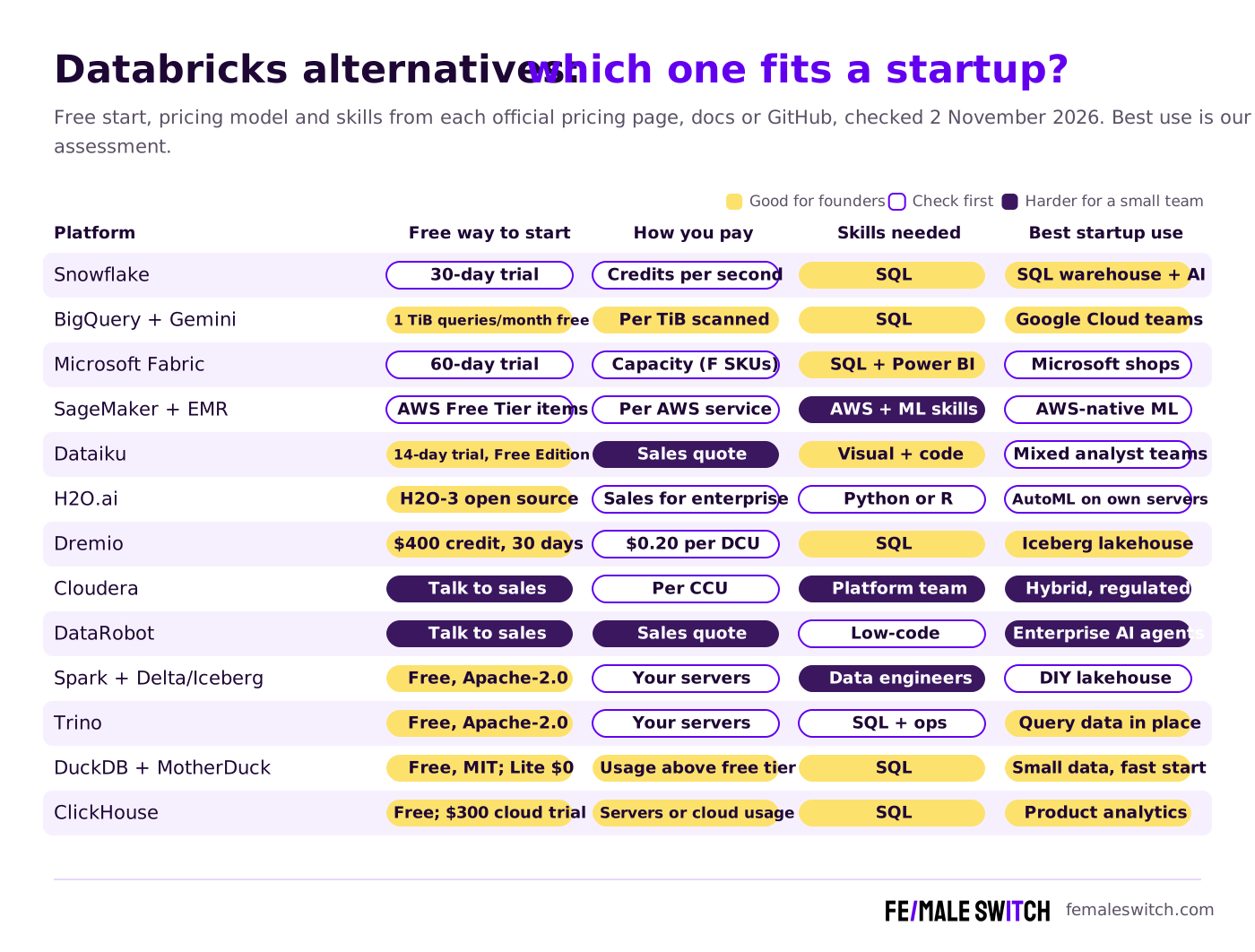
Databricks Alternatives Compared
Sources: each vendor's pricing page, documentation or GitHub repository, default view, checked 2 November 2026. Cloud bills also include storage, data transfer and the servers your provider charges for.
Managed Databricks Alternatives
1. Snowflake: SQL warehouse with its own AI layer
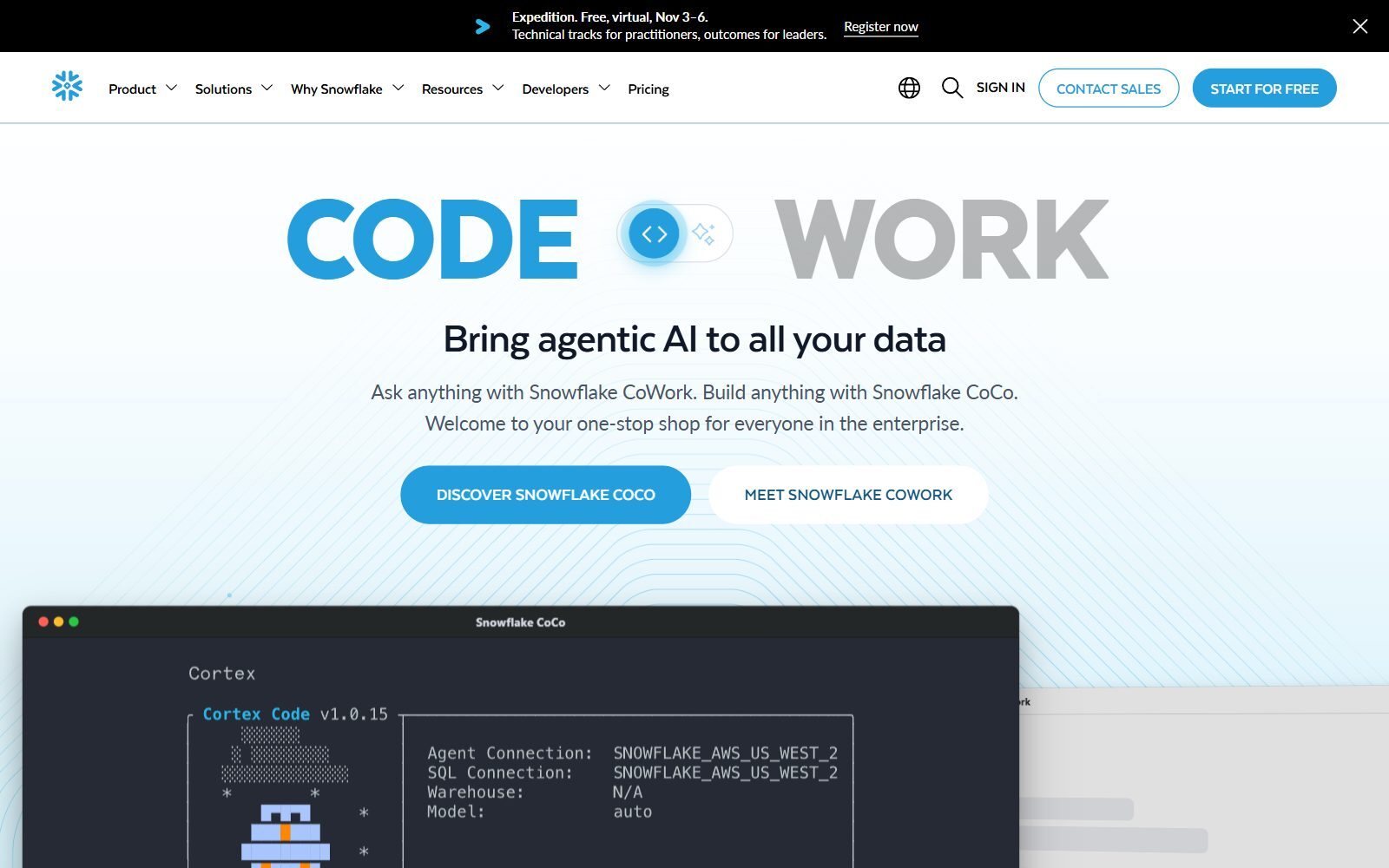
Snowflake is a cloud data platform best known for its SQL data warehouse. Its homepage now leads with agentic AI on your data: Snowflake CoWork for asking questions and Snowflake CoCo, a coding agent. The Snowflake pricing page lists four editions (Standard, Enterprise, Business Critical and Virtual Private Snowflake) with consumption-based pricing; the credit price depends on the cloud and region, so it is not shown in the default view. According to the Snowflake documentation, an X-Small warehouse uses 1 credit an hour, billed per second with a 60-second minimum, and the free trial lasts 30 days. Choose it if your work is mostly SQL and you want less engineering than Databricks needs; choose Databricks if most of your work is Python, Spark and model training.
2. Google BigQuery and Gemini Enterprise Agent Platform (formerly Vertex AI)
Google BigQuery is a serverless warehouse with the most generous free start in this list: the first 1 TiB of queries and the first 10 GiB of storage are free every month, and on-demand queries then cost $6.25 per TiB scanned. Machine learning sits next to it in Google's AI platform, which changed its name: Google's release notes of 22 April 2026 say Vertex AI is now part of the Gemini Enterprise Agent Platform, and Agent Builder was folded into it too. The Gemini platform page lists more than 200 models in Model Garden, notebooks integrated with BigQuery, training, tuning and MLOps tools, and $300 in free credits for new Google Cloud customers. For a startup already on Google Cloud, this pair covers most of what Databricks does, with less setup.
3. Microsoft Fabric: the all-in-one platform for Microsoft companies
Microsoft Fabric puts data integration, data engineering, a data warehouse, real-time analytics, data science and Power BI on one shared storage layer, OneLake. It is also where Azure Synapse Analytics is heading: the Azure Synapse page now points customers to "Migrate to Fabric". You pay for capacity: the Fabric pricing page lists capacity sizes from F2 upwards, pay-as-you-go or reserved, and says a one- or three-year reservation saves about 41% compared with pay-as-you-go. The Fabric free trial gives 60 days of trial capacity. For custom machine learning, Microsoft still offers Azure Machine Learning; note that its Prompt flow feature retires on 20 April 2027, so do not build new work on it.
4. Amazon SageMaker and Amazon EMR: data, analytics and ML on AWS
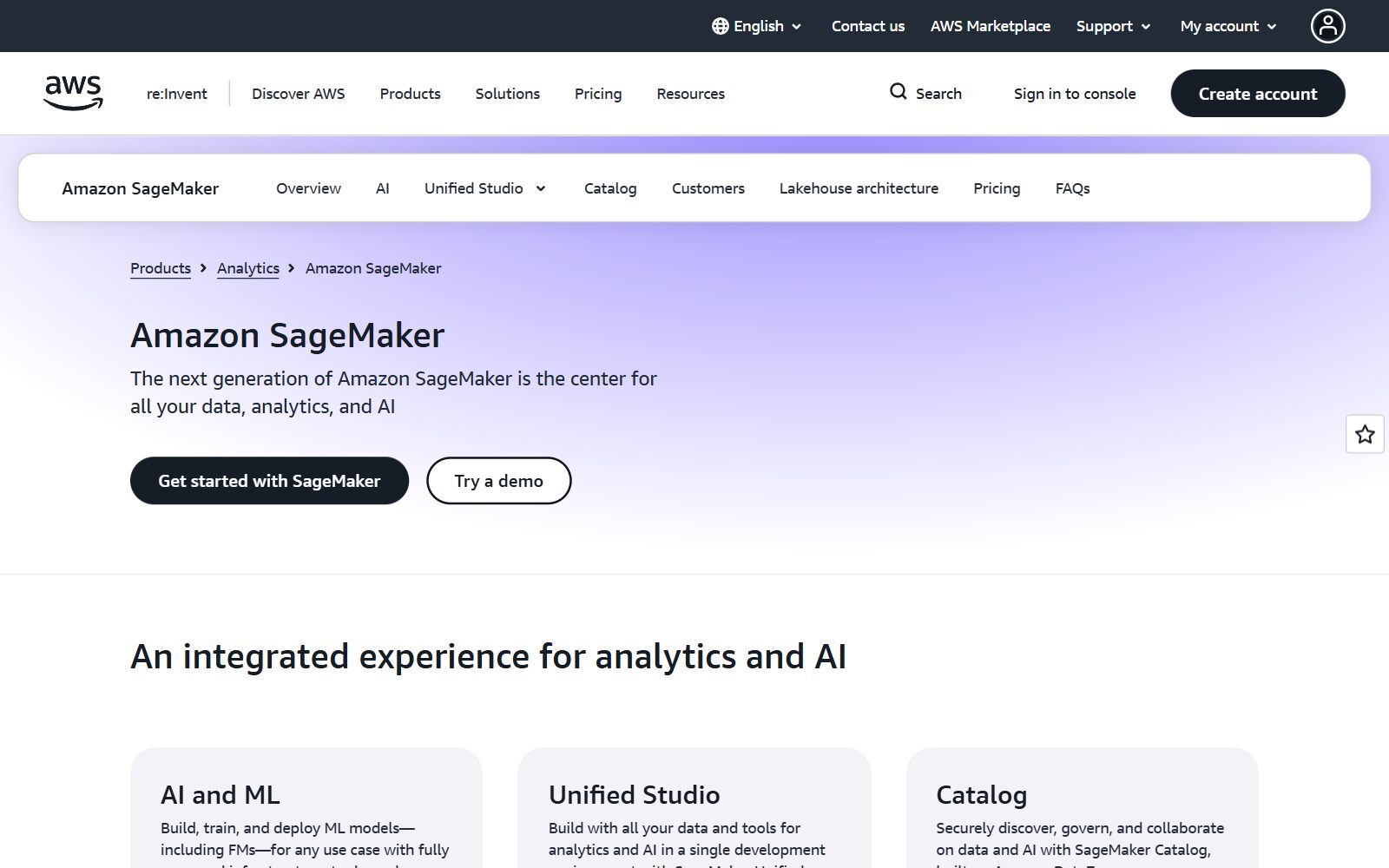
AWS reorganised SageMaker: the Amazon SageMaker page now calls the next generation of SageMaker the center for all your data, analytics and AI, and the machine-learning service you may know is now SageMaker AI (formerly Amazon SageMaker). SageMaker Unified Studio puts data, SQL analytics and model development in one environment, and its lakehouse unifies S3 data lakes and Redshift warehouses with Apache Iceberg. The SageMaker pricing page lists a Unified Studio Free Tier and, for notebooks, 250 hours of a small instance a month for the first two months. For Spark jobs, Amazon EMR runs Apache Spark, Trino, Flink and Hive, serverless or on your own clusters. Together they replace Databricks for teams that want to stay fully inside AWS, at the cost of more services to wire together.
5. Dataiku: visual data science for mixed teams
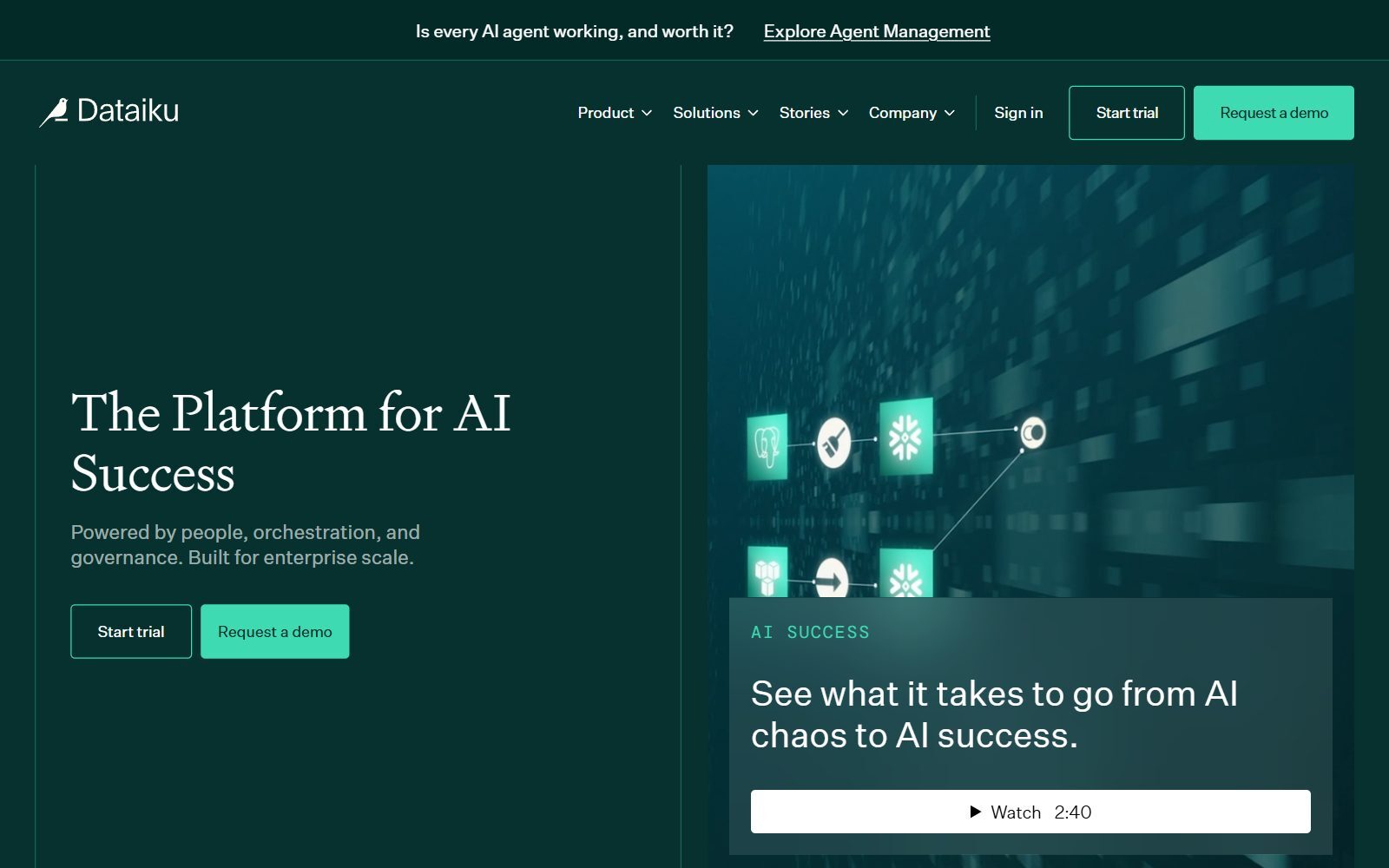
Dataiku is a platform where analysts build data flows and models visually while data scientists use code in the same project, with AI agents, governance and deployment on top. Its get started page offers a 14-day free trial of Dataiku Cloud, and a Free Edition you can install on Mac or Linux if you prefer to run it yourself. Paid plans go through sales. It suits a startup whose business people need to work with data without writing Spark code.
6. H2O.ai: open-source AutoML and enterprise AI
H2O.ai sells an AI platform for predictive, generative and agentic AI, with products such as Driverless AI and h2oGPTe that can run in your own environment. For a startup the interesting part is H2O-3, its distributed machine-learning and AutoML engine, which is free and open source under the Apache 2.0 licence; H2O-3 Secure is the same engine with enterprise controls and support. The H2O-3 repository published release 3.46.0.11 in October 2026. It replaces the machine-learning part of Databricks, not the warehouse.
Validate your startup idea with the unique borrowed authority approach: we publish articles about your product in our blog and you get traffic and testers for your MVP
- Prove Market Demand: See real organic traffic and waitlist conversions
- Unlock High-Potential Keywords: Receive a curated list of top-performing keywords directly from Google Search Console data.
- Estimate Customer Acquisition Cost (CAC): Gain financial foresight with an estimated CAC based on real keyword performance data.
🔗 Start validating your startup now
7. Dremio: an Iceberg lakehouse with SQL
Dremio is a lakehouse platform built on Apache Iceberg, Apache Polaris and Apache Arrow, with an AI agent and a semantic layer for business users. Dremio Cloud is fully managed on AWS and costs $0.20 per Dremio Compute Unit, with a $400 credit for 30 days to try it; Dremio Enterprise is self-managed software, and the Community Edition is a free query engine for your own machines or servers. Pick it when you want the open-format lakehouse idea of Databricks with a SQL-first experience.
8. Cloudera: hybrid data and AI for regulated companies
Cloudera offers a data and AI platform that runs in public clouds and in your own data centre, with an open data lakehouse on Iceberg, data engineering, a data warehouse, streaming and AI workbenches. The Cloudera pricing page charges per Cloudera Compute Unit (CCU) per hour: for example $0.07 per CCU for Data Engineering Core and for Data Warehouse, and $0.20 per CCU for Machine Learning. It is built for large and regulated companies; most early-stage startups will find the platforms above simpler.
9. DataRobot: enterprise AI agents and predictive AI
DataRobot was on the 2025 list as an AutoML tool and now presents itself as an agentic AI platform for building, running and governing AI agents and predictive models on premises, in hybrid setups or across clouds. Its homepage shows no public price, so you go through sales. It replaces the AI side of Databricks for large companies, not the data platform, and is rarely a fit for an early-stage startup.
Open-Source Databricks Alternatives
Databricks itself is built on open-source projects, so you can assemble much of it yourself. You pay nothing for the software, but you pay for servers and for the engineering time to run them. For a longer list of self-hosted warehouses, see our open-source Snowflake alternatives.
10. Apache Spark with Delta Lake or Apache Iceberg: the do-it-yourself lakehouse
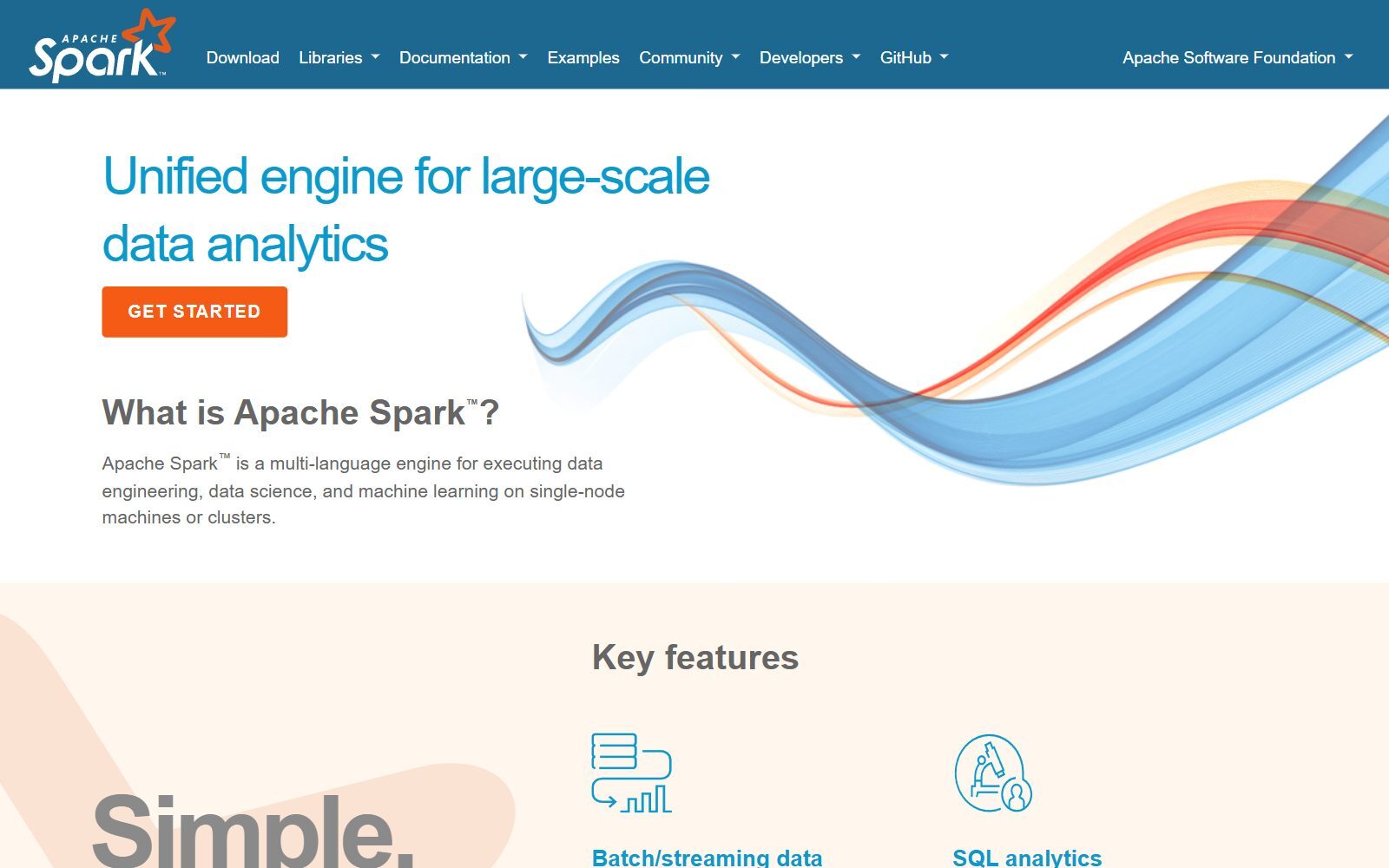
Apache Spark is the engine at the heart of Databricks: a multi-language engine for data engineering, data science and machine learning on one machine or a cluster, under the Apache 2.0 licence. Spark 4.3.0 was released in October 2026. To get lakehouse tables with transactions and time travel, add an open table format: Delta Lake (Apache 2.0, version 4.4.1 in October 2026) or Apache Iceberg (Apache 2.0, version 1.12.0 in September 2026), which the AWS, Dremio and Cloudera lakehouses also build on. You can run Spark yourself, or let a cloud service such as Amazon EMR run it for you.
11. Trino: query data where it already lives
Trino is a distributed SQL query engine for big data. It does not store data: it queries data in place in S3 object storage, Hadoop, MySQL, Cassandra and many other systems, and can join several of them in one SQL statement. It is Apache 2.0 licensed, and Trino 484 came out in October 2026. Use it as the SQL layer of an open lakehouse, especially when your data is spread across several systems.
12. DuckDB and MotherDuck: analytics without a cluster
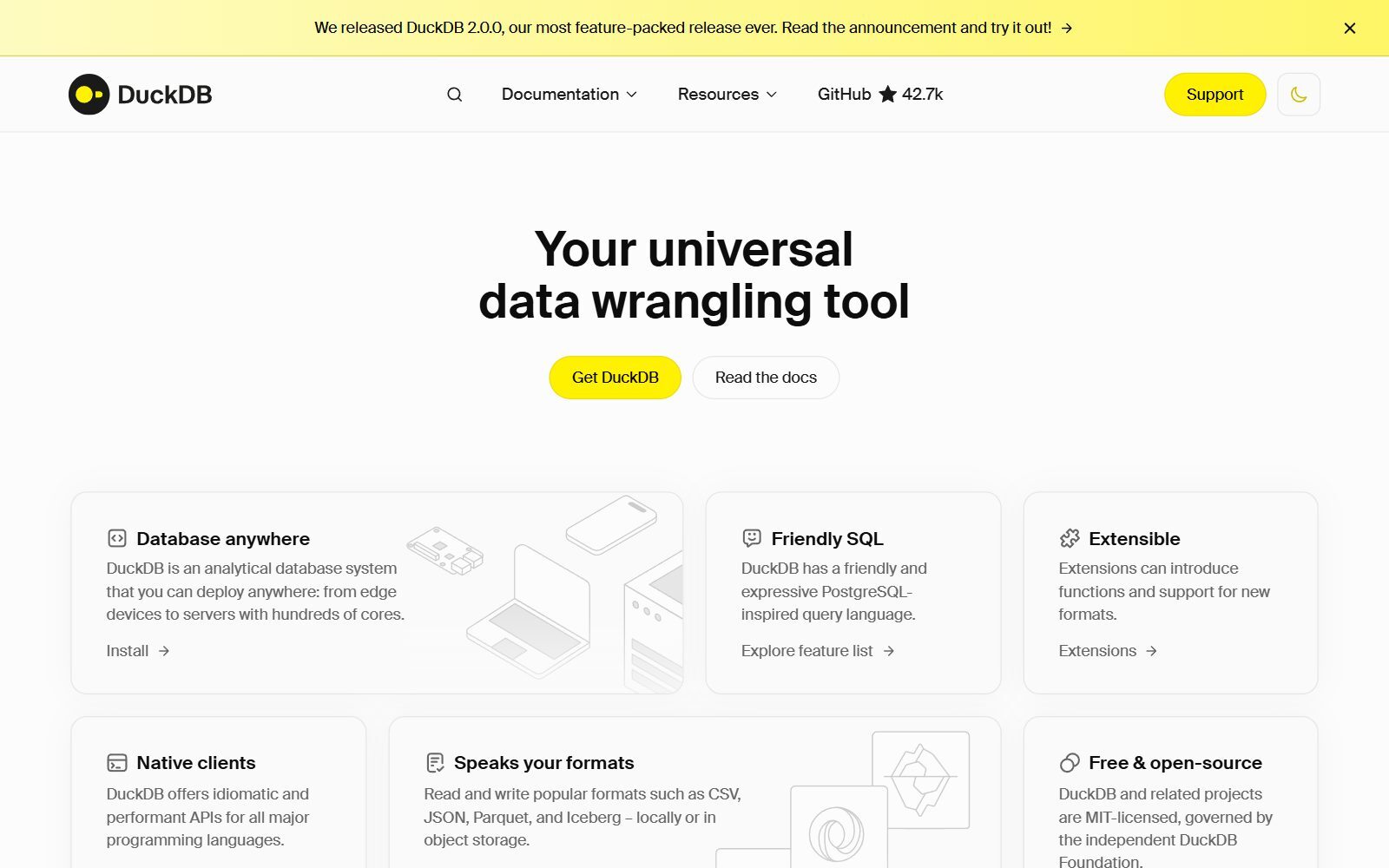
DuckDB is an MIT-licensed analytical database that runs inside your application or on a laptop and reads CSV, JSON, Parquet and Iceberg files locally or from object storage. DuckDB 2.0.0 came out in October 2026. Many startups have far less data than Databricks was built for, and DuckDB handles it on one machine with no cluster at all. When you need sharing, MotherDuck hosts it: the Lite plan starts at $0 with 10 GB of storage and 10 hours of compute a month, and Business costs $250 per organisation a month plus usage.
13. ClickHouse: fast analytics for product and event data
ClickHouse is an open-source, column-oriented analytics database (Apache 2.0, release 26.10 in October 2026) built for real-time analytics and observability on large event and log data. You can self-host it, or use ClickHouse Cloud, which starts with a 30-day trial and $300 in credits. It is a strong choice when the job is user-facing dashboards or product analytics rather than model training.
Databricks Alternatives That Changed or Faded Away
The 2025 version of this article included tools that no longer belong on the list, or that changed name:
- Qubole: the website still describes a data lake platform, but its footer reads ©2024 and it shows no current product news, so we no longer recommend it for a new project.
- Talend: talend.com now redirects to Qlik Talend. Qlik retired the free Talend Open Studio on 31 January 2024, and Talend is a data-integration tool that feeds a platform rather than replacing Databricks.
- Google Cloud Vertex AI: renamed. It is now part of the Gemini Enterprise Agent Platform (see item 2).
- Microsoft Azure Machine Learning: still available, but Microsoft's data platform is now Fabric, and Azure Synapse customers are pointed to Fabric (see item 3).
- Amazon SageMaker: the ML service is now called SageMaker AI, inside the next-generation SageMaker (see item 4).
Which Databricks Alternative Should You Choose?
- Most of your work is SQL and dashboards: Snowflake or BigQuery.
- You want the cheapest managed start: BigQuery's monthly free tier, or DuckDB with MotherDuck Lite.
- Your company already runs on Microsoft 365 and Power BI: Microsoft Fabric.
- You are all-in on AWS: Amazon SageMaker with EMR.
- Business users and data scientists must work together: Dataiku.
- You need machine learning on your own servers: H2O-3, free and open source.
- You want an open lakehouse without Databricks: Spark with Delta Lake or Iceberg, plus Trino or Dremio for SQL.
- Your product needs fast analytics on events: ClickHouse.
- You run Spark and model training at scale and like it: stay on Databricks and watch the DBU bill.
How Founders Use a Data and AI Platform
Most early-stage startups do not need a lakehouse on day one. Start with the smallest tool that answers the questions you act on every week: often a Postgres database, DuckDB or a free BigQuery tier, plus a dashboard from our open-source Metabase alternatives or free Looker alternatives. Move to a platform like Databricks, Snowflake or Fabric when data engineering work or model training starts to take real time every week, not before.
The data platform is one layer of the stack. Build internal tools on top with our open-source Retool alternatives and open-source AppSheet alternatives, keep structured data and AI in a shared base with the open-source Airtable AI alternatives, add AI to your CRM with the open-source Salesforce Einstein alternatives, and measure your website with the open-source Google Analytics alternatives. Before you build anything, validate your startup idea with real customers, and once your data tells a story, turn it into articles with the F/MS AI SEO Tool so customers find you in Google and AI assistants.
Join ElonaHunt (like ProductHunt but for women) and explore the coolest women-focused startups out there!
Discover your next big inspiration and connect with like-minded female entrepreneurs!
👉 Join the Hunt Here
FAQ About Databricks Alternatives
What is the best alternative to Databricks?
It depends on your work. Snowflake is the closest managed rival for SQL analytics and AI, BigQuery is the easiest start on Google Cloud, Microsoft Fabric suits Microsoft companies, and Spark with Delta Lake or Iceberg is the open-source route to the same lakehouse design.
Is there a free version of Databricks?
Yes. Databricks Free Edition costs nothing, but its terms limit it to personal use and smaller compute sizes, so it is for learning rather than running a startup's production data.
How does Databricks pricing work?
Databricks charges pay-as-you-go in Databricks Units (DBUs), billed per second, and your cloud provider bills the servers and storage separately. Committed-use discounts are arranged with sales, and the pricing page's default view shows no price per DBU.
Is Snowflake cheaper than Databricks?
Neither is cheaper in general: both bill by usage, and the price depends on your workload, cloud and region. Snowflake is often simpler for SQL-heavy teams; Databricks is often a better fit for Python, Spark and model training.
What happened to Google Vertex AI?
Google's release notes of 22 April 2026 say Vertex AI is now part of the Gemini Enterprise Agent Platform. Old links redirect to the new product page, and new Google Cloud customers still get $300 in free credits.
Is Azure Synapse being replaced by Microsoft Fabric?
Microsoft's Azure Synapse page points customers to migrate to Fabric, which combines data engineering, warehousing, data science and Power BI on one storage layer. Fabric has a 60-day free trial.
Can I build a Databricks-like lakehouse with open source?
Yes. Use Apache Spark for processing, Delta Lake or Apache Iceberg for tables in object storage, and Trino or Dremio for SQL. The software is free under Apache 2.0, but you pay for servers and engineering time.
Is DuckDB a real alternative to Databricks?
For small and medium data, often yes: DuckDB runs analytics on one machine without a cluster, and MotherDuck hosts it with a free Lite plan. For very large data and distributed model training, a platform like Databricks, Snowflake or BigQuery fits better.
Are Qubole and Talend still good Databricks alternatives?
No. Qubole's website shows no current product news, and Qlik retired the free Talend Open Studio in January 2024. Talend is a data-integration tool, not a full data and AI platform.
Where can I get a backlink by writing about my startup?
You can publish a guest post in one of the Fe/male Switch startup blogs, which rank in Google and in AI tools. Get a quality backlink.
About the Author
Violetta Bonenkamp, also known as MeanCEO, is an experienced startup founder with an impressive educational background including an MBA and four other higher education degrees. She has over 20 years of work experience across multiple countries, including 5 years as a solopreneur and serial entrepreneur. Throughout her startup experience she has applied for multiple startup grants at the EU level, in the Netherlands and Malta, and her startups received quite a few of those. She’s been living, studying and working in many countries around the globe and her extensive multicultural experience has influenced her immensely.

