

Free Census Data Alternatives in 2027: Where Founders Get Population, Demographic and Economic Data
Census data answers the first questions of almost every business plan: how many people or businesses fit your customer profile, where they live, what they earn and how fast the group is growing. The US Census Bureau's own tools are free but hard to use, and they stop at the US border. Below are the free sources that replace or complement them, checked on their official websites in October 2026: what each covers, whether it is really free, whether it has an API, and which old favourites have shut down or are not primary sources at all. We wrote it for founders who need numbers for market sizing, a pitch deck or customer research, not for statisticians.
Quick answer: for US numbers, start with Census Reporter (the easiest view of the American Community Survey) and go to data.census.gov or the Census Data API when you need a specific table or every county at once; use IPUMS when you need person-level microdata and FRED for economic time series. For other countries, use World Bank Open Data, Eurostat for the EU, the OECD Data Explorer and Our World in Data. All of them are free; Social Explorer is the one paid tool that people often list as free.
Boost Your SEO by Getting Featured in Our Blogs and get a backlink.
We publish content about startups, education, tech, funding, etc. that ranks well not only in Google but also in Perplexity, ChatGPT, Grok and other AI tools.
👉 Get featured now!
Free Census Data Alternatives Compared
Sources: each provider's official website, documentation and terms, checked 30 October 2026. Prices and limits can change; check the provider before you build on it.
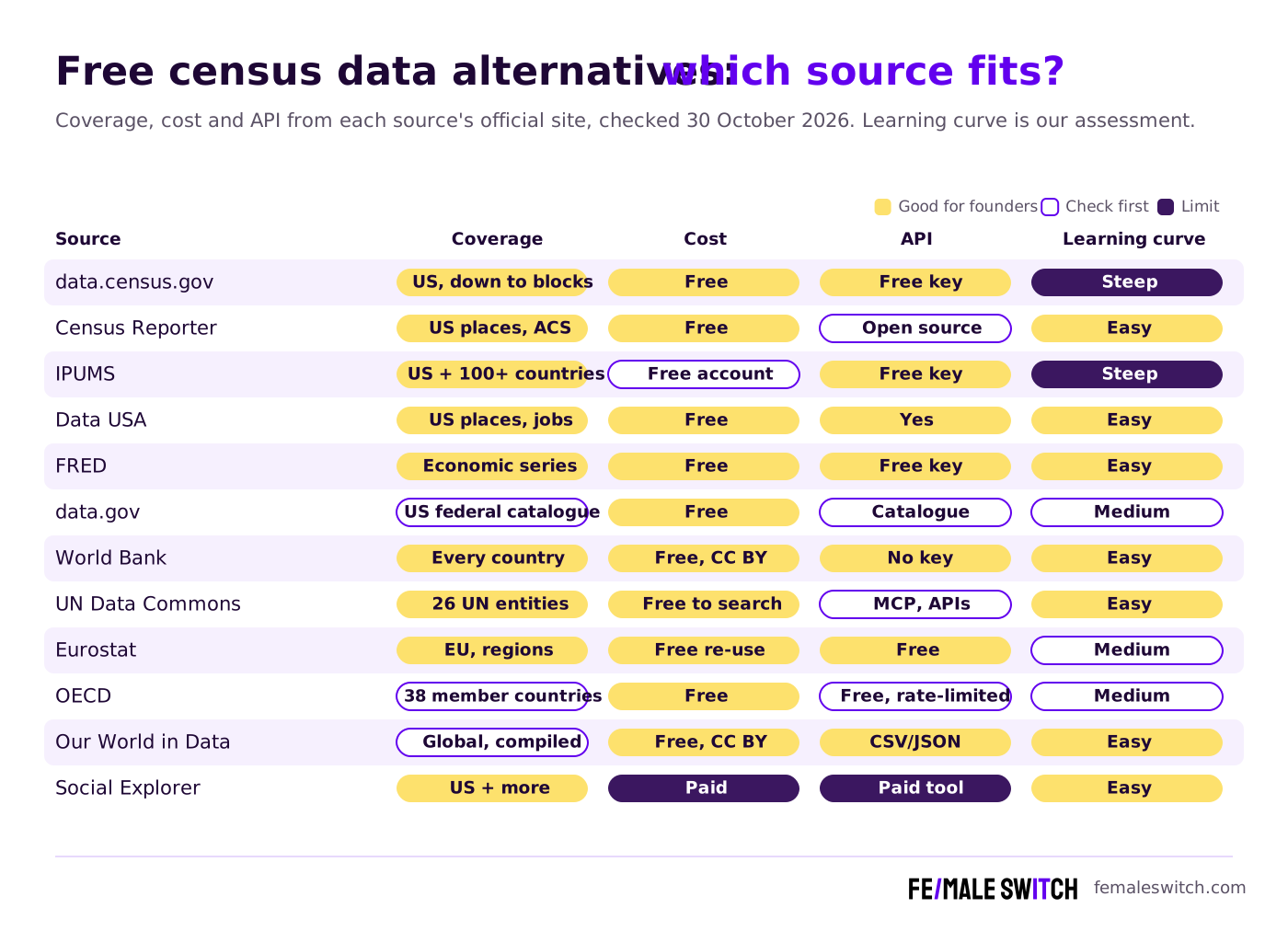
The Best Free Census Data Sources in 2027
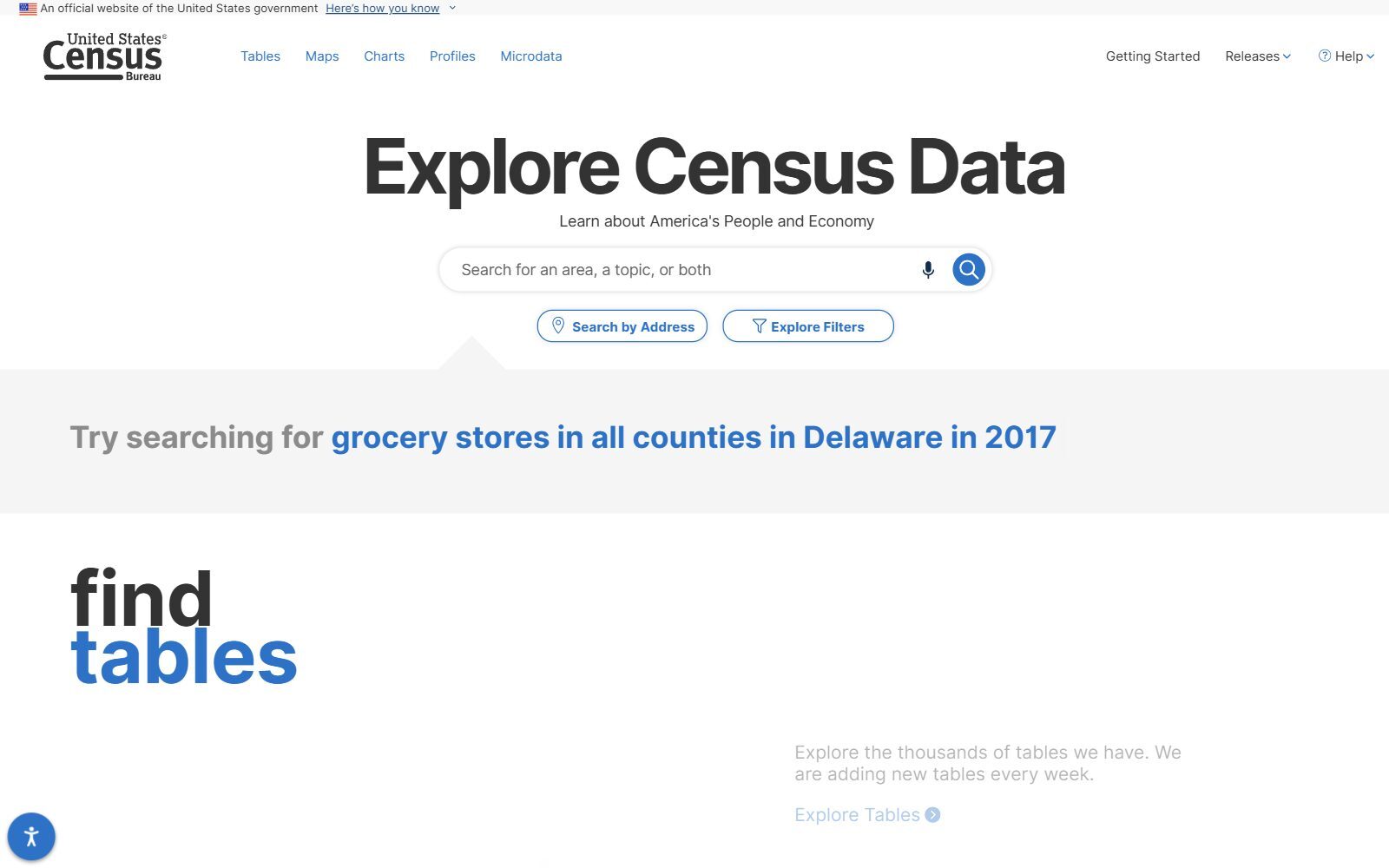
1. data.census.gov and the Census Data API: the official source
The Census Bureau calls data.census.gov its primary data search platform. You can search by place, topic or street address and open the results as tables, maps, charts or area profiles; a Microdata section lets you build custom tables from public-use microdata. It holds the American Community Survey (ACS), the decennial census and the Bureau's business statistics such as County Business Patterns, which counts business establishments by industry and county. The newest release is the 2025 American Community Survey 1-year estimates, published on 29 October 2026; the Bureau says dates for the other 2025 ACS products will follow.
If you need the same table for every county or want to feed numbers into a spreadsheet or app, use the Census Data API. Its user guide says an API key must now be used with every data query; the key is free and comes by email after a short sign-up, and one query can ask for up to 50 variables. The catch for founders: the interface assumes you know which table you need, so most people start with one of the easier tools below and come back here for the official figure.
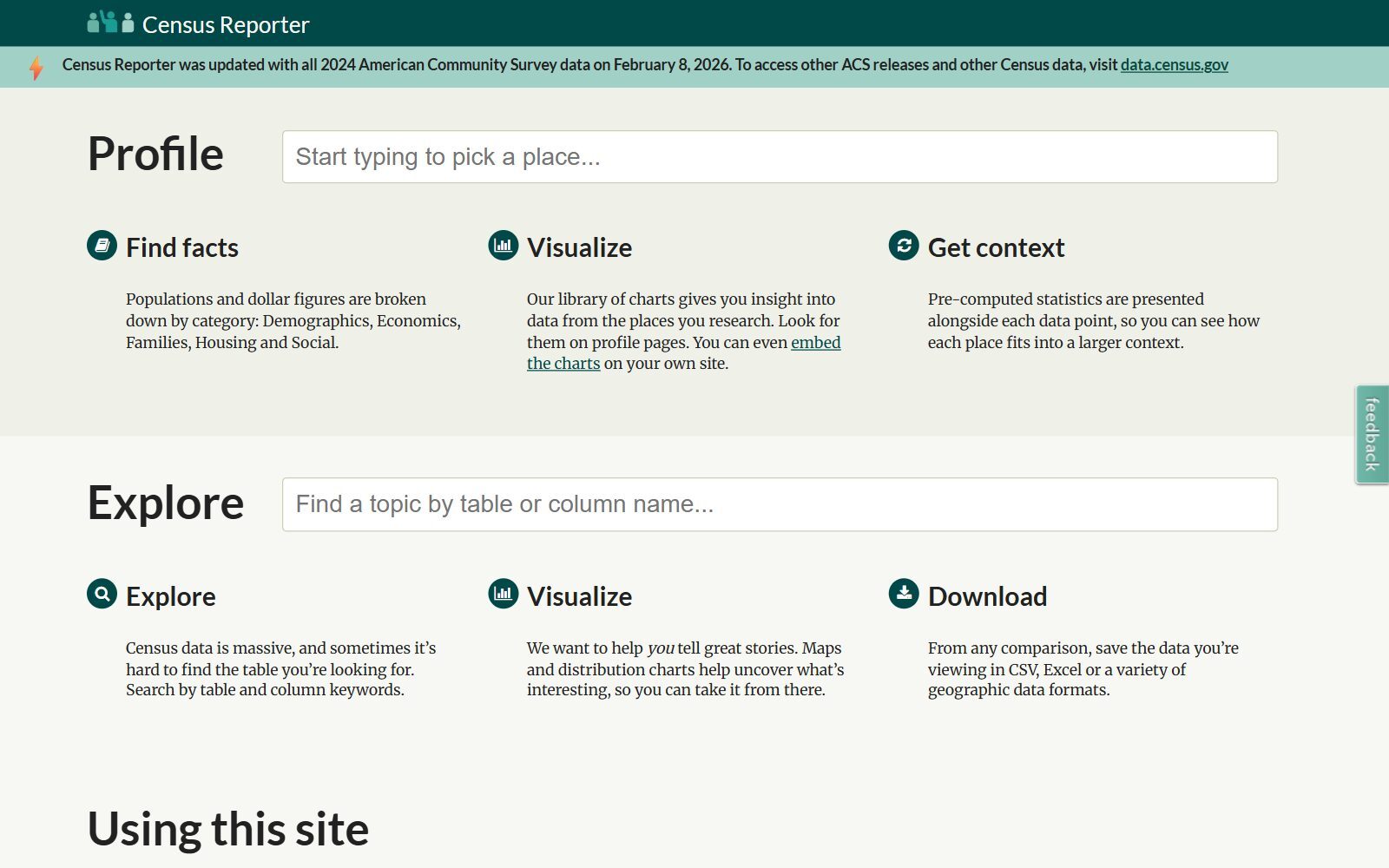
2. Census Reporter: the easiest way to read ACS data
Census Reporter is an independent, free and open-source project that turns ACS tables into readable profiles of states, cities, counties, ZIP code areas and districts. Each profile breaks figures down into demographics, economics, families, housing and social characteristics and shows how the place compares with its county, state and the US. Its banner says it was updated with all 2024 ACS data on 8 February 2026; for newer releases it sends you to data.census.gov. You can download any comparison as CSV, Excel or geographic files, and the data is not copyrighted because it comes from the Census Bureau. Its code is on GitHub and was still being updated in October 2026.
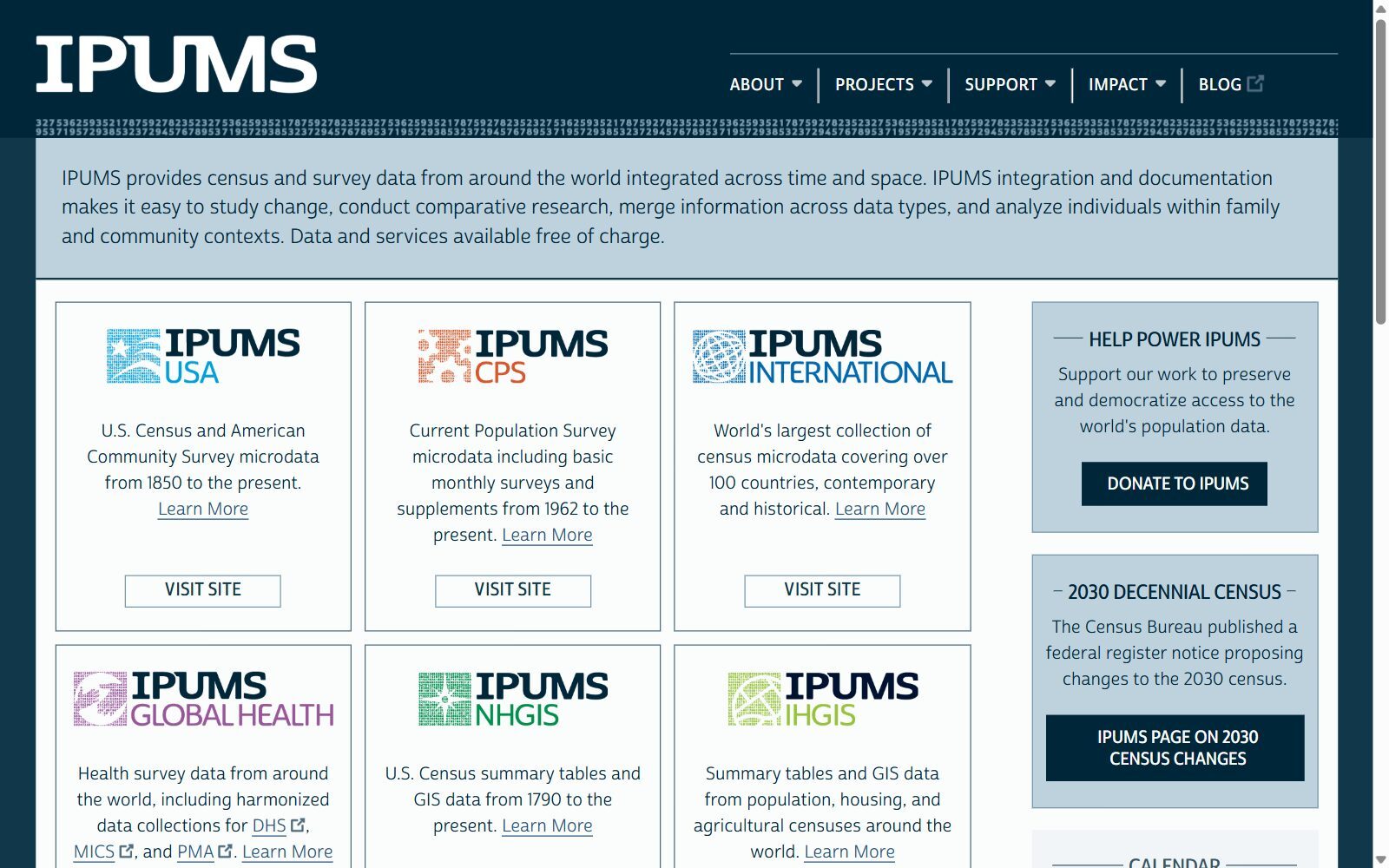
3. IPUMS: free microdata for custom customer groups
IPUMS integrates census and survey data across time and countries, and says its data and services are free of charge; you register for each collection. IPUMS USA has US census and ACS microdata from 1850 to today, IPUMS CPS has the Current Population Survey from 1962, IPUMS International is the largest collection of census microdata, covering more than 100 countries, and IPUMS NHGIS has US census summary tables and GIS boundary files from 1790 onwards. Microdata means one row per (anonymised) person or household, so you can count exactly the group you sell to instead of relying on ready-made tables. The IPUMS API covers NHGIS, USA, CPS, International and other collections and needs an IPUMS account, a registration for that collection and an API key.
4. Data USA: charts on places, jobs and industries
Data USA is an open platform built by Deloitte, Datawheel and Cesar Hidalgo on public US government data. Its homepage lists more than 47,000 automated reports on locations, industries, jobs, universities, degrees and products, which is handy when your customer is defined by job or sector rather than by place. It also offers an API if you want to build on the data.
5. FRED: economic time series for pricing and timing
FRED, the economic data service of the Federal Reserve Bank of St. Louis, has published economic data since 1991: prices, wages, interest rates, employment, retail sales and many regional series. Use it to show how your market moved over time, for example inflation in your input costs or local unemployment. Browsing and downloading are free; its API documentation says every request needs an API key, which you get with a FRED account.
6. data.gov: the US government's data catalogue
data.gov, run by the General Services Administration's Technology Transformation Services, listed 431,277 datasets when we checked in October 2026, from US government agencies. It is a catalogue, not a statistics tool: it points you to each agency's files, which makes it useful for niche questions such as licences, inspections or transport data. A next-generation catalogue is being tested at catalog.data.gov.
Validate your startup idea with the unique borrowed authority approach: we publish articles about your product in our blog and you get traffic and testers for your MVP
- Prove Market Demand: See real organic traffic and waitlist conversions
- Unlock High-Potential Keywords: Receive a curated list of top-performing keywords directly from Google Search Console data.
- Estimate Customer Acquisition Cost (CAC): Gain financial foresight with an estimated CAC based on real keyword performance data.
🔗 Start validating your startup now
7. World Bank Open Data: every country, no API key
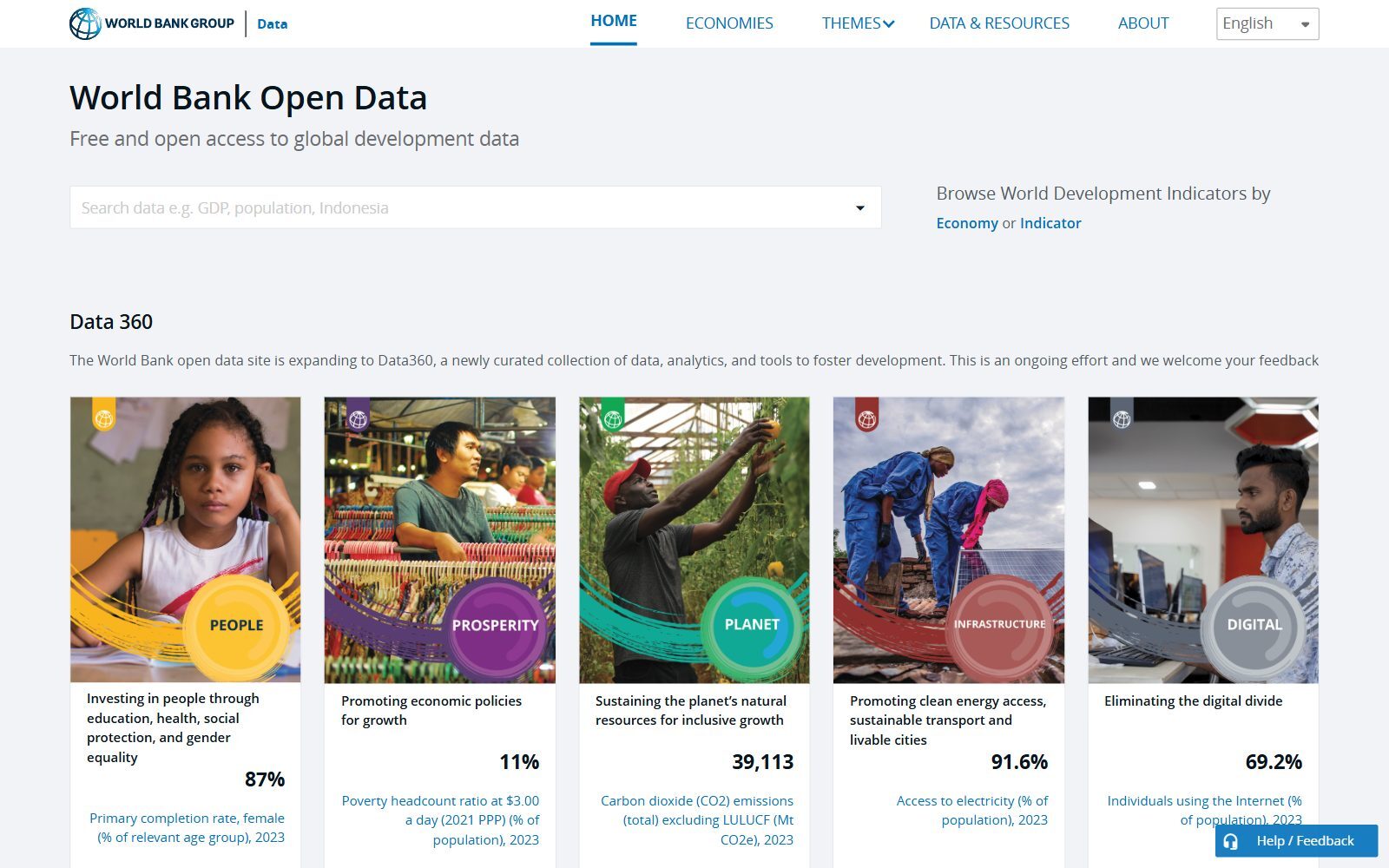
World Bank Open Data offers free and open access to global development data, including the World Development Indicators: population, income, prices, internet use, education and much more for every country. Its Indicators API gives access to nearly 16,000 time series and no longer needs a key, and most datasets are licensed under CC BY 4.0, so you can reuse them commercially with a credit. The site says it is expanding into Data360, a curated collection of data, analytics and tools.
8. UN System Data Commons and UN population estimates
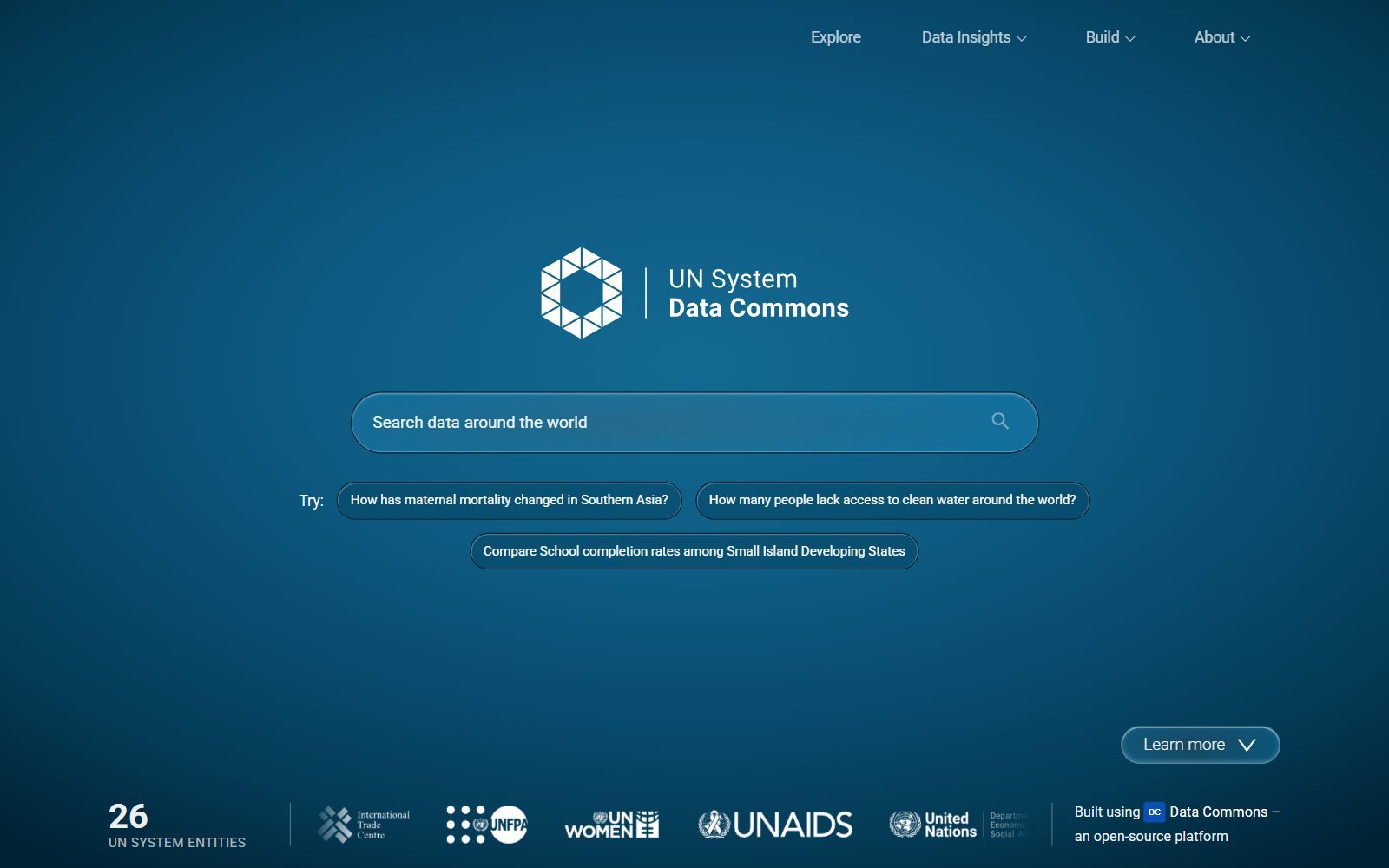
The address data.un.org, which used to open the UN Statistics Division's UNdata search, now opens the UN System Data Commons. The UN launched it on 17 September 2026: it brings together public data from 26 UN system entities, nearly 44 million data points, which you search in everyday language. Google says it is an open-source platform built on its Data Commons and uses the Model Context Protocol, so AI agents can fetch official figures too. Each entity's own terms of use apply.
For population counts and forecasts, the UN's World Population Prospects 2024 has estimates from the 1950s to today and projections to 2100 for 237 countries or areas. It was launched on 11 July 2024 and is the source many other sites quote.
9. Eurostat: the EU's official statistics
Eurostat, the statistical office of the European Union, publishes population, labour, prices, business and regional data for EU countries, plus population projections. Its APIs give free-of-charge programmatic access to data and metadata in SDMX and other formats, and its copyright notice encourages free re-use of the data. It is the right source when you size a market in Europe and need the same definitions in every country.
10. OECD Data Explorer: comparable data for rich economies
The OECD Data Explorer covers the OECD's 38 member countries: income, prices, productivity, education, health and more, defined the same way in every country. The OECD's API is based on the SDMX standard, is free of charge and has rate limits, and most OECD written content published since 1 July 2024 is under a CC BY 4.0 licence. Use it to compare markets before you choose where to launch.
11. Our World in Data: clean charts for your pitch deck
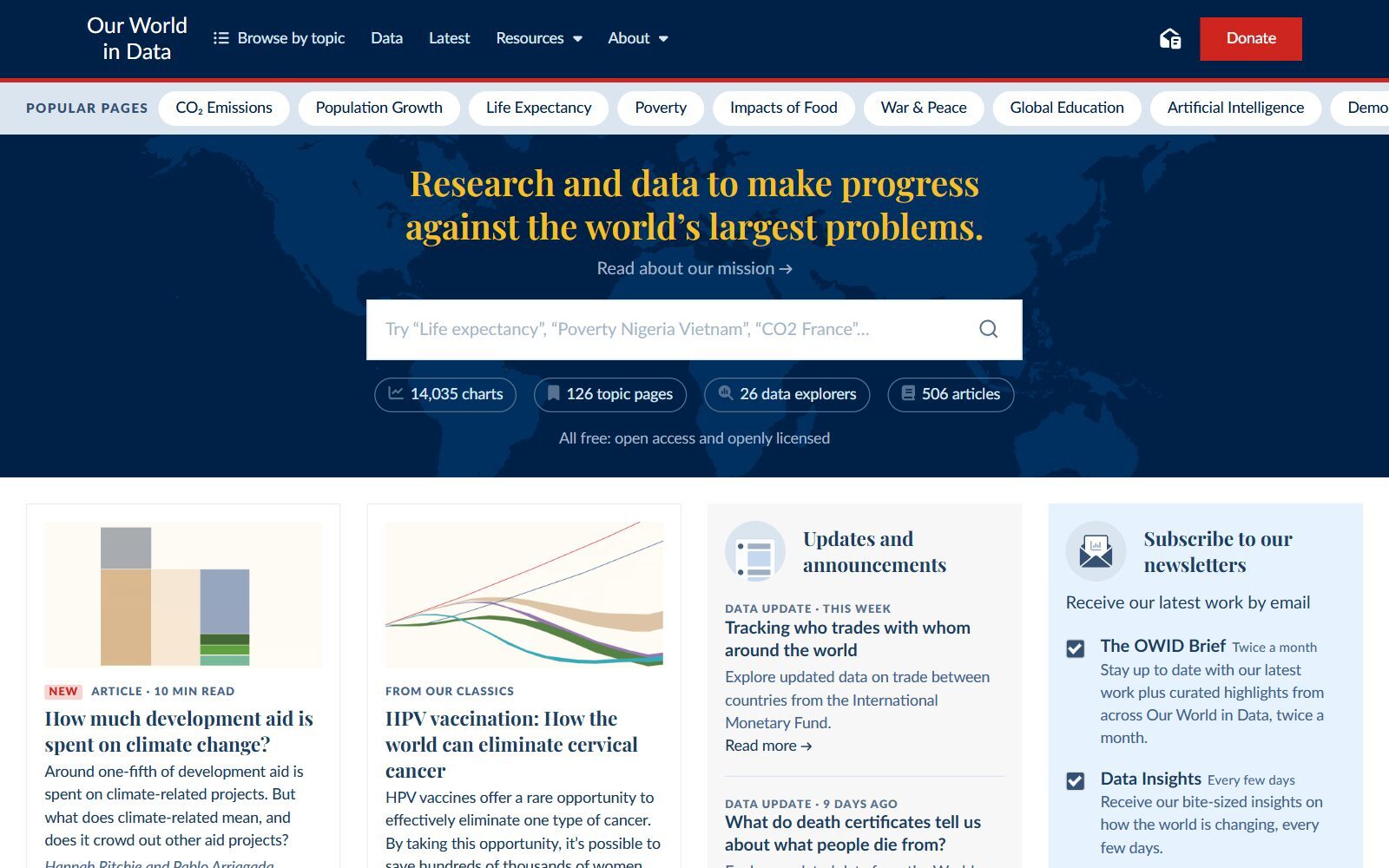
Our World in Data is a collaboration between University of Oxford researchers and the UK non-profit Global Change Data Lab. Its homepage listed 14,035 charts in October 2026, all free and openly licensed. It says most of its data comes from third parties such as the WHO, the UN and the World Bank, so it is a compiler, not a primary source: credit both Our World in Data and the original provider. Every chart has data you can download, and a chart data API gives CSV files and JSON metadata.
12. Humanitarian Data Exchange (HDX): population data for fragile markets
The Humanitarian Data Exchange is a service of the UN Office for the Coordination of Humanitarian Affairs (OCHA). It shares datasets from aid agencies and governments, including baseline population and administrative boundaries for countries where official statistics are thin. HDX HAPI, launched in June 2024, serves standardised indicators through one API; check the licence and update date of each dataset before you use it.
13. Social Explorer: paid, not free
Social Explorer appeared in the old version of this list, but it is a commercial product. It now describes itself as AI-powered spatial analytics software with a data library of more than 500,000 variables, including US census data you can map without code. Its plans page did not load for us in October 2026, so we do not quote prices; check them before you sign up, and ask your university or public library whether it already gives you access.
Join ElonaHunt (like ProductHunt but for women) and explore the coolest women-focused startups out there!
Discover your next big inspiration and connect with like-minded female entrepreneurs!
👉 Join the Hunt Here
Changed, Shut Down or Not a Primary Source
Four items from the 2025 version of this article have shut down, changed or are not primary sources:
- FiveThirtyEight: ABC News shut the site down in March 2025, according to Nieman Lab. Its former project pages now redirect to ABC News politics. The data page still loads, with data under CC BY 4.0, but the GitHub data repository has not changed since February 2025, so treat it as an archive.
- Open Data Network: opendatanetwork.com did not respond when we checked on 30 October 2026. To find city and state datasets, use data.gov or the city's own open data portal instead.
- Worldometer: its own about page says its live counters are real-time estimates made with a proprietary algorithm from other organisations' data and projections. It is not a primary source; quote the UN, World Bank or national statistics office instead.
- UNdata: not shut down as a dataset, but data.un.org now opens the UN System Data Commons (see above).
Which Census Data Source Should You Choose?
- You need a quick profile of a US city, county or ZIP area: Census Reporter, then data.census.gov for the newest release.
- You need the same figure for every county or state: the Census Data API (free key) or Data USA.
- You need a custom customer group, such as single parents in one state: IPUMS microdata.
- You need business counts by industry and area: County Business Patterns on data.census.gov.
- You need prices, wages or spending over time: FRED.
- You are sizing a market outside the US: World Bank Open Data and the UN for any country, Eurostat for the EU, OECD for rich economies.
- You need one clean chart for a deck: Our World in Data, crediting the original source.
- You prefer point-and-click maps and can pay: Social Explorer.
How Founders Use Free Census Data for Market Sizing and Customer Research
A bottom-up market size is a count multiplied by a price: the number of households, people or businesses that match your customer profile, times what one of them would pay you per year. Census data gives you the count. Take the group from the ACS or IPUMS (for example women aged 25 to 44 with a bachelor's degree in three metro areas), or business counts from County Business Patterns, then apply your own price and an honest share you can reach. Write down the table, year and geography of every number so an investor can check it. Our list of free market size calculators helps with the maths, and free user persona generators turn the numbers into a customer profile you can test.
Numbers show where customers could be; talking to them shows whether they will pay. Combine census data with the ways to validate a startup idea and with search demand: Similarweb vs Google Keyword Planner and Semrush vs Similarweb explain which tool tells you what people search for and which competitors already get the traffic. Choosing a city or country? Start with our guides to startup cities in North America and the best countries for early-stage startups, and check grants for early-stage startups, since many grant applications ask for a market size.
To turn downloads into dashboards without paying for BI software, see our free Looker alternatives, open-source Metabase alternatives and free Metabase AI alternatives that answer questions about your data in plain English. Other free public data worth knowing: open-source weather forecasting tools and free weather APIs, and for your own website visitors, open-source Google Analytics alternatives. When your research is done, publish it: the F/MS AI SEO Tool helps turn it into articles that rank in Google and AI assistants.
FAQ About Free Census Data Alternatives
Is US census data free?
Yes. Everything on data.census.gov is free, and so is the Census Data API, although its user guide now says an API key must be used with every query. The key is free and arrives by email after a short sign-up.
What is the easiest free alternative to data.census.gov?
Census Reporter. It turns American Community Survey tables into readable profiles of places and lets you download comparisons as CSV or Excel. It was updated with all 2024 ACS data on 8 February 2026; for newer releases use data.census.gov.
What is the newest American Community Survey release?
The 2025 ACS 1-year estimates, published on 29 October 2026. The Census Bureau says dates for the other 2025 ACS products, such as the 5-year estimates, will be announced.
Is IPUMS free for commercial research?
IPUMS says its data and services are free of charge, but you need an account and must register for each data collection and accept its terms. Read the terms of the collection you use before you build a product on it.
Where can I find free population data for countries outside the US?
World Bank Open Data and the UN's World Population Prospects cover every country, Eurostat covers the EU in detail, the OECD Data Explorer covers its 38 member countries, and Our World in Data compiles these sources into charts.
Is FiveThirtyEight data still available?
Partly. ABC News shut FiveThirtyEight down in March 2025, according to Nieman Lab. The data page still loads with data under CC BY 4.0, but the GitHub repository has not been updated since February 2025.
Is Worldometer a reliable source for population numbers?
Use it with care. Its own about page says its live counters are real-time estimates made with a proprietary algorithm from other organisations' data. Quote the UN, the World Bank or a national statistics office instead.
Is Social Explorer free?
No. It is a commercial mapping and analytics product. Before you buy, ask your university or public library whether it already gives you access.
How do I use census data to size my market?
Count the households, people or businesses that match your customer profile with ACS, IPUMS or County Business Patterns data, multiply by what one customer would pay per year, and note the table, year and area for every number.
Where can I get a backlink by writing about my startup?
You can publish a guest post in one of the Fe/male Switch startup blogs, which rank in Google and in AI tools. Get a quality backlink.
About the Author
Violetta Bonenkamp, also known as MeanCEO, is an experienced startup founder with an impressive educational background including an MBA and four other higher education degrees. She has over 20 years of work experience across multiple countries, including 5 years as a solopreneur and serial entrepreneur. Throughout her startup experience she has applied for multiple startup grants at the EU level, in the Netherlands and Malta, and her startups received quite a few of those. She’s been living, studying and working in many countries around the globe and her extensive multicultural experience has influenced her immensely.

