
Open-Source Looker Alternatives: Semantic Layers and Governed BI You Can Self-Host
People choose Looker for one reason above all: its semantic layer. You describe your data once in LookML (what revenue means, how orders join to customers, who may see which rows), and every dashboard, analyst and AI assistant then works from the same definitions. Replacing Looker with "any dashboard tool" loses exactly that. This guide lists open-source tools that keep the idea of governed, modelled metrics: semantic layers, metrics-as-code frameworks and BI tools built on top of them. We checked every project on its official site and GitHub in November 2026: the exact licence, the latest release, and what is free versus paid.
Quick answer: the closest open-source replacement for Looker is Lightdash (MIT core), which turns dbt models into governed metrics and dashboards; if you want a headless semantic layer that feeds any BI tool, app or AI agent, use Cube Core (Apache 2.0), often paired with Apache Superset for dashboards; if you like code-first modelling, try Malloy or dbt's MetricFlow; for fast BI-as-code with a built-in semantic layer, Rill; for a click-friendly tool with official metrics, Metabase; and for AI agents that must stick to governed definitions, Wren AI.
Boost Your SEO by Getting Featured in Our Blogs and get a backlink.
We publish content about startups, education, tech, funding, etc. that ranks well not only in Google but also in Perplexity, ChatGPT, Grok and other AI tools.
👉 Get featured now!
What Looker Offers in 2027, and What It Costs
According to Google Cloud's Looker page, Looker is now "the agentic BI platform built on a trusted semantic layer". Business logic is defined once in LookML, and Conversational Analytics, Dashboard Agents and tools connected through MCP all read from it. The Looker pricing page lists three editions of Looker (Google Cloud core): Standard (for teams of fewer than 50 users), Enterprise and Embed. Each includes 10 Standard users and 2 Developer users, is sold on a one-, two- or three-year annual commitment, and has no public price: the page says "Call sales".
What the old "Looker AI" means today. There is no separate product called Looker AI. Google's AI in Looker is Gemini: the Looker page lists natural-language questions through Conversational Analytics, Gemini-powered help to build visualizations and custom calculations, and AI Quick Starts for deep dives. Conversational Analytics is measured in data tokens. Google's pricing page says customers have promotional access without allocation limits through 31 January 2027; from 1 February 2027, each instance gets a monthly token allowance and extra usage costs $3 per million input tokens and $20 per million output tokens.
Looker Studio is a different product. The free report builder called Looker Studio was renamed Data Studio on 16 April 2026, according to the Data Studio release notes. Data Studio is still free for creators and viewers, and Data Studio Pro costs $9 per user per project per month. It has no LookML-style semantic layer. If a free hosted report builder is all you need, our free Looker alternatives guide covers that case; this guide is about replacing Looker's modelling layer with open source.
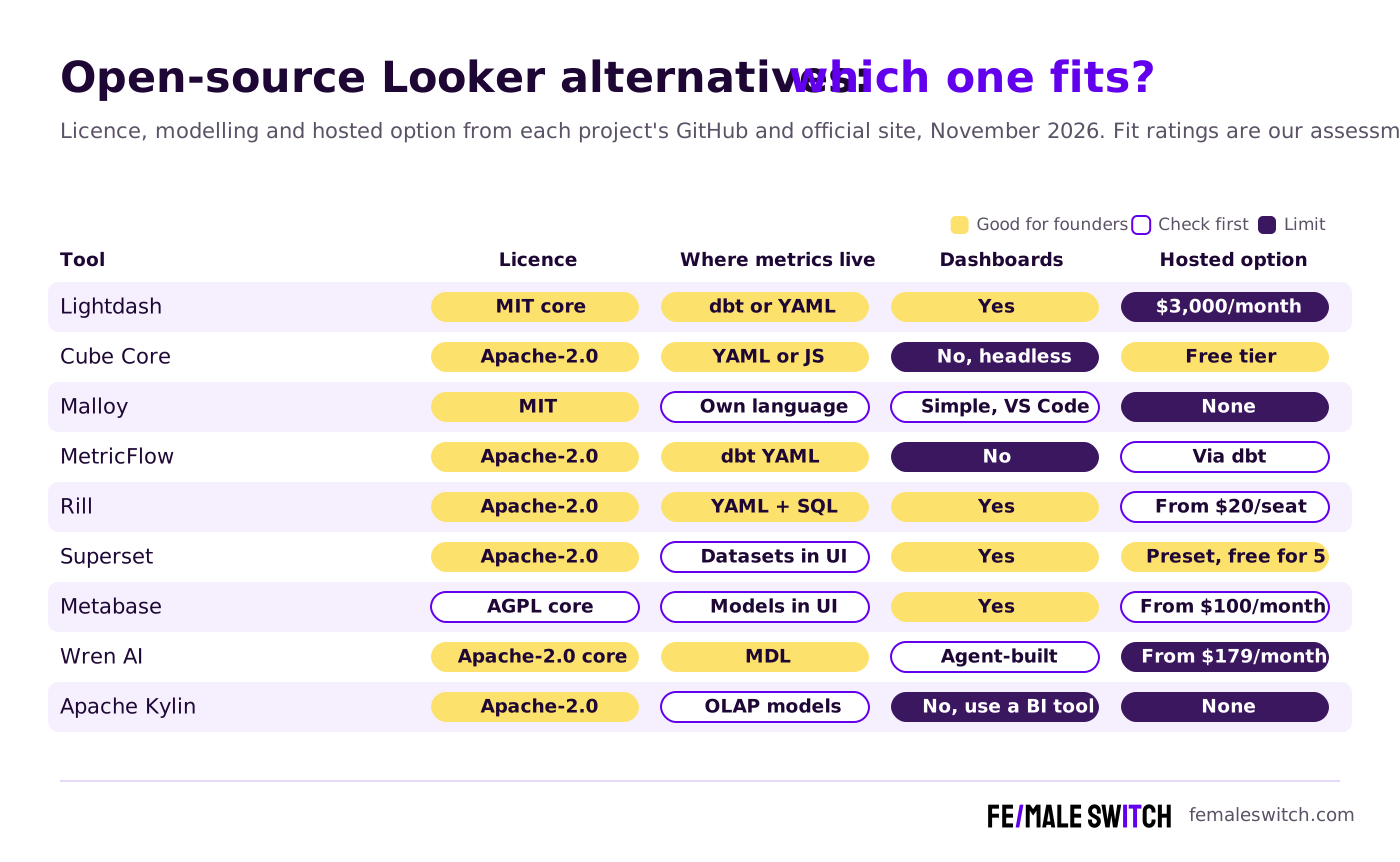
Open-Source Looker Alternatives Compared
Sources: each project's GitHub repository (licence file, releases) and official website or pricing page, checked 5 November 2026. Self-hosting is free, but you pay for servers and your own time.
The Best Open-Source Looker Alternatives in 2027
1. Lightdash: the closest open-source match to LookML and Explores
Lightdash builds governed metrics, dashboards and AI agents from what its README calls a context layer: metrics, dimensions, joins, permissions and business logic defined once, either in your dbt project or in standalone Lightdash YAML. Charts and dashboards also live as files, so changes go through pull requests, like LookML in Git. The code is MIT-licensed outside its enterprise folder, and the team ships several releases a day (3.163.0 on 5 November 2026). The Lightdash pricing page lists the open-source edition as self-hosted with community support on Slack, and Cloud Pro at $3,000 a month with unlimited users and a 21-day trial. For a startup, the realistic route is self-hosting next to an existing dbt project.
2. Cube Core: a headless semantic layer for any BI tool or AI agent
Cube Core (formerly Cube.js) describes itself as the open-source semantic layer. You define metrics, dimensions, joins and access rules once in code, and Cube serves them through SQL, REST and GraphQL APIs to BI tools, your own app or AI agents, with a built-in caching engine for fast answers. It is headless: there is no dashboard UI, so you pair it with Superset, Metabase or your own front end. The repository is Apache 2.0 by default (a few packages are MIT), and version 1.8.18 came out on 3 November 2026. If you would rather not host it, Cube Cloud has a free-forever plan for small projects; Starter costs $40 per developer a month and Premium $80.
3. Malloy: a semantic modelling language from the LookML school
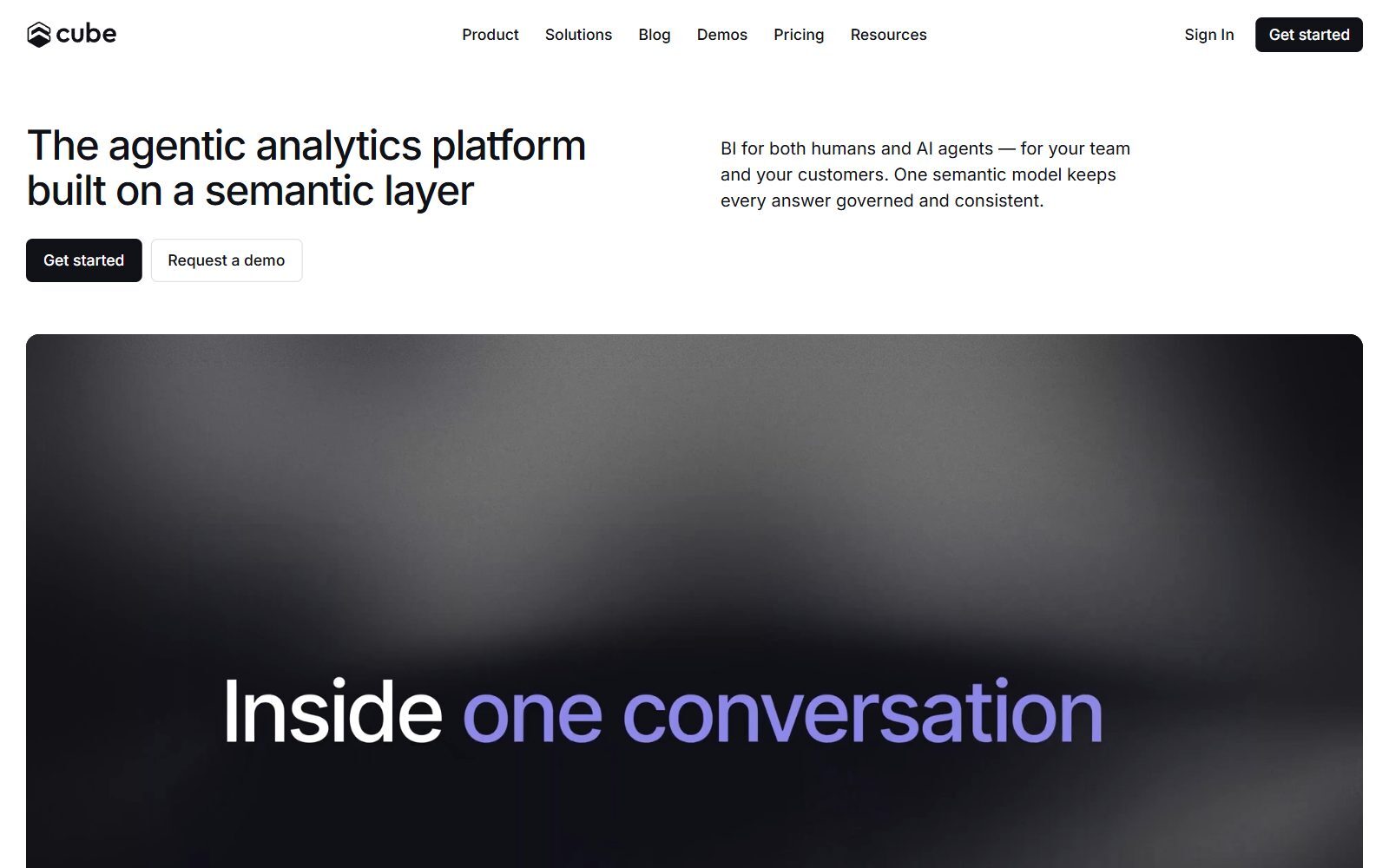
Malloy is an MIT-licensed semantic modelling and query language that compiles to SQL and runs on BigQuery, Snowflake, DuckDB, MotherDuck, PostgreSQL, MySQL, Trino, Presto and Databricks, according to its GitHub README. Its own site compares it directly with LookML: semantic models like LookML give safety but limit analytical freedom, and Malloy aims to combine both. You write models in the VS Code extension, which also builds simple visualizations and dashboards. Malloy is very active (version 0.0.437 on 30 October 2026), but its docs still call it a work in progress, so it suits data people who like code more than business users.
4. dbt MetricFlow: metrics as code inside your dbt project
MetricFlow is the engine behind dbt's Semantic Layer. You define semantic models and metrics in YAML next to your dbt models, and MetricFlow compiles each request into SQL, handling multi-hop joins, ratio and cumulative metrics and time grains. The dbt documentation says it is distributed under the Apache 2.0 licence and works with dbt 1.6 and later; the latest release, 0.213.0, came out in September 2026. It is a library and command-line tool, not a dashboard app, so it fits teams that already use dbt and want one source of metric definitions.
Validate your startup idea with the unique borrowed authority approach: we publish articles about your product in our blog and you get traffic and testers for your MVP
- Prove Market Demand: See real organic traffic and waitlist conversions
- Unlock High-Potential Keywords: Receive a curated list of top-performing keywords directly from Google Search Console data.
- Estimate Customer Acquisition Cost (CAC): Gain financial foresight with an estimated CAC based on real keyword performance data.
🔗 Start validating your startup now
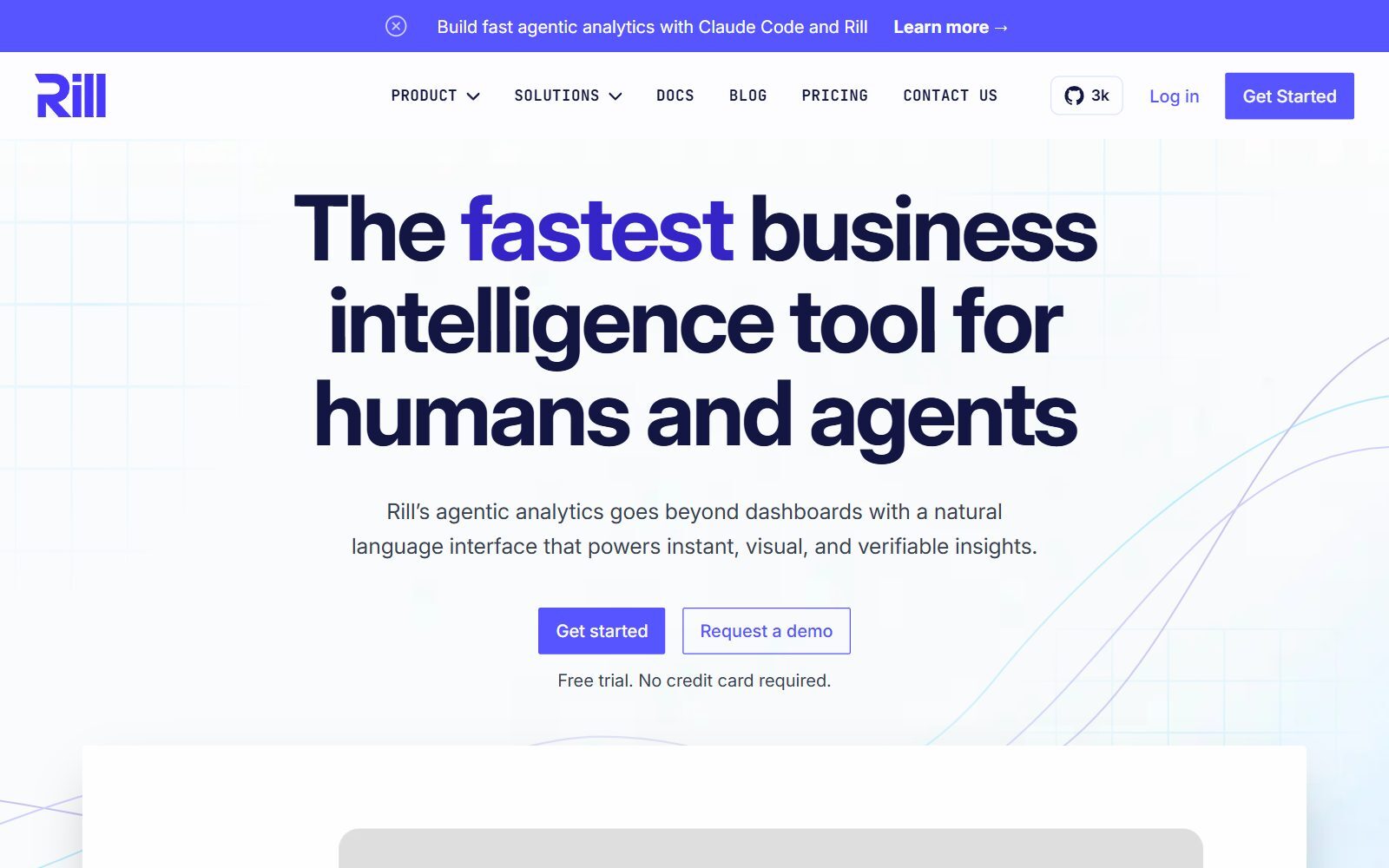
5. Rill: a semantic layer and fast dashboards, all as code
Rill is an Apache 2.0 BI tool whose semantic layer, called metrics views, defines dimensions, measures and time grains in YAML, with row access policies per user or group. Dashboards are generated from those definitions and query ClickHouse or DuckDB, and an MCP server lets AI agents query the same metrics. Version 0.91.1 came out on 3 November 2026. You can run Rill Developer locally for free; sharing with a team is built around Rill Cloud, which the Rill pricing page lists from $20 per seat a month for up to 20 seats, with compute billed separately and a $250 usage credit on all plans.
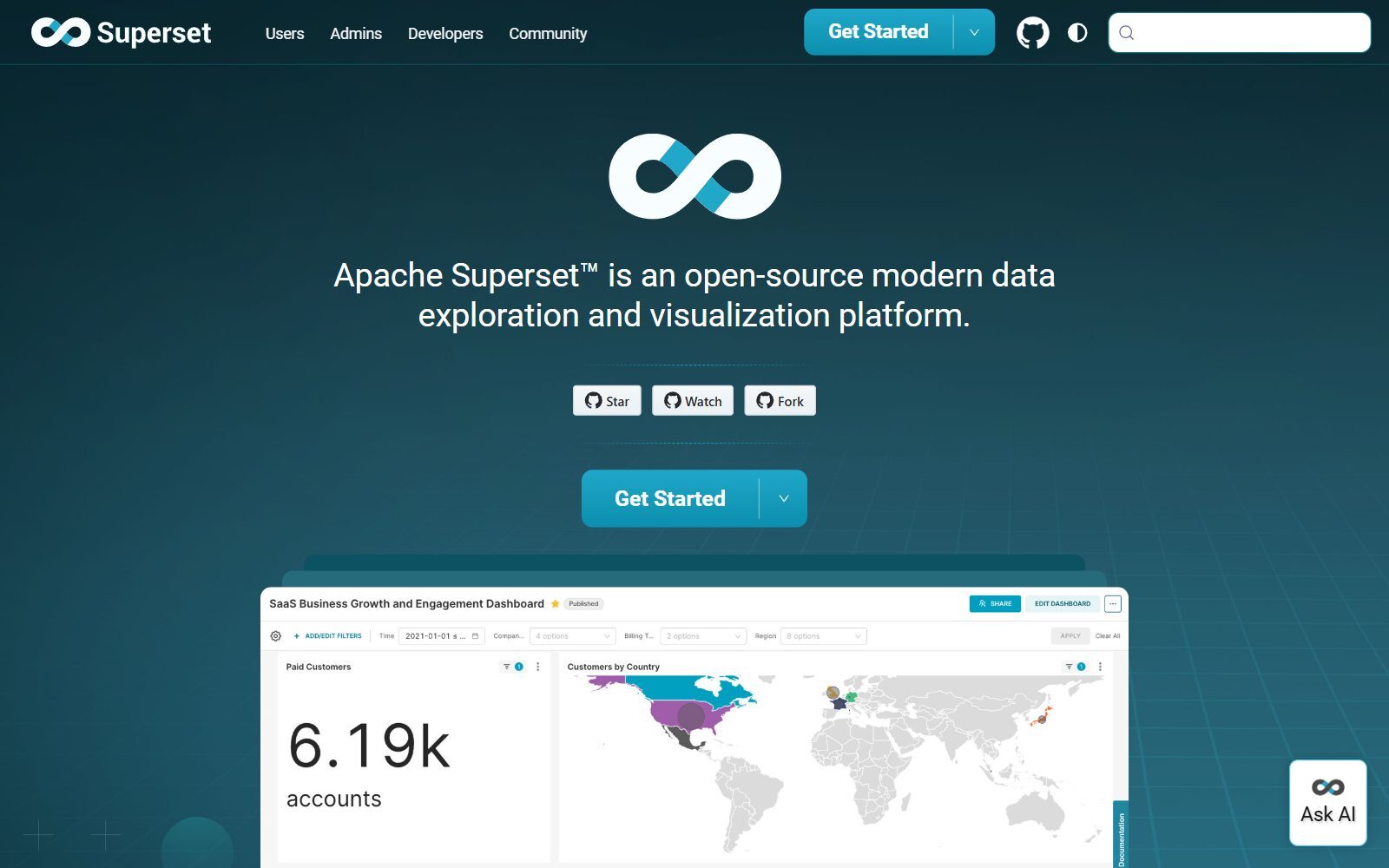
6. Apache Superset: open-source dashboards with a light semantic layer
Apache Superset is an Apache Software Foundation project under the Apache 2.0 licence. Its README lists a no-code chart builder, a SQL editor and a lightweight semantic layer for defining custom dimensions and metrics on datasets. That layer is thinner than LookML (no shared model of joins across the whole company), which is why many teams put Cube Core underneath it. Version 7.0 was in release-candidate testing in October 2026. Preset, a managed Superset service, has a Starter plan that is free forever for up to 5 users; Professional costs $20 per user a month billed annually.
7. Metabase: official metrics and models for non-technical teams
Metabase is the easiest tool on this list for people who do not write code. Its semantic layer docs describe metrics as the official way to calculate important numbers: you save a calculation such as revenue once, put it in a curated collection, and everyone picks it in the query builder instead of writing their own version. Models clean up raw tables for the same purpose. The Open Source edition is free with unlimited users; the code is AGPL outside its enterprise folder, and version 65.2 came out on 30 October 2026. Governance features that Looker includes, such as row- and column-level permissions and SSO, are on the paid Pro plan at $575 a month; Cloud Starter costs $100 a month with 5 users.
8. Wren AI: a governed semantic layer for AI agents
Wren AI is an open-source generative BI engine. Its modelling language (MDL) gives AI agents such as Claude Code, Cursor or any MCP client a governed semantic layer, so they write SQL from your business definitions, and it can turn an answer into a shareable dashboard across more than 22 data sources. The core engine, SDK and skills are Apache 2.0; version 0.17.1 came out on 30 October 2026. Read the Wren AI pricing page carefully: it says the open-source edition is the free CLI and context engine for developers, with no UI. The hosted app starts at $179 a month billed annually (Essential Cloud), with a 7-day trial.
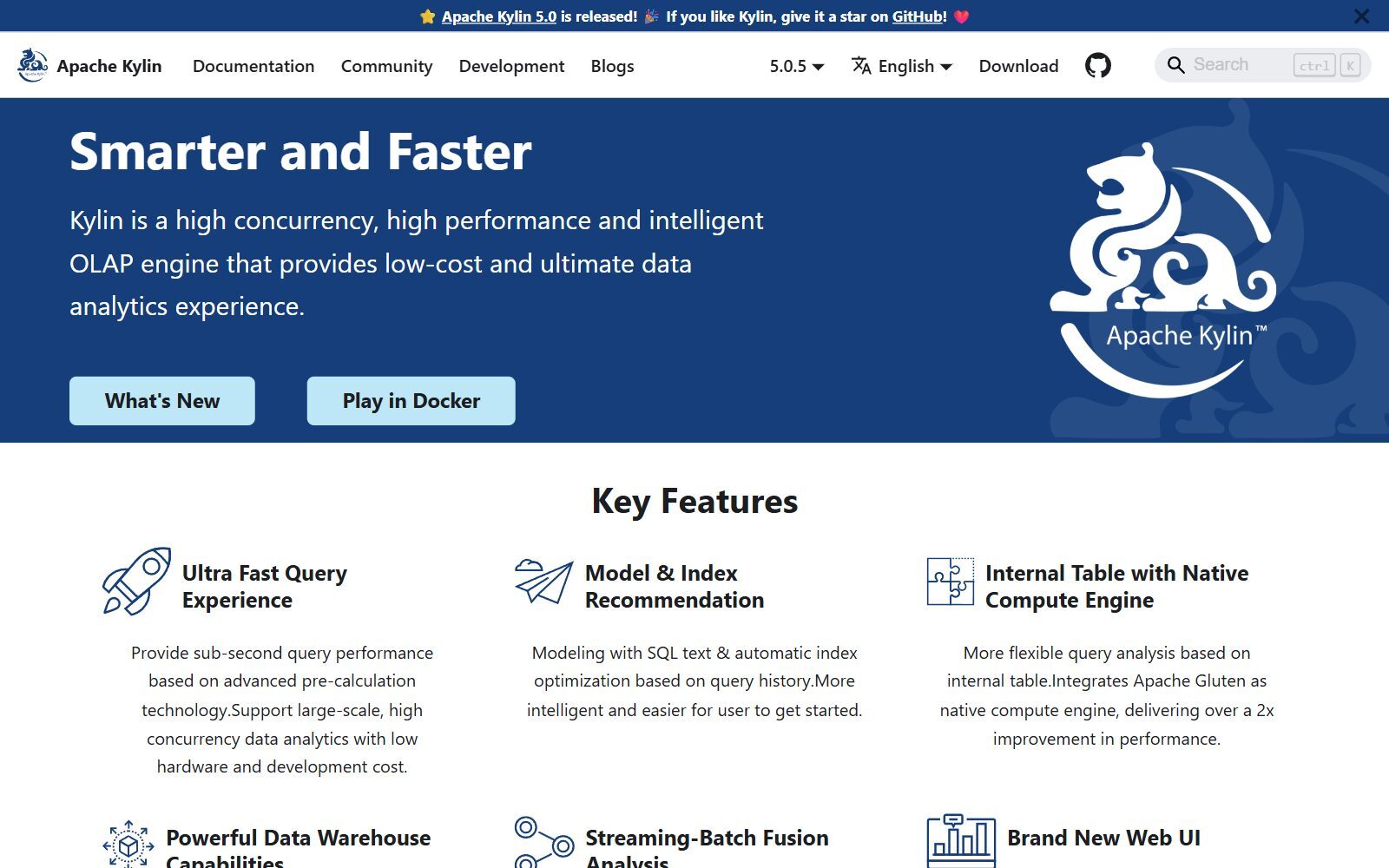
9. Apache Kylin: modelled OLAP for very large data
Apache Kylin is an Apache 2.0 OLAP engine, created and open-sourced by eBay in 2014, according to its README. You model tables, dimensions and measures, Kylin pre-calculates them, and BI tools query the model with sub-second answers on very large datasets. Version 5.0.5 was released on 13 July 2026. It is infrastructure, not a dashboard tool, so it only makes sense when your data is far bigger than a typical startup's; put Superset or another BI tool on top.
Changed, Renamed or Not Like-for-Like
The 2025 version of this article listed some tools that do not replace Looker's semantic layer. They are still useful, just for different jobs:
- "Looker AI": not a product. Looker's AI features are Gemini in Looker and Conversational Analytics inside the paid Looker platform.
- Cube.js: renamed. The open-source project is now Cube Core, listed above.
- Redash: still maintained (BSD-2, version 26.9.0 in September 2026), but it is SQL queries plus dashboards with no shared metric model. We cover it in our open-source Metabase alternatives.
- Helical Insight and Knowage: AGPL-licensed BI suites that are actively released (Helical Insight 7.0.0 in July 2026, Knowage 9.0.12 in November 2026), with reports, dashboards, OLAP and KPIs; they are classic BI suites rather than code-defined semantic layers. See our open-source Power BI alternatives.
- Eclipse BIRT: a reporting engine for Java applications, not a governed BI layer.
- KNIME Analytics Platform: free and open source, but a visual data-science workflow tool rather than shared dashboards.
- Plotly: its open-source Dash is a Python framework for building data apps, so a developer has to build the BI layer.
- Grafana and Evidence: excellent open-source tools for live metrics (Grafana, AGPL) and reports as code in SQL and Markdown (Evidence, MIT), but neither gives you a LookML-style model of the whole business.
Which Open-Source Looker Alternative Should You Choose?
- Your data team uses dbt and wants Looker-style Explores: Lightdash.
- You want one semantic layer that feeds several tools, your product and AI agents: Cube Core, with Superset or Metabase on top.
- You love LookML's ideas but want a full query language: Malloy.
- You only need metric definitions in code, inside dbt: MetricFlow.
- You want fast dashboards defined in YAML and SQL: Rill.
- Your team clicks rather than codes: Metabase with official metrics, or Superset if your analysts are SQL-heavy.
- Your main users will be AI agents: Wren AI, or the MCP servers of Lightdash, Cube and Rill.
- Your data runs to billions of rows: Apache Kylin under a BI tool.
Not set on open source? The free Looker alternatives guide linked above compares hosted and free options, and if you mainly want to ask your data questions in plain English, see the free Metabase AI alternatives. For the warehouse underneath, read our open-source Databricks alternatives.
How Founders Use a Semantic Layer
A semantic layer sounds like an enterprise luxury, but its core idea helps from the first spreadsheet: agree on what each number means before you chart it. Write down your five key metrics and their exact definitions (our list of key metrics in the business model canvas is a good start), then encode them once in Lightdash, Cube or Metabase so that investors, co-founders and AI assistants all see the same revenue and churn. During a 30-day validation sprint, one governed dashboard of sign-ups, activation and pre-orders is enough; add modelling depth only when the questions get harder.
A BI layer is one part of an open-source stack. Build internal admin panels with our open-source Retool alternatives, feed your database with the open-source Zapier alternatives, and measure your website with the open-source Google Analytics alternatives. Before you build anything, validate your startup idea with real customers, and once your data tells a story, turn it into articles with the F/MS AI SEO Tool so customers find you in Google and AI assistants.
Join ElonaHunt (like ProductHunt but for women) and explore the coolest women-focused startups out there!
Discover your next big inspiration and connect with like-minded female entrepreneurs!
👉 Join the Hunt Here
FAQ About Open-Source Looker Alternatives
Is there an open-source alternative to Looker?
Yes. Lightdash (MIT core) is the closest, with governed metrics and dashboards on top of dbt. Cube Core (Apache 2.0) is an open-source semantic layer you can pair with Apache Superset or Metabase, and Malloy, MetricFlow and Rill define metrics as code.
What is the open-source equivalent of LookML?
There is no exact clone, but several projects cover the same job: Lightdash YAML or dbt models, Cube data models, dbt MetricFlow's semantic models, Rill's metrics views and the Malloy language. Malloy's own site compares itself directly with LookML.
Is Looker free?
No. Looker (Google Cloud core) is sold in Standard, Enterprise and Embed editions on an annual commitment, and the pricing page says to call sales. Google offers a free trial, and its free report builder is Data Studio, formerly Looker Studio.
What is Looker AI?
There is no separate product with that name. Looker's AI features are Gemini in Looker and Conversational Analytics. Google says Conversational Analytics is in a promotional period without allocation limits until 31 January 2027, with token-based billing from 1 February 2027.
Is there an open-source alternative to Looker Studio?
Looker Studio is now called Data Studio and is still free. If you want open source instead, Apache Superset and Metabase are the easiest self-hosted report and dashboard tools; Superset is also hosted free for up to 5 users by Preset.
Is Lightdash really open source?
Mostly. Its code is MIT-licensed except an enterprise folder under a separate licence. The self-hosted open-source edition is free; Lightdash Cloud Pro costs $3,000 a month with unlimited users.
Does Cube have a user interface?
Cube Core is headless: it serves your semantic layer through SQL, REST and GraphQL APIs and has no dashboard UI. Connect a BI tool such as Superset or Metabase, or your own app. Cube Cloud adds workbooks and dashboards, with a free plan.
What is the AWS alternative to Looker?
Amazon's own BI service is Amazon Quick Sight, part of Amazon Quick, and it is not open source. On AWS you can also self-host any tool in this list, for example Cube Core with Apache Superset.
Which open-source Looker alternative works best with AI agents?
Wren AI is built for agents that must follow governed definitions, and Lightdash, Cube and Rill offer MCP servers so assistants such as Claude can query your metrics. A semantic layer keeps AI answers consistent with your dashboards.
Where can I get a backlink by writing about my startup?
You can publish a guest post in one of the Fe/male Switch startup blogs, which rank in Google and in AI tools. Get a quality backlink.
About the Author
Violetta Bonenkamp, also known as MeanCEO, is an experienced startup founder with an impressive educational background including an MBA and four other higher education degrees. She has over 20 years of work experience across multiple countries, including 5 years as a solopreneur and serial entrepreneur. Throughout her startup experience she has applied for multiple startup grants at the EU level, in the Netherlands and Malta, and her startups received quite a few of those. She’s been living, studying and working in many countries around the globe and her extensive multicultural experience has influenced her immensely.

