

Open-Source Zapier Alternatives You Can Self-Host: Workflow Automation Without Per-Task Fees
Zapier is the easiest way to connect apps, but its bill grows with every task, and your customer data runs through someone else's servers. Open-source and self-hosted workflow tools let you run the same kind of automations on your own server, often with no limit on executions. The catch is that "open source" is used loosely in this market. Some of the best-known Zapier alternatives are source-available: you can read and self-host the code, but the licence limits commercial use. We checked every tool below in October 2026 on its official website and in its LICENSE file on GitHub, together with its latest releases, and we say exactly which licence each one uses.
Quick answer: for the closest no-code Zapier replacement under a real open-source licence, use Activepieces (MIT core); for the biggest community and AI agent workflows, use n8n, but know that its fair-code licence is not open source; for developers who want scripts, workflows and internal apps in one place, use Windmill; for IoT and event-driven flows, use Node-RED; and for data pipelines, use Kestra or Apache Airflow.
Boost Your SEO by Getting Featured in Our Blogs and get a backlink.
We publish content about startups, education, tech, funding, etc. that ranks well not only in Google but also in Perplexity, ChatGPT, Grok and other AI tools.
👉 Get featured now!
What Zapier Costs in 2027
To know what you are replacing: on the Zapier pricing page (checked October 2026) the Free plan includes 100 tasks a month and only two-step Zaps. Pro starts at $19.99 a month billed annually ($29.99 billed monthly) for 750 tasks, and Team starts at $69 a month billed annually for 2,000 tasks. AI steps and MCP tool calls use the same task pool, and Zapier Agents and Chatbots are add-ons. Self-hosting the tools below is free; you pay for a server and your own time instead, so they pay off fastest when you run thousands of tasks a month.
Open Source vs Source-Available: Read the Licence First
An open-source licence approved by the Open Source Initiative (MIT, Apache-2.0, AGPL-3.0, GPL-3.0) lets anyone use the software for any purpose, including commercial ones. A source-available licence shows you the code but adds limits. n8n is the main example here: its Sustainable Use License lets you use and modify it only for your own internal business purposes or for non-commercial or personal use, and you may only distribute it free of charge for non-commercial purposes. n8n calls this model "fair-code". Several open-source tools also keep paid enterprise features in a separate folder under a commercial licence (Activepieces, Windmill, Automatisch). For a startup automating its own work, all of these are fine. If you want to resell automation as a service or build it into your product, check the licence before you start.
Open-Source Zapier Alternatives Compared
Sources: each project's official website, pricing page, LICENSE file and GitHub releases, checked 27 October 2026. Self-hosting is free, but you pay for the server and maintenance.
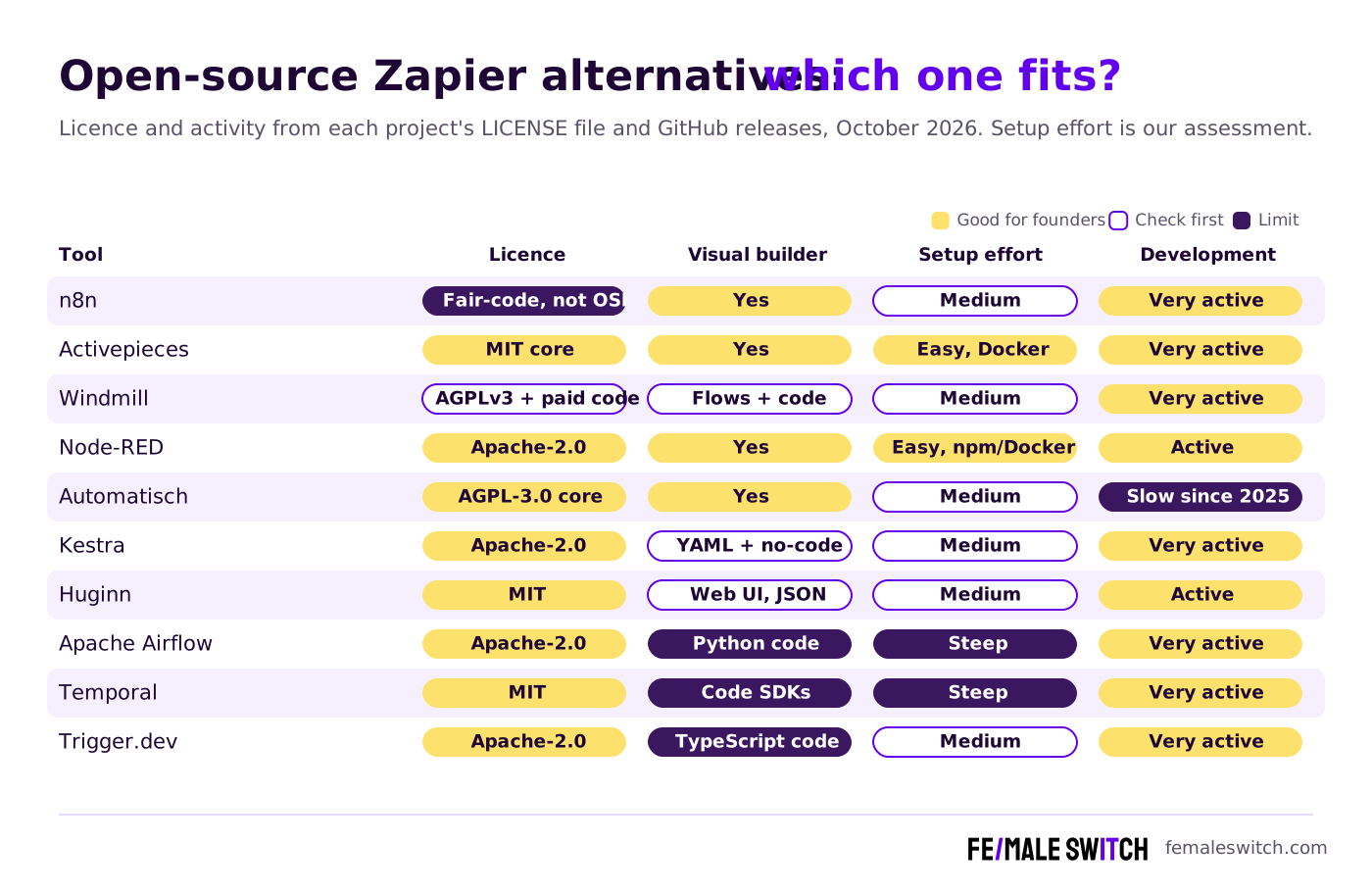
The Best Open-Source Zapier Alternatives in 2027
1. n8n: the most popular self-hosted Zapier alternative (fair-code)
n8n is a visual workflow builder for automations and AI agents: you connect nodes on a canvas, drop into JavaScript or Python when you need to, and add human approvals to AI steps. Its homepage counts 500+ native integrations, and any other API can be reached through HTTP requests or MCP. You can deploy it on your own server or with Docker. Licence: n8n is not open source in the OSI sense. Its README calls it fair-code and source-available, under the Sustainable Use License, while files marked ".ee" need an n8n Enterprise License. Running it for your own company's automations is allowed for free; selling it as a service is not. On n8n's pricing page the cloud Starter plan costs €20 a month and Pro €50 a month (billed yearly) for 2,500 and 10,000 executions; the self-hosted Business plan is €667 a month. n8n published several releases in October 2026.
New to it? Our n8n guide for beginners walks through the first workflows, and we also wrote about lessons from n8n's valuation.
2. Activepieces: the closest MIT-licensed Zapier replacement
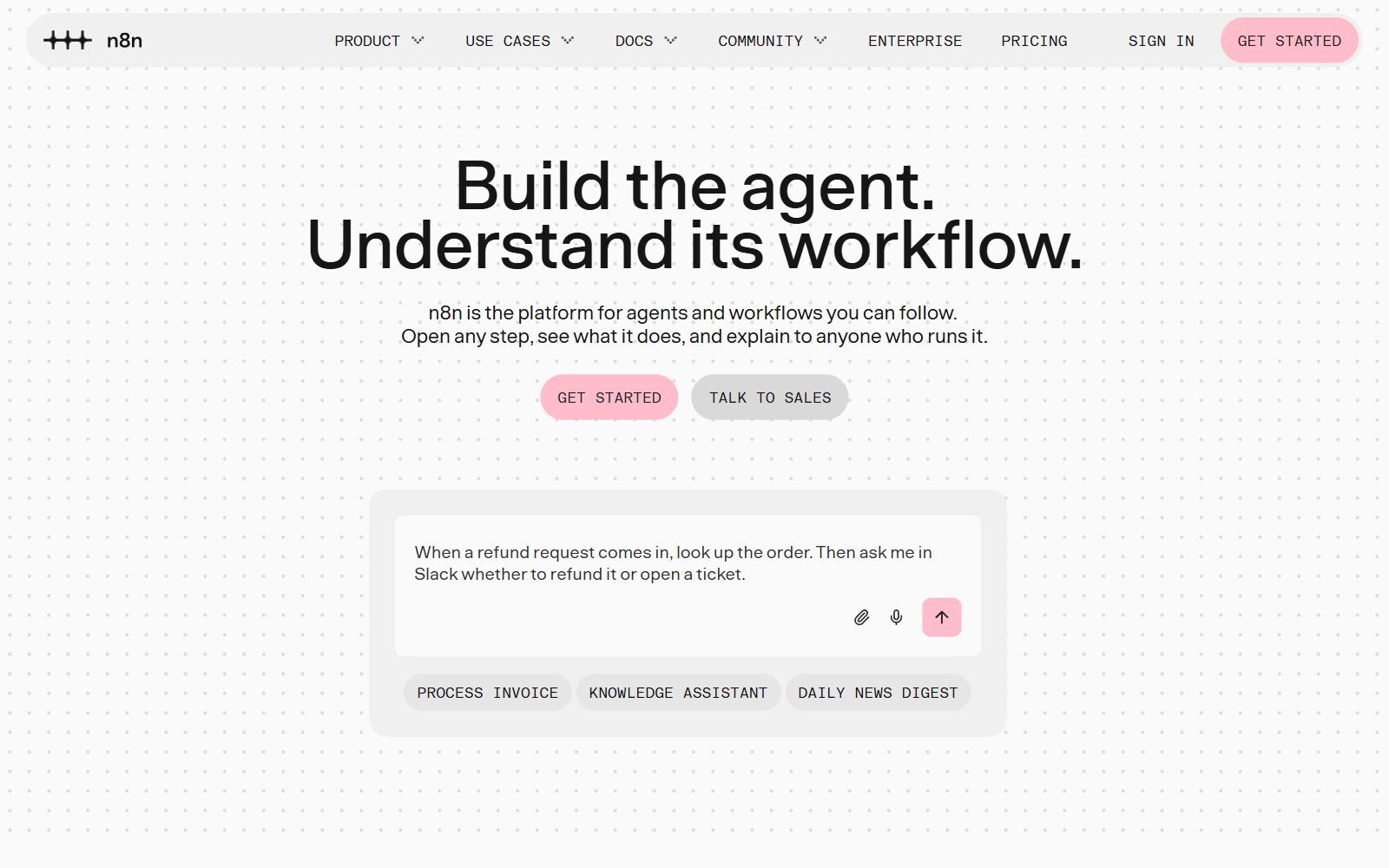
Activepieces looks and feels most like Zapier: a no-code flow builder for non-technical teams, plus AI agents, tables and chat in one workspace. Its homepage lists 770+ integrations ("pieces"), each MIT-licensed, plus an HTTP piece for any REST or GraphQL API. Through its MCP server, Claude and Cursor can run your flows, and its agents can use other MCP servers. The licence file puts everything under MIT except the enterprise folders, which have their own commercial licence. You can self-host it with Docker or Kubernetes, even air-gapped. In the cloud (hosted in Frankfurt), the free plan includes 1,000 credits a month for up to 5 users, and one run costs one credit however many steps it has; Plus is $20 a month with 10,000 credits. New releases came out throughout October 2026.
3. Windmill: scripts, workflows and internal apps for developers
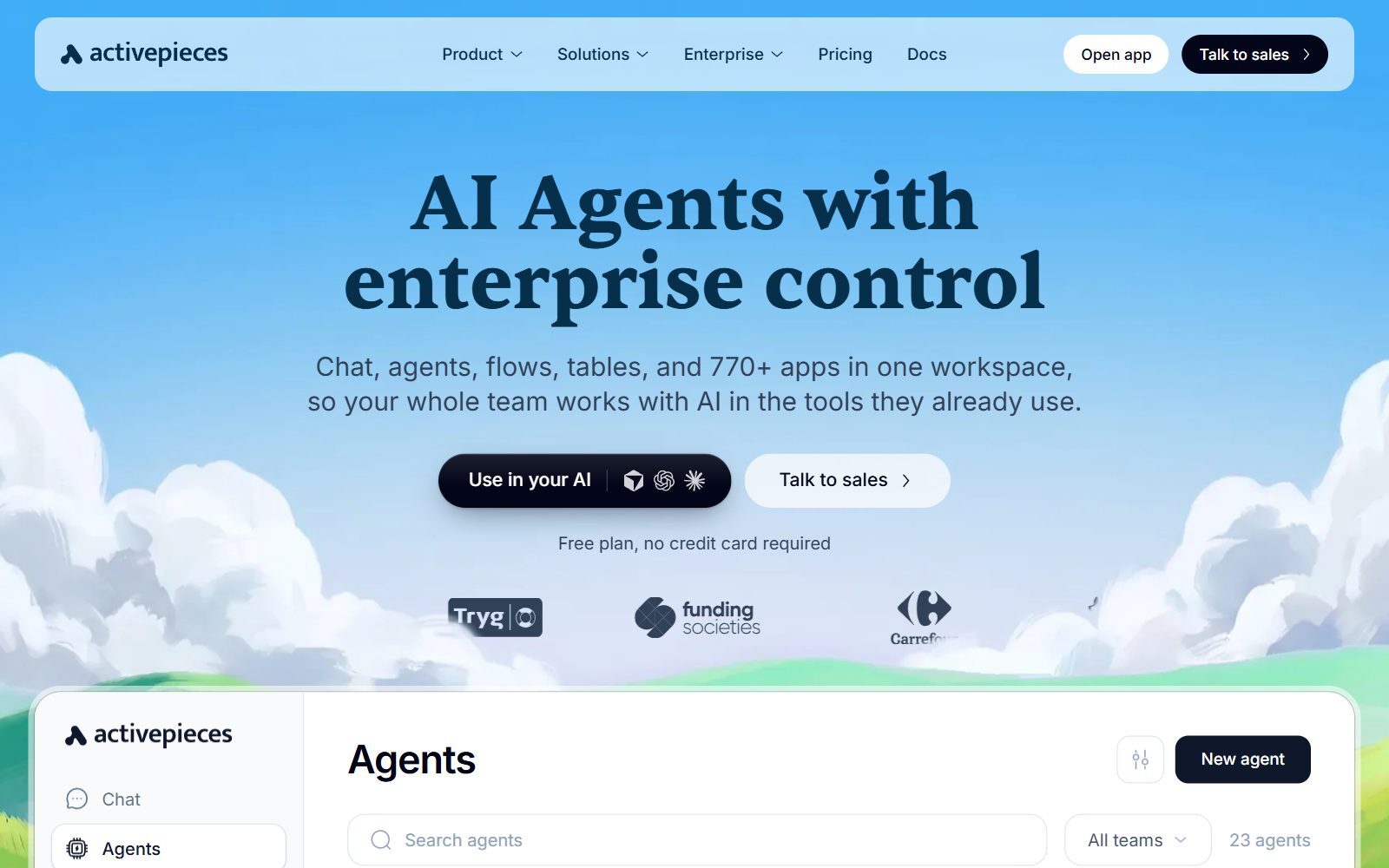
Windmill calls itself a code-first platform for workflows, apps and AI agents. You write scripts in TypeScript, Python, Go, PHP, Bash, SQL and more than 20 languages in total, chain them into flows in a visual editor or in code, and every script and flow gets a webhook, a schedule option and an API endpoint. AI agents can run on 12 providers or your own model. Most of the code is AGPLv3, some parts are Apache-2.0, and enterprise features are under a proprietary licence. On the Windmill pricing page the free self-hosted edition has unlimited executions, up to 50 users (10 with SSO) and 3 workspaces; Enterprise starts at $120 a month. Windmill ships new versions several times a week (v1.850.0 on 27 October 2026). It is also a strong pick if you are replacing Retool.
4. Node-RED: visual flows for APIs, devices and events
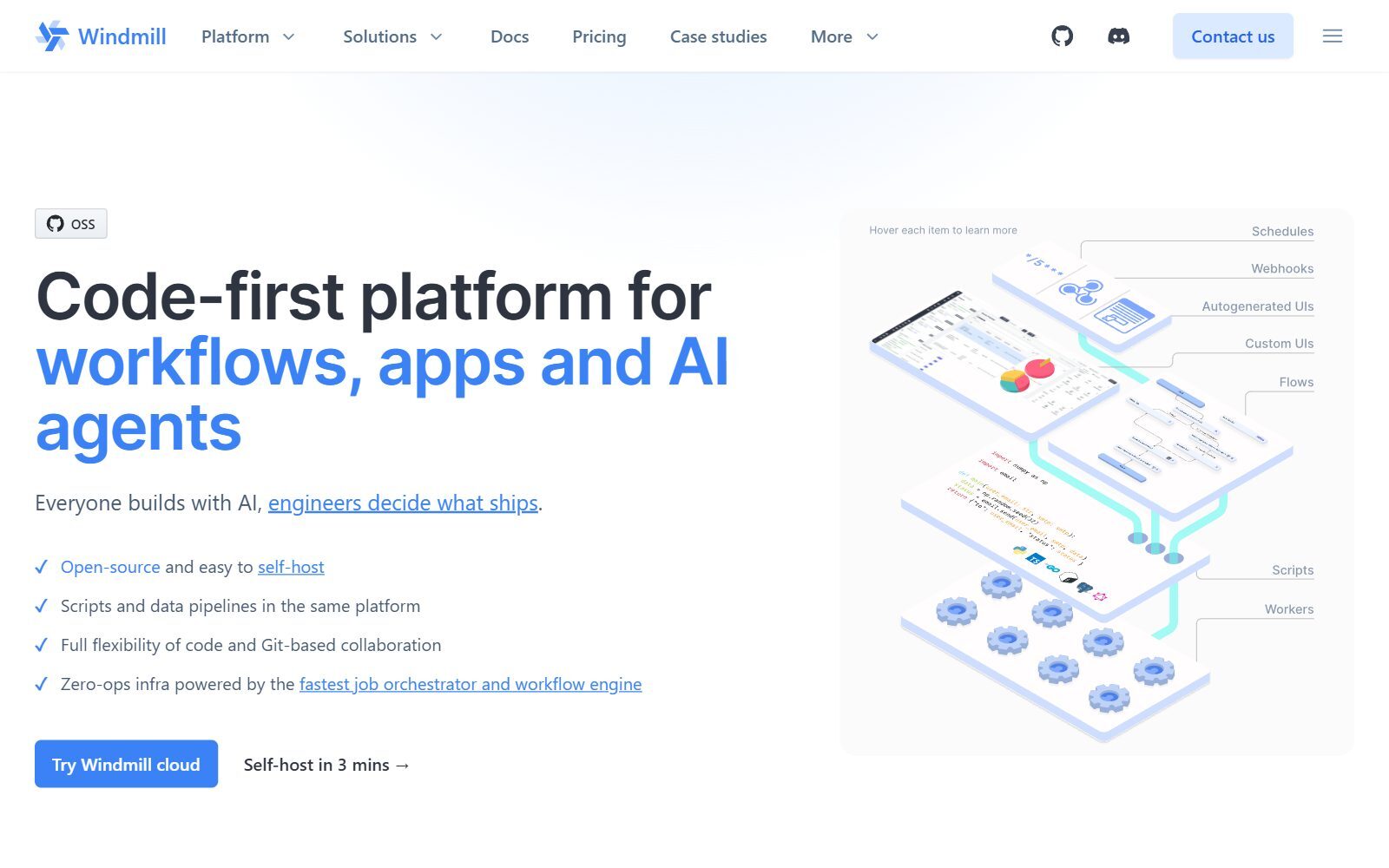
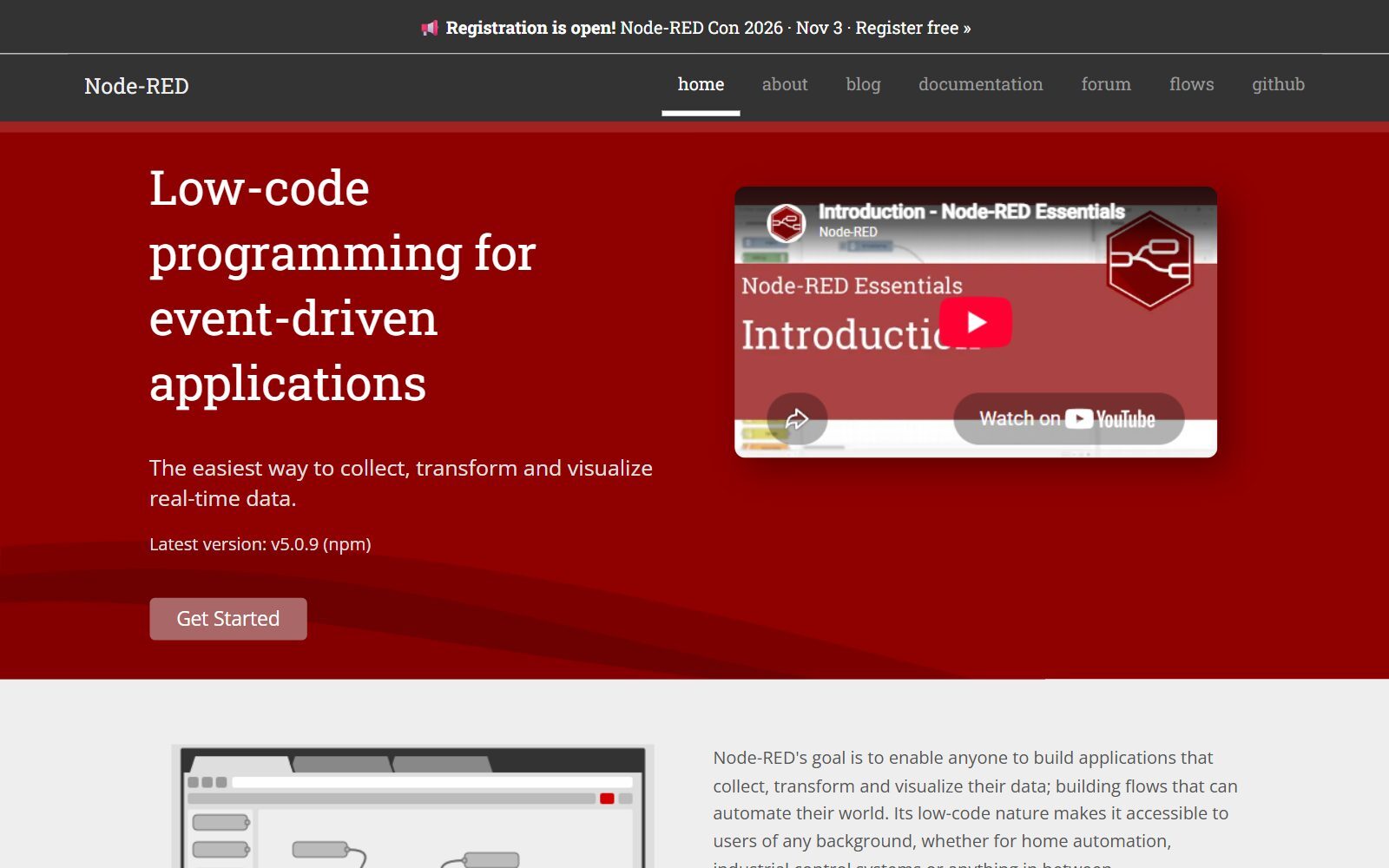
Node-RED is low-code programming for event-driven applications, built on Node.js: you wire nodes together in the browser to collect, transform and act on data. It runs on a laptop, in Docker, on a Raspberry Pi or in the cloud, and its community library lists more than 5,000 nodes and flows. It is licensed under Apache-2.0, with copyright held by the OpenJS Foundation and contributors. It shines for IoT, webhooks and API glue rather than ready-made SaaS connectors. Version 5.0.9 came out on 21 October 2026, and the 4.1 line still gets maintenance releases.
5. Automatisch: a simple open-source Zapier clone, with slower development
Automatisch describes itself as an open-source Zapier alternative: a no-code builder you can self-host so business data stays on your servers, which matters for teams under GDPR or in health and finance. Its licence is AGPL-3.0, except files marked ".ee.", which are under an enterprise licence, and a cloud version is offered too. Check activity before you commit: its latest release on GitHub, v0.15.0, dates from August 2025, and the last code change on the main branch was in January 2026.
Validate your startup idea with the unique borrowed authority approach: we publish articles about your product in our blog and you get traffic and testers for your MVP
- Prove Market Demand: See real organic traffic and waitlist conversions
- Unlock High-Potential Keywords: Receive a curated list of top-performing keywords directly from Google Search Console data.
- Estimate Customer Acquisition Cost (CAC): Gain financial foresight with an estimated CAC based on real keyword performance data.
🔗 Start validating your startup now
6. Kestra: open-source orchestration for data and AI workflows
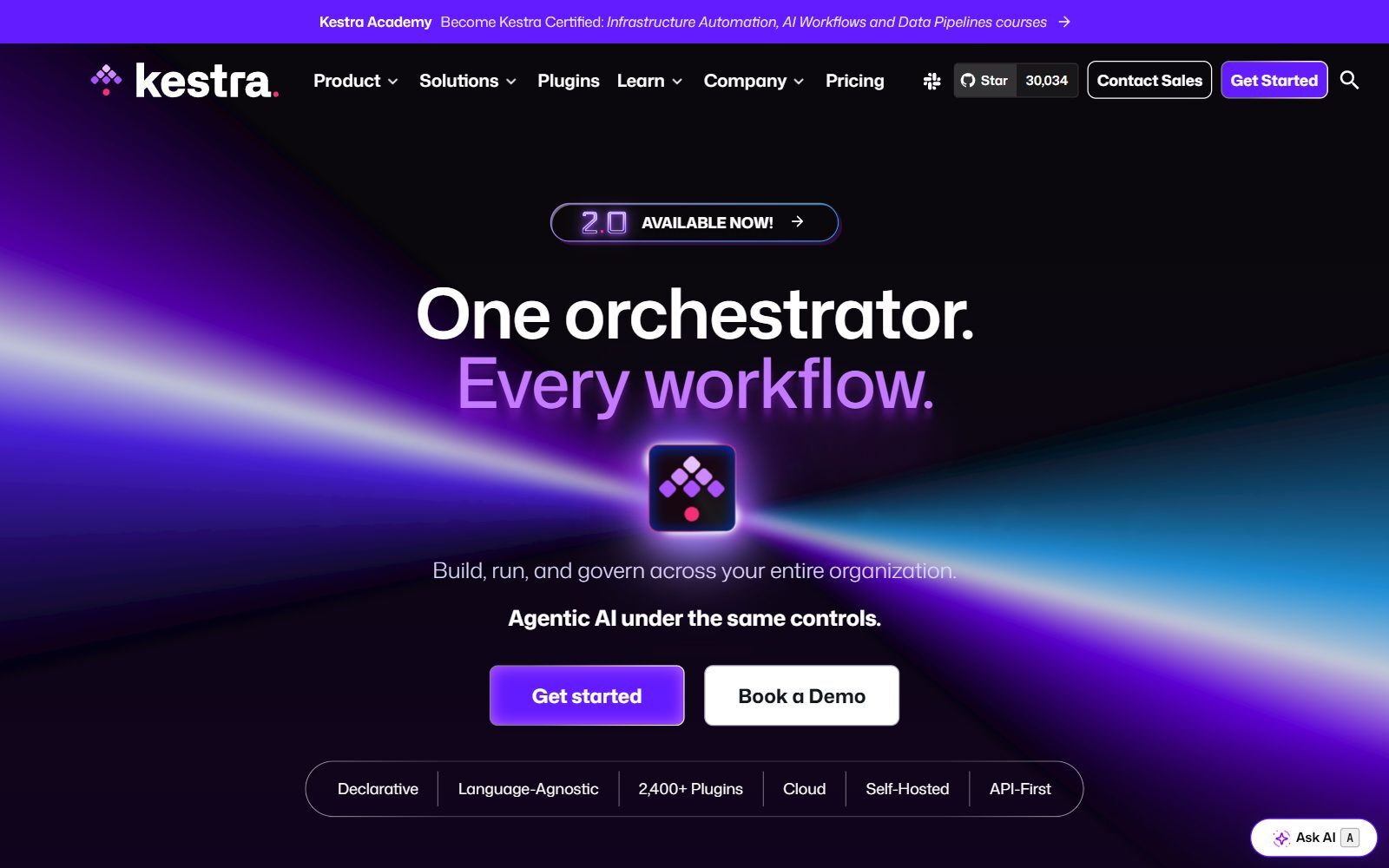
Kestra is an event-driven orchestrator: workflows are declarative (YAML), and you can edit them in code or in a no-code editor. The open-source edition is Apache-2.0 and includes 2,400+ plugins, scheduling and event triggers, business logic in any language, an MCP server for AI agents, and unlimited flows and executions. Enterprise and Kestra Cloud prices are on request. Version 2.0 is out, with 2.0.8 released on 27 October 2026. Pick Kestra when your automations are closer to data pipelines and infrastructure jobs than to "new lead in form, add to CRM".
7. Huginn: agents that watch the web for you
Huginn has been around since 2013, and its README calls it a hackable version of IFTTT or Zapier on your own server. Its agents scrape websites and alert you when they change, watch RSS feeds, inboxes, webhooks and MQTT topics, send digests, post to Slack or Telegram, send SMS through Twilio and call OpenAI-compatible APIs. It is MIT-licensed and starts with one Docker command. It is maintained by one developer in his spare time, yet releases keep coming (the latest on 26 October 2026). Good for monitoring; less good for team-wide business workflows.
8. Apache Airflow: scheduled data pipelines in Python
Apache Airflow is the Apache Software Foundation's platform to author, schedule and monitor workflows as Python code. It is Apache-2.0 and very widely used for ETL and data engineering, but it is not a no-code tool: someone on your team needs to write and maintain Python. Airflow 3.3.0 was released on 6 July 2026, and provider packages are updated every few weeks.
9. Temporal: durable workflows for developers
Temporal is an MIT-licensed platform for durable execution: workflows written in code save their state at each step, so they resume after crashes, timeouts or deploys. It suits long-running processes such as onboarding, payments or AI agent loops that must not lose their place. You can self-host the open-source server or use Temporal Cloud, which offered $150 in free credits at sign-up when we checked.
10. Trigger.dev: background jobs and AI agents in TypeScript
Trigger.dev lets developers write long-running tasks, scheduled jobs and AI agent workflows in TypeScript and run them without managing queues. It is Apache-2.0 and can be self-hosted. In the cloud, the free plan includes $5 of usage a month, Hobby is $10 and Pro $50 a month. Version 4.8.1 came out on 23 October 2026. Choose it if your product's own backend needs Zapier-like automation that lives in your codebase.
Zapier Alternatives That Changed, Closed or Are Not Open Source
The 2025 version of this article listed some tools that no longer belong on an open-source Zapier shortlist:
- Camunda: the current Camunda 8 engine and apps (Zeebe, Operate, Tasklist) are under the source-available Camunda License 1.0, according to the Camunda repository. Camunda 7 Community Edition reached end of life with its final release, 7.24, on 14 October 2025, and its repository was archived. The Apache-2.0 community fork Operaton continues that code base. Both are BPM engines for developers rather than Zapier replacements.
- Pipedream: never open source as a platform (only its component registry is public). Workday announced it would acquire Pipedream in November 2025 and has since reported the deal closed.
- Syndesis: its GitHub repository was archived in July 2024, and its last release dates from December 2021. Do not start new projects on it.
- Joget: still active and GPLv3 in its community edition, but it is a low-code app builder rather than an app-to-app automation tool. See our open-source Retool alternatives instead.
Which Open-Source Zapier Alternative Should You Choose?
- You want Zapier, but self-hosted and truly open source: Activepieces.
- You want the largest community, templates and AI agent workflows, and you only automate your own business: n8n.
- Your team writes code and also needs internal tools: Windmill.
- You automate devices, webhooks or real-time data: Node-RED.
- You run data pipelines: Kestra if you want YAML and a UI, Apache Airflow if your team lives in Python.
- You need automation inside your own product's backend: Trigger.dev or Temporal.
- You want to monitor websites, prices or feeds: Huginn.
Still deciding between hosted tools? Read about Make, the no-code integration platform, AI agents coming to Make.com and our no-code AI platform comparison. If you need a website before automations, see our free Carrd alternatives.
Join ElonaHunt (like ProductHunt but for women) and explore the coolest women-focused startups out there!
Discover your next big inspiration and connect with like-minded female entrepreneurs!
👉 Join the Hunt Here
How Founders Use Open-Source Automation
Start with the work you repeat every week: new leads from a form into your CRM, invoices into a spreadsheet, a daily digest of mentions, or a draft for every new blog post. Build one workflow, run it for two weeks, and only then add the next. Our guide to AI marketing automation shows which marketing tasks are worth automating, and these steps to automate article writing show a content workflow end to end. If you hire help, here are experts in Make.com automations.
Open source can replace much more of a startup's paid stack. We have also checked open-source Intercom alternatives for customer messaging, open-source Buffer alternatives and free Hootsuite alternatives for social media, open-source Expensify alternatives for expenses and open-source GitHub Copilot alternatives for coding. Before you automate anything, validate your startup idea with real customers, and turn what you learn into articles with the F/MS AI SEO Tool so people find you in Google and AI assistants.
FAQ About Open-Source Zapier Alternatives
What is the best open-source alternative to Zapier?
Activepieces is the closest open-source match: a no-code builder with 770+ integrations, AI agents and an MIT-licensed core. n8n is more popular, but its licence is fair-code, not open source.
Is n8n open source?
Not by the Open Source Initiative's definition. n8n uses the Sustainable Use License, which it calls fair-code: the source is public and you can self-host it for your own internal business, non-commercial or personal use, but you cannot sell it as a service without a commercial agreement.
Can I use n8n for free in my startup?
Yes, if you self-host it to automate your own company's work, which the Sustainable Use License allows. Features in files marked ".ee" need an n8n Enterprise License, and n8n's cloud starts at €20 a month billed yearly.
Which Zapier alternatives are fully open source?
Of the tools in this list, Node-RED, Kestra, Apache Airflow and Trigger.dev use Apache-2.0; Huginn and Temporal use MIT; Activepieces is MIT outside its enterprise folders; Windmill and Automatisch are AGPL-3.0 with separate enterprise code.
How much does Zapier cost in 2027?
When we checked in October 2026, Zapier's free plan included 100 tasks a month with two-step Zaps only, and Pro started at $19.99 a month billed annually for 750 tasks.
Is there a free open-source Zapier alternative with AI agents?
Yes. Activepieces includes AI agents and an MCP server, Windmill runs AI agents on 12 providers or your own model, and Kestra's open-source edition has an MCP server for AI agents. n8n has AI agents too, under its fair-code licence.
Which open-source automation tool is easiest to install?
Node-RED installs with npm or Docker and even runs on a Raspberry Pi, and Activepieces and Huginn start with a Docker command. Airflow and Temporal need more engineering time.
Is Pipedream open source?
No. Only its component registry is public. Workday announced it would acquire Pipedream in November 2025 and has since reported the deal closed.
Is Camunda still open source?
Camunda 8's core is under the source-available Camunda License 1.0, and Camunda 7 Community Edition reached end of life in October 2025. Operaton is an Apache-2.0 fork of Camunda 7.
Where can I get a backlink by writing about my startup?
You can publish a guest post in one of the Fe/male Switch startup blogs, which rank in Google and in AI tools. Get a quality backlink.
About the Author
Violetta Bonenkamp, also known as MeanCEO, is an experienced startup founder with an impressive educational background including an MBA and four other higher education degrees. She has over 20 years of work experience across multiple countries, including 5 years as a solopreneur and serial entrepreneur. Throughout her startup experience she has applied for multiple startup grants at the EU level, in the Netherlands and Malta, and her startups received quite a few of those. She’s been living, studying and working in many countries around the globe and her extensive multicultural experience has influenced her immensely.

