

Open-Source PlantUML Alternatives: Diagrams as Code Tools Compared
PlantUML made a simple idea popular: write a diagram as text, keep it in Git next to your code, and let a tool draw it. It is still actively developed, but it runs on Java, its syntax is showing its age, and many teams now want diagrams that render straight inside GitHub, GitLab or their docs site. We checked every tool below on its official repository or website in October 2026: the licence, the latest release and what it is really good at. Every tool on the list has an OSI-approved open-source licence and is text-based, so it fits the same docs-as-code workflow as PlantUML.
Quick answer: for most teams the best open-source PlantUML alternative is Mermaid, because GitHub and GitLab render it in Markdown. Use D2 for clean architecture diagrams, Structurizr if you follow the C4 model, Graphviz for large graphs, and Kroki if you want one service that renders PlantUML, Mermaid, D2 and many other languages side by side.
Boost Your SEO by Getting Featured in Our Blogs and get a backlink.
We publish content about startups, education, tech, funding, etc. that ranks well not only in Google but also in Perplexity, ChatGPT, Grok and other AI tools.
👉 Get featured now!
Open-Source PlantUML Alternatives Compared
Sources: each project's GitHub, GitLab or npm releases and official website, checked 26 October 2026.
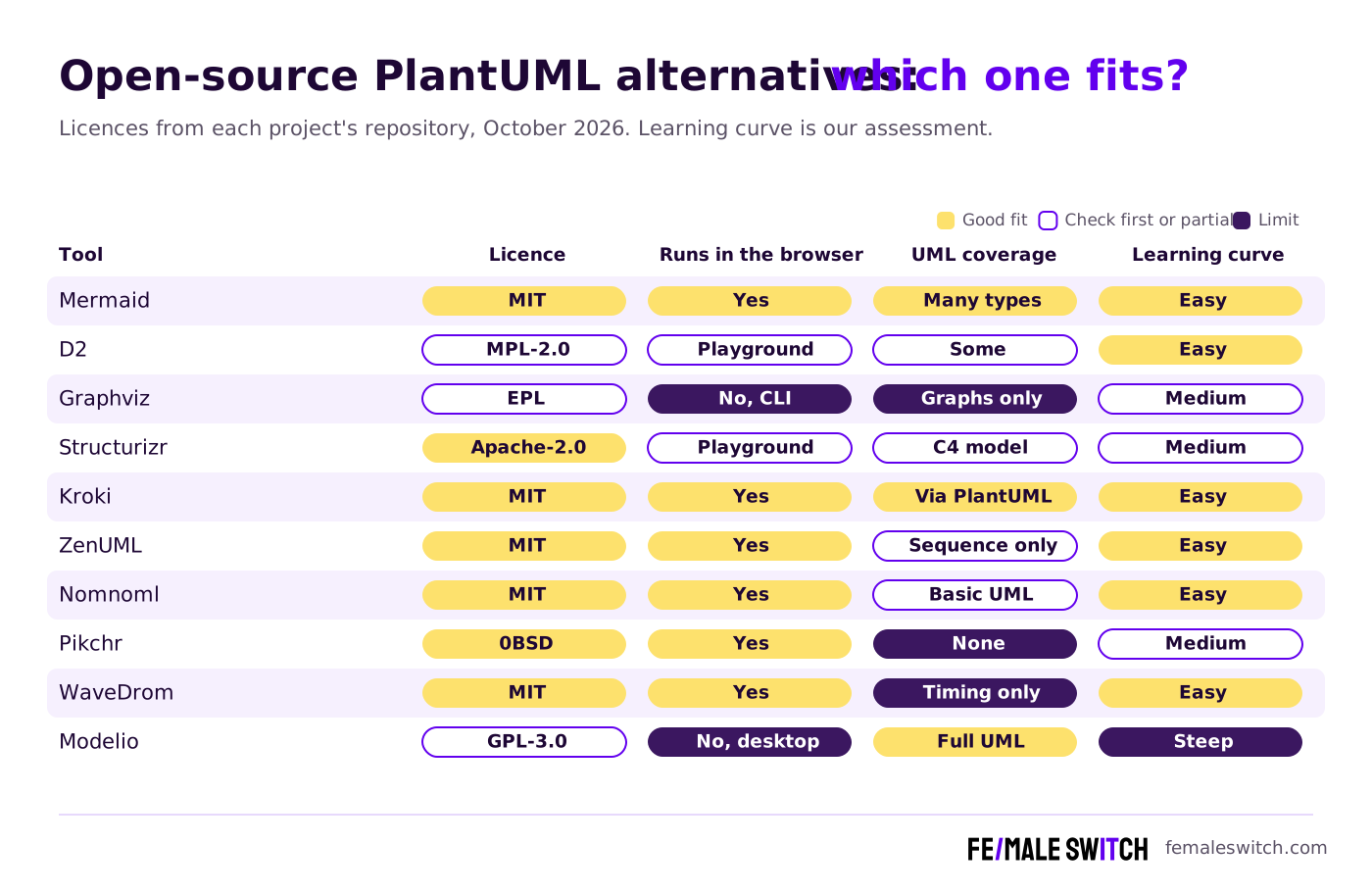
The 10 Best Open-Source PlantUML Alternatives in 2027
1. Mermaid: the default for diagrams in Markdown
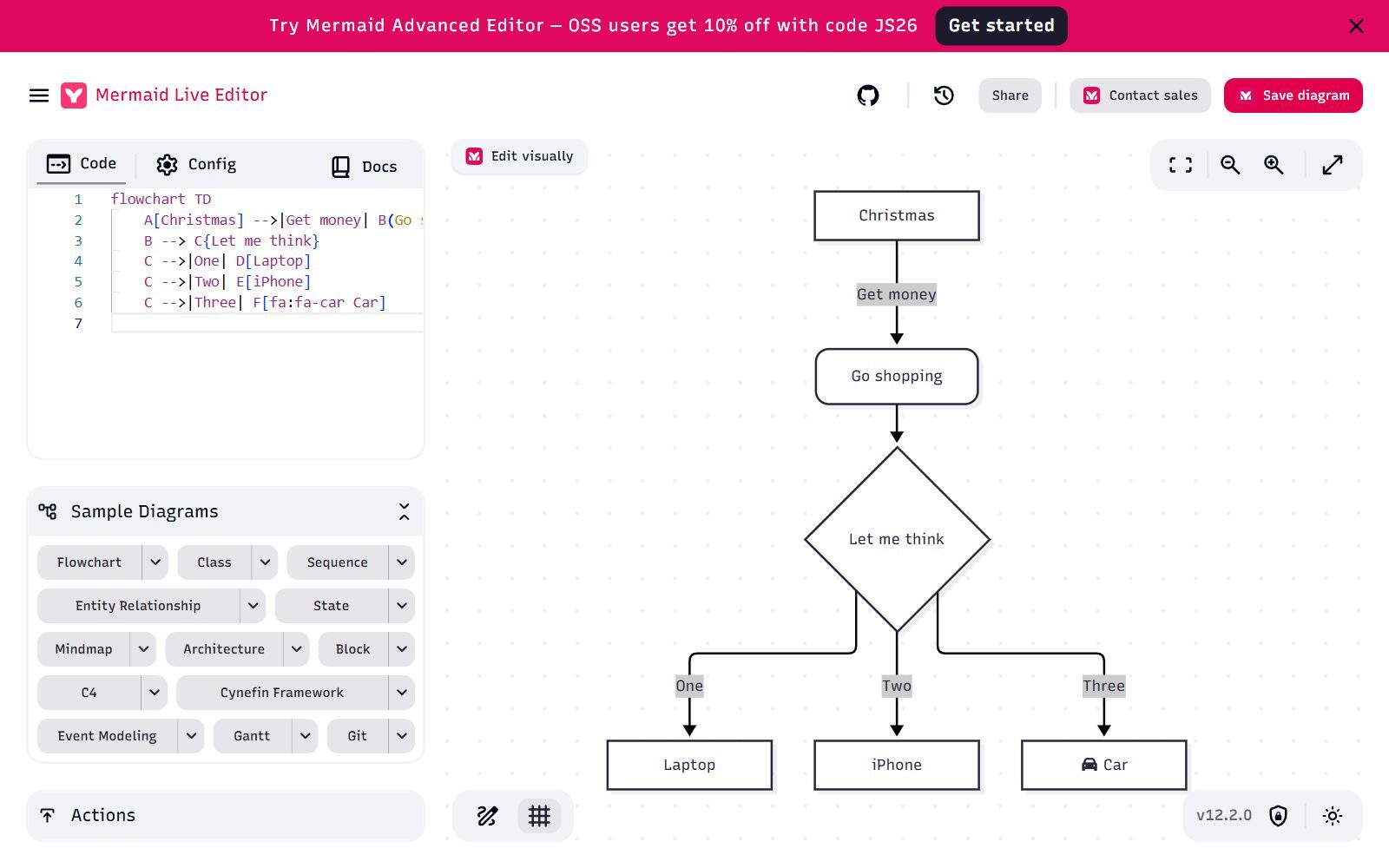
Mermaid is a JavaScript library that turns Markdown-like text into diagrams. Its biggest advantage over PlantUML is reach: GitHub renders Mermaid code blocks in issues, pull requests, discussions and Markdown files, and GitLab supports it too, so a diagram in your README just works. It covers flowcharts, sequence, class, state, entity-relationship, Gantt, C4, mindmap, timeline, architecture and many newer chart types. It is MIT-licensed and very active: version 12.2.0 came out in October 2026. The company behind it sells a hosted editor with AI features, but the library and the Live Editor stay free.
2. D2: modern architecture diagrams with a clean syntax
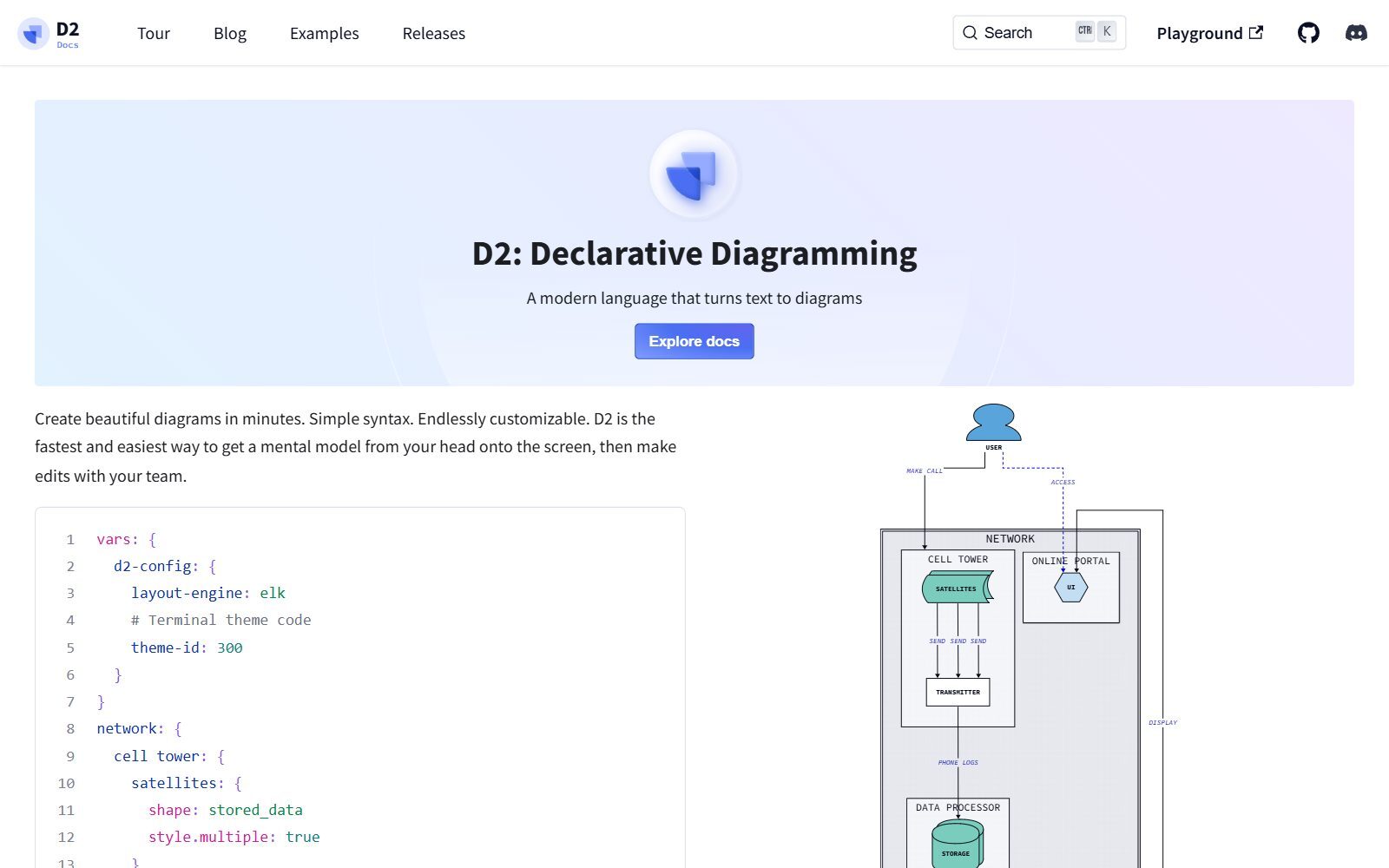
D2 (Declarative Diagramming) is a newer text-to-diagram language from Terrastruct with a short, readable syntax, professional themes and a hand-drawn sketch mode. It is written in Go, licensed under MPL-2.0 and actively developed; version 0.9.0 was released in September 2026. The open-source layout engines are dagre (the default) and ELK. Terrastruct also sells TALA, a closed-source layout engine made for software architecture that needs a licence for commercial use, so check which engine you use.
3. Graphviz: the classic engine for graphs and networks
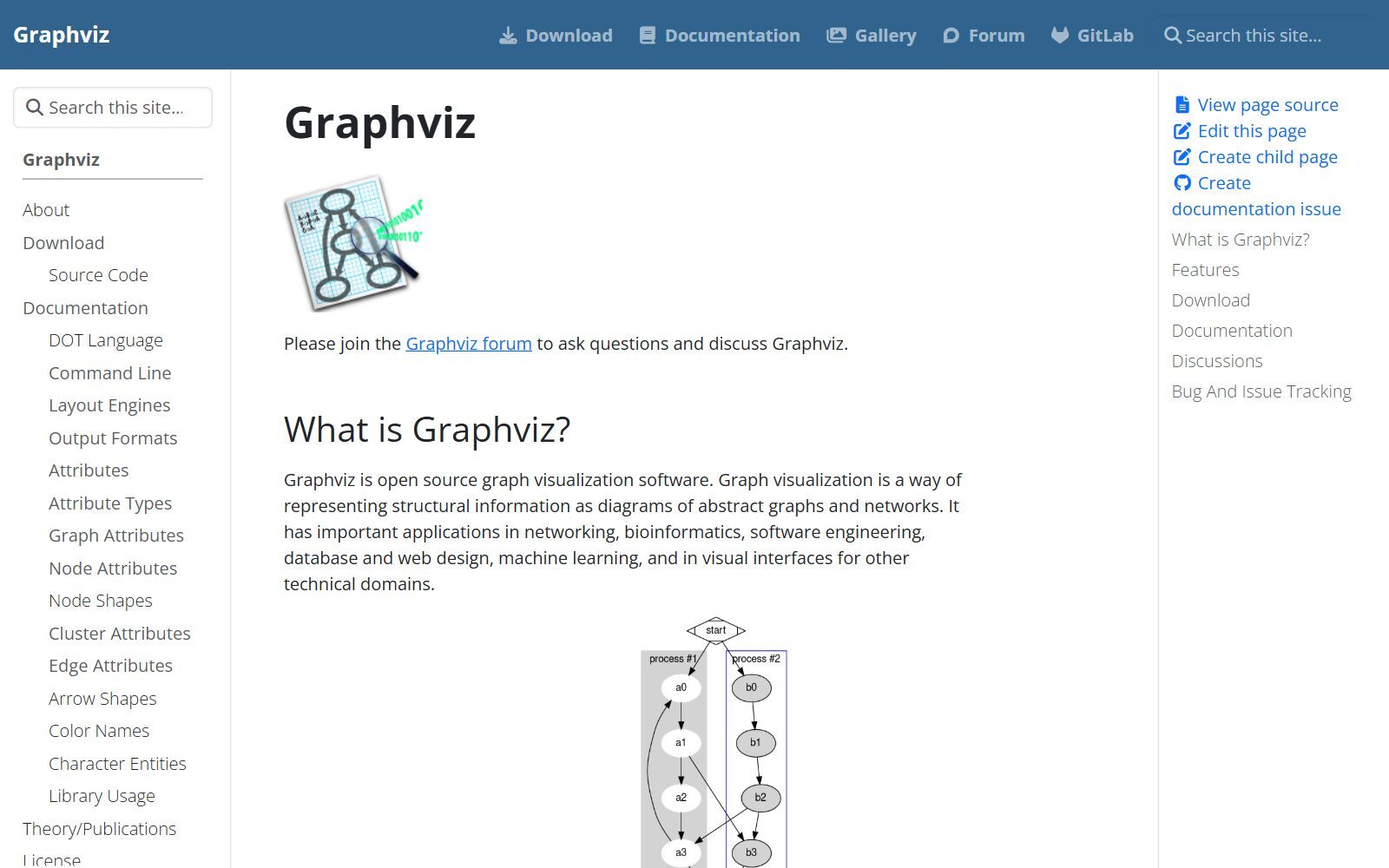
Graphviz is the open-source graph visualisation toolkit many other tools build on; PlantUML itself needs it for class, use-case, component, state and several other diagram types. You describe nodes and edges in the DOT language and Graphviz lays them out automatically, which is ideal for dependency graphs, network maps, state machines and anything with hundreds of nodes. It is released under the Eclipse Public License, runs on Windows, Mac and Linux, and is actively maintained: version 16.1.0 came out in September 2026. It is not a UML tool, so sequence or class diagrams are hard work.
4. Structurizr: the reference tool for the C4 model
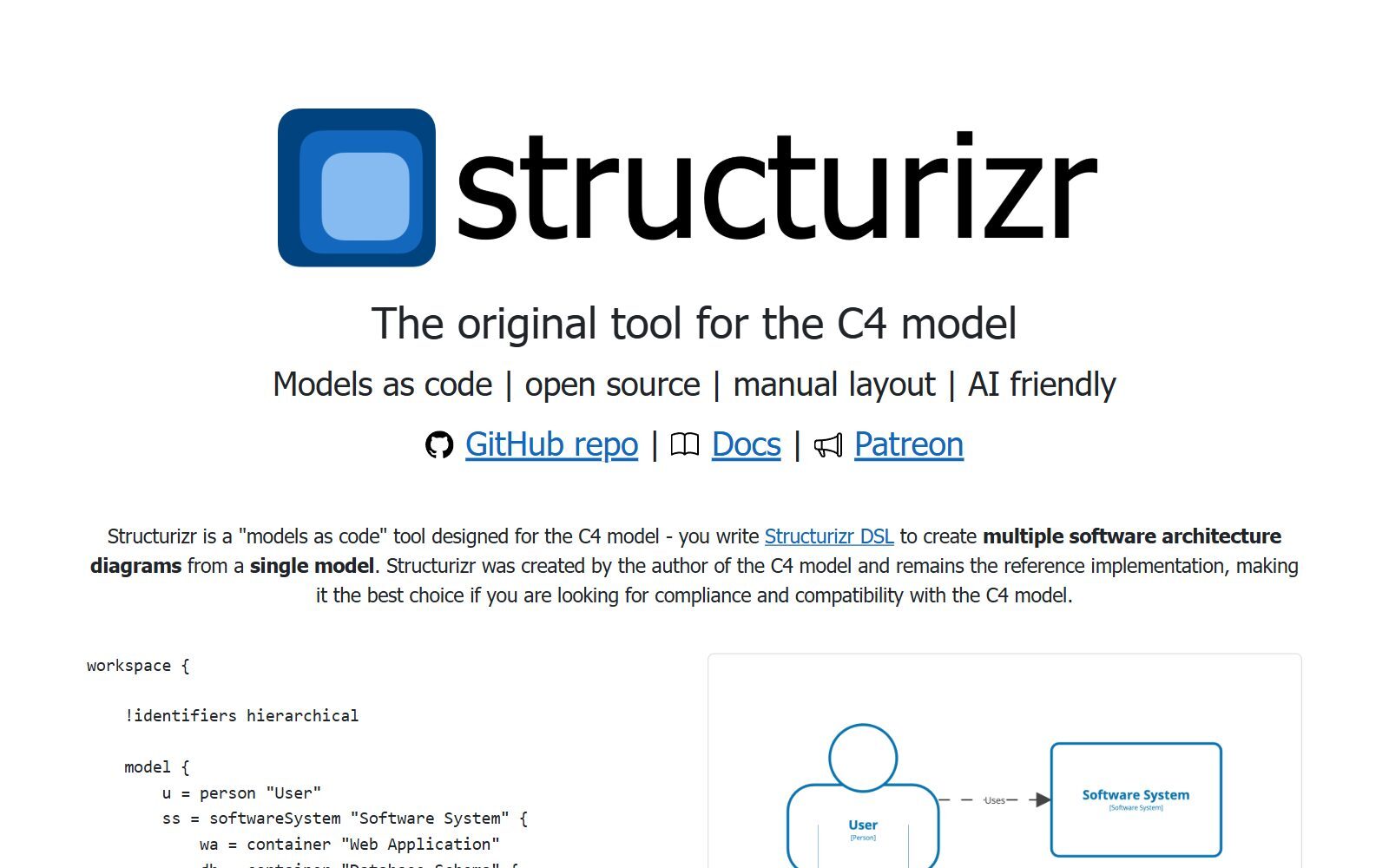
Structurizr is a "models as code" tool from Simon Brown, the creator of the C4 model. Instead of drawing each diagram, you describe your software system once in the Structurizr DSL and generate system context, container, component, deployment and dynamic views from that single model. It can also export views to PlantUML and Mermaid. The code is open source under Apache-2.0 and now lives in one consolidated project (the old Structurizr Lite and CLI repositories are archived). The playground and the local Docker version are free; pre-built server binaries for enterprise use need a paid licence, from £300 a month for up to 20 users, while the open-core server can be built from source.
5. Kroki: one API for PlantUML, Mermaid, D2 and more
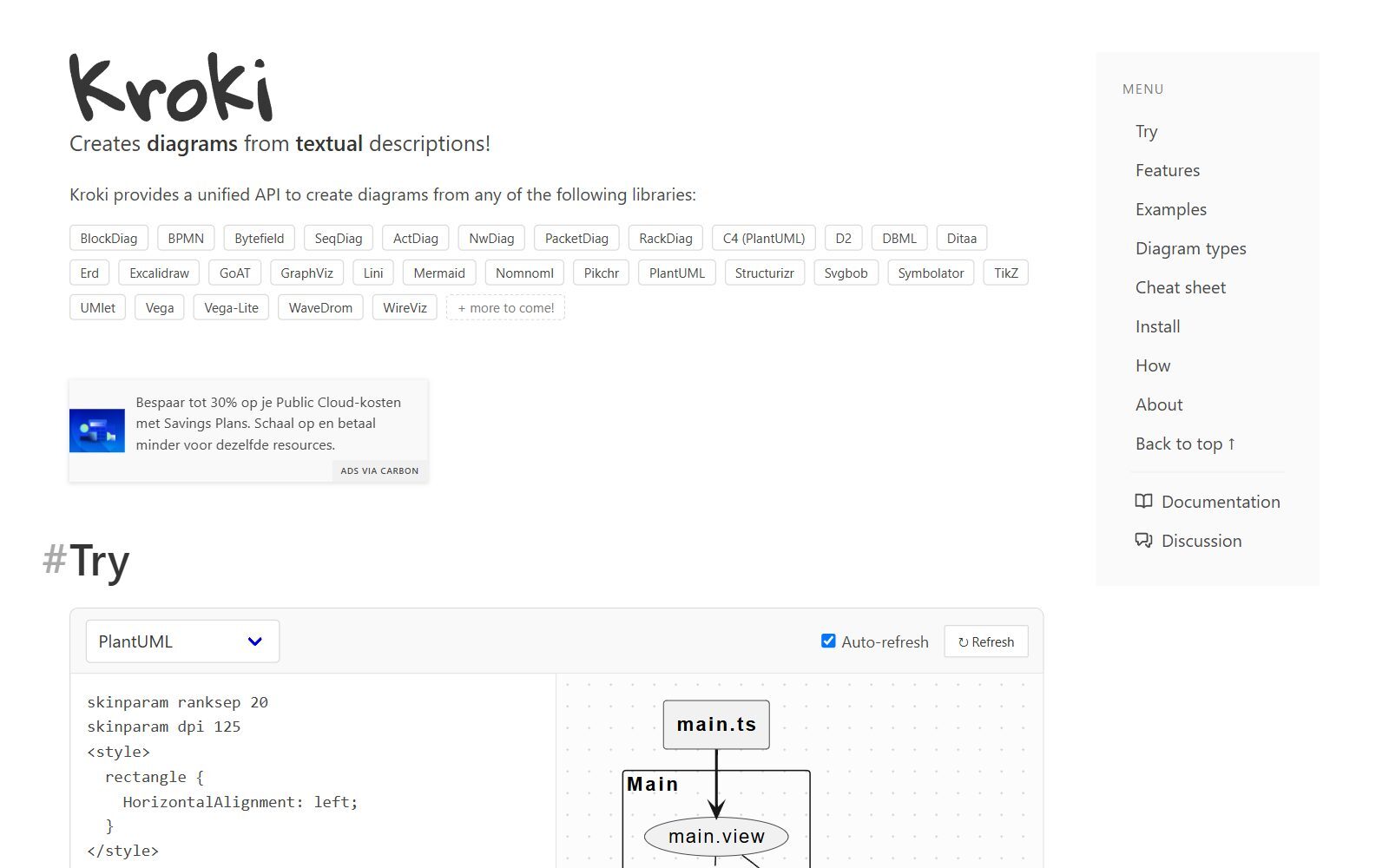
Kroki is not a diagram language but a rendering service: send it text in about 30 languages (PlantUML, C4 with PlantUML, Mermaid, D2, Graphviz, Structurizr, Nomnoml, Pikchr, WaveDrom, BPMN, Excalidraw and more) and it returns SVG, PNG or PDF. That makes it the easiest way to move away from PlantUML gradually, because your old files keep rendering while new diagrams use another language. Kroki is MIT-licensed, runs as a free public service and can be self-hosted with Docker or Kubernetes; version 0.34.0 came out in October 2026.
Validate your startup idea with the unique borrowed authority approach: we publish articles about your product in our blog and you get traffic and testers for your MVP
- Prove Market Demand: See real organic traffic and waitlist conversions
- Unlock High-Potential Keywords: Receive a curated list of top-performing keywords directly from Google Search Console data.
- Estimate Customer Acquisition Cost (CAC): Gain financial foresight with an estimated CAC based on real keyword performance data.
🔗 Start validating your startup now
6. ZenUML: sequence diagrams that read like code
ZenUML focuses on one thing PlantUML is famous for: sequence diagrams. Its syntax looks like method calls, so developers can write a flow almost as they would write the code. The core library is MIT-licensed and actively released (4.11.0 in October 2026), it is also available as a diagram type inside Mermaid, and there is a web app plus plugins for Confluence and JetBrains IDEs.
7. Nomnoml: quick UML-style sketches in the browser
Nomnoml draws class, component and use-case style diagrams from a very small syntax, right in the browser, with no account. It is MIT-licensed and handy for quick sketches in a meeting or a design doc. Development is slower than the tools above: the last tagged release, 1.7.0, dates from December 2024.
8. Pikchr: technical diagrams inside Markdown
Pikchr (pronounced "picture") is a PIC-like language for diagrams in technical documentation, designed to sit in fenced code blocks in Markdown; the SQLite project uses it for its syntax diagrams. It compiles to SVG from a single C file with no dependencies, is safe to run on user input, and is released under the zero-clause BSD licence. It is ideal for precise boxes-and-arrows diagrams, not for UML.
9. WaveDrom: timing diagrams for hardware teams
WaveDrom draws digital timing diagrams and waveforms from a short JSON-style description. If you design chips, boards or embedded systems, it replaces PlantUML's timing diagrams with a dedicated tool. It is MIT-licensed, has a browser and desktop editor, and the rendering engine can be embedded in any web page; version 3.8.0 was published in October 2026.
10. Modelio: full UML modelling when text is not enough
Modelio is an open-source modelling environment for UML, BPMN, SysML and ArchiMate, licensed under GPL-3.0. It is not text-based: you build a model in a desktop app, which suits teams that need the complete UML standard, model validation or enterprise architecture rather than quick diagrams in Git. Version 6.2.0 was released on GitHub in August 2026. The other mature option in this space is Eclipse Papyrus, which since April 2026 also comes as a browser-based Papyrus-Web.
Tools Dropped From This List, and Why
The earlier version of this article recommended several tools that no longer fit an open-source, diagrams-as-code list:
- ArgoUML: no longer maintained in practice. Its original tigris.org site is gone, and the project's own resources page says the existing releases are old and were moved from Tigris.
- StarUML: not open source. It is commercial software with a one-time licence of $129 per device (Standard) or $199 (Professional).
- Inkscape: a good open-source vector editor, but not a diagram tool. For drawing, see our guide to free Illustrator alternatives.
- blockdiag, seqdiag, actdiag and nwdiag: still Apache-licensed and still rendered by Kroki, but the last release (3.0.0) dates from December 2021.
- Draw.io and Excalidraw: both open source (Apache-2.0 and MIT) and actively developed, but you draw with a mouse rather than write text. We compare them in our list of open-source draw.io alternatives.
Which Open-Source PlantUML Alternative Should You Choose?
- Your docs live in GitHub or GitLab: Mermaid, because diagrams render in Markdown with no extra setup.
- You document software architecture: Structurizr if you use the C4 model, D2 if you want good-looking diagrams fast.
- You have hundreds of PlantUML files: Kroki, so old diagrams keep rendering while you convert them one by one.
- You draw dependency graphs or network maps: Graphviz.
- You mostly write sequence diagrams: ZenUML, or Mermaid's own sequence diagrams.
- You need the full UML standard: Modelio or Eclipse Papyrus rather than a text tool.
- You design hardware: WaveDrom for timing diagrams.
How to Move Off PlantUML in 4 Steps
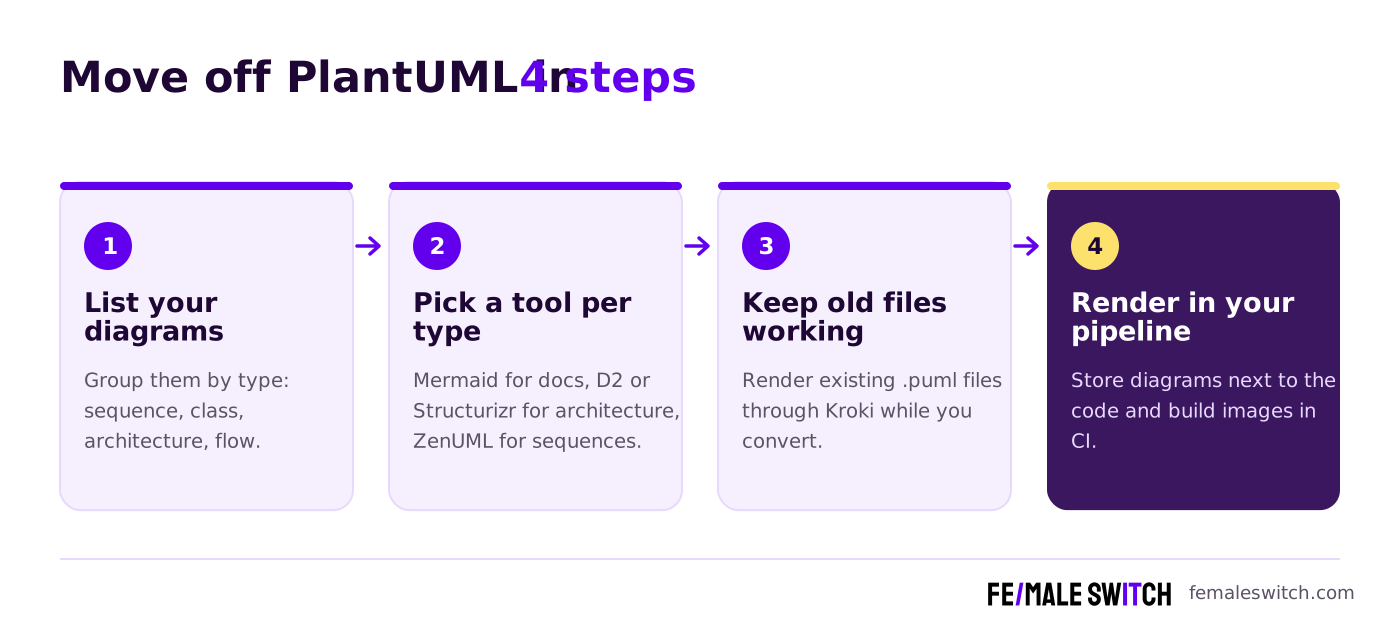
- List your diagrams. Search the repository for .puml files and group them by type: sequence, class, architecture, flow.
- Pick a tool per type. Mermaid for most docs diagrams, D2 or Structurizr for architecture, ZenUML or Mermaid for sequences. One tool rarely fits everything.
- Keep old files working. Point your docs at Kroki so existing PlantUML keeps rendering, and convert diagrams when you next touch them.
- Render in your pipeline. Keep the text files next to the code and generate images in CI, so diagrams change in the same pull request as the code.
How Founders Use Diagrams as Code
For a small startup team, diagrams as code are less about notation and more about speed: an architecture sketch in the README helps a new developer or freelancer get going in an hour instead of a week, and a sequence diagram in a pull request makes a design decision easy to review. If you are a non-technical founder, a simple Mermaid flowchart of your product is also a good way to talk to developers; our guides to understanding software development and developer relations for non-technical founders cover the basics. Building your first version without code? See no-code MVP development.
If your team prefers visual whiteboards to text, compare Lucidchart alternatives, Whimsical alternatives and Miro alternatives. And if you are choosing developer tools more broadly, our list of open-source GitHub Copilot alternatives covers AI coding assistants you can self-host.
FAQ About Open-Source PlantUML Alternatives
What is the best open-source alternative to PlantUML?
For most teams it is Mermaid: it is MIT-licensed, covers the common diagram types and renders directly in GitHub and GitLab Markdown. D2 and Structurizr are better for architecture diagrams.
Is PlantUML still maintained?
Yes. PlantUML is still actively developed, with new releases every few weeks; the latest we saw came out in October 2026. Teams usually switch for Markdown rendering, a lighter setup without Java, or a more modern syntax.
Is Mermaid better than PlantUML?
Mermaid is easier to adopt because GitHub, GitLab and many docs tools render it without a server. PlantUML still covers more UML diagram types in depth, such as detailed class, component and deployment diagrams.
Can I keep my PlantUML files and still switch?
Yes. Kroki renders PlantUML alongside Mermaid, D2, Graphviz and about 30 other languages, so you can convert diagrams gradually.
Which tool is best for C4 architecture diagrams?
Structurizr, the reference tool for the C4 model by its creator Simon Brown. It generates several C4 views from one model and can export them to PlantUML or Mermaid.
Is D2 free for commercial use?
D2 itself is open source under MPL-2.0 and free to use. Only the optional TALA layout engine is closed source and needs a paid licence for commercial use.
Is StarUML open source?
No. StarUML is commercial software sold with a one-time licence per device. Modelio and Eclipse Papyrus are open-source alternatives for full UML modelling.
Is ArgoUML still developed?
Not in any practical sense. The original tigris.org site is gone and the project's own resources page describes the existing releases as old.
What is the best open-source tool for sequence diagrams?
Mermaid and ZenUML. ZenUML's syntax looks like code, and it is also available as a diagram type inside Mermaid.
Where can I find visual, drag-and-drop diagram tools?
Draw.io and Excalidraw are open-source visual editors. See our comparison of open-source draw.io alternatives for more options.
About the Author
Violetta Bonenkamp, also known as MeanCEO, is an experienced startup founder with an impressive educational background including an MBA and four other higher education degrees. She has over 20 years of work experience across multiple countries, including 5 years as a solopreneur and serial entrepreneur. Throughout her startup experience she has applied for multiple startup grants at the EU level, in the Netherlands and Malta, and her startups received quite a few of those. She’s been living, studying and working in many countries around the globe and her extensive multicultural experience has influenced her immensely.

