

Fukuoka Startups to Watch in 2027: 8 Verified Fukuoka Companies in Medical AI, Biotech, OLED, Outdoor Apps and Climate Tech
Fukuoka, the largest city on Japan's southern island of Kyushu, has built its startup scene around a few strong anchors: Kyushu University's research labs in the west of the city, the city-backed Fukuoka Growth Next hub in Daimyo, and a Startup Visa that lets foreign founders prepare a company from inside Japan. The 2026 version of this article listed ten names, but most did not hold up: several are based in Tokyo or Kanagawa, one was described as an aquaculture company when it is an AI research lab, and for two we found no website at all. For this 2027 edition we started again and checked every company on its own website, or in an official programme release, in November 2026: that it still operates, that it gives Fukuoka as its head office, what it builds and what it publishes about its funding. What happened to the old names is listed near the end.
Quick answer: the Fukuoka startups to watch in 2027 are Medmain (AI for pathology), KAICO (proteins and vaccines made in silkworms), Kyulux (next-generation OLED materials), KOALA Tech (organic semiconductor lasers), YAMAP (a hiking and outdoor app), Tensor Energy (AI for renewable power plants and batteries), aiESG (product-level ESG analysis) and Aakel (carbon management software and consulting). Four of them grew out of Kyushu University. For support, start with Fukuoka Growth Next and its STARTUP CAFE, and, if you are not Japanese, Fukuoka City's Startup Visa.
Are you getting customers from ChatGPT yet?
More and more traffic is coming from Perplexity, ChatGPT, Grok and other AI tools.
👉 Rank on ChatGPT
Why Fukuoka Matters for Founders in 2027
The companies below share a pattern. Kyushu University's Ito campus and the Fukuoka Industry-Academia Symphonicity (FiaS) building next to it house three of them, Kyulux, KOALA Tech and KAICO, and aiESG and Medmain also have Kyushu University roots. The consumer and climate companies sit in the city centre, in Hakata and Tenjin, close to Fukuoka Growth Next, the public-private startup facility in Daimyo. In June 2026 five of the eight companies on this list were among the ten chosen for Fukuoka Growth Next's High Growth Program, its selective programme for companies that could become leading Fukuoka startups.
We removed the old article's claims that Fukuoka is Japan's leading startup hub and "one of the most entrepreneurial cities", and its StartupBlink link, because it gave no primary source. For the wider picture in Asia, compare our lists of startups to watch in China and Ulaanbaatar, and our guide to the best countries for AI startups.
Fukuoka Startups to Watch in 2027 Compared
Sources: each company's official website and news page, and Fukuoka Growth Next's June 2026 release, checked 2 November 2026.
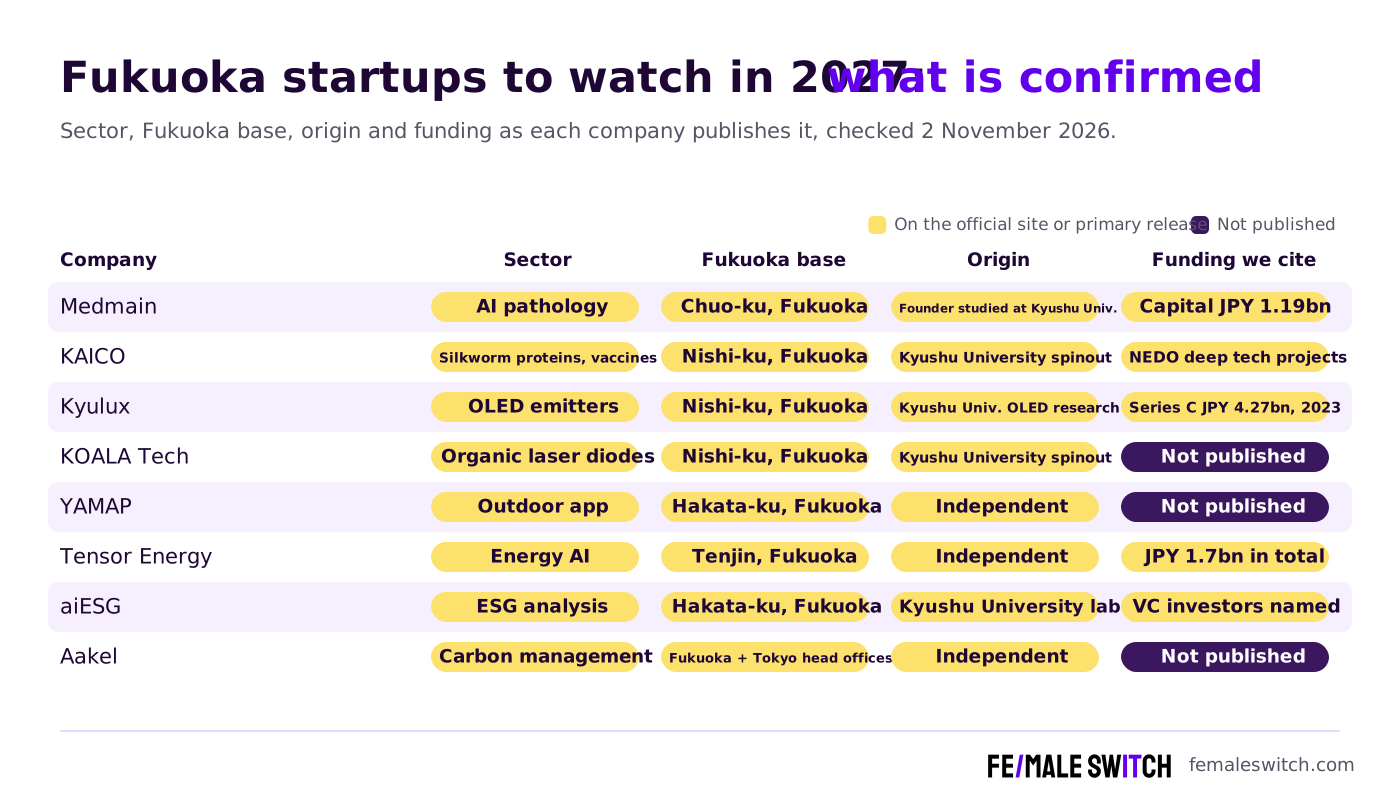
The Fukuoka Startups to Watch in 2027
1. Medmain: AI for pathology diagnosis
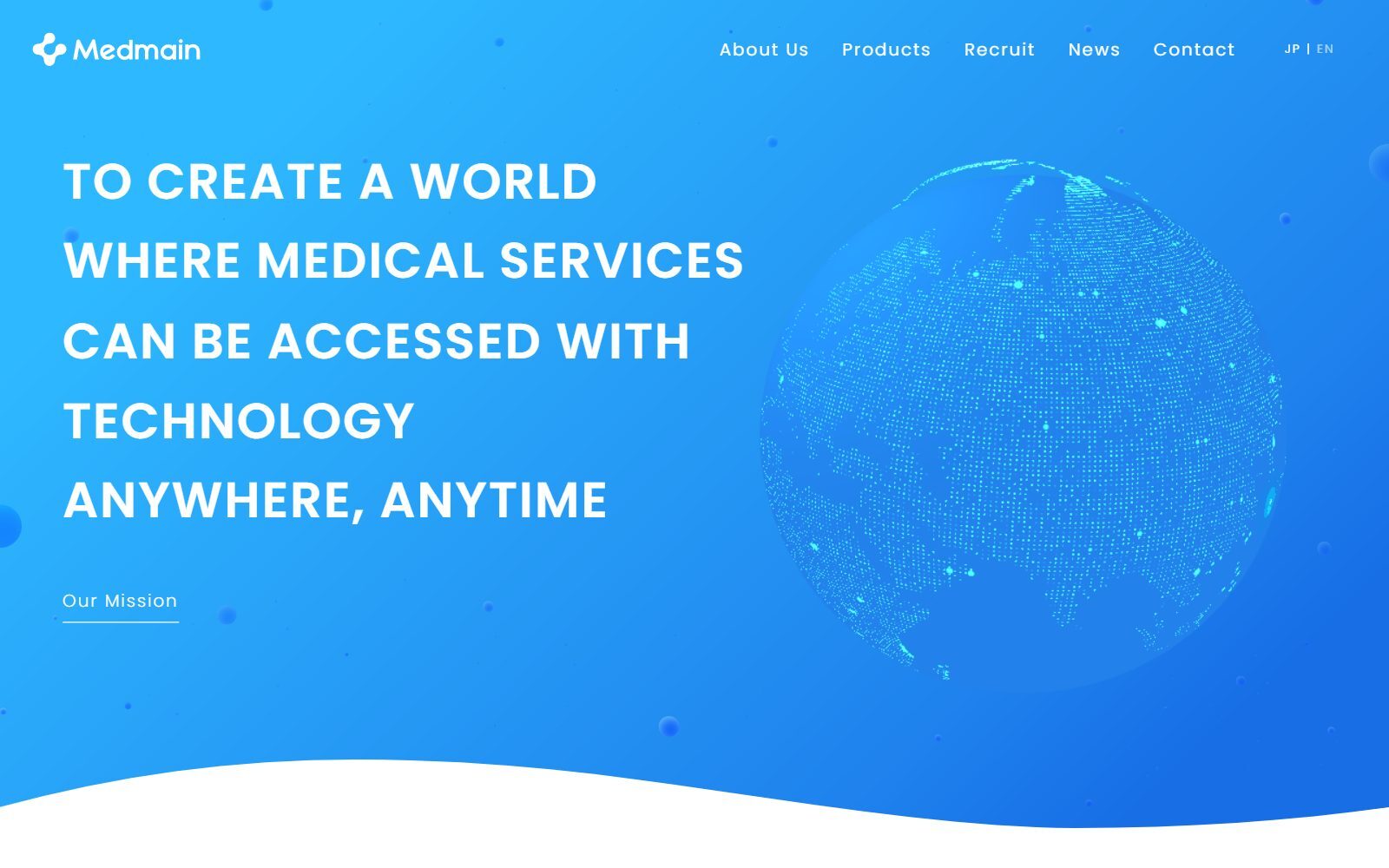
Medmain develops PidPort, a system that uses deep learning to screen pathology images of tissue and cells, adds a telepathology function so that slides can be sent to pathologists elsewhere for diagnosis, and stores the digitised specimens in the cloud. Its site notes that the features available depend on the country. The company was founded in January 2018 by its CEO, Osamu Iizuka, who studied at Kyushu University's School of Medicine and worked as a software engineer before starting it, and its company page lists an office in Chuo-ku, Fukuoka, plus offices in Tokyo and Palo Alto, California, and capital of JPY 1.19 billion including capital reserve. In April 2026 it published research on AI that scores the Ki-67 labeling index, a common marker in cancer pathology, in the journal Diagnostics.
Lesson for founders: Medmain pairs its AI with a remote diagnosis network. A workflow tool that saves time today makes it easier to sell the AI that comes with it.
Best for: founders in medical AI, digital pathology and health software.
2. KAICO: proteins and vaccines made in silkworms
KAICO is a Kyushu University venture founded in April 2018 that produces hard-to-make proteins inside silkworms, using a silkworm-baculovirus expression system based on the university's own baculovirus genome and silkworm strains. It sells contract protein expression and research reagents, and develops supplements, oral vaccines and feed additives for animals as well as human vaccines. Its head office and GMP production site are in Nishi-ku, Fukuoka, with a second lab in Kurume. Its company page lists two NEDO deep tech startup support projects for an oral pig vaccine and feed additive, one for 2023 to 2025 and one for mass-production trials from 2025 to 2028. In March 2026 it said its KAICO Powder for Pig feed additive was expanding across Asia after Vietnam, and in June 2026 it signed a distribution agreement with Reber Genetics for Taiwan.
Lesson for founders: KAICO earns money from lab services and feed additives while its vaccines move through development. Selling something simple from your platform early keeps a deep tech company going.
Best for: founders in biotech, animal health and university spinouts.

Boost Your SEO by Getting Featured in Our Blogs and get a backlink.
We publish content about startups, education, tech, funding, etc. that ranks well not only in Google but also in Perplexity, ChatGPT, Grok and other AI tools.
👉 Get featured now!
3. Kyulux: next-generation OLED materials
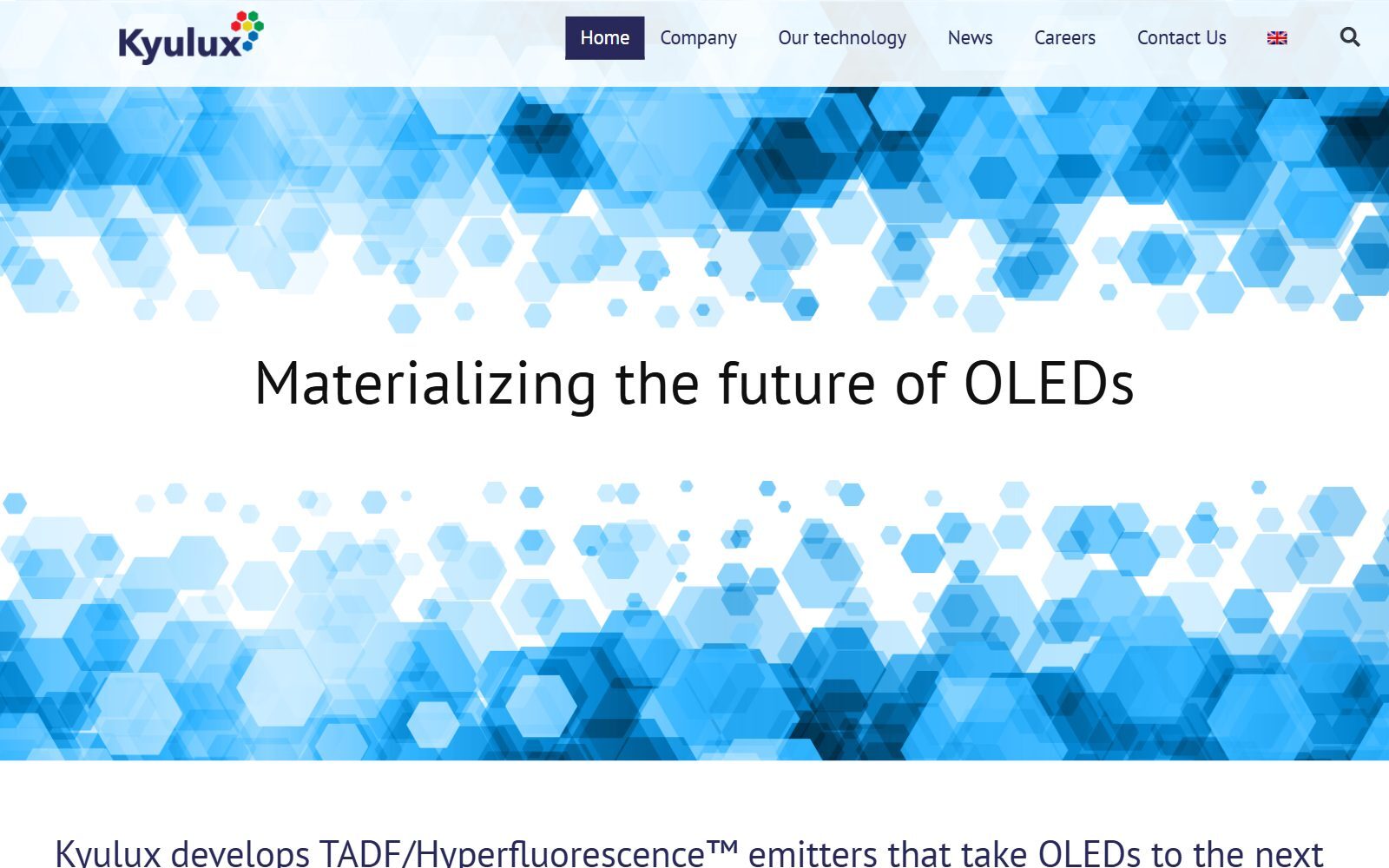
Kyulux develops TADF and Hyperfluorescence emitters, materials meant to give OLED displays higher efficiency, purer colours and longer lifetimes, including the efficient, long-lasting blue emitter the industry is still looking for. It works with a team led by Professor Chihaya Adachi of Kyushu University's OLED research centre. Founded in March 2015, it gives its head office in the FiaS building in Nishi-ku, Fukuoka, has a subsidiary in Boston and reported 85 employees at the end of September 2025. Its news page lists a Series C round of JPY 4.27 billion in December 2023, a capital and business alliance with Nippon Soda in November 2024 to set up mass production of its materials, and a licence agreement with SK Materials JNC in South Korea in February 2026.
Lesson for founders: Kyulux licenses its materials to large chemical makers instead of building every factory itself. Licensing can take a materials startup to scale much faster than its own plants would.
Best for: founders in advanced materials, displays and deep tech hardware.
4. KOALA Tech: organic semiconductor lasers for wearables
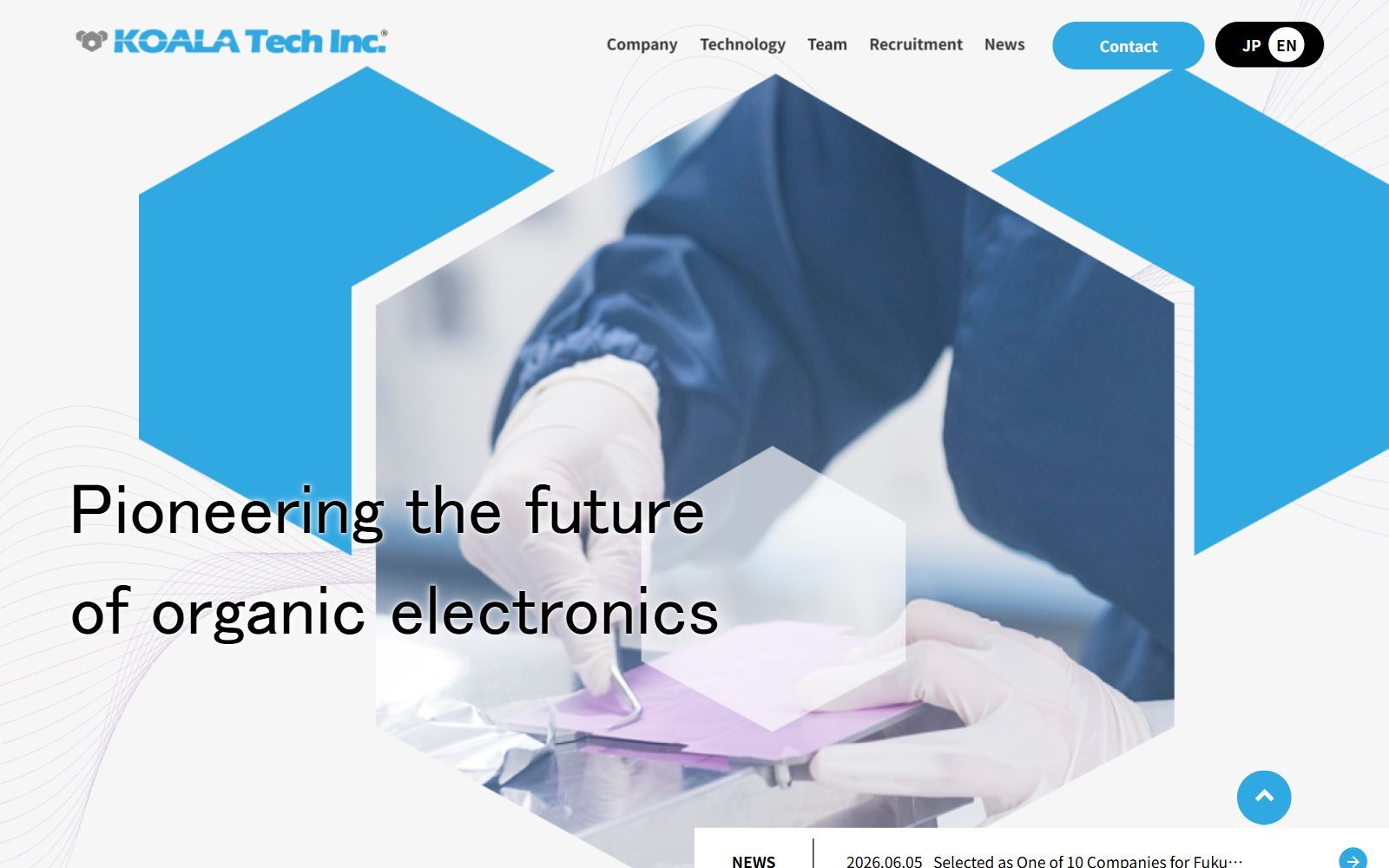
KOALA Tech is a Kyushu University startup founded in March 2019 by Professor Chihaya Adachi and others to commercialise the organic semiconductor laser diode (OSLD), a laser built on the same device structure as an OLED. It sees uses in displays for smart glasses and other wearables and in sensing. Its head office is in the FiaS building in Nishi-ku, Fukuoka. Its CTO, Fatima Bencheikh, is a co-founder who came from Kyushu University's organic photonics research centre and led the company as CEO from April 2023; its current CEO is Masayuki Urushiyama. Its history lists joint development with Mitsui Chemicals from 2021 and with Sony Group from October 2021, and selection as one of the first 33 J-Startup KYUSHU companies in April 2022. In June 2026 it was chosen for Fukuoka Growth Next's High Growth Program.
Lesson for founders: KOALA Tech found large partners (a chemical maker and an electronics group) years before a product. Joint development deals give a hardware startup both money and a future customer.
Best for: founders in photonics, AR and VR hardware, and women-led deep tech.
5. YAMAP: the hiking app built in Fukuoka
YAMAP is a hiking and outdoor app that shows your position on a map even without mobile signal, records routes and photos and lets hikers share them. Around the app the company runs YAMAP STORE, outdoor insurance through a group company, YAMAP MAGAZINE and a furusato nozei (hometown tax donation) service. Its company page gives its head office in Hakata-ku, Fukuoka, a Tokyo branch, 92 employees, CEO Yoshihiko Haruyama and a service launch date of 1 March 2013. It lists selection for METI's national J-Startup programme in October 2021, a Minister of Land, Infrastructure, Transport and Tourism award at the 5th Japan Service Awards, and a Google Play Best of 2025 award in the wearable category in November 2025. It does not publish funding amounts on its site.
Lesson for founders: YAMAP turned a free app into several paid businesses (a store, insurance, content) that serve the same hikers. Once you have an engaged community, ask what else they already pay for.
Best for: founders in consumer apps, outdoor and travel, and community businesses.
Boost Your SEO by Publishing Your Startup Press Release with us.
We publish content about startups, education, tech, funding, etc. that ranks well not only in Google but also in Perplexity, ChatGPT, Grok and other AI tools.
👉 Publish Press Release
6. Tensor Energy: AI for renewable power plants and batteries
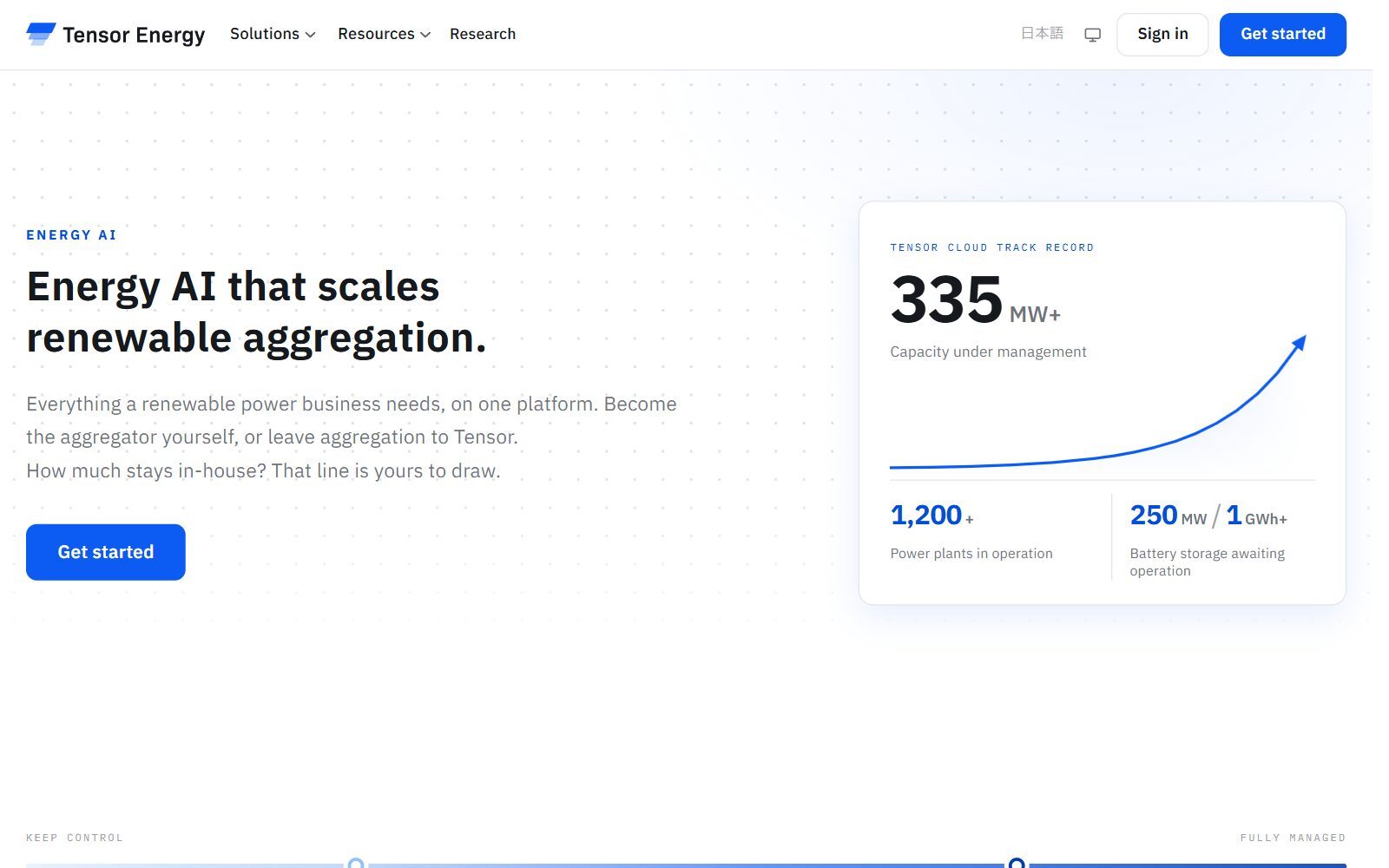
Tensor Energy sells software and services that forecast renewable power generation, bid into electricity markets and monitor plants, so that solar and battery owners can either act as their own aggregator or hand aggregation to Tensor. It also helps with buying and selling power plants. Founded in November 2021, it gives its address in ONE FUKUOKA BLDG. in Tenjin, Chuo-ku, Fukuoka. Its company page says it has raised JPY 1.7 billion in total and has a team of 19, and its homepage lists more than 335 MW of capacity under management, more than 1,200 power plants in operation and 250 MW / 1 GWh of battery storage awaiting operation. In June 2026 it was chosen for Fukuoka Growth Next's High Growth Program.
Lesson for founders: Tensor offers the same platform as software for customers who want control and as a full service for those who do not. Two ways to buy can widen a B2B market without a second product.
Best for: founders in climate tech, energy software and AI for markets.
7. aiESG: ESG analysis for products and services
aiESG analyses the environmental, social and governance impact of individual products and services across their supply chains, combining AI with research from the lab of Professor Shunsuke Managi at Kyushu University, where the company started. Professor Managi is its representative director and Daikichi Seki is its CEO. Founded in July 2022, it gives its head office near Hakata Station in Hakata-ku, Fukuoka, and a Tokyo branch; its company page listed 32 employees on 1 July 2025 and names its shareholders, including JAFCO Group, Miyabi Ventures, Nissay Capital, Kampo NEXT Partners and FFG Venture Business Partners, and clients such as Bridgestone, Tokyo Gas and Taisei. It does not publish round amounts. In June 2026 it was chosen for Fukuoka Growth Next's High Growth Program.
Lesson for founders: aiESG turned years of academic research into a service that large companies need for disclosure rules. Regulation can create the demand that a research-based startup needs.
Best for: founders in sustainability data, ESG software and academic spinouts.
8. Aakel: carbon management for companies and cities
Aakel is a climate tech company that offers software for visualising greenhouse gas emissions and simulating reductions, EV smart charging and fleet management, and consulting on decarbonisation, energy cost savings and climate disclosure (including CDP), under its CarbOne brand. Founded in August 2018, it lists head offices in both Fukuoka (Daimyo, Chuo-ku) and Tokyo, CEO Ryoji Miyawaki and 60 employees as of 28 August 2026. Fukuoka Growth Next describes it as a Fukuoka-born startup and chose it for its High Growth Program in June 2026. Its news page shows public sector work, such as a July 2026 contract to run Saitama Prefecture's carbon neutral working group. It does not publish funding amounts.
Lesson for founders: Aakel sells both software and consulting to the same customers. In a young market, consulting pays the bills and teaches you what the software must do.
Best for: founders in climate tech, EV infrastructure and B2B software.
Where Fukuoka Startups Get Support
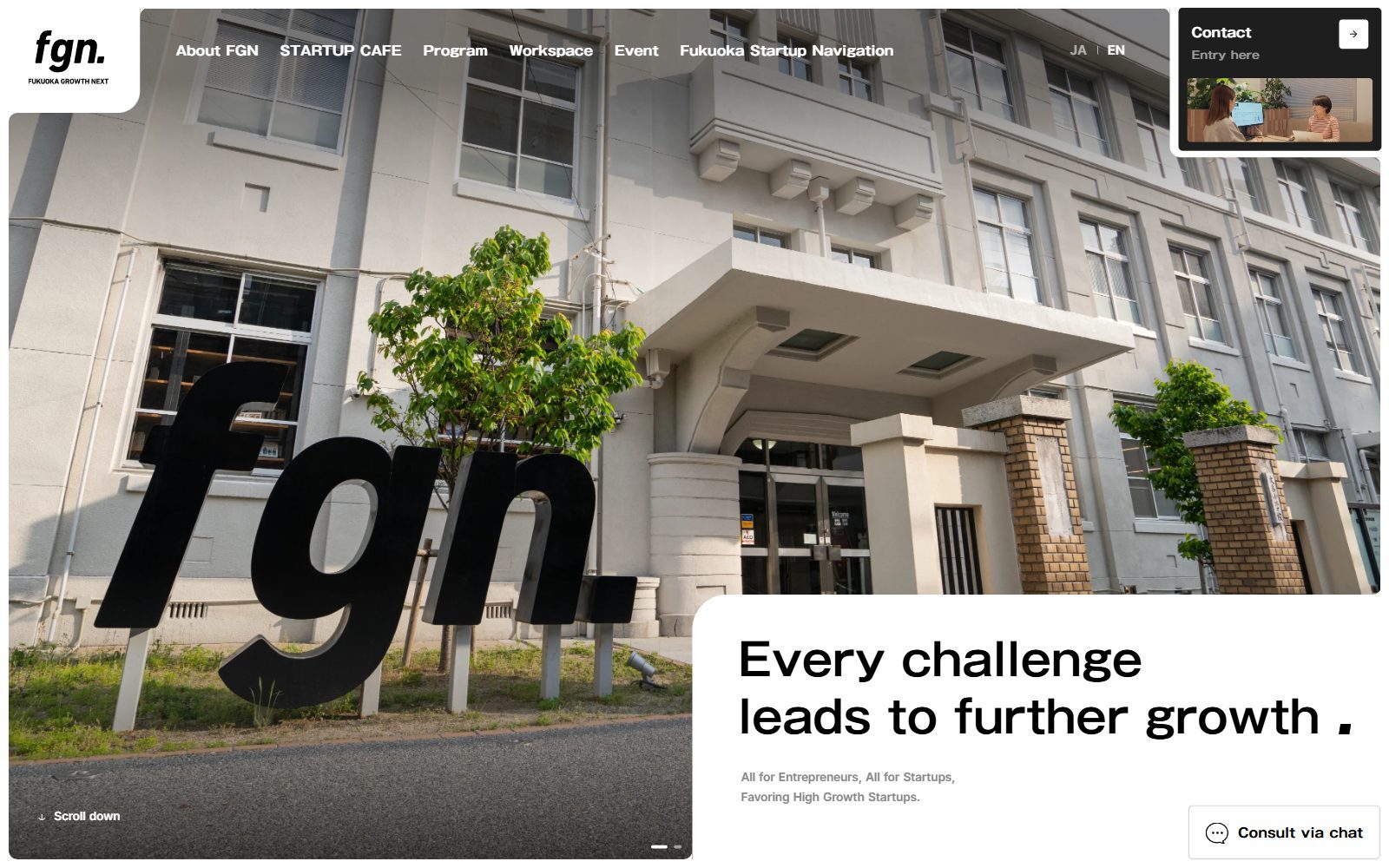
- Fukuoka Growth Next (FGN): the city's public-private startup facility at 2-6-11 Daimyo, Chuo-ku. It offers coworking, team rooms and private offices, regular Growth Pitch events (the 117th was held in October 2026) and selective programmes: the High Growth Program for companies that could become leading Fukuoka startups (its 2026 cohort of ten was announced on 5 June 2026), the STARTUP ELITE Bootcamp and the Fukuoka Social Startup Academy.
- STARTUP CAFE: FGN's consultation desk for anyone thinking about starting a business. Its experts help before and after founding, from first questions and incorporation to expert referrals, hiring, overseas expansion and fundraising.
- Fukuoka City Startup Visa: the city reviews a foreign founder's business plan in advance and can issue a certificate that leads to a "Designated Activities" status of residence for up to two years, while the founder meets the requirements of the Business Manager visa. It covers knowledge-based industries, health and medical, environment and energy, logistics and some trade businesses. Applicants first talk to Global Business Support (GBS), the city's one-stop desk for foreign entrepreneurs; the city charges 300 yen per certificate.
- J-Startup KYUSHU: a selection programme of the Ministry of Economy, Trade and Industry's Kyushu bureau for promising startups in the region. KOALA Tech says it was one of the first 33 companies chosen, in April 2022. YAMAP and Kyulux were also selected for the national J-Startup programme.
- Kyushu University: the research base behind KAICO, Kyulux, KOALA Tech and aiESG. Three of them work from the FiaS building and the Ito Lab+ research building next to the Ito campus.
- National deep tech money: KAICO and KOALA Tech both list NEDO support. For more options, see our guides to startup incubators in Asia and deep tech accelerators.
Fukuoka Companies From the Old List That Changed or Were Removed
The 2026 version of this article listed ten companies. Here is what we found when we checked each one in November 2026:
- Animoca Brands KK: the Japanese arm of Animoca Brands gives its location as Shibuya, Tokyo, not Fukuoka.
- Fimecs: a drug discovery company (not an IoT company, as the old article said) whose site gives an address in Fujisawa, Kanagawa.
- SakanaAI: Sakana AI is a Tokyo AI research company, not an aquaculture startup.
- Kyoto Fusioneering: develops systems for fusion power plants, not general renewable energy, and we found no Fukuoka base.
- SimpleForm and Soundraw: real companies, but we found no Fukuoka base on their websites.
- QTnet Ventures: we found no company with this name. QTnet itself is an established Kyushu telecom company (BBIQ broadband and QTmobile), not a startup.
- Kailas Robotics and GreenWave Photonics: we found no official website and no company matching the old description, so we removed them.
- Medmain: stays on the list, but we removed the funding figure the old article gave, because the company does not publish it.
An established Fukuoka deep tech company worth knowing: iQPS, which builds the QPS-SAR small radar satellites that can see through clouds and at night, has its head office in Chuo-ku, Fukuoka. It is no longer an early-stage startup (its parent, QPS Holdings, has an investor relations site), but it shows how far a Kyushu University spinout can grow. Its 20th satellite was scheduled to launch on a Rocket Lab Electron rocket on or after 3 November 2026.
Which Fukuoka Startup Should You Learn From?
- You build medical or health AI: study Medmain, which sells a workflow (telepathology) with its AI.
- You build biotech: study KAICO, which earns from lab services and feed additives while vaccines mature.
- You build materials or hardware: study Kyulux's licensing deals and KOALA Tech's joint development with large partners.
- You build a consumer app: study YAMAP, which added a store, insurance and content around one community.
- You build climate tech: study Tensor Energy (software or full service) and Aakel (software plus consulting).
- You turn research into a company: study aiESG, which grew from a university lab into a service for large corporations.
- You are just starting: book a STARTUP CAFE consultation at Fukuoka Growth Next and, if you are a foreign founder, ask Global Business Support about the Startup Visa.
How Founders Use the Fukuoka Startup Scene
The pattern on this list is clear: university research or a strong local community first, Fukuoka Growth Next programmes next, and then Japanese venture capital and corporate partners. Compare investors in our guide to early-stage VCs in Asia and deep tech VCs. Women founders can also look at our lists of grants for women entrepreneurs in Asia and accelerators for female entrepreneurs.
Many of these companies sell to specialists, so meet them where they gather: see our calendars of startup events in Tokyo, deep tech startup events, health tech startup events and climate tech startup events, and compare with founders in Auckland.
Research-heavy startups often forget marketing until late. Start early: publish your startup press release, and write about your work with the F/MS AI SEO Tool or the AI SEO Blog so customers, investors and AI assistants can find you.
Is your startup on ChatGPT?
More and more traffic is coming from Perplexity, ChatGPT, Grok and other AI tools.
👉 Rank on ChatGPT
FAQ About Fukuoka Startups in 2027
Which Fukuoka startups should I watch in 2027?
Our verified list: Medmain, KAICO, Kyulux, KOALA Tech, YAMAP, Tensor Energy, aiESG and Aakel. Each still operates and gives Fukuoka as its head office (Aakel lists head offices in both Fukuoka and Tokyo) on its own website, checked in November 2026.
Which Fukuoka startup has raised the most published funding?
Kyulux reported a Series C round of JPY 4.27 billion in December 2023. Tensor Energy says it has raised JPY 1.7 billion in total. The other companies either publish no amounts or list investors and grants without figures.
Are there deep tech startups in Fukuoka?
Yes. Kyulux (OLED materials), KOALA Tech (organic semiconductor lasers) and KAICO (proteins and vaccines made in silkworms) all grew out of Kyushu University research and work from the research buildings next to its Ito campus.
Are there health tech startups in Fukuoka?
Medmain develops PidPort, an AI system for pathology images with telepathology and cloud storage, and KAICO develops oral vaccines for animals and humans.
Are there climate tech startups in Fukuoka?
Tensor Energy runs AI forecasting and trading for renewable plants and batteries, aiESG analyses the ESG impact of products and services, and Aakel offers carbon management software and decarbonisation consulting.
What is Fukuoka Growth Next?
The city's public-private startup facility in Daimyo, Chuo-ku. It offers workspace, the STARTUP CAFE consultation desk, pitch events and programmes such as the High Growth Program, whose 2026 cohort of ten companies was announced on 5 June 2026.
How does the Fukuoka Startup Visa work?
Fukuoka City reviews a foreign founder's business plan and can issue a certificate leading to a "Designated Activities" status of residence for up to two years, while the founder meets the Business Manager visa requirements. Start with the city's Global Business Support desk.
What is J-Startup KYUSHU?
A programme of the Ministry of Economy, Trade and Industry's Kyushu bureau that selects promising startups in the region. KOALA Tech says it was among the first 33 companies chosen in April 2022.
What happened to the companies on the old list?
Animoca Brands KK, Sakana AI and Fimecs are based in Tokyo or Kanagawa, Kyoto Fusioneering, SimpleForm and Soundraw showed no Fukuoka base, QTnet is an established telecom company, and we found no official site for Kailas Robotics or GreenWave Photonics. Medmain stays.
Where can I get a backlink by writing about my startup?
You can publish a guest post in one of the Fe/male Switch startup blogs, which rank in Google and in AI tools. Get a quality backlink.
About the Author
Violetta Bonenkamp, also known as MeanCEO, is an experienced startup founder with an impressive educational background including an MBA and four other higher education degrees. She has over 20 years of work experience across multiple countries, including 5 years as a solopreneur and serial entrepreneur. Throughout her startup experience she has applied for multiple startup grants at the EU level, in the Netherlands and Malta, and her startups received quite a few of those. She’s been living, studying and working in many countries around the globe and her extensive multicultural experience has influenced her immensely.

