
TL;DR: Open EU funding calls for startups are published in four places: the EU Funding & Tenders Portal (direct EU grants and, under a separate filter, cascade calls from EU-funded projects), national and regional agencies (cohesion money and co-funded programmes like Eurostars), the programme sites of EIT communities and partnerships, and the websites of cascade funding projects. No single list catches everything. Below: a source map, the exact portal filters to use, a 15-minute weekly routine, a scored triage worksheet, a copyable call tracker and a worked founder example.
Open EU funding calls are easy to find and easy to miss at the same time. The Commission publishes hundreds of topics a year, yet most founders hear about a call from a LinkedIn post two days before it closes, because calls live in different places and use different words for the same thing.
This guide replaces our old monthly "newest EU funding calls" round-ups from 2025. Those lists went out of date within weeks. The method below doesn't: once you set it up, it finds the next call for you. For a monthly list of fresh calls, read Mean CEO's EU Funding News, which picks out new calls for startups every month.
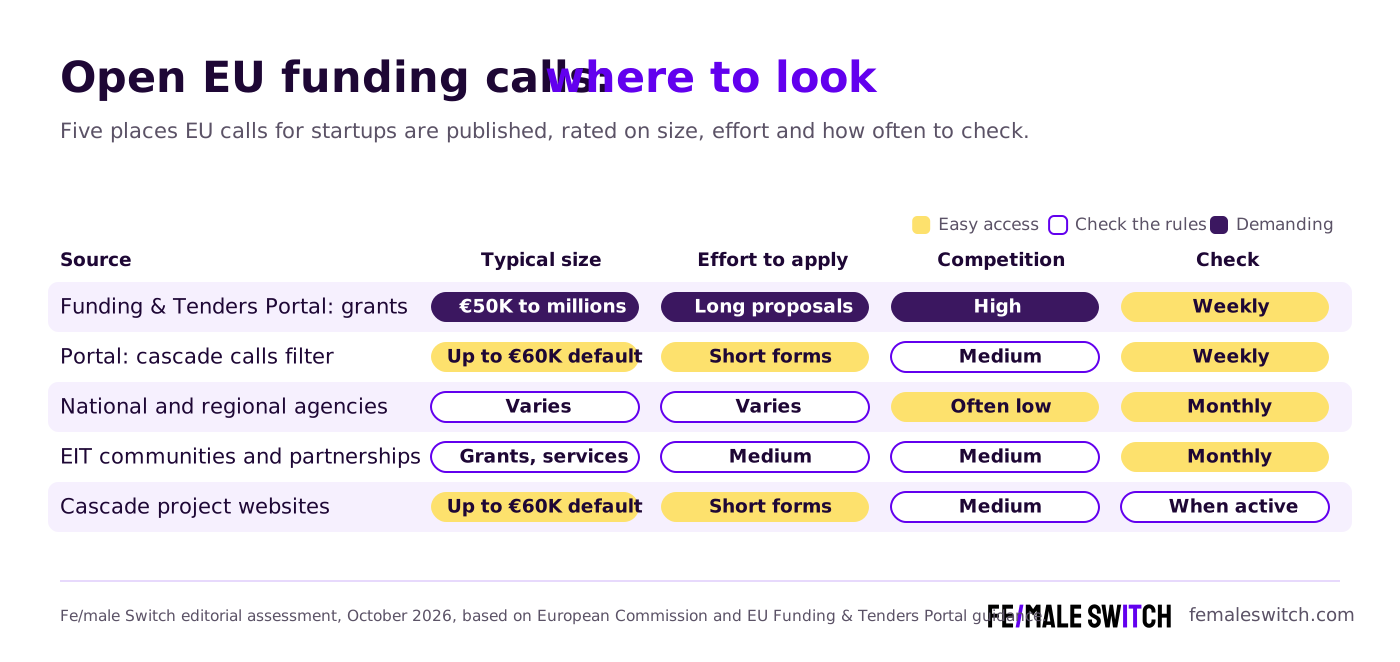
Where open EU funding calls are published

EU money reaches startups through two management routes, and each publishes calls in its own place.
- Direct management: the Commission and its agencies (EISMEA, CINEA, the European Research Executive Agency and others) run programmes such as Horizon Europe, the European Innovation Council, Digital Europe, LIFE and the Single Market Programme. Their calls sit on the EU Funding & Tenders Portal.
- Shared management: cohesion funds such as the European Regional Development Fund are handed to national and regional authorities, which design their own calls. These never appear on the Portal. You find them on your national or regional agency's website.
On top of that come two layers that most founders overlook: cascade funding calls, where EU-funded projects pass part of their grant to startups through their own open calls, and co-funded programmes like Eurostars, run by the Eureka network with national funding agencies.
How to search the Funding & Tenders Portal properly
The Portal is the single most important source, and most people use it badly: they type "startup" into the search box and get hundreds of results, half of them closed or irrelevant. Use the filters instead.
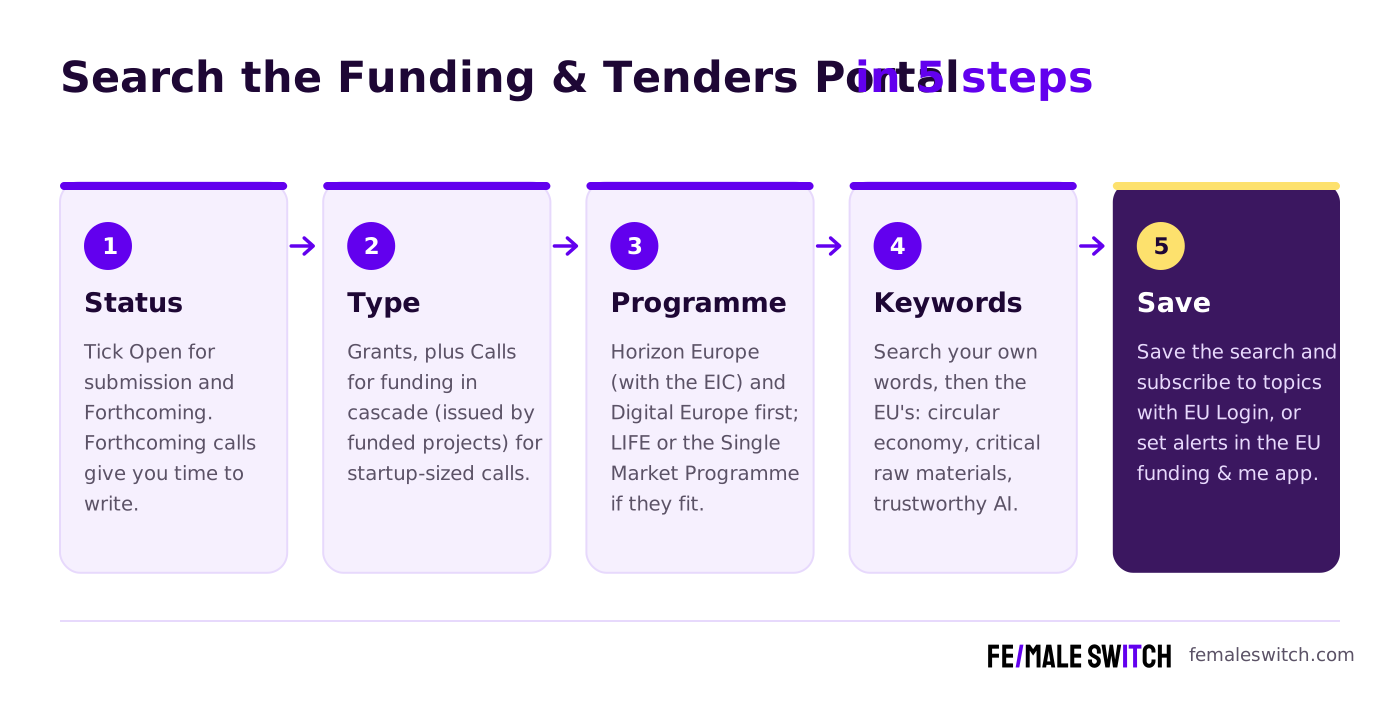
- Filter by status. Tick "Open for submission" and "Forthcoming". Forthcoming calls are the ones you can actually prepare for. A call that opens next month and closes in four months gives you time to write; one closing in nine days usually doesn't.
- Filter by type of call. The Portal separates grants from calls for tenders (procurement). For cascade calls, the Portal's own help pages point to the type filter "Calls for funding in cascade (issued by funded projects)". This one filter turns up most of the startup-sized calls in the EU.
- Filter by programme. Start with Horizon Europe (which includes the European Innovation Council) and Digital Europe. Add LIFE for climate and environment, and the Single Market Programme for SME support.
- Search with your own words, then theirs. Try your technology ("battery recycling"), then the EU's vocabulary ("circular economy", "critical raw materials").
- Read the full topic page. Check the type of action, the budget per project, whether a consortium is required and the deadline model (single stage or two stage).
- Save the search and follow the topics you like. With an EU Login account you can save searches and subscribe to topic pages, so updates land in your inbox. The Commission's "EU funding & me" app, launched in September 2025, offers the same searches and alerts on a phone.
The Commission adopted the main Horizon Europe Work Programme 2026–2027 on 11 December 2025. It is the last work programme of the 2021–2027 period, so many topics listed now close in 2026 or 2027.
The 15-minute weekly routine
This routine takes a quarter of an hour once a week and two hours once a month.
Which calls fit your startup
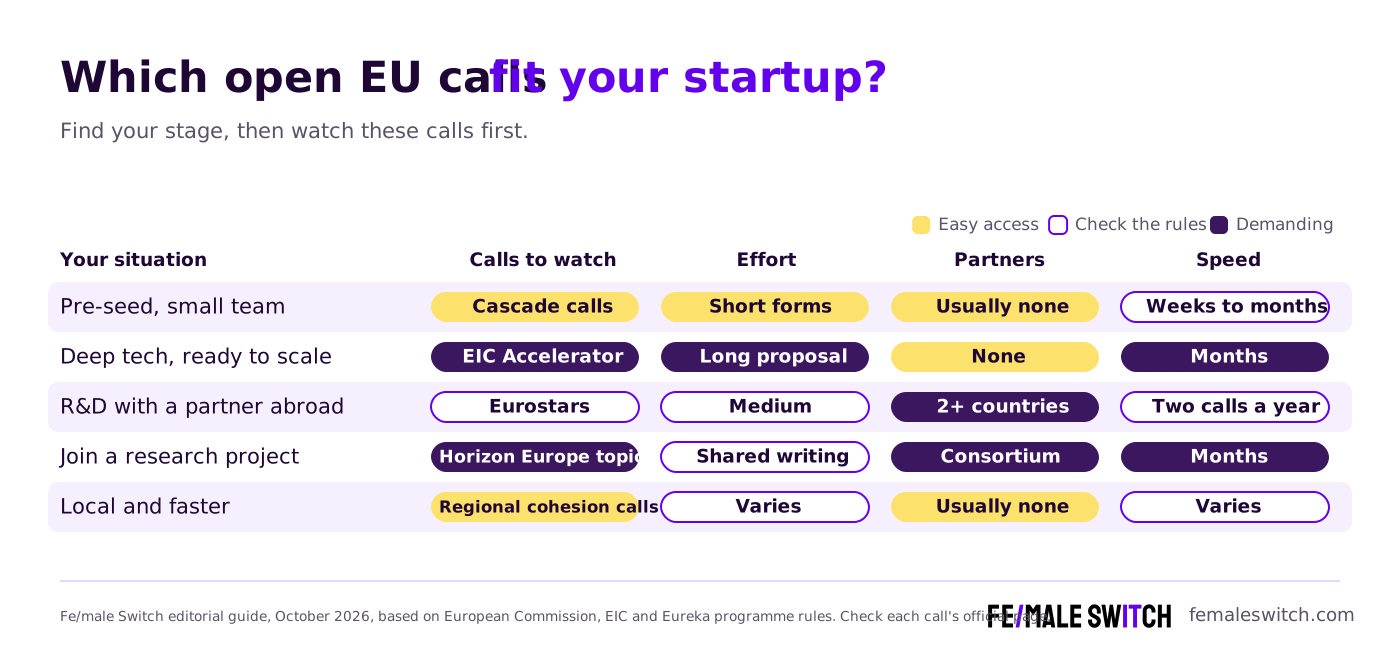
Not every open call is your call. Use this quick decision path before you read anything in detail.
- Pre-seed, no revenue, small team? Start with cascade calls and national early-stage schemes. They have short forms and lower competition. Read our guide to cascade funding.
- Prototype working, deep tech, ready to scale? Watch the EIC Accelerator. Its short application can be sent at any time; full proposals go to fixed cut-off dates set in each year's EIC Work Programme. The 2027 dates remain draft until the Commission adopts the EIC Work Programme 2027.
- R&D project with a partner in another country? Look at Eurostars, which runs a spring and an autumn call. The latest call closed on 10 September 2026, according to Austria's FFG and Bulgaria's national innovation fund.
- Want to join a large research project? Search Horizon Europe topics that need SMEs as consortium partners, and use the Portal's partner search to find coordinators.
- Local, smaller, faster money? Your regional cohesion programme is often the least crowded door.
For a full map of grants, equity and loans, see European funds for startups.
Score a call before you write a word
Every founder who has written an EU proposal knows the feeling of discovering on day ten that the call never fit. Score each candidate first. Give 0, 1 or 2 points per row.
10–12 points: apply. 7–9 points: apply only if nothing better is open. 6 or less: skip it and log why, so you don't reconsider it next week.
A copyable call tracker
Keep every candidate call in one place. A spreadsheet works; so does a plain note. Copy this template and fill one block per call.
The three dates at the bottom matter most. Portals slow down in the last hours before a deadline, and late submissions are not accepted.
A worked founder example
Picture a two-person climate-tech startup building software that predicts energy waste in small factories. In January the founders set up two saved searches on the Portal: one for Horizon Europe and Digital Europe topics with "energy efficiency" and "industry", and one with the cascade filter and "energy". In February the cascade search shows a project open call for SMEs piloting energy tools in manufacturing, closing in ten weeks, with no partners required. It scores 11 out of 12.
They log it in the tracker, ask the project's helpdesk one question about eligibility, and submit three days early. In parallel, their monthly check of the regional agency turns up a cohesion-funded voucher for digital pilots.
Mistakes that make founders miss calls
- Searching only once. Forthcoming topics appear months before they open. A one-off search finds only what is open today.
- Trusting "open" labels. Check the deadline on the topic page itself, and read any updates or corrigenda.
- Ignoring national agencies. Cohesion money never shows up on the Portal.
- Chasing big calls first. A €2.5 million EIC grant is tempting, but a €60,000 cascade grant you can actually win builds the track record evaluators look for later.
- Missing the helpdesk. Every call names a contact for questions. A written answer about eligibility can save weeks.
Who should apply and who can skip it
Set up this system if you plan to apply for any EU grant in the next 12 months, you work in a field the EU funds heavily (climate, digital, health, deep tech, food, raw materials), or you need non-dilutive money to reach your next milestone.
Skip it for now if you have no product or prototype yet, your startup is outside the EU and associated countries, or you need money within the next three months: EU grants rarely pay that fast. Build the product first, then come back to this list.
Related EU funding guides
- EU grants for startups: programme map, deadlines and decision tree
- European funds for startups: the 2027 map of EU grants, equity and loans
- Cascade funding explained: how startups win EU open calls
- Call for evaluators 2027: how to become a paid EU expert evaluator
- The EU funding labyrinth: a critical analysis for startups
- EU grants: a guide to writing a funding application
Not ready to apply yet? The Fe/male Switch startup game lets you build and test your startup step by step, so you have the traction and numbers EU evaluators ask for.
FAQ
Where can I find open EU funding calls for startups?
Start with the EU Funding & Tenders Portal, filtered by "Open for submission" and "Forthcoming". Add the cascade filter for project open calls, then check your national and regional agencies and the EIT community in your sector. A monthly round-up catches what your filters miss.
How do I find cascade funding calls on the Funding & Tenders Portal?
On the calls page, use the type filter "Calls for funding in cascade (issued by funded projects)". These calls are published by EU-funded projects themselves, and you sign your agreement with the project.
Can I get alerts for new EU funding calls?
Yes. With an EU Login account you can save searches on the Portal and subscribe to topic pages to get updates by email. The Commission's "EU funding & me" app sends the same kind of alerts to your phone.
Are there EU grants open all year?
Some. The EIC Accelerator accepts short applications at any time, though full proposals go to fixed cut-offs. Most other EU calls have set deadlines, so watching forthcoming topics matters more than looking for rolling calls.
What is the difference between a forthcoming and an open call?
A forthcoming call has been announced but does not accept submissions yet. An open call accepts submissions until its deadline. Forthcoming calls give you the most time to prepare.
How far in advance should I start preparing an EU application?
For a cascade call, four to six weeks is usually enough. For a Horizon Europe or EIC proposal, plan two to three months, longer if you need partners.
About the Author
Violetta Bonenkamp, also known as MeanCEO, is an experienced startup founder with an impressive educational background including an MBA and four other higher education degrees. She has over 20 years of work experience across multiple countries, including 5 years as a solopreneur and serial entrepreneur. Throughout her startup experience she has applied for multiple startup grants at the EU level, in the Netherlands and Malta, and her startups received quite a few of those. She’s been living, studying and working in many countries around the globe and her extensive multicultural experience has influenced her immensely.

