
TL;DR: what is the best business to start in 2026?
We scored 30 business ideas from 0 to 100 using official data on earnings, demand growth, survival, self-employment and AI exposure. The top five are contracting and renovation (65), cybersecurity consulting (63), massage therapy (59), solar and heat pumps (52), consulting (51). There is no single best business for everyone: the most profitable, the safest and the easiest ideas are different, so use the ranking with your skills, budget and goal.
👉 Get ideas matched to your skills with the free Business Ideas Generator
Most "best business ideas" lists are long, unranked and based on opinion. They rarely tell you what owners actually earn, whether demand is growing, how many businesses survive or which ideas AI is about to squeeze.
This guide does. We combined the US Bureau of Labor Statistics, IRS tax data on sole proprietors, Census and Eurostat survival data and Microsoft Research's AI exposure scores into one transparent score for 30 common business ideas. Then we show which ideas are best for each goal and each situation, with links to our deeper guides. For the best business ideas in jobs Europe can't fill, with EU shortage data and training routes, see our sister site's guide to the best business ideas in labour-shortage jobs. If you'd rather buy a business that already works, see these 12 businesses to buy instead of start on mean.ceo.
Updated October 2026. The scoring method is explained below.
How we scored the best business ideas
Each idea gets a score from 0 to 100 based on five factors. We chose the closest official occupation or industry for each idea and weighted the factors by what matters most to a new owner:
The data comes from the BLS Occupational Outlook Handbook (May 2025 pay and 2025–35 projections), IRS Statistics of Income for sole proprietorships (tax year 2023), BLS Business Employment Dynamics and Microsoft Research's AI applicability scores. Two limits matter: survival and owner income are measured by industry, not by idea, and BLS pay covers employees, so it shows what the work is worth rather than what your business will earn.
The 30 best business ideas, ranked
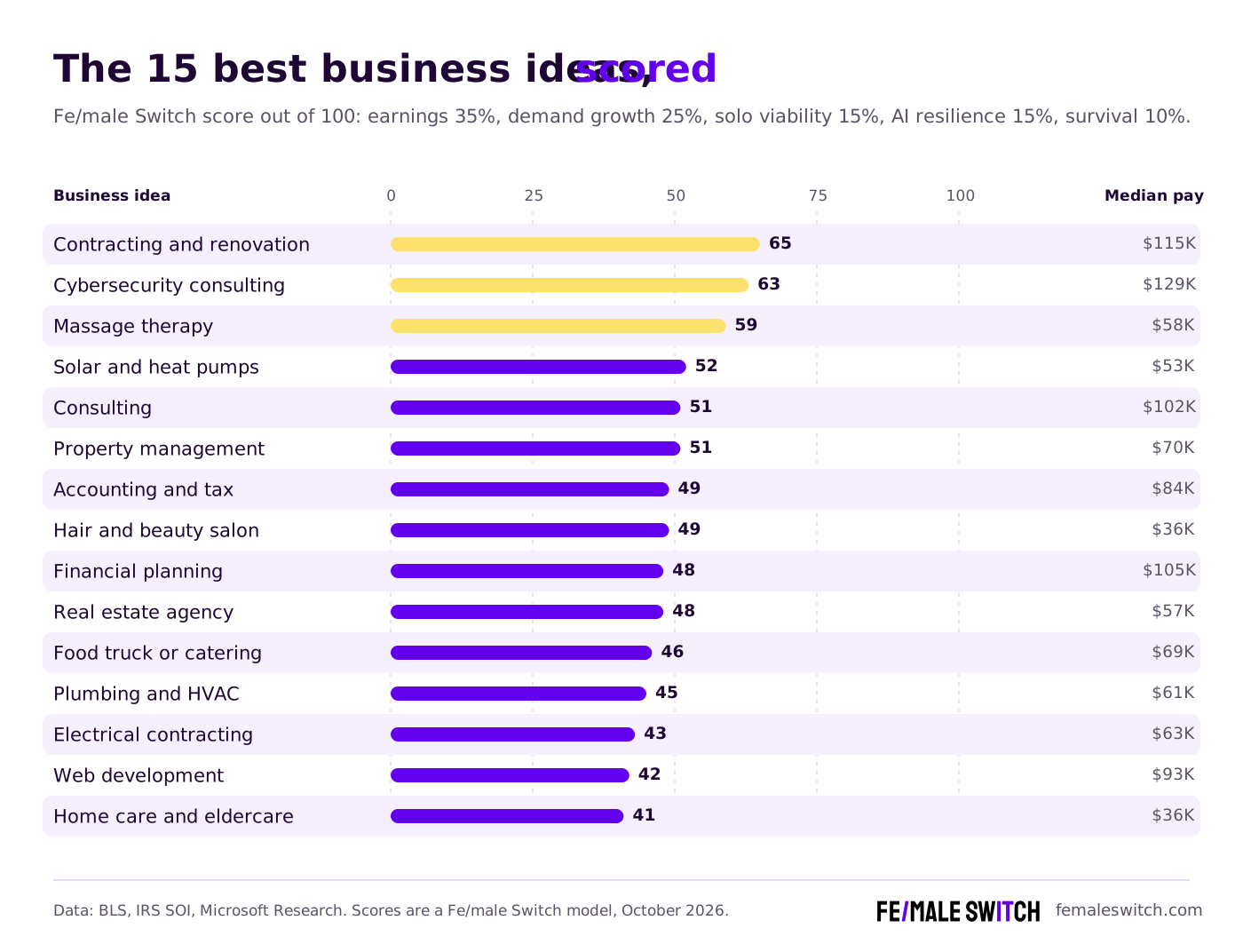
Median pay: BLS, May 2025, for the closest occupation. Growth: BLS projections 2025–35. AI exposure: Microsoft Research applicability score.
The top 10 business ideas, explained
1. General contracting and renovation (score 65)
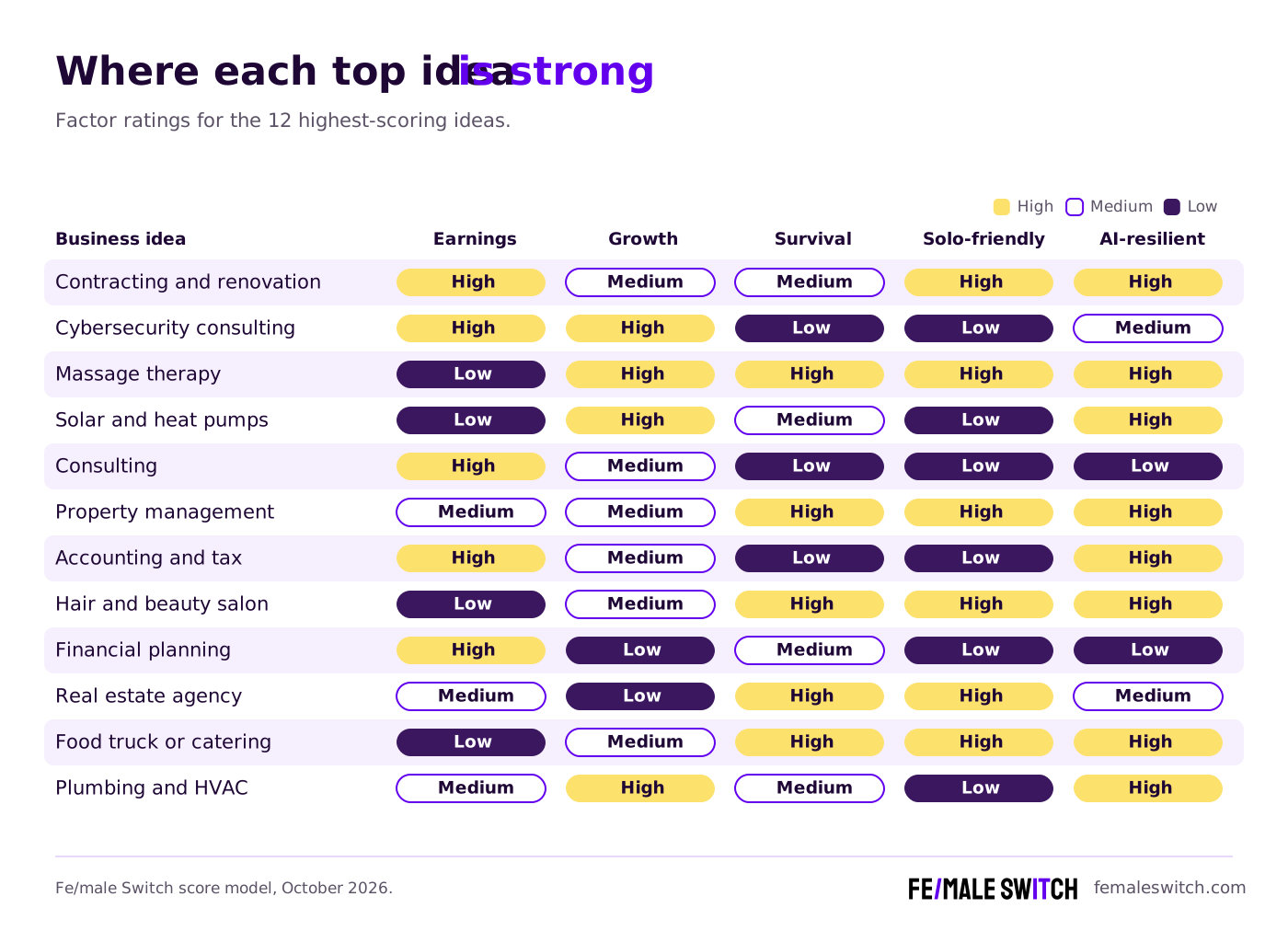
Renovation, fit-out and general contracting combine high pay with high self-employment: 38% of construction managers work for themselves, and BLS projects 9% job growth. Owners of residential building firms average about $102,000 in receipts per solo business.
- Best for: experienced project managers and tradespeople; works well as a team business
- Watch out for: licences and insurance, cash flow on large jobs and finding reliable subcontractors.
Women-owned construction firms earn 93% of what men-owned ones do, the smallest gap of any sector; see our business ideas for women.
2. Cybersecurity consulting (score 63)
Information security analysts earn a median $129,180, and BLS projects 21% growth to 2035, among the fastest of any professional job. Small firms now need security help to win contracts with larger customers.
- Best for: IT professionals with security certifications
- Watch out for: very few work self-employed (0.2%), so most start as consultants to SMEs; you need real expertise and insurance.
3. Massage therapy (score 59)
Massage therapy scores high on almost everything except pay: 15% projected growth, 36% self-employed, one of the lowest AI exposures of any occupation and strong survival rates for personal services.
- Best for: career changers who want hands-on, flexible work
- Watch out for: a licence in most US states and many other countries; income is capped by your hours unless you hire.
4. Solar and heat pump installation (score 52)
Solar panel installers are the fastest-growing occupation in this ranking at +37% to 2035, and heat pump and HVAC jobs grow 11%. New building rules in Europe add demand.
- Best for: electricians, roofers and HVAC professionals
- Watch out for: certification and safety rules; the market depends on subsidies and energy prices.
See the deadlines behind it in our guide to new business ideas.
5. Management or strategy consulting (score 51)
Management consulting has the highest net margin in the IRS data (about 50% for consulting sole proprietors) and BLS projects 10% growth for management analysts, with a median of $101,860.
- Best for: experienced professionals selling expertise
- Watch out for: income depends on a few clients, and AI exposure is high for routine analysis; specialise by industry.
Consulting also tops our list of low risk business ideas.
6. Property management (score 51)
Property managers earn a median $69,990, 31% are self-employed and solo property management businesses average about $75,000 in receipts. Monthly management fees make income recurring.
- Best for: people with real estate, admin or hospitality experience
- Watch out for: licensing in some US states and countries; tenants call at all hours.
7. Accounting and tax services (score 49)
Accountants earn a median $83,680, and CPA offices run by sole proprietors net about $65,800 a year on average, the highest owner income in this ranking.
- Best for: qualified accountants and tax preparers
- Watch out for: licensing and liability; routine bookkeeping is shrinking as software automates it, so focus on advice and complex returns.
8. Hair and beauty salon (score 49)
Hair and beauty is one of the most solo-friendly businesses: about half of hairdressers and 80% of barbers are self-employed, AI exposure is minimal and personal services have some of the best five-year survival rates.
- Best for: licensed stylists, barbers and beauticians
- Watch out for: low median pay ($35,880 before tips) unless you build a team or a premium niche.
9. Financial planning (score 48)
Personal financial advisors earn a median $105,070, and sole proprietors in financial investment activities net about $54,900 a year, among the highest in the IRS data.
- Best for: qualified financial professionals
- Watch out for: regulation and authorisation are strict, growth is slow (+1%) and robo-advisers compete for simple accounts; specialise in complex needs.
10. Real estate agency (score 48)
Real estate agents are among the most self-employed professionals (54%), and real estate firms have above-average survival in the US and EU.
- Best for: networkers and career changers with local knowledge
- Watch out for: a licence is required in the US and many EU countries, and income takes time: NAR puts median gross income for agents with two years or less at just $8,000.
Ideas ranked 11 to 30: quick verdicts
- 11. Food truck or catering (46): strong survival, but food businesses keep only about 2% of receipts as profit; test with catering before buying a truck.
- 12. Plumbing and HVAC (45): +7–11% growth and very low AI exposure; licensing takes years, so it suits people already in the trade.
- 13. Electrical contracting (43): +9% growth and steady demand from electrification; a licence is required almost everywhere.
- 14. Web development (42): good pay ($92,650) but high AI exposure; specialise in complex builds, accessibility or e-commerce.
- 15. Home care and eldercare (41): the fastest demand growth among care jobs (+18%), but low pay; the money is in running an agency with staff.
- 16. Pet grooming and pet care (40): +11% growth and loyal repeat customers; pay is modest unless you add grooming, boarding or training.
- 17. Photography (39): the most self-employed occupation here (67%), but demand is flat and AI images compete for simple work.
- 18. Interior design (39): 26% self-employed and steady demand; home staging and commercial projects pay best.
- 19. Personal training (38): +7% growth and low AI exposure; group classes and niches such as strength for older adults scale best.
- 20. Auto repair (38): excellent survival and steady demand; electric vehicles are changing the skills you need.
- 21. Marketing and digital marketing (37): solid pay, but very few marketers work alone and AI is automating routine content; sell strategy and results.
- 22. Landscaping (36): almost no AI exposure and recurring contracts, but low pay and seasonal cash flow.
- 23. Event planning (36): +6% growth and good pay for planners; cash flow is seasonal and deposits are essential.
- 24. HR and recruitment (35): +6% growth and new pay-transparency rules in the EU, but HR is rarely a solo business.
- 25. Graphic design (31): jobs are projected to fall 2% and AI handles simple design; brand strategy and specialist niches survive.
- 26. Translation (31): the most AI-exposed occupation of all 785 measured; only specialist legal, medical or literary work holds up.
- 27. Childcare (28): constant demand but low pay, licensing and falling projected employment for childcare workers.
- 28. Commercial cleaning (26): easy to start and recurring, but low pay and thin margins unless you build a team and win contracts.
- 29. Tutoring (25): low cost to start, but flat demand and rising AI tutoring; exam prep and in-person tutoring hold up best.
- 30. Bookkeeping (20): the lowest score: BLS projects bookkeeping jobs to fall 6% as software automates the work; sell advice instead.
What is the best business for each goal?
"Best" means different things to different founders. Here is what the data says for the most common goals.
Most profitable
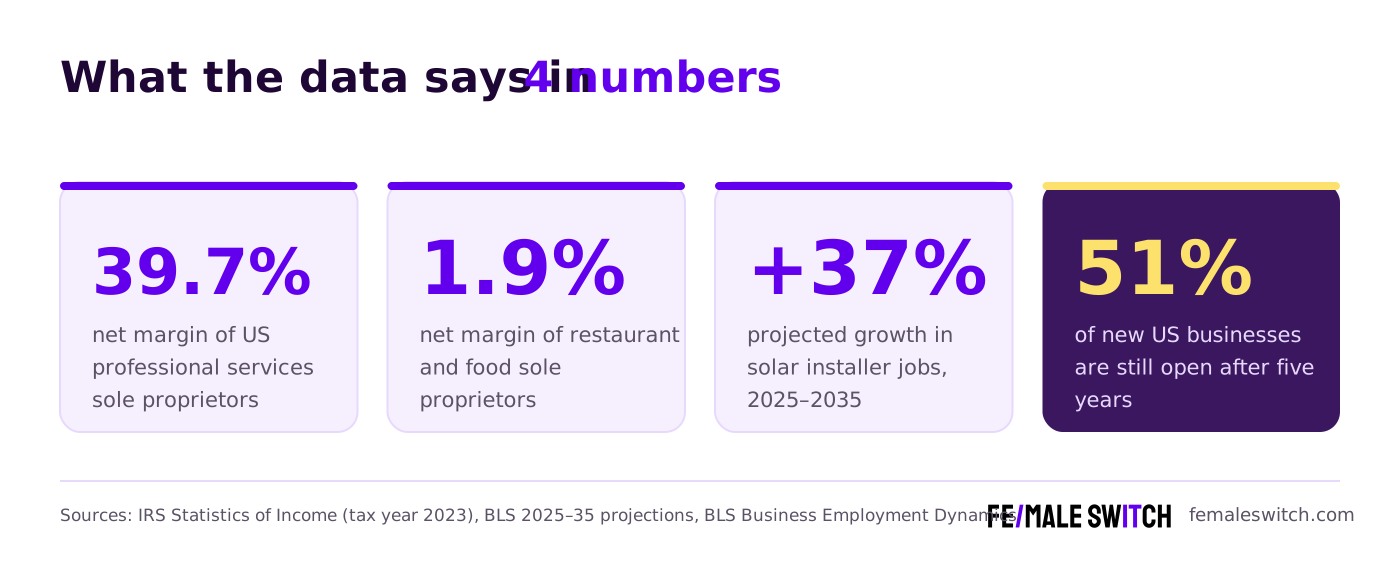
In IRS data, professional services sole proprietors keep 39.7% of their receipts as net income, against 18.3% across all industries, 4.1% in retail and just 1.9% in accommodation and food. The highest average owner income in our ranking comes from accounting firms (CPA offices, about $65,800), financial investment advice (about $54,900) and consulting (about $30,400). Skills-based services beat product businesses on margin.
Fastest-growing
Solar installation (+37%), cybersecurity (+21%), home care (+18%) and massage therapy (+15%) have the fastest projected job growth to 2035. Growth means customers are easier to find, even when pay starts modest.
Safest
About half of new US businesses survive five years. Personal services, auto repair and retail survive best (about 60%), professional services worst (about 51%). For a full safety ranking with worst-case losses, read our guide to low risk business ideas.
Easiest and cheapest to start
Service businesses that use skills you already have need the least money: consulting, tutoring, pet care, cleaning and design. For startup costs in euros and the fastest route to first revenue, see the best low cost business to start.
Most solo-friendly
Photography (67% self-employed), real estate (54%) and hair and beauty (48%) are the occupations where working for yourself is most common, so the business model is proven for one person.
Safest from AI
Hands-on work is the least exposed: massage, landscaping, home care, plumbing and HVAC score lowest on Microsoft's AI applicability index, while translation is the single most exposed of 785 occupations.
Popular business ideas that score worse than their hype
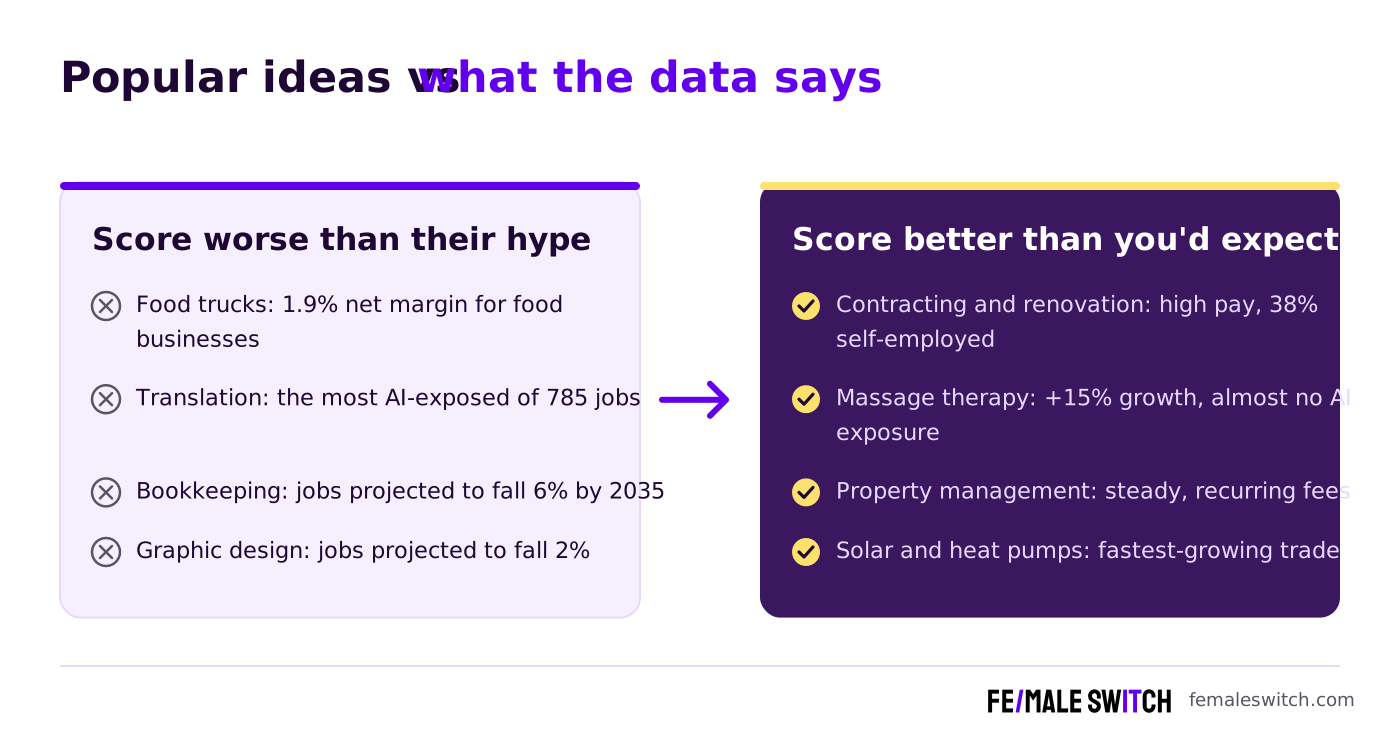
Food trucks and catering rank 11th thanks to strong survival, but food businesses keep only 1.9% of receipts as net income. Translation, bookkeeping and graphic design are popular first businesses, yet BLS projects flat or falling demand and AI is taking over routine work. They can still work in a specialist niche; just don't choose them because they look easy.
Do the best business ideas differ in Europe?
Mostly no: the same skills-based and hands-on services lead. Survival patterns are similar too. According to Eurostat, 57.2% of new EU businesses are still active after three years. Health and social care (67.5%), real estate (61.4%) and personal services (61.3%) survive best, while retail (51.8%), administrative services (51.8%) and transport (43.8%) struggle most.
Two differences matter for the ranking: more trades and professions are regulated in Europe (master craftsman rules for some trades in Germany, licensed estate agents in France and Germany), and new EU rules are creating demand for renovation, repair and compliance services. Registration and social security costs also vary a lot; compare them in MeanCEO's guide to bootstrapping costs by country.
Which business is best for your situation?
All of these guides are free on Fe/male Switch, including small business ideas from home and how to start a startup.
How to choose and validate your business idea
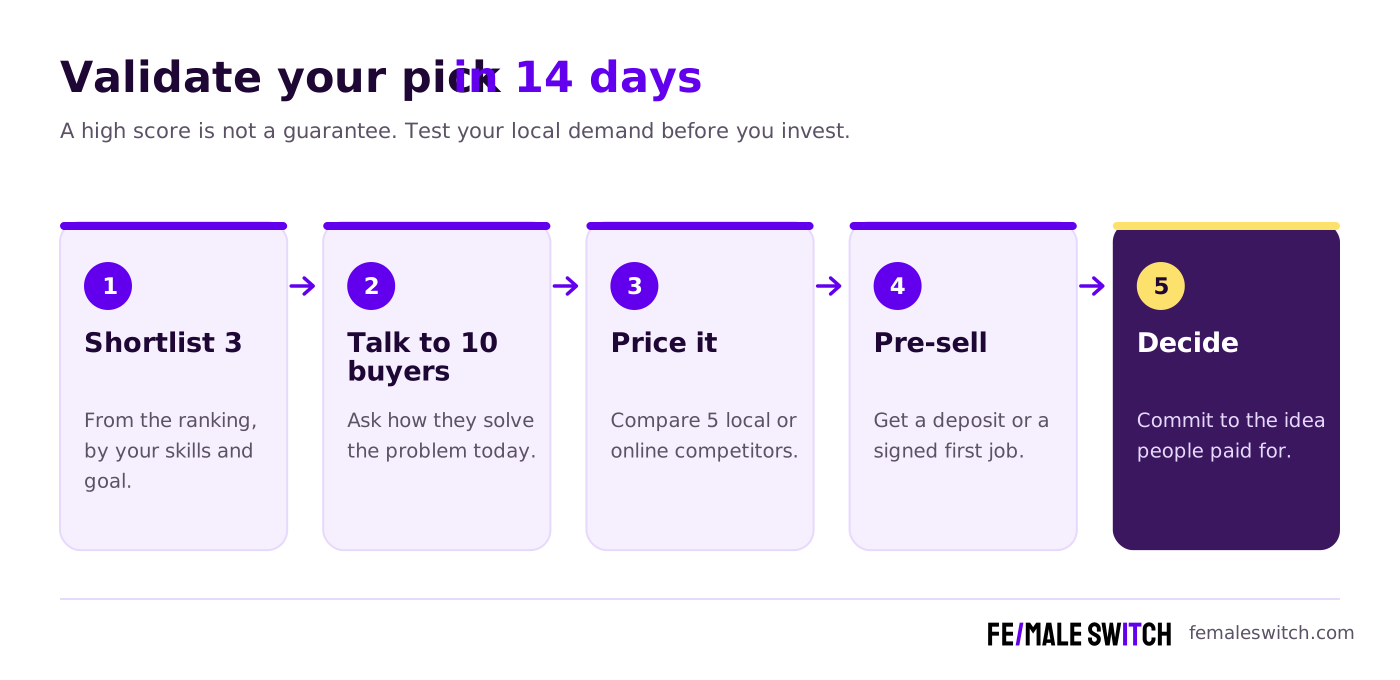
A data score tells you which ideas have the best odds on average, not whether they will work in your town or niche. Shortlist three ideas that match your skills, talk to ten potential customers about how they solve the problem today, check five competitors' prices and ask for a deposit. Score the results with the free Idea Validator and size your market with the Market Size Calculator.
Turn your best idea into a business with an AI co-founder
The Fe/male Switch startup game guides you from idea to first customers, with Elona Musk as your AI co-founder and 6,000+ founders learning alongside you.
👉 Start building your first business
Conclusion: the best business uses your skills where demand is growing
Across 30 ideas, the highest scores go to skilled trades and renovation, cybersecurity, hands-on wellness, energy installation, property management and professional services. They combine solid pay, growing demand and work AI can't easily do. The lowest scores go to routine digital work and food businesses with thin margins. The best choice for you is the highest-scoring idea that matches your skills, budget and life, tested with real customers before you commit.
Your next step: pick three ideas from the ranking, talk to ten potential customers this week and ask one to pay. For structured lessons, join the free startup school.
Methodology
Each idea is matched to its closest BLS occupation and industry. Factors are scaled from 0 to 1 (pay from $35,000 to $130,000; owner net income from $3,000 to $40,000; growth from −6% to +21%; self-employment from 0% to 50%; AI applicability from 0 to 0.5; five-year survival from 45% to 65%) and combined with the weights above. Scores are a Fe/male Switch model, October 2026, and describe averages, not individual outcomes.
FAQ: best business ideas
What is the best business to start in 2026?
In our data-based ranking, the top scores go to contracting and renovation (65), cybersecurity consulting (63), massage therapy (59), solar and heat pumps (52), consulting (51). The best choice for you depends on your skills, budget and whether you want to work alone or build a team.
What is the most profitable business to start?
Skills-based professional services are the most profitable for small owners: professional services sole proprietors keep about 40% of receipts as net income in IRS data, and accounting and financial advice firms have the highest average owner income. Food and retail have the thinnest margins.
What business has a 90% success rate?
None. About half of new US businesses survive five years, and even the best-surviving industries, such as personal services and auto repair, reach about 60%. You can raise your odds by choosing a growing market, keeping costs low and pre-selling.
What is the easiest business to start for beginners?
Service businesses based on skills you already have are the easiest: pet care, tutoring, cleaning, consulting in your profession or design. They need little money and no premises.
What business can make $10,000 a month?
Higher-paid skilled services can reach $10,000 a month with a few steady clients: consulting, cybersecurity, accounting, financial planning or renovation contracting. It usually takes time to build the client base, and hiring helps you go further.
What are the fastest-growing businesses to start?
By projected job growth to 2035: solar installation (+37%), cybersecurity (+21%), home care (+18%), massage therapy (+15%) and HVAC (+11%).
Which business ideas are safest from AI?
Hands-on services such as massage, landscaping, home care, plumbing, HVAC and hair and beauty have the lowest AI exposure. Translation, bookkeeping and routine writing or design are the most exposed.
How long does it take a small business to become profitable?
Service businesses that sell your own skills can be profitable within months, because costs are low. Businesses with premises, stock or staff usually take one to three years. Pre-selling and keeping fixed costs low shorten the wait.
Is a food truck a good business?
It can be, but the numbers are tough: food businesses keep about 2% of receipts as net income on average, and permits, equipment and fuel are costly. Test demand with catering or market stalls first.
About the Author
Violetta Bonenkamp, also known as MeanCEO, is an experienced startup founder with an impressive educational background including an MBA and four other higher education degrees. She has over 20 years of work experience across multiple countries, including 5 years as a solopreneur and serial entrepreneur. Throughout her startup experience she has applied for multiple startup grants at the EU level, in the Netherlands and Malta, and her startups received quite a few of those. She’s been living, studying and working in many countries around the globe and her extensive multicultural experience has influenced her immensely.

