
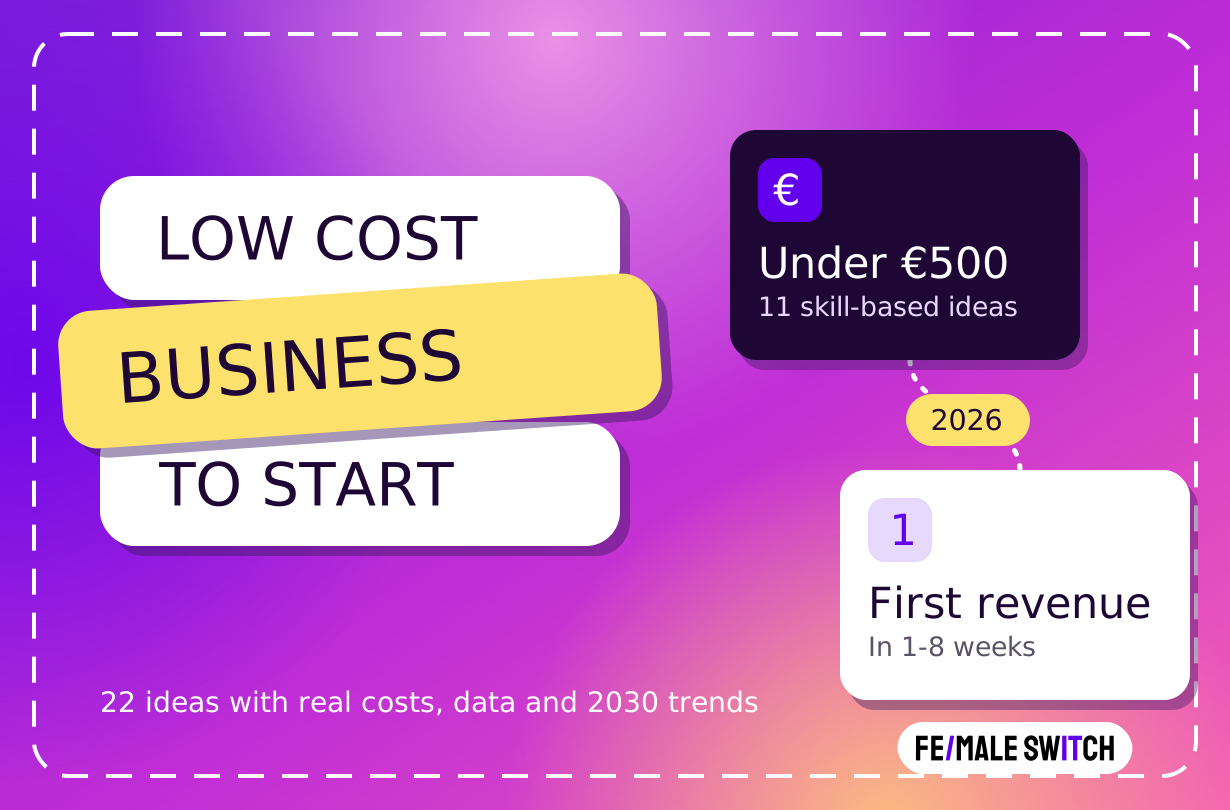
TL;DR: the best low cost business to start in 2026
A low cost business is one you can launch for under €1,000 (or $1,000), usually a service you sell with skills you already have. The cheapest to start are virtual assistance, freelance services, online tutoring, social media management and reselling: €0–500 to launch, first revenue in roughly 1–8 weeks. For the strongest demand to 2030, look at AI automation for small businesses, resale, pet services and senior companion care. Get paying customers before you spend, and keep fixed costs close to zero: about half of new businesses are gone within five years.
👉 Test your idea for free with the Fe/male Switch Idea Validator
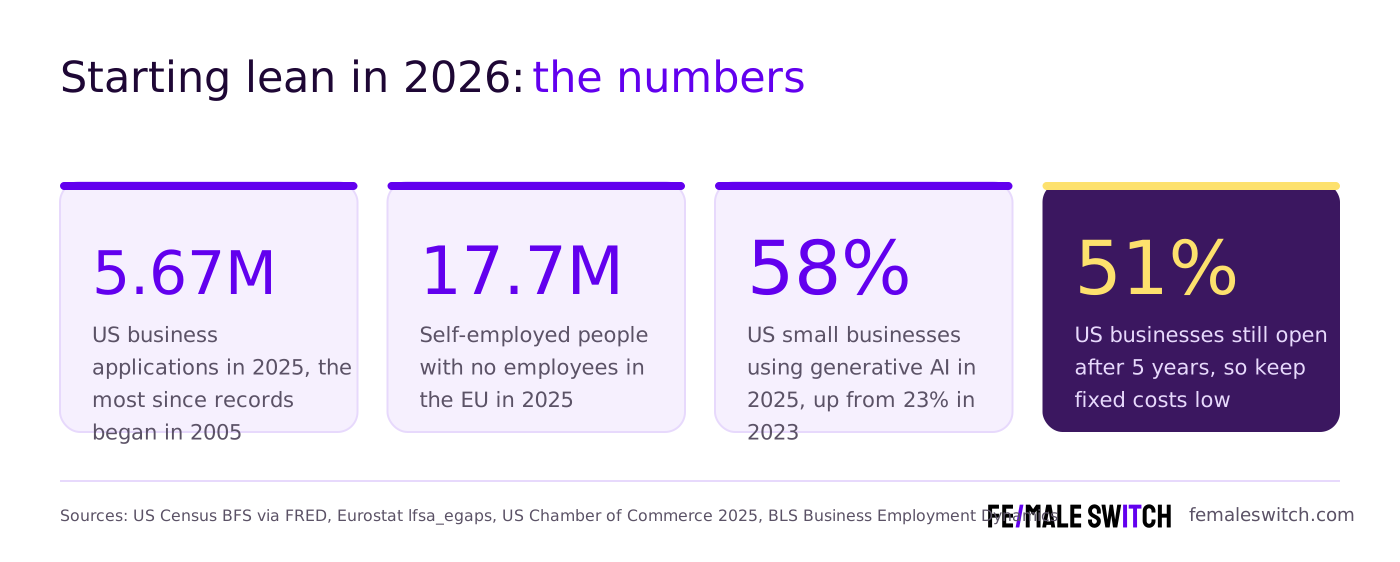
More people are starting businesses than ever, and most of them start small. In 2025 Americans filed 5.67 million new business applications, the highest yearly total since the US Census Bureau began tracking them in 2005. In the European Union, 17.7 million people work for themselves with no employees. Very few of them raised investor money first: only about 0.5% of new US firms use outside equity such as venture capital, according to a 2025 US Treasury report. The rest start on savings, early sales and a lot of hustle.
This guide is for that majority. It compares 22 low cost businesses using the same yardsticks for each one: what it really costs to start, what you can charge, how quickly money comes in, where demand is heading, and what usually goes wrong. Costs are shown in euros, with official registration fees for 10 countries, because most "cheap business" lists only talk about the US.
Want the strongest ideas regardless of cost? See our data-based ranking of the 30 best business ideas for 2026.
Looking for more options? Browse 100 business ideas sorted by budget, place and whether you can start alone. Not sure which one fits you? Answer five questions to get three business suggestions matched to your budget, time and work style.
Updated October 2026. Methodology and sources are at the end of the article.
What counts as a low cost business?
There is no official definition, and the lists that rank on Google disagree: some say under $100, others under $10,000. A useful working definition is a business you can start for under €1,000, without stock you can't sell, without a lease, and without borrowing. In practice that means selling a skill, a service you deliver in person, or products you make or source in small batches. We group the 22 ideas below into three tiers:
- Under €500: skill-based online services and simple product businesses. You mostly need a laptop, a phone and free or cheap software.
- €500–1,500: services that need insurance, a certificate, equipment or starter materials.
- €1,500–5,000: businesses with real tools, vehicles or ad budgets. Still cheap compared with a shop or a franchise, but you are risking more.
All startup costs exclude a laptop and smartphone you already own. Dollar amounts are roughly similar to the euro figures. Running costs matter as much as launch costs, so watch the monthly subscriptions: three €20 tools quietly become €720 a year. For line-by-line first-year budgets of 10 of these businesses, see our sister guide to the real cost of a low cost business to start.
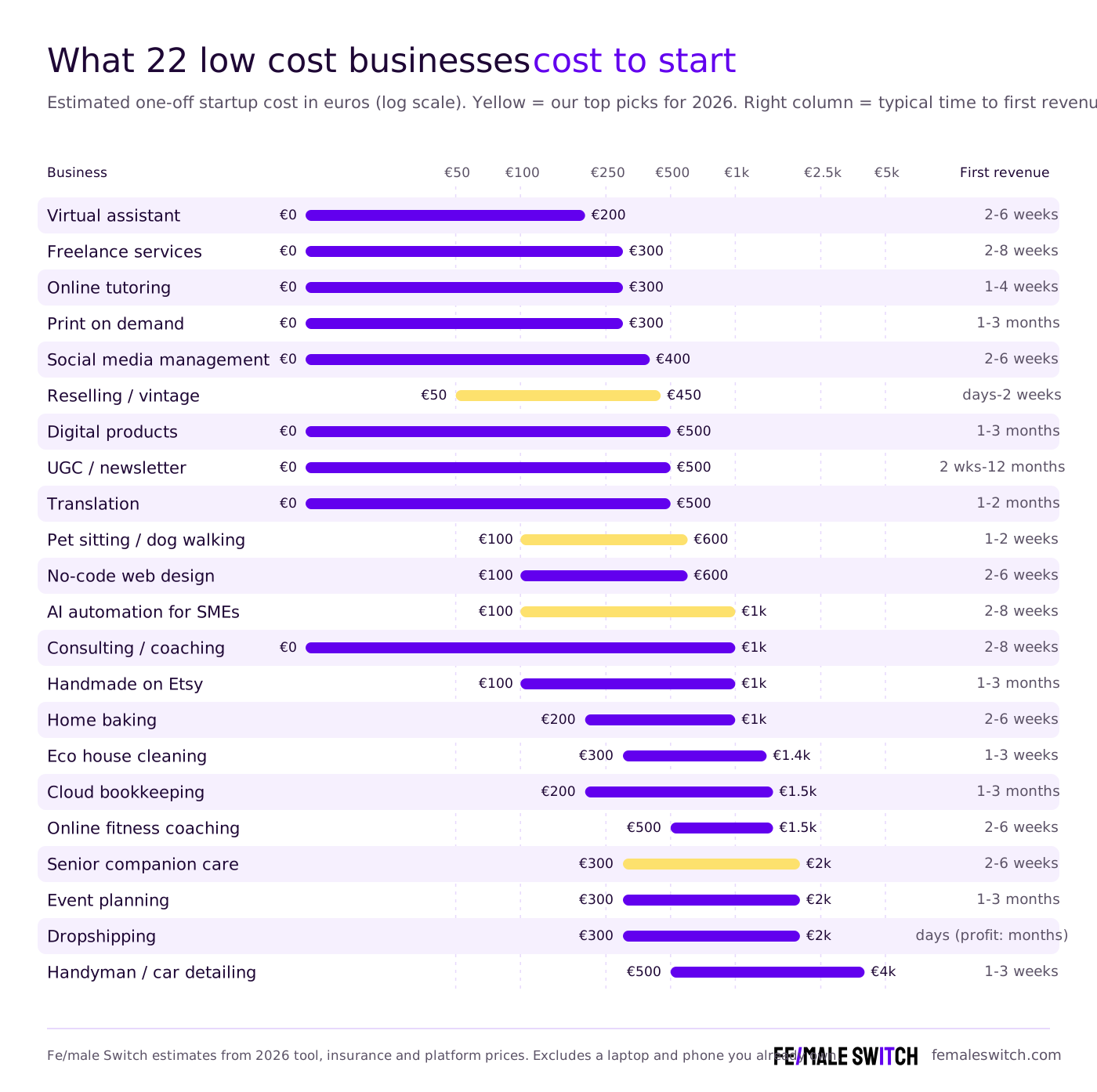
Low cost businesses compared: 22 ideas at a glance
Use this table to shortlist two or three ideas, then read the details below. Profit potential and AI risk are our editorial ratings, explained in the methodology.
Which businesses can you start for under €500?
These eleven ideas need little more than skills, a laptop and a few low-cost tools. They are the fastest way to earn your first euro, but most compete on price with freelancers worldwide, so pick a niche.
1. Virtual assistant or online business manager
Busy founders, coaches and small agencies pay for help with inboxes, calendars, customer support, invoicing and project tracking. The better-paid version is the online business manager who runs systems and automations, not just tasks.
- Startup cost: €0–200 (Google Workspace, a scheduling tool, a simple website).
- What you can charge: Upwork lists general virtual assistants at a median of about $10–20 an hour; advanced support and operations roles charge more.
- Demand signal: Upwork's research found 28% of US skilled knowledge workers now freelance, earning $1.5 trillion in 2024.
- Time to first revenue: 2–6 weeks through your existing network.
- Watch out for: Global price competition and AI agents that handle routine admin. Sell outcomes ("inbox zero, every day"), not hours.
2. Freelance writing, design or marketing
If you can write, design, edit video or run campaigns, you can sell that skill from day one. Generalists are being squeezed; specialists who use AI to work faster are not.
- Startup cost: €0–300 (portfolio site, Canva Pro or design software, optional platform fees).
- What you can charge: Rates vary widely. On Fiverr, average spend per buyer rose 13.3% to $342 in 2025 while the number of buyers fell 13.6%, according to Fiverr's 2025 results: fewer, bigger clients.
- Demand signal: Upwork reported that AI-related work on its platform grew more than 50% in 2025, while generic writing and translation categories declined.
- Time to first revenue: 2–8 weeks.
- Watch out for: Generic content is being commoditised by AI. Position yourself as an "AI-assisted specialist" in one industry.
3. Online tutoring and language lessons
Exam preparation, maths, coding for kids and language lessons can all be taught over video. Platforms bring students; your own website keeps the margin.
- Startup cost: €0–300 (headset, webcam, platform profile).
- What you can charge: Preply notes typical English tutor rates of $15–50 an hour. Platforms usually take the first lesson and a commission.
- Demand signal: Grand View Research projects the online tutoring market to reach $23.7 billion by 2030.
- Time to first revenue: 1–4 weeks on a platform.
- Watch out for: Commissions and AI tutors undercut basic conversation practice. Exam prep and niche subjects hold their value.
4. Print on demand
You design T-shirts, mugs, posters or tote bags; a supplier such as Printful or Printify prints and ships each order. No stock, no warehouse.
- Startup cost: €0–300 (free POD accounts, an Etsy or Shopify shop; Shopify Basic is €28 a month, or €21 billed yearly).
- What you can charge: Margins are thin: often a few euros per item after production, shipping and marketplace fees.
- Demand signal: Grand View Research sizes print on demand at $10.8 billion in 2025, growing 23.6% a year to 2033.
- Time to first revenue: 1–3 months.
- Watch out for: AI design tools flood the market and copyright takedowns are common. Original art for a specific community wins.
5. Social media management for local businesses
Restaurants, salons, gyms and shops know they need Instagram, TikTok and Google posts but rarely have time. A monthly retainer for two channels is an easy sell to businesses you already visit.
- Startup cost: €0–400 (Canva, a scheduling tool, your phone).
- What you can charge: Upwork shows median rates of $14–35 an hour; retainers of $400–2,000 a month are common.
- Demand signal: The US Chamber of Commerce found 58% of small businesses used generative AI in 2025, yet many owners still want someone to run it for them.
- Time to first revenue: 2–6 weeks; local referrals convert quickly.
- Watch out for: Scope creep inside a fixed fee and client churn. AI writes captions, so sell strategy, local video and community management.
6. Reselling and vintage
Buy underpriced clothing, books, electronics or furniture at thrift shops, flea markets and clear-outs, then resell on Vinted, eBay or Depop. It is the fastest route to a first sale on this list.
- Startup cost: €50–450 for starting stock. Vinted does not charge sellers fees in most EU markets.
- What you can charge: Profit depends on your eye for value; a common rule of thumb is to buy only what you can resell for at least two to three times the price.
- Demand signal: ThredUp and GlobalData forecast the global secondhand apparel market to reach $393 billion by 2030. Vinted's 2025 sales volume grew 47% to €10.8 billion.
- Time to first revenue: Days to 2 weeks.
- Watch out for: Sourcing gets harder as competition grows, and platforms now report active sellers to EU tax authorities under DAC7. Keep records from day one.
7. Digital products, templates and online courses
Notion and Canva templates, spreadsheets, printable planners, guides and mini-courses are built once and sold many times. They work best when you already have an audience or real expertise.
- Startup cost: €0–500 (Gumroad, Payhip or Etsy shop, design tools, a microphone for courses).
- What you can charge: Platform fees are typically around 10% plus payment processing. Income is very uneven: most sellers earn little, a few earn a lot.
- Demand signal: Demand for learning online keeps growing, but generic templates are now easy to generate with AI.
- Time to first revenue: 1–3 months, usually slower without an audience.
- Watch out for: Saturation. Niche expertise plus community (for example a cohort course) beats generic downloads.
8. UGC creator or niche newsletter
Brands pay user-generated content (UGC) creators for authentic product videos they can use in ads. Newsletters earn through paid subscriptions and sponsorships once they have an engaged niche audience.
- Startup cost: €0–500 (phone, ring light, microphone; Substack and Beehiiv have free tiers).
- What you can charge: Marketplace data from Billo puts the median UGC video at about $175, with usage rights extra. Substack passed 5 million paid subscriptions in 2025.
- Demand signal: Goldman Sachs has forecast the creator economy could approach $480 billion by 2027.
- Time to first revenue: UGC: 2–6 weeks. Newsletter: 3–12 months.
- Watch out for: Algorithm dependence and AI avatars pushing basic UGC prices down. A trusted personal voice is the moat.
9. Translation and localisation
Bilingual people can translate websites, apps, legal or medical documents. The work is shifting to reviewing and correcting machine translation.
- Startup cost: €0–500 (a translation tool licence, association membership).
- What you can charge: The US median for interpreters and translators is about $60,000 a year according to the BLS, but freelance rates for generic text are falling.
- Demand signal: Slator puts the language industry at about $30.9 billion, growing only 2.65% a year; traditional services are shrinking.
- Time to first revenue: 1–2 months.
- Watch out for: This is the most AI-exposed idea here. Specialise in regulated fields, transcreation or interpreting.
10. Pet sitting and dog walking
Pet owners pay well for reliable care, and the work cannot be automated. Start on Rover or Pawshake, then move regular clients to direct bookings.
- Startup cost: €100–600 (pet-care liability insurance, a background check, a platform profile).
- What you can charge: Rover sitters in big US cities typically charge $25–26 per 30-minute walk; overnight stays pay more.
- Demand signal: US pet spending reached $158 billion in 2025, and services such as boarding, grooming, sitting and walking were the fastest-growing category at +8%, according to APPA. The BLS projects 11% job growth for animal care workers by 2035.
- Time to first revenue: 1–2 weeks.
- Watch out for: Liability for injuries or escapes, and income capped by your hours. Add training, grooming or photo updates to raise prices.
11. No-code web design
Small businesses need websites that look good, load fast and bring in bookings. With Tilda, Webflow, Framer or Wix you can build them without writing code.
- Startup cost: €100–600 (builder plans, templates, a portfolio site).
- What you can charge: Upwork lists median web designer rates of $15–30 an hour; custom projects and monthly care plans pay more.
- Demand signal: The BLS reports a $99,520 median wage for web developers and digital designers, and many are self-employed.
- Time to first revenue: 2–6 weeks.
- Watch out for: AI site builders are killing the market for basic brochure sites. Bundle sites with booking systems, SEO and visibility in AI answers.
Sell results, not pages: these conversion optimisation techniques are an easy upsell.
Not sure which idea fits you?
Our free Business Ideas Generator suggests ideas based on your skills and budget, and the Value Proposition Generator helps you describe your offer in one clear sentence.
Best low cost businesses to start with €500–1,500
These ideas cost a bit more because they need insurance, certification, equipment or materials. In return they face less global price competition, and several are among the fastest-growing markets to 2030.
12. AI automation for small businesses
Set up chatbots, automated follow-ups, invoice processing or reporting workflows for local businesses using tools like ChatGPT, Claude, Zapier, Make or n8n. Most small firms know AI could save them time but have no one to set it up.
- Startup cost: €100–1,000 (AI and automation subscriptions, a course or two).
- What you can charge: Usually a fixed setup fee per workflow plus a monthly retainer for maintenance. There is no reliable benchmark yet, so use case studies to price.
- Demand signal: ResearchAndMarkets estimates AI consulting and support services will grow from $14 billion in 2024 to $72.8 billion by 2030 (31.6% a year). In the EU, only about 17% of small enterprises used AI in 2025, against 55% of large ones.
- Time to first revenue: 2–8 weeks, faster if you sell into an industry you know.
- Watch out for: Tools change every month, and you take on data-protection duties under GDPR and transparency rules under the EU AI Act.
Why it is our top pick: it combines low startup cost, high hourly value and a clear, measurable demand gap between small and large companies. Our AI for startups workshop walks through the marketing automations small firms ask for most.
13. Consulting or coaching in your field
Your years of experience in HR, marketing, finance, engineering or operations are a product. Fractional roles (for example a part-time marketing lead) and team coaching are growing fast.
- Startup cost: €0–1,000 (website, scheduling tool, optional certification).
- What you can charge: Day rates depend on your field; experienced consultants often charge more per day than their former salary per week.
- Demand signal: The International Coaching Federation counted 122,974 coach practitioners worldwide in 2025, up 15% since 2023, generating $5.34 billion.
- Time to first revenue: 2–8 weeks if you start with your existing network.
- Watch out for: Credibility in an unregulated market. Publish case studies and results, not just credentials.
14. Handmade products on Etsy
Jewellery, ceramics, candles, art prints and personalised gifts. Etsy brings buyers, but the marketplace itself is under pressure, so plan a second sales channel early.
- Startup cost: €100–1,000 (materials, photography, listing fees).
- What you can charge: Etsy charges $0.20 per listing, a 6.5% transaction fee and payment processing fees; Offsite Ads can take more.
- Demand signal: Warning sign: Etsy's consolidated gross merchandise sales fell 5.3% in 2025 and active buyers dropped to 86.5 million, according to its 2025 annual report.
- Time to first revenue: 1–3 months.
- Watch out for: A shrinking buyer base and mass-produced lookalikes. Sell "made by a human" through your own site, markets and wholesale too.
15. Home baking and cottage food
Custom cakes, gluten-free bread, vegan treats and pre-ordered boxes sold through Instagram or WhatsApp. Special-diet niches let you charge more.
- Startup cost: €200–1,000 (permits, food-hygiene training, packaging, equipment).
- What you can charge: Premium custom work pays best; once you count your hours, standard baked goods often earn little.
- Demand signal: In the US, all 50 states allow some home food sales, but rules and revenue caps vary (Institute for Justice). In the EU you must register with your local food authority.
- Time to first revenue: 2–6 weeks.
- Watch out for: Regulation and low hourly earnings. Check local rules before your first sale.
16. Eco house cleaning
Reliable cleaning is always in demand, and non-toxic "eco" positioning plus recurring subscriptions supports higher prices.
- Startup cost: €300–1,400 (supplies, insurance, bonding).
- What you can charge: HomeAdvisor reports US cleaning rates of $25–80 an hour, averaging about $50; independent cleaners usually charge less than companies.
- Demand signal: Steady local demand that AI cannot replace.
- Time to first revenue: 1–3 weeks.
- Watch out for: Physical strain, and growth requires hiring. Sell weekly or fortnightly plans for predictable income.
17. Cloud bookkeeping
Small businesses need clean books every month. With QuickBooks or Xero certifications (often free) you can serve clients anywhere, but check local rules: some EU countries regulate who may keep books.
- Startup cost: €200–1,500 (software, certification, professional liability insurance).
- What you can charge: Upwork shows $11–25 an hour for routine bookkeeping and $40+ for accountant-level work.
- Demand signal: The BLS projects bookkeeping clerk jobs to fall 6% by 2035 as software automates data entry.
- Time to first revenue: 1–3 months.
- Watch out for: Automation of transaction work. Sell monthly "fractional finance" packages with reporting and advice.
18. Online fitness coaching
Train clients over video and through an app, with programmes tailored to specific groups. Certification is usually the biggest cost.
- Startup cost: €500–1,500 (certification, insurance, coaching app).
- What you can charge: The US median for fitness trainers is about $47,160 a year, with jobs projected to grow 7% by 2035 (BLS).
- Demand signal: The ACSM 2026 fitness trends put wearable tech first, with fitness for older adults and exercise for weight management in the top ten.
- Time to first revenue: 2–6 weeks.
- Watch out for: Free apps and AI workout plans. Niches such as strength for GLP-1 users, menopause or older adults hold value.
Low cost businesses with higher potential (€1,500–5,000)
The last four ideas need more cash for equipment, training, stock or advertising. Two of them have strong long-term demand; one (dropshipping) is riskier than it used to be.
19. Senior companion and non-medical care
Companionship, errands, meal preparation and transport for older people who want to stay at home. Human presence is the product, so AI cannot replace it.
- Startup cost: €300–2,000 (first aid and dementia training, background checks, insurance; licensing rules vary).
- What you can charge: Hourly rates follow local home-care markets; the US median for home health and personal care aides is about $35,800 a year.
- Demand signal: The BLS projects 18% job growth by 2035, about 760,500 openings a year. In the EU, Eurostat projects the share of people aged 80+ to more than double, from 6% to 15%.
- Time to first revenue: 2–6 weeks.
- Watch out for: Emotional load, liability and safeguarding duties. Get the right training and insurance before you start.
20. Event and party planning
Micro-weddings, children's parties, corporate offsites and themed celebrations. Your network is your marketing.
- Startup cost: €300–2,000 (website, contracts, insurance, starter decor).
- What you can charge: The BLS reports a $61,160 median wage for event planners, with 6% projected growth by 2035.
- Demand signal: Smaller weddings and "experience" parties are popular, and AI tools cut the admin.
- Time to first revenue: 1–3 months.
- Watch out for: Seasonality, and spending drops in downturns.
21. Dropshipping
You sell products online and a supplier ships them directly to customers. It is still marketed as the ultimate cheap business, but the economics have changed.
- Startup cost: €300–2,000+ (store subscription, apps and, above all, advertising tests).
- What you can charge: Margins depend on ad costs. Ad platform data from TrendTrack suggests Meta's median cost per 1,000 impressions rose about 20% in 2025.
- Demand signal: The US ended duty-free de minimis entry for low-value parcels in August 2025, and the EU is introducing a flat customs duty on small parcels in 2026, raising costs for cheap imported goods.
- Time to first revenue: Days for a first sale; months for profit, if it comes.
- Watch out for: Negative unit economics on products under €20, slow shipping and chargebacks. Choose local suppliers and higher-priced products, or skip it.
22. Handyman or mobile car detailing
Small home repairs, furniture assembly and mounting jobs, or washing and detailing cars at the customer's home. Both are local, practical and AI-proof.
- Startup cost: Handyman €500–3,000 (tools, insurance; licences vary by country and job). Car detailing €1,000–4,000 (pressure washer, extractor, products).
- What you can charge: Independent handymen typically charge $50–80 an hour in the US.
- Demand signal: Ageing homeowners and busy households need small jobs done reliably.
- Time to first revenue: 1–3 weeks.
- Watch out for: Higher upfront costs, physical work and weather. Check what work needs a licensed professional.
Which low cost businesses will grow to 2030, and which are shrinking?
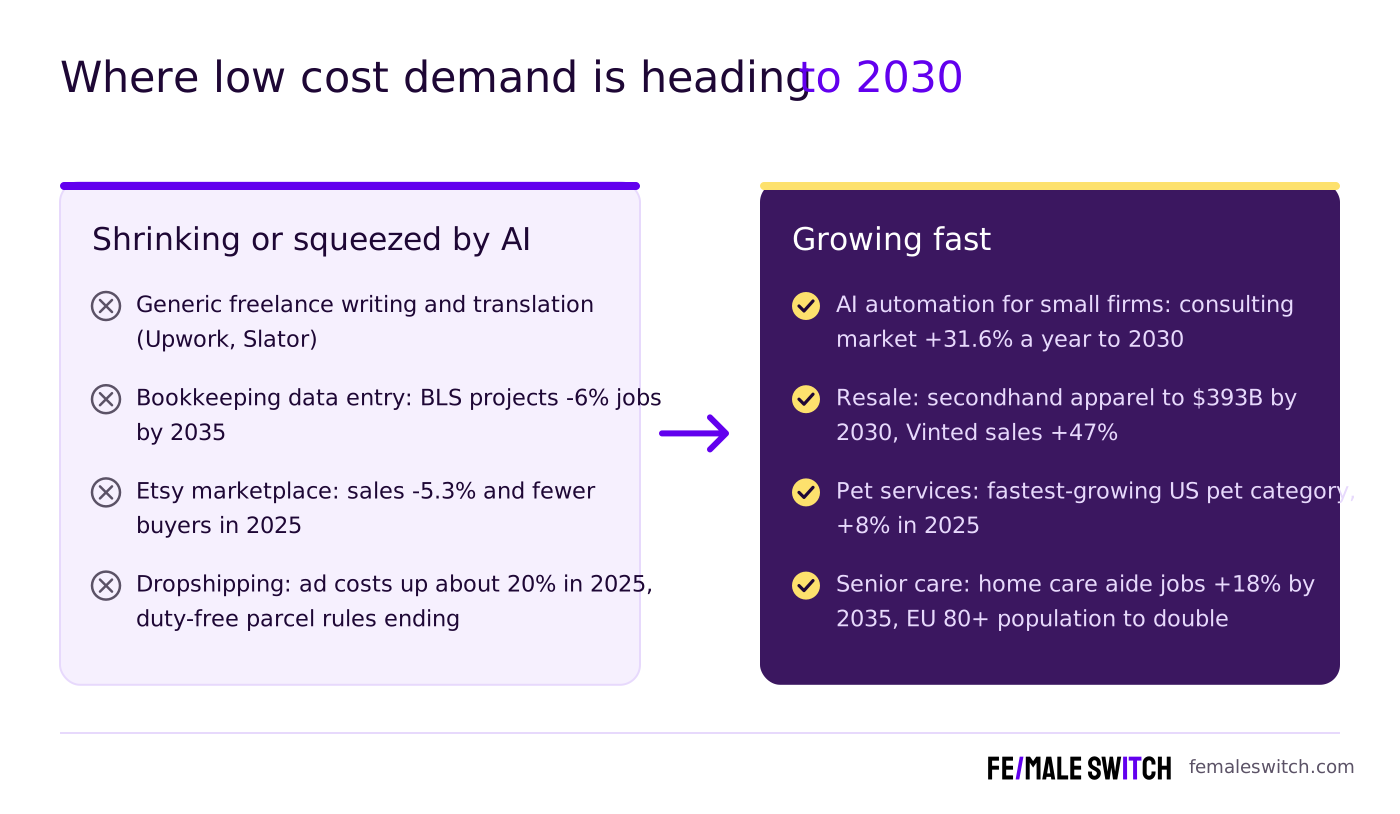
Startup cost is only half the decision. The other half is where demand is going. Three data-based patterns stand out for 2026–2030:
- AI splits the list in two. Work that is easy to describe in a prompt (generic writing, translation, data entry, basic templates) is getting cheaper. Work that involves trust, physical presence or implementing AI for others is getting more valuable.
- Demographics favour care. The UN expects people aged 80+ to outnumber infants by the mid-2030s. Senior care, accessible fitness and home services all benefit.
- Spending shifts to services and secondhand. Pet services grew faster than pet products in 2025, and resale keeps taking share from new clothing. Both reward small, local operators with good reputations.
Our prediction: by 2030 the most profitable one-person businesses will combine a human service with AI-powered delivery. Think of a pet sitter with automated booking and updates, or a bookkeeper who sells advice instead of data entry. Carta's data already shows solo founders rising from 23.7% of new startups in 2019 to 36.3% in early 2025.
How much does it cost to register a business in Europe, the UK and the US?
Registration is often the cheapest part of starting, and in several countries it is free. The hidden cost is social security, which can be a fixed monthly amount even when you earn nothing. Figures below are official fees for 2026 where available; always check the source before you register.
Sources: national registries and tax authorities (KVK, CRO, economie.gouv.fr, BOE, MTCA, EMTA, gov.uk) and state fee tables, checked October 2026. Notary and company costs marked "roughly" are estimates. Rules change often, so confirm with your local chamber of commerce or tax office.
How AI tools cut the cost of starting a business in 2026
A few years ago, a new business paid a designer for a logo, a developer for a website and an assistant for admin. In 2026 a founder can do a first version of most of that with tools costing less than a dinner out. Adoption is moving fast: 58% of US small businesses used generative AI in 2025, up from 23% in 2023 (US Chamber of Commerce).
The catch: AI makes the first draft cheap, not the judgement. Customers still buy from people they trust, so use AI to save time and spend that time talking to customers. For a tour of the tools founders actually use, see AI tools for founders. Try the free Business Plan Generator and Market Size Calculator to see how far free tools can take you.
What does a realistic €500 launch budget look like?
Here is what a skills-based business actually needs in month one, at 2026 prices. Most founders spend far less than this at the start. When you are ready to spend on promotion, the free Marketing Budget Calculator helps you set a limit.
How do you test a business idea for free before spending money?
The cheapest business is the one you don't start because nobody wants it. Before buying anything, run this five-step test. It usually takes two to four weeks and costs nothing but time.
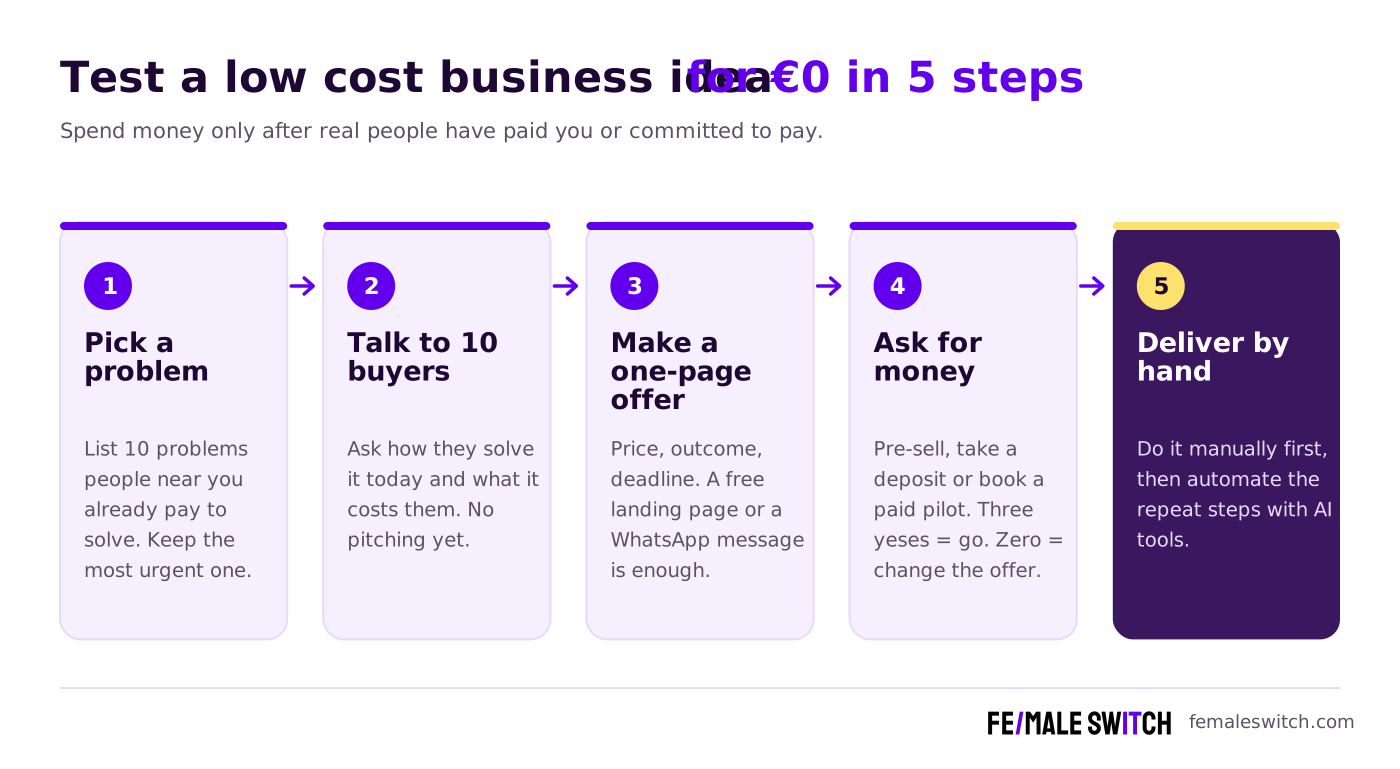
Writing your plan on one page helps too: our guide to the Business Model Canvas shows how, and the Idea Validator stress-tests your assumptions in minutes. Before step 2, sketch your buyer with the User Persona Generator, and check who else solves the problem with our guide to competitor analysis for startups.
What should women and first-time founders know before starting cheap?
Starting lean is not just a budget choice; for many women it is the realistic route. The GEM 2024/25 Women's Entrepreneurship Report found that 1 in 10 women started a business in 2024, compared with 1 in 8 men, and that women were 47% more likely to close a business for family or personal reasons. Investor money remains concentrated: startups with at least one female founder raised a record $73.6 billion in the US in 2025, but more than $30 billion of that went to just two AI companies (Fortune, citing PitchBook).
The good news is that small, self-funded businesses are exactly where women are growing fastest. Wells Fargo's 2026 report counts 15.7 million women-owned businesses in the US, 40.6% of all businesses, growing 12.1% between 2022 and 2025 against 6.3% for men-owned businesses. Only 9% of them have employees, which shows how many are solo, low-overhead operations. In the EU, women make up 34% of the self-employed.
Practical advice from what we see at Fe/male Switch:
- Design for flexibility. Choose an idea you can pause for a week without losing every client, such as products, retainers with a backup partner, or bookable services. Working from home? Check what your space, lease and local rules allow in our guide to small business ideas from home.
- Charge properly from the start. Underpricing is the most common mistake in service businesses. Quote a rate that still works if you get busy.
- Build in public with peers. A community of founders at the same stage keeps you going when progress is slow.
- Look at non-dilutive money. Grants don't cost equity; our sister site lists EU grants for startups with open calls and application tips.
- Practise before you risk money. Our startup game lets you build a business step by step with an AI co-founder, Elona Musk, at 0% risk.
Build your first business with an AI co-founder
Fe/male Switch is a startup game where you validate an idea, find first customers and launch, guided by AI tools and a community of 6,000+ founders.
👉 Start building your first startup
What are the risks of a low cost business?
Low cost does not mean low risk; it means the risk is mostly your time. US data from the Bureau of Labor Statistics shows about 78% of new businesses survive their first year, 51% reach five years and 35% reach ten. In the EU, 57% of businesses born in 2021 were still active three years later, and bankruptcies rose 5.7% in the second quarter of 2026. For ideas ranked by risk rather than cost, with survival rates by industry, see our guide to low risk business ideas. The most common traps:
- Competing only on price. If anyone with a laptop can offer your service, you need a niche, a guarantee or a local edge.
- Subscription creep. Ten €15 tools cost €1,800 a year. Review them every quarter.
- Ignoring taxes and social security. Set aside 25–35% of income until you know your real rate.
- Borrowing too early. If you do take a loan, have a repayment plan before you sign; see how to pay off your first business loan.
- Platform dependence. Etsy, Upwork or Instagram can change fees or algorithms overnight. Collect customer emails from day one.
- Skipping insurance and permits. Pet care, food, cleaning and senior care all carry liability. A single incident can cost more than a year of premiums.
For a wider list of ideas, see our earlier low cost business ideas guide and the collection of business ideas for women.
Conclusion: the best low cost business to start is the one customers already pay for
The cheapest businesses to start in 2026 are skill-based services such as virtual assistance, freelancing, tutoring and social media management, plus reselling. The ones with the strongest demand to 2030 combine a human service with AI: automation for small businesses, pet services, senior care and resale. Whatever you choose, test it with real buyers before you spend, keep fixed costs near zero, and price for profit from your first invoice.
Your next step: pick two ideas from the table, talk to ten potential customers this week, and try to pre-sell one offer. If you want a structured path, start the Fe/male Switch startup game for free, or take the lessons in the free startup school.
Methodology
Startup cost and time-to-first-revenue ranges are Fe/male Switch estimates, built from October 2026 prices for tools, platforms, insurance and registration.
FAQ: low cost businesses to start
What is the cheapest business to start with high profit?
Service businesses that sell expertise have the best profit-to-cost ratio. AI automation for small businesses, consulting in your field and no-code web design can be started for under €1,000 and charge high hourly or project rates, because the main cost is your skill, not stock or equipment.
What business can I start with €1,000 or $1,000?
With €1,000 you can start almost any idea in the first two tiers of this guide: AI automation, pet sitting, eco cleaning, home baking, bookkeeping, web design, online tutoring or a small reselling business. Keep at least a third of the budget as a buffer and don't spend it on ads before you have sales.
What business can I start with €100 or less?
Virtual assistance, freelance services, online tutoring, social media management and digital products can all start for under €100 if you already own a laptop and phone. Reselling can start with €50 of stock bought at thrift shops or flea markets.
Can I start a business with no money at all?
Yes, if you sell a service you can already deliver. Use free tools, find first clients through your network and local groups, and register once you are about to invoice. In France, Spain and the UK, registering as a sole trader is free.
What is the easiest low cost business for beginners with no experience?
Reselling, pet sitting, house cleaning and social media management for local businesses have the gentlest learning curve. They need reliability more than credentials, and you can get your first paying customer within a few weeks.
How long does it take for a low cost business to become profitable?
Because startup costs are low, many service businesses are profitable from their first paid project, typically within 1–8 weeks. Product businesses such as print on demand, Etsy shops and digital products usually take 1–3 months or more, and newsletters can take a year to earn meaningful income.
Which low cost businesses will be in demand in 2026 and beyond?
Data points to AI automation for small businesses (forecast to grow about 31.6% a year to 2030), resale (secondhand apparel forecast at $393 billion by 2030), pet services (the fastest-growing US pet category) and senior care (home care aide jobs projected to grow 18% by 2035).
Do I need to register my business before I start?
In most countries you need to register before you invoice customers or once your activity is regular. Registration is free or cheap in many places (for example €0 in France and Spain, €85.15 in the Netherlands, £0 for a UK sole trader), but check social security and tax obligations, which matter more than the registration fee.
Is dropshipping still a good low cost business in 2026?
It is riskier than it used to be. Advertising costs rose in 2025, the US ended duty-free entry for low-value parcels and the EU is adding a flat duty on small parcels, which squeezes margins on cheap imported products. If you try it, choose local suppliers and higher-priced products.
Can I run a low cost business alongside a full-time job?
Yes. Digital products, reselling, tutoring in the evenings, weekend pet sitting and freelance projects all work part-time. Choose an idea where clients don't expect instant replies during office hours, and check your employment contract for non-compete or side-business clauses.
About the Author
Violetta Bonenkamp, also known as MeanCEO, is an experienced startup founder with an impressive educational background including an MBA and four other higher education degrees. She has over 20 years of work experience across multiple countries, including 5 years as a solopreneur and serial entrepreneur. Throughout her startup experience she has applied for multiple startup grants at the EU level, in the Netherlands and Malta, and her startups received quite a few of those. She’s been living, studying and working in many countries around the globe and her extensive multicultural experience has influenced her immensely.

