
TL;DR: what are the best business ideas for women?
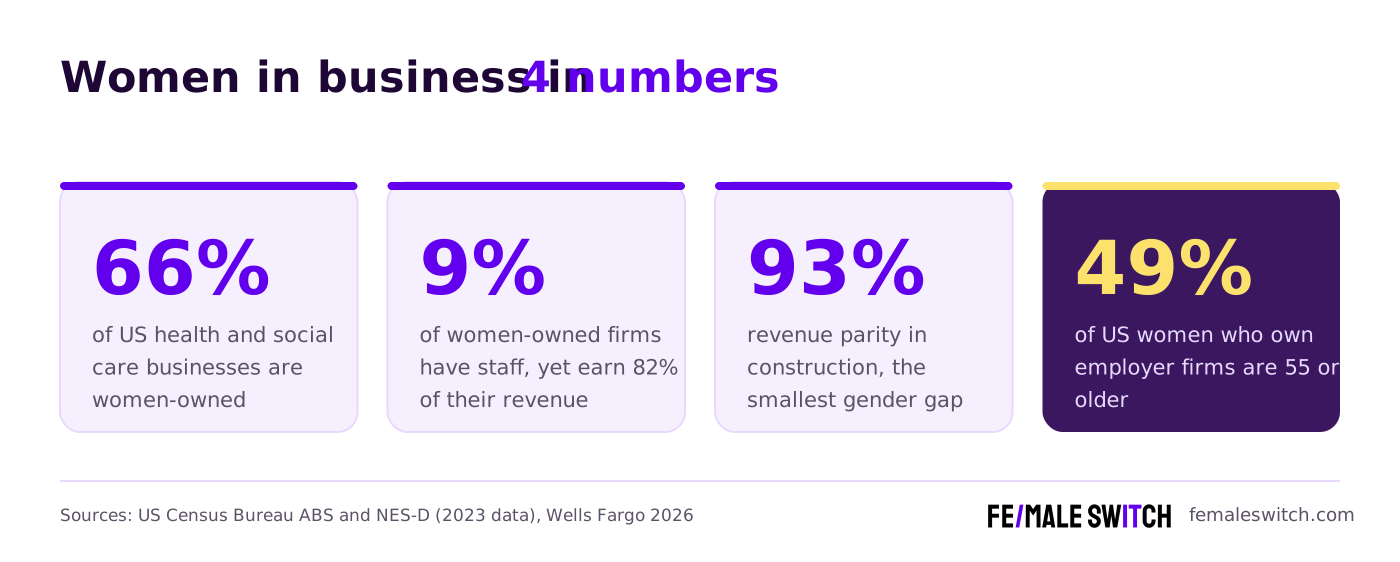
The best business for you depends on your experience, your life stage and how much you want to grow. The data points to professional services built on your career (fractional executive work, AI consulting, HR, coaching), care and health services where demand is rising fastest (eldercare, childcare, menopause support), and higher-revenue sectors women still overlook, such as construction and wholesale, where women-owned firms earn up to 93% of what men's do. The biggest lever is growth: the 9% of women-owned firms with employees earn 82% of all women-owned revenue.
👉 Find ideas that fit your skills with the free Business Ideas Generator
Most lists of business ideas for women repeat the same suggestions: candles, baking, nails, virtual assistance. Some of those are fine businesses, but the lists rarely ask the questions that matter: where do women-owned businesses actually make money, which ideas fit your stage of life, and which ones will AI erode in the next five years?
This guide answers those questions with data from the US Census Bureau, Eurostat, the Global Entrepreneurship Monitor and the BLS, then gives you 24 ideas grouped by your starting point. For startup budgets, risk and running a business from home, see our companion guides to the best low cost business to start, low risk business ideas and small business ideas from home. For the bigger picture, see the latest data on business women in Europe and the US, and 20 women who built companies. Starting later in life? See 15 business ideas for women over 50 on our sister site.
Updated October 2026. Methodology is at the end.
Where do women-owned businesses earn the most?
Women own a large and fast-growing share of businesses, but a much smaller share of business revenue. According to the US Census Bureau, women own 22.9% of US employer firms, and the average women-owned employer firm earns $1.73 million a year against $4.06 million for men-owned firms. Among solo businesses the gap is similar: $32,849 against $67,623.
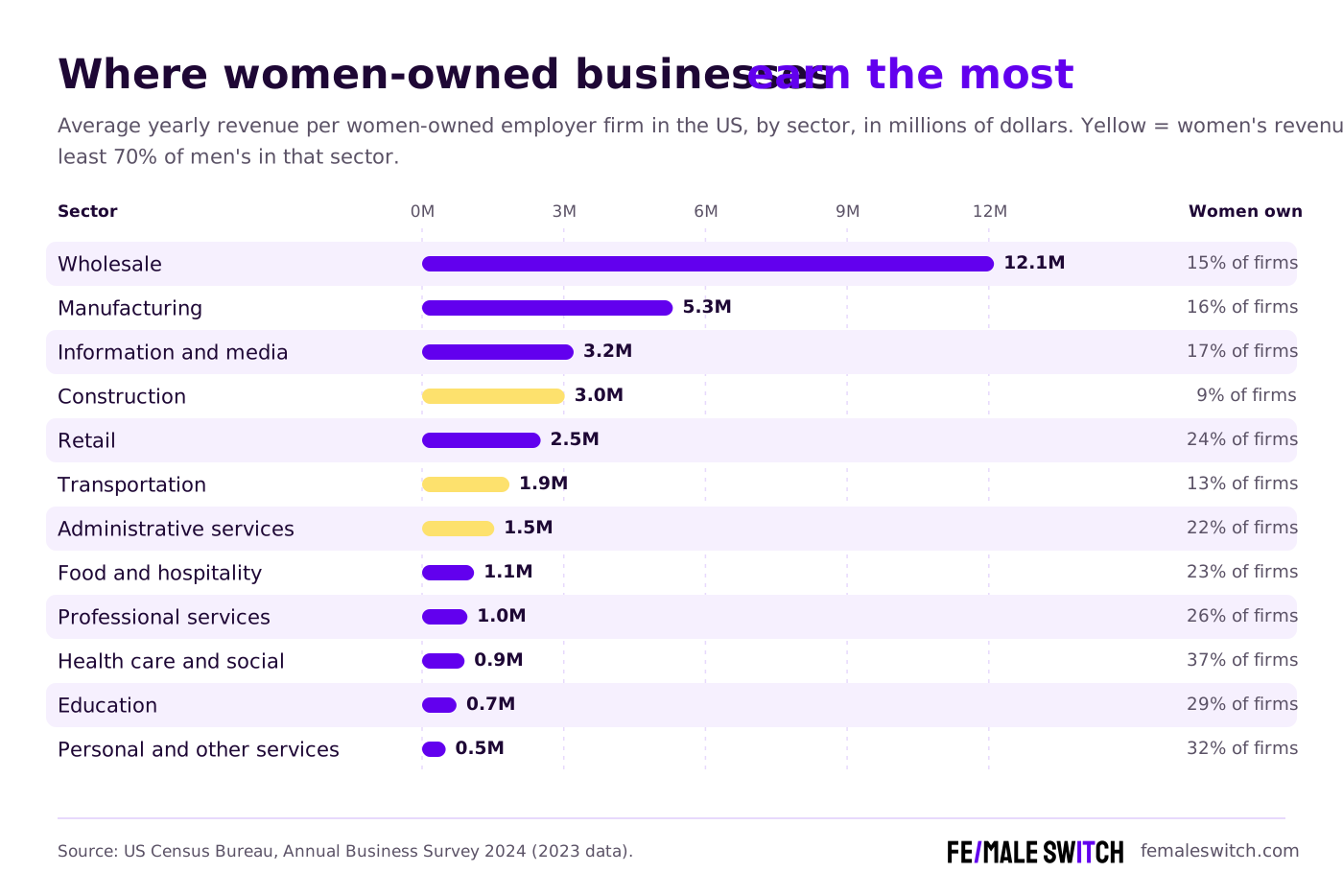
US employer firms; Census Bureau Annual Business Survey 2024, 2023 data.
Three insights matter more than any single idea:
- The stereotype trap is real. Women cluster in health care, personal services and education, where average revenue is lowest. In Europe the pattern is the same: women are 72.4% of self-employed people in personal services and 66.0% in health and social work, but only 16.1% in ICT and 4.5% in construction (Eurostat).
- Some "male" sectors are fairer than you'd think. In construction, women-owned firms earn 93% of men's average revenue, and in transportation 79%. Fewer competitors and B2B clients who pay for reliability can outweigh the bias.
- Hiring is the biggest lever. Only 9% of women-owned firms have employees, compared with 17.9% of men-owned firms, but those 9% generate 82.2% of all women-owned revenue, according to Wells Fargo's 2026 report.
None of this means you should avoid caring or creative work. It means you should price it properly, build a team when demand allows, and consider where your experience could earn more. Read more in our overview of female entrepreneurship statistics and trends.
Which business fits your life stage?
Women start businesses for different reasons than men. In the Census survey of business owners, "balance work and family" was the top reason for women (60.1% rated it very important), while men most often named being their own boss (65.1%). The GEM 2024/25 Women's Entrepreneurship Report adds that women are 1.47 times as likely as men to exit a business for family reasons. So fit matters as much as profit.
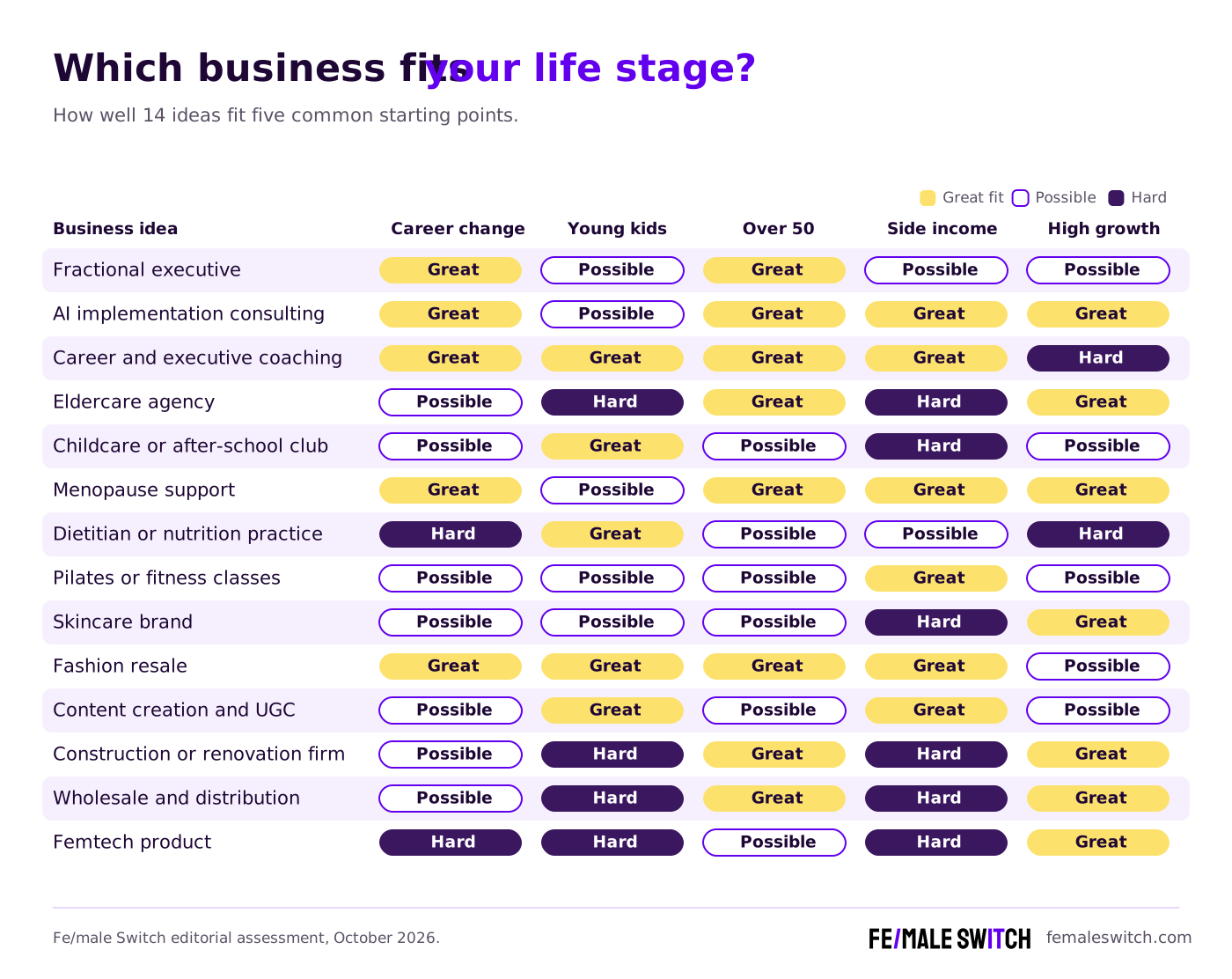
- Career changers: turn your profession into a service first: fractional work, consulting, coaching or HR. Experience in the same industry more than doubles the chance of a top-growth company in US research.
- Mothers of young children: pick work you can schedule or do asynchronously, such as coaching, online nutrition services, resale or content. See our guide to work-life balance for founders.
- Women over 50: you're in good company. 49.3% of US women who own employer firms are 55 or older, and 43.8% of self-employed women in the EU are 50–74. Experience, networks and savings are your advantages.
- Side income: start with ideas that need no premises or staff: coaching, AI set-up services, resale, teaching fitness classes.
- High growth: choose a scalable model with investors in mind, such as femtech, a product brand or an eldercare agency, and read how to start a startup.
24 business ideas for women, by starting point
Each idea includes who it suits, the strongest data we could find and what to watch out for. US earnings are BLS median pay for employees in the occupation (May 2025), a useful floor for what clients pay; your own pricing can be higher.
Ideas that use your professional experience
1. Fractional executive (CFO, CMO, HR or COO)
Companies that can't afford a full-time executive hire one for a few days a month. If you've led finance, marketing, people or operations, you already have the product.
- Best for: career changers and women over 50 with senior experience
- The data: Lightcast counted more than 34,000 US workers with "fractional" in their job title in 2025, up 265% since 2019, and finance accounts for 46% of fractional job postings. BLS projects 10% growth for management analysts, with median pay of $101,860.
- Watch out for: income depends on 3–5 retainer clients; agree scope and notice periods in writing.
2. AI implementation consulting for small businesses
Most small businesses want to use AI but don't know where to start. Setting up tools, automations and training is a fast-growing service, and women are under-represented in it.
- Best for: career changers, side income and anyone comfortable with software
- The data: In 2025, 55% of large EU firms used AI but only 17% of small ones (Eurostat), and the EU AI Act's AI-literacy rules have pushed employers to train staff. GEM finds women are less than half as likely as men to start ICT businesses (2.3% vs 6.1%), so the field is wide open.
- Watch out for: keep learning; sell outcomes (hours saved, sales won) rather than tools.
Start with the best AI tools for female entrepreneurs and MeanCEO's guide to AI tools for solo founders.
3. HR and pay-transparency consulting
Employers face new rules on pay, flexibility and wellbeing, and small firms have no HR department.
- Best for: HR professionals going independent
- The data: The EU Pay Transparency Directive had to be in national law by 7 June 2026, yet only four member states met the deadline, so many employers still need pay audits and job frameworks. BLS projects 6% growth for HR specialists (median $75,940); women are 78% of HR workers.
- Watch out for: employment law differs by country; carry professional indemnity insurance.
4. Financial planning and bookkeeping for women and small firms
Women control a growing share of household wealth but are rarely served by advisers who look like them. Small firms also need bookkeeping as tax goes digital.
- Best for: accountants, bankers and qualified advisers
- The data: Women are only 23.8% of US Certified Financial Planners and about 18% of UK financial advisers. Personal financial advisors earn a median $105,070. In the UK, Making Tax Digital for Income Tax started in April 2026 for sole traders and landlords with income over £50,000.
- Watch out for: regulated advice needs authorisation (FCA, SEC or national regulators); routine bookkeeping is shrinking as software automates it (BLS: −6% by 2035), so sell advice and clean-up.
5. Career and executive coaching
Coaching turns leadership or career experience into a scalable service delivered online.
- Best for: managers, HR leaders and career changers; works around children
- The data: The ICF 2025 Global Coaching Study counted 122,974 coach practitioners worldwide, 15% more than in 2023, generating $5.34 billion; 72% of coaches are women.
- Watch out for: it's crowded and unregulated: niche down (for example, women returning to work, new managers or founders) and get credentials.
Explore women's leadership coaching as a niche.
Care and health: where demand is growing fastest
Women already own 66% of US health care and social assistance businesses. Demand here is driven by ageing populations and childcare shortages, so the opportunity is to build bigger, better-priced services, not just solo practices.
6. Eldercare and senior companion agency
Older adults increasingly want help to live at home. A companion or home-care agency can grow into a business with dozens of staff.
- Best for: women over 50, nurses and care managers; high growth
- The data: The BLS projects 18% growth for home health and personal care aides by 2035, about 847,300 more jobs, the fastest in this guide. In the EU, 22.0% of people are already 65 or older, and England's social care sector has a 6.2% vacancy rate.
- Watch out for: personal care is regulated (CQC registration in England, state licences in the US); companionship-only services usually need less.
7. Childcare, holiday and after-school clubs
Parents struggle to find care that matches modern working hours, especially for older children and atypical hours.
- Best for: mothers, teachers and early-years professionals
- The data: In the Coram Childcare Survey 2026, only 64% of English councils had enough after-school places for 5–11-year-olds, 27% for parents working atypical hours and just 13% for 12–14-year-olds. An after-school club costs parents about £69 a week.
- Watch out for: licensing, staff ratios and safeguarding everywhere; plan premises and insurance early.
8. Menopause support services
Menopause has moved from taboo to boardroom topic. Coaching, workplace programmes, products and clinics all have room to grow.
- Best for: health professionals, HR specialists and women over 45
- The data: BCG estimates the US menopause market at under $5 billion today with the potential to exceed $40 billion by 2030, with about 65 million US women in a stage of menopause. In the UK, the Employment Rights Act 2025 introduces menopause action plans for employers with 250+ staff, voluntary from April 2026.
- Watch out for: medical claims and supplements are regulated; partner with clinicians for anything clinical.
9. Doula and postpartum support
Doulas and postpartum specialists support families before and after birth, a service many parents now budget for.
- Best for: midwives, nurses, mothers who want flexible, meaningful work
- The data: 46 US states and Washington DC have taken steps toward Medicaid coverage for doula care (Georgetown CCF tracker). UK birth doulas typically charge £500–2,000 per birth.
- Watch out for: births are unpredictable; work with a backup doula and clear contracts.
10. Dietitian or nutrition practice
Nutrition services can run online or in clinics, and demand is rising with interest in metabolic health and menopause.
- Best for: qualified dietitians and nutrition graduates
- The data: BLS projects 8% growth for dietitians (median $76,400); women are 91.7% of the profession.
- Watch out for: "Dietitian" is a protected title in the UK (HCPC registration) and in many US states and EU countries; "nutritionist" and "health coach" are not, so check what you can call yourself.
11. Femtech or women's health product
Products for women's health, from fertility and pregnancy to menopause and pelvic health, are still underserved.
- Best for: founders with clinical, scientific or product experience who want to build a scalable company
- The data: Women's health VC in the US and Europe reached about $2 billion in 2025, below the 2024 peak, with money concentrating in fewer, larger deals (SVB/First Citizens).
- Watch out for: medical devices and apps with health claims fall under the EU MDR, UK MHRA and FDA rules; budget for regulation from day one.
Read our guide to healthtech and femtech opportunities.
Beauty, wellness and lifestyle
12. Pilates, yoga or fitness studio
Pilates is the most-booked class on ClassPass for the third year running, and small studios and instructors can capture local demand.
- Best for: fitness lovers seeking side income or a studio business
- The data: ClassPass reported Pilates bookings up 66% in 2025 (reformer +71%). BLS projects 7% growth for fitness trainers (median $47,160); women are 66% of the occupation.
- Watch out for: studio rent and reformer equipment are expensive; start by teaching classes or renting space by the hour.
13. Skin, brow or nail studio
Skin, brow and nail services are booked every few weeks, which makes income predictable.
- Best for: beauty professionals ready to run their own studio
- The data: BLS projects 9% growth for both skincare specialists (median $45,330) and manicurists.
- Watch out for: licensing is required in every US state; England plans a licensing scheme for non-surgical cosmetic procedures, and Germany requires a master qualification for hairdressing.
14. Skincare or clean beauty brand
A product brand can scale far beyond your own hours, and Europe is the world's biggest cosmetics market.
- Best for: high growth; founders with a clear niche and some capital
- The data: European cosmetics retail sales reached €110 billion in 2025, including €32.3 billion for skincare (Cosmetics Europe). McKinsey expects global beauty growth to slow to about 5% a year.
- Watch out for: EU products need a Responsible Person, a safety report and CPNP notification before sale; differentiate on a real need, not just ingredients.
15. Event and wedding planning
Couples and companies outsource planning, and good planners get referrals for years.
- Best for: organised career changers; works part-time at first
- The data: BLS projects 6% growth for meeting and event planners (median $61,160); women are 73.4% of the profession. The average US wedding costs about $34,200 (The Knot).
- Watch out for: seasonal cash flow; take deposits and use contracts with cancellation terms.
16. Interior design and home staging
Interior design and home staging help homeowners, landlords and agents sell or rent faster.
- Best for: designers, architects and creative career changers
- The data: BLS: interior designers earn a median $67,190 and 26% are self-employed; women are 82.8% of the profession. In NAR's 2025 survey, 83% of buyers' agents said staging helps buyers visualise a home.
- Watch out for: some US states restrict the "interior designer" title; build a portfolio and partner with estate agents.
See how others offer virtual interior design.
17. Pet services
Pet owners spend more every year, and services such as grooming, training and boarding can't be automated.
- Best for: animal lovers; flexible hours
- The data: US pet spending reached $158 billion in 2025 (APPA), and BLS projects 11% growth for animal care jobs. The EU has 139 million pet-owning households (FEDIAF).
- Watch out for: boarding needs a licence in England and many other places; insure against injuries.
Read why pet sitting and dog walking is a strong starter business.
Online and creator businesses
18. Content creation, UGC and newsletters
Brands pay creators for content, and newsletters can be monetised directly through subscriptions.
- Best for: mothers, side income and anyone with a niche audience
- The data: US creator ad spend was projected at $37 billion in 2025, up 26% and growing about four times faster than total media (IAB). Substack reports over 5 million paid subscriptions, and writers keep 90% minus card fees.
- Watch out for: income is uneven and platform-dependent; build an email list you own.
Plan your channels with our content creation strategy guide.
19. Online courses and memberships
Courses and memberships package your expertise into products you sell repeatedly.
- Best for: experts with an audience; side income
- The data: Marketplaces take a large cut: Udemy pays instructors 37% of organic sales, and its subscription payout pool fell to 15% from January 2026. Selling on your own site keeps most of the revenue.
- Watch out for: AI tutors make information-only courses less valuable; sell community, feedback and certification instead.
20. Fashion resale and vintage
Second-hand fashion is growing several times faster than new clothing, and curation is a skill buyers pay for.
- Best for: mothers, side income and women over 50 with an eye for style
- The data: ThredUp's 2026 report found US second-hand apparel grew 19% in 2025, about four times faster than retail clothing. Vinted's revenue rose about 38% to €1.1 billion in 2025.
- Watch out for: margins depend on sourcing; new EU textile take-back fees are due to start around 2028.
See our guide to e-commerce startups for female founders.
Higher-revenue sectors women still overlook
These ideas break the stereotype. They need more capital or industry knowledge, but the revenue per business is far higher and competition from other women founders is low.
21. Construction, renovation or property maintenance company
Renovation, property maintenance and fit-out companies win repeat contracts from landlords, businesses and homeowners. You don't need to swing the hammer: many owners run the project management and hire tradespeople.
- Best for: project managers, women over 50 and career changers from property or operations
- The data: Women-owned construction employer firms in the US average $3.02 million in revenue, 93% of men's average, the smallest gap of any sector, yet women own only 8.7% of them. In the EU, women are just 4.5% of self-employed people in construction.
- Watch out for: licences and insurance for building work; start with project management and maintenance contracts.
22. Wholesale and distribution
Importing and distributing products to shops, restaurants or businesses is unglamorous and lucrative.
- Best for: women with buying, retail or supply-chain experience
- The data: Women-owned wholesale employer firms average $12.11 million a year, the highest of any sector, yet women own only 14.9% of them.
- Watch out for: working capital for stock and long payment terms; secure supplier agreements before you scale.
23. Your own product line with contract manufacturing
You can own a product brand without owning a factory by using contract manufacturers for food, cosmetics, home goods or apparel.
- Best for: high growth; founders with a clear niche and access to capital
- The data: Women-owned manufacturing employer firms average $5.31 million in revenue; women own 16.2% of them.
- Watch out for: minimum order quantities and product rules (food, cosmetics, toys); validate demand with pre-orders before the first production run.
24. Real estate agency or property management
Real estate agents and property managers earn on transactions and recurring management fees.
- Best for: career changers and women over 50 with local networks
- The data: Women are 66% of US Realtors. NAR's 2026 member profile puts median gross income at $59,200, but only $8,000 for agents with up to two years' experience. Property managers earn a median $69,990.
- Watch out for: licensing in the US, Germany and France (not in the UK); income takes time to build, so start with property management for recurring revenue.
Which business ideas are safest from AI?
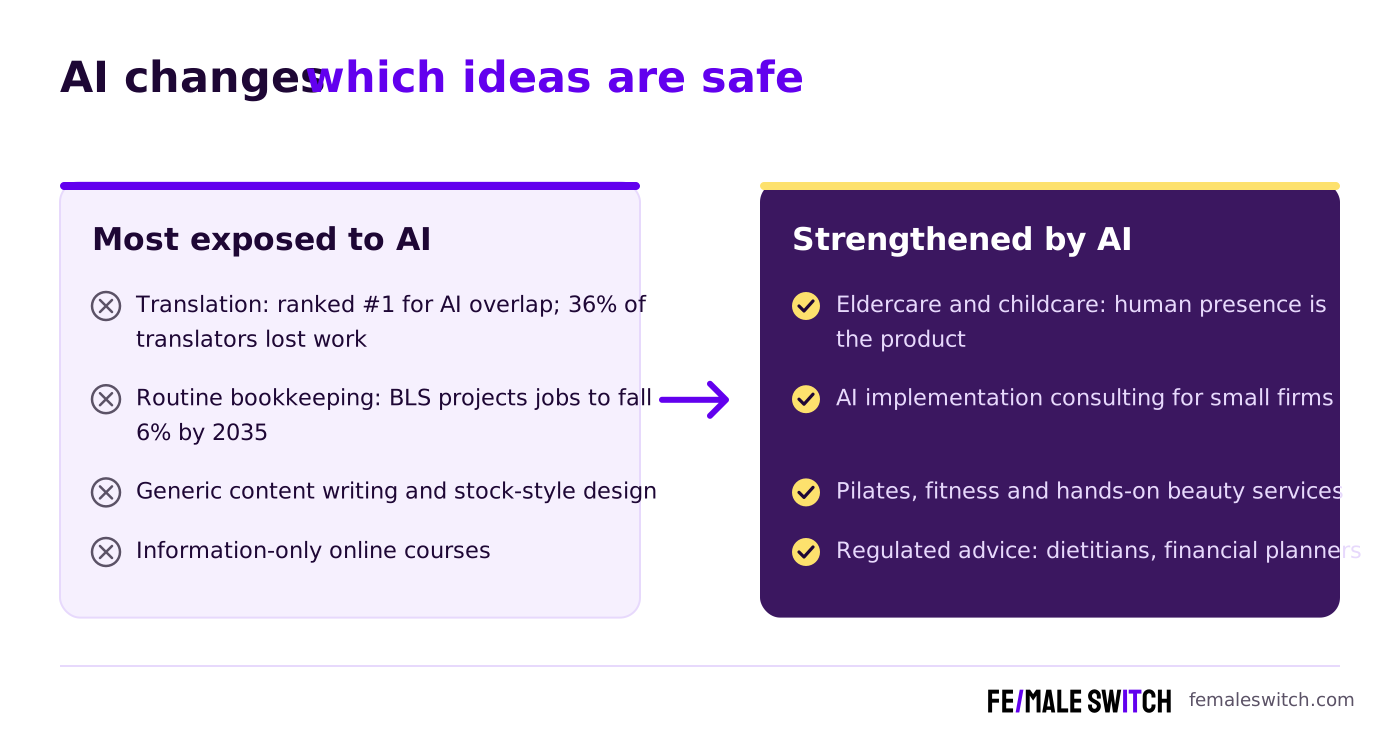
Ideas built on human presence, trust or regulation are the most resilient: care, health, hands-on services and licensed advice. Ideas that sell only information or routine digital work face falling prices: 36% of translators surveyed by the UK Society of Authors had already lost work to generative AI. The safest digital businesses use AI to deliver more value per client rather than competing with it.
How can women get money to start a business?
Most women fund their businesses themselves, and the investment gap is still wide. In 2025, startups with at least one female founder took a record 27.7% of US venture capital, but all-female teams received only about 1.1% (PitchBook). In the UK, all-female founder teams won 1.9% of equity investment value in 2024 (British Business Bank). Debt is easier but not equal: 49% of US women-owned employer firms received the full financing they asked for in 2025 (Federal Reserve).
Start with revenue and non-dilutive money, and approach investors once you have traction. Our guides to grants for female founders and funding for female founders list more options, and our sister site tracks EU grants for startups.
How to choose and test your business idea in 7 days
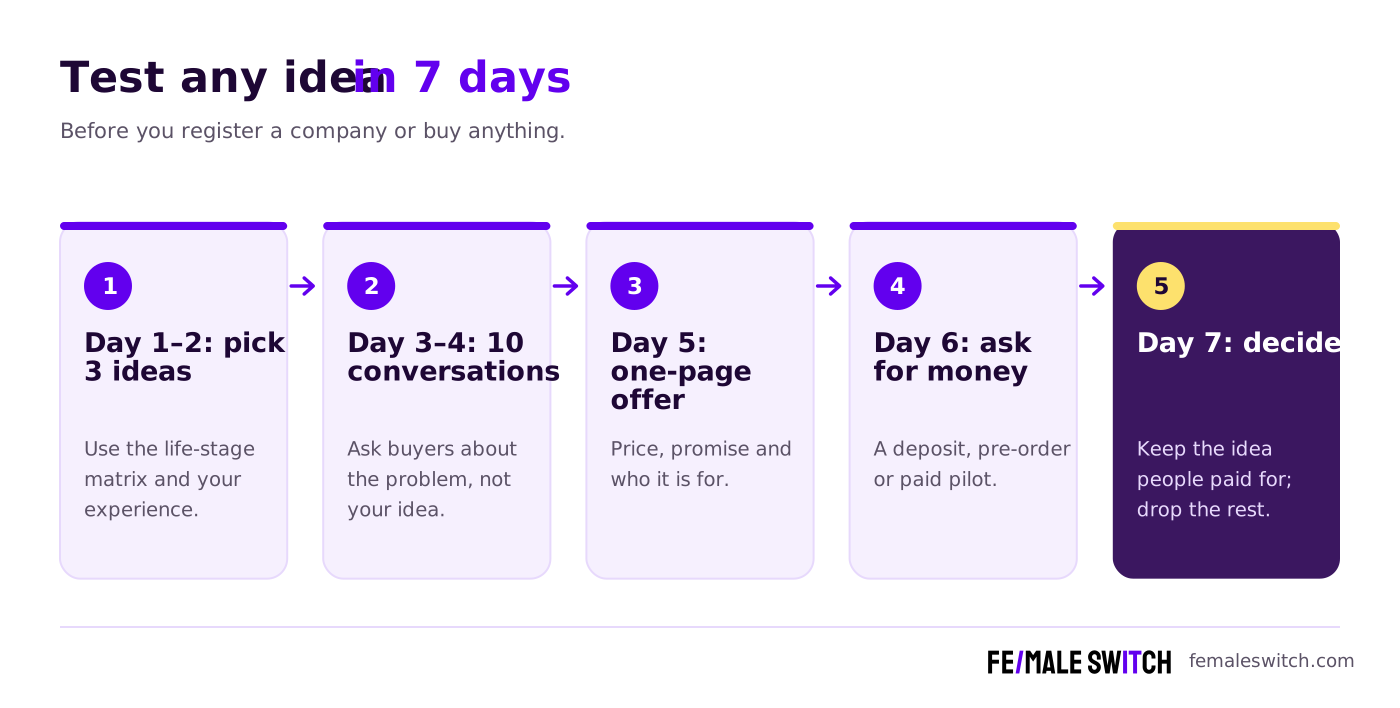
Women are less likely than men to say they have the skills to start a business (52.1% vs 62.7% in GEM data), yet the best way to build confidence is evidence. Talk to ten potential customers, write a one-page offer and ask for a deposit. The idea people pay for is your business. Score your options with the free Idea Validator and read how to validate a startup idea as a female founder.
Build your business with an AI co-founder and 6,000+ women founders
The Fe/male Switch startup game takes you from idea to first customers step by step, with Elona Musk as your AI co-founder and a community of female founders beside you.
👉 Start building your first business
Conclusion: choose the business that fits your life and pays you properly
The best business ideas for women are not a separate, smaller category. Use the experience you already have, choose a model that fits your life stage, and look beyond the sectors where women-owned firms earn the least. Care and health offer the strongest demand, professional services offer the fastest start, and construction, wholesale and product brands offer the highest revenue per business. Whatever you choose, plan to hire when demand allows; that is where women-owned revenue grows.
Your next step: pick three ideas from the life-stage matrix, talk to ten potential customers this week and ask one of them to pay. For structured lessons, join the free startup school.
Methodology
Sector revenue data is for US employer firms (Census Annual Business Survey, 2023 data); earnings are BLS median pay for employees (May 2025) and indicate what the work is worth, not guaranteed business income. Life-stage ratings are a Fe/male Switch editorial assessment, October 2026.
FAQ: business ideas for women
Which business is best for women?
The best business is one that uses your experience and fits your life. Data-backed options include fractional executive work, AI implementation consulting, coaching, eldercare and childcare services, menopause support, Pilates instruction and fashion resale.
Which business is most profitable for women?
Revenue is highest in wholesale, manufacturing, information and construction: US women-owned employer firms in wholesale average $12.1 million a year. For a solo start, professional services such as fractional finance roles or financial planning pay best, with BLS medians above $100,000.
What is the best online business for a woman?
Online coaching, AI set-up and automation services, content creation and resale are strong options. They need little capital, can be run on your own schedule and scale through retainers, subscriptions or an audience you own.
What is the best business for a mother?
Choose work you can schedule or do asynchronously: coaching, online nutrition services, resale, content creation or childcare that includes your own children. Set fixed working blocks and grow at a pace that fits your family.
What is the best business to start at 50?
Use your experience: fractional executive roles, consulting, coaching, eldercare agencies and real estate suit women over 50. Nearly half of US women who own employer businesses are 55 or older, and research links industry experience with higher success.
How can a woman start a business with no money?
Start with a service you can sell from your skills, such as consulting, coaching or AI set-up, and ask for deposits before you spend. Apply for women's grants such as the Amber Grant or national programmes, and see our guide to the best low cost businesses.
How can a woman get money to start a business?
Most women start with savings and revenue. Add grants (Amber Grant, Women TechEU, Innovate UK Women in Innovation), loans from banks or community lenders, and crowdfunding. Approach angels and VCs once you have traction; all-female teams still receive only about 1–2% of VC.
What business is least likely to fail?
Services with recurring demand and low fixed costs are the safest, such as bookkeeping, care, pet services and consulting. Our guide to low risk business ideas compares survival rates by industry.
Are there business ideas for women that AI won't replace?
Yes. Care, health, hands-on beauty and fitness, and regulated advice depend on human presence and trust. AI is more likely to replace routine translation, bookkeeping and generic content work.
About the Author
Violetta Bonenkamp, also known as MeanCEO, is an experienced startup founder with an impressive educational background including an MBA and four other higher education degrees. She has over 20 years of work experience across multiple countries, including 5 years as a solopreneur and serial entrepreneur. Throughout her startup experience she has applied for multiple startup grants at the EU level, in the Netherlands and Malta, and her startups received quite a few of those. She’s been living, studying and working in many countries around the globe and her extensive multicultural experience has influenced her immensely.

