
TL;DR: what skills does an entrepreneur need?
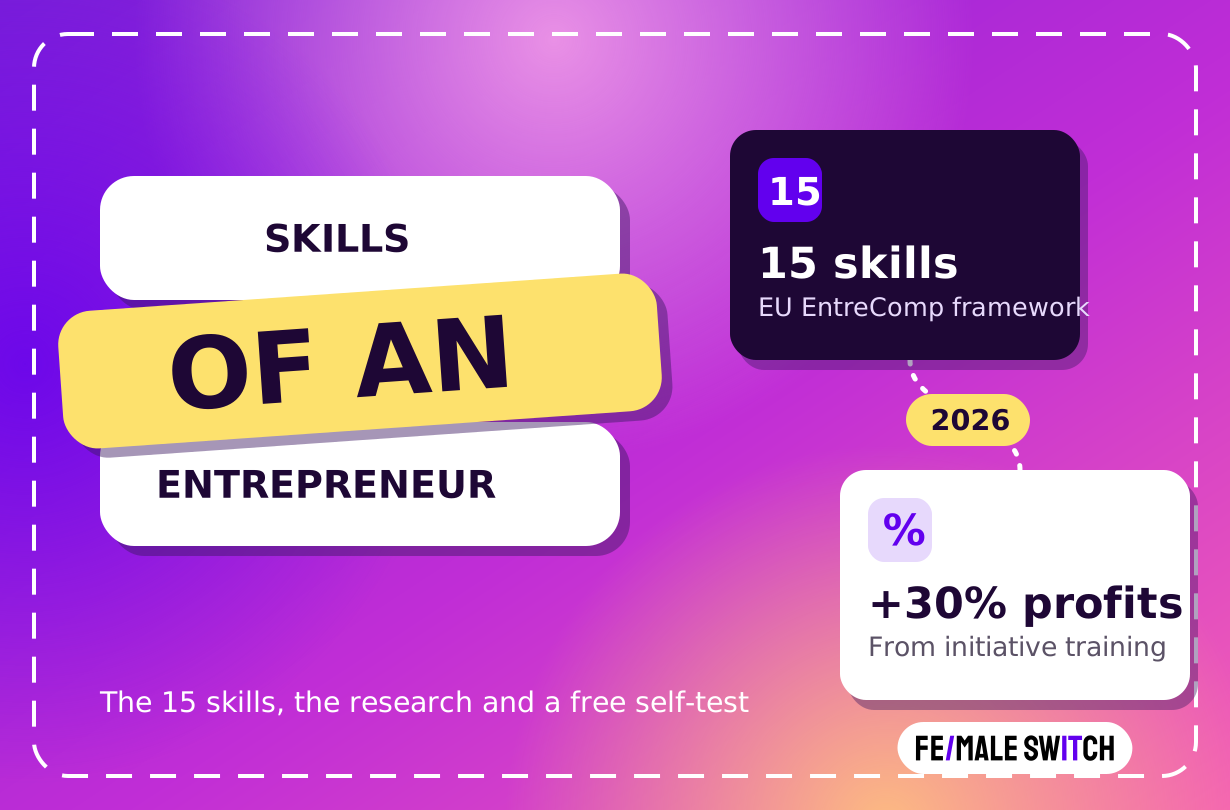
The EU's EntreComp framework lists 15 entrepreneurial skills in three groups: spotting and valuing ideas, mobilising resources and people, and taking action under uncertainty. Research adds three lessons: successful founders are generalists rather than specialists, proactive initiative can be trained and pays off (+30% profits in one large trial), and skills grow fastest by doing, not by reading. Score yourself on all 15 below, find your biggest gap for your stage, and build it with small weekly tests.
👉 Practise all 15 skills in the Fe/male Switch startup game
Most lists of entrepreneur skills are opinions. This guide uses the European Commission's EntreComp framework, which defines 15 entrepreneurial competences, and adds the research on which skills actually make a difference to business results. For each skill you'll see what it looks like in practice and the fastest way to build it.
You'll also find a free self-test, a map of which skills matter at each startup stage, and data on the confidence gap that holds many women back. Updated October 2026. Not sure where you start from? Our sister site translates 10 common jobs into the skills of an entrepreneur you already have.
What are entrepreneurial skills?
Entrepreneurial skills are the abilities you need to turn an idea into something of value for others: finding opportunities, gathering resources and people, and acting under uncertainty. They differ from personality traits, which are fairly stable, and from mindset, which is your attitude; skills can be learned and measured. They're not only for founders. EntreComp treats them as a key competence for every citizen, useful in jobs, communities and side projects.
The 15 skills of an entrepreneur at a glance
Source: EntreComp, European Commission Joint Research Centre (2016). Descriptions and practice ideas are ours.
What research says actually predicts success
Successful founders are generalists
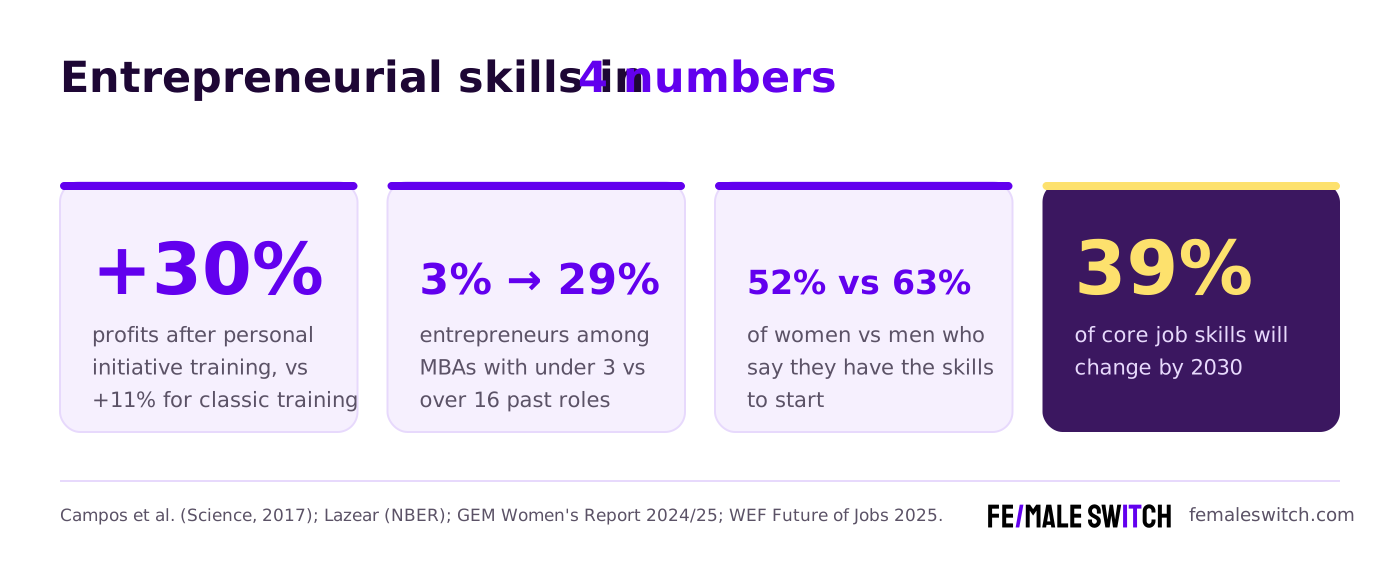
Stanford economist Edward Lazear studied about 5,000 Stanford MBA graduates and found that the number of different roles people had held was by far the strongest predictor of becoming an entrepreneur: 3% of those with fewer than three past roles were entrepreneurs, against 29% of those with more than 16. Founders need to be good enough at many things rather than excellent at one, which is why the list of skills is so broad.
Initiative can be taught, and it pays
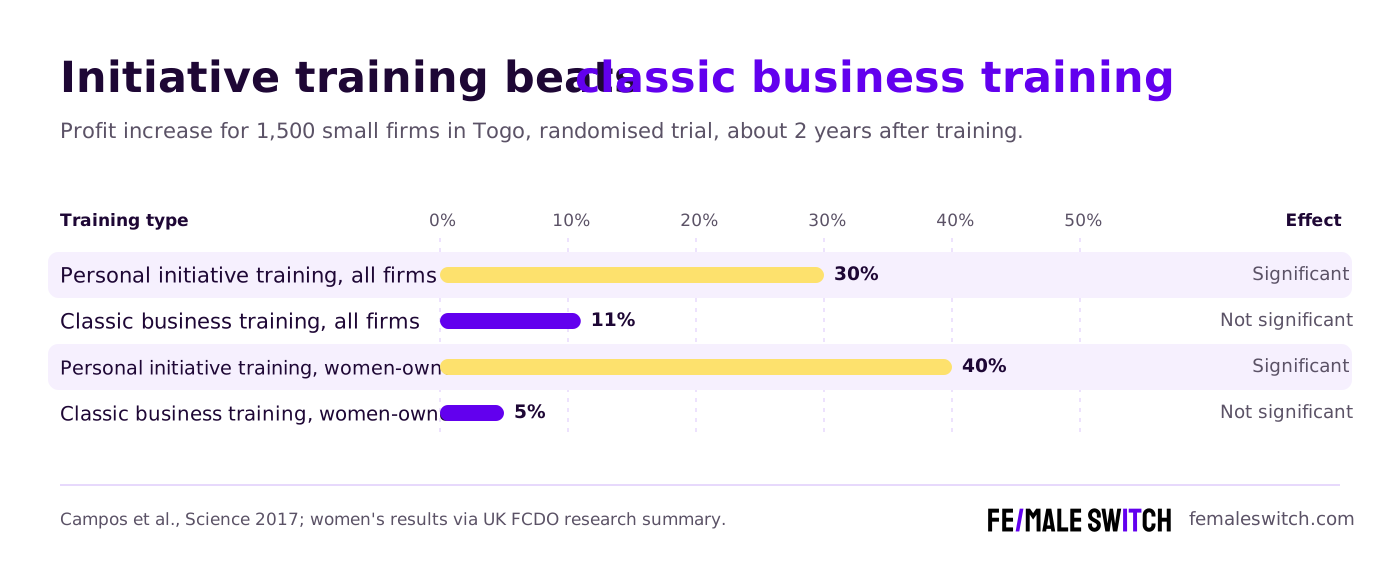
In a randomised trial with 1,500 small businesses in Togo, published in Science in 2017, Francisco Campos and colleagues compared a classic business course with training in personal initiative: acting proactively, setting your own goals and overcoming obstacles. Initiative training raised profits by 30%; the classic course had no significant effect. A seven-year follow-up found profits still 52% above the control group on average, but the gains held for men while women's faded, partly because they had less capital to invest and lower self-efficacy. Skills need resources to pay off.
Matched traits and experience matter
A meta-analysis by Andreas Rauch and Michael Frese found that traits matched to entrepreneurial work, such as proactiveness, innovativeness and self-efficacy, are linked to business success, though the effects are moderate. Experience counts too: founders of the fastest-growing US firms are 45 on average when they start, and prior industry experience doubles the odds of top growth. In short, no single talent makes an entrepreneur; a broad mix of skills, practised in a field you know, does.
Ideas and opportunities skills
Spotting opportunities
Opportunities come from changes: new rules, new technology, new habits, ageing populations. Founders with industry experience spot them faster, which is one reason why, in research by Azoulay and colleagues, founders with three or more years in the same industry were twice as likely to build a top-growth firm.
Sign you have it: you notice unmet needs and changes others miss. Build it: keep a weekly log of problems people complain about.
Creativity
Creativity in business is mostly recombination: taking a model that works in one market and fitting it to another. It improves with volume, so generate many options before you judge any of them.
Sign you have it: you generate several solutions, not just the first one. Build it: sketch 10 versions of one idea before choosing.
Vision
Vision is what lets you recruit a co-founder, a first employee or an investor before there is much to show. Keep it concrete: who you serve, what changes for them, and how big it can get.
Sign you have it: you can describe where this goes in 3 years. Build it: write a one-page future press release.
Valuing ideas
This is the skill behind the most common skill-related failure. CB Insights found poor product-market fit in 43% of recent startup shutdowns. Test willingness to pay early, with pre-orders, deposits or pilots, and use a scoring tool such as our Idea Validator.
Sign you have it: you judge which ideas are worth money. Build it: score ideas on demand, margin and your edge.
Ethical and sustainable thinking
Customers, investors and EU rules increasingly reward businesses that can show their impact. It's also a source of opportunities, from repair and resale to energy savings.
Sign you have it: you weigh the impact on people and the planet. Build it: add an impact check to every big decision.
Resources skills
Self-awareness and self-efficacy
Self-efficacy, the belief that you can act successfully, is one of the traits most linked to business success in a meta-analysis by Rauch and Frese. It's also where the gender gap is widest, as the GEM data below shows. It grows through small wins, so set goals you can hit.
Sign you have it: you know your strengths and believe you can act. Build it: ask 5 people for your top strength and gap.
Motivation and perseverance
Every founder hears no far more often than yes. Perseverance is easier when your goals are about inputs you control, such as calls made or tests run, not only outcomes you don't.
Sign you have it: you keep going after rejections. Build it: set weekly process goals, not just outcomes.
Mobilising resources
Few founders own what they need. They borrow, rent, apply for grants, barter and ask. Being resourceful matters more than being well funded at the start.
Sign you have it: you get money, tools and help you don't own. Build it: make one ask a week: a grant, a loan, a favour.
Financial and economic literacy
Running out of cash was the final cause in 70% of the startup shutdowns CB Insights analysed. Only 18% of EU adults have a high level of financial literacy, according to Eurobarometer, so this is a gap for most founders. Start with our guide to financial planning for first-time founders.
Sign you have it: you read a P&L, price and plan cash. Build it: build a 12-month cash-flow sheet for your idea.
Mobilising others
Selling, pitching and negotiating. In the Slush 2025 survey of 607 European founders, fundraising (58%), revenue growth (53%) and customer acquisition (about 50%) were the top worries, and all three depend on this skill. See B2B sales for female founders and telling your story in a pitch deck.
Sign you have it: you persuade customers, partners and investors. Build it: pitch to 10 strangers and track the answers.
Into action skills
Taking the initiative
The skill with the strongest evidence that training works. In the Togo trial described above, teaching business owners to act proactively raised profits by 30%, nearly three times the effect of a classic business course.
Sign you have it: you start before everything is ready. Build it: ship one small test every week.
Planning and management
Plans change, but planning forces you to set priorities, test assumptions and budget. Keep plans short and review them every two weeks.
Sign you have it: you set priorities, milestones and budgets. Build it: run 2-week sprints with 3 goals each.
Coping with uncertainty and risk
Founders rarely love risk; they manage it. Cap the money and time each experiment can cost, and decide in advance what result would make you stop.
Sign you have it: you decide with incomplete information. Build it: cap each experiment's cost before you start.
Working with others
Teams and co-founder relationships make or break early startups. Agree on roles, equity and how you'll resolve disagreements before they happen, and learn to lead in a way that inspires.
Sign you have it: you build a team and handle conflict. Build it: agree roles and equity in writing early.
Learning through experience
Entrepreneurs learn mostly by doing, then reflecting. A short written review after every test, covering what you expected, what happened and what you'll change, turns mistakes into skill. Use data-driven decision-making to keep it honest.
Sign you have it: you turn results into better decisions. Build it: write a 15-minute review after every test.
The skill gaps behind startup failures
Startups rarely fail for one reason, but the patterns point to specific skills. In CB Insights' 2026 analysis of 385 venture-backed shutdowns:
Source: CB Insights, March 2026. Cases can have several reasons; running out of capital is usually the final cause, not the root one.
For a broader look at the warning signs, read why most startups fail.
Entrepreneurial skills for the AI era
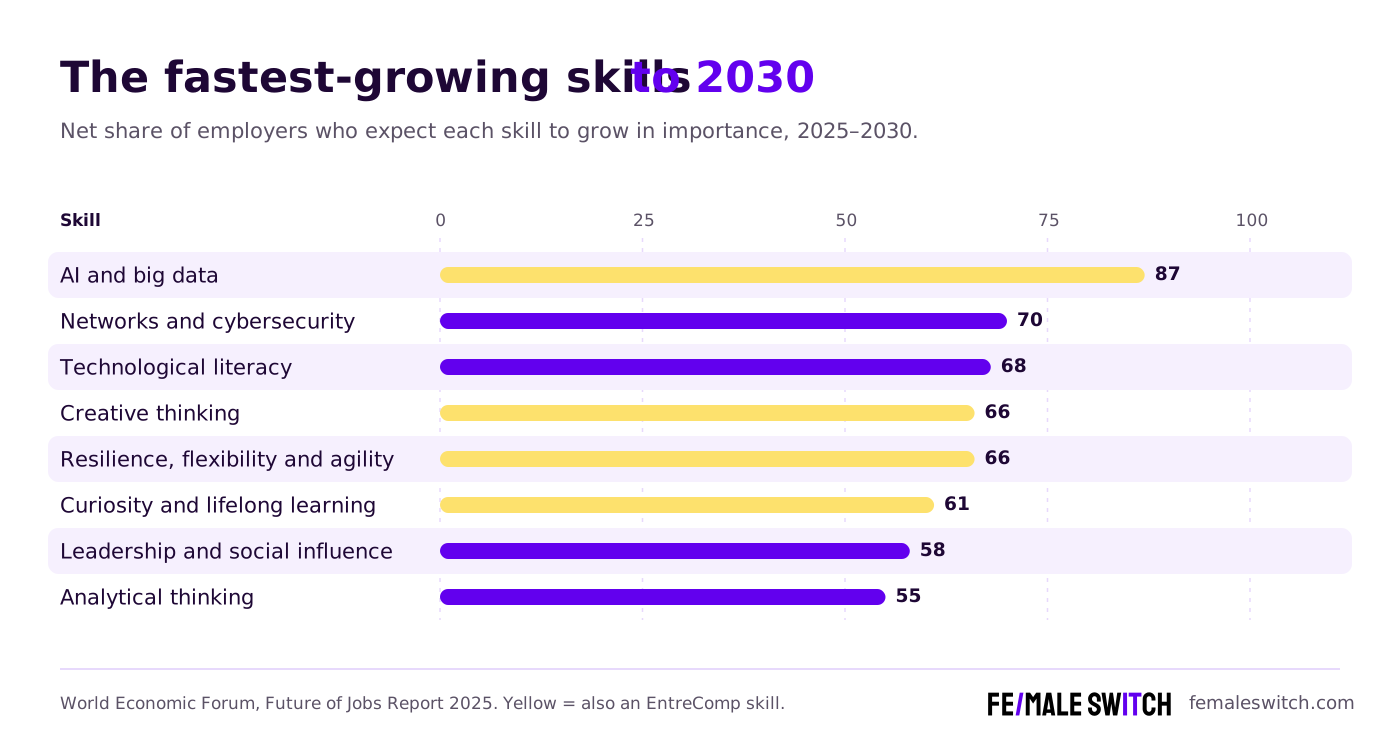
The World Economic Forum's Future of Jobs Report 2025 expects 39% of core job skills to change by 2030. AI and big data top the list of growing skills, but four of the top six, creative thinking, resilience, curiosity and leadership, are classic entrepreneurial skills. AI is also changing how small businesses work: 20% of EU enterprises used AI in 2025, up from 8% in 2023, and lack of expertise was the main reason for not using it. Treat AI literacy as part of mobilising resources: it lets one founder do what used to need a team. An AI co-founder like Elona Musk is one way to practise.
Entrepreneurial skills assessment: score yourself
Rate yourself from 1 to 5 on each skill: 1 means you've never done it, 3 means you've done it a few times with mixed results, and 5 means you do it well and others ask you for help. Be honest, or ask a colleague to score you too.
How to read your score: 60–75, you're ready to start and should focus on scale skills; 40–59, start small and build your two lowest skills as you go; 15–39, begin with a side project or a simulation before risking money. More important than the total: any 1 or 2 in a skill marked critical for your stage below. If you want more tools, see our review of tests for entrepreneurial potential.
Which entrepreneurial skills matter at each stage?
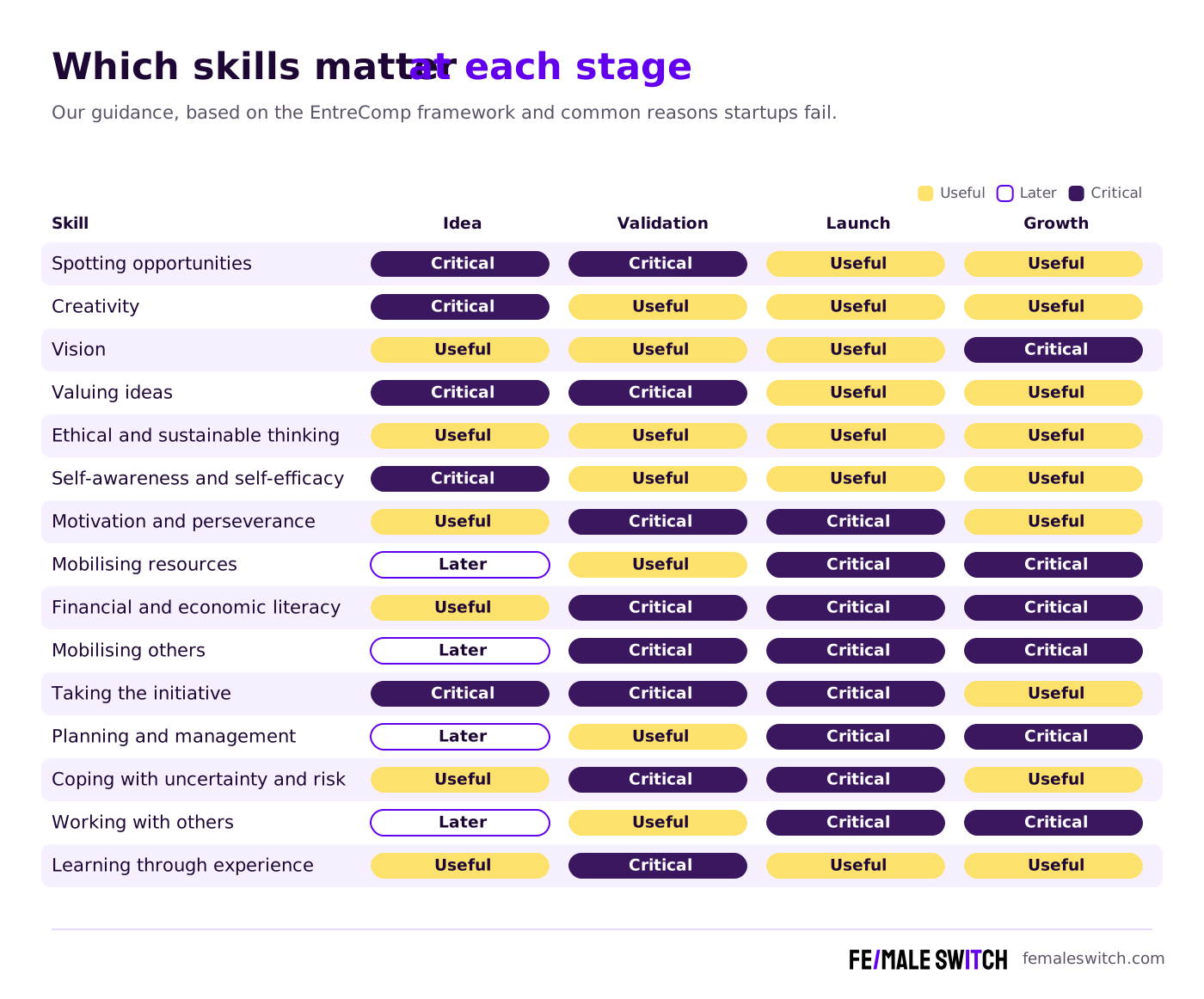
You don't need all 15 on day one. At the idea stage, spotting opportunities, creativity and initiative matter most. During validation, valuing ideas, selling and learning from experience take over. At launch, money, planning and teamwork become critical, and in growth, vision, resources and leadership. Our guide on how to start a startup walks through each stage, and what starting a startup is really like shows the time and money involved.
Women entrepreneurs and the skills confidence gap
Women have the skills but often doubt them. In the GEM Women's Entrepreneurship Report 2024/25, 52.1% of women worldwide said they had the skills to start a business, against 62.7% of men. In high-income countries the gap is widest, and European women report the lowest confidence of any region.
Source: GEM Women's Entrepreneurship Report 2024/25 (2024 survey data).
The gap is about perceived skill, not ability, and it has real effects: the Togo follow-up showed women's gains faded when self-efficacy and capital were lacking. What helps is evidence of your own competence: small wins, practice in a safe setting, mentors and peers. See building confidence as a first-time founder and our data on business ideas for women.
How to develop entrepreneurial skills faster
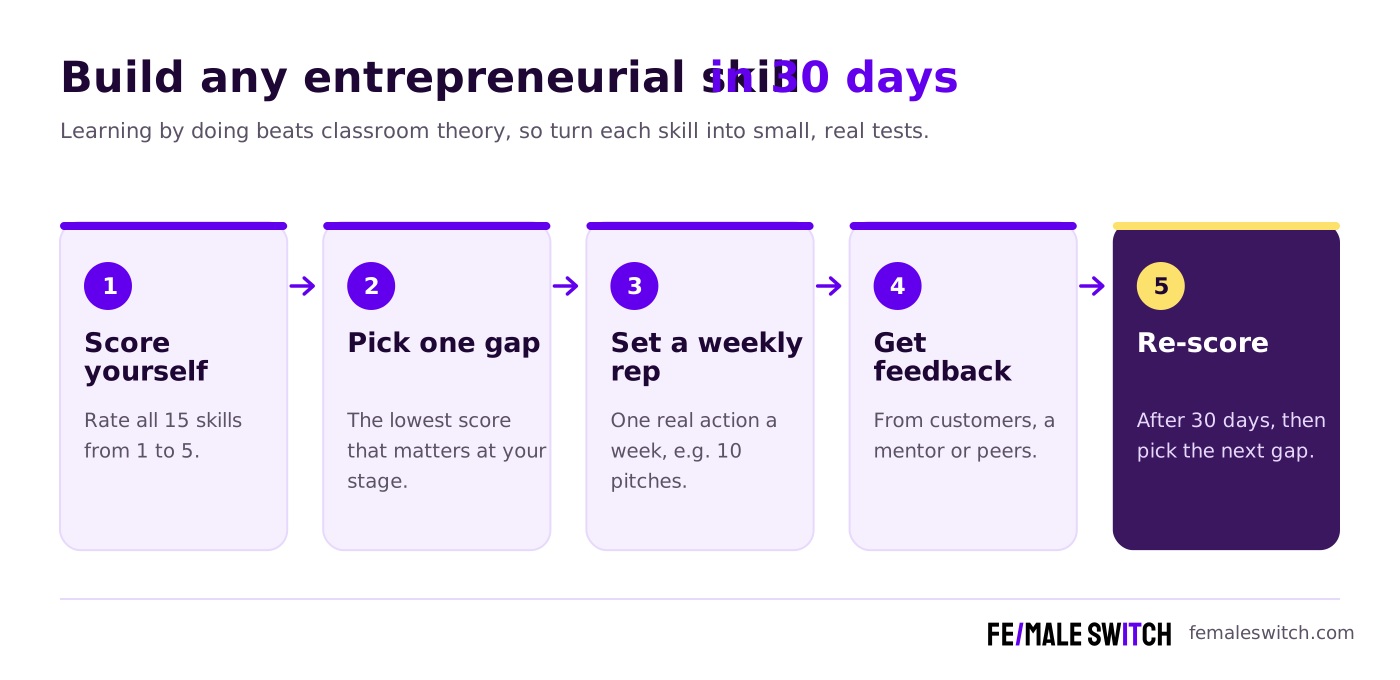
Entrepreneurship education works, but modestly: a meta-analysis by Martin, McNally and Kay of 42 studies found a positive link between education and entrepreneurial skills and outcomes, and warned that weaker studies overstate it. Practice-based programmes do best, and Junior Achievement reports that alumni of its student company programme start businesses at two to three times the rate of their peers. The common thread is doing: real customers, real money, real feedback.
- Start a side project with a real customer, even a tiny one.
- Use simulations to practise decisions without risking your savings.
- Work in a startup or a small business to see many roles at once, the Lazear effect.
- Find a mentor or peer group who will give honest feedback.
- Learn the hard skills on demand: finance, sales and AI tools, when your stage needs them.
Practise all 15 skills in one place
The Fe/male Switch startup game takes you from idea to first customers in weekly quests, with an AI co-founder and 6,000+ founders learning by doing, exactly the kind of practice the research says works.
👉 Start building your skills in the game
Conclusion: entrepreneurs are made, one skill at a time
There is no single entrepreneurial gene. The evidence points to a broad mix of 15 skills, built through varied experience, proactive habits and lots of practice. Score yourself, focus on the gaps that matter for your stage, and build them with real tests.
Your next step: take the self-assessment above, choose one skill to build this month, and find an idea to practise on with our great business ideas proven by real founders. For free structured lessons, join the free startup school. Our older lists of 20 founder skills cover more tactics.
Methodology
The 15 skills follow the EntreComp framework (European Commission JRC, 2016). Research findings come from peer-reviewed studies and working papers (Lazear; Campos et al.; Rauch and Frese; Azoulay et al.; Martin, McNally and Kay), GEM, WEF, Eurostat, Eurobarometer, CB Insights and Slush, checked in October 2026. The stage map and scoring bands are our guidance.
FAQ: skills of an entrepreneur
What are the 10 most important skills of an entrepreneur?
Spotting opportunities, valuing ideas, taking the initiative, selling and persuading (mobilising others), financial literacy, mobilising resources, coping with uncertainty, perseverance, working with others and learning from experience. Which matter most depends on your stage.
What is the most important entrepreneurial skill?
If you have to pick one, taking the initiative: it has the strongest evidence that training it improves results, with profits up 30% in a large randomised trial. In practice, founders need a balanced mix rather than one standout skill.
Are entrepreneurs born or made?
Mostly made. Some traits help, but research shows that varied experience, proactive habits and practice explain far more, and that entrepreneurial skills can be trained.
Can entrepreneurial skills be learned?
Yes. Personal initiative training raised small-business profits by 30% in Togo, and meta-analyses link entrepreneurship education to better skills and outcomes. Learning by doing works best.
What is the difference between hard and soft entrepreneurial skills?
Hard skills are technical and measurable, such as financial literacy, planning and valuing ideas. Soft skills are interpersonal and personal, such as initiative, perseverance, creativity and working with others. Entrepreneurs need both.
What is EntreComp?
EntreComp is the European Commission's Entrepreneurship Competence Framework, published in 2016. It defines 15 competences in three areas (ideas and opportunities, resources, into action) with an 8-level progression from foundation to expert.
Which entrepreneurial skills matter most in the age of AI?
AI literacy, analytical and creative thinking, resilience and curiosity. The WEF expects AI and big data to be the fastest-growing skill to 2030, while classic entrepreneurial skills such as creativity and resilience also gain importance.
How do I put entrepreneurial skills on a CV?
Name the skill and prove it with a result: launched a side project with 50 paying customers (initiative, selling), built a budget that cut costs by 15% (financial literacy), or led a volunteer team of eight (working with others).
Do women entrepreneurs need different skills?
No, the skills are the same. But women report less confidence in their startup skills than men, especially in Europe, so building self-efficacy through small wins, mentors and practice is particularly valuable.
How can I assess my entrepreneurial skills?
Score yourself from 1 to 5 on the 15 EntreComp skills using the table above, ask someone who knows your work to score you too, and focus on the lowest scores that matter at your current stage.
About the Author
Violetta Bonenkamp, also known as MeanCEO, is an experienced startup founder with an impressive educational background including an MBA and four other higher education degrees. She has over 20 years of work experience across multiple countries, including 5 years as a solopreneur and serial entrepreneur. Throughout her startup experience she has applied for multiple startup grants at the EU level, in the Netherlands and Malta, and her startups received quite a few of those. She’s been living, studying and working in many countries around the globe and her extensive multicultural experience has influenced her immensely.

