
TL;DR: what makes a business idea great?
A great business idea solves a real problem people already feel, can be tested cheaply, and reaches its first customers through a community the founder belongs to. We studied 20 founders who started small, from Spanx and Vinted to Pip & Nut and Mumsnet: 10 began with their own problem, 10 started on the side, and most found one breakthrough channel before they scaled. You don't need a unique idea; you need a better version of something people want, tested in person.
👉 Test your idea for free with the Idea Validator
Lists of great business ideas rarely show a single real business behind the ideas. This guide does the opposite. It looks at 20 companies that started with a garage, a blender, a back bedroom or a few hundred euros, and asks what made each idea great at the start, not just how big it became.
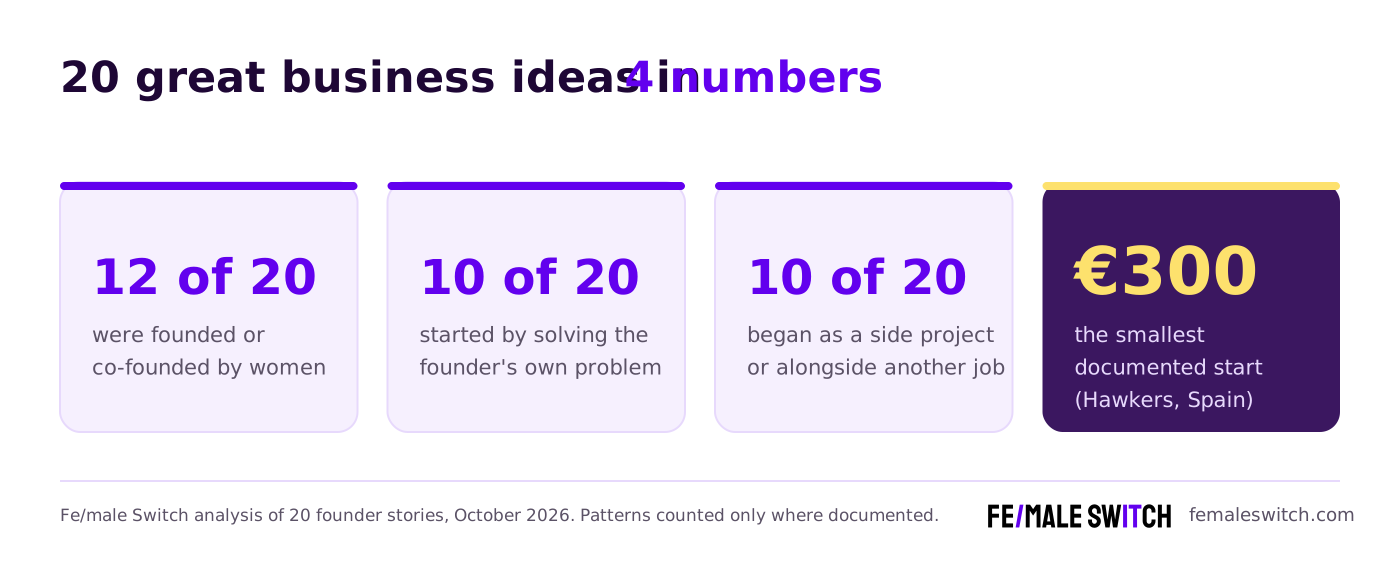
12 of the 20 were founded or co-founded by women, and 14 come from Europe. For each one you'll find what they started with, who the first customers were, the turning point, where the business is today, and a version of the idea you could start in 2026. Looking for ideas that also do good? See 14 European great business ideas that do good and make money.
Updated October 2026.
What makes a business idea great?
A great business idea has three things: a problem people already pay to solve, a cheap way to test it, and a founder with an edge, such as experience, a community or a channel others don't have. Uniqueness matters far less than most people think: Amar Bhidé's study of fast-growing Inc. 500 companies found that most founders started by copying or slightly changing an existing idea.
See our ranking of the best business ideas, the business ideas hub with 100 ideas, and new business ideas for 2026–2027.
20 great business ideas proven by real founders
They solved their own problem
Spanx (US, 2000)
Sara Blakely was selling fax machines when she cut the feet off her pantyhose to get a smooth line under trousers. She put $5,000 of her savings into the idea, wrote her own patent and cold-called a Neiman Marcus buyer, then demonstrated the product to her in the ladies' room. She even paid friends to buy it in stores. Oprah's "Favorite Things" in November 2000 was the breakthrough, and Spanx took no outside investment until Blackstone bought a majority in 2021.
The version you could start in 2026: A product that fixes an everyday annoyance in your own life, shown in person to one buyer who can say yes.
Natural Cycles (Sweden, 2013)
Elina Berglund, a physicist at CERN, wrote an algorithm to track her own fertility instead of using hormonal contraception. She called herself her own first customer; colleagues at CERN were next. FDA clearance in 2018 made Natural Cycles the first app cleared as a contraceptive in the US.
The version you could start in 2026: A digital tool you build for your own health or life admin, tested with ten people like you before you scale.
Pip & Nut (UK, 2013)
Pippa Murray was training for a marathon and frustrated by the palm oil and sugar in nut butters, so she made her own in a blender. A weekend stall at London's Maltby Street Market was her research lab; Selfridges became her first major stockist in 2015. Pip & Nut reported £26.4M in revenue and its first profit in 2025.
The version you could start in 2026: A better version of a food you buy every week, sold at a market stall before you approach shops.
Huel (UK, 2015)
Julian Hearn found balancing his nutrients while dieting a "nightmare" and teamed up with nutritionist James Collier to create a complete food. Largely self-funded before raising £20M, Huel reached £214M in revenue in FY24, and Danone agreed to buy it in 2026 at a reported value of about €1 billion.
The version you could start in 2026: A product that removes a hassle you know well, built with an expert who gives it credibility.
Mumsnet (UK, 2000)
Justine Roberts came up with Mumsnet after a disastrous family holiday in 1999, when she realised parents had nowhere to pool advice. She and Carrie Longton started from a back bedroom. When the dot-com crash ended their planned £4M fundraise, they bootstrapped instead. In 2024 Mumsnet made £9.4M in revenue and £2.65M in profit, still founder-controlled.
The version you could start in 2026: An online community or resource for a group you belong to, funded by advertising, memberships or events.
They started on the side
Mailchimp (US, 2001)
Mailchimp started as a side project of a web design business. The founders kept it bootstrapped, and a free plan launched in 2009 reportedly grew users from 85,000 to 450,000 in a year. Intuit bought it in 2021 for about $12 billion; it had never taken venture capital.
The version you could start in 2026: A small tool you build for your own clients' recurring problem, offered free to many and paid by a few.
Base44 (Israel, 2024)
Maor Shlomo built Base44, a tool that turns plain-language descriptions into apps, on his own with about NIS 30,000 of his own money. Six months after launch, already profitable, he sold it to Wix for $80 million plus earn-outs.
The version you could start in 2026: An AI-powered tool for a task you know inside out; one experienced founder can now build and sell it.
Tony's Chocolonely (Netherlands, 2005)
Tony's Chocolonely began as a stunt on a Dutch TV consumer show: journalist Teun van de Keuken reported himself to the police for eating chocolate made with child labour, then produced 5,000 Fairtrade bars as a one-off. They sold, demand kept coming, and the company now makes €240M a year in revenue.
The version you could start in 2026: A product with a cause your customers care about, tested with a single limited batch.
Sézane (France, 2013)
As a teenager Morgane Sézalory sold clothes on eBay, then built a following reselling vintage. Her newsletter list became the launchpad for her own label; early monthly collections of about 100 pieces sold out in minutes. Sézane made at least €250M in revenue in 2021.
The version you could start in 2026: Resell or curate products online to build an email list, then launch your own line to the people already buying.
They turned a skill or a service into a brand
Drybar (US, 2008)
Alli Webb was a stay-at-home mother when she started "Straight at Home" in 2008, offering $40 blow-dries in clients' homes and advertising on a local mums' website. Demand led to the first Drybar salon in 2010; the product line later sold for $255 million and the chain grew past 140 salons.
The version you could start in 2026: A single service you can offer in people's homes, proving demand before you rent premises.
Home Instead (US, 1994)
Paul and Lori Hogan founded Home Instead in 1994 after caring for Paul's grandmother at home, reportedly with about $18,000. Franchising from 1995 spread the model worldwide, and the network became part of Honor in 2021.
The version you could start in 2026: A local care or home service that solves a problem your own family faced, built to be repeatable.
The Body Shop (UK, 1976)
Anita Roddick opened the first Body Shop in Brighton in 1976 with a reported £4,000 loan, selling simple, inexpensive cosmetics in refillable bottles. Within 15 years there were 700 shops; L'Oréal bought the company in 2006. Its UK business went into administration in 2024, a reminder that great ideas still need good stewardship.
The version you could start in 2026: A shop or product line built around values and thrift, tested in one location first.
They gave a community a better way to trade
Vinted (Lithuania, 2008)
Milda Mitkutė had too many clothes when she moved flat in Vilnius in 2008, so Justas Janauskas built a website where she could give them away to friends. Friends wanted the same, and Vinted grew into Europe's largest second-hand fashion marketplace, with about €1.1 billion in revenue and its third profitable year in 2025.
The version you could start in 2026: A simple way for people in your circle to swap, sell or share something they all have too much of.
notonthehighstreet (UK, 2006)
Holly Tucker ran local craft fairs before she and Sophie Cornish launched notonthehighstreet in 2006 with 95 small makers. The founders guaranteed the debts and worked unpaid for over a year. The marketplace was sold to Great Hill Partners in 2021.
The version you could start in 2026: An online marketplace for a community of small makers or providers you already know offline.
Too Good To Go (Denmark, 2015)
A group of young Danish founders were angry about how much food buffet restaurants threw away. Too Good To Go launched in early 2016, and within weeks hundreds of businesses were selling surplus food through the app. It quickly widened from buffets to bakeries, cafés and supermarkets across Europe.
The version you could start in 2026: A service that turns local businesses' waste or idle capacity into something customers want.
They copied or resold first, then built their own
Hawkers (Spain, 2013)
After a failed marketplace, four friends in Spain started Hawkers with €300, first reselling another brand's sunglasses to learn the market, then launching their own. Data-driven social media ads turned it into a fashion brand with €55M in revenue in 2023.
The version you could start in 2026: Resell a product category to learn what sells, then launch your own version.
Gymshark (UK, 2012)
Ben Francis started in his parents' garage at 19, dropshipping supplements and putting the profit into a sewing machine and screen printer. Free kit for fitness YouTubers built a community; a sold-out stand at the BodyPower expo in 2013 took daily sales from about $450 to $45,000. Gymshark reported £646M in revenue in FY25.
The version you could start in 2026: Make better gear for a hobby community you belong to, and get it into the hands of its best-known members.
Bolt (Estonia, 2013)
Markus Villig was 19 when he started Bolt in Tallinn with a reported €5,000 from his parents, signing up taxi drivers in person. He focused on markets the big players underserved, from the Baltics to Africa, and became Europe's youngest unicorn founder.
The version you could start in 2026: A service for your own city or region that global players ignore.
They started narrow, then widened
Canva (Australia, 2012)
Melanie Perkins taught design software at university and saw how hard it was for students. She and Cliff Obrecht first built Fusion Books, a yearbook design tool used by 400 schools, from her mother's living room. After more than 100 rejections from investors, Canva launched in 2013 and reached $4 billion in annual revenue run rate by the end of 2025.
The version you could start in 2026: A simple tool for one narrow use (yearbooks, menus, invoices) that can later serve everyone.
Ankerkraut (Germany, 2013)
Anne and Stefan Lemcke started mixing spice blends at home in Hamburg in 2013 and found their first customers through grill bloggers. An appearance on Germany's Dragons' Den in 2016 accelerated growth; Nestlé bought a majority in 2022, and the founders bought the brand back in 2026.
The version you could start in 2026: A niche food product for an enthusiast community, sold online through the people that community follows.
The patterns behind 20 great business ideas
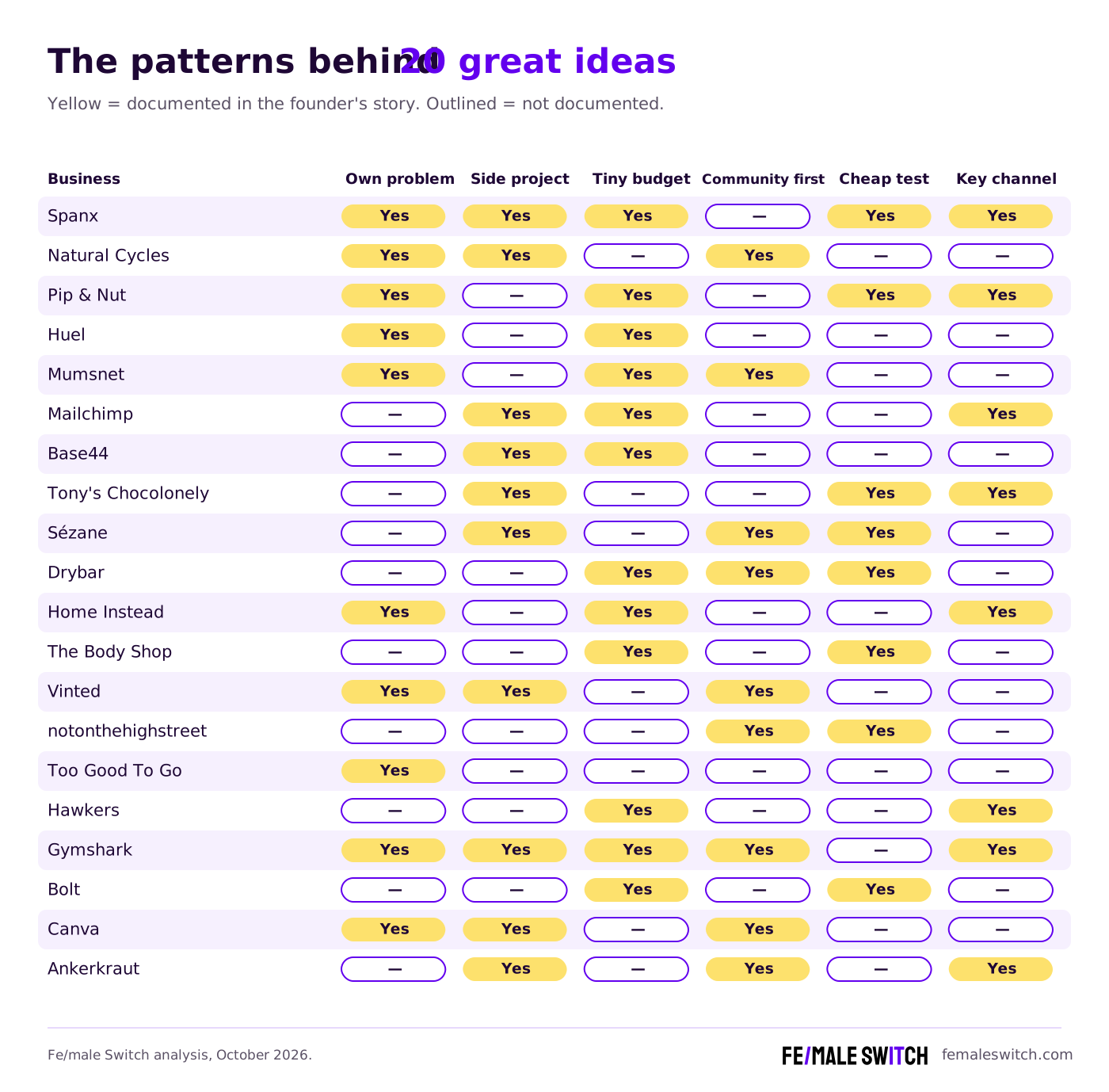
- Their own problem (10 of 20): Spanx, Natural Cycles, Pip & Nut, Vinted and Mumsnet all started with a frustration the founder lived with. Research agrees: a Kauffman Foundation study found that almost half of innovative US startups that survive five years were founded by people who first built the product for their own use.
- On the side (10 of 20): Blakely sold fax machines, Mailchimp was a side project, Tony's was a TV segment. Keeping an income while testing lowers the stakes.
- A tiny or self-funded start (12 of 20): from Hawkers' €300 to Spanx's $5,000. Money was rarely what made the idea great.
- Community first (9 of 20): friends (Vinted), colleagues (Natural Cycles), a newsletter (Sézane), local mums (Drybar), YouTubers (Gymshark).
- A cheap test in person (8 of 20): a market stall, a one-off batch, an expo stand, home visits.
- One breakthrough channel (8 of 20): Oprah, a buyer at Selfridges, an expo, TV, social ads or franchising changed the growth curve.
The lesson for anyone looking for a great business idea: look closer to home. Your job, your hobby, your family's problems and the communities you belong to are where most of these companies began. Our business ideas hub shows the research behind this and a five-step method to find yours.
What success stories don't tell you
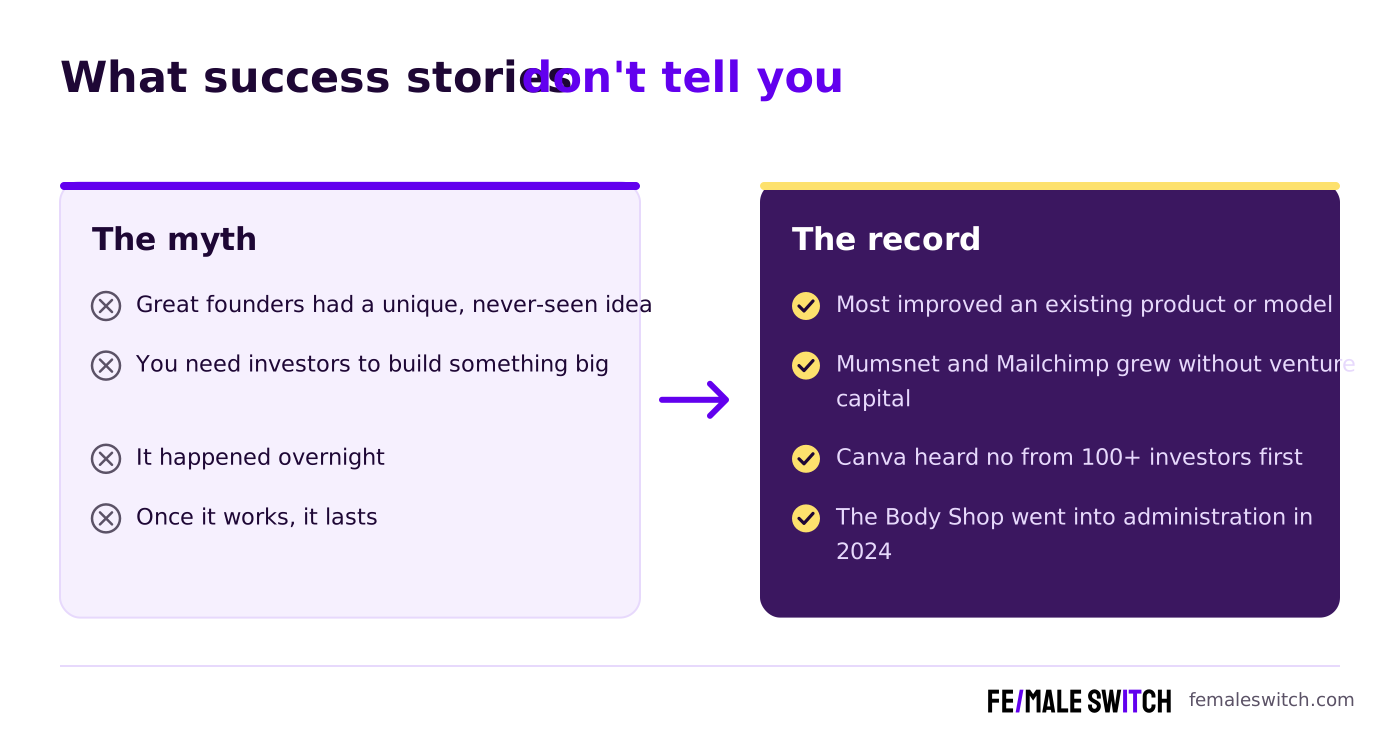
Success stories are told backwards, so they hide the failures. Hawkers' founders had a failed marketplace before, Gymshark started with dropshipping, and Canva was rejected by more than 100 investors. Most businesses don't become famous at all: across the EU, 57.2% of new businesses are still active after three years, according to Eurostat. Even big wins can fade: The Body Shop went into administration in 2024, and Ankerkraut's founders bought their brand back from Nestlé two years after selling it. Judge an idea by whether people pay you now, not by whether it could become a unicorn.
How to turn your idea into a great business
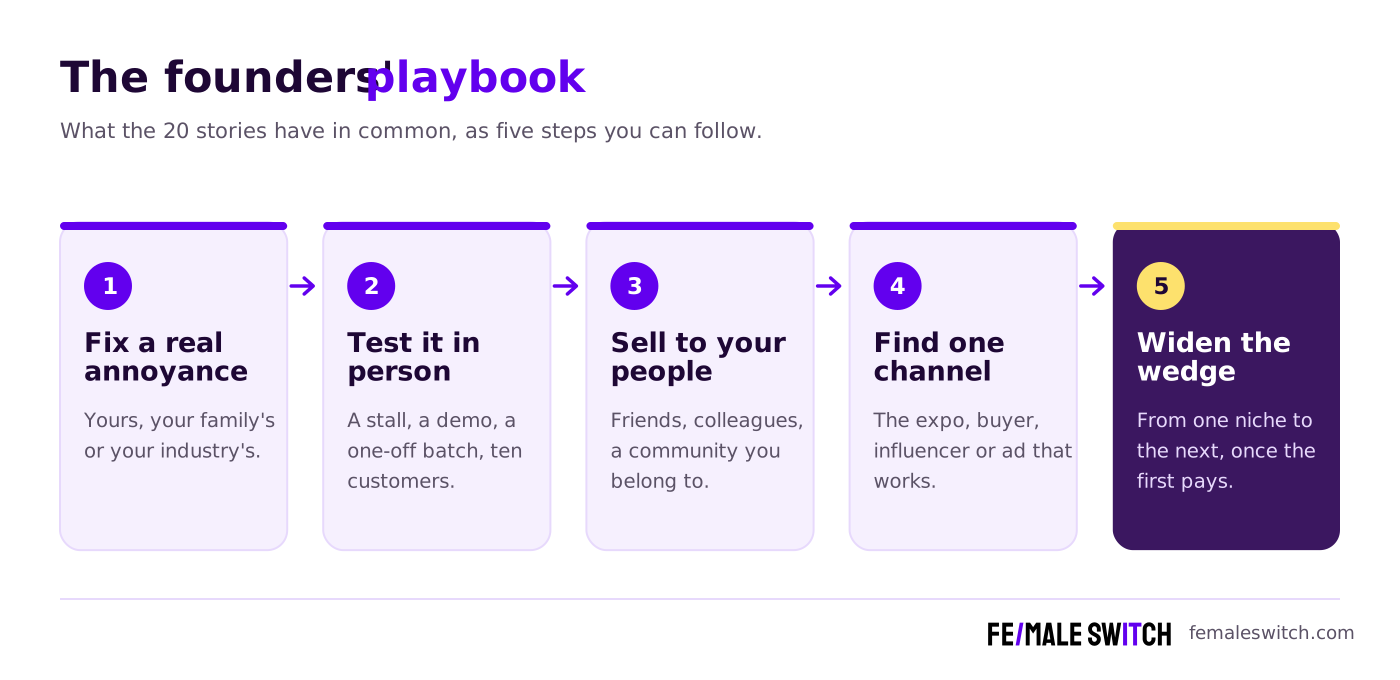
- Fix a real annoyance. Start with a problem you, your family or your industry deal with every week.
- Test it in person. Sell ten units at a market, offer the service to five clients, demonstrate it to one buyer.
- Sell to your people first. Friends, colleagues and online communities you belong to give you honest feedback and first sales.
- Find one channel that works. An event, a stockist, a creator or a type of ad; double down on it before trying the next.
- Widen the wedge. Expand from the first niche only once it pays, as Canva did from yearbooks and Too Good To Go from buffets.
Keep costs low while you test with our guide to the best low cost business to start, see what the women in this list have in common in business ideas for women, and when you're ready to register and raise money, read how to start a startup. Score your idea with the free Idea Validator or generate options with the Business Ideas Generator.
Build your own success story with an AI co-founder
The Fe/male Switch startup game takes you from idea to first customers, the same path these founders followed, with Elona Musk as your AI co-founder and 6,000+ founders learning alongside you.
👉 Start building your first business
Conclusion: great business ideas are found close to home
The 20 founders in this guide didn't wait for a unique idea. They fixed a problem they knew, tested it cheaply with people around them, found one channel that worked and only then grew. That is a path anyone can follow in 2026, with less money than ever thanks to AI and online tools. Pick the story closest to your own situation, borrow its pattern and test your version this month.
Your next step: write down three annoyances from your work or life, choose the one people already spend money on, and test it with ten people this month. For structured lessons, join the free startup school.
Methodology
We selected 20 businesses that started small, across sectors and countries, with at least half founded or co-founded by women. Figures come from company pages, filings and reputable press, checked in October 2026; "reported" marks figures from secondary sources. Patterns are counted only when documented in the founder's story.
FAQ: great business ideas
What makes a business idea great?
A problem people already pay to solve, a cheap way to test it, and a founder with an edge such as experience, a community or a channel. Most great businesses improved something that already existed rather than inventing something new.
What are some great business ideas that started small?
Spanx began with $5,000 of savings, Gymshark in a garage, Pip & Nut with a blender and a market stall, Mumsnet in a back bedroom, Vinted as a website to give away clothes to friends, and Hawkers with €300.
What famous companies were started by women with little money?
Spanx (Sara Blakely, $5,000), The Body Shop (Anita Roddick, a reported £4,000 loan), Mumsnet (Justine Roberts and Carrie Longton, a back bedroom), Pip & Nut (Pippa Murray, a blender) and Vinted (co-founded by Milda Mitkutė).
Do I need a unique idea to start a great business?
No. Most successful founders improved an existing product or copied a model into a new market. Research on fast-growing companies finds that most founders started with a copied or slightly modified idea.
How did successful founders get their first customers?
Usually through people they already knew: friends (Vinted), colleagues (Natural Cycles), a newsletter list (Sézane), a local parents' website (Drybar), a market stall (Pip & Nut) or a community of fans (Gymshark).
How do I know if my business idea is great?
Test it with real buyers. If strangers pay a deposit, pre-order or come back, the idea is working. Compliments from friends are not evidence.
Can I start a great business while working full-time?
Yes. Spanx, Mailchimp, Tony's Chocolonely and Sézane all began alongside another job or business. Starting on the side lets you test the idea before giving up your income.
What are great business ideas for 2026?
Ideas that follow the same patterns with today's tools: AI-built software for a niche you know, services for ageing populations, repair and resale, community-led product brands and local services that are hard to find. See our guides to new and best business ideas.
About the Author
Violetta Bonenkamp, also known as MeanCEO, is an experienced startup founder with an impressive educational background including an MBA and four other higher education degrees. She has over 20 years of work experience across multiple countries, including 5 years as a solopreneur and serial entrepreneur. Throughout her startup experience she has applied for multiple startup grants at the EU level, in the Netherlands and Malta, and her startups received quite a few of those. She’s been living, studying and working in many countries around the globe and her extensive multicultural experience has influenced her immensely.

