
TL;DR: what is starting a startup really like?
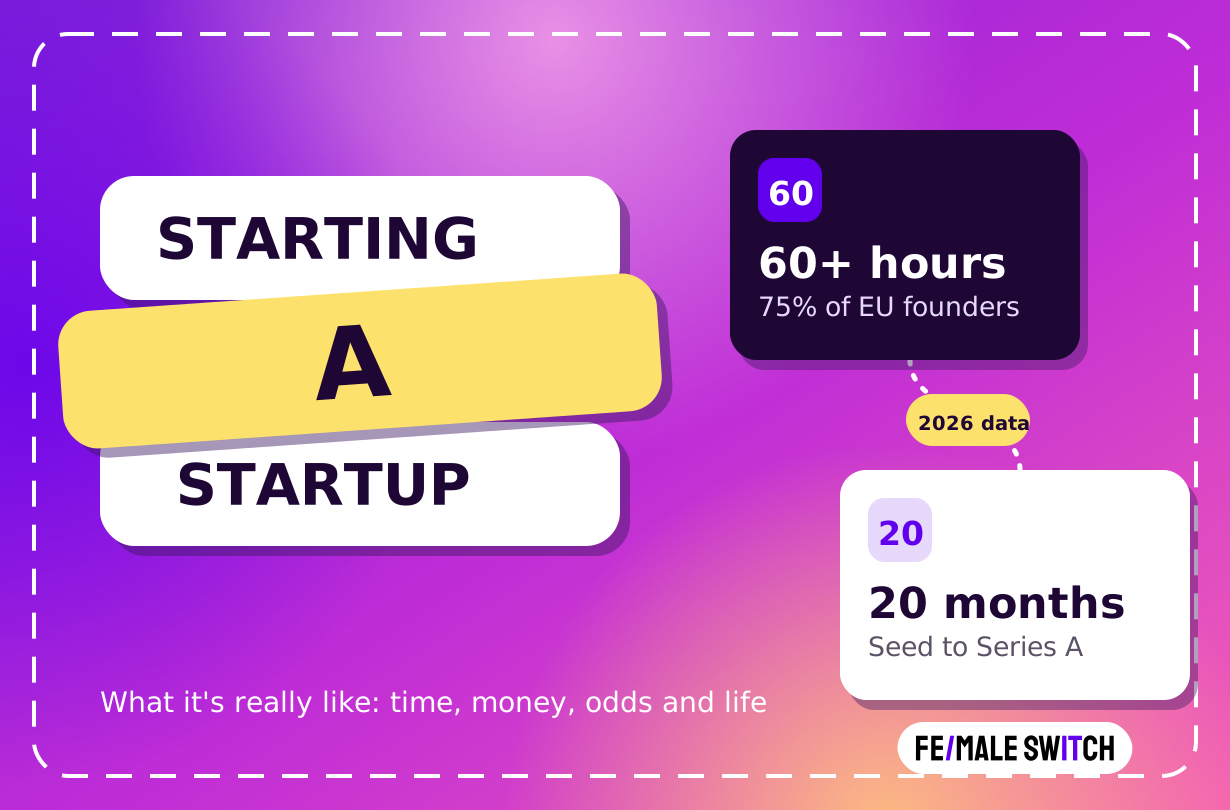
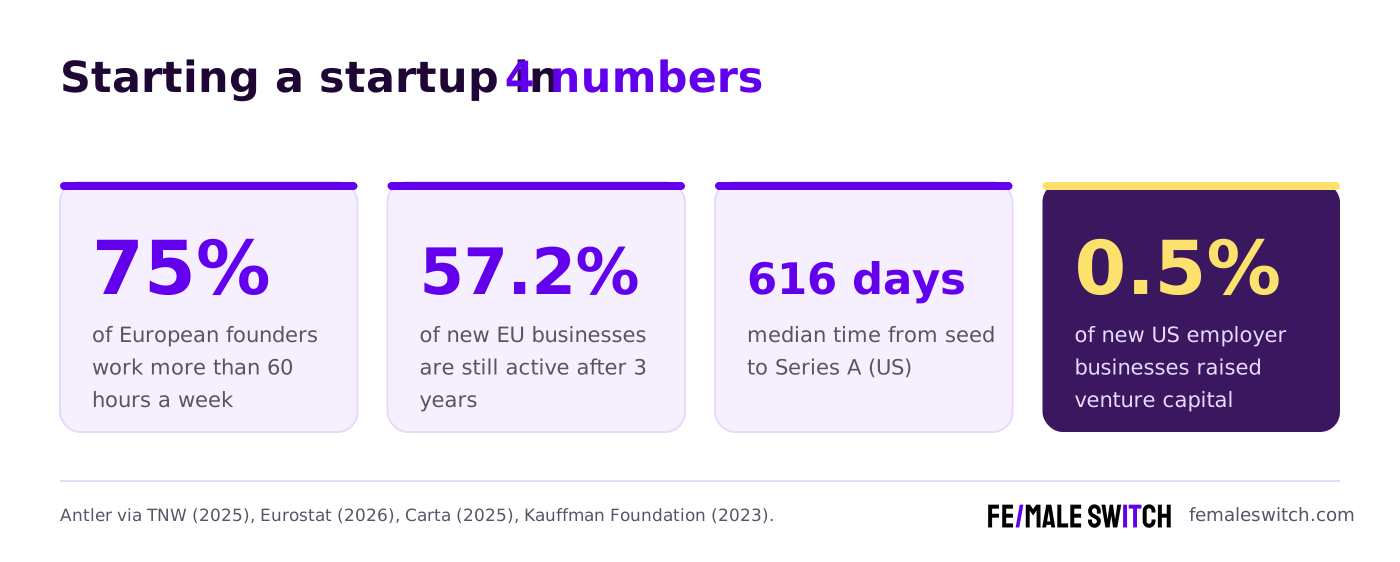
Slower, harder and less glamorous than the stories, and more doable than most people think. Three quarters of European founders work more than 60 hours a week, the median US startup waits 20 months between seed and Series A, and 43% of new EU businesses are gone within three years. But only 0.5% of new businesses ever raise venture capital, most start with savings, and founders who start on the side are 33% less likely to fail. This guide shows the time, money, odds and personal cost in data, so you can decide with open eyes.
👉 Practise the whole journey risk-free in the Fe/male Switch startup game
Most advice about starting a startup tells you what to do. This guide is about what happens to you while you do it: how many hours you'll work, when you'll get paid, how long each milestone takes, what the odds are, and what it does to your health and relationships. If you want the practical steps, from validating an idea to registering a company in Europe, read our guide on how to start a startup.
We pulled the numbers from Eurostat, Carta, the KfW start-up monitor, Stripe and peer-reviewed research, and kept the European picture in front. Updated October 2026. Before you leave a salary, check the safety nets for starting a startup in Europe, from startup allowances to maternity cover.
Starting a startup: the first three years at a glance
Every startup is different, but the data shows a recognisable pattern. Here is what the first three years typically look like for a founder who starts small and grows.
Sources: KfW Gründungsmonitor 2026, Antler founder survey 2025, Carta 2025, Pilot founder salary report 2025. A typical pattern, not a rule.
How much time does starting a startup take?
More than you plan for. In an Antler survey of European founders, 75% worked more than 60 hours a week and 19% more than 80; in Germany, 94% passed 60 hours. The wider picture is calmer: according to the KfW start-up monitor, Germany's full-time business founders work 45 hours a week on their business and part-timers 16. Venture-backed startups sit at the extreme end.
How long do the milestones take?
- First customer: faster than ever. According to Stripe's 2025 annual letter, 20% of startups incorporated through Stripe Atlas charged their first customer within 30 days, up from 8% in 2020.
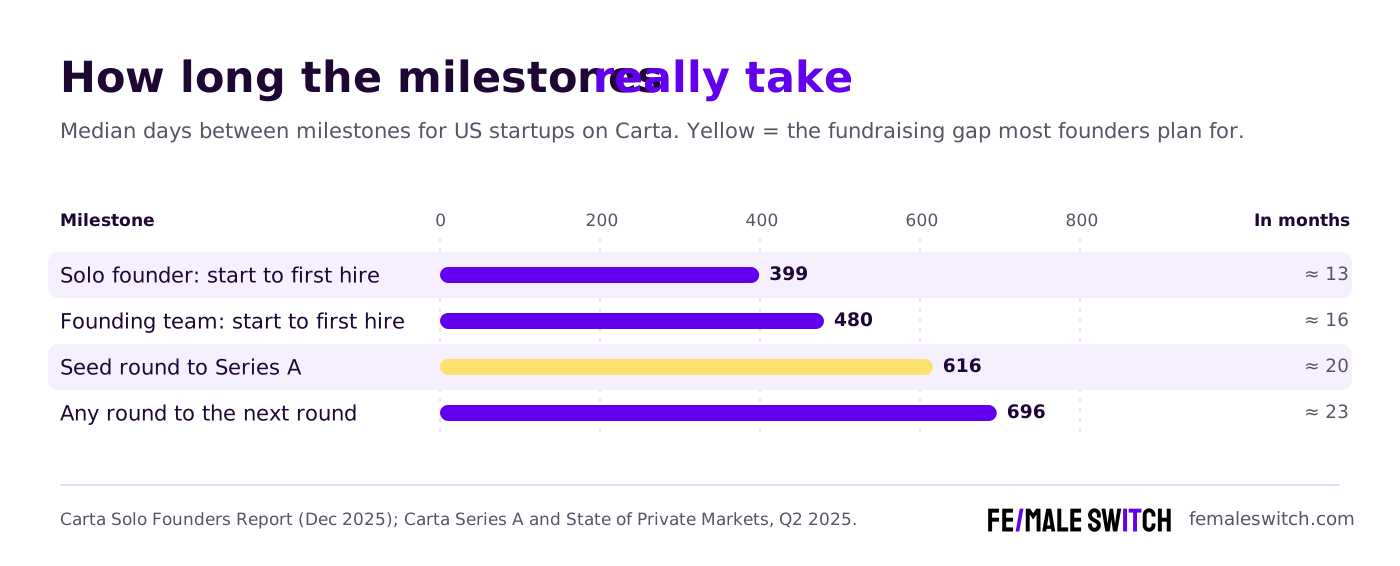
- First hire: solo founders hired after a median 399 days and teams after 480, according to the Carta Solo Founders Report.
- Seed to Series A: a median 616 days in 2025, more than two months longer than two years earlier. Only 15.4% of the 2022 seed cohort reached Series A within two years, half the rate of 2018.
- Profit or exit: count in years, not months. Plan your savings, relationships and health for a long run.
What does starting a startup cost you personally?
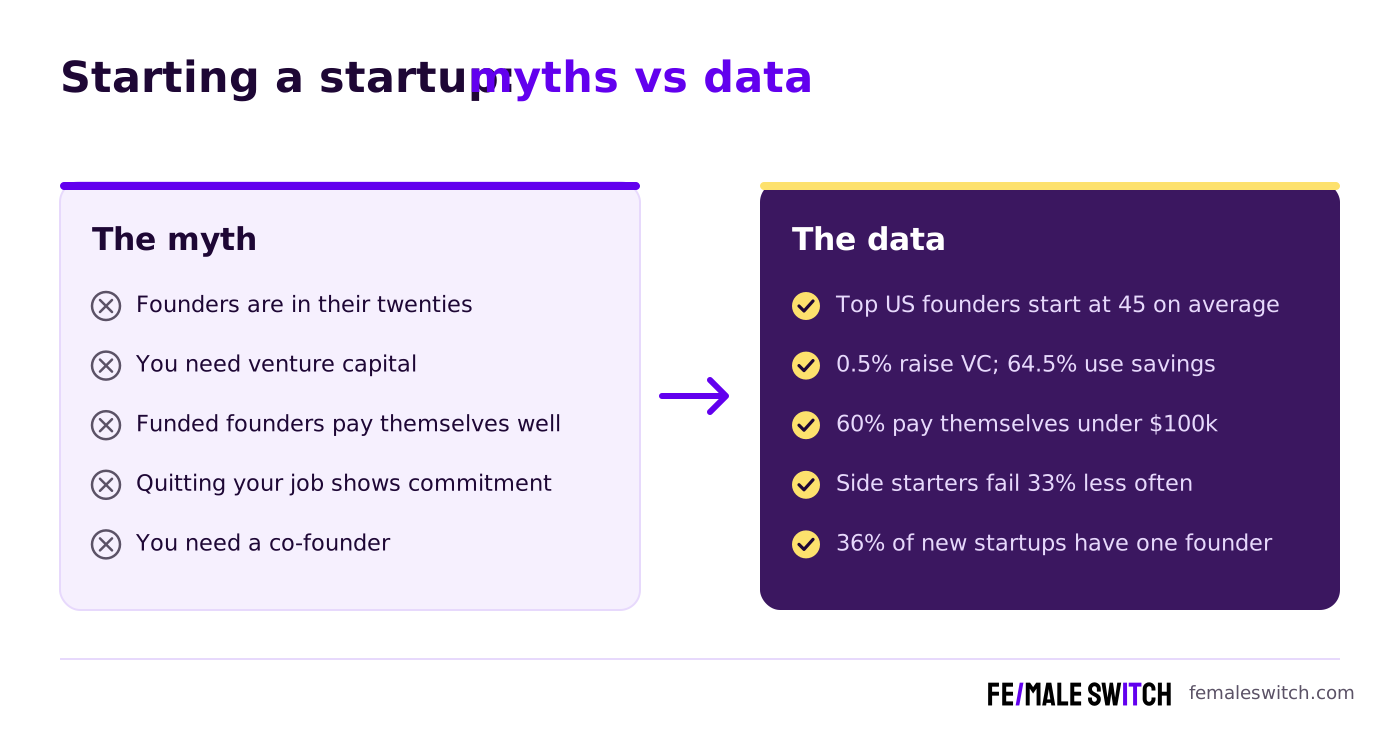
The company's costs are only half the story; our how to start a startup guide breaks those down. The bigger cost is usually your own income. 64.5% of new US employer businesses were funded with personal or family savings, and only 0.5% ever received venture capital, according to the Kauffman Foundation.
Sources: Carta round benchmarks Q2 2026 and Founder Ownership Report 2026; Kruze payroll data 2026. European seed rounds are about half the US size (Atomico, 2025).
Those salaries are for funded companies. Across all founders, Pilot's 2025 survey found that 60% paid themselves under $100k. Dilution is the other price: by Carta's count, the median founding team owns 56% after seed and 36% after Series A. If you're planning your own runway, our guide to financial planning for first-time founders walks through it.
What are the odds a new startup survives?
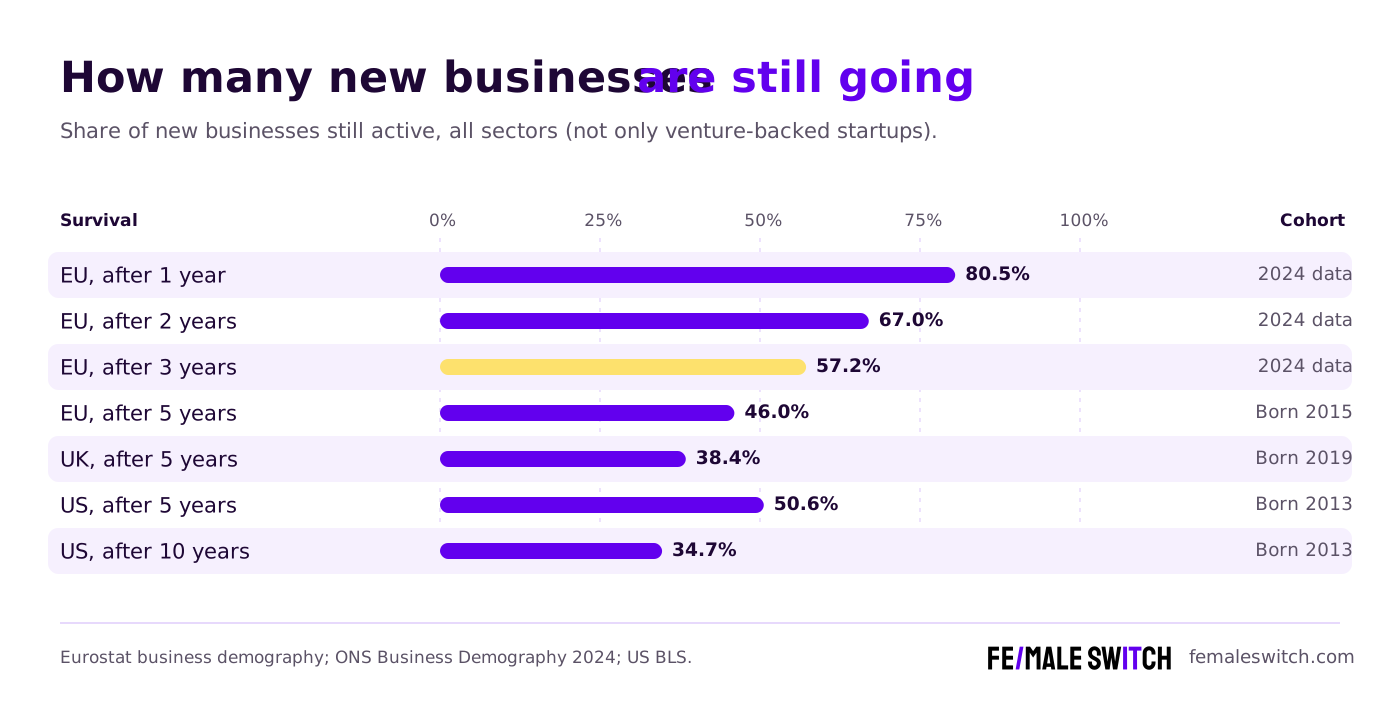
The famous "90% of startups fail" is not what official data shows for new businesses overall. In the EU, 80.5% of new businesses are still active after one year and 57.2% after three, according to Eurostat; after five years it's about 46%. Odds are lower for venture-backed startups chasing fast growth, because they swing for bigger outcomes. Carta recorded 254 shutdowns of its venture-backed customers in the first quarter of 2024 alone, up 58% on a year earlier.
Survival also isn't the same as success. Many founders close a company, learn, and start a better one. Read why most startups fail to avoid the common traps, and the founder reset framework if it happens to you.
What starting a startup does to your health and relationships
This is the part founders talk about least. In a study of 242 entrepreneurs by Michael Freeman and colleagues, 72% were affected by mental health conditions, directly (49%) or through their family history. A Sifted survey in 2025 found that more than half of European founders had experienced burnout in the past year.
- Loneliness: 36% of new startups now have a single founder, up from 24% in 2019. Solo is possible, but build a circle of peers and mentors early.
- Co-founder strain: disagreements about money, roles and pace are a leading reason teams split. Agree on them in writing; see co-founder relationships.
- Family and partners: a year without a salary is a shared decision. Talk about the money and the hours before you start, not after.
- Burnout: watch the early signs (sleep, irritability, losing interest) and protect recovery time; our guide to preventing burnout as a female entrepreneur has practical routines.
For balancing a startup with children or care duties, see work-life balance for female founders with dependents.
Starting a startup while employed: the lower-risk route
You don't have to quit to start. In a study of about 6,300 US entrepreneurs over 14 years, Raffiee and Feng found that people who kept their job while starting were 33% less likely to fail than those who quit straight away. It's also how most people start: in Germany, 70% of new businesses in 2025 were started part-time, and about 40% of founders stayed in employment, according to KfW.
Check your employment contract for non-compete and intellectual property clauses, keep the work on your own time and equipment, and set a trigger for going full-time, such as revenue that covers half your salary. Our guide on moving from side hustle to full-time covers the switch.
Who actually starts startups?
- Older founders than you think. The founders of the fastest-growing US startups were 45 on average when they started, according to research by Azoulay, Jones, Kim and Miranda. The average new business founder in Germany is 34.
- More solo founders. Solo founders started 36.3% of new US startups in the first half of 2025, but received only 14.7% of priced-round funding in 2024.
- Too few women, especially in funding. Female-founded and mixed teams raised about 13% of European venture capital in 2025, according to the Female Innovation Index. In Germany about one founder in five is a woman.
If you're a woman founder, plan for longer fundraising and lean on grants, angels and revenue. Our guides to business ideas for women and building confidence as a first-time founder help with the first steps.
How AI is changing what it's like to start
Starting is cheaper and faster than it was even three years ago. One founder with AI tools can now build, design and market a first version that used to need a small team. Stripe reports that the top AI companies reached $5 million in annualised revenue in 24 months, against 37 months for the top software companies of 2018, and that the share of new startups charging a customer in their first month more than doubled since 2020. The hard parts haven't changed: finding a problem people pay for, selling, and staying the course.
Starting a startup: myths vs data
10 things founders wish they knew before starting
- It takes longer than your plan. Double every timeline, especially fundraising.
- Sales matter more than the product. The first customers come from conversations, not launches.
- Your savings are your runway. Know how many months you can last before you start.
- You can keep your job. Part-time starts are the norm, and they fail less often.
- Most money doesn't come from VCs. Revenue, savings, grants and angels fund most companies.
- Pay yourself something as soon as you can. A tiny salary is easier to sustain than none.
- Pick co-founders slowly. Agree on roles, equity and exit before you build.
- Look after your health. Burnout ends more startups than competitors do.
- Talk to peers. Other founders are the best cure for loneliness and bad decisions.
- Failing isn't the end. Many successful founders built their winner on the second or third attempt.
Is starting a startup worth it?
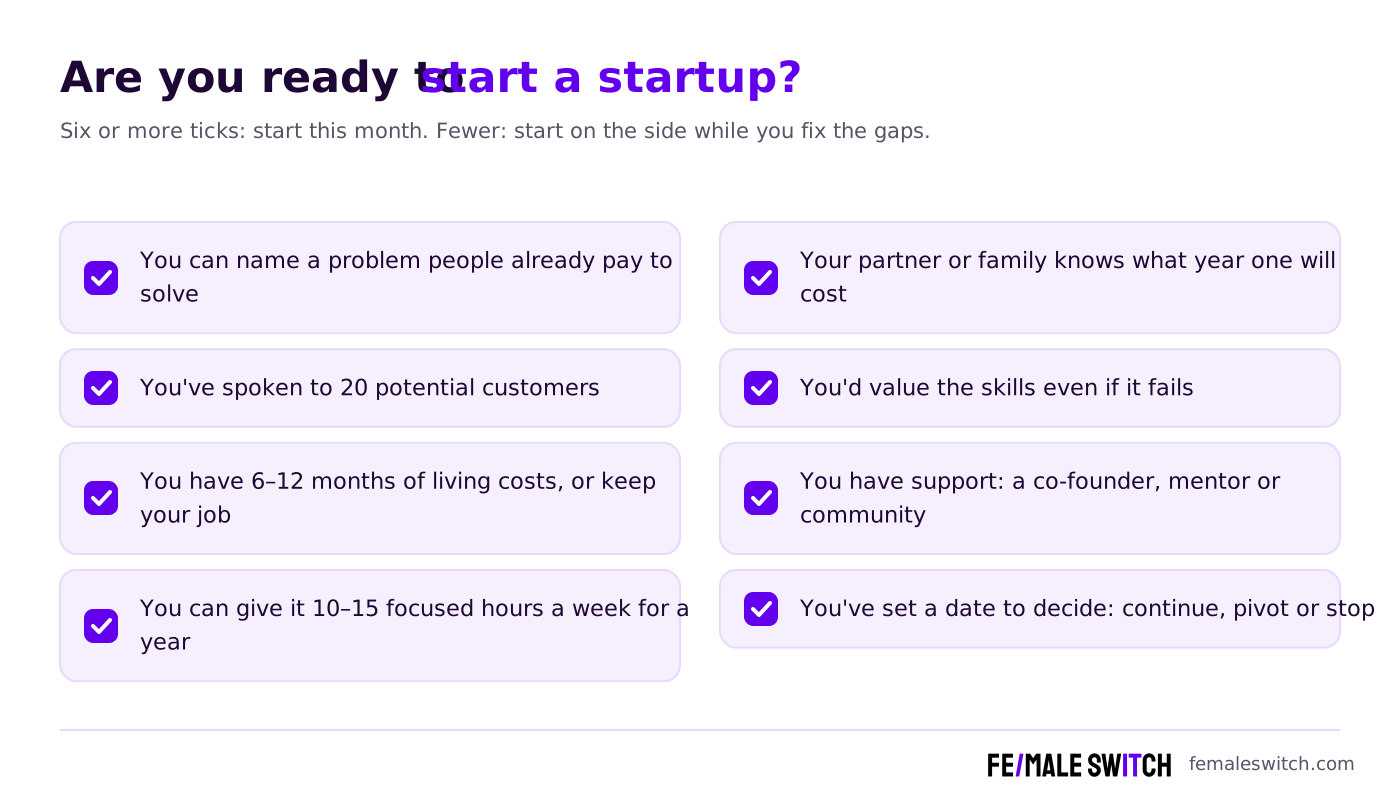
It's worth it if you're solving a problem you care about, you can afford the time and money, and you'd value what you learn even if the company doesn't last. It's rarely worth it as a way to get rich quickly: the median outcome for a single venture is modest, and the big wins are rare. Use this test before you commit.
Not ready yet? Find a problem worth solving with our business ideas hub and great business ideas proven by real founders, then score your idea with the free Idea Validator.
Try starting a startup before you risk your savings
The Fe/male Switch startup game lets you go from idea to first customers in a safe environment, with Elona Musk as your AI co-founder and 6,000+ founders for company.
👉 Start your first startup in the game
Conclusion: start with open eyes
Starting a startup means long hours, little pay at first, slow milestones and real strain on your health and relationships. It also means learning faster than in almost any job, and the odds are better than the myths suggest, especially if you start on the side, spend little and sell early. Look at the numbers, talk to the people who'll share the cost, and decide when you'll review your progress.
Your next step: take the readiness test above, then follow the practical steps in our guide on how to start a startup. For free structured lessons, join the free startup school.
Methodology
Figures come from official statistics (Eurostat, ONS, US BLS, KfW), Carta and Stripe company data, founder surveys and peer-reviewed research, checked in October 2026. Business survival data covers all new firms, not only venture-backed startups; Carta data covers US startups on its platform. Survey figures with small samples are named as such.
FAQ: starting a startup
What is starting a startup really like?
Long hours, uncertainty and little pay at first, mixed with fast learning and a lot of freedom. Most founders spend the first months talking to customers and testing small versions, and milestones such as first hires and funding rounds take well over a year.
How many hours a week do startup founders work?
It varies. An Antler survey found that 75% of European startup founders work more than 60 hours a week, while Germany's full-time business founders average 45 hours and part-time founders 16, according to KfW.
How much do founders pay themselves in the first year?
Often nothing. Bootstrapped founders usually live on savings or a job until revenue arrives. Across all founders in Pilot's 2025 survey, 60% paid themselves under $100k; funded seed-stage CEOs in Kruze's payroll data averaged about $153k.
How long does it take for a startup to make money?
Some charge their first customer within a month: 20% of Stripe Atlas startups did in 2025. Covering the founders' salaries usually takes one to three years, and profitability or an exit takes longer.
What percentage of new businesses survive?
In the EU, 80.5% of new businesses are still active after one year, 57.2% after three and about 46% after five. In the US, about half survive five years. Venture-backed startups chasing fast growth have lower odds.
Is starting a startup worth it if it fails?
Often yes, if you start in a way you can afford. Founders gain skills, networks and judgment that employers and investors value, and many succeed on a later attempt. Starting on the side and spending little keeps the downside small.
Can I start a startup while working full-time?
Yes, and it's the most common way. Founders who keep their job while starting are 33% less likely to fail. Check your contract for non-compete and intellectual property clauses first.
How does starting a startup affect mental health?
It can be hard on it. In one study, 72% of entrepreneurs were affected by mental health conditions directly or through family history, and more than half of European founders reported burnout in 2025. Peer support, sleep and clear working hours help.
Is starting a startup harder for women in Europe?
Funding is harder: female-founded and mixed teams raised about 13% of European venture capital in 2025. Grants, angel networks, revenue-first models and women-focused programmes help close the gap.
How do I know if I'm ready to start a startup?
You're ready if you have a problem people pay to solve, have spoken to potential customers, can cover 6–12 months of living costs or keep your job, and the people close to you understand the commitment.
About the Author
Violetta Bonenkamp, also known as MeanCEO, is an experienced startup founder with an impressive educational background including an MBA and four other higher education degrees. She has over 20 years of work experience across multiple countries, including 5 years as a solopreneur and serial entrepreneur. Throughout her startup experience she has applied for multiple startup grants at the EU level, in the Netherlands and Malta, and her startups received quite a few of those. She’s been living, studying and working in many countries around the globe and her extensive multicultural experience has influenced her immensely.

