

EdTech Startup Grants: Non-Dilutive Funding for Education Startups, Checked for 2027
Grants are the best first money for an EdTech startup: you keep your equity, and the reviewers often care about learning outcomes as much as revenue. But many lists of "EdTech grants" mix three things: grants a company can win, grants that only schools, states or nonprofits can receive, and accelerators that take equity. This guide keeps only programmes an EdTech startup can apply for itself, and we checked each one on its official page in October 2026: who can apply, how much you get, what strings are attached and when the next deadline is. Where a deadline has passed, we say so. The 2025 versions of this article listed 20 and 25 items; most were school grants, equity programmes or names we could not find on any official site, so they are listed at the end with the reason. For startup grants that are not specific to education, read our guides to grants for early-stage startups worldwide and grants for early-stage startups in Europe. If you also want mentoring, pilots and investor access in Europe, see our list of EdTech accelerators in Europe. For a country-by-country view of the US, Canada and Mexico, read our guide to EdTech grants in North America.
Quick answer: US EdTech startups have two federal doors: the ED/IES SBIR programme of the Department of Education ($250,000 in Phase I, then $1 million), whose FY 2027 solicitations are expected in late 2026 or early 2027, and the NSF SBIR/STTR Learning and Cognition Technologies topic (up to $305,000 in Phase I, zero equity), with deadlines on 4 November 2026, 4 March 2027 and 7 July 2027. Founders anywhere can enter the next Tools Competition (prizes of $50,000 to $300,000). In Europe, use the EIC Accelerator for a deep tech learning product close to market, or join an Erasmus+ cooperation partnership with schools or universities. Open-source EdTech in emerging markets fits the UNICEF Venture Fund, and African EdTech ventures should watch for the next Mastercard Foundation EdTech Fellowship cohort.
Write FREE SEO-optimized Blog Articles! Our Article Writer ensures your blog is loved by both Google and your readers, turning those clicks into customers.
👉 Write your article here
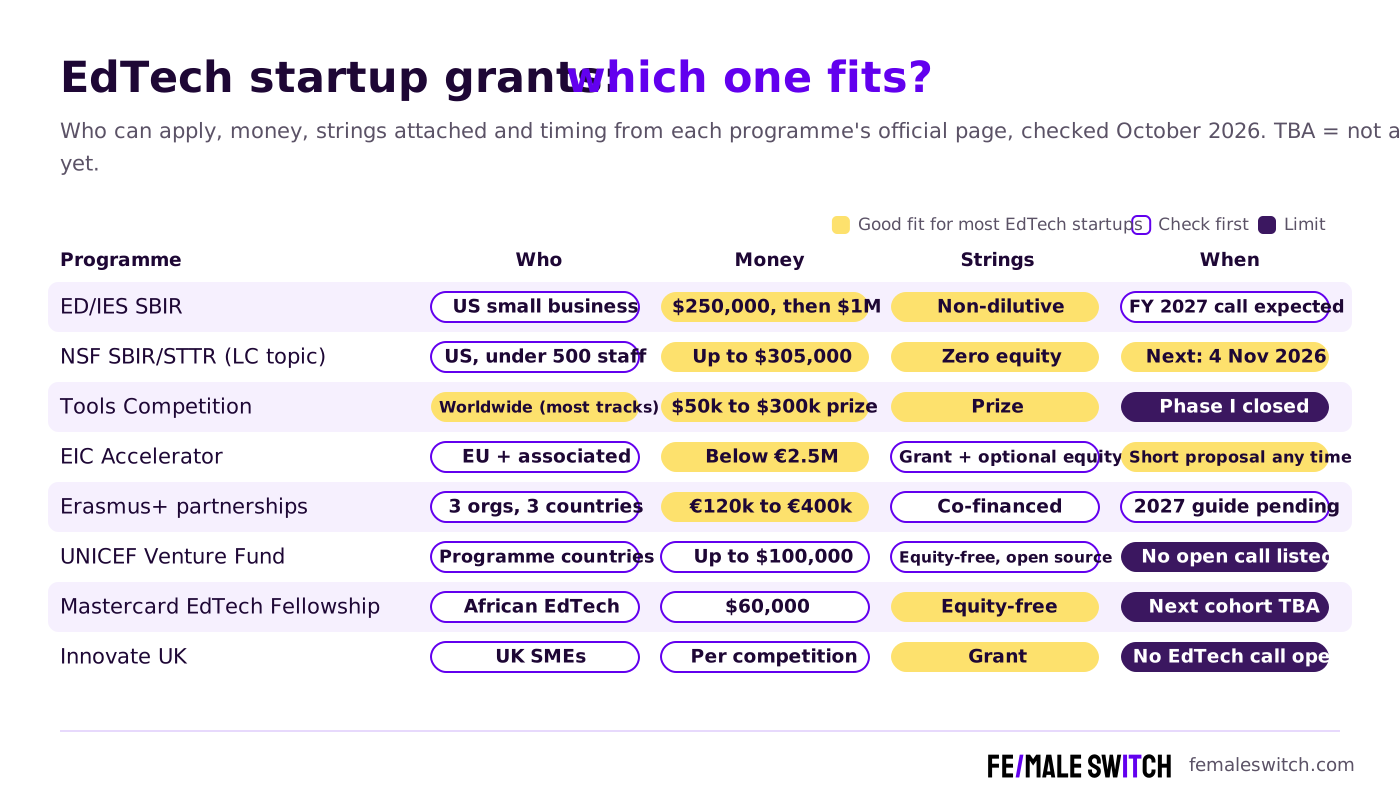
EdTech Startup Grants Compared
Sources: each programme's official website, solicitation or rules page, checked 30 October 2026. Rules change between rounds, so check the official page again before you apply.
US Grants for EdTech Startups
1. ED/IES SBIR: $250,000 and then $1 million from the US Department of Education
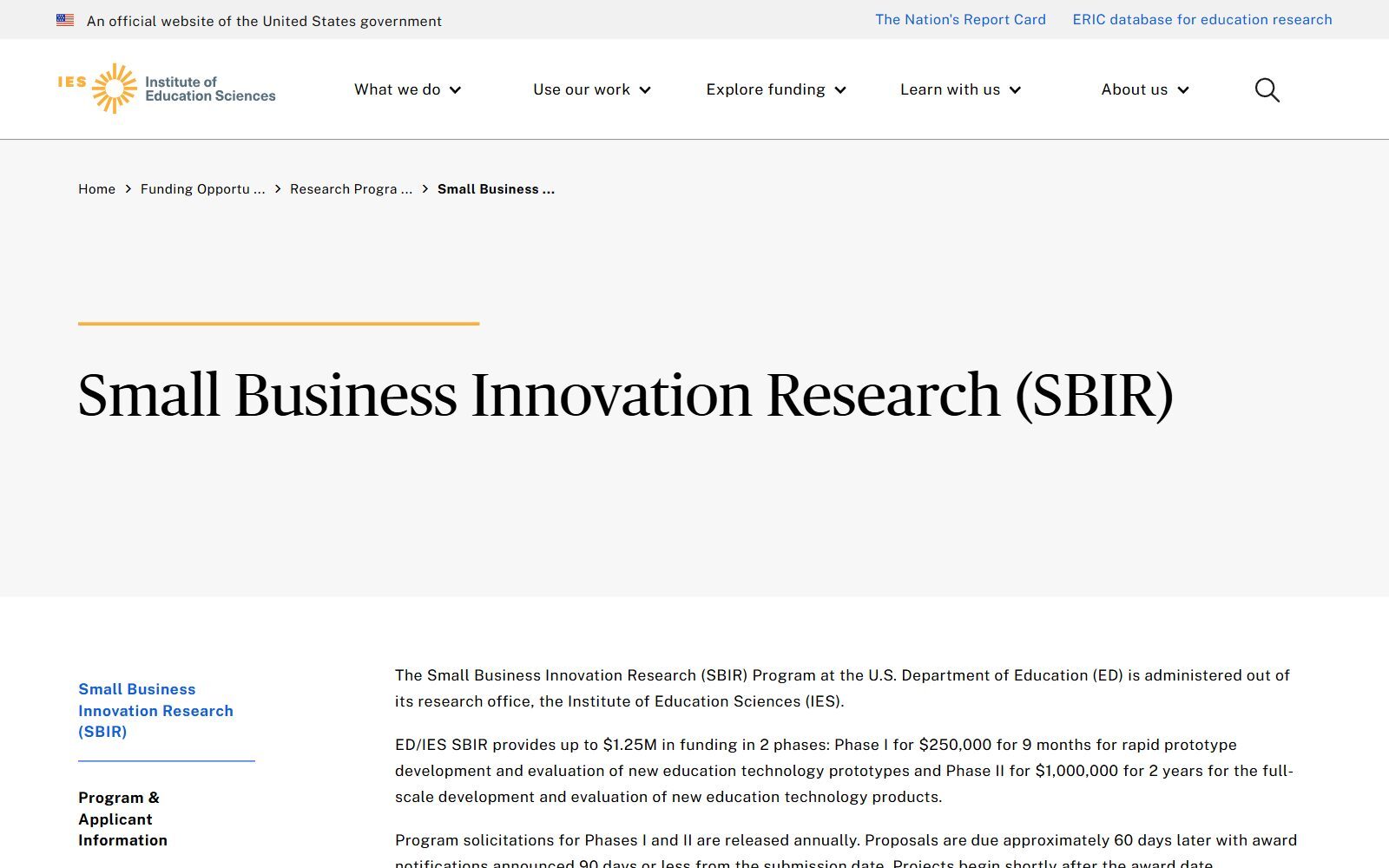
The US Department of Education runs its own Small Business Innovation Research programme through its research office, the Institute of Education Sciences (IES). It is the only federal SBIR programme built entirely around education technology: games, assessments, virtual and augmented reality, simulations, AI adaptive tutors, data dashboards and assistive technologies. Phase I gives $250,000 for nine months to build and test a prototype; Phase II gives $1,000,000 for two years of full development and evaluation, for up to $1.25 million in total. Since 2002 it has made 286 Phase I and 120 Phase II awards. Status: according to the FY 2027 solicitation page, the three FY 2026 solicitations are closed, and the FY 2027 solicitations are expected to open in late 2026 or early 2027, with proposals due about 60 days after release. The FY 2026 round had three tracks: Phase IA for a new, first-of-its-kind product, Phase IB for a new component of an existing research-based product, and Direct to Phase II ($1 million for two years) to turn evidence-based innovations created by university or nonprofit researchers into commercial products. Programme staff answer questions only before a solicitation is released, so contact them now if you plan to apply in 2027.
2. NSF SBIR/STTR: the Learning and Cognition Technologies topic
The National Science Foundation's America's Seed Fund funds research-based startups and takes zero equity. Its Learning and Cognition Technologies (LC) topic covers advanced learning technologies, workforce development and upskilling, analytics for learning and cognition, multimodal learning and other learning technologies, including AI in education. Under the NSF 26-510 solicitation, Phase I pays up to $305,000 for 6 to 18 months and Phase II up to $1,250,000, typically over 24 months. The company must be a US small business with fewer than 500 employees, at least 50% owned by US citizens or permanent residents, and all funded work must happen in the US. The principal investigator must work for the company at least 20 hours a week but needs no PhD. First you send a short Project Pitch; only with an invitation can you submit a full proposal. The next deadlines are 4 November 2026, 4 March 2027 and 7 July 2027 at 5 p.m. your local time. Our guide to startup competitions in North America lists faster, smaller prizes for US founders.
Boost Your SEO by listing your startup and get a FREE backlink.
Create a profile in the F/MS Startup Game, add the link to your website and submit.
👉 List your startup now!
Global Prizes and Funds for EdTech
3. Tools Competition: prizes of $50,000 to $300,000
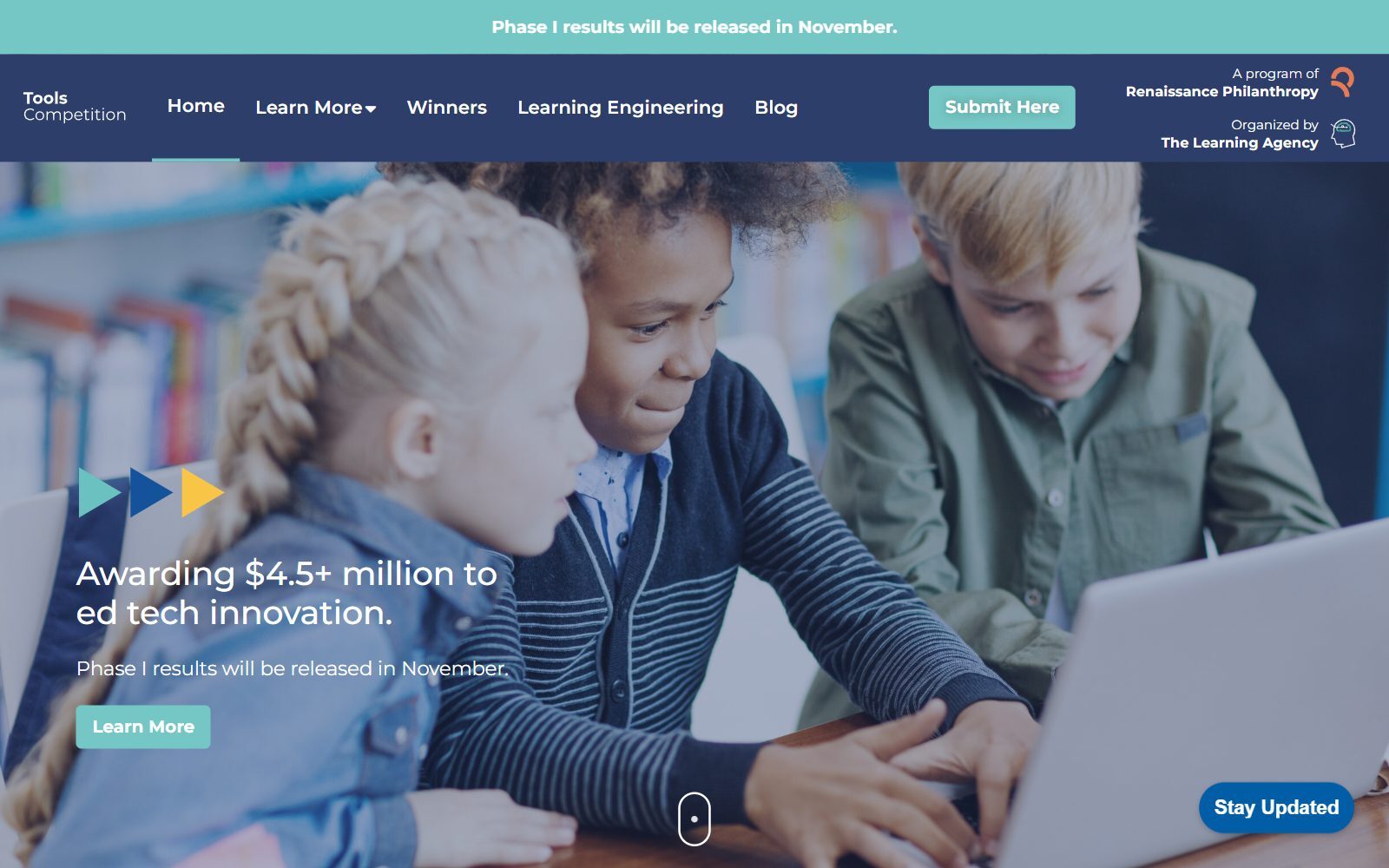
The Tools Competition is a yearly prize competition for education technology, sponsored by Renaissance Philanthropy and run by The Learning Agency; the current cycle awards more than $4.5 million. According to its official rules, small and large companies and nonprofits can enter. Catalyst prizes ($50,000) are for early-stage tools, Growth prizes ($150,000) for products with some users, and Transform prizes ($300,000) for platforms with 10,000 or more users; a datasets track pays $100,000. The tracks are Strengthening Teaching, Reimagining Assessment, Navigating Postsecondary Learning and Work (US entrants serving US learners only) and Building Better Datasets; the other three are open worldwide. Half of a prize is paid when winners are notified and the rest after a product review, and winners take part in a 12-month impact evaluation. Status: Phase I abstracts for this cycle were due on 13 October 2026. Invited teams hear on 24 November 2026 and send Phase II proposals by 21 January 2027; winners are announced in June 2027. If you missed it, prepare for the next cycle.
4. UNICEF Venture Fund: up to $100,000 for open-source EdTech in emerging markets
The UNICEF Venture Fund invests in early-stage frontier tech from emerging markets that can benefit children and young people, and its portfolio includes early childhood education and game-based learning startups. Seed funding is up to $100,000, and graduates can be invited to growth funding of up to $400,000. It takes no equity and seeks no financial return: the open-source code or hardware you build is UNICEF's "equity". Only private for-profit companies registered in a UNICEF programme country can apply, with a working prototype, first pilot results and an open-source licence (or a commitment to adopt one within six months). Calls are themed and the selection takes about six months; no open call was listed when we checked in October 2026.
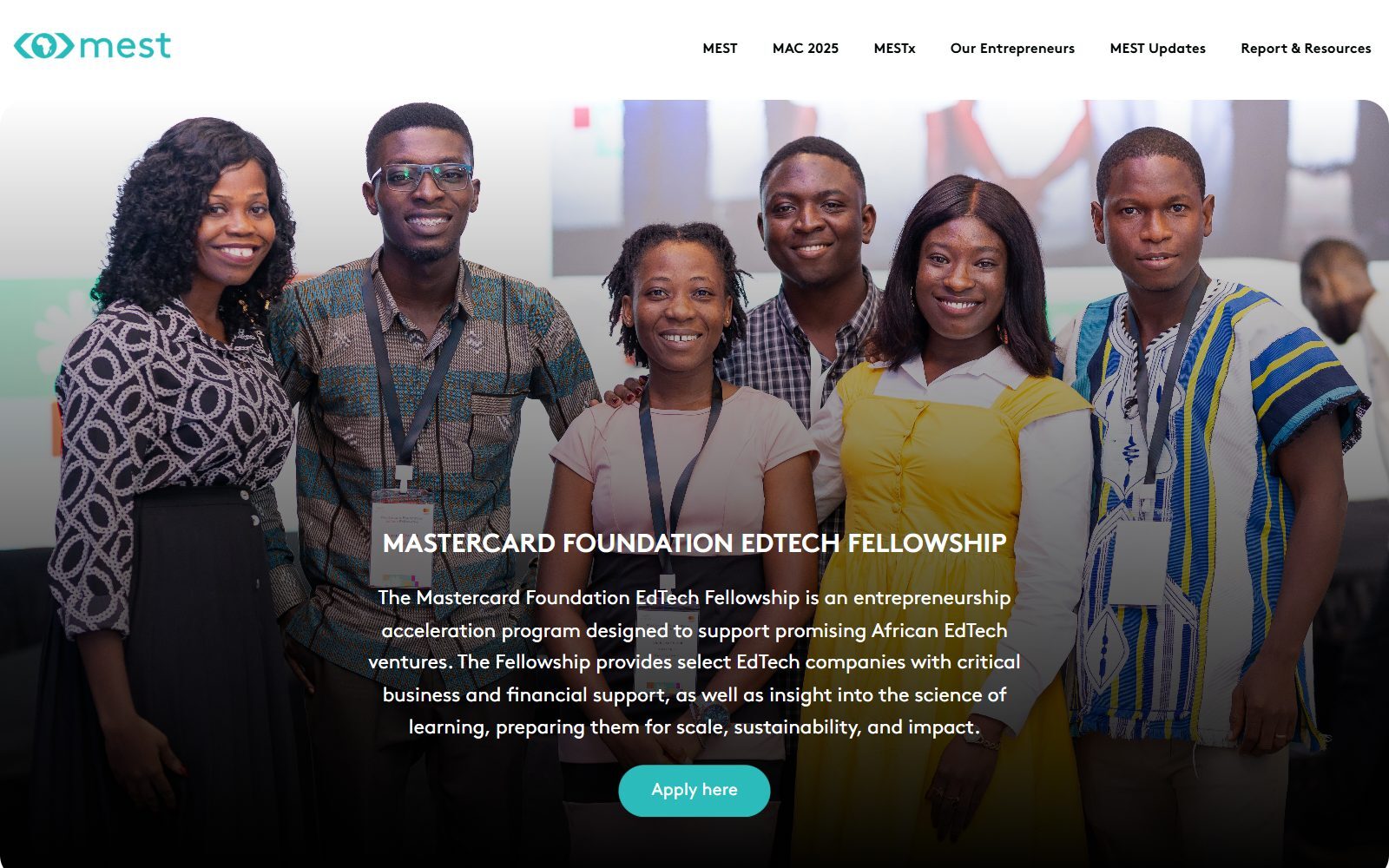
5. Mastercard Foundation EdTech Fellowship: $60,000 for African EdTech ventures
The Mastercard Foundation EdTech Fellowship is an acceleration programme for African EdTech companies, run with innovation hubs and EdTech accelerators across the continent. On the fellowship page of MEST, one of those hubs, participating businesses receive $60,000 of equity-free funding plus business support and insight into the science of learning. The first cohort (2024) selected 12 companies. The application deadline for the third cohort was 30 January 2026, and no later cohort was announced on the page when we checked (October 2026). Other hubs run their own cohorts and dates, so check the hub in your country.
Boost Your SEO with 1,500+ Free Business Directories: increase your DA, get backlinks and traffic.
We've compiled an exclusive list of directories and websites where you can submit your business and start building high-quality backlinks to boost your website traffic and get your SEO snowball rolling.
👉 Submit your startup now!
European and UK Grants for EdTech Startups
6. EIC Accelerator: a grant below €2.5 million for deep tech close to market
The EIC Accelerator is not an education programme, but it is open to any field, so an EdTech startup with a genuinely new technology (for example AI, speech or adaptive learning engines) can apply. It funds startups and SMEs in the EU and Horizon Europe associated countries at technology readiness levels 6 to 8, with a lump-sum grant below €2.5 million and optional equity of €1 million to €10 million. Short proposals can be sent at any time and are batched on the first Tuesday of each month at 17:00 Brussels time. The last full-proposal cut-off of 2026 is 4 November 2026; the 2027 dates had not been published when we checked. Grant-grants.com explains the process in its EIC Accelerator programme guide.
7. Erasmus+ Cooperation partnerships: €120,000 to €400,000 with schools and universities
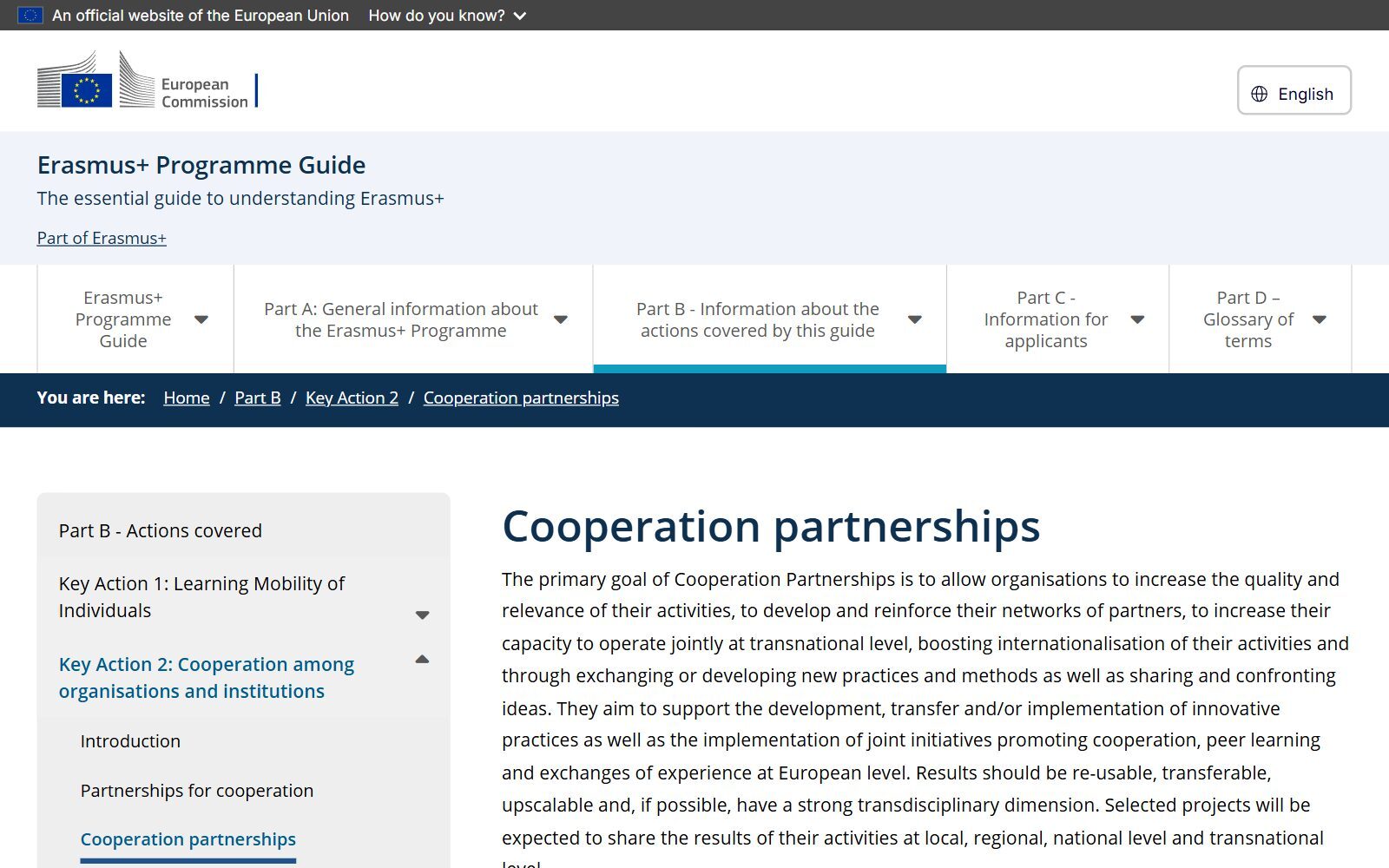
Erasmus+ does not fund startups on their own, but a company can be a partner, or after two years the applicant, in a Cooperation partnership. Any public or private organisation established in an EU Member State or a third country associated to the programme can take part, and a partnership needs at least three organisations from three different countries, for example your startup, a school and a university. The grant is one of three lump sums, €120,000, €250,000 or €400,000, and projects are expected to be co-financed. The applicant (coordinator) applies for all partners to the National Agency of its own country, and it must have been legally established for at least two years before the deadline, so a younger startup joins as a partner rather than leading. Under the 2026 Programme Guide, the main deadline for education and training was 5 March at midday Brussels time, with an optional second round on 1 October in countries whose National Agency runs one; both have passed, and the 2027 Programme Guide had not been published when we checked. Read grant-grants.com on Erasmus+ funding for EdTech before you look for partners.
8. Innovate UK: no EdTech competition open right now
Innovate UK funds UK-registered businesses through themed competitions on its Innovation Funding Service. On 30 October 2026 a search for "education" returned no open competitions, and its open-to-all-sectors Smart grants are paused and closed to new applications. The open AI competitions, such as Frontier AI: SME Champions (closes 11 November 2026, a share of up to £3.1 million for feasibility studies by UK SMEs), are not about education, so an EdTech product fits only if its AI technology itself is the innovation. UK startups can still apply for the EIC Accelerator grant, though not its equity part.
Boost Your SEO by Getting Featured in Our Blogs and get a backlink.
We publish content about startups, education, tech, funding, etc. that ranks well not only in Google but also in Perplexity, ChatGPT, Grok and other AI tools.
👉 Get featured now!
What About the Big Education Foundations?
Many lists send EdTech founders to the Gates, Jacobs or Walton foundations. Their own pages say they rarely fund companies that write to them:
- Gates Foundation: its grant opportunities page says the foundation awards the majority of its grants to US 501(c)(3) and other tax-exempt organisations identified by its staff. Open requests for proposals, including Grand Challenges, are posted on its submission portals.
- Jacobs Foundation: its FAQ says it generally does not consider unsolicited proposals; open calls for specific programme goals are posted on its website.
- Walton Family Foundation: its grants page says the foundation does not accept unsolicited proposals.
- Google.org and the LEGO Foundation: they have funded learning projects through challenges and accelerators, but we found no open call for EdTech companies on their official pages in October 2026.
For a startup, the realistic route to foundation money is indirect: partner with a nonprofit or university that the foundation already funds, or enter a foundation-backed prize such as the Tools Competition.
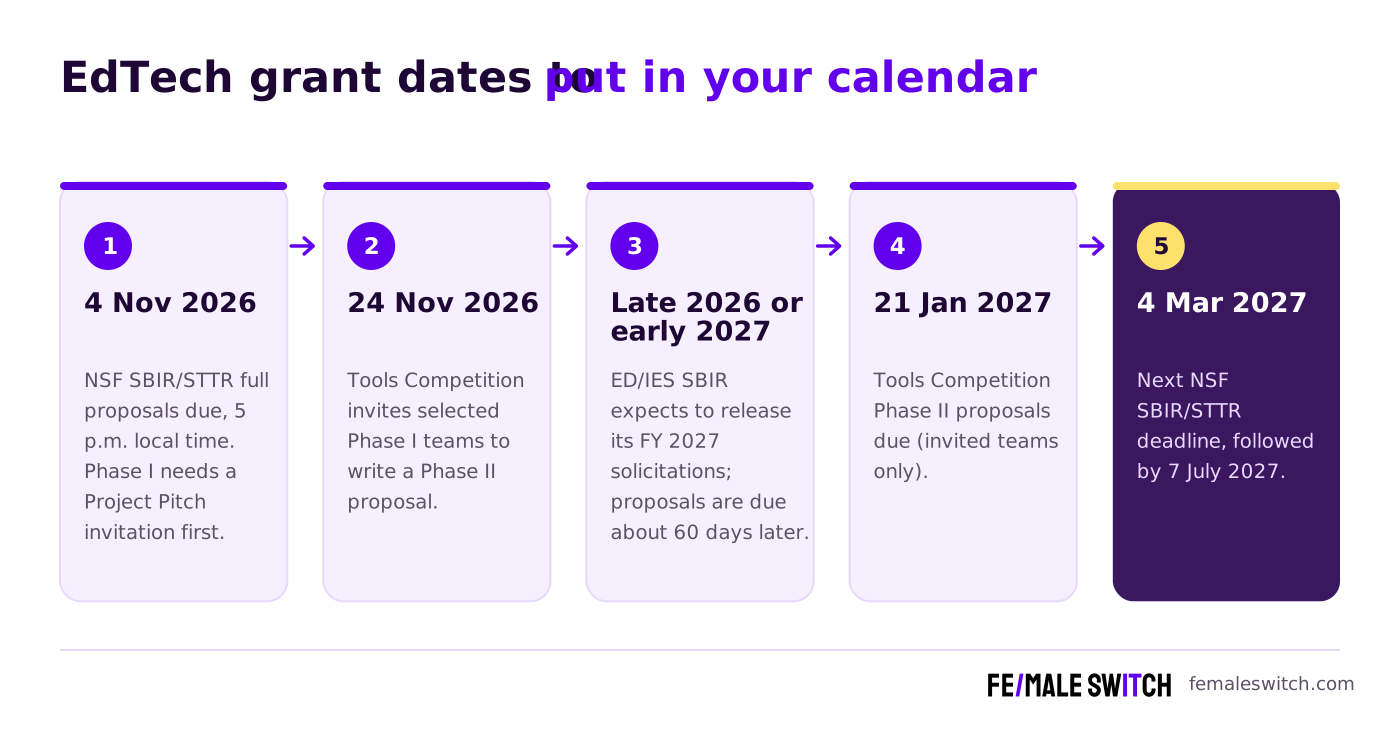
EdTech Grant Dates for Your Calendar
These are the next fixed dates from the programmes above. The EIC Accelerator takes short proposals at any time, and the UNICEF Venture Fund and the Mastercard Foundation EdTech Fellowship had no announced next date.
Programmes Removed From the Old List
These were in the 2025 versions of this article. Here is why they are no longer on the list:
- LearnLaunch Fund + Accelerator (Breakthrough to Scale): a Boston venture fund and accelerator, so its money is an investment, not a grant.
- SBIR (general) and "NSF Innovate": merged into the ED/IES SBIR and NSF SBIR/STTR sections above, which are the federal SBIR doors for education products.
- UNICEF "Blue Unicorn Farm": we found no official UNICEF page for it. The UNICEF Venture Fund above is UNICEF's real funding route for startups.
- Enhancing Education Through Technology, the New York State Learning Technology Grant and the TIGER grant: grants for states, school districts or schools, not for companies; we also found no official page for the TIGER grant or its named provider.
- Rural Technology Fund: it gives technology resources, scholarships and assistive devices to rural students and their teachers, not grants to startups.
- National Endowment for the Humanities, Commonwealth of Learning and Education Commission of the States: they work with institutions, governments and states; we found no grant for EdTech startups.
- EdTech Genome Project Grant, Future of Learning Grant Program, Deloitte Digital Grants for Education, BatchEd and Go-Together EdTech Accelerator: their old links no longer work (the domains do not resolve, return 404 or show a parked page), and we found no official page for them.
- Techstars EdTech Accelerator: the old Techstars page returns 404, and the 2025 version itself described its money as an investment in exchange for equity, not a grant.
Which EdTech Grant Should You Apply For?
- You are a US EdTech startup with a new product idea: prepare for the ED/IES SBIR FY 2027 Phase I call and send an NSF Project Pitch now, aiming for 4 March 2027.
- You built your product with university or nonprofit researchers: ED/IES SBIR Direct to Phase II ($1 million) when the FY 2027 call opens.
- You have users already, anywhere in the world: the next Tools Competition cycle, Growth or Transform level.
- You build open-source tools in an emerging market: the UNICEF Venture Fund's next call.
- You run an African EdTech company: the next Mastercard Foundation EdTech Fellowship cohort at a hub in your country.
- You are in the EU with deep tech close to market: an EIC Accelerator short proposal. With schools or universities as partners, an Erasmus+ Cooperation partnership.
- You lead a women-founded EdTech startup: add the women-only grants in our guides to grants for female entrepreneurs and grants for female entrepreneurs in Europe.
How EdTech Founders Combine Grants With Other Funding
Grants take months and pay for research and development, not for sales, so most EdTech founders combine them with other money and with customers. Our sister site grant-grants.com keeps a broader list of EdTech and education innovation grants and explains non-dilutive funding. In Europe, track the dates in our EU grant calendar for 2027, learn how to find open EU funding calls, and, if you are a new founder, see Erasmus for Young Entrepreneurs, which pays for a stay with an experienced entrepreneur abroad. Faster money comes from startup competitions in Europe and startup incubators in Europe; when you are ready for investors, compare early-stage VC firms. To meet school buyers and reviewers in person, pick from our list of EdTech startup events.
Join F/MS: Startup Facilitator & Incubator and unlock your startup dreams today! Get your first customers, register you company in the Netherlands and get startup visas for the team.
FAQ About EdTech Startup Grants
Which EdTech startup grants are open now?
In late October 2026: NSF SBIR/STTR (next deadline 4 November 2026, invitation needed) and EIC Accelerator short proposals (any time). The ED/IES SBIR FY 2027 calls are expected in late 2026 or early 2027, and the Tools Competition is in its Phase II for invited teams.
How much does the US Department of Education give EdTech startups?
Through ED/IES SBIR, $250,000 for a nine-month Phase I and $1,000,000 for a two-year Phase II, up to $1.25 million in total. Direct to Phase II awards of $1 million are for evidence-based innovations created by university or nonprofit researchers.
Can a non-US EdTech startup get SBIR money?
No. NSF requires a US small business with fewer than 500 employees, at least 50% owned by US citizens or permanent residents, with all funded work done in the US. ED/IES SBIR is also for US small businesses.
Which EdTech grants accept founders from any country?
Three of the four Tools Competition tracks are open worldwide (the Postsecondary track is US only). The UNICEF Venture Fund takes for-profit startups registered in UNICEF programme countries.
Can a startup apply for Erasmus+?
Yes, as a private organisation in an EU Member State or associated country, but only in a partnership of at least three organisations from three countries, and only an organisation established for at least two years can lead it. Cooperation partnerships get lump sums of €120,000, €250,000 or €400,000.
Does the Gates Foundation fund EdTech startups?
Rarely directly. Its own page says it awards most grants to US 501(c)(3) and other tax-exempt organisations identified by its staff; open requests for proposals are posted on its submission portals.
Do I have to give up equity for these grants?
No for SBIR, NSF, Tools Competition prizes, the UNICEF Venture Fund and the Mastercard Foundation EdTech Fellowship. The EIC Accelerator adds equity only if you ask for it; UNICEF asks for your code to be open source instead.
Are there EdTech grants in the UK?
Not right now: Innovate UK had no open education competition on 30 October 2026, and Smart grants are closed to new applications. UK startups can apply for the EIC Accelerator grant.
Where can I find general startup grants?
In our guides to grants for early-stage startups worldwide and in Europe, linked at the top of this article.
Where can I get a backlink by writing about my EdTech startup?
You can publish a guest post in one of the Fe/male Switch startup blogs, which rank in Google and in AI tools. Get a quality backlink.
About the Author
Violetta Bonenkamp, also known as MeanCEO, is an experienced startup founder with an impressive educational background including an MBA and four other higher education degrees. She has over 20 years of work experience across multiple countries, including 5 years as a solopreneur and serial entrepreneur. Throughout her startup experience she has applied for multiple startup grants at the EU level, in the Netherlands and Malta, and her startups received quite a few of those. She’s been living, studying and working in many countries around the globe and her extensive multicultural experience has influenced her immensely.
