
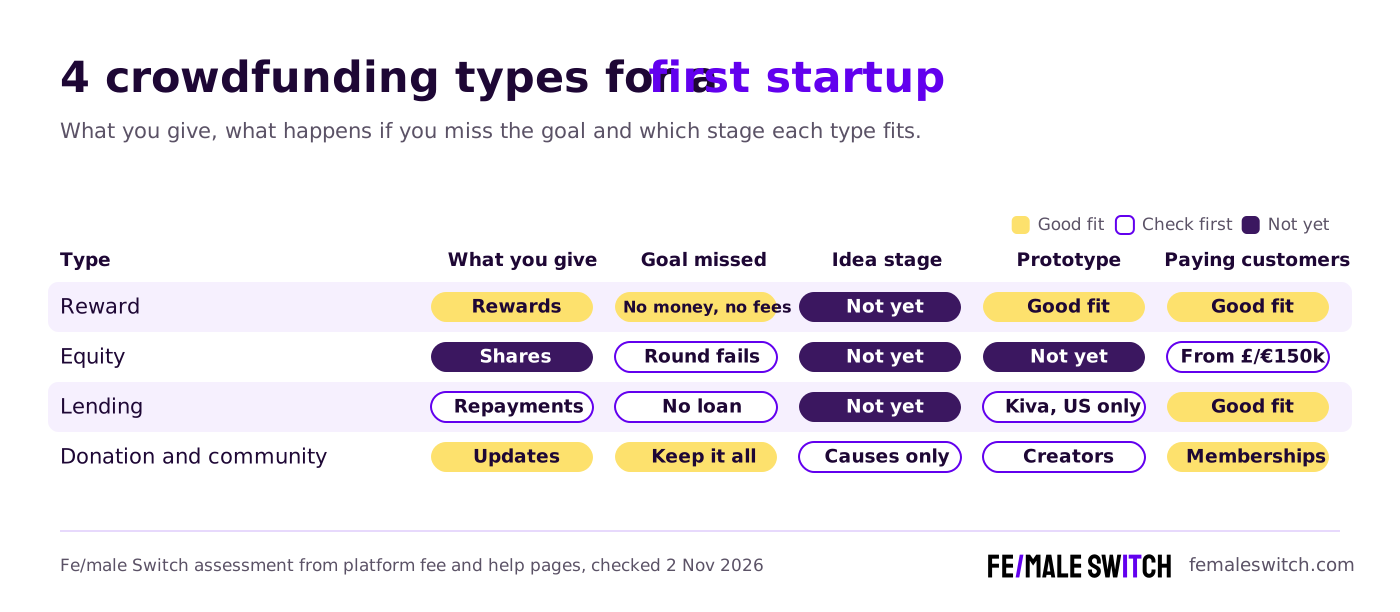
TL;DR: Crowdfunding platforms come in four types, and a first-time founder has to pick the TYPE before the platform: reward, equity, lending or donation. On the platforms we checked on 2 November 2026, equity rounds start at a £/€150,000 target (Crowdcube, Republic Europe), Kiva's 0% loans are for US businesses only, GoFundMe's terms ban rewards in exchange for donations, and Kickstarter's rules exclude service businesses. That leaves reward crowdfunding as the realistic first raise for most product startups, and memberships for service and creator businesses. Answer seven questions in the matcher below to get your type, three platform picks with their fees and a 6-week plan.
Crowdfunding platforms look like free money from strangers, but the strangers arrive LAST. Crowdcube keeps a pitch private until the founder's network fills an agreed first slice, and Kiva asks borrowers to invite friends and family to lend before the loan goes public.
So this guide starts with your situation: the four types side by side, a decision by stage, 9 crowdfunding sites grouped by type with fees from their own pages, a 6-week plan and the copy to prepare with an AI co-founder. For the wider money picture, read our guide to funding options for female-led startups.
How does the crowdfunding type and platform matcher work?
Tell the matcher what you sell, your stage, how much you need, whether you would give away shares, where you are based, how big your email list is and whether you can ship rewards. It returns the best type with a one-line reason and a second choice, three platforms from this guide with the fees we verified, a 6-week plan with one task per week and warnings.
Two rules shape the result. Shares only make sense from £/€150,000, where both equity platforms in this guide start. And your list sets your goal: the matcher warns you when each person on your list would have to give more than €50.
What are the four types of crowdfunding?
- Reward crowdfunding: backers pledge money and get a product, a copy of the work or an experience later. You give no shares and owe nothing but the reward.
- Equity crowdfunding: investors buy shares in your company. The platform sets a share price from your pre-money valuation (what the company is worth before the new money) and holds the shares through a nominee structure, where one nominee company holds all crowd investors' shares as a single entry on your cap table.
- Lending crowdfunding (debt crowdfunding, crowdlending): many lenders fund one loan, and you repay it on a schedule.
- Donation crowdfunding: people give for a cause and get nothing back. Memberships on Patreon or Buy Me a Coffee sit next to it: fans pay monthly for access or perks.
Two funding models decide what happens if you fall short. All-or-nothing means backers are charged only if you hit the goal (Kickstarter, Indiegogo). Keep-it-all means you keep every payment as it arrives (GoFundMe, Patreon, Buy Me a Coffee).
Sources: platform fee and help pages, checked 2 November 2026.
Equity and lending crowdfunding in the EU run under the European Crowdfunding Service Providers Regulation (ECSP, Regulation (EU) 2020/1503), applied since 10 November 2021. One licence covers the EU, and three numbers matter: a project owner can raise up to €5,000,000 over 12 months under these rules, a non-sophisticated investor gets a four-day reflection period to cancel, and above €1,000 or 5% of their net worth, whichever is higher, that investor must see a risk warning and give explicit consent. Reward and donation campaigns fall outside ECSP.
Which crowdfunding type fits your first startup?
Here is how it breaks down for the first-time founders we see in the Fe/male Switch startup game.
- Idea stage, any product. Don't launch a public campaign yet. Kickstarter requires a working prototype for app and tech projects, with no CGI faking features. Collect deposits and sign-ups first with our guide to getting paid before you build and the smoke test playbook.
- Prototype of a physical product or creative work. Reward crowdfunding is your strongest first raise. You pre-sell the first batch, keep 100% of your company and learn which tier sells.
- Prototype of an app. Reward crowdfunding works if backers get something tangible, such as lifetime access or a founding-member plan. If your users are businesses, paid pilots beat a campaign.
- A service business. Kickstarter's rules exclude projects "centered around establishing and providing services", so sell founding memberships on Patreon or Buy Me a Coffee, or presell packages from your own landing page.
- A social cause. GoFundMe serves personal and charity fundraisers. A startup with a mission still sells something, so run a reward campaign.
- Paying customers and a raise of £/€150,000 or more. Now equity crowdfunding platforms open up, if your community and pre-committed money match the size of the round.
- Paying customers who need a small loan. In the US, Kiva's 0% loans of $1,000 to $15,000 fit. EU lenders want a track record: October's borrower FAQ asked for 3 years of trading and more than €250,000 turnover.
Not sure you are ready? Take our free entrepreneurial mindset test, then fill in our lean canvas template so your campaign has a customer, a problem and a price.
Which crowdfunding platforms fit each type?
All nine picks in one table, with fees as each platform publishes them.
Sources: platform fee pages, checked 2 Nov 2026.
Which reward crowdfunding platforms suit a first product?
Backers buy the product here instead of a slice of your company, and both picks charge only when you succeed.
1. Kickstarter: all-or-nothing reward campaigns for products and creative work
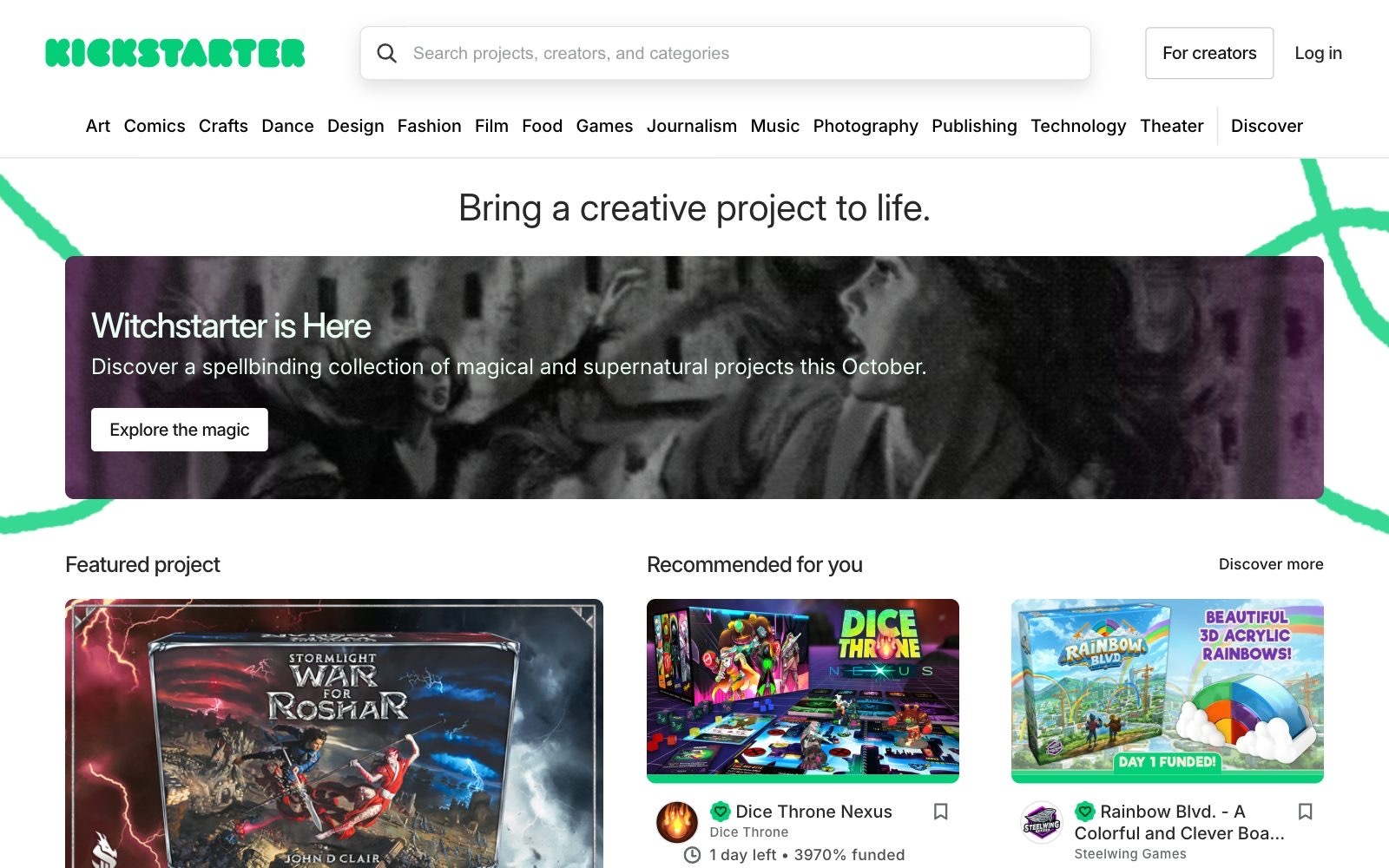
Kickstarter's own review called 2025 its biggest year to date. Two features help a first-timer: Pre-Launch Updates, emailed to everyone who follows your pre-launch page, and Pledge Over Time, which splits a pledge into interest-free monthly payments. On a €10,000 campaign from 200 backers at €50, our maths with the Dutch fee page gives €860 in fees, so you keep €9,140.
- Fees as published: 5% of funds raised plus 3% + €0.30 per pledge (Netherlands page); no fees if funding fails.
- Fits: physical products, games, books, design and apps with a working prototype.
- Watch out: services, marketplaces, equity, alcohol and energy drinks are prohibited.
2. Indiegogo: reward crowdfunding with pledge management included
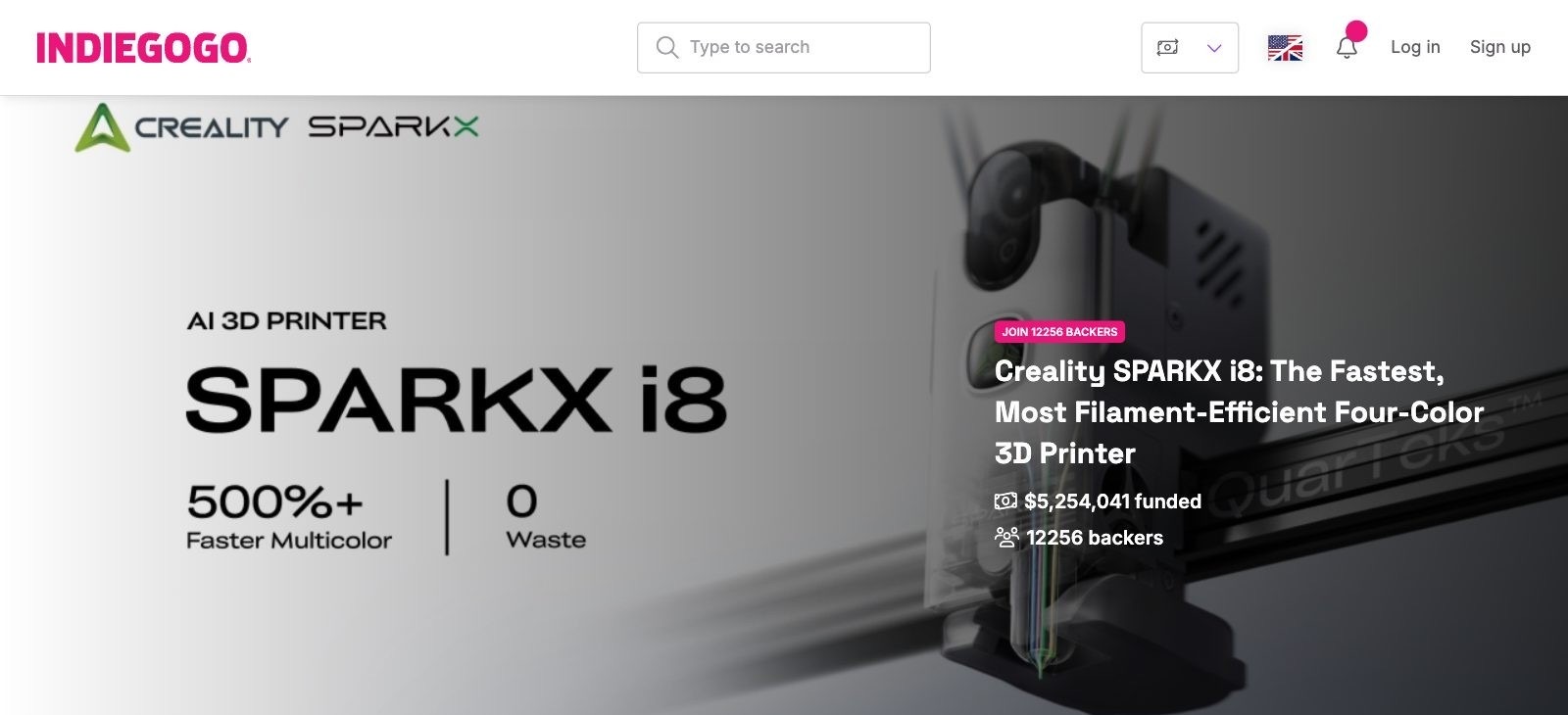
Indiegogo has been owned by Gamefound since 2025 and moved to a platform built on Gamefound technology on 16 October 2025, its help centre says. Backers are charged only after a campaign reaches its goal, unless they chose instant payment, and pledge management is free. The same €10,000 campaign costs €840 in fees by our maths.
- Fees as published: 5% platform fee and 3% + 0.20 per transaction in USD, EUR or GBP; optional performance marketing costs 10% of ad revenue.
- Fits: gadgets, community projects and creative work, plus late pledges after the campaign.
- Watch out: the platform changed in late 2025, so trust its current help pages over older guides.
Which equity crowdfunding platforms accept startups in Europe?
Equity crowdfunding for startups is a SECOND raise for most founders. Both platforms start at £/€150,000 and expect much of the money from your own network.
3. Crowdcube: equity rounds for UK and European companies with a community
Crowdcube calls itself Europe's largest private market investment platform, with investors who have put in more than £1bn since 2011. Investors buy shares from £10 or €10, and your pitch stays private until your network reaches an agreed first target. At the £150,000 minimum, a Full Access round costs up to £25,745 before VAT on the platform fee by our maths, and a Focus round marketed only to your network costs £16,245.
- Fees as published: listing £4,995 (Focus) or £9,995 (Full Access); success fee 5% (Focus) or up to 8% (Full Access); 2.5% platform fee; nominee fee £750 or £1,000 a year after the first 12 months.
- Fits: UK or Irish limited companies with customers, plus some businesses headquartered in Europe.
- Watch out: the minimum raise is £/€150,000 and the average is £670,000.
4. Republic Europe: equity crowdfunding for UK and EU startups, formerly Seedrs
Republic Europe is the former Seedrs, regulated by the UK's Financial Conduct Authority and the Central Bank of Ireland. Its founder help centre, updated in March 2026, sets the bar: business and community based full-time in the UK, EU, EEA or Switzerland, and a target over £/€150,000. Campaigns open privately first and run for up to 30 days in public.
- Fees as published: not published for founders; investors pay 2.5% on investing (£/€5 minimum, £/€250 maximum).
- Fits: startups with customers, a community and part of the round pre-committed.
- Watch out: a small community for a large target is a listed reason for rejection.
Before you set a valuation, study our pitch deck examples for a first raise and the pre-seed fundraising mistakes to avoid, or raise from a few angel investors for women founders.
Which lending crowdfunding platforms work for a first startup?
Lending works once money comes in every month to repay it.
5. Kiva: 0% microloans for US small businesses
Kiva U.S. makes 0% interest loans of $1,000 to $15,000 possible with no fees, no collateral and no minimum credit score. You apply in 30 to 60 minutes, wait 20 to 25 business days for approval, invite friends and family to lend first, then open the loan to more than 2 million lenders. Repayment starts a month after you receive the money and runs 12 to 36 months.
- Fees as published: no fees, 0% interest.
- Fits: US founders, including brand-new businesses that can document they exist.
- Watch out: you must live and operate in the United States, and loans can't refinance debt.
6. EvenFi: EU-licensed lending and equity for established businesses
EvenFi is a crowdfunding service provider authorised by Spain's CNMV (register number 5 since 17 February 2023) with an EU passport, and the lender accounts of the French platform October moved to it. It lists more than 150,000 registered investors, and businesses raise €50,000 to €5,000,000 from its investors, their own network or both.
- Fees as published: not published.
- Fits: EU companies with revenue that want a loan or equity round under ECSP rules.
- Watch out: October's borrower FAQ asked for 3 years of trading, over €250,000 turnover and profit.
Which donation and community platforms fit causes and creators?
These keep-it-all platforms pay out what comes in, with no goal to hit.
7. GoFundMe: donations for personal causes, not a startup launch
GoFundMe charges one transaction fee per donation. Its terms, effective 23 June 2026, ban "promotions involving rewards (monetary or otherwise) in exchange for donations" and any investments, loans or equity. You can't pre-sell a product here, so a startup launch belongs on a reward platform.
- Fees as published: no platform fee; 2.9% + $0.30 per donation on the US pricing page, other rates elsewhere.
- Fits: a personal cause, a community need or a charity linked to your mission.
- Watch out: donor rewards are banned, except small UK give-aways such as one sticker.
8. Patreon: monthly memberships for creators and communities
Patreon is free to start and takes 10% of what you earn, plus processing, conversion and payout fees, for memberships and one-time purchases in more than 16 currencies. For a coach or a podcast-led startup, €1,000 a month from members means €100 to Patreon before processing.
- Fees as published: 10% of income plus processing, conversion and payout fees and taxes.
- Fits: service and content businesses that deliver something every month.
- Watch out: members pay for ongoing access, so pick a publishing rhythm you can keep.
9. Buy Me a Coffee: tips, memberships and a small shop
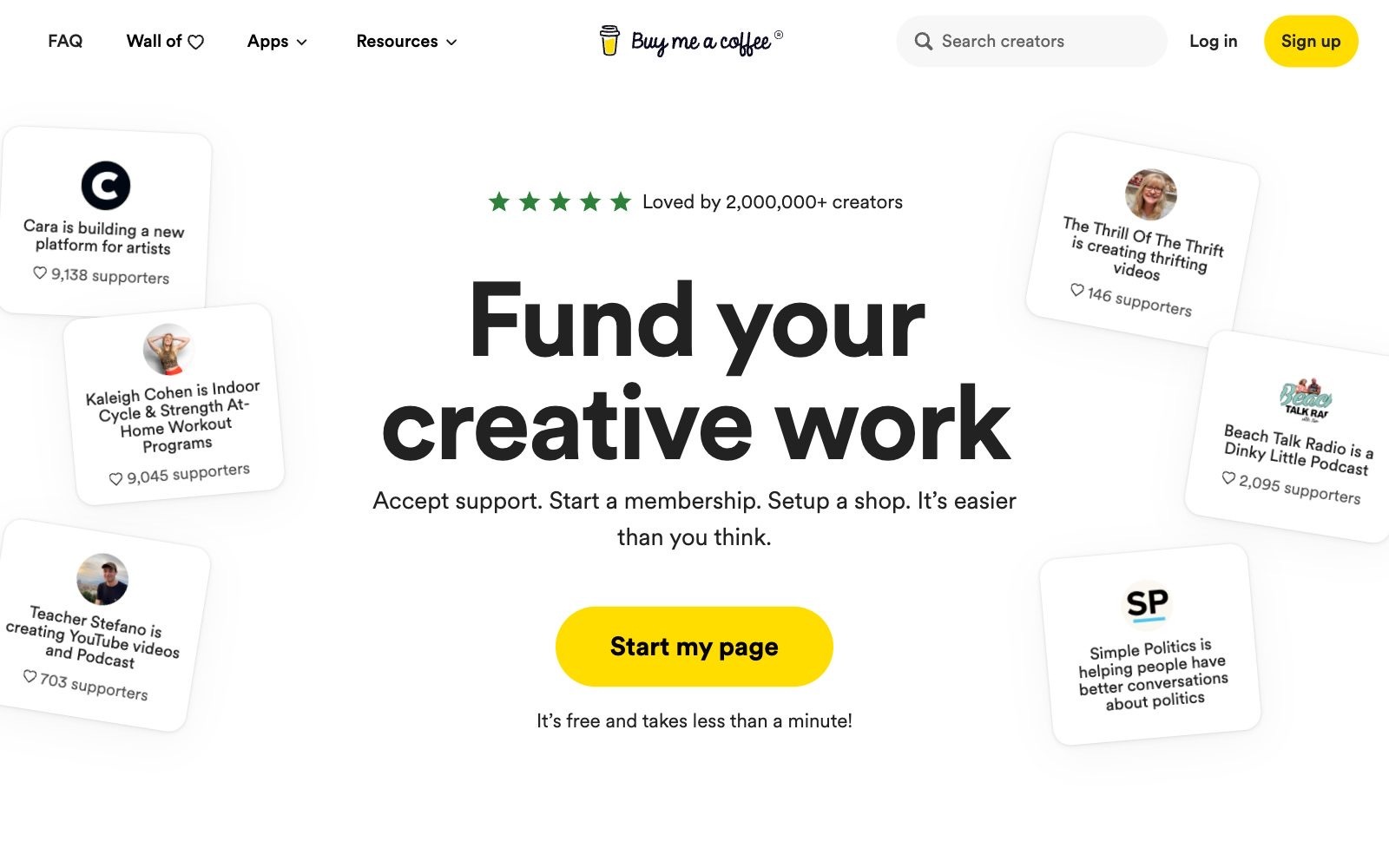
Buy Me a Coffee says more than 2,000,000 creators use it, and a page takes under a minute to set up. It charges a flat 5% fee plus payment processing, with memberships, a shop and analytics free for everyone.
- Fees as published: flat 5% plus payment processing.
- Fits: a first circle of supporters, digital products and founding-member perks.
- Watch out: payouts work only in countries Stripe supports.
How do you run a 6-week crowdfunding campaign?
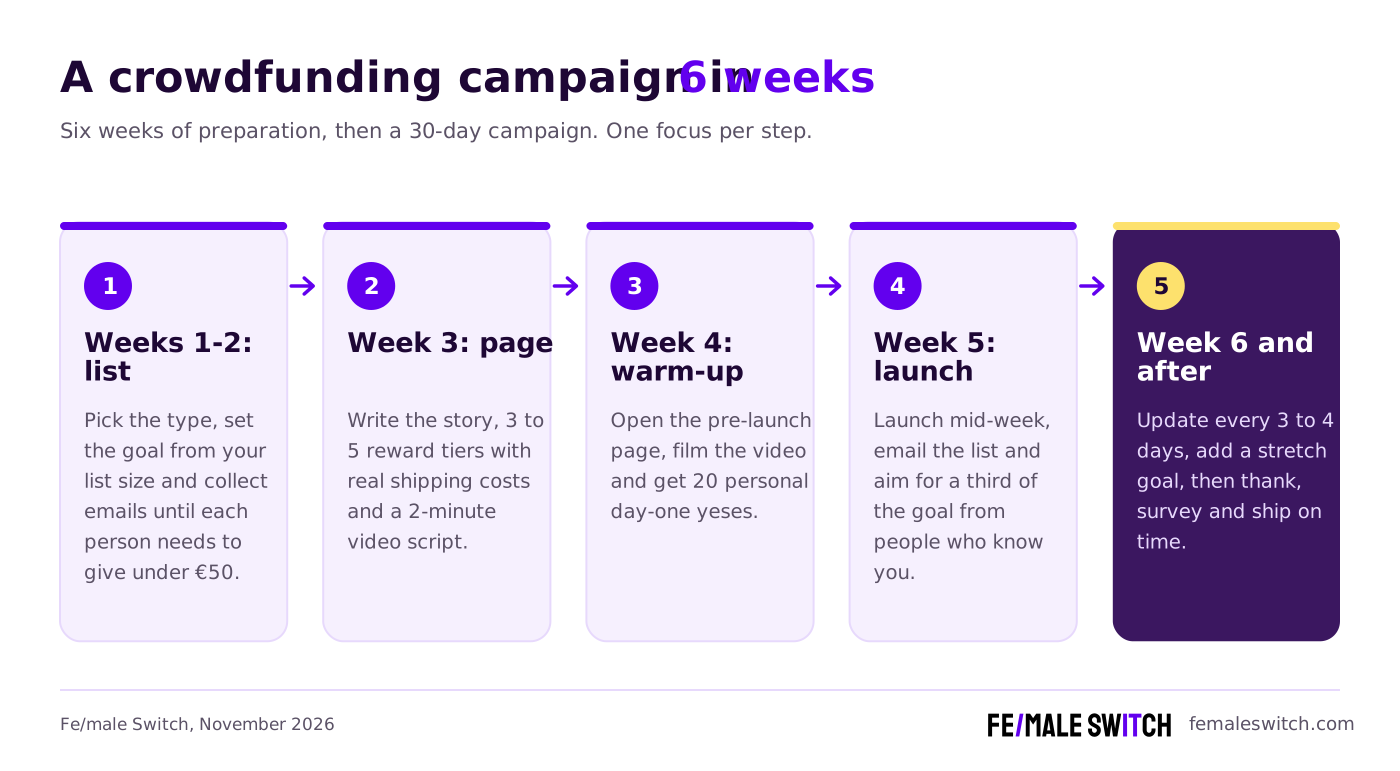
Here is the plan we use in the Fe/male Switch startup game: six weeks of work, then a 30-day campaign.
- Week 1: set the type, goal and maths. Pick your type with the matcher. Set the goal at the cost of making and shipping the first batch plus fees, then divide it by your list. Above €50 a person, lower the goal or grow the list.
- Week 2: build the list. Collect emails with our €100 landing page validation plan and in person. Ask 20 people directly whether they would back you on day one.
- Week 3: write the page and rewards. Draft the story, three to five reward tiers and a video script. Price tiers with our guide to pricing your first product, with an early-bird tier for the first 48 hours.
- Week 4: open the pre-launch page. Send your list there to follow it, and film a two-minute video, or make a demo video without recording your own voice.
- Week 5: launch day and the first 72 hours. Launch mid-week in your backers' morning, email the list and message your 20 day-one yeses personally. Aim for a third of the goal from people who know you before strangers see the page.
- Week 6: the middle. Post an update every three to four days, add a stretch goal, answer comments within a day and ask each backer to share the page with one friend.
- After the campaign. Thank backers within 24 hours, survey them for sizes and addresses, post monthly production updates and ship what you promised.
Our guide to crowdfunding strategies for women-led startups adds case studies, and our networking guide for women entrepreneurs helps you grow the list in Week 2.
Campaign page outline (copy and fill in)
- Headline: [product] helps [customer] [result] in [time]
- Opening: the problem in one real story, the product and the backer price
- Video: 2 minutes, founder on screen in the first 10 seconds
- Reward tiers: early bird, standard, bundle for two, founder tier
- Proof: prototype photos, test results, quotes from first users
- Timeline and risks: production steps, shipping month, what could delay delivery
- About us: who you are and why you will deliver
Launch-day email (copy and edit)
- Subject: It's live: [product], early-bird price until [day]
- Body: Hi [name], you told me in [month] that you wanted [product]. The campaign opened this morning, and the first [number] backers pay [price] instead of [price]: [link]. If it's not for you, forwarding it to one person who needs it helps just as much. Thank you, [your name]
What should you prepare with your AI co-founder before launch?
An AI co-founder turns six weeks of writing into editing. Paste these prompts into Elona or any assistant, with your lean canvas underneath.
For a quick start, our free elevator pitch generator writes pitch lines in seconds, and the product description generator drafts reward descriptions to edit.
Practise your pitch with Elona before backers hear it. Elona, your AI co-founder, tests your idea, plans your week and drafts your lean canvas and pitch deck outline inside the Fe/male Switch startup game. Her free tools cost nothing, the Intern tier with her feedback in the Skill Lab costs €2.50 a month, and the Play tier costs €10 a month with a 14-day free trial (early-bird prices, VAT included). Bring her your campaign page and ask for the three weakest sentences.
Which crowdfunding mistakes do first-time founders make?
- Choosing a platform before a type. A service founder learns about Kickstarter's prohibited list after weeks of work.
- Launching to strangers. Without your own list, day one ends at zero.
- Setting the goal at what you want. Set it at what your list can fund and let stretch goals carry the rest.
- Forgetting costs. Fees took 8.4% to 8.6% in our two reward examples, before shipping, packaging and VAT.
- Rewards you can't ship. Price every tier with real shipping quotes.
If the campaign isn't ready, grants pay without rewards or shares: see grants and funding for female entrepreneurs, or grow on revenue with our guide to bootstrapping without investment.
What should you do this week?
Run the matcher and write down your type, your goal and your list size. If each person would need to give more than €50, Week 2 is your whole month. Then draft your one-line pitch with the prompts above and test it on five people. Crowdfunding platforms reward founders who arrive with a crowd, so build yours first.
FAQ: crowdfunding platforms
What is the best crowdfunding platform for a first startup?
For a physical product or creative work with a prototype, Kickstarter or Indiegogo: both charge 5% plus payment processing, and only when the goal is reached. Service businesses and creators fit Patreon or Buy Me a Coffee.
How much do crowdfunding platforms charge?
Kickstarter takes 5% plus 3% + €0.30 per pledge on its Dutch fee page, Indiegogo 5% plus 3% + 0.20, Patreon 10% plus processing and Buy Me a Coffee 5% plus processing. Crowdcube charges £4,995 to £9,995 to list, a 5% to 8% success fee and a 2.5% platform fee.
Can I crowdfund a startup with no product yet?
Not an app or tech product on Kickstarter, which requires a demonstrated prototype. At the idea stage, collect deposits and sign-ups on your own landing page first.
What is the difference between reward and equity crowdfunding?
Reward backers get a product or experience and no shares. Equity investors buy shares through a regulated platform, which in the EU works under the ECSP rules with a €5,000,000 limit per 12 months.
Are there equity crowdfunding platforms for small raises?
Not the big European ones: Crowdcube's minimum is £/€150,000 and Republic Europe asks for over £/€150,000. Smaller sums come from angels, grants, reward campaigns or, in the US, Kiva loans of up to $15,000.
Can I use GoFundMe for my startup?
GoFundMe suits personal causes and charities. Its terms ban rewards in exchange for donations and any investment, loan or equity offer.
What happens if a Kickstarter campaign misses its goal?
Nobody is charged and Kickstarter takes no fees. You can relaunch later with a lower goal or a bigger list.
About the Author
Violetta Bonenkamp, also known as MeanCEO, is an experienced startup founder with an impressive educational background including an MBA and four other higher education degrees. She has over 20 years of work experience across multiple countries, including 5 years as a solopreneur and serial entrepreneur. Throughout her startup experience she has applied for multiple startup grants at the EU level, in the Netherlands and Malta, and her startups received quite a few of those. She’s been living, studying and working in many countries around the globe and her extensive multicultural experience has influenced her immensely.

