
TL;DR: Startup newsletters pay off for a first-time founder only when each issue turns into one action in her own startup, so this guide sorts 15 active newsletters by stage: no idea yet, testing an idea, chasing first customers, or applying for grants and first investors. Every pick was checked on 30 October 2026 for its latest issue, its writer, its frequency and its price. All 15 have a free way in, and only four sell optional paid extras, such as What A Startup at $12 a month. Use the newsletter matcher below to get your 5 picks and a Monday, Wednesday, Friday routine in under a minute.
A first-time founder can subscribe to ten startup newsletters in ten minutes and spend the next month reading about other people's companies. We see it every week in Fe/male Switch: a player signs up for everything, her inbox fills with Series B news, and her own idea still has zero customer interviews.
The best startup newsletters for a beginner match her stage and her hours. Each pick below shows who writes it, how frequently it arrives and what it costs, as its own page states today, plus who should skip it. The list leans on Europe and on women founders, because that is who plays our startup game. If you are still at step zero, read our guide on how to start a startup in 9 steps first.
Three terms first. Substack and beehiiv are platforms where writers publish email newsletters with free and paid tiers. VC means venture capital, money from investment funds in exchange for shares. A grant is money you don't pay back and don't give shares for.
How does the startup newsletter matcher work?
Tell the matcher your stage, what you want most right now (ideas, marketing, money, AI tools or a community of women founders), how many hours a week you can read and whether you are based in Europe. It scores the 15 newsletters in this guide and returns your 5 matches with one line each on why, plus a Monday, Wednesday and Friday routine with one action after each issue.
Two rules shape the result. Fewer hours means fewer daily emails: with one hour a week, weekly and twice-monthly picks win. And your stage beats your wish list: a founder with no idea yet gets idea newsletters first, even if she picks "money".
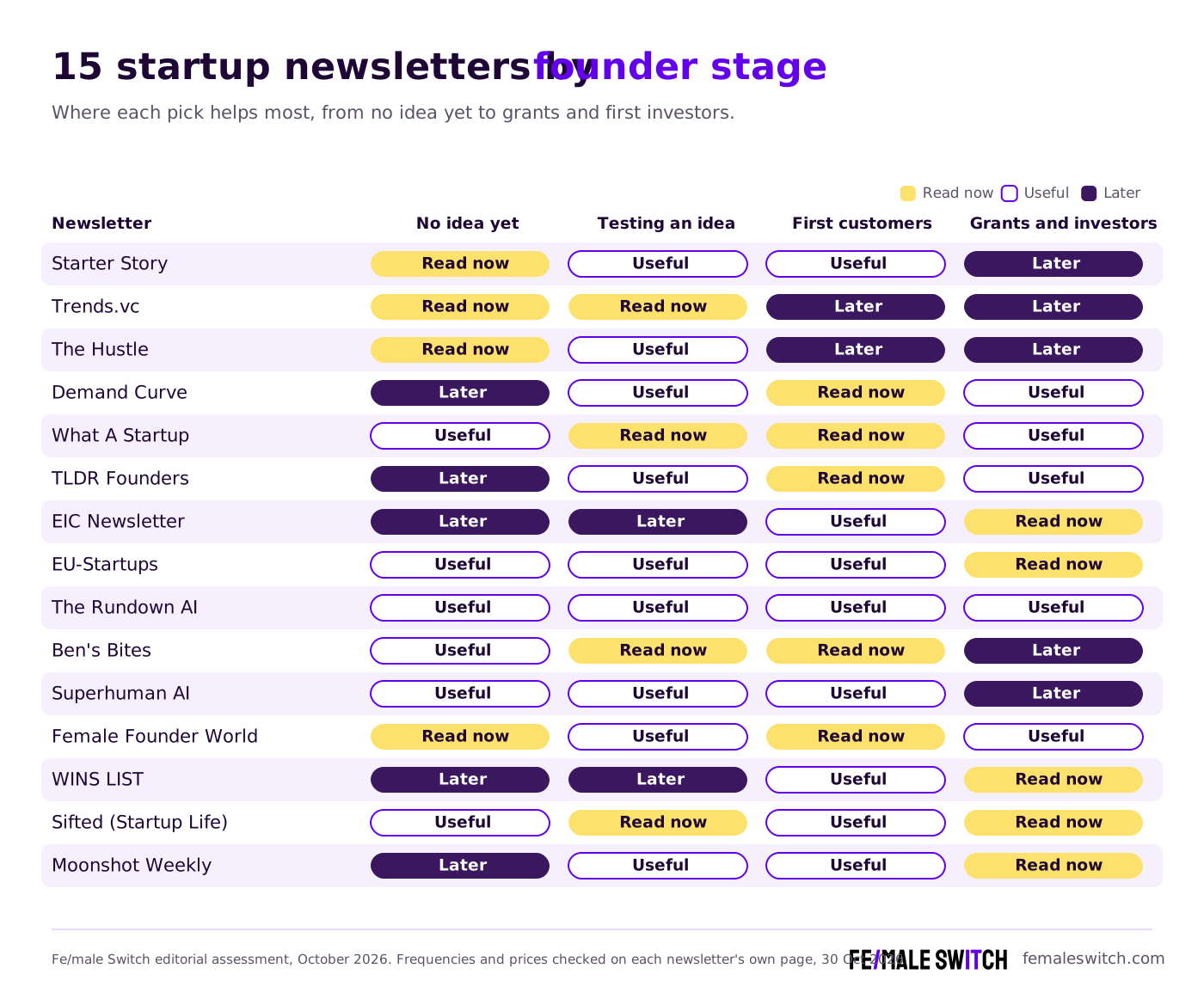
Which startup newsletters fit each stage?
All 15 picks in one table. Frequency and price come from each newsletter's own page on 30 October 2026.
Sources: each newsletter's own homepage, about, subscribe or archive page, opened 30 October 2026.
Which startup newsletters help you find and test an idea?
At the idea stage you need many real examples of small businesses that already make money, and the habit of noting the ones you could copy for your own market.
1. Starter Story: founder case studies with real numbers
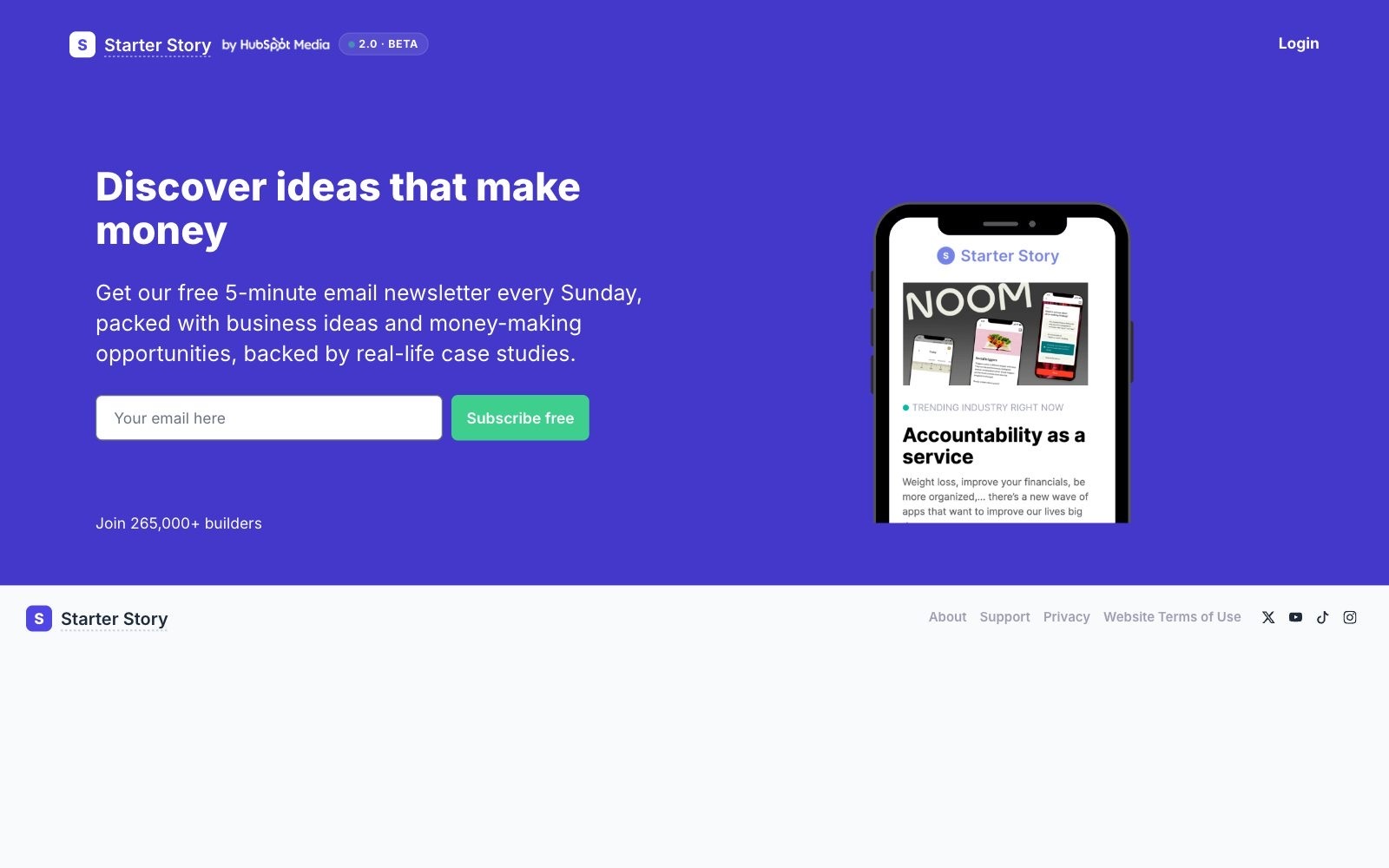
Starter Story tells how founders started and what they earn, and its Sunday email collects the week's best stories. Recent homepage headlines include a "boring website" making $30K a month and an app a founder built for his dad. Run each idea you like through our free business ideas generator for a version that fits your skills and city.
- Who writes it: the Starter Story team, part of HubSpot Media (no single author named).
- Frequency and price: every Sunday, free. "Join 265,000+ builders", says the newsletter page.
- Read it for / Skip it if: proof that small online businesses make money; skip it once you have a tested idea and need customers.
2. Trends.vc: weekly reports on markets just opening up
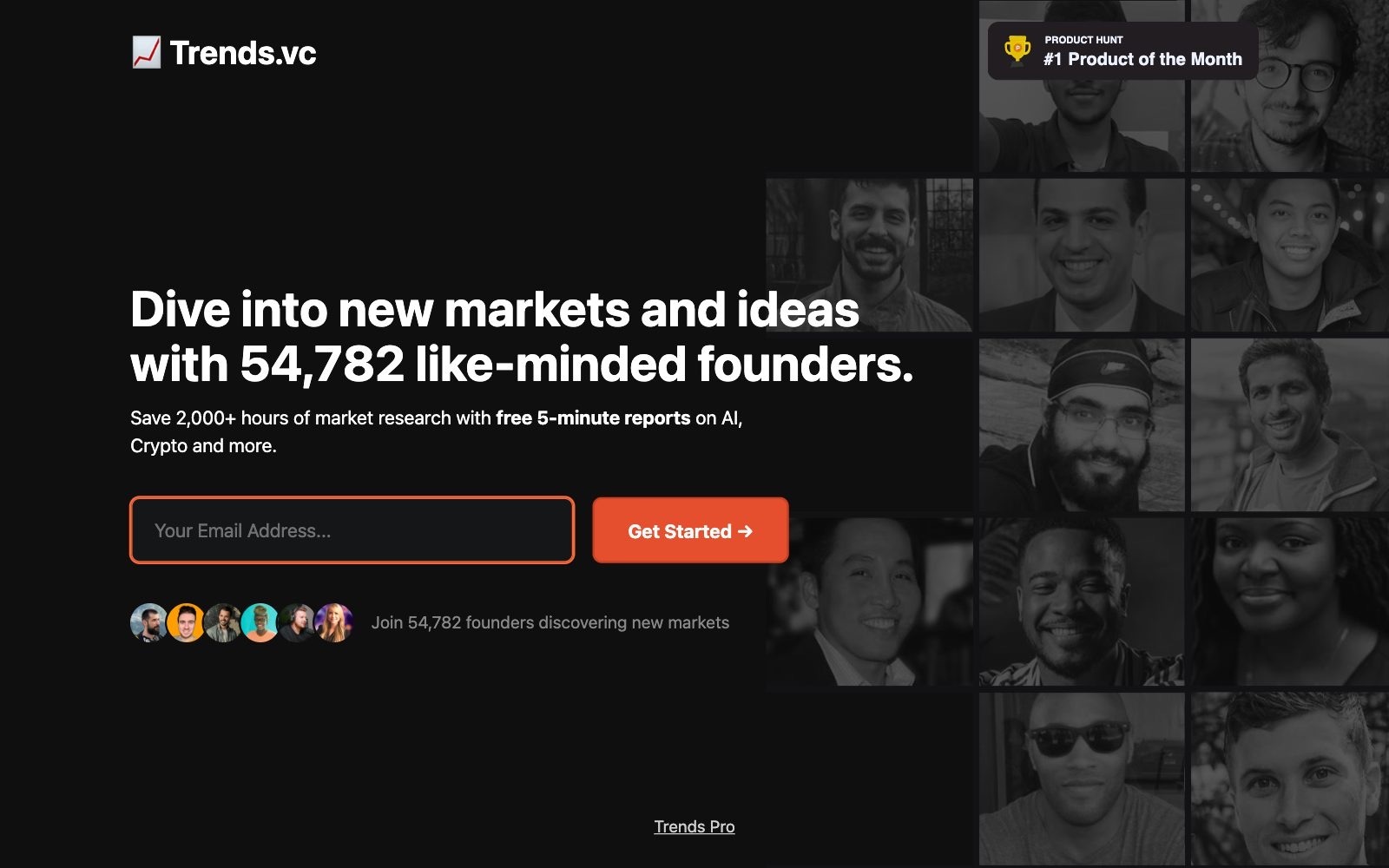
Trends.vc publishes short reports on markets that are starting to grow. The reports dated 22 and 28 October 2026 covered "data-for-cash" apps and reverse-engineered apps. Pick the problem you understand from your own work and test it with five people.
- Who writes it: Dru Riley ("Trends.vc is made with love by Dru Riley").
- Frequency and price: weekly reports, the free ones take about 5 minutes; Trends Pro costs $25/month, billed $299 yearly. The join page names 54,782 founders.
- Read it for / Skip it if: fresh markets to test; skip Pro until you have used ten free reports.
3. The Hustle: daily business stories with an eye for odd niches
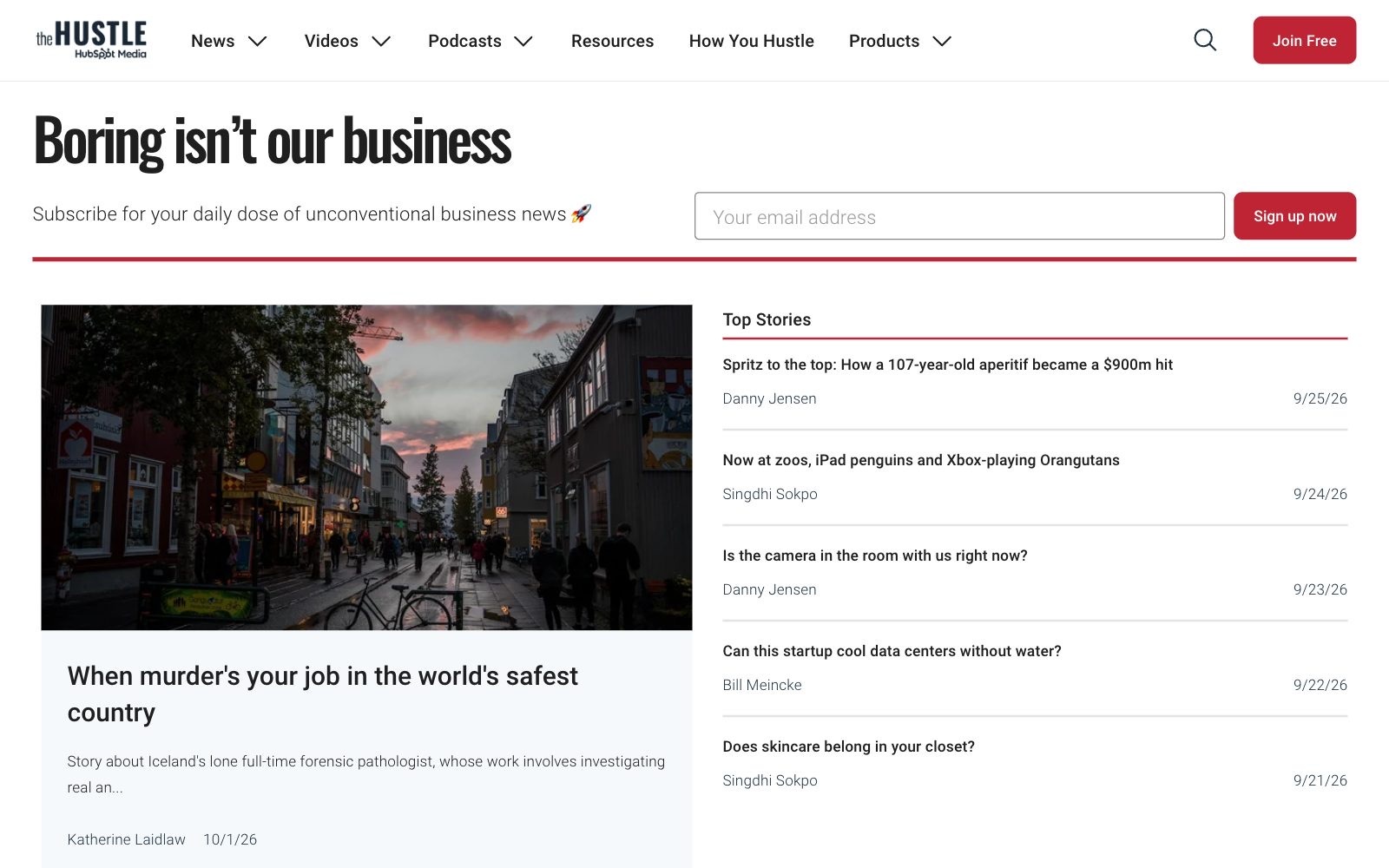
The Hustle sends a short business news email every day and an original story on Sundays. On 29 October 2026 it asked why car keys cost so much to replace. A strange price is a business idea in plain sight. Its sign-up box says it keeps 2M+ readers in the loop.
- Who writes it: The Hustle's newsroom, owned by HubSpot.
- Frequency and price: daily, plus the Sunday "Hustle Originals", free.
- Read it for / Skip it if: the Sunday story for idea spotting; skip the daily email if you have one hour a week.
With three candidate ideas, put each on one page with our free lean canvas tool, then test the strongest with the 15-minute problem interview script.
Which newsletters help you win first customers on a small budget?
Once an idea survives ten problem interviews, switch your reading to selling, pricing and getting found.
4. Demand Curve: growth tactics from a startup marketing agency
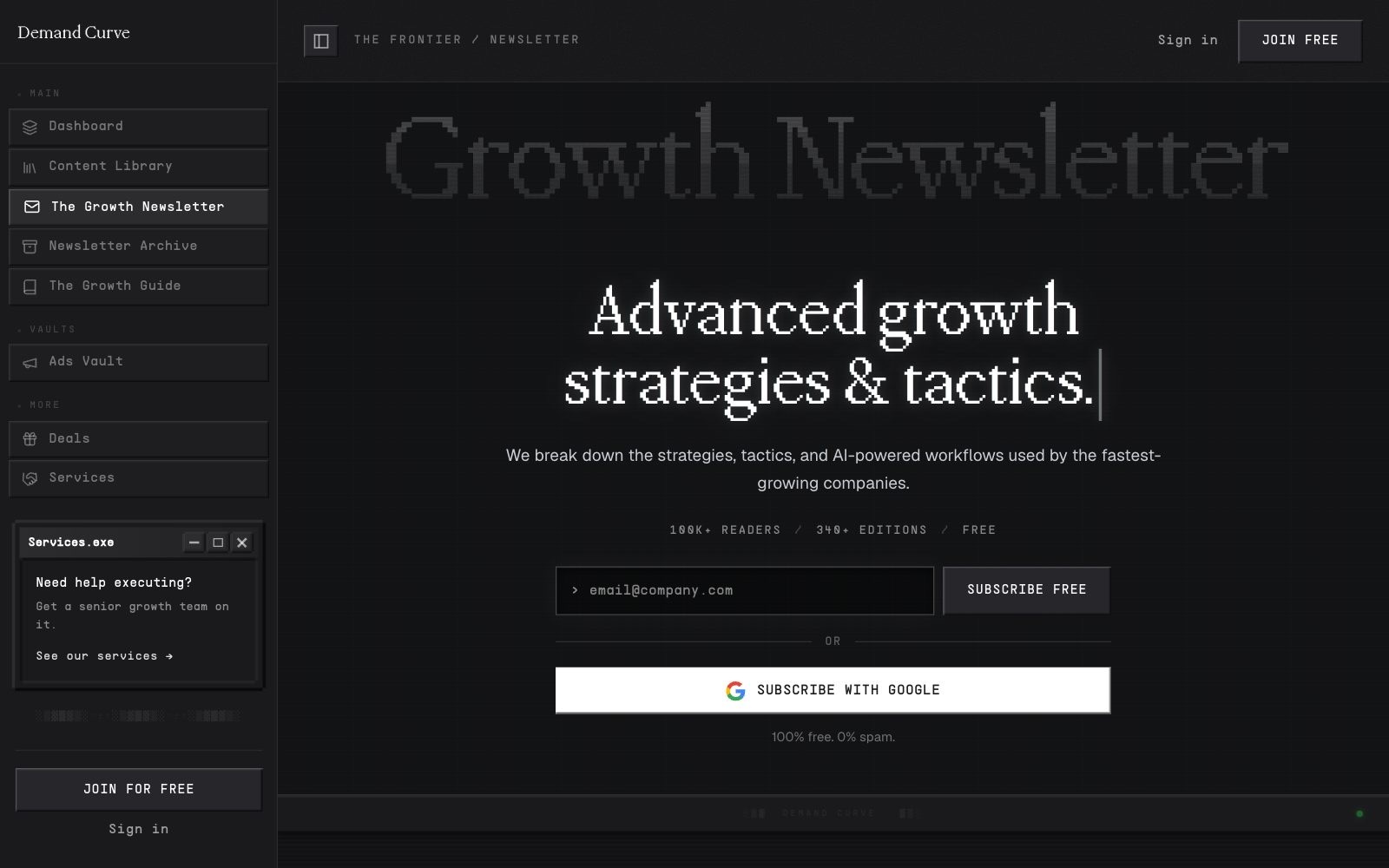
Demand Curve is a growth agency for startups, and its Growth Newsletter shares what works in its agency work. Issue #351 on 21 October 2026 was titled "Narrow to grow, take-back pricing, change the axis". Try one with a cheap smoke test before you build anything.
- Who writes it: the Demand Curve team (no individual writers named).
- Frequency and price: "One issue twice a month", "Always free". 100,000+ founders and growth leaders read it, says the page.
- Read it for / Skip it if: marketing tactics with examples; skip it while you have nobody to sell to.
5. What A Startup: one early-stage decision per post
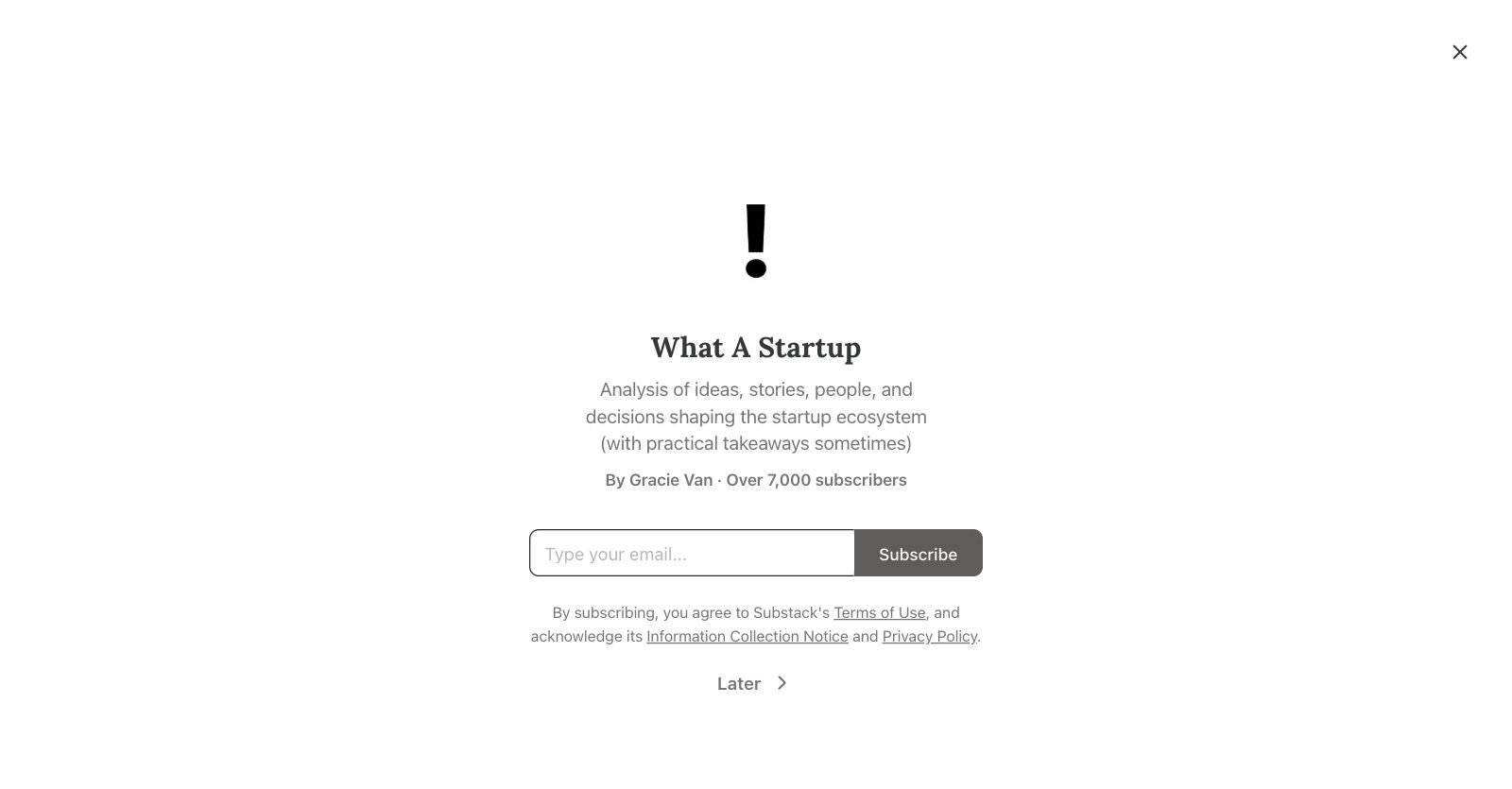
What A Startup is a first-person Substack about the decisions early founders face. Recent posts: "How I know my startup is ready to scale" (29 October 2026) and "How I sell to a big customer with zero credibility" (27 October 2026). That second problem hits most founders in month three, and our guide to customer acquisition for bootstrapped startups covers it for free.
- Who writes it: Gracie Van, who started her first business at 18 and worked at a VC firm, a VC-backed AI startup, an edtech startup and a startup community.
- Frequency and price: 3 to 5 posts a week, roughly half free; paid is $12 a month or $120 a year. Over 7,000 subscribers.
- Read it for / Skip it if: honest early-stage judgement calls; skip the paid tier until free posts change what you do.
6. TLDR Founders: a short digest of founder articles
TLDR Founders sums up founder articles in a few lines each. Its archive shows an issue every weekday in the last week of October 2026.
- Who writes it: the TLDR editorial team (no editor named).
- Frequency and price: weekdays (its FAQ still says Monday, Wednesday and Friday); free, "with no paywall". 380,000 subscribers, says the FAQ.
- Read it for / Skip it if: one good article a day; skip it if daily email makes you feel behind.
For your first marketing quarter, use our free marketing plan generator with the startup marketing plan template for your first 90 days.
Which newsletters help you find grants and first investors?
A European first-time founder needs open grant calls, deadlines and small funding programmes more than VC gossip.
7. EIC Newsletter: European grant calls from the source
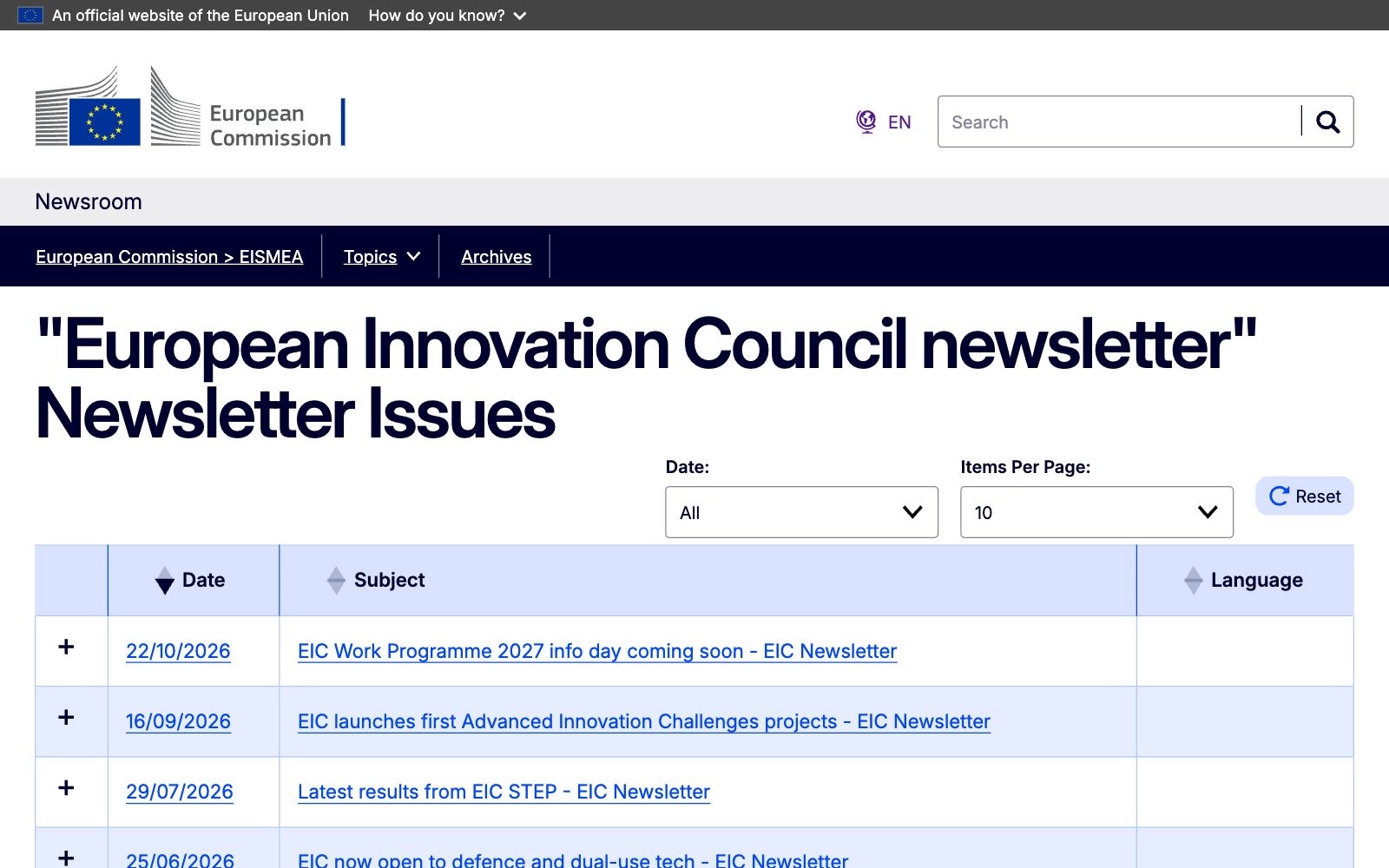
The EIC is the European Commission body behind EU funding calls such as EIC Pathfinder, and its newsletter announces calls, info days and results. The 22 October 2026 issue announced a 2027 work programme info day on 19 November and reported 43 projects selected under EIC Pathfinder Open, each receiving up to €4 million in grant funding, €166 million in total. Pair it with our guide to European grants for startups, which covers smaller national grants for earlier stages.
- Who writes it: the EIC and SMEs Executive Agency (EISMEA) of the European Commission.
- Frequency and price: 11 issues so far in 2026, roughly monthly; free.
- Read it for / Skip it if: deadlines months ahead; skip it if you are outside the EU and its associated countries.
8. EU-Startups: weekly European news with funding openings
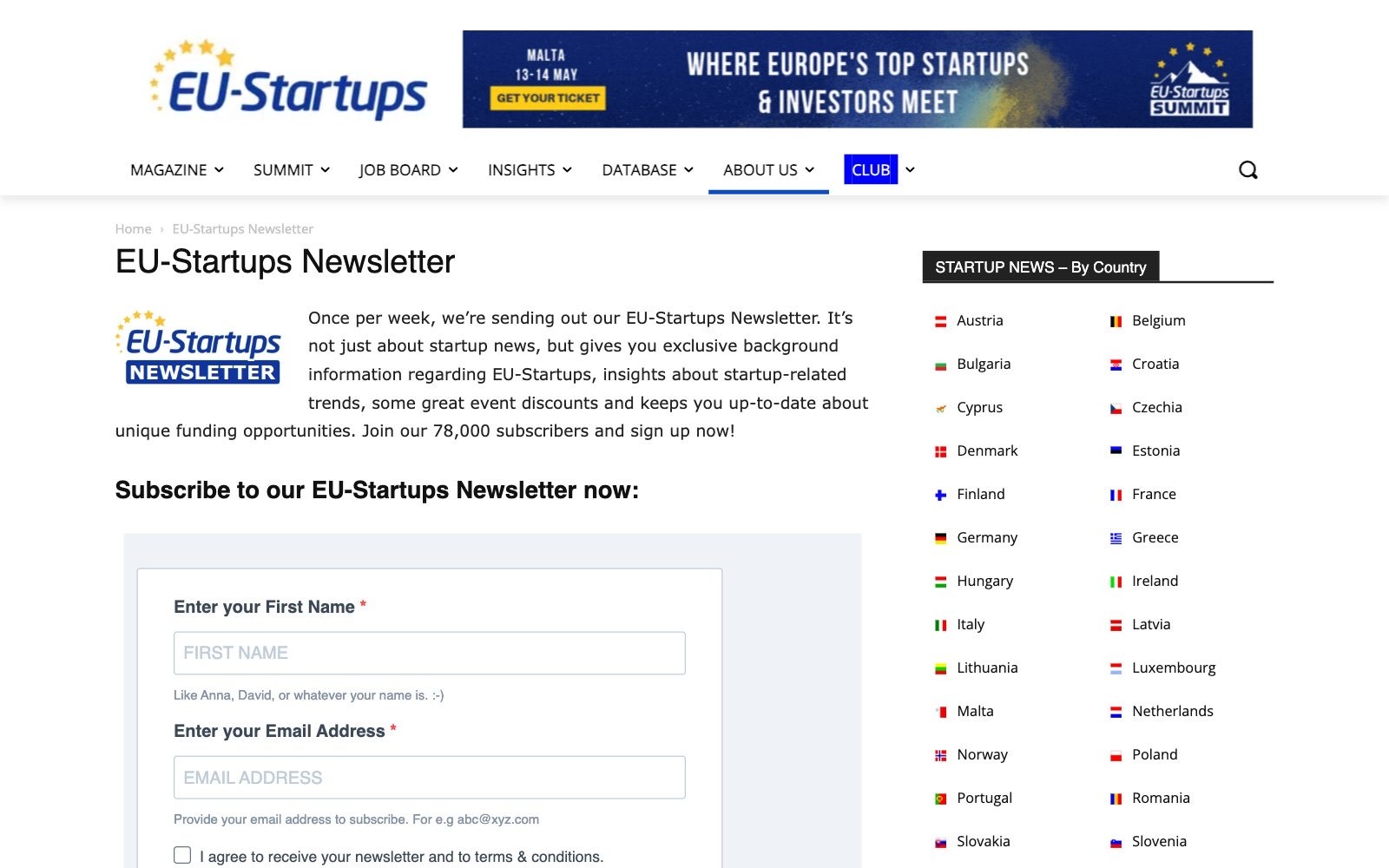
EU-Startups has covered European startups since October 2010, and its weekly newsletter adds trends, event discounts and "unique funding opportunities". Note every investor who funded a company one step ahead of yours.
- Who writes it: founder and CEO Thomas Ohr and editor David Cendon Garcia, published by Menlo Media in Barcelona.
- Frequency and price: once a week, free. "Join our 78,000 subscribers", says the sign-up page.
- Read it for / Skip it if: European funding news and calls; skip it if you sell in one local market and won't raise.
Before you answer a grant call, draft the plan evaluators ask for with our free business plan generator and the one-minute version with the elevator pitch generator. For private money, read how to find and pitch angel investors as a woman founder; an angel investor puts her own money into an early startup.
Which AI newsletters suit a solo founder?
Pick one daily and one slower AI newsletter and ignore the rest.
9. The Rundown AI: five minutes of AI news a day
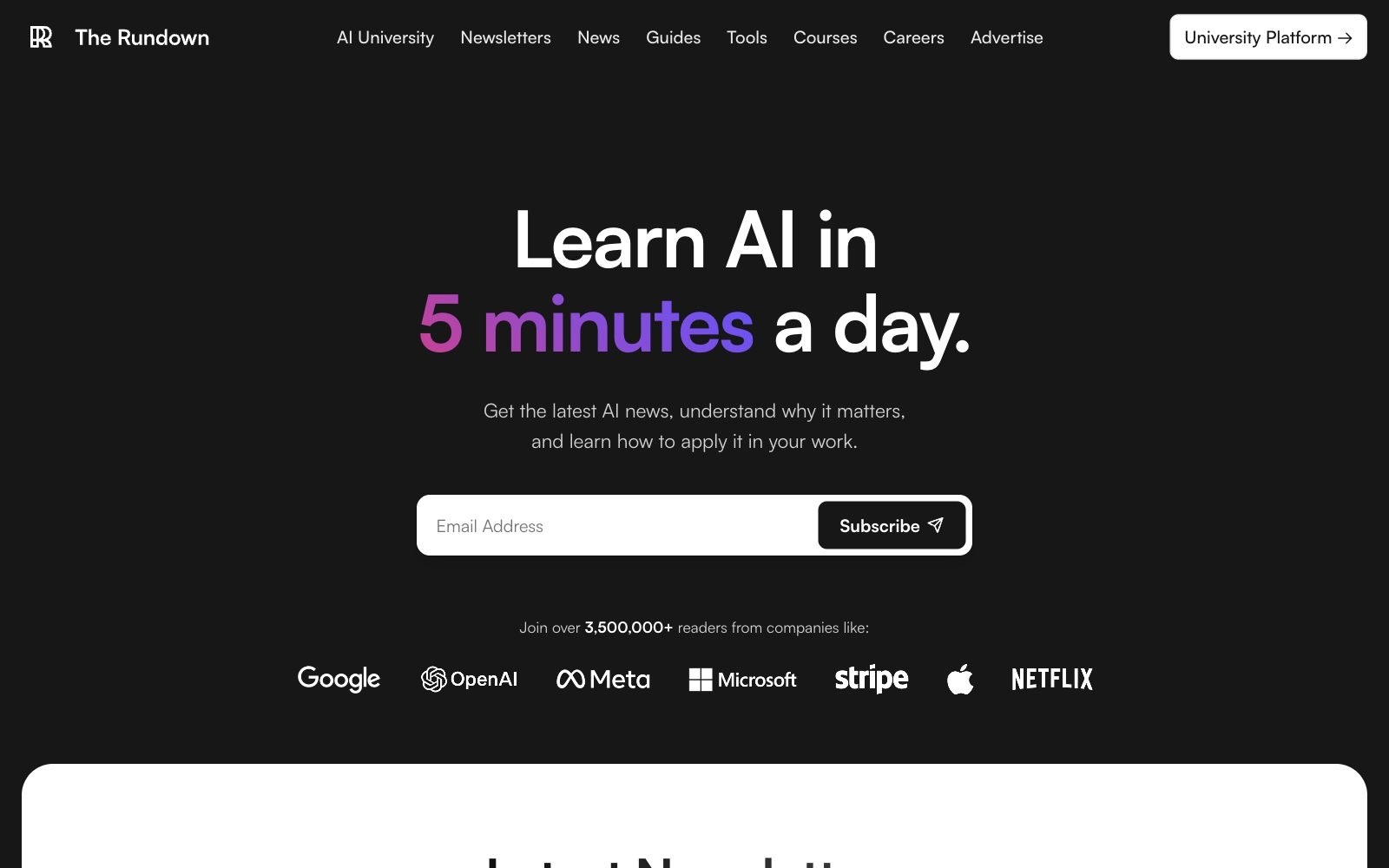
The Rundown AI promises "Daily AI News & Insights in 5 Minutes a Day". Its latest issue led with a Google model launch and added a how-to on turning a prompt into a poster with Canva. Try one how-to a week on a real task.
- Who writes it: The Rundown team; recent issues are by Zach Mink and Jennifer Mossalgue.
- Frequency and price: daily, free ("Join for free"). 3,500,000+ readers, says the site.
- Read it for / Skip it if: staying current in five minutes; skip it if you already read another daily AI email.
10. Ben's Bites: AI tools, picked by a no-code builder
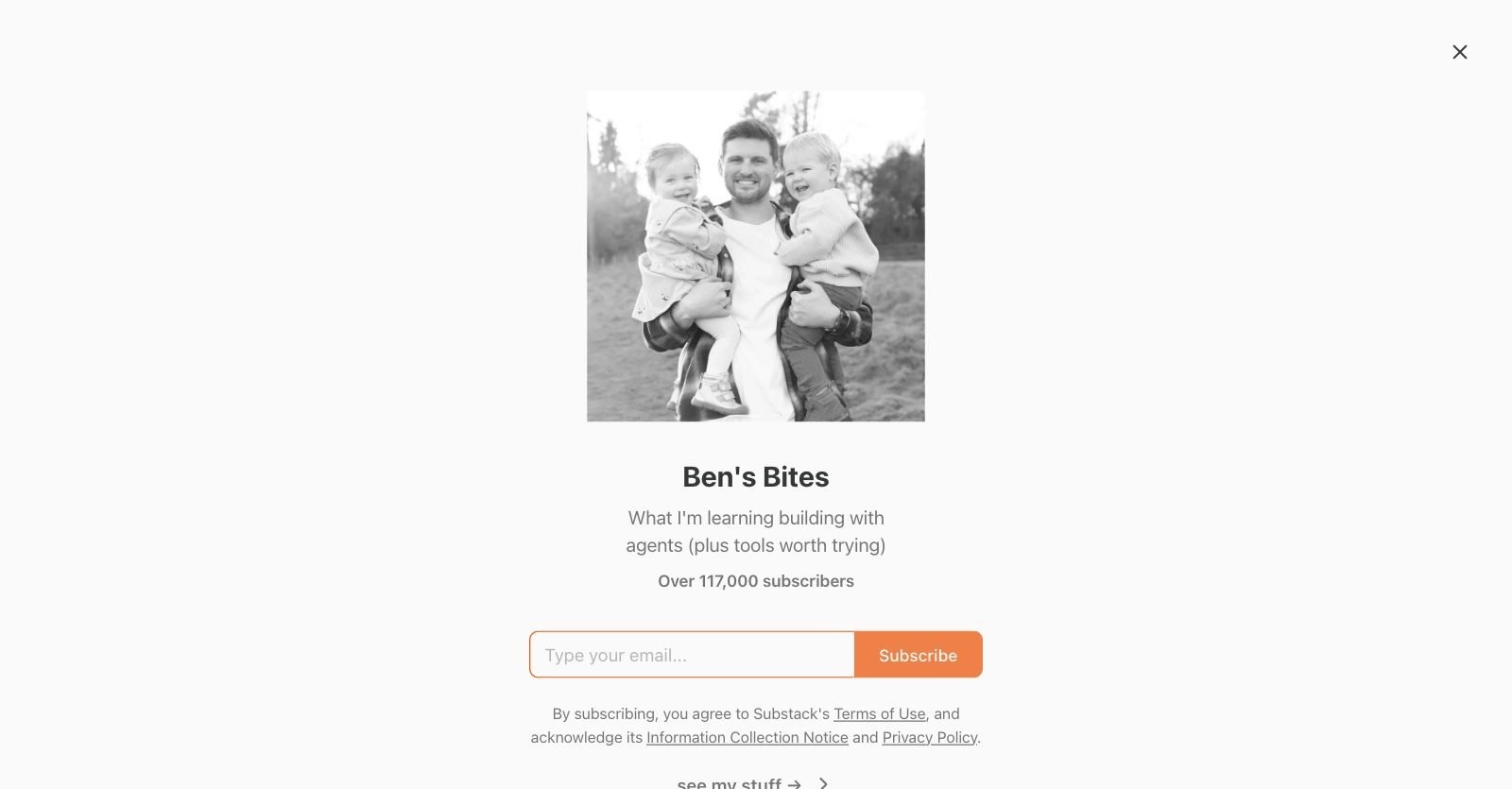
Ben's Bites sends a Tuesday and Thursday summary of AI news and launches, plus how-tos on building with AI agents. Ben Tossell built more than 50 no-code products and started Makerpad, which Zapier bought in March 2021, so his picks suit a non-technical founder. His 29 October 2026 post was titled "AI is overwhelming and I'm doing it wrong".
- Who writes it: Ben Tossell, with a small team.
- Frequency and price: summaries on Tuesday and Thursday; posts mix free and paid, and community access costs $80/year. Over 117,000 subscribers.
- Read it for / Skip it if: tools to try the same day; skip the community until you ship something with AI.
11. Superhuman AI: tools and tutorials in three minutes
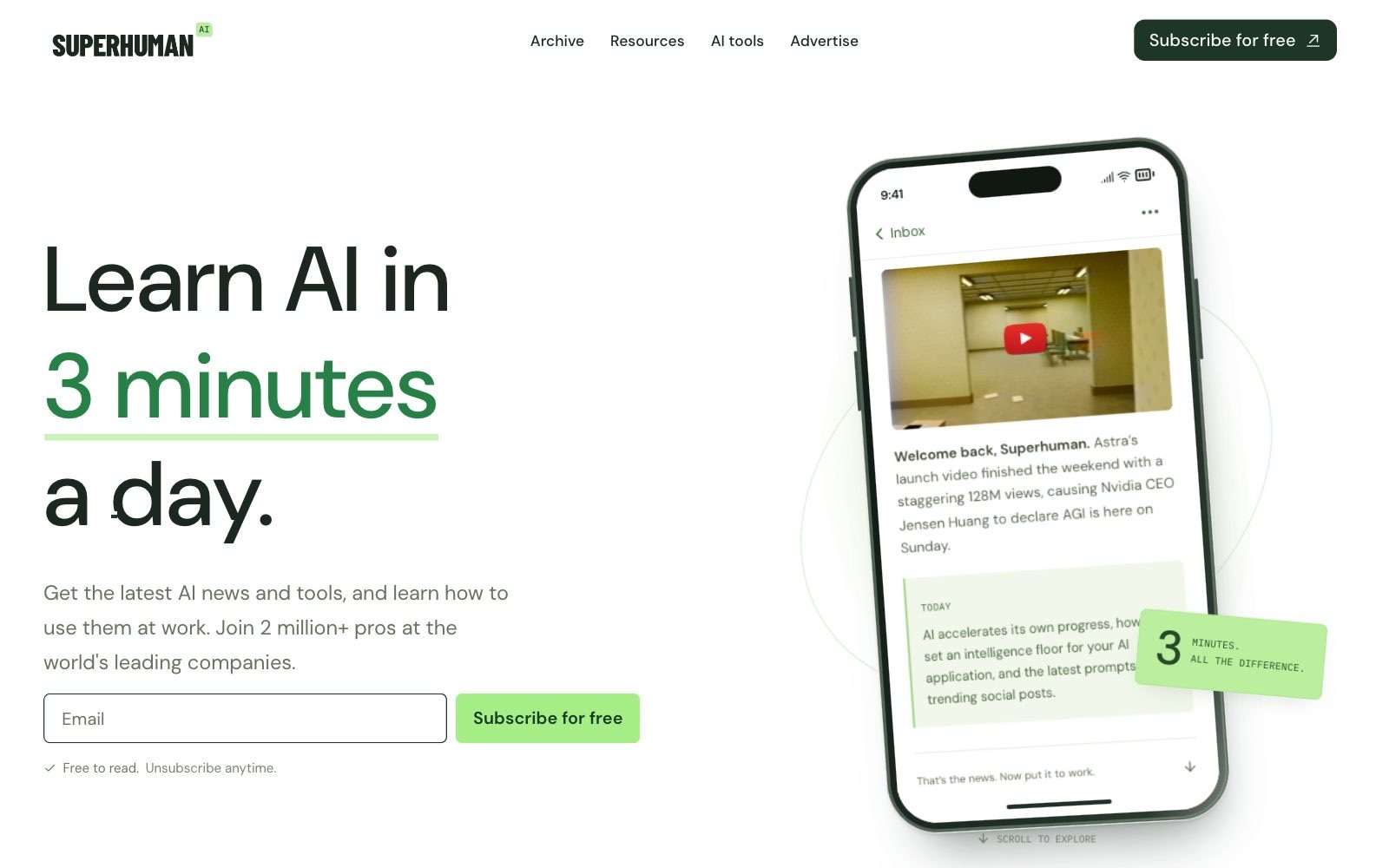
Superhuman AI is a daily email of AI news, tools and short tutorials from Zain Kahn and his team. The 29 October 2026 issue covered Apple's touchscreen MacBook and Google's new model. It is the shortest of the three AI picks.
- Who writes it: Zain Kahn and the Superhuman AI team.
- Frequency and price: daily, "Free to read". "Join 1 million+ readers", says the sign-up box.
- Read it for / Skip it if: quick tool tips; skip it if you prefer depth over speed.
To turn AI news into a working setup, read our 13 AI tools for a small business launch and ChatGPT for business with 30 days of prompts.
Which newsletters are written for women founders?
Newsletters with real numbers from women's companies earn a slot in your week, because they show what a launch or a raise looks like for someone like you.
12. Female Founder World: the group chat for women building brands
Female Founder World calls itself "the group chat for your business" and runs the Female Founder World Summit in New York. Its September 2026 posts included a launch breakdown of Good Girl Snacks. Add our guide to female founder communities if you want peers as well as reading.
- Who writes it: the Female Founder World team; the brand was founded by Jasmine Garnsworthy, according to a beehiiv case study.
- Frequency and price: no fixed schedule (latest posts 8 and 12 September 2026), free to read.
- Read it for / Skip it if: consumer brand launches and founder money stories; skip it if you build B2B software.
13. WINS LIST: who raised what among women founders this week
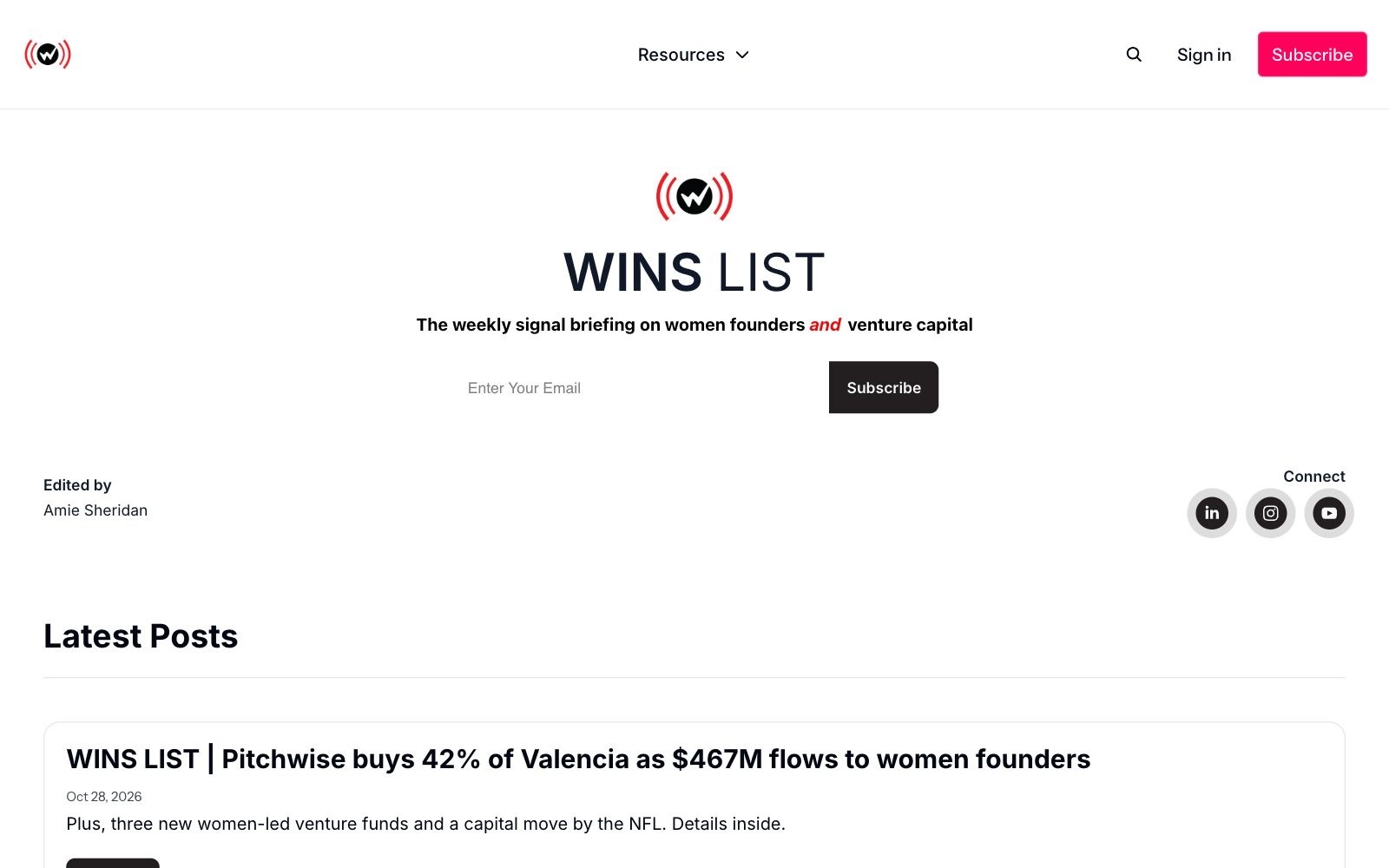
WINS LIST is "the weekly signal briefing on women founders and venture capital", with a week in review, numbers, founder raises and VC signals. Its 28 October 2026 issue reported $467M flowing to women founders that week. Note who backed women at your stage: that is your investor list.
- Who writes it: editor Amie Sheridan, a ghostwriter and publicist to founders and CEOs for over a decade.
- Frequency and price: weekly; the site lists no price or paywall.
- Read it for / Skip it if: preparing to raise; skip it while you still test an idea.
For grants and competitions instead of VC, use our list of 23 grants and funding options for female entrepreneurs. Still hunting for the idea itself? Start with business ideas for women with real data.
Which startup newsletters cover Europe best?
The EIC Newsletter and EU-Startups cover European money; these two add the European scene and its people.
14. Sifted: European tech news with a weekly founder column
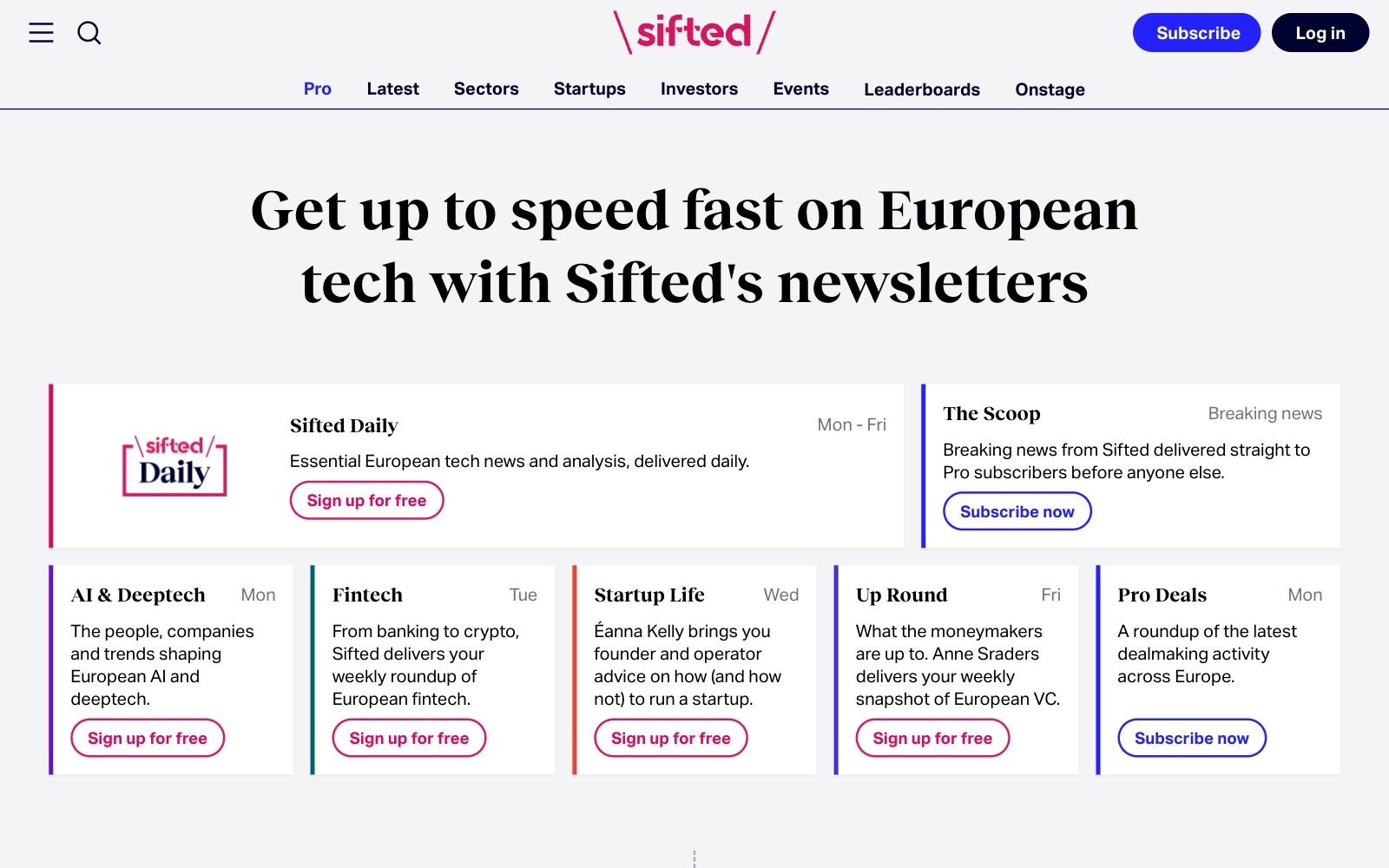
Sifted covers European startups and runs several free newsletters. For first-time founders the pick is Startup Life on Wednesdays, where Éanna Kelly shares advice "on how (and how not) to run a startup". Up Round on Fridays, by Anne Sraders, covers European VC.
- Who writes it: Sifted's newsroom; Startup Life by Éanna Kelly, Up Round by Anne Sraders.
- Frequency and price: Sifted Daily Monday to Friday plus weekly topic emails, free; the Deals newsletter is for paid Pro subscribers. 125,000+ subscribers across Europe.
- Read it for / Skip it if: Startup Life every Wednesday; skip Sifted Daily if you have one hour a week.
15. Moonshot Weekly: Sunday reading on European startups and AI
Moonshot Weekly comes from the team behind Female Foundry and is written by Agata Nowicka, a three-time founder and founding partner of Moonshot Capital in London. It promises "practical GTM advice" and investment signals; GTM means go-to-market, your plan for reaching buyers. The 25 October 2026 issue covered European AI talent.
- Who writes it: Agata Nowicka.
- Frequency and price: every Sunday, free. A community of over 7,000 founders, investors, scientists and builders, says the about page.
- Read it for / Skip it if: a European founder's view of AI-era startups; skip it if you want step-by-step how-tos.
How do you turn one newsletter issue into one action?
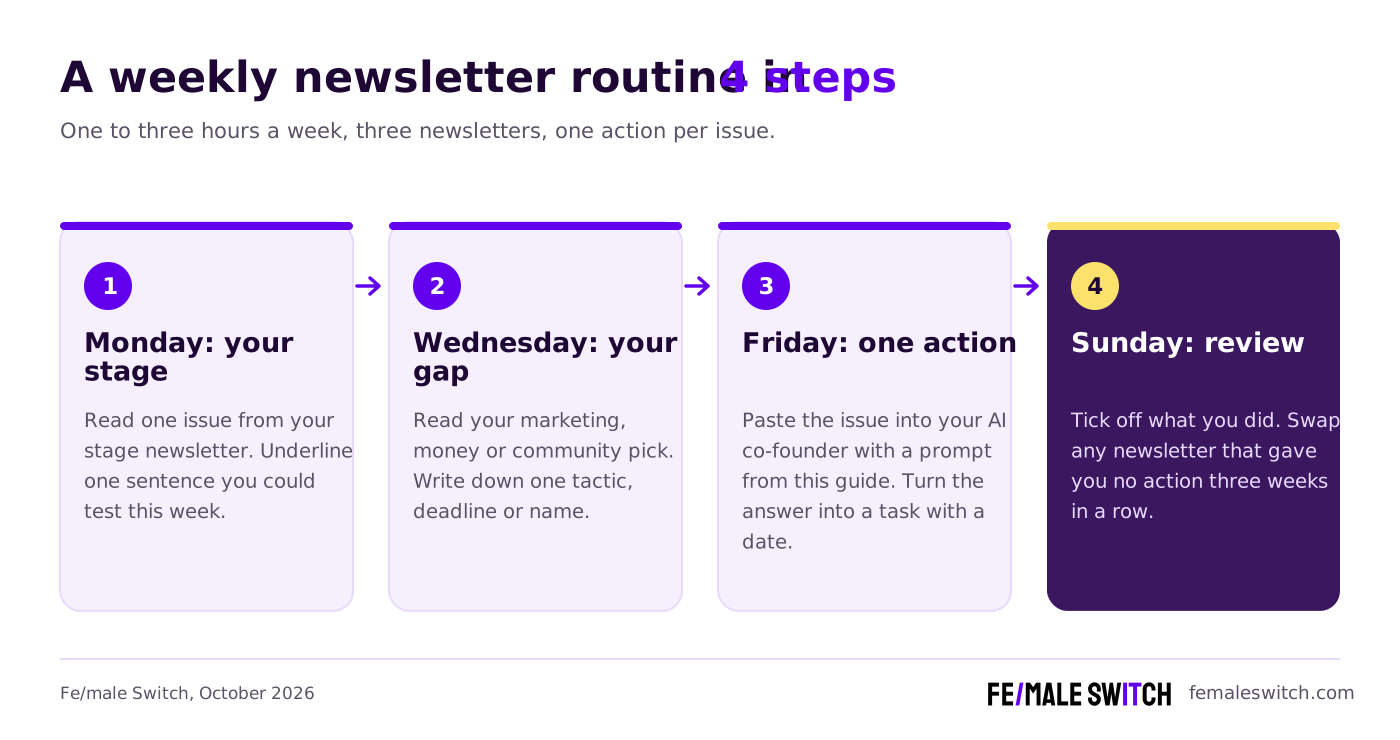
Here is the routine we teach in Fe/male Switch, for one to three hours a week.
- Keep three newsletters. One for your stage, one for your biggest gap and one AI pick. Unsubscribe from the rest for now.
- Monday: read for your stage. Underline one sentence you could test this week.
- Wednesday: read for your gap. Write down one tactic, one deadline or one name.
- Friday: turn reading into a task. Paste the issue into your AI co-founder with a prompt below and give the answer a date.
- Sunday: review in ten minutes. Tick off what you did, and swap any newsletter that gave you no action three weeks in a row.
These prompts work with Elona, ChatGPT or any AI assistant. Paste the newsletter text under the prompt.
For a full month of these actions, follow our 30-day validation plan for first-time founders.
Practise it inside a real startup. In the Fe/male Switch startup game you build your own startup quest by quest, and Elona, your AI co-founder, tests your idea, plans your week and drafts your canvases. Her free tools cost nothing, the Intern tier with her feedback in the Skill Lab costs €2.50 a month, and the Play tier costs €10 a month with a 14-day free trial (early-bird prices, VAT included). Bring your Friday action to Elona.
Which startup newsletter mistakes cost first-time founders the most time?
- Reading for a stage you are not in. VC news eats the hours you need for interviews; save funding picks for the month you raise.
- Stacking daily emails. Three dailies mean fifteen emails a week.
- Paying before reading free issues. Pay only when free issues already changed what you did twice.
- Following only US advice. US tactics on taxes and funding don't transfer to Europe.
What should you do this week?
Pick your three newsletters with the matcher and unsubscribe from everything that didn't make the cut. Block Monday, Wednesday and Friday reading slots. On Friday, turn one issue into one task with Elona or the prompts above. In four weeks you will have read twelve issues and finished twelve small actions, and your startup will have moved twelve times.
FAQ: startup newsletters
What is the best startup newsletter for a first-time founder?
The one that matches your stage. With no idea yet, read Starter Story; while testing an idea, add Trends.vc; once you look for customers, Demand Curve is the strongest free marketing pick. The matcher above gives you five picks for your situation.
Are startup newsletters free?
All 15 in this guide have a free way in. Four sell paid extras: What A Startup ($12 a month or $120 a year), the Ben's Bites community ($80 a year), Trends Pro ($25 a month billed $299 yearly) and Sifted Pro.
How many startup newsletters should I read?
Three: one for your stage, one for your biggest gap and one AI newsletter. That fits into one to two hours a week.
Which startup newsletters cover Europe?
Sifted (with the weekly Startup Life column), EU-Startups (weekly news and funding openings), the EIC Newsletter (EU grant calls) and Moonshot Weekly (European startups and AI, every Sunday).
Are there startup newsletters for women founders?
Yes. Female Founder World covers women building consumer brands, and WINS LIST tracks raises by women founders every week. Moonshot Weekly comes from the team behind Female Foundry.
What is the best AI newsletter for a solo founder?
The Rundown AI for daily news in five minutes, Ben's Bites for tools a non-technical founder can try the same day, Superhuman AI for the shortest read. Pick one daily and stop there.
About the Author
Violetta Bonenkamp, also known as MeanCEO, is an experienced startup founder with an impressive educational background including an MBA and four other higher education degrees. She has over 20 years of work experience across multiple countries, including 5 years as a solopreneur and serial entrepreneur. Throughout her startup experience she has applied for multiple startup grants at the EU level, in the Netherlands and Malta, and her startups received quite a few of those. She’s been living, studying and working in many countries around the globe and her extensive multicultural experience has influenced her immensely.

