

TL;DR: Everybody Lies summary in one paragraph: Seth Stephens-Davidowitz, a former Google data scientist, argues that people tell surveys, friends and even themselves a flattering story, while what they search for and do online is far more honest. His evidence is mostly anonymous Google searches, and his four "powers" of big data are new kinds of data, honest data, the ability to zoom in on small groups and cheap experiments. For founders the lesson is simple: trust behaviour over opinions. The catch is that a small startup doesn't have big data, so below you'll find a "say vs do" evidence worksheet, a 2017-vs-2026 table, a checklist for when an A/B test is worth running and a 30-day plan for small-data founders.
Everybody Lies: Big Data, New Data, and What the Internet Can Tell Us About Who We Really Are came out in May 2017 with Dey Street Books, an imprint of HarperCollins, with a foreword by Steven Pinker. Stephens-Davidowitz has a PhD in economics from Harvard, worked as a data scientist at Google and wrote op-eds for The New York Times. The book became a New York Times bestseller. Most summaries list its surprising findings about sex, race and politics. This one asks a narrower question: how does a founder with a few hundred users use its ideas in 2026?
Everybody Lies summary in seven ideas
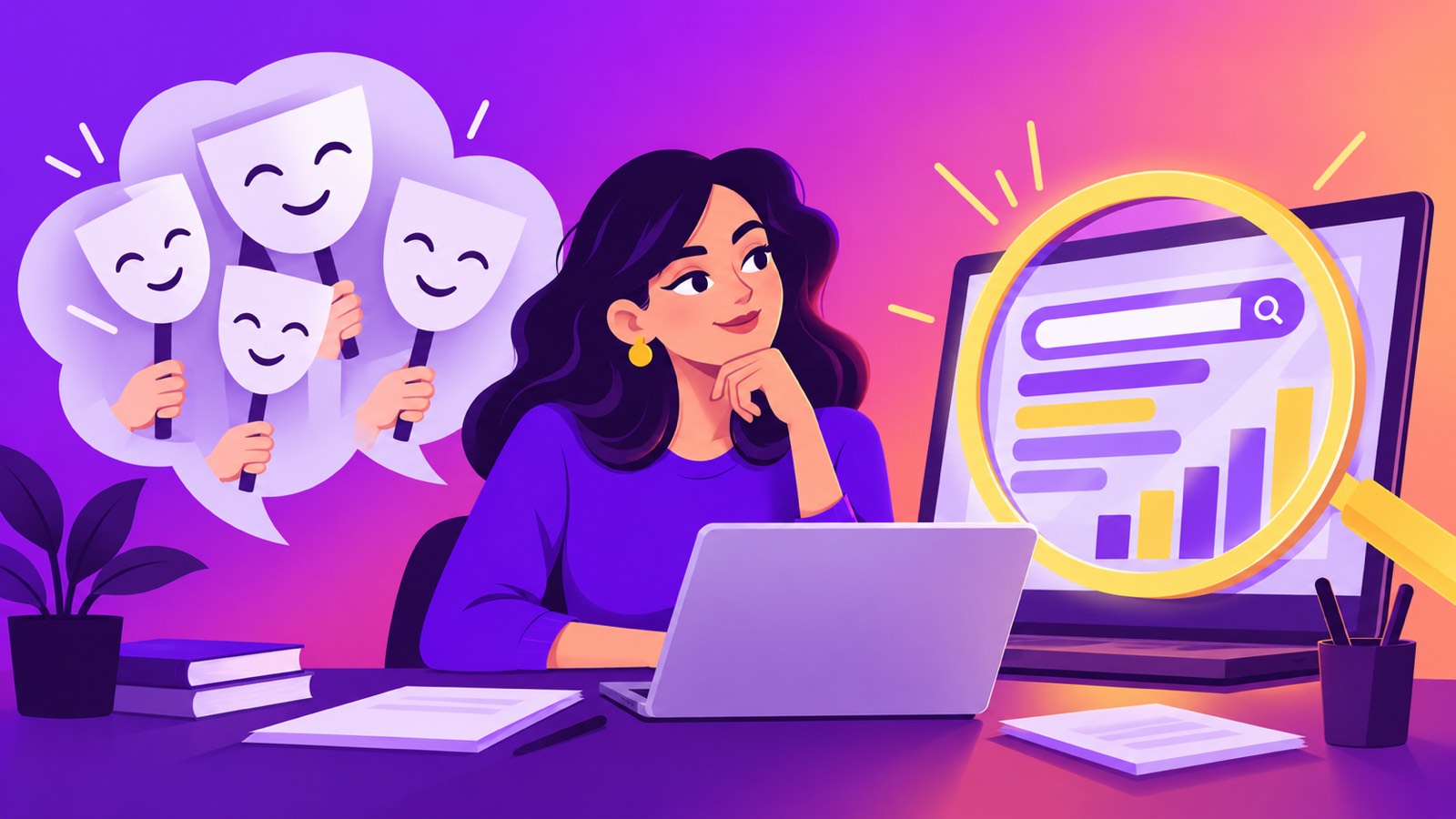
- People lie to surveys. We underreport what embarrasses us and overreport what makes us look good, even in anonymous questionnaires. Stated opinions are a weak guide to real behaviour.
- Search is a digital truth serum. Alone with a search box, people type the questions they would never ask out loud. Stephens-Davidowitz uses Google search data to study prejudice, health worries, insecurity and desire, and finds that the picture is often darker and stranger than surveys suggest.
- Social media shows the brag version. What people post and like is a performance. The author contrasts it with searches to show how far apart the public and private self can be.
- New kinds of data. Words, pictures, clicks and searches all count as data now. The book shows researchers reading meaning from text and images that nobody used to measure.
- Zoom in on small groups. Big datasets let you look at one city, one age group or one unusual subgroup with enough detail to learn something real, instead of relying on national averages.
- The world is a lab. Online companies run constant randomised experiments, A/B tests, and learn what works instead of debating it. The book describes how the 2008 Obama campaign tested versions of its sign-up page and how companies test almost every screen.
- Handle with care. The last part covers the limits: with enough variables, some will correlate by pure chance, measurable things crowd out important ones, and some uses of data cross ethical lines, such as judging individuals by what people like them search for.
📘 Free e-book: Startup Idea Validation the Right Way. Before you market or build anything, make sure people want it. Violetta Bonenkamp's free e-book shows first-time founders how to test demand with minimal resources, track the metrics that matter and reach their first customers without giving away equity, with downloadable templates and checklists. Read about the book and get your free copy →
Why this book matters more for founders than for data scientists
Every early founder hits the same trap. Friends say the idea is great, survey respondents tick "very likely to buy", and then nobody pays. Everybody Lies explains why: people answer in the way that makes them look kind, smart or consistent.
It's the customer discovery lesson seen from the data side. The Mom Test teaches you to ask about past behaviour instead of opinions. Everybody Lies goes further: look at what people leave behind when nobody is asking, such as what they search for, click, pay for and quietly abandon.
The catch for a small startup is scale. Stephens-Davidowitz works with billions of searches. You have a landing page, a waitlist, a few dozen interviews and maybe a few hundred users. The ideas still work, but only if you shrink them.
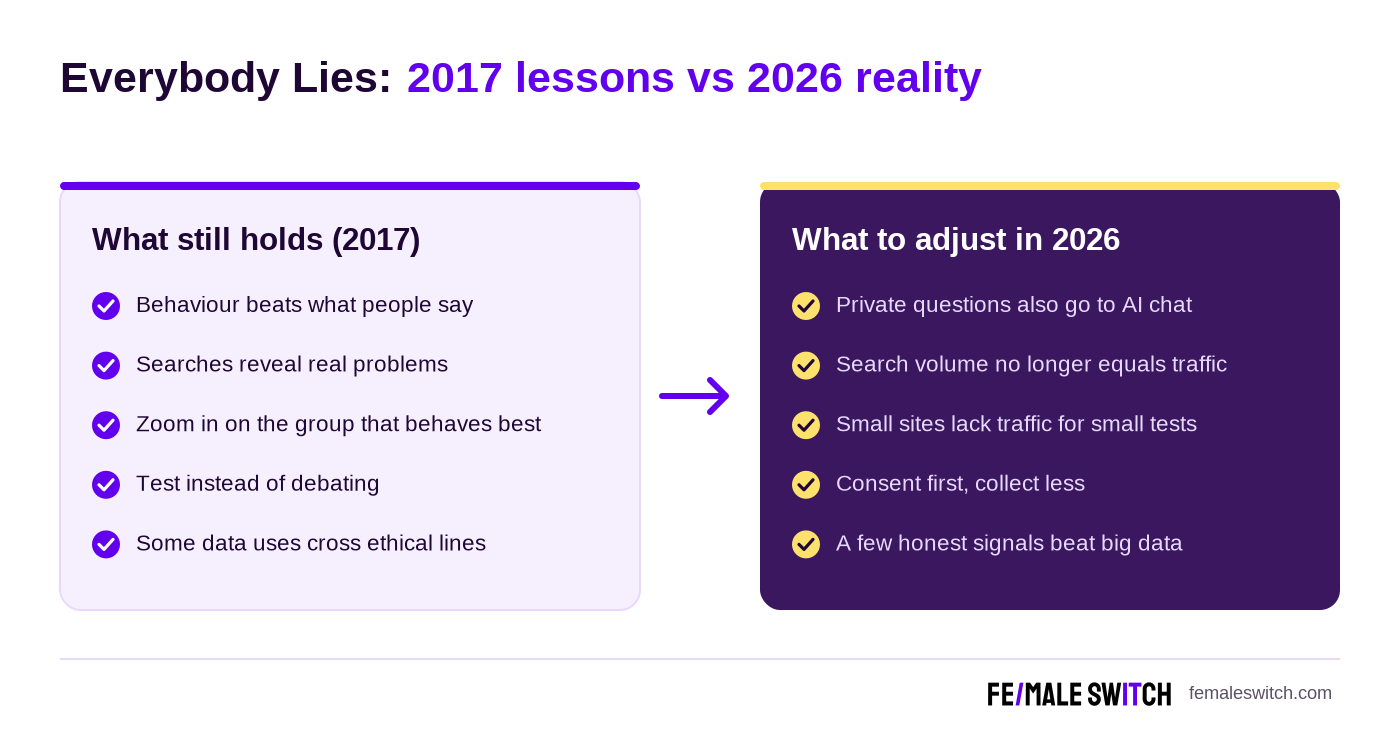
What held up and what aged: 2017 vs 2026
A "say vs do" evidence worksheet you can copy
Use this before you build a feature or commit to an idea. Every claim about demand goes in one of two columns, and only the right one counts.
If the left side is full and the right side is empty, you don't have demand yet. You have politeness.
Should you A/B test it? A checklist for small-data founders
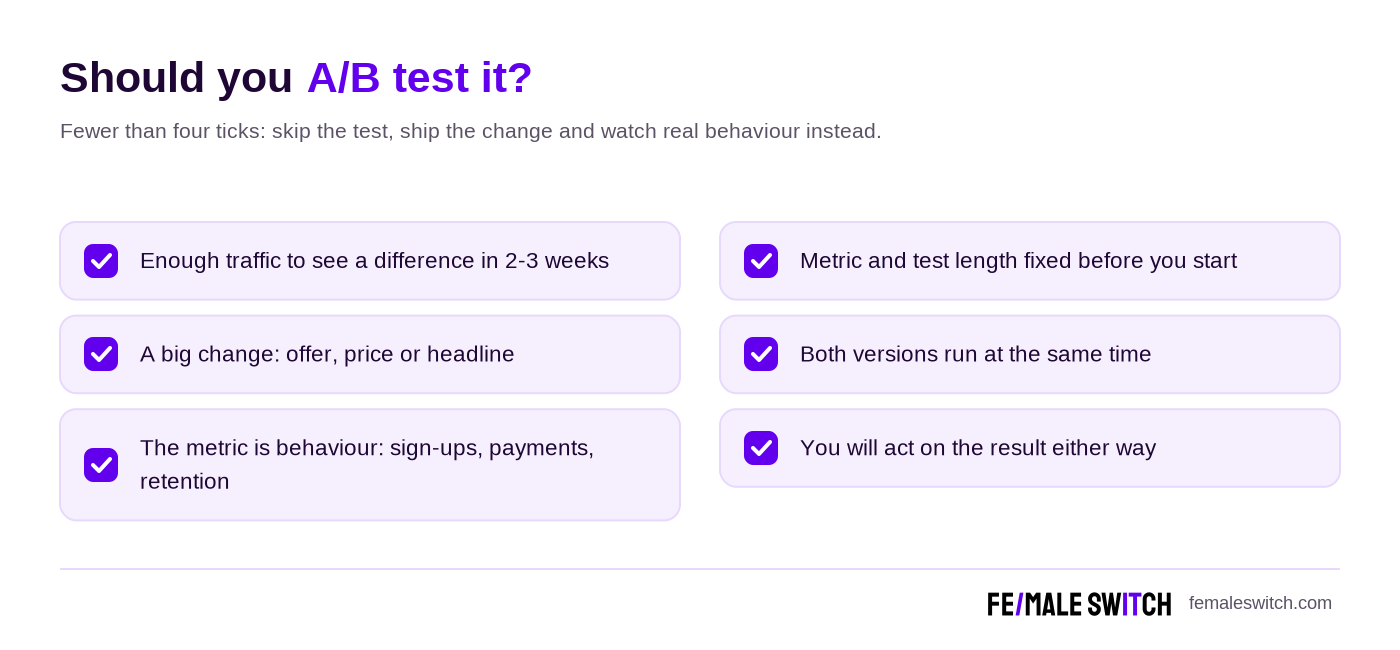
The "world is a lab" chapter tempts founders to test every button. With little traffic, most such tests never reach a clear answer. Run one only when most of these are true:
- You get enough visitors or users on that page to see a difference within two to three weeks.
- The change is big (a new offer, price or headline), not a button colour.
- The metric you'll judge by is behaviour: sign-ups, payments, retention, not time on page.
- You decided the metric and the length of the test before you started.
- Both versions are live at the same time, so seasons and news don't skew the result.
- You'll actually act on the result, whichever way it goes.
If you tick fewer than four, skip the test. Make the change you believe in, watch the behaviour signals and talk to the users who leave. For a deeper look at running experiments the lean way, see our Lean Startup summary.
A worked founder example
A founder wants to launch an online bookkeeping course for freelancers. A survey of her network says most people would "definitely" buy it. She uses the book's thinking instead.
Free search tools and freelancer forums show plenty of questions about taxes and invoices, but few about bookkeeping as a subject, and one narrow problem, quarterly tax estimates, stands out. She builds two simple landing pages, the broad course and a short "quarterly taxes without panic" workshop, and sends the same small ad budget to each. The workshop page gets several times more sign-ups, and a handful of people pay for an early-bird seat.
She runs the workshop first and plans what comes next from the questions people ask during it. No big data was involved, just honest behaviour signals collected on purpose.
A 30-day plan to apply the book in a small startup
If you'd like to practise these decisions before you put your own money in, our startup game with an AI co-founder guides you through customer research, testing and first sales step by step. And if you want to run the research cheaply with AI tools, The Bootstrap AI Revolution shows how small teams do it.
Who should read Everybody Lies (and who can skip it)
Read it if you want a lively argument for trusting behaviour over opinions, or you work in marketing, product or research. It also explains why your survey results keep disappointing you.
Skim or skip it if you want a step-by-step method. There are no exercises, many examples are about society rather than business, and some topics are explicit. For hands-on customer research, start with The Mom Test.
Related startup books for founders
- The Mom Test: how to ask customers questions that even polite people can't lie about.
- The Lean Startup: Eric Ries on turning ideas into experiments and learning from real behaviour.
- Hooked: Nir Eyal on the habits users actually form, and how to design for them.
- Super Founders: what a large dataset of startups says about which founder myths are wrong.
FAQ
What is Everybody Lies by Seth Stephens-Davidowitz about?
It's a 2017 book about what internet data, mostly anonymous Google searches, reveals about how people really think and behave. Its main claim is that people lie in surveys and in public, while their searches and clicks are far more honest.
What are the four powers of big data in Everybody Lies?
The book names new types of data, honest data, the ability to zoom in on small groups, and the chance to run many cheap experiments. It then spends a section on what big data can't do and what it shouldn't be used for.
What does "digital truth serum" mean?
It's the author's name for search data. Because people search alone and anonymously, they type questions they would never say out loud, so searches show desires and fears that surveys miss.
What can startup founders learn from Everybody Lies?
Trust what customers do over what they say. Look at searches, sign-ups, payments and drop-offs instead of compliments and survey answers, and use experiments when you have enough traffic to learn from them.
Is Everybody Lies still worth reading in 2026?
Yes, for its core message about behaviour versus opinions, which hasn't aged. Some details have: AI assistants now take many private questions, privacy rules are stricter, and search volume no longer means the same amount of website traffic.
What is the follow-up to Everybody Lies?
Seth Stephens-Davidowitz published Don't Trust Your Gut in 2022. It applies the same data-driven approach to personal decisions such as dating, career and where to live.
About the Author
Violetta Bonenkamp, also known as MeanCEO, is an experienced startup founder with an impressive educational background including an MBA and four other higher education degrees. She has over 20 years of work experience across multiple countries, including 5 years as a solopreneur and serial entrepreneur. Throughout her startup experience she has applied for multiple startup grants at the EU level, in the Netherlands and Malta, and her startups received quite a few of those. She’s been living, studying and working in many countries around the globe and her extensive multicultural experience has influenced her immensely.

