
Open-Source Apollo.io Alternatives: Build Your Own Sales Stack With a Self-Hosted CRM, Email Campaigns and Verification
Apollo.io bundles several sales jobs into one subscription: a contact database to find leads, enrichment, email sequences, a dialer, meeting booking and a deal pipeline. No open-source project replaces all of that, and none of them comes with Apollo's contact database. What open source can do is give a startup the rest of the stack for free: a CRM you own, email campaigns you control, an email verifier and the automation that ties them together. We checked every tool below on its official website and GitHub on 2 November 2026: the licence, the latest release and what each one really does. Tools from the old version of this list that are archived or do a different job are listed separately at the end.
Quick answer: for the CRM and pipeline, use Twenty (modern, with email and calendar sync) or EspoCRM (light and easy to host); SuiteCRM and Odoo Community suit teams that want a classic CRM or a full back office. For email campaigns and lead scoring, add Mautic; to check addresses before you send, run Reacher; and to enrich leads from paid data APIs, wire everything together with Activepieces. If what you really need is Apollo's database of contacts, keep Apollo's free plan for search and move the rest of your workflow to open source.
Boost Your SEO by Getting Featured in Our Blogs and get a backlink.
We publish content about startups, education, tech, funding, etc. that ranks well not only in Google but also in Perplexity, ChatGPT, Grok and other AI tools.
👉 Get featured now!
What Apollo.io Does and What It Costs in 2027
Apollo describes itself as an AI-powered platform to build pipeline and close deals, and its product menu promises access to 240 million contacts and 30 million companies. On the Apollo pricing page (default view, annual billing, checked 2 November 2026), the Free plan costs $0 and includes 900 credits per seat per year, granted monthly, 2 sequences, basic filters, CRM enrichment for 100 records a month, 1 meeting event and 150 minutes of call recording. Paid plans cost $49 (Basic), $79 (Professional) and $119 (Organization, minimum 3 seats) per seat per month, billed annually, before taxes. That is the bar: open-source tools win on cost, control and data ownership, but you supply the contact data yourself.
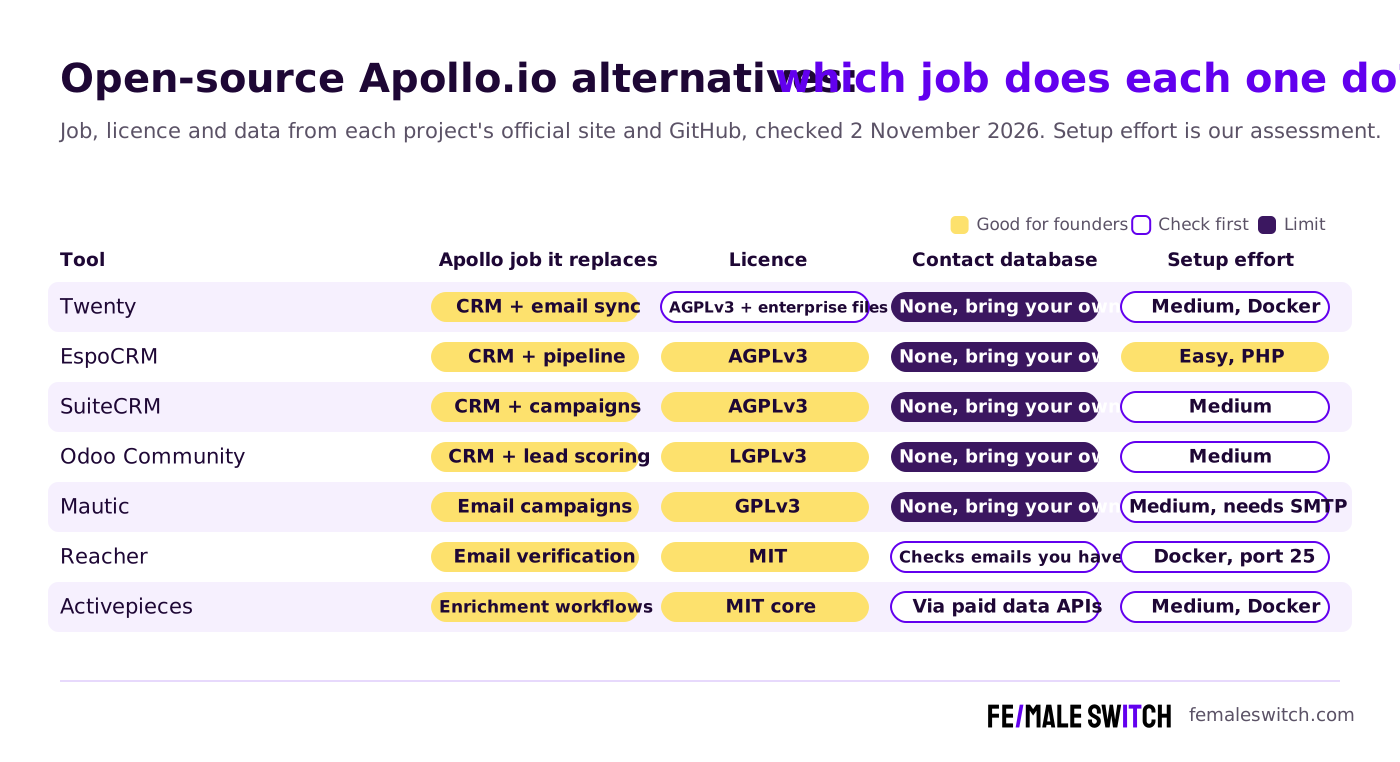
Open-Source Apollo.io Alternatives Compared
Sources: each project's official website, pricing page and GitHub repository, checked 2 November 2026. Self-hosting is free, but you pay for the server, email sending and your own time.
Open-Source CRMs to Replace Apollo's Pipeline
1. Twenty: a modern open-source CRM with email and calendar sync
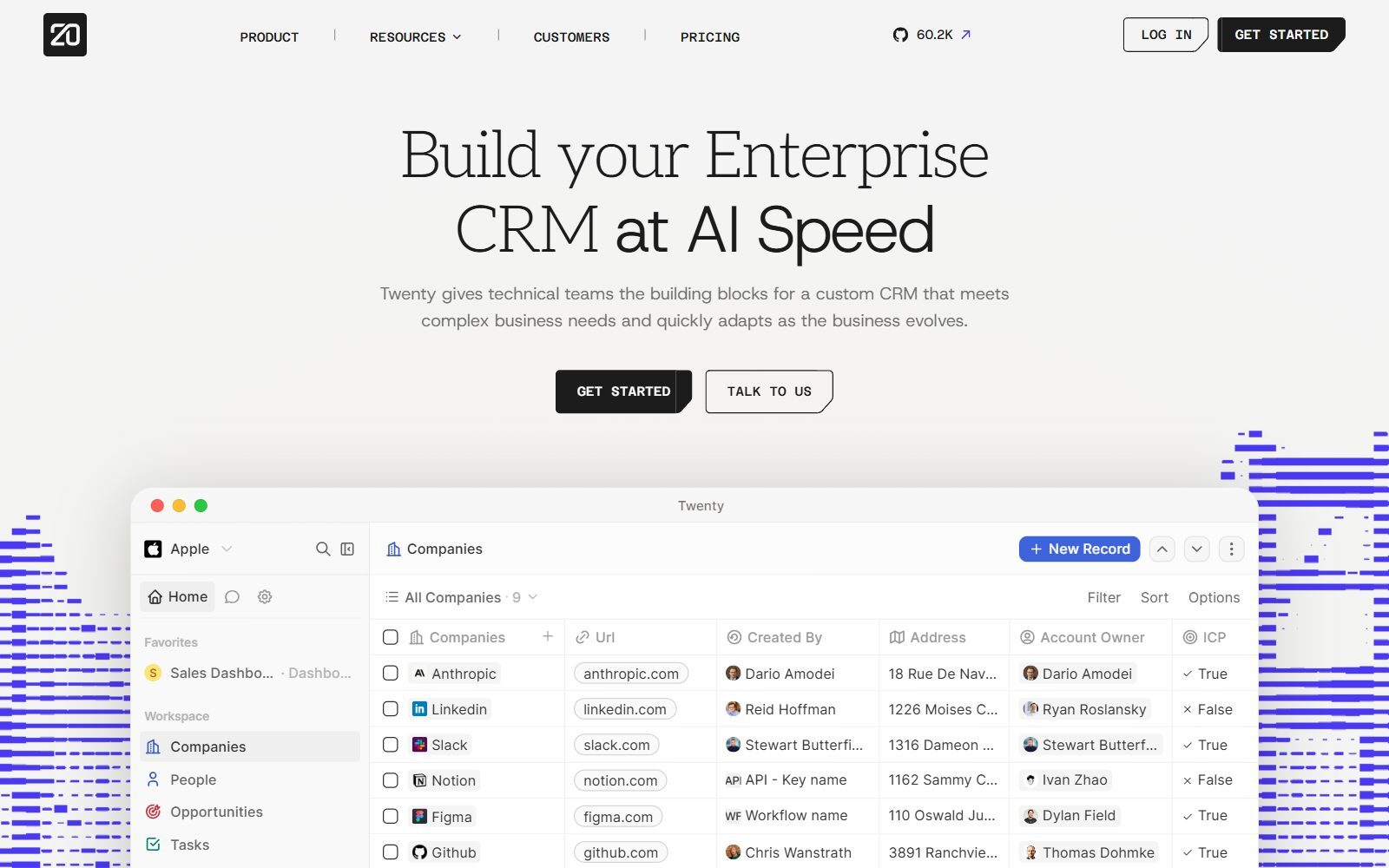
Twenty calls itself the number one open-source CRM on GitHub, where it has around 60,000 stars, and it ships new versions every few days (v2.54.0 came out on 30 October 2026). It covers companies, people, opportunities and tasks in a fast, spreadsheet-like interface, with no-code workflows and an API. For an Apollo user, the useful part is that Google and Microsoft email and calendar sync log your emails and meetings to the right contacts automatically, and its AI chat, agents and MCP server let assistants such as Claude or ChatGPT work with your CRM data. The Twenty licence is mostly AGPLv3, with files marked Enterprise under a commercial licence. Self-hosting is free; the Twenty pricing page lists cloud plans at $9 (Pro) and $39 (Organization) per user per month.
2. EspoCRM: a lightweight CRM you can host anywhere
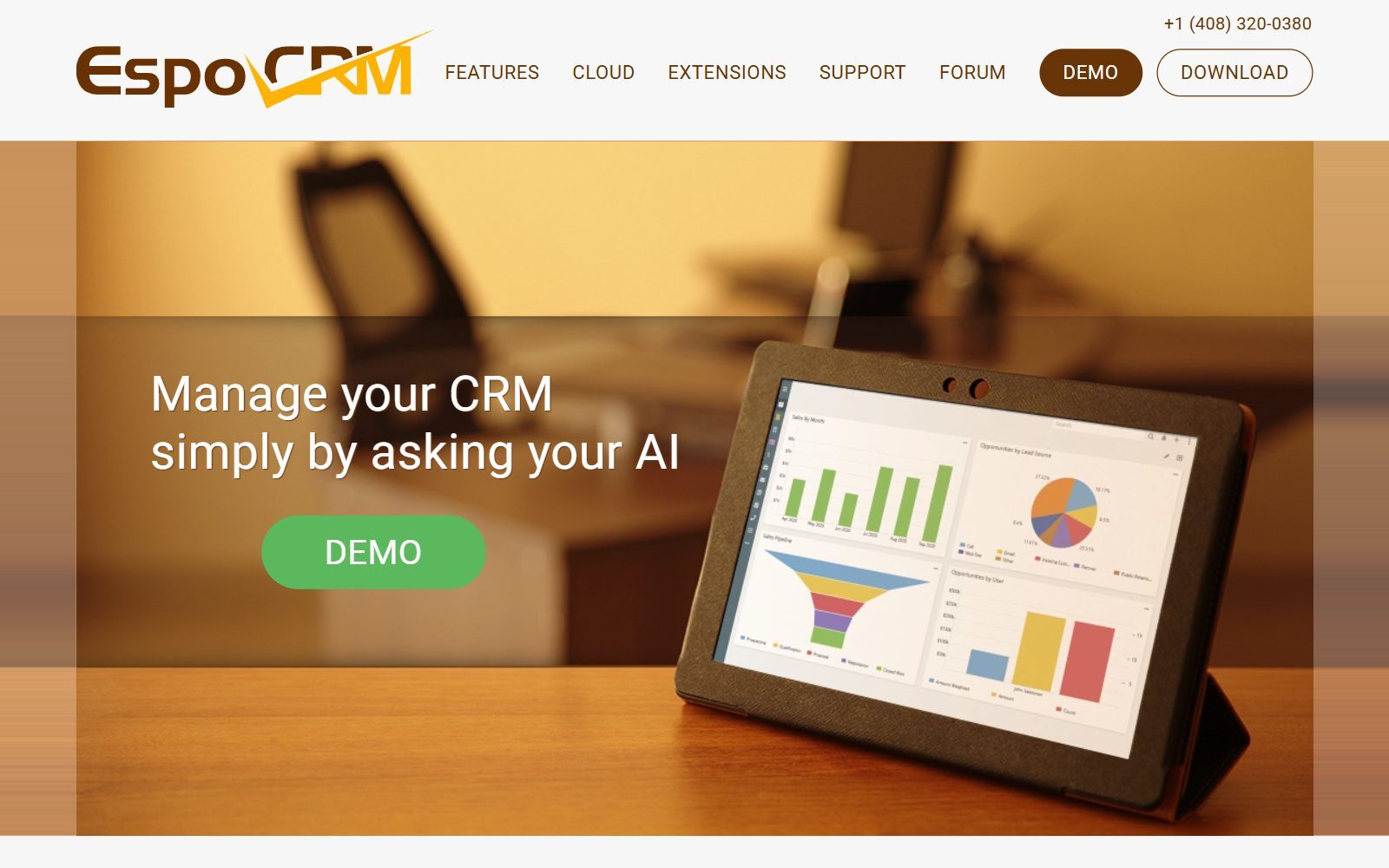
EspoCRM is an AGPLv3 CRM written in PHP that runs on ordinary web hosting, with leads, accounts, a sales pipeline, email, calendar and reports. Version 10.0.11 came out on 23 October 2026. Its homepage now says you can manage your CRM simply by asking your AI: the free EspoCRM MCP extension turns it into an MCP server, so an AI assistant can read and update leads through the tools you allow. Choose EspoCRM if you want a simple, cheap-to-run pipeline for one founder or a small sales team.
3. SuiteCRM: the classic open-source CRM with campaigns
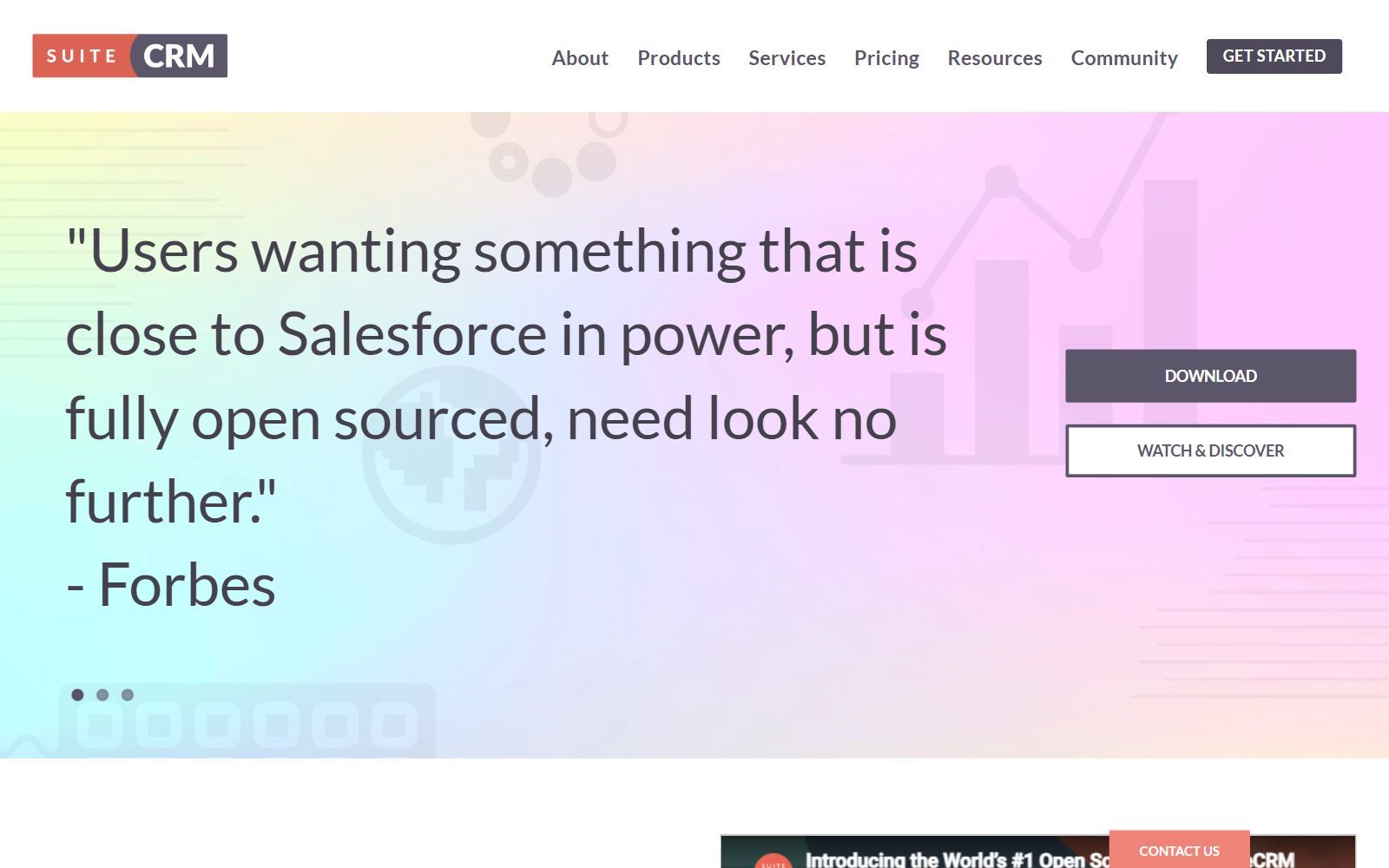
SuiteCRM is a long-running AGPLv3 CRM with sales, marketing campaigns, case management, workflows and a REST API. It is still maintained: SuiteCRM 8.10.2 was released on 31 July 2026 and the code repositories were still receiving commits in late October 2026. It is heavier than EspoCRM, but it suits a team that wants a familiar, Salesforce-style CRM and the option to buy hosting or support from SuiteCRM's makers later.
4. Odoo Community: CRM with lead scoring plus the back office
Odoo CRM is one app in Odoo's business suite, and the Community edition is published under the LGPLv3. Its CRM includes predictive lead scoring, which learns from your own won and lost deals to estimate each new lead's chance of closing, the open-source answer to Apollo's lead scores. Add Odoo's sales, invoicing and email marketing apps when you need them. If you do not want to self-host, the Odoo pricing page offers One App Free: one app with unlimited users on Odoo Online.
Validate your startup idea with the unique borrowed authority approach: we publish articles about your product in our blog and you get traffic and testers for your MVP
- Prove Market Demand: See real organic traffic and waitlist conversions
- Unlock High-Potential Keywords: Receive a curated list of top-performing keywords directly from Google Search Console data.
- Estimate Customer Acquisition Cost (CAC): Gain financial foresight with an estimated CAC based on real keyword performance data.
🔗 Start validating your startup now
Open-Source Tools for Outreach, Verification and Enrichment
5. Mautic: email campaigns, sequences and lead scoring
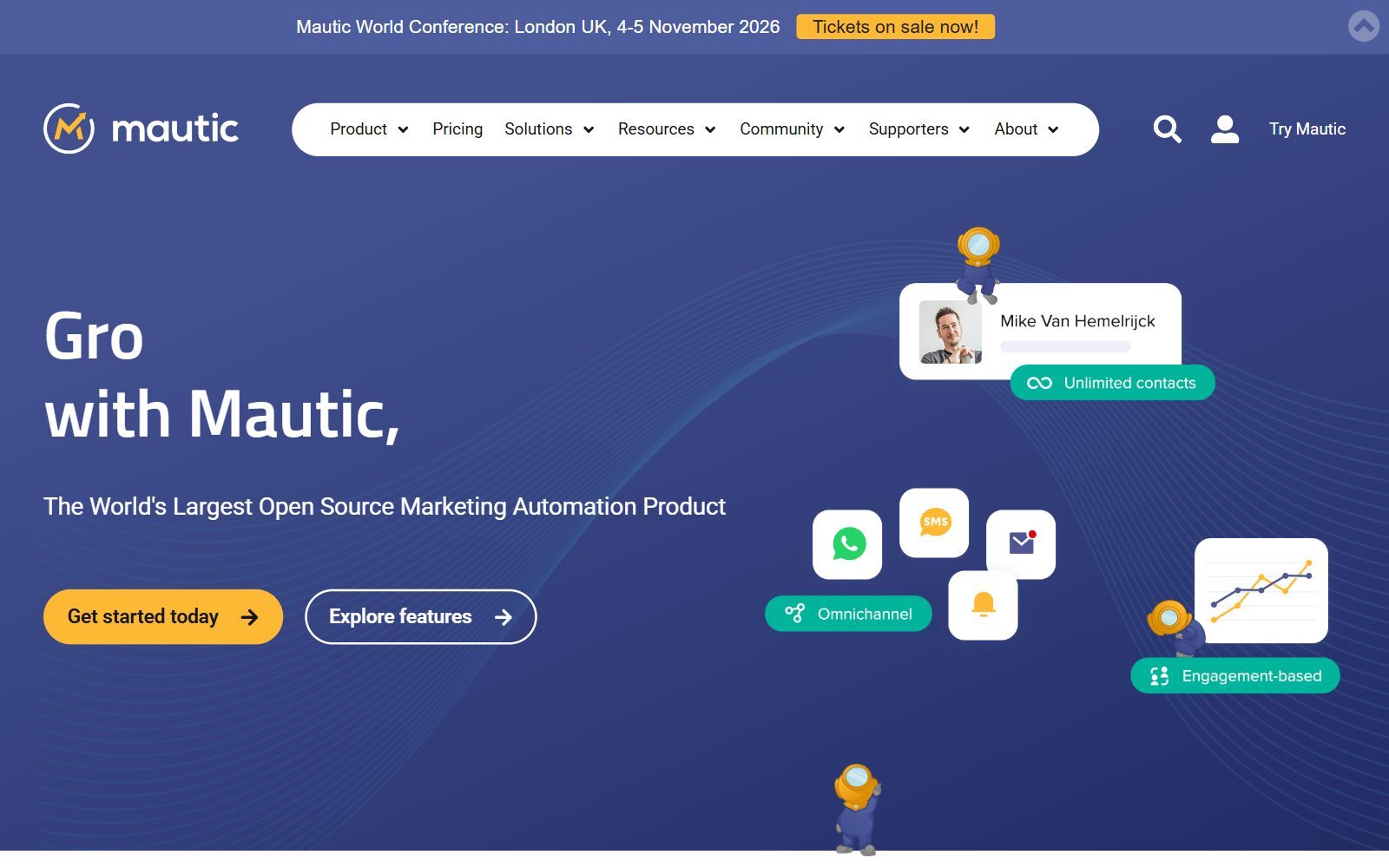
Mautic calls itself the world's largest open-source marketing automation product. It is GPLv3, and version 7.2.2 came out on 26 October 2026. Its drag-and-drop campaign builder lets you send a series of emails with delays and conditions, which is the closest open-source match to Apollo sequences, and its point scoring ranks contacts by engagement. It also has an email and landing page builder and a REST API to sync contacts with your CRM. Mautic does not send email itself: you connect your own SMTP server or email provider, so check that provider's rules and privacy law (such as the GDPR in the EU) before you email people who never opted in. If you prefer not to host it, Mautic's site lists managed hosting partners and a 14-day free trial.
6. Reacher: open-source email verification
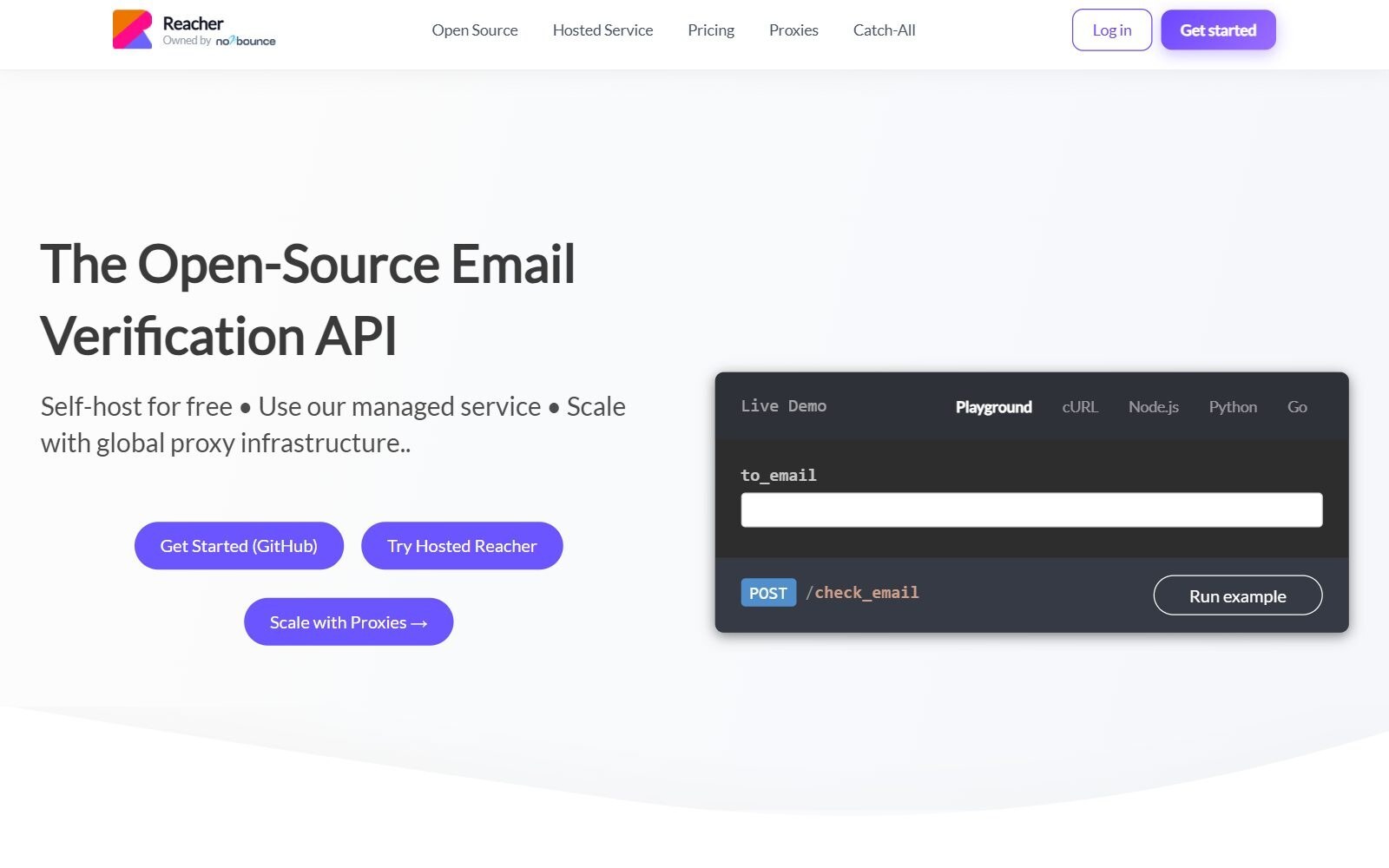
Reacher checks whether an email address exists without sending an email, the job Apollo does when it marks an address as verified. Its engine, check-if-email-exists, is MIT-licensed, and version 0.11.11 came out on 30 October 2026. You run it as a Docker HTTP backend, a command-line tool or a Rust library. Two practical limits: your server needs outbound port 25 open, and the README says that anything beyond very small volumes needs SMTP proxy servers. The homepage sums it up as self-host for free, with a paid managed service from its owner, no2bounce.
7. Activepieces: enrichment and sales workflows you control
Activepieces is a workflow automation tool with an MIT-licensed core (enterprise folders are separate) and more than 770 integrations, including pieces for Twenty and Odoo. Version 0.92.3 came out on 28 October 2026. This is how you rebuild Apollo's enrichment step: when a lead arrives from a form or a list, a flow calls the enrichment API you choose, verifies the address with Reacher, scores the lead with an AI step and creates the record in your CRM. The data still comes from a provider you pay for; Activepieces just stops you being locked into one.
Apollo.io Alternatives From the Old List: Archived, Changed or a Different Job
The 2025 version of this article listed ten tools. Several no longer belong on an Apollo shortlist:
- YetiForce CRM: its GitHub repository was archived by the owner on 26 August 2025 and is now read-only, and the last release published there is 6.5.0 from November 2023. The company's website is still online, but the open-source code is no longer developed in public, so it has left the main list.
- Metabase, Redash and Eclipse BIRT: all three are still maintained, but they are business intelligence and reporting tools, not sales tools. Compare them in our open-source Metabase alternatives.
- PostHog: an open-source product analytics platform. Useful for seeing what leads do in your product, not for finding them; see our open-source Google Analytics alternatives.
- Chatwoot: an open-source customer support inbox for chat, email and social channels. It belongs with our open-source Intercom alternatives and open-source Zendesk alternatives.
- AI SDR-Kit: the old link pointed to a list article, not to a project. We found no maintained standalone open-source repository to recommend.
- Meeting booking (Cal.com): Apollo includes meeting events, and Cal.com was the usual open-source answer. Its open-source repository now redirects to Cal.diy, an MIT-licensed community fork with the enterprise features removed, whose README recommends it for personal, non-production use. Check that note before you rely on it for sales meetings.
Which Open-Source Apollo.io Alternative Should You Choose?
- You need one place for leads, deals and email history: Twenty, self-hosted or on its cloud plan.
- You want the cheapest CRM to run on shared hosting: EspoCRM.
- You want a classic CRM with marketing campaigns built in: SuiteCRM.
- You need CRM, quotes and invoices in one system: Odoo Community, or One App Free on Odoo Online for the CRM alone.
- You want sequences and lead scoring without paying per seat: Mautic, with your own email provider.
- Your bounce rate is too high: Reacher, self-hosted.
- You buy data from several providers: Activepieces to enrich, verify and route every lead automatically.
- You need fresh contacts every week: no open-source tool has a contact database; keep a data provider such as Apollo's free plan for search only.
How Founders Build an Open-Source Sales Stack
Start with the CRM, because every other tool writes into it; our list of CRM tools for startups covers hosted options too, and our open-source Salesforce Einstein alternatives show how to add AI lead scoring and agents on top. Then add outreach: Mautic for sequences, or one of the open-source Mailchimp alternatives if you mostly send newsletters to people who signed up. If you would rather not host anything yet, our free Mailchimp alternatives and the HubSpot vs ActiveCampaign comparison cover hosted options.
Connect the pieces last. Our open-source Zapier alternatives compare Activepieces with the other automation tools that move leads between forms, verifiers and your CRM. Keep a person reviewing every message before it goes out, and send fewer, better emails rather than more. Before you build a sales machine, validate your startup idea with real customers, and use the F/MS AI SEO Tool to bring inbound leads from Google and AI assistants, so outreach is not your only channel.
Join ElonaHunt (like ProductHunt but for women) and explore the coolest women-focused startups out there!
Discover your next big inspiration and connect with like-minded female entrepreneurs!
👉 Join the Hunt Here
FAQ About Open-Source Apollo.io Alternatives
Is there an open-source version of Apollo.io?
No. No open-source project combines Apollo's contact database, enrichment, sequences and dialer. You can replace the CRM, email campaigns, verification and automation with open-source tools, but the contact data has to come from somewhere else.
Does Apollo.io have a free plan in 2027?
Yes. In November 2026 Apollo's pricing page listed a $0 Free plan with 900 credits per seat per year (granted monthly), 2 sequences, CRM enrichment for 100 records a month and 1 meeting event.
How much do Apollo's paid plans cost?
On the default annual view in November 2026: $49 (Basic), $79 (Professional) and $119 (Organization, minimum 3 seats) per seat per month, billed annually, before taxes.
What is the best open-source CRM to replace Apollo's pipeline?
For most startups, Twenty: it is actively developed, syncs Google and Microsoft email and calendars, and is free to self-host. EspoCRM is the lighter, easier choice.
Can I send cold email sequences with open-source software?
Mautic can send a series of emails with delays and conditions through your own SMTP server or email provider. Check your provider's rules and privacy law, such as the GDPR, before emailing people who did not opt in.
Is there an open-source email verifier?
Yes. Reacher's check-if-email-exists engine is MIT-licensed and can be self-hosted with Docker. It needs outbound port 25, and larger volumes need SMTP proxies.
Can open-source tools enrich leads like Apollo?
Not on their own, because none has a contact database. Activepieces can call the enrichment API you choose, verify the address and save the result to your CRM.
Is YetiForce CRM still open source and maintained?
Its GitHub repository was archived on 26 August 2025 and is read-only, with the last release there from November 2023, so we no longer recommend it as an open-source pick.
Which open-source CRM has lead scoring?
Odoo Community's CRM includes predictive lead scoring based on your own won and lost deals, and Mautic scores contacts by email and website engagement.
Where can I get a backlink by writing about my startup?
You can publish a guest post in one of the Fe/male Switch startup blogs, which rank in Google and in AI tools. Get a quality backlink.
About the Author
Violetta Bonenkamp, also known as MeanCEO, is an experienced startup founder with an impressive educational background including an MBA and four other higher education degrees. She has over 20 years of work experience across multiple countries, including 5 years as a solopreneur and serial entrepreneur. Throughout her startup experience she has applied for multiple startup grants at the EU level, in the Netherlands and Malta, and her startups received quite a few of those. She’s been living, studying and working in many countries around the globe and her extensive multicultural experience has influenced her immensely.

