
Open-Source TextMorph Alternatives: Paraphrasing Tools and Local Models You Can Run Yourself
TextMorph was sold as an AI paraphraser that rewrites sentences in a different style. In November 2026 we could not find it running: textmorph.com shows a parked-domain page, and textmorph.io and textmorph.ai do not resolve at all. Whatever you used it for, you need a replacement, and if you want one that is open source, the field looks very different from the 2025 version of this list. That list was made up of QuillBot, Wordtune, Jasper and other web services that were never open source.
Real open-source paraphrasing comes in two forms. The first is a small, dedicated paraphrase model such as PEGASUS, which you call from Python and which rewrites one sentence at a time. The second, and the one most people use today, is an open model running on your own computer through a free app such as Ollama, Jan or Writing Tools, with a prompt that tells it how to rephrase: simpler, more formal, shorter, or just different. We checked the licence, latest release and setup of every project below on its official repository, model card or website on 14 November 2026.
Quick answer: for QuillBot-style rewriting anywhere on your computer, install Ollama with an Apache-2.0 model such as Qwen3 or Mistral 7B, then add Writing Tools (a rewrite hotkey for any app) or Page Assist (a right-click "Rephrase" in your browser). Prefer one app with no setup? Use Jan. Developers who need paraphrases in bulk can call the Apache-2.0 PEGASUS paraphrase model from Python, and a team can share one model through LocalAI.
Boost Your SEO by Getting Featured in Our Blogs and get a backlink.
We publish content about startups, education, tech, funding, etc. that ranks well not only in Google but also in Perplexity, ChatGPT, Grok and other AI tools.
👉 Get featured now!
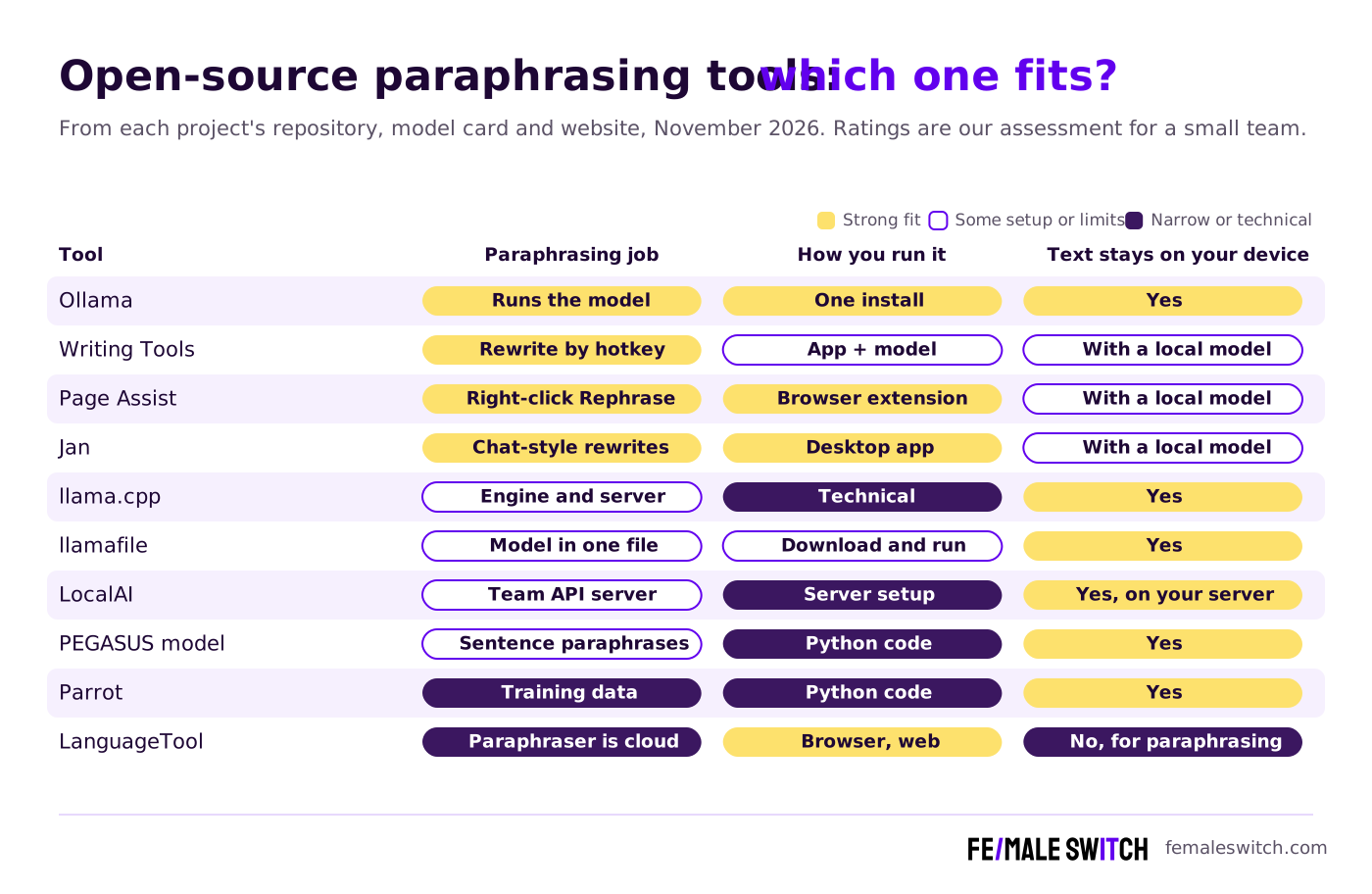
Open-Source TextMorph Alternatives Compared
Sources: each project's GitHub repository, licence file and releases page, Hugging Face model cards and the official websites, checked 14 November 2026.
How Open-Source Paraphrasing Works in 2027
A paraphraser takes a sentence and returns the same meaning in different words. There are three open-source ways to get that:
- A local model with a rewrite prompt. An app such as Ollama or Jan runs an open model on your computer, and you ask it to "rewrite this more simply" or "make this formal". This is the closest match to QuillBot's modes, and it handles whole paragraphs.
- A dedicated paraphrase model. Older sequence-to-sequence models such as PEGASUS were fine-tuned only to paraphrase. They are small and fast, but they work best on single sentences and need a few lines of Python.
- A rewrite button on top of a model. Writing Tools and Page Assist add a hotkey or a right-click menu, so you never copy text into a chat window. They are interfaces; the model still runs in Ollama or another engine.
One rule matters for privacy: a tool only keeps your text on your device if the model runs there too. Writing Tools, Page Assist and Jan can also send text to cloud APIs; choose a local model if you are rewriting anything confidential.
The 10 Best Open-Source TextMorph Alternatives in 2027
1. Ollama: QuillBot-style rewriting on your own computer
Ollama is the simplest way to run an open model locally, and it is the engine most of the other tools on this list connect to. Its homepage calls it "the most popular way to build with open models" and offers models "locally or in the cloud", adding that prompts are never stored or trained on. The code on GitHub is MIT-licensed, and version 0.40.16 came out on 9 November 2026.
For paraphrasing, install the app, pull a model such as Qwen3 or Mistral 7B, and type a prompt like "Rewrite this paragraph in plain English and keep every fact". On its own Ollama is a chat window and a command line; most people add a rewrite button on top, which is what the next two tools do. If you only want local models, avoid the cloud models Ollama also offers.
2. Writing Tools: a rewrite hotkey for every app
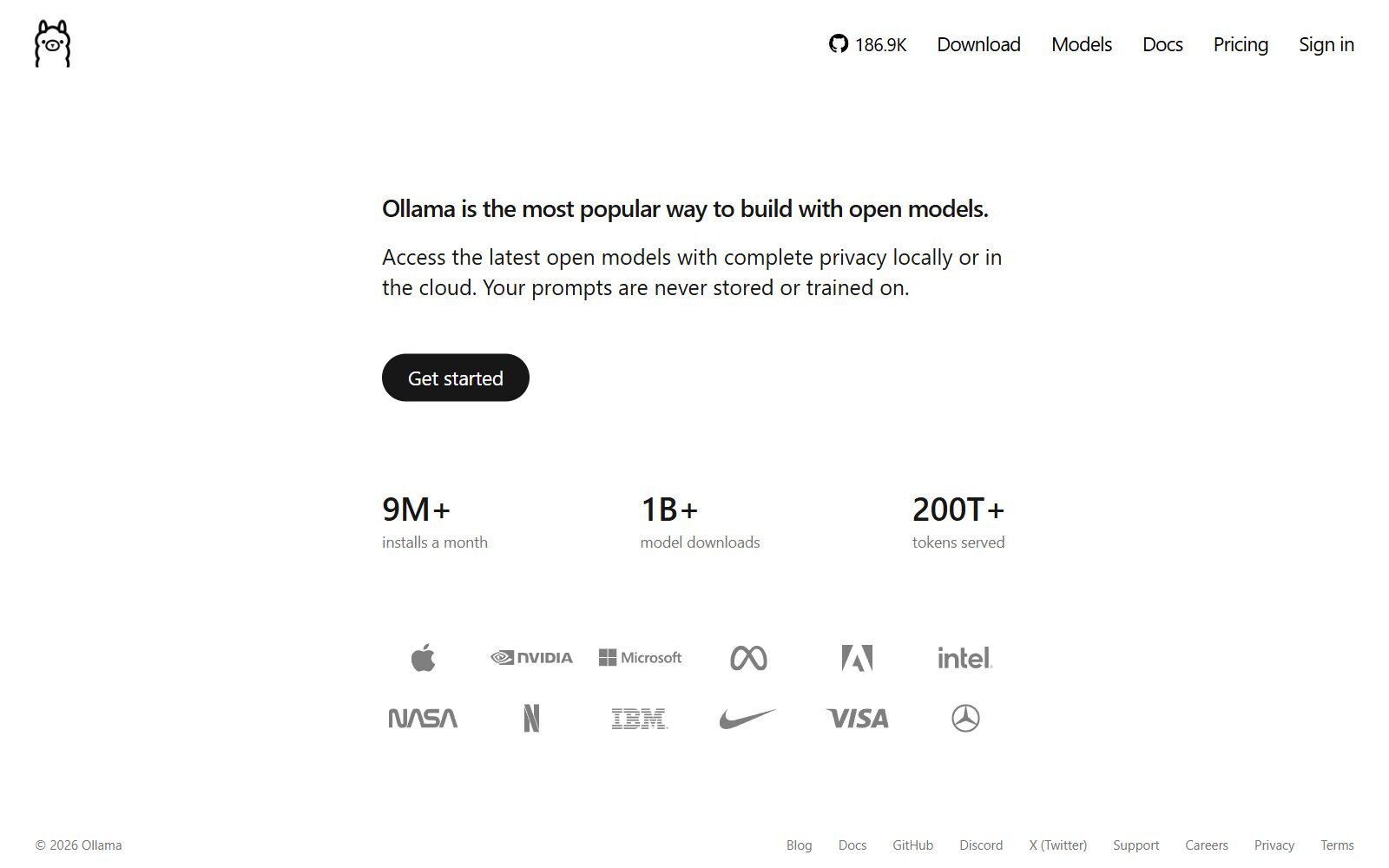
Writing Tools is the most QuillBot-like experience in open source. Select text in any app, press Ctrl+Space, and choose to proofread, rewrite, change the tone or summarise it. It is GPL-3.0, runs on Windows, macOS 14 or later and Linux (marked work in progress), and the latest release, from 10 May 2026, is Windows v9 and macOS v6.1.
Its README lists local options (Ollama, llama.cpp, KoboldCPP, TabbyAPI and vLLM, plus MLX on Apple Silicon) next to cloud ones such as the free Gemini API. With a local model, nothing leaves your computer; with Gemini or another cloud API, your text goes to that provider.
3. Page Assist: right-click Rephrase in your browser
Page Assist is an MIT-licensed browser extension that adds a sidebar and a web interface for local models. Its copilot menu works on selected text on any web page, and one of the five built-in prompts is "Rephrase", described in its documentation as rewriting text with alternative vocabulary. You can add your own copilot prompts, so "Make formal" or "Shorten" sits one right-click away. It connects to Ollama and OpenAI-compatible endpoints; version 1.5.91 came out on 8 November 2026. Our open-source GrammarlyGO alternatives guide covers its other writing features.
4. Jan: an offline app for longer rewrites
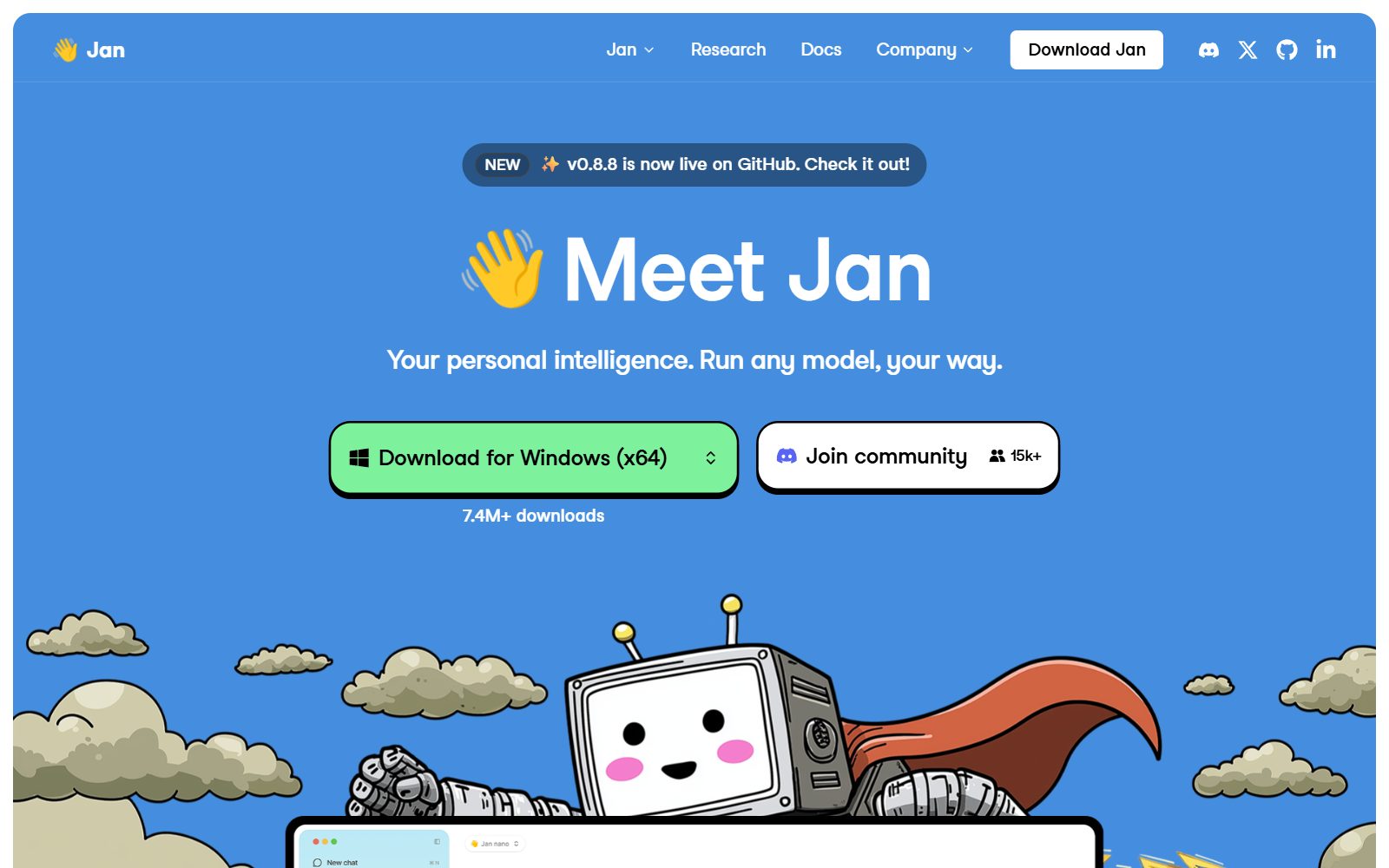
Jan calls itself an open-source ChatGPT replacement: a desktop app for Windows, macOS and Linux that downloads and runs models for you, with no separate engine to install. Its licence file is Apache-2.0 (Menlo Research), and version 0.8.8 came out on 28 October 2026. For paraphrasing, it suits longer jobs, such as rewriting a whole blog post for a different audience, where a chat that remembers your instructions helps. Jan can also connect to cloud models, so pick a local one for private text.
5. llama.cpp: the engine underneath
llama.cpp is the MIT-licensed C/C++ engine that runs open models in GGUF format on ordinary laptops, and many local apps build on it. It reached version 1.0.0 on 13 November 2026. You use it directly if you are comfortable with a terminal: its llama-server program offers an OpenAI-compatible API, so any paraphrasing script or rewrite plugin that speaks the OpenAI format can use a model on your own machine.
6. llamafile: a paraphrasing model in one file
llamafile packs a model and its runtime into a single executable file, so you download one file and run it, with no installer. The project is now maintained by Mozilla.ai, its README shows an Apache 2.0 licence, and version 0.10.6 came out on 15 September 2026. It is a handy way to hand a private rewriting tool to a colleague who will never install a developer stack.
Validate your startup idea with the unique borrowed authority approach: we publish articles about your product in our blog and you get traffic and testers for your MVP
- Prove Market Demand: See real organic traffic and waitlist conversions
- Unlock High-Potential Keywords: Receive a curated list of top-performing keywords directly from Google Search Console data.
- Estimate Customer Acquisition Cost (CAC): Gain financial foresight with an estimated CAC based on real keyword performance data.
🔗 Start validating your startup now
7. LocalAI: one rewriting server for your team
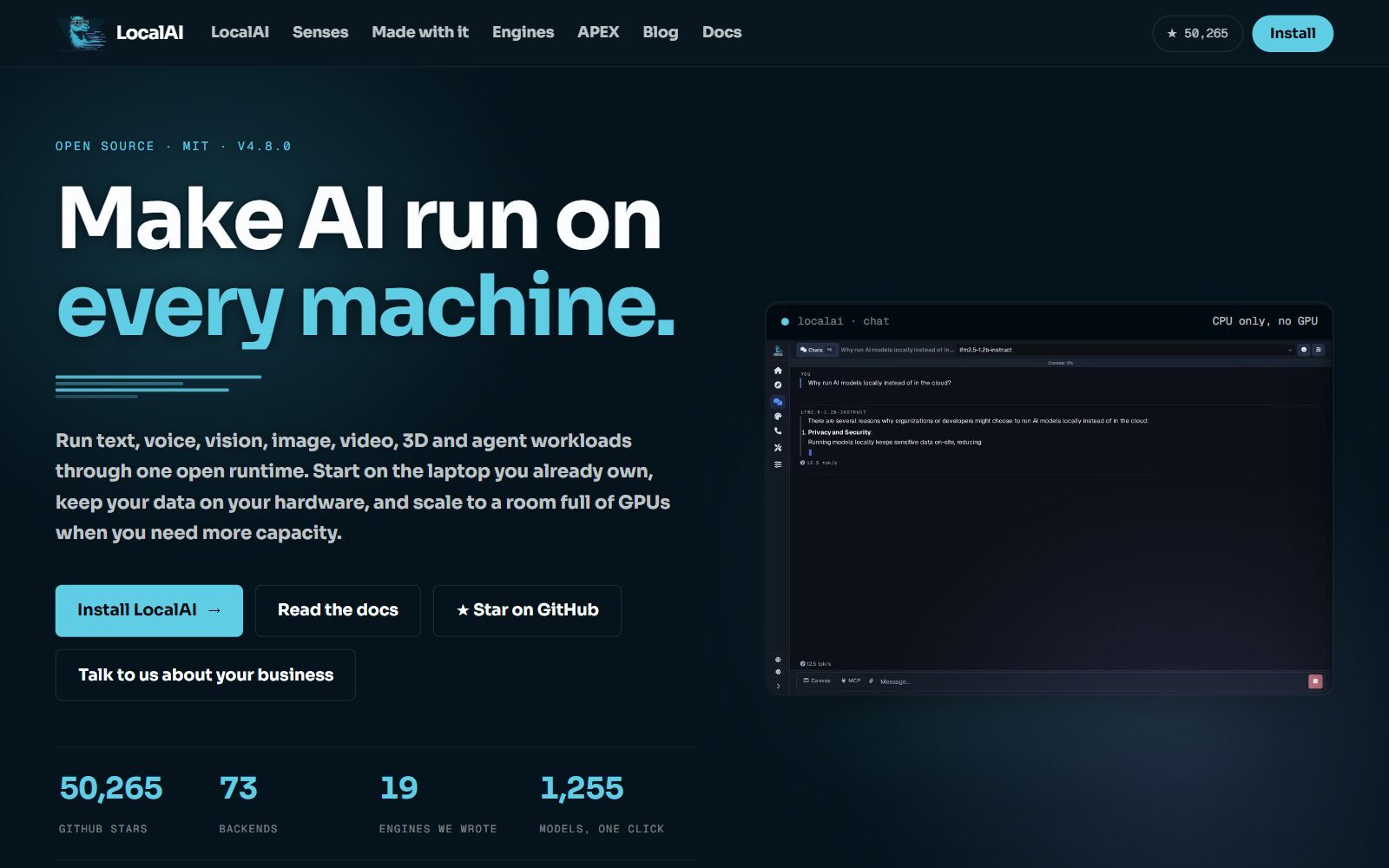
LocalAI (MIT) is a self-hosted server that answers requests in the OpenAI format, and also speaks the Anthropic, Ollama and ElevenLabs APIs, so existing tools only need a new URL. Its site says it runs on a laptop with no GPU and scales to GPU servers. For a startup, it means one paraphrasing and rewriting endpoint that the whole team, or your own product, can call without sending text to an outside AI company. Version 4.12.1 came out on 23 October 2026.
8. PEGASUS paraphrase model: a classic open model built only to paraphrase
The pegasus_paraphrase model on Hugging Face is Google's PEGASUS fine-tuned for paraphrasing, and its model card lists the Apache-2.0 licence. You load it with the Transformers library in a few lines of Python and ask for several versions of a sentence at once, which makes it useful for generating variations of headlines, FAQs or test data. It is old (last updated in March 2021), and the model card's example limits input to 60 tokens, so it works sentence by sentence and will not rewrite a whole page the way a modern chat model does.
9. Parrot: paraphrases for chatbot training data
Parrot is an Apache-2.0 Python library that its README describes as a paraphrase-based utterance augmentation framework built to accelerate training of NLU models. In plain words: it turns one example question into many, with knobs for how much the wording should change, which helps when you train a support bot or intent classifier. It is not a writing tool, and it is barely maintained: the only release is v1.0 from June 2021 and the last commit dates from January 2024.
10. LanguageTool: open-source checker, but the paraphraser is cloud only
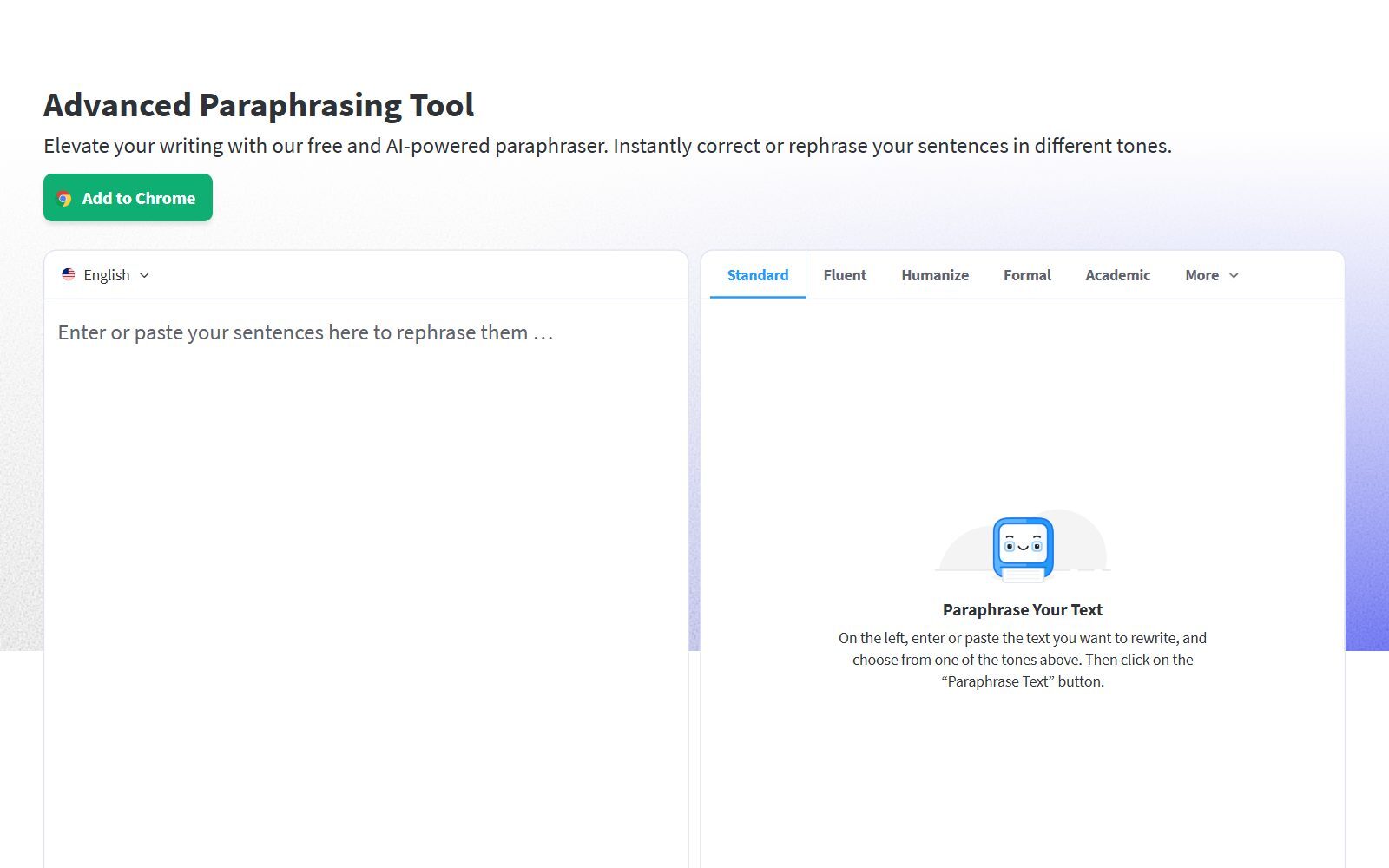
LanguageTool needs an honest label. Its grammar and style engine is open source under LGPL-2.1 and actively developed, and you can run it as your own server. Its paraphrasing tool is a separate AI feature of the hosted service: the page calls it free and AI-powered, but Basic users can paraphrase three times a day, and unlimited paraphrasing is only in Premium. The self-hosted server has no AI-based features, so for open-source rewriting, pair LanguageTool's checks with one of the local-model tools above.
Join ElonaHunt (like ProductHunt but for women) and explore the coolest women-focused startups out there!
Discover your next big inspiration and connect with like-minded female entrepreneurs!
👉 Join the Hunt Here
Which Open Models Are Good for Paraphrasing?
The apps above are free, but the model decides the quality and the licence. Licences differ a lot, so check the model card before using a model in a product:
- Apache-2.0 open models: Qwen3 (for example Qwen3-4B-Instruct-2507), Mistral 7B Instruct v0.3 and IBM Granite 4.0 are all listed under Apache-2.0 on Hugging Face. Small versions run on a normal laptop and rewrite paragraphs well.
- Open weights with their own licence: Google's Gemma and Meta's Llama models are free to download but come with their own terms (the Gemma licence and the Llama community licence), which are not OSI open-source licences.
- Dedicated paraphrasers with use restrictions: the popular T5-based chatgpt_paraphraser model by Humarin uses an OpenRAIL licence, which adds use restrictions. PEGASUS paraphrase is the Apache-2.0 option.
Prompts That Recreate QuillBot-Style Modes
Paraphrasing apps mostly differ in their modes. With a local model you write the mode yourself and save it as a custom prompt in Writing Tools, Page Assist or Jan:
- Standard: "Rewrite this text in different words. Keep the meaning, every fact and every name. Return only the rewritten text."
- Fluent: "Make this read naturally for a native English speaker. Fix awkward phrasing, do not add new ideas."
- Formal: "Rewrite this for an investor email: formal, clear, no slang."
- Simple: "Rewrite this so a 12-year-old understands it. Short sentences, common words."
- Shorten: "Cut this to half its length without losing any key point."
Always read the result against the original: any model, open or closed, can drop a number or change a claim while rephrasing.
TextMorph Alternatives That Are Discontinued, Changed or Not Open Source
- TextMorph itself: no working official site in November 2026. textmorph.com shows a parked-domain page, and textmorph.io and textmorph.ai do not resolve.
- QuillBot, Wordtune, ZeroGPT, SpinBot, Jasper, SciSpace, Paraphraser.io, WordAi and Scribbr: all were in the 2025 version of this list, and none of them is open source. They are closed-source web services, free or paid. Our AI paraphrasing tools guide covers hosted paraphrasers.
- Pickiepoint: we could not identify an official website or app listing for it, so it is removed.
- GPT4All: still MIT-licensed, but quiet: its latest release, v3.10.0, dates from February 2025 and the repository has had no commits since May 2025.
- Open WebUI: a popular interface for local models, but its current licence is the "Open WebUI License", a BSD-style licence with a branding clause, so it is not an OSI open-source licence any more.
Which Open-Source TextMorph Alternative Should You Choose?
- You want a paraphraser that works in every app: Ollama plus Writing Tools.
- You mostly rewrite text in the browser: Ollama plus Page Assist, with your own "Rephrase" prompts.
- You want one app and no setup: Jan with a small local model.
- Your team or product needs a private rewriting API: LocalAI or llama.cpp's server.
- You need many variations of short sentences in code: the PEGASUS paraphrase model; for chatbot training data, Parrot.
- You mainly need grammar fixes, not rewrites: see our open-source Grammarly alternatives.
Comparing beyond open source? Our earlier lists of TextMorph alternatives, free TextMorph alternatives and open-source TextMorph alternatives in Startup Tools, plus the directory posts on free TextMorph alternatives and paid TextMorph alternatives, cover hosted tools.
How Founders Use Open-Source Paraphrasing Tools
For a small startup, rewriting is daily work: the same product description for a landing page, an app store listing and a cold email; a grant answer cut to a word limit; a support reply made friendlier. A local setup keeps confidential drafts, such as pitch decks, investor updates and customer data, off third-party servers, and it costs nothing per word. Be careful with one use: rewriting other people's articles to pass them off as your own is still plagiarism, whatever tool does it.
The same open models power the rest of an open-source stack. See our guides to open-source ChatGPT alternatives, open-source Notion AI alternatives, open-source Coda AI alternatives, open-source Jasper alternatives and open-source GitHub Copilot alternatives. If you are weighing hosted AI writers instead, read Copy.ai vs Writesonic, Jasper vs Copy.ai, our free AI writing tools list and the QuillBot co-writer guide. When your text is ready to rank, our AI SEO tool helps you plan the articles.
FAQ About Open-Source TextMorph Alternatives
Is TextMorph still available?
We could not find it running in November 2026: textmorph.com shows a parked-domain page and textmorph.io and textmorph.ai do not resolve. Treat it as unavailable and choose one of the alternatives above.
Is there an open-source paraphrasing tool?
Yes. The practical options are a local open model run through Ollama or Jan with a rewrite prompt, rewrite buttons such as Writing Tools and Page Assist, and dedicated models such as the Apache-2.0 PEGASUS paraphrase model.
What is the best open-source alternative to QuillBot?
Ollama with an Apache-2.0 model such as Qwen3 or Mistral 7B, plus Writing Tools for a hotkey in every app or Page Assist for right-click rephrasing in the browser. You recreate QuillBot's modes with saved prompts.
Is QuillBot open source?
No. QuillBot, Wordtune, Jasper, WordAi, Paraphraser.io and Scribbr are closed-source web services. None of them belongs on an open-source list.
Can I paraphrase offline?
Yes. Ollama, Jan, llama.cpp and llamafile run models entirely on your computer once the model is downloaded, and Writing Tools and Page Assist work offline when they point at a local model.
Is LanguageTool's paraphraser open source?
No. LanguageTool's grammar engine is open source under LGPL-2.1, but the paraphrasing tool is a cloud AI feature: Basic users get three rephrasings a day and unlimited paraphrasing needs Premium. The self-hosted server has no AI features.
Which open model is best for rewriting text?
For an open-source licence, choose an Apache-2.0 model such as Qwen3, Mistral 7B Instruct or IBM Granite 4.0. Gemma and Llama are free to download but use their own licences, which are not OSI open source.
Do I need a powerful computer to paraphrase with a local model?
Not for short texts. Small models of a few billion parameters run on an ordinary laptop, and LocalAI says it works on a CPU without a GPU. Larger models give better rewrites but need more memory.
Is using a paraphrasing tool plagiarism?
Rewording your own text is fine. Paraphrasing someone else's work and presenting it as yours is still plagiarism, and you should cite the source of any ideas you reuse.
How can I get my startup featured in articles like this one?
We publish articles about startups and tools that rank in Google and in AI answers. Our marketing services page explains how to get featured and earn a backlink.
About the Author
Violetta Bonenkamp, also known as MeanCEO, is an experienced startup founder with an impressive educational background including an MBA and four other higher education degrees. She has over 20 years of work experience across multiple countries, including 5 years as a solopreneur and serial entrepreneur. Throughout her startup experience she has applied for multiple startup grants at the EU level, in the Netherlands and Malta, and her startups received quite a few of those. She’s been living, studying and working in many countries around the globe and her extensive multicultural experience has influenced her immensely.

