

Roam Research Alternatives: Networked Note-Taking Apps, Free and Paid
Roam Research made backlinks, block references and daily notes famous, and it still describes itself as a note-taking tool for networked thought. But it has no free plan, and many founders want something cheaper, faster on mobile, local-first or better for teams. We checked 16 apps that do the same job, linking ideas into a personal knowledge graph, on their official pricing pages on 8 November 2026 (default view, no toggles). This list covers both free and paid apps; if you only want open-source software, read our open-source Roam Research alternatives instead.
Quick answer: Obsidian is the best free all-rounder (free without limits, local Markdown files, links and a graph view). Logseq is the closest to Roam's outliner with blocks and backlinks, free and open source. Tana Outliner and Capacities add structure with supertags and objects. Heptabase is for visual thinkers on whiteboards, RemNote for students who want flashcards, and Notion for teams that need databases more than a graph.
Boost Your SEO by Getting Featured in Our Blogs and get a backlink.
We publish content about startups, education, tech, funding, etc. that ranks well not only in Google but also in Perplexity, ChatGPT, Grok and other AI tools.
👉 Get featured now!
What Roam Research Costs in 2027
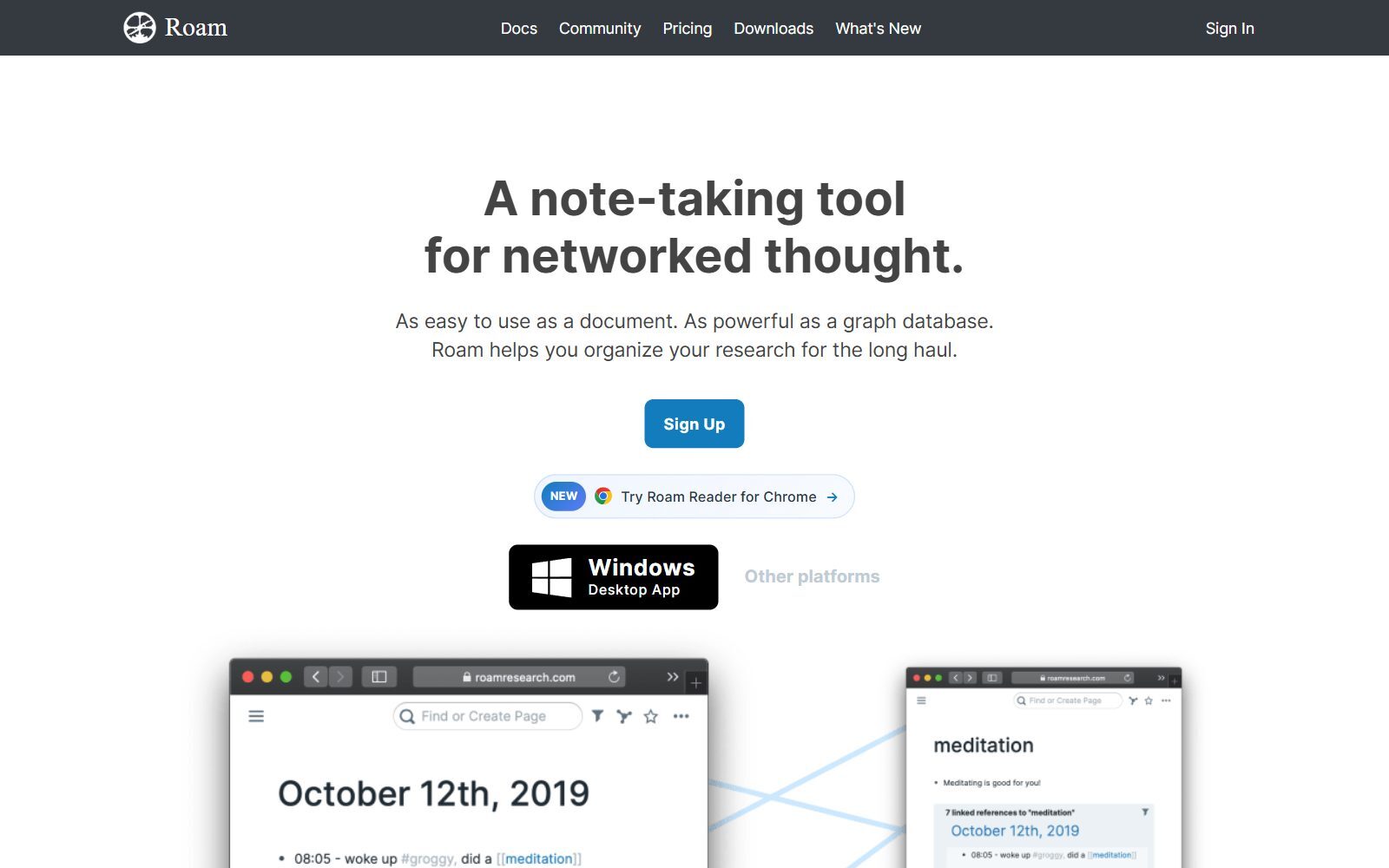
On the Roam Research homepage (checked 8 November 2026), Roam Pro costs $15 a month or $165 a year ($13.75 a month), with unlimited private or public graphs, unlimited collaborators, and API access and apps. The free trial runs 31 days and you are charged afterwards; the trial is only valid if you never had a plan. Believer costs $500 for 5 years and adds first access to new features, community calls and priority support. There is still no free plan. Roam's newest addition is Roam Reader, an extension for Chrome. If $165 a year is fine and you love block references, Roam is still a strong tool; the apps below are for everyone else.
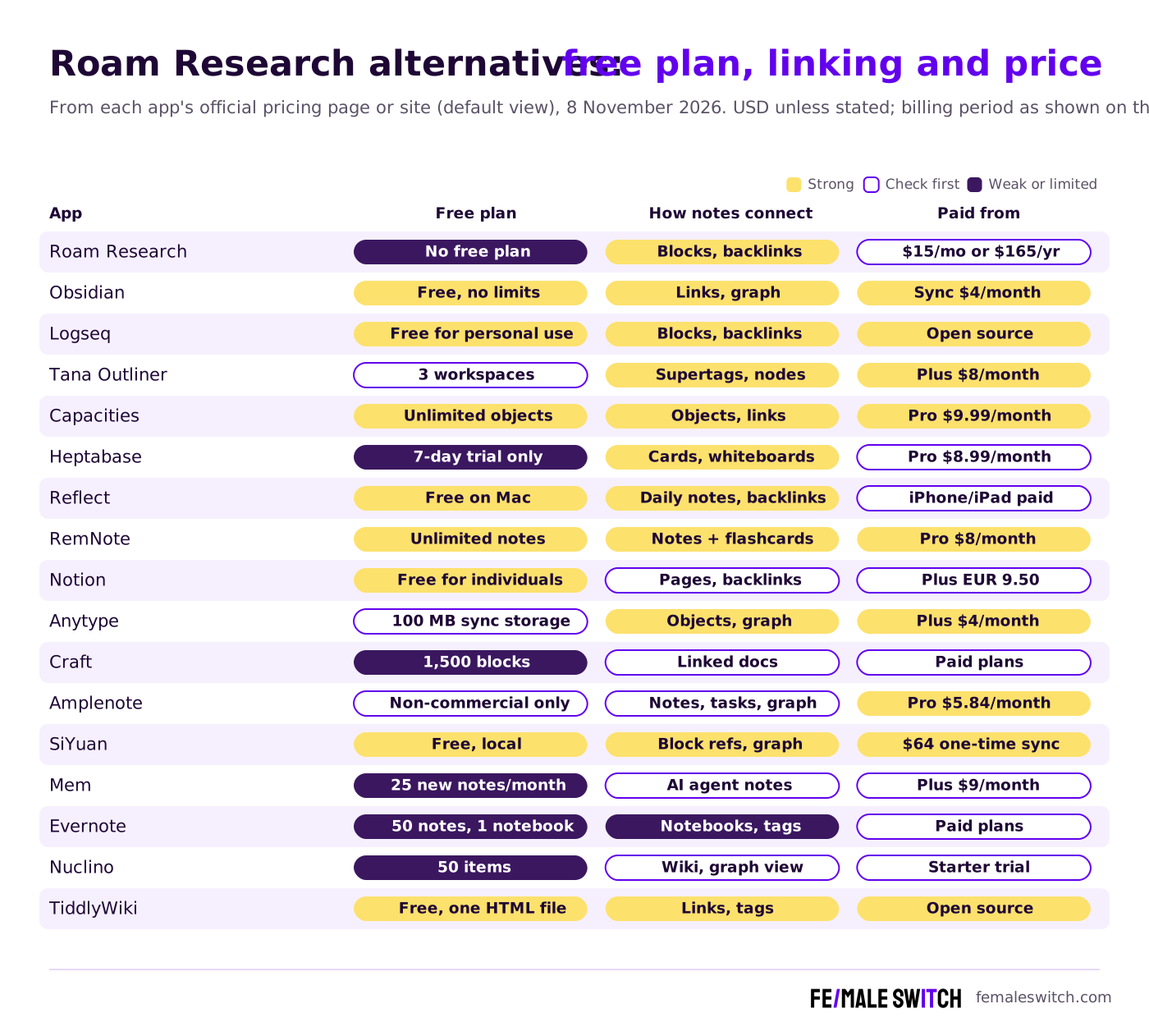
Roam Research Alternatives Compared
Sources: each app's official pricing page or homepage, default view, checked 8 November 2026. Notion showed us euros; other prices are in USD. Billing period as shown on each page.
The Best Roam Research Alternatives in 2027
1. Obsidian: the free, local-first favourite
Obsidian keeps your notes as Markdown files on your own device. You link notes to each other, see backlinks and explore an interactive graph, and thousands of community plugins add almost any Roam feature, including outlining and daily notes. The Obsidian pricing page says it is free without limits, with no sign-up. Optional Sync costs $4 per user a month billed annually ($5 monthly), Publish $8 per site a month billed annually, and a commercial licence ($50 per user a year) is encouraged but not required for work use. Open-source options are in our open-source Obsidian alternatives.
2. Logseq: the closest free match to Roam
Logseq works like Roam: an outliner of blocks, daily journals, backlinks and queries. Its homepage says it is open source, free forever for personal use and privacy-first, with data stored locally, Markdown files, apps for iOS and Android, 150+ plugins and 30+ themes. The code is AGPL-3.0, and version 2.0.2 was released on 7 October 2026. If you are leaving Roam because of the price but love its outliner, try Logseq first.
3. Tana Outliner: supertags that turn notes into data
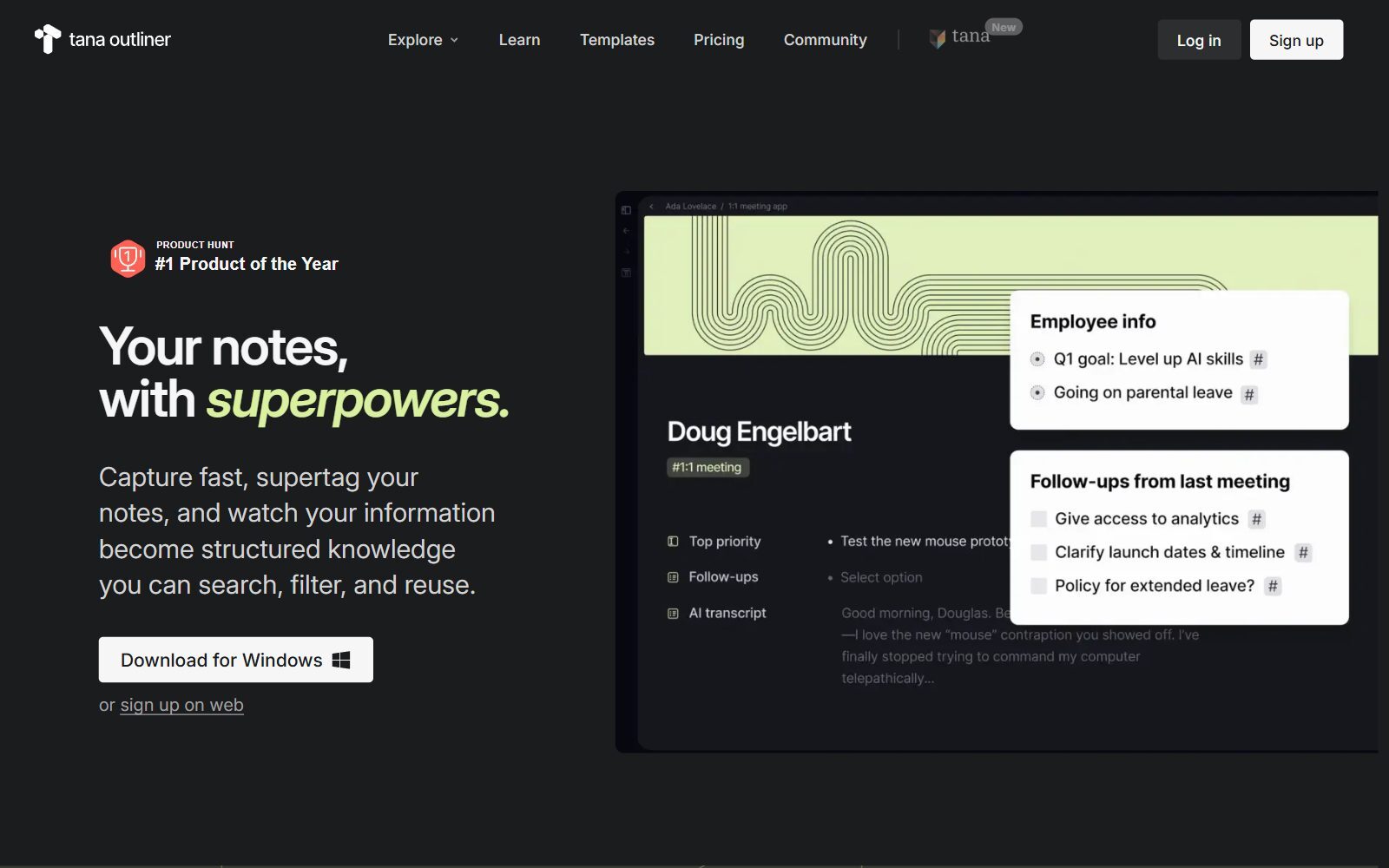
Tana has split into two products. tana.inc is now a meeting platform for AI agents, while the note-taking app is Tana Outliner, built on nodes and supertags: tag a bullet as a task, project, meeting or investor and it gets fields you can search and filter. The Tana Outliner pricing page lists a Free plan with a knowledge graph editor, supertags, references with @, public page sharing, up to 3 workspaces, 0.5 GB of storage and 500 AI credits. Plus is $8 a month and Pro $14 a month in the default view, each with a 14-day trial. Tana suits founders who want Roam's links plus a light CRM or project tracker in the same graph.
4. Capacities: objects instead of pages
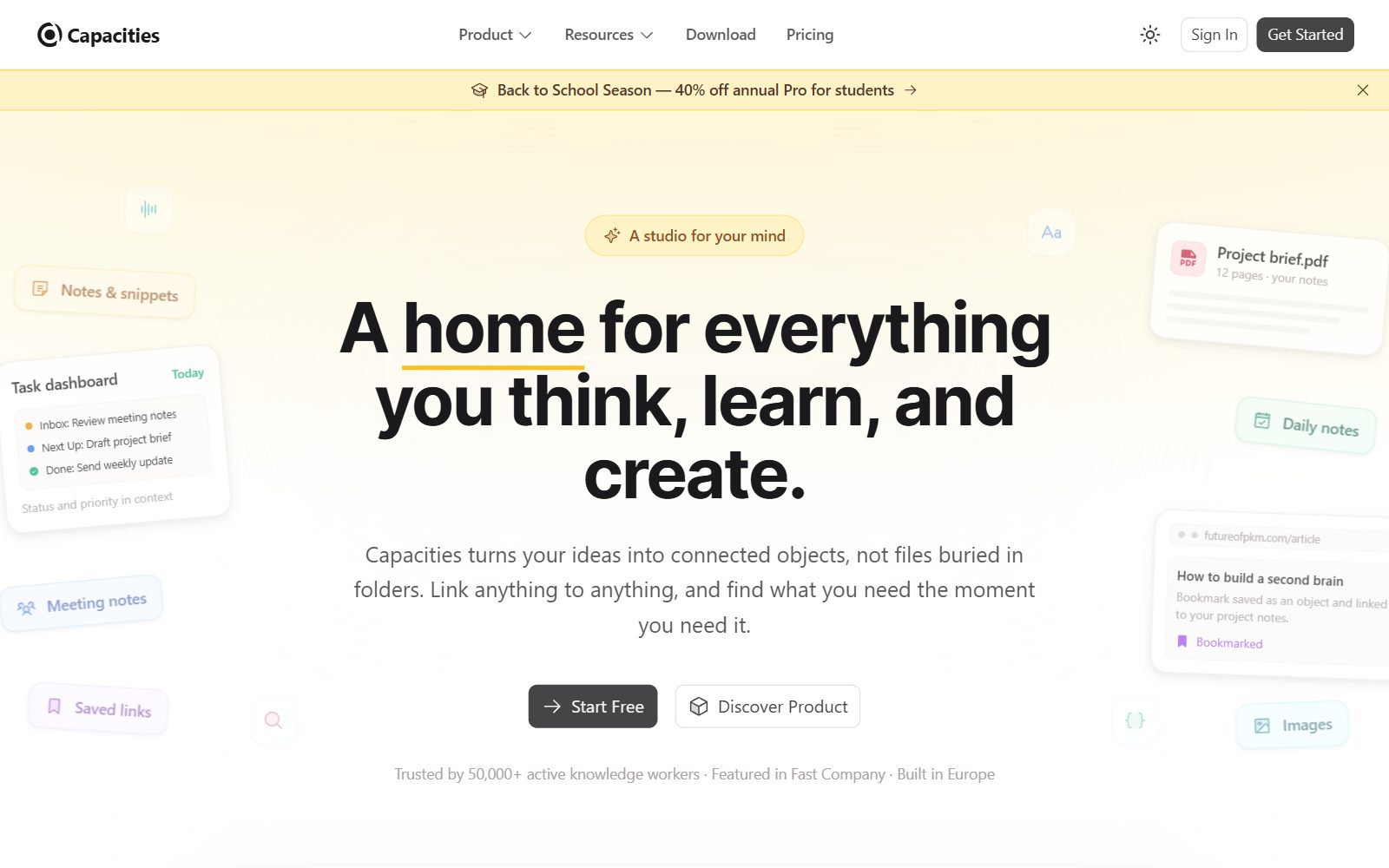
Capacities turns ideas into connected objects (people, books, ideas, projects) that you can link to anything. On the Capacities pricing page, the free Basic plan has unlimited spaces, objects and blocks, sync across devices, full import and export, view-only sharing, offline support and 5 GB of media uploads, then 100 MB a month. Pro costs $9.99 a month and adds AI, whiteboards, tasks, queries, calendar integration and version history. The company says the core product will remain free.
5. Heptabase: visual research on whiteboards
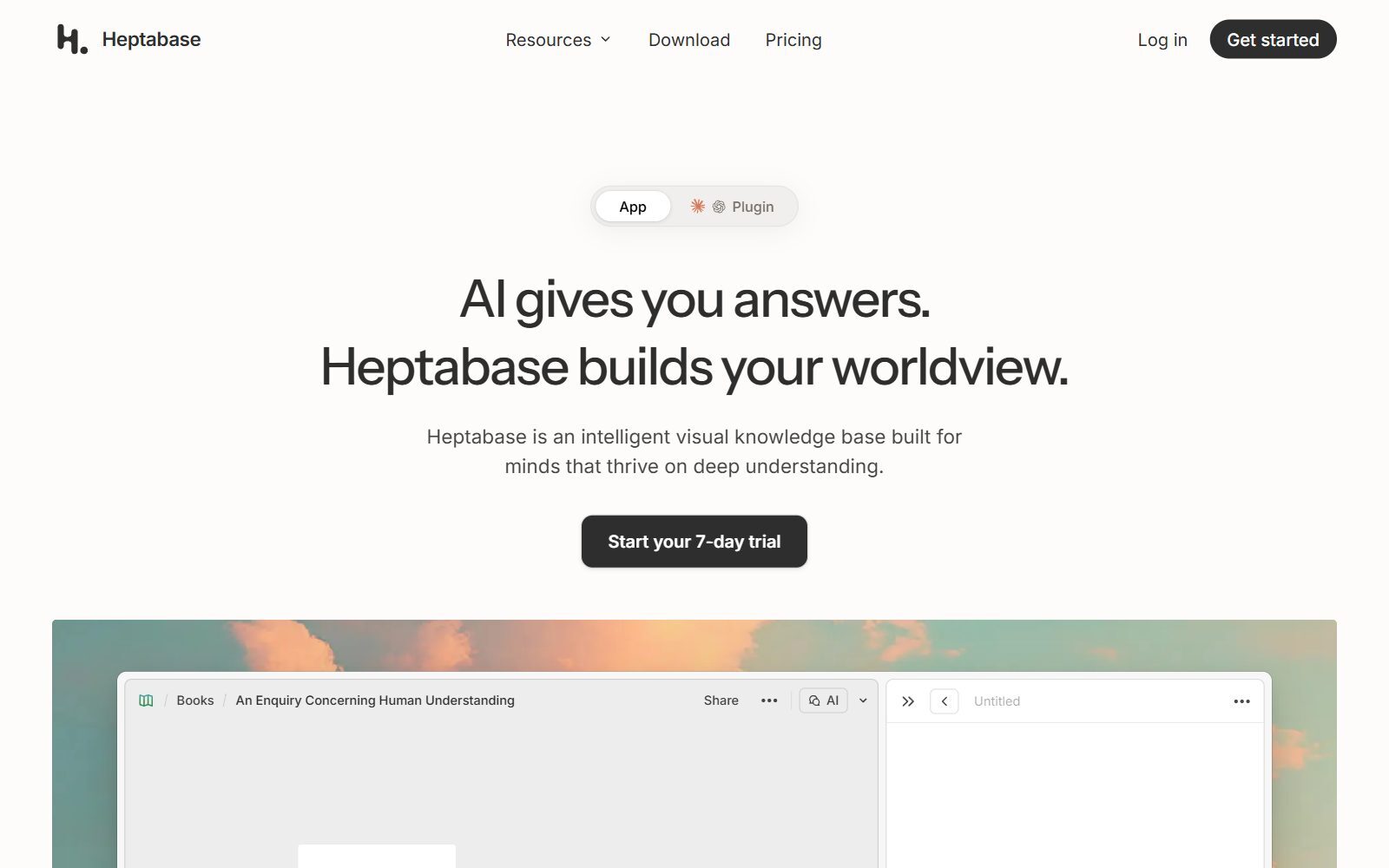
Heptabase calls itself a visual knowledge base: you break sources such as PDFs and videos into cards and arrange them on whiteboards to see how ideas connect. There is no free plan; the homepage offers a 7-day trial. The Heptabase pricing page shows Pro at $8.99 a month and Premium at $17.99 a month in its default yearly view, with unlimited notes, whiteboards and tags on Pro.
6. Reflect: now open source and free on Mac
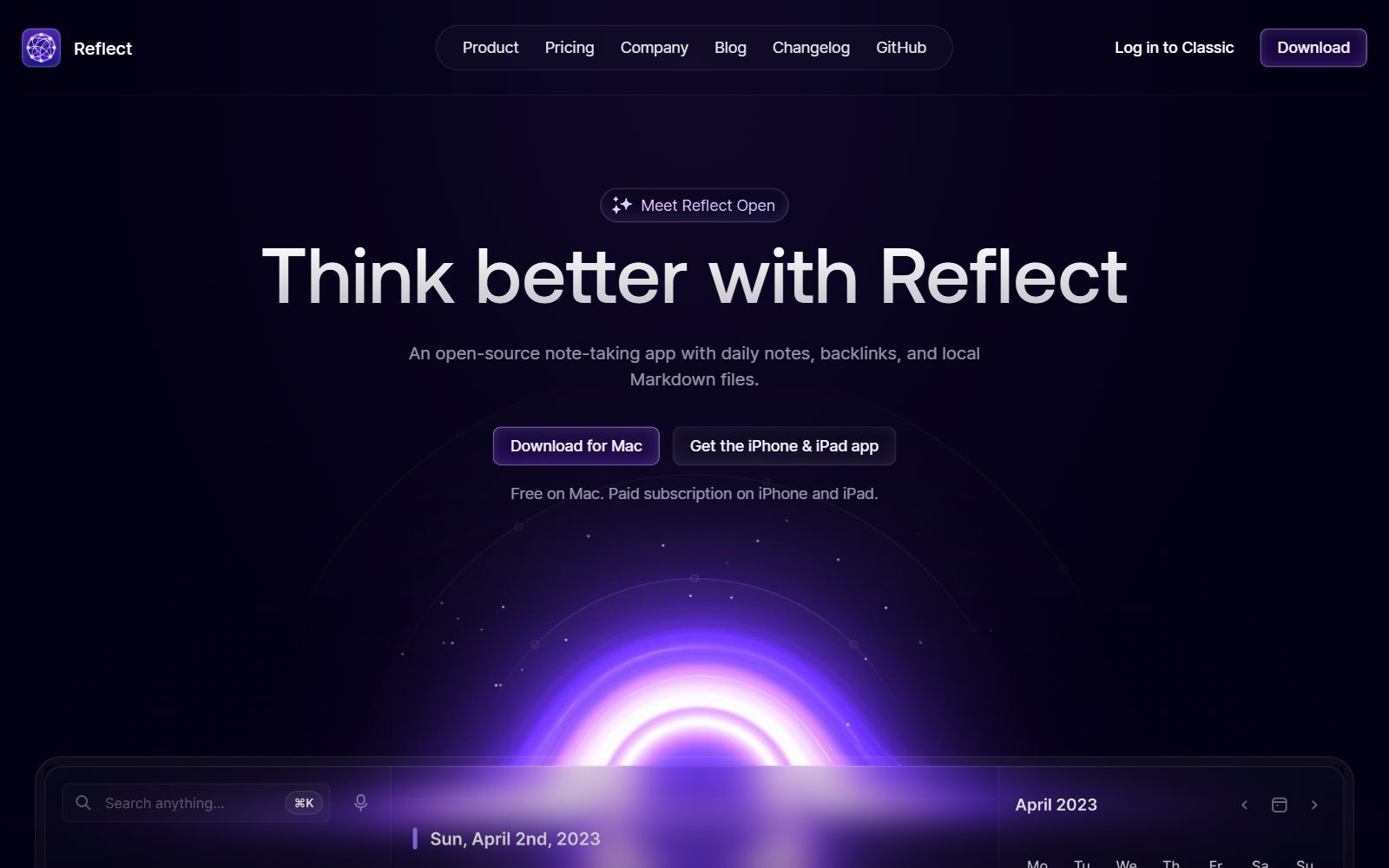
Reflect has changed a lot. The new Reflect Open is an open-source note app with daily notes, backlinks and local Markdown files; it is free on Mac, with a paid subscription for the iPhone and iPad app. Notes sync through iCloud Drive or Git, and the optional AI uses your own API key. The Reflect Open repository is MIT licensed; version 0.17.0 came out on 4 November 2026. Reflect Classic, the older subscription app, is still maintained.
7. RemNote: notes that become flashcards
RemNote combines linked notes with spaced-repetition flashcards, which makes it the best Roam alternative for learning a new field, an exam or a language. The free plan includes unlimited notes and flashcards, unlimited synced devices and 3 annotated PDFs. Pro costs $8 a month ($96 billed yearly) and Pro with AI $18 a month.
8. Notion: the team workspace with backlinks
Notion is less of a thinking tool and more of a team workspace, but it has links and backlinks between pages, plus databases, forms and simple sites. The Free plan is for individuals organising personal projects; Plus costs EUR 9.50 per member a month as shown from our location. Pick it when your notes must also run projects for a team. Compare it in ClickUp vs Notion, Notion vs Jira and our open-source Notion alternatives.
9. Anytype: private, local-first objects
Anytype stores your data locally on your device, with on-device encryption and sync, and links between objects show up in a graph. The free plan gives 100 MB of remote storage, 10 shared channels and unlimited private channels; Plus costs $4, Pro $8 and Ultra $16 a month for more storage and shared channels. Its code is published under its own source-available licence, which is not an OSI open-source licence.
10. Craft: linked documents that look good
Craft is a polished docs app with linked pages. Its free plan includes 1,500 blocks in total, 1 GB of storage, one personal space, 25 MB uploads and 7 days of version history, but no shared spaces; paid plans remove the block limit. It suits founders who want linked notes to look like finished documents. More free options: our free Craft alternatives.
Validate your startup idea with the unique borrowed authority approach: we publish articles about your product in our blog and you get traffic and testers for your MVP
- Prove Market Demand: See real organic traffic and waitlist conversions
- Unlock High-Potential Keywords: Receive a curated list of top-performing keywords directly from Google Search Console data.
- Estimate Customer Acquisition Cost (CAC): Gain financial foresight with an estimated CAC based on real keyword performance data.
🔗 Start validating your startup now
11. Amplenote: notes, tasks and calendar together
Amplenote links notes with a task list and calendar, so ideas turn into scheduled work. The Personal plan is free forever but licensed for non-commercial use, so a startup needs a paid plan for work. Pro costs $5.84 a month plus tax, billed annually, and adds Graph View and the native desktop app; Unlimited costs $10 a month billed annually. Every account starts with a two-week trial of Pro features.
12. SiYuan: block references, free and local
SiYuan offers Roam-style block references and two-way links in a Markdown editor. Its pricing page says it is completely free with local storage; PRO features for third-party S3 or WebDAV sync cost $64 once, and a subscription with 8 GB of official cloud storage starts at $148. The code is AGPL-3.0 and version 3.8.9 was released on 29 October 2026.
13. Mem: an AI agent over your notes
Mem has turned into an AI agent that organises notes, meetings and tasks for you. The free plan is small: 25 new notes and 25 messages to Mem a month, task tracking for up to 25 notes and 3 hours of Voice Mode. Mem Plus costs $9 a month. Choose it if you would rather ask your notes than link them by hand.
14. Evernote: the classic notebook
Evernote is still strong at web clipping, document scanning and search, but it is organised by notebooks and tags rather than a graph. Its compare-plans page lists a Free plan with 50 notes and 1 notebook, so most users will need a paid plan. Our open-source Quip alternatives cover other document tools.
15. Nuclino: a linked wiki for small teams
Nuclino is a fast team knowledge base ("your team's collective brain") with list, board, table and graph views and built-in whiteboards. The Free plan allows up to 50 items, 3 canvases and 2 GB of storage; Starter, with unlimited items, starts with a 14-day trial. Compare team wikis in Trello vs Confluence.
16. TiddlyWiki: a whole wiki in one file
TiddlyWiki is a free, open-source personal wiki that lives in a single HTML file: small notes (tiddlers) linked and tagged however you like. Version 5.4.1 is current. It takes some tinkering, but it costs nothing and runs anywhere a browser does.
Changed Since the 2025 List
- Tana: tana.inc is now a meeting platform for AI agents; the note-taking app continues as Tana Outliner at outliner.tana.inc.
- Reflect: relaunched as Reflect Open, an open-source app (MIT), free on Mac; Reflect Classic is still maintained.
- Mem: now an AI agent with a free tier of 25 new notes a month.
- Roam Research: prices unchanged in the structure above and still no free plan.
- Added: Tana Outliner, Anytype, Craft, Amplenote, SiYuan and Mem. Kept from the old list: Obsidian, Notion, Logseq, Evernote, RemNote, Nuclino, Heptabase, Reflect, Capacities and TiddlyWiki.
Which Roam Research Alternative Should You Choose?
- You want Roam's outliner for free: Logseq, or SiYuan for block references.
- You want local files and the biggest plugin choice: Obsidian.
- You want structure (tasks, people, projects) in your graph: Tana Outliner or Capacities.
- You think visually: Heptabase.
- You study or learn a lot: RemNote.
- Your team needs a shared workspace: Notion or Nuclino.
- You live on a Mac and want daily notes: Reflect Open.
- You want privacy first: Anytype or Obsidian.
Join ElonaHunt (like ProductHunt but for women) and explore the coolest women-focused startups out there!
Discover your next big inspiration and connect with like-minded female entrepreneurs!
👉 Join the Hunt Here
How Founders Use Networked Notes
A founder's knowledge graph pays off when it holds the things you look up again: customer interview notes linked to the problem they mention, investor conversations linked to each fund, competitor pages linked to features. Start every day in a daily note, link each person, company and idea you mention, and review the backlinks before a meeting. Map the business on our free Lean Canvas tool, draw flows with our free Whimsical alternatives or free Miro alternatives, and keep the decisions in your notes app.
If your notes turn into team projects, compare our free ClickUp AI alternatives, open-source ClickUp alternatives and free Asana alternatives. For AI workspaces, see the open-source Notion AI alternatives and open-source Coda AI alternatives. When you publish what you learn, the F/MS AI SEO Tool helps those articles get found in Google and AI assistants.
FAQ About Roam Research Alternatives
Is Roam Research free?
No. When we checked on 8 November 2026, Roam had no free plan: Pro costs $15 a month or $165 a year after a 31-day trial, and Believer costs $500 for 5 years.
What is the best free alternative to Roam Research?
Logseq is the closest free match, with an outliner, blocks, daily journals and backlinks, free forever for personal use. Obsidian is the most popular free option and is free without limits.
What is the best paid alternative to Roam Research?
Tana Outliner (Plus $8 a month) for structured notes with supertags, Capacities (Pro $9.99 a month) for object-based notes, and Heptabase (Pro $8.99 a month in the yearly view) for visual research.
Is Obsidian better than Roam Research?
Obsidian is free, stores Markdown files locally and has thousands of plugins. Roam is an outliner built around block references in the cloud. Obsidian suits most people; Roam suits heavy block-reference users.
Tana vs Roam Research: which is better?
Roam is simpler and focused on linked thinking. Tana Outliner adds supertags that give notes fields and views, which helps when notes double as tasks, contacts or projects. Tana Outliner has a free plan; Roam does not.
Is Logseq the same as Roam Research?
No, but it works in a similar way: blocks, daily journals, backlinks and queries. Logseq is open source (AGPL-3.0), stores data locally and is free for personal use.
Which Roam alternative is best for teams?
Notion for a team workspace with databases, or Nuclino for a simple linked wiki. Roam itself allows unlimited collaborators on Pro.
Which Roam alternative works best on mobile?
Logseq has apps for iOS and Android, and Capacities and RemNote offer mobile apps too. Reflect Open has a paid iPhone and iPad app.
What happened to Reflect and Tana?
Reflect relaunched as Reflect Open, an open-source app that is free on Mac. Tana's note app is now called Tana Outliner, while tana.inc is a separate meeting platform for AI agents.
Where can I get a backlink by writing about my startup?
You can publish a guest post in one of the Fe/male Switch startup blogs, which rank in Google and in AI tools. Get a quality backlink.
About the Author
Violetta Bonenkamp, also known as MeanCEO, is an experienced startup founder with an impressive educational background including an MBA and four other higher education degrees. She has over 20 years of work experience across multiple countries, including 5 years as a solopreneur and serial entrepreneur. Throughout her startup experience she has applied for multiple startup grants at the EU level, in the Netherlands and Malta, and her startups received quite a few of those. She’s been living, studying and working in many countries around the globe and her extensive multicultural experience has influenced her immensely.

