

EdTech Angel Investors in South America: 7 Networks and Investors With a Real Education Portfolio
Most lists of edtech angel investors in South America mix up angel networks, big venture funds, development banks and accelerators, and many names on them have never backed an education company. If you build an edtech startup in Brazil, Chile, Peru, Argentina, Colombia or Uruguay, you need investors who write early cheques and who already understand schools, teachers, learners and training budgets. We checked every investor on its own website on 9 November 2026 and kept only those that are active, invest early in South America and either name education in their thesis or list an edtech company in their own portfolio. Seven passed: five angel networks and two edtech-focused investors. The big funds and the names we removed are in separate sections.
Quick answer: in Brazil, pitch Gávea Angels (education is in its thesis; R$500,000 to R$2 million per round), GVAngels (four edtech companies in its portfolio; up to R$2 million, from R$25,000 a month in revenue), BR Angels (up to US$1 million; backs the edtech Scaleup) and Poli Angels (backs Picode Education). In Chile, ChileGlobal Angels invests from USD 10,000 and lists the coding school Desafío Latam. For education and employability startups that serve low-income learners anywhere in Latin America, Potencia Ventures runs the Potencia UP fellowship, which expanded to Spanish-speaking countries in 2026.
Write FREE SEO-optimized Blog Articles! Our Article Writer ensures your blog is loved by both Google and your readers, turning those clicks into customers.
👉 Write your article here
EdTech Angel Investors in South America Compared
Sources: each investor's official website and portfolio page, checked 9 November 2026. "Not published" means the investor's own site does not state it. Tickets and terms change between rounds, so read the official page before you apply.
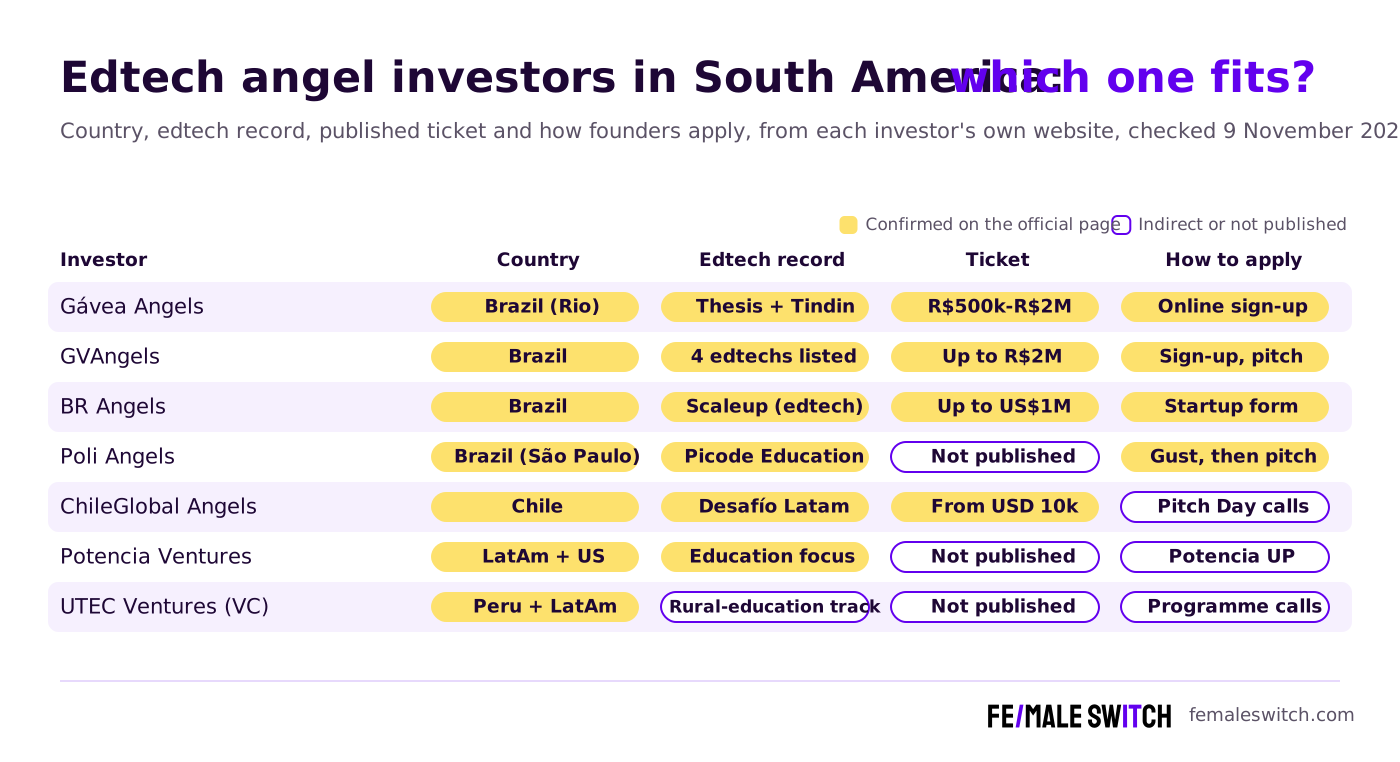
The 7 EdTech Angel Investors in South America for 2027
Angel networks in South America are mostly sector-agnostic, so the useful question is not "is it an edtech fund?" but "has it already backed an education company, and will it understand my sales cycle?" Each entry below names the edtech companies the network lists on its own site. For the general angel networks in the region, with tickets and how to apply, see our guide to angel investors in South America.
Angel networks in Brazil
1. Gávea Angels (Rio de Janeiro, Brazil)
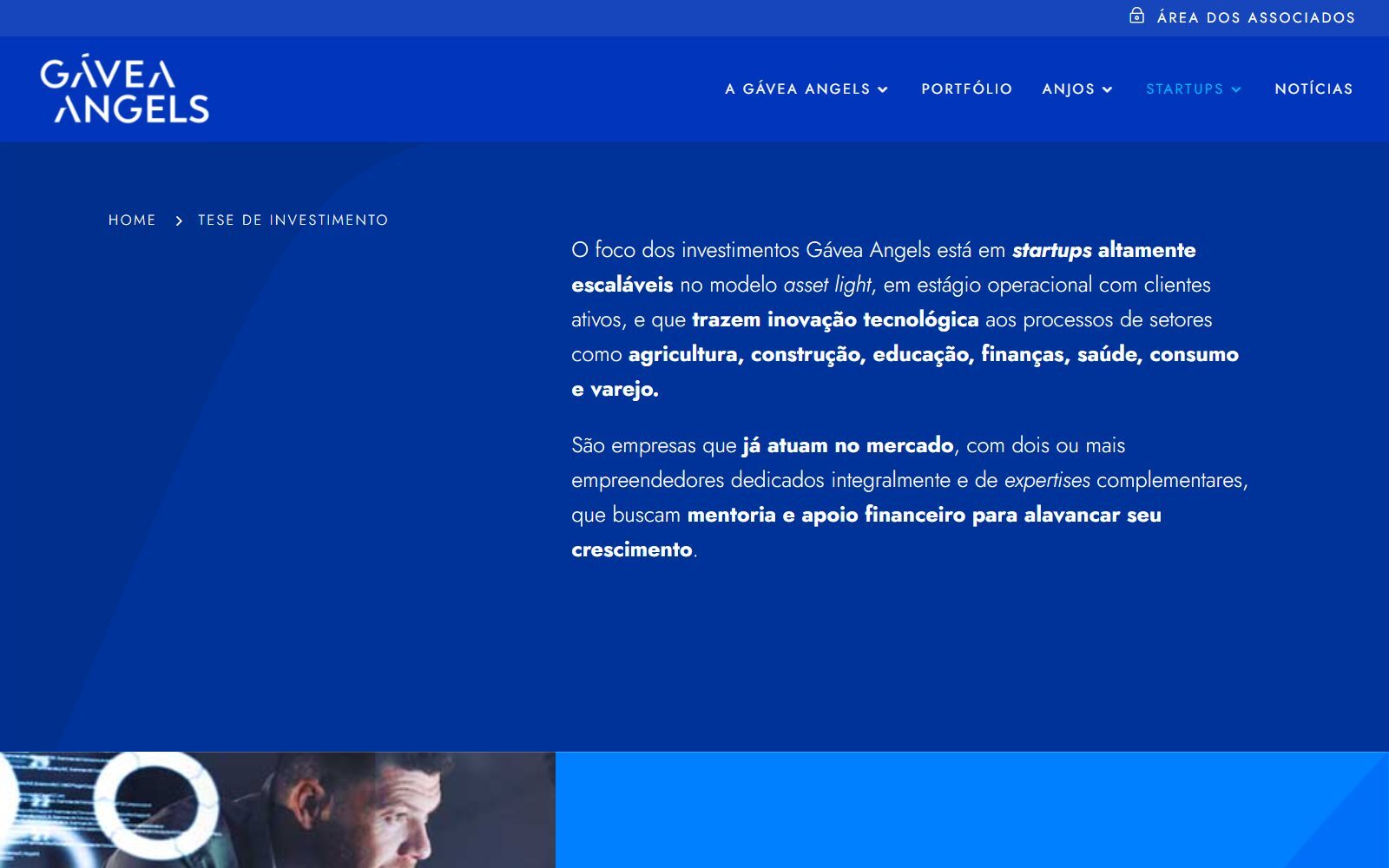
Gávea Angels is a Rio de Janeiro angel association whose investment thesis names education next to agriculture, construction, finance, health, consumer and retail. It backs highly scalable, asset-light startups that already have active customers and two or more full-time founders with complementary skills. Rounds range from R$500,000 to R$2 million for 5% to 25% of the company, depending on valuation, and can be tripled with co-investors; members buy quotas of R$10,000 to R$50,000 each, and the investment cycle runs up to five years. Members themselves screen, recommend and run each round. Edtech record: its portfolio lists Tindin, a gamified financial-education platform for schools and families, and Descomplica, an online education site for university entrance exams, public-service exams and degrees. Best for: Brazilian edtechs with paying schools or learners and a team of at least two.
2. GVAngels (Brazil)
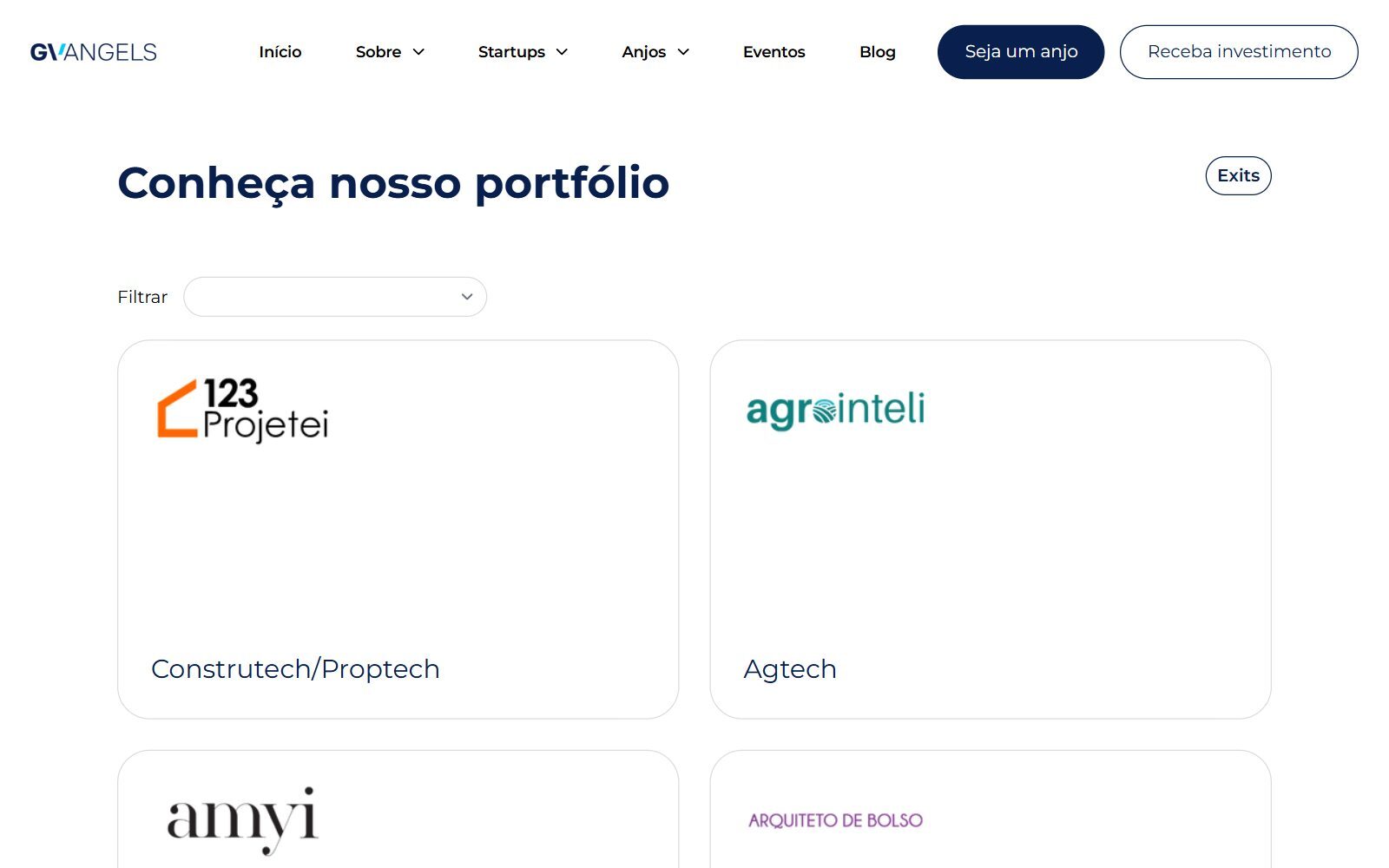
GVAngels is a Brazilian angel network. Its thesis is sector-agnostic: ideally three experienced co-founders (technology, product and sales), revenue of at least R$25,000 a month, and rounds from pre-seed and seed to a bridge to Series A, sometimes Series A, with cheques of up to R$2 million. Edtech record: its portfolio page has an Edtech filter that lists Proleduca (scholarships that connect primary and secondary students with companies and schools), Diário Escola (school communication software from nursery to secondary level) and Nulinga (online language training for company staff), plus EducBank, a school-payments company listed among its exits. Best for: edtechs with recurring revenue that sell to schools, families or employers.
3. BR Angels (Brazil)
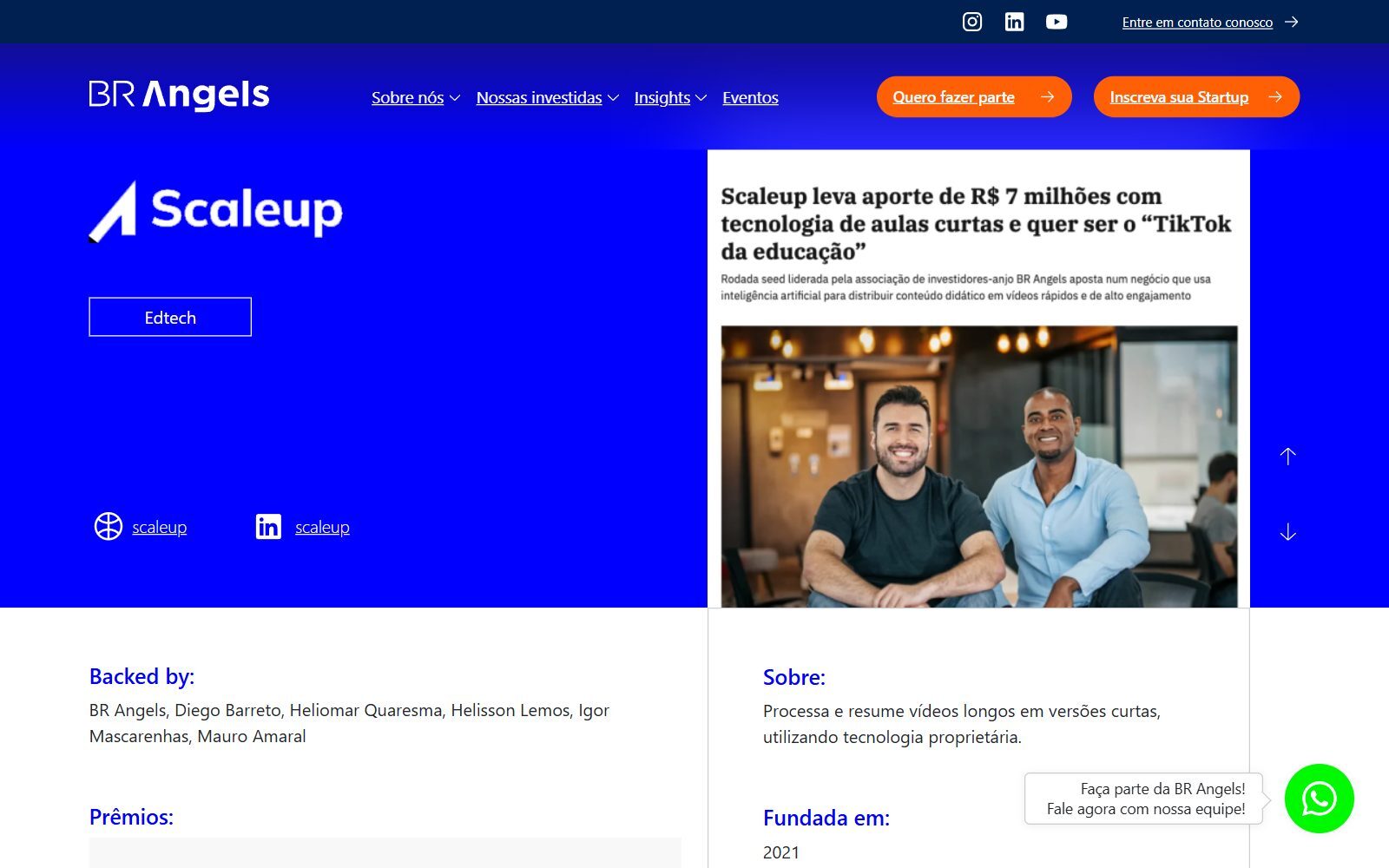
BR Angels invests up to US$1 million in B2B, B2B2C and B2C startups with low cash burn and capital needs, both pre-operational and operational, in the digital and the real economy, and it looks for startups where its members' business experience can make a difference. Edtech record: its portfolio page for Scaleup tags the company as Edtech: founded in 2021, it processes long videos and turns them into short versions with its own technology, and the page shows a press clipping about a R$7 million seed round led by BR Angels. Founders apply through the startup sign-up form on the site. Best for: B2B edtechs and content platforms that need a larger angel round.
4. Poli Angels (São Paulo, Brazil)
Poli Angels is an association of investors, founders and executives started by alumni of the Escola Politécnica of the University of São Paulo (Poli-USP), with a focus on innovation and technology. Startups apply on the Gust platform, pitch rounds take place every two months in person or by video, and a curation committee chooses which startups go on to interviews. Edtech record: its portfolio includes Picode Education, which brings robotics, programming and computational thinking into classrooms with a gamified platform and maker kits aligned with Brazil's national curriculum (BNCC). The network does not publish a ticket size. Best for: technical edtech teams selling to schools.
Boost Your SEO by listing your startup and get a FREE backlink.
Create a profile in the F/MS Startup Game, add the link to your website and submit.
👉 List your startup now!
Angel networks in the Spanish-speaking countries
5. ChileGlobal Angels (Chile)
ChileGlobal Angels is the angel network of Fundación Chile. It backs early-stage, technology-based startups with high return potential and global scalability, takes part in every step from selection to closing, and invests from USD 10,000, with co-investment between members. Startups present at Pitch Days, both in person and online. Edtech record: its portfolio lists Desafío Latam, a Latin American digital-skills school that runs bootcamps and scholarships. Best for: Chilean edtechs and training companies raising a first angel round.
For Argentina, Colombia, Peru and Uruguay, we did not find an angel network whose own site names education as a focus or lists an edtech company. General networks there can still back an edtech: see our angel investors in South America guide, and the city guides to Buenos Aires, Lima and Brasília for local support.
Boost Your SEO with 1,500+ Free Business Directories: increase your DA, get backlinks and traffic.
We've compiled an exclusive list of directories and websites where you can submit your business and start building high-quality backlinks to boost your website traffic and get your SEO snowball rolling.
👉 Submit your startup now!
Edtech-focused investors and programmes (not angel networks)
6. Potencia Ventures and the Potencia UP fellowship (Latin America)
Potencia Ventures is an impact investment group, investing since 2002, that backs funds and companies in education and the future of work for lower-income people. Since 2017 it has made direct investments in early-stage companies in Latin America and the United States; its portfolio includes Arvore (reading engagement for schools, Brazil), DIO (free tech education that links learners with employers, Brazil), EdMachina (AI that flags students at risk of dropping out, Latin America) and Flevo (student financing and payments for universities, Latin America). Its route for founders is Potencia UP, a fellowship launched in 2023: a digital track run with Artemisia, then 20 founders selected for a personalised phase on product-market fit and fundraising, then due diligence for the companies that fit, with the aim of investing in at least two companies per cohort. The third edition expands in 2026 from Brazil to Spanish-speaking Latin America. The official page does not publish a ticket size. Best for: edtech and employability startups that serve low-income learners.
7. UTEC Ventures (Peru)
UTEC Ventures has backed first-time founders building technology companies in Peru and Latin America since 2014. It is a venture investor and accelerator, not an angel network, but it is useful for education founders: with Ruralia it runs Acelera Ruralia, an acceleration programme for initiatives focused on rural education, and its Femlab programme supports women founders. Best for: Peruvian edtechs and rural-education projects.
Larger venture funds that back Latin American edtechs at Series A and later are a different route; compare them in our list of edtech VC firms, and for structured programmes see the edtech accelerators and AI accelerators in South America.
Boost Your SEO by Getting Featured in Our Blogs and get a backlink.
We publish content about startups, education, tech, funding, etc. that ranks well not only in Google but also in Perplexity, ChatGPT, Grok and other AI tools.
👉 Get featured now!
Investors From the 2025 List That We Removed or Changed
The 2025 versions of this list (top 15, top 20 and top 25, now merged here) mixed angels with venture funds and other institutions, and several had no edtech activity we could confirm. Here is what changed:
- Venture capital and growth funds, not angels: Reach Capital and Rethink Education (edtech venture capital firms, covered in our edtech VC list), Canary, Nazca, Volpe Capital, SoftBank's Latin America fund, Base Partners and General Atlantic (growth equity).
- Other institutions: the IFC is a development finance institution, and Start-Up Chile is an accelerator programme; neither is an angel investor.
- Outside South America: Angel Ventures is a Mexican venture capital firm.
- No edtech activity confirmed on an official page: COREangels (its site does not mention an edtech fund), Dalus Capital, Niu Ventures, ALIVE Ventures, Cavalry Ventures, Blue Horizon and VentureCup.
- Individuals: we no longer list individual angels such as Matías Muchnick without an official profile that shows edtech investing.
- Gera Venture Capital: described as an education investor in Rio de Janeiro by investor databases, but its own website did not load when we checked, so we left it out.
- Statistics removed: the old version's figures on edtech funding falling by 71% and on Brazil's share of regional funding had no source, so we removed them.
Which EdTech Angel Investor Should You Pitch?
- You sell to schools in Brazil: Gávea Angels (Tindin), GVAngels (Diário Escola) and Poli Angels (Picode Education) have all backed school-facing edtechs.
- You sell training to companies: GVAngels (Nulinga) and BR Angels (Scaleup).
- You need a larger angel round: BR Angels (up to US$1 million) or Gávea Angels (up to R$2 million, tripled with co-investors).
- You already have revenue: GVAngels asks for at least R$25,000 a month; Gávea wants active customers.
- You are in Chile: ChileGlobal Angels, from USD 10,000.
- You serve low-income learners anywhere in Latin America: Potencia UP.
- You work on rural education in Peru: UTEC Ventures' Acelera Ruralia.
- You are not ready to raise: start with edtech startup grants, which do not take equity.
How EdTech Founders in South America Use Angel Investors
Angels in the region invest in teams with traction, so show demand first: run our 30-day validation sprint or validate your startup idea with our content-driven service, and avoid the common pre-seed fundraising mistakes. Fe/male Switch, the startup game and online incubator that publishes this blog, lets you build and test an edtech idea with AI co-founders before you pitch. Choose your market with our guides to the best countries in South America for edtech startups and the best countries for edtech startups worldwide, and the AI startup cities in South America if your product uses AI. Angels often come in alongside public money: see the deep tech grants in South America and the edtech grants in North America if you plan to expand there. When you are ready for international angels, compare angel investors in North America, angel investors in Europe and the edtech accelerators in Europe and in Asia, and meet investors in person at the events in our edtech events guide.
Join F/MS: Startup Facilitator & Incubator and unlock your startup dreams today! Get your first customers, register you company in the Netherlands and get startup visas for the team.
FAQ About EdTech Angel Investors in South America
Who are the best angel investors for edtech startups in South America in 2027?
Based on their own portfolios: Gávea Angels, GVAngels, BR Angels and Poli Angels in Brazil, and ChileGlobal Angels in Chile. Potencia Ventures is an impact investor focused on education across Latin America, and UTEC Ventures runs a rural-education accelerator track in Peru.
Are there angel networks that invest only in edtech in South America?
We did not find one. The networks above invest across sectors but have backed education companies, and Gávea Angels names education in its thesis. Potencia Ventures is the closest to an education specialist, but it is an impact investment group, not an angel network.
How much do Brazilian angel networks invest in an edtech startup?
Gávea Angels invests R$500,000 to R$2 million for 5% to 25%, which co-investors can triple; GVAngels invests up to R$2 million; BR Angels up to US$1 million. Poli Angels does not publish a ticket.
Do angel investors in Brazil require revenue?
Some do. GVAngels asks for at least R$25,000 a month in revenue, and Gávea Angels looks for startups that already have active customers. BR Angels considers both pre-operational and operational companies.
Which angel investors back edtech in Chile?
ChileGlobal Angels, the angel network of Fundación Chile, invests from USD 10,000 with co-investment and lists the digital-skills school Desafío Latam in its portfolio. Startups present at its Pitch Days.
What is Potencia UP?
A fellowship from Potencia Ventures for early-stage founders in education and the future of work who serve low-income people. It runs in three phases (a digital track with Artemisia, a personalised phase for 20 founders, then due diligence) and aims to invest in at least two companies per cohort. In 2026 it expanded to Spanish-speaking Latin America.
Is Reach Capital an angel investor?
No. Reach Capital is a venture capital firm, not an angel network. We list education VC firms separately in our guide to edtech VC firms.
Are there edtech angel investors in Argentina, Colombia, Peru or Uruguay?
We did not find an angel network in those countries whose own site names education as a focus or lists an edtech company. General angel networks can still invest in edtech, and in Peru UTEC Ventures runs an accelerator track for rural-education projects.
How do I apply to a Brazilian angel network?
Through the network's own form: Gávea Angels and BR Angels have startup sign-up forms, GVAngels runs a sign-up, online pitch and committee process, and Poli Angels takes applications on Gust with pitch rounds every two months.
How can my edtech startup get noticed by investors?
Get covered where investors and AI assistants look: you can publish a guest post in the Fe/male Switch startup blogs and earn a backlink, then pitch the networks above with that coverage in your deck.
About the Author
Violetta Bonenkamp, also known as MeanCEO, is an experienced startup founder with an impressive educational background including an MBA and four other higher education degrees. She has over 20 years of work experience across multiple countries, including 5 years as a solopreneur and serial entrepreneur. Throughout her startup experience she has applied for multiple startup grants at the EU level, in the Netherlands and Malta, and her startups received quite a few of those. She’s been living, studying and working in many countries around the globe and her extensive multicultural experience has influenced her immensely.
