

TL;DR: The Gamer's Brain summary in one paragraph: Celia Hodent's 2017 book explains how perception, memory, attention, motivation and emotion shape what players do, and turns that science into a UX framework with two pillars: usability (can people use it?) and "engage-ability" (do they want to keep using it?). It was written for game studios, but it's one of the best onboarding books a non-game founder can read. Below you'll find a 2017-vs-2026 table, a copyable first-session audit, a five-person playtest script and a worked founder example.
The Gamer's Brain summary most people find online is written for game designers. That makes sense: Celia Hodent, a psychologist with a PhD who led UX work at Ubisoft, LucasArts and Epic Games during the development of Fortnite, wrote it for studios. CRC Press published it in 2017 with the subtitle "How Neuroscience and UX Can Impact Video Game Design".
But a game is a product that nobody has to use. If the first ten minutes are confusing or boring, they leave. That's exactly the situation of most early-stage startups, which is why this review reads the book as a founder's guide to onboarding, retention and user testing.
The Gamer's Brain summary in six ideas
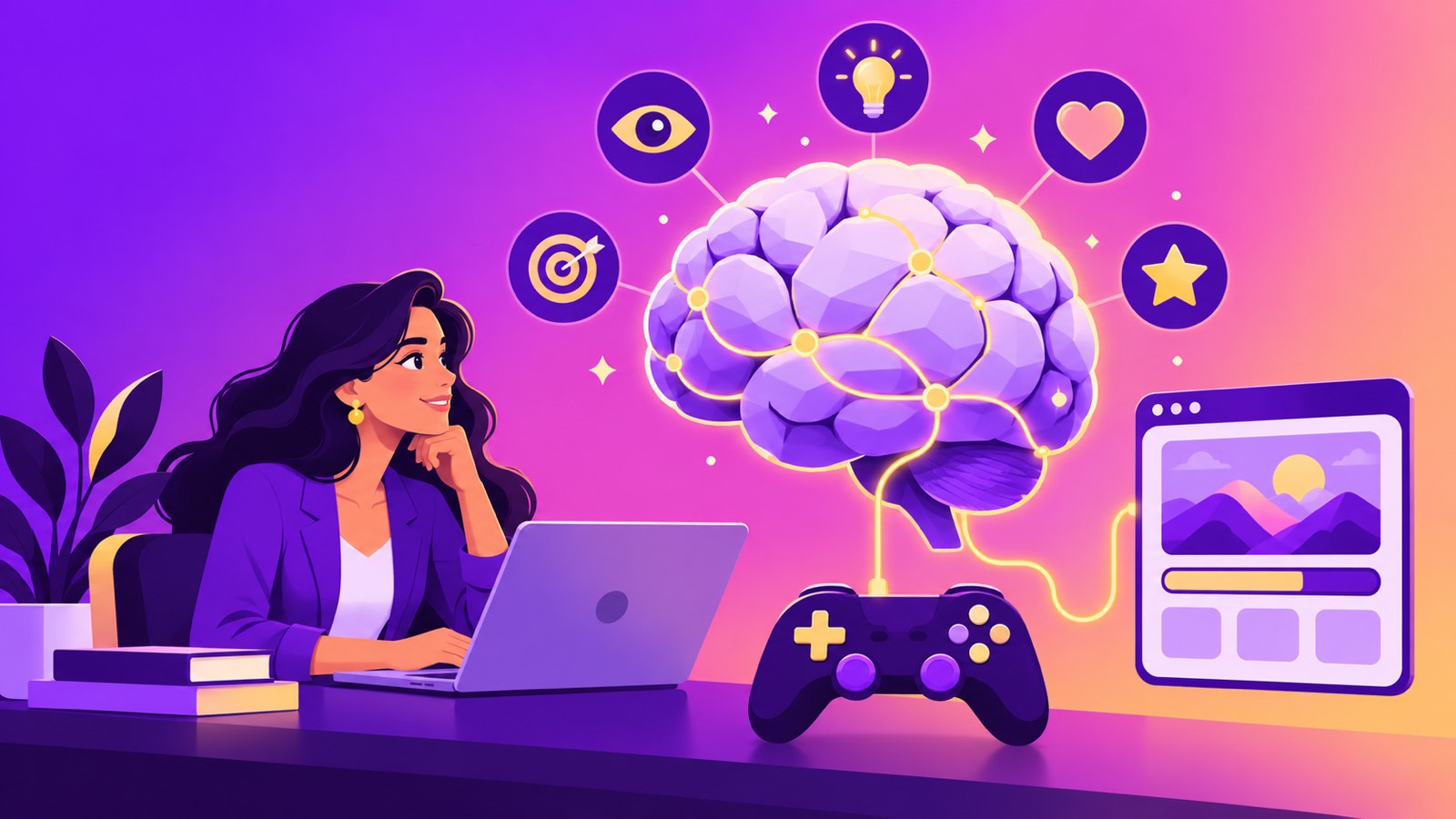
- Your brain is not your user's brain. You know your product too well to see it clearly. What feels obvious to the team is often invisible to a first-time user. This trap is known as the curse of knowledge, and the book's answer is to test with real people.
- Perception is a guess. People don't see your screen as it is; they interpret it based on what they expect. Icons, colours and layouts that look clear to you can mean something else to them.
- Attention and memory are scarce. People can hold only a few things in mind at once, and they forget fast. Every extra step, rule or label costs mental effort, so good design teaches one thing at a time and lets people practise it.
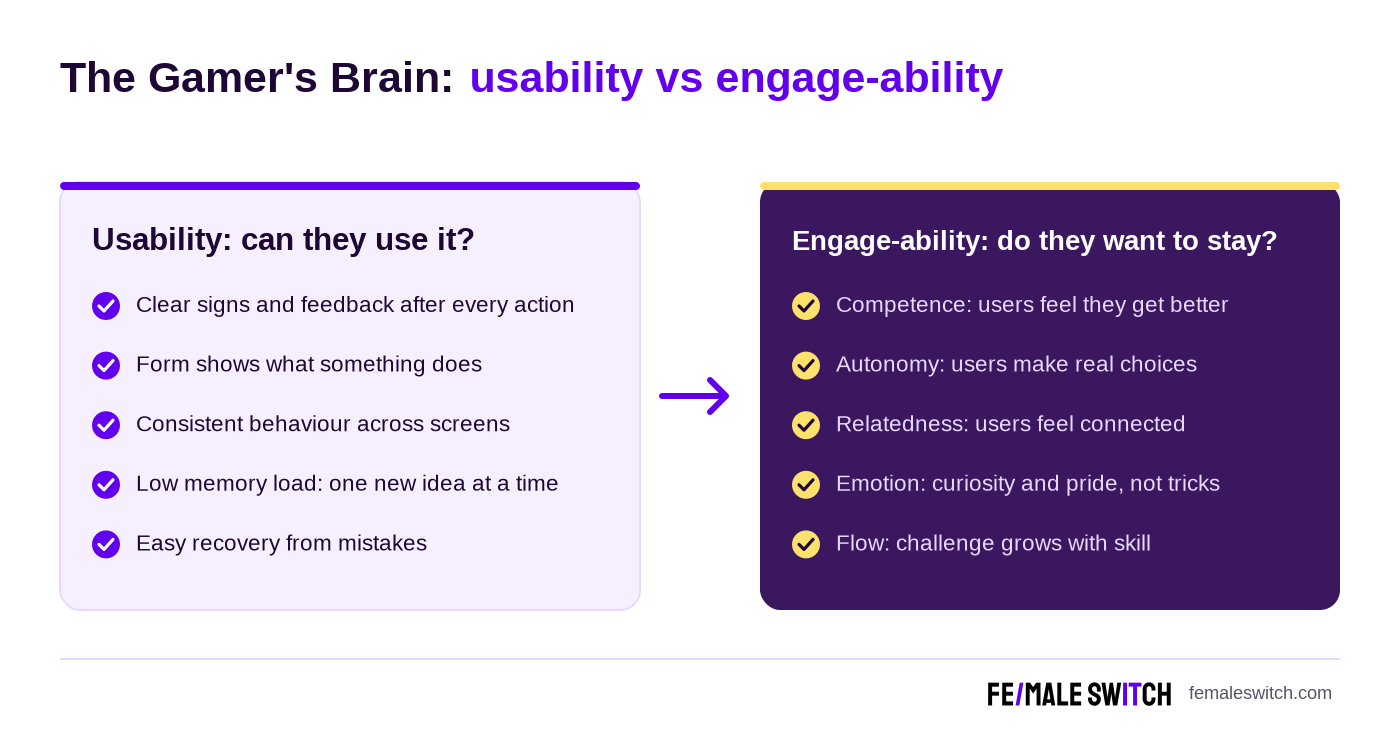
- Usability comes first. Hodent's first pillar is about removing friction: clear signs and feedback, a form that shows what something does, consistent behaviour and help when people make mistakes. If people can't use it, nothing else matters.
- Engage-ability decides whether they stay. The second pillar breaks "fun" into motivation, emotion and flow. On motivation, Hodent leans on self-determination theory: people stay when they feel competent, in control and connected to others. Points and rewards help less than that.
- Measure, don't guess. Playtests, user research and analytics are part of design, not an afterthought. The book also busts popular "neuromyths", brain "facts" that lead teams to design for people who don't exist.
📘 Free e-book: Startup Idea Validation the Right Way. Before you market or build anything, make sure people want it. Violetta Bonenkamp's free e-book shows first-time founders how to test demand with minimal resources, track the metrics that matter and reach their first customers without giving away equity, with downloadable templates and checklists. Read about the book and get your free copy →
Why a game UX book belongs on a founder's shelf
Games solve a problem every startup has: teaching a complex system to a stranger who can quit at any moment. Good games don't hand you a manual. They show one action, let you try it, give instant feedback and only then add the next idea. Most SaaS onboarding does the opposite: a tour of twelve tooltips, a dashboard full of empty charts and a long settings page.
Hodent's two pillars give founders a simple way to split the problem:
- Usability: can a new user reach their first win without help? This is about friction, clarity and feedback.
- Engage-ability: once they can, do they want to come back? This is about motivation, emotion and the feeling of getting better at something.
Most early products fail on the first pillar and then try to fix it with the second, adding badges and streaks to a product people still don't understand. The book's order is the right one: fix usability, then work on engagement.
The Gamer's Brain then vs now: what changed since 2017
The science in the book hasn't aged. Perception, attention and memory work the same way they did in 2017. What changed is the products founders build and the tools they have.
First-session audit: score your onboarding
Copy this into a doc and fill it in while you watch someone use your product for the first time. Don't help them; just take notes.
A five-person playtest script for founders
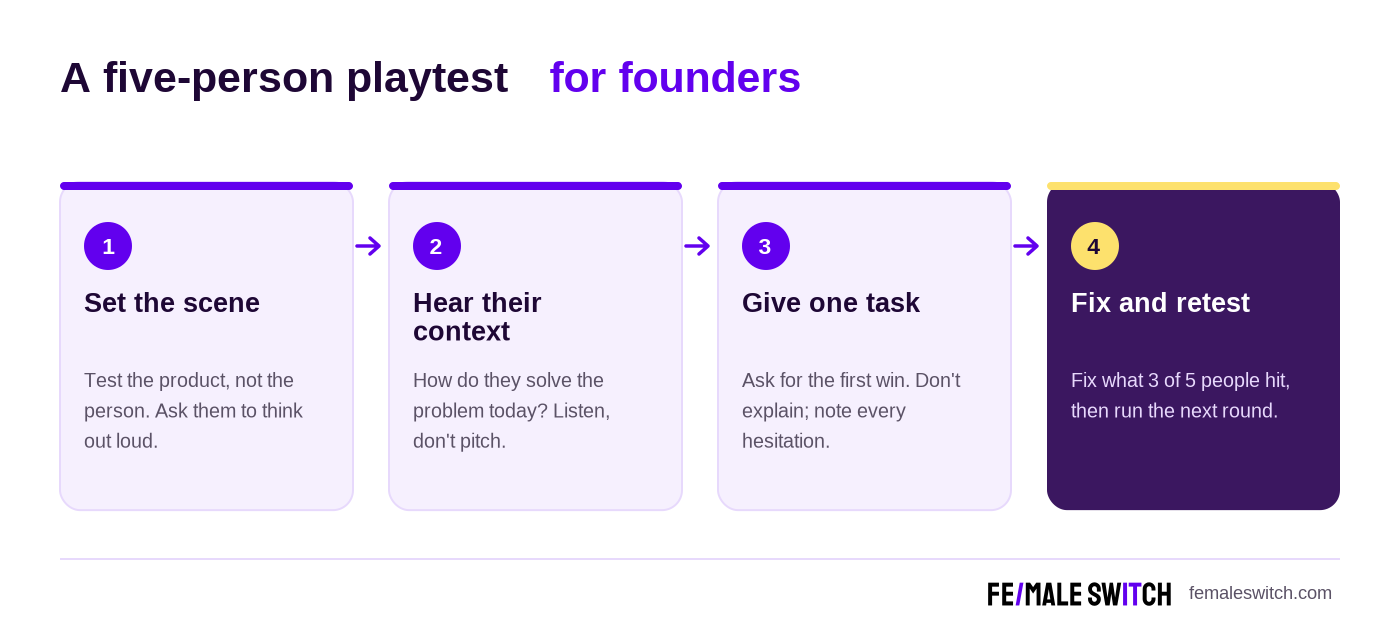
The book treats user research as part of the design process. You don't need a lab to start. Five people from your target audience usually reveal the biggest problems.
If you want to practise this whole loop before you have a product, our startup game with an AI co-founder walks you through it step by step. For the interview side, pair this script with The Mom Test, which shows how to ask questions people can't answer politely.
A worked founder example
Picture a two-person startup selling a budgeting tool for freelancers. Sign-ups are fine, but most users never come back after day one. The founders add a weekly streak and a badge for connecting a bank account. Nothing changes.
They run five playtests. Four of the five testers stop at the same screen: an empty dashboard with six charts and the words "Connect a source". Three think "source" means a file upload. Nobody reaches the first win, which the founders define as "seeing how much tax to set aside this month".
Using the two pillars, the fix is clear. Usability first: rename the button, start with one question ("What did you earn last month?"), show the tax figure right away, and hide the other charts until there's data. Engage-ability second: tell users they're "on track" when they set money aside, and let them pick their own reminder day instead of a fixed streak. In the next round, four of five testers reach the first win in under three minutes. The streak and badge were never the problem; the first screen was.
Who should read The Gamer's Brain (and who can skip it)
Read it if you build any product people use on a screen, especially if users sign up and then disappear.
Skim or skip it if you want a quick tactical checklist. The book is a mix of cognitive science and game examples, and non-game founders have to translate the lessons themselves. If your problem is that nobody wants the product at all, start with demand: validate the idea first, as explained in Startup Idea Validation the Right Way.
Related startup books for founders
- Hooked Summary: how habits form once people can use your product, with an ethics check that pairs well with Hodent's later work.
- The Lean Startup Summary: build, measure, learn, the same test-and-fix loop applied to the whole business.
- Jobs to be Done: Theory to Practice: define the first win from the customer's point of view.
- Free Bootstrapping with AI Guide: run research, testing and onboarding with AI tools on a tiny budget.
FAQ
What is The Gamer's Brain about?
It explains how the brain perceives, pays attention, remembers, learns and stays motivated, and how game developers can use that knowledge to design better experiences. Its UX framework splits the player experience into usability and engage-ability.
Who is the author of The Gamer's Brain?
Celia Hodent, a UX expert with a PhD in psychology. She worked at Ubisoft, LucasArts and Epic Games, where she led UX during the development of Fortnite. The book was published by CRC Press in 2017.
What is engage-ability in game UX?
Engage-ability is Hodent's term for how well a product keeps people motivated and involved. She breaks it into motivation, emotion and game flow, alongside usability, which is about how easy the product is to use.
Is The Gamer's Brain useful if you don't make games?
Yes. Its lessons on attention, memory, feedback and motivation apply to any app, website or SaaS product, especially onboarding. Founders need to translate the game examples to their own product, as in the audit above.
What is the difference between The Gamer's Brain and The Psychology of Video Games?
The Gamer's Brain (2017) is a detailed UX handbook for developers. The Psychology of Video Games (2020) is Hodent's shorter book for a general audience, and it includes a chapter on ethics in the game industry.
Is The Gamer's Brain still relevant in 2026?
The science is: human perception, attention and memory haven't changed. Some tools and examples are dated, so use the then-vs-now table above to apply it to today's products, AI interfaces included.
About the Author
Violetta Bonenkamp, also known as MeanCEO, is an experienced startup founder with an impressive educational background including an MBA and four other higher education degrees. She has over 20 years of work experience across multiple countries, including 5 years as a solopreneur and serial entrepreneur. Throughout her startup experience she has applied for multiple startup grants at the EU level, in the Netherlands and Malta, and her startups received quite a few of those. She’s been living, studying and working in many countries around the globe and her extensive multicultural experience has influenced her immensely.

