

The Best Countries for Deep Tech Startups Worldwide and the National Programmes Behind Them
A deep tech startup (quantum, chips, biotech, robotics, space, new materials or climate hardware) needs more than a good city. It needs a country whose agencies pay for risky R&D without taking equity, whose public investors back long development cycles, and whose visa rules let a foreign founder actually move in. This guide compares ten countries outside Europe on exactly those points: the United States, South Korea, Singapore, China, Japan, Israel, Canada, Australia, the United Arab Emirates and India. We checked every programme on its official page in October and November 2026, and we list the countries in the order of WIPO's Global Innovation Index 2026 instead of inventing a ranking.
Quick answer: the United States is the deepest market for deep tech founders, with NSF's America's Seed Fund paying up to $2 million per company without taking equity. Singapore (Startup SG Tech, SGInnovate), Japan (NEDO's deep tech programme, up to 3 billion yen per company) and South Korea (TIPS with a deep tech track) have the most structured state support. China launched a national venture capital guidance fund for hard technology in December 2025, India runs a ₹1 lakh crore RDI Scheme, and Israel offers both seed grants and an Innovation Visa. For Germany, France, the UK, Switzerland and the Nordics, read our separate guide to deep tech countries in Europe.
Write FREE SEO-optimized Blog Articles! Our Article Writer ensures your blog is loved by both Google and your readers, turning those clicks into customers.
👉 Write your article here
Deep Tech Countries at a Glance
Sources: the official pages of each agency and programme, and WIPO's Global Innovation Index 2026 ranking and top 10 innovation clusters, checked October and November 2026. A dash means the economy has no cluster in WIPO's top 10.
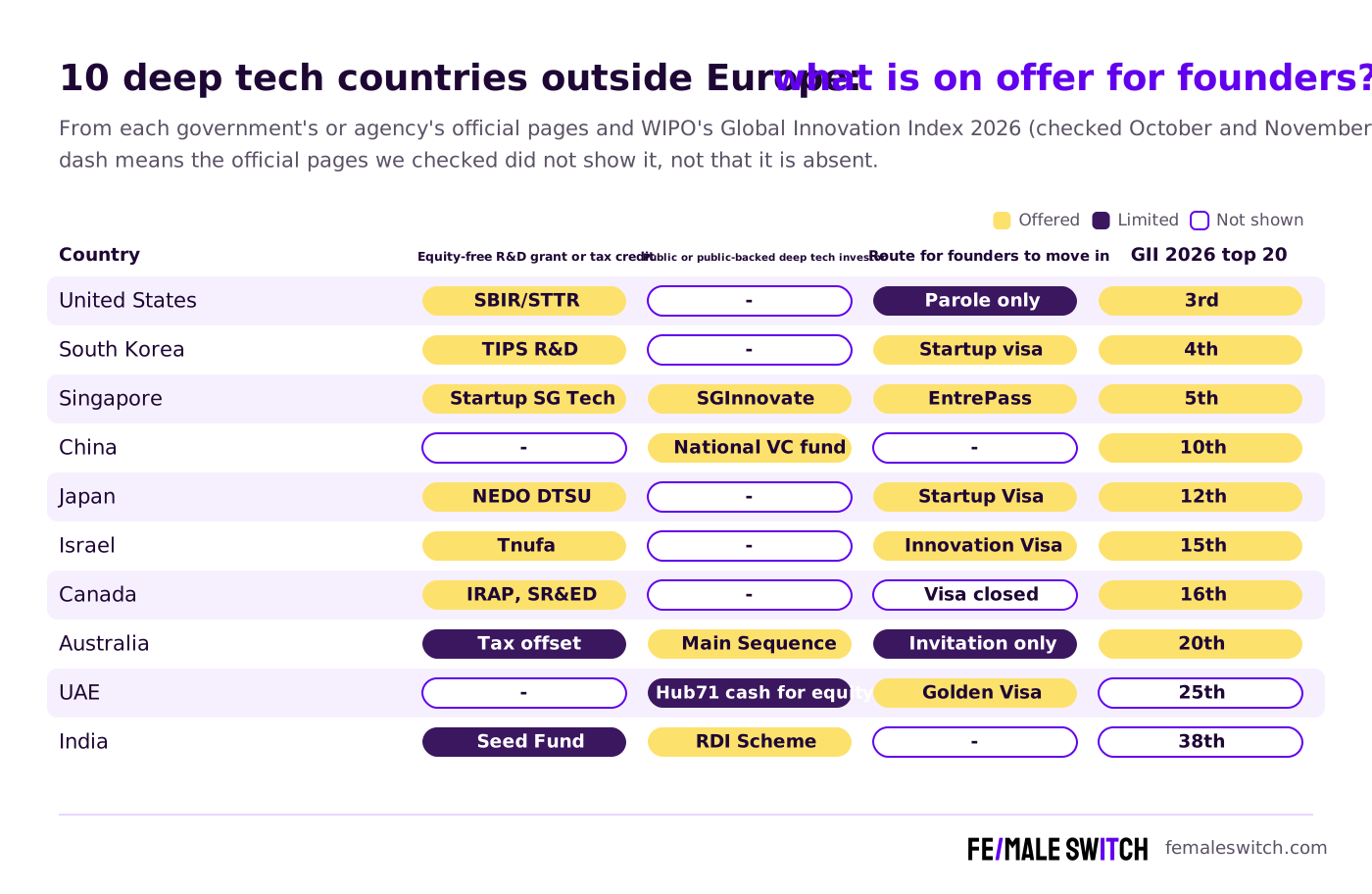
What the Global Data Says About Deep Tech Countries
The most useful new source is the special chapter of WIPO's Global Innovation Index 2026, published on 29 September 2026. It draws on the new Dealroom-WIPO Deep Science Startup Tracker and counts more than 30,000 deep science startups created since 2000, worth $7.6 trillion together; in 2025 they made up 16% of all venture-backed startups. The United States leads with 12,752 deep science startups, followed by China (3,466) and the United Kingdom (2,133). Growth since 2020 has been fastest in Central and Southern Asia (118%), driven by India. The overall GII 2026 ranking is led by Switzerland, Sweden, the United States, South Korea and Singapore, and the world's top innovation cluster is Shenzhen–Hong Kong–Guangzhou, ahead of Tokyo–Yokohama and San Jose–San Francisco.
The 10 Best Countries for Deep Tech Startups Outside Europe in 2027
1. United States
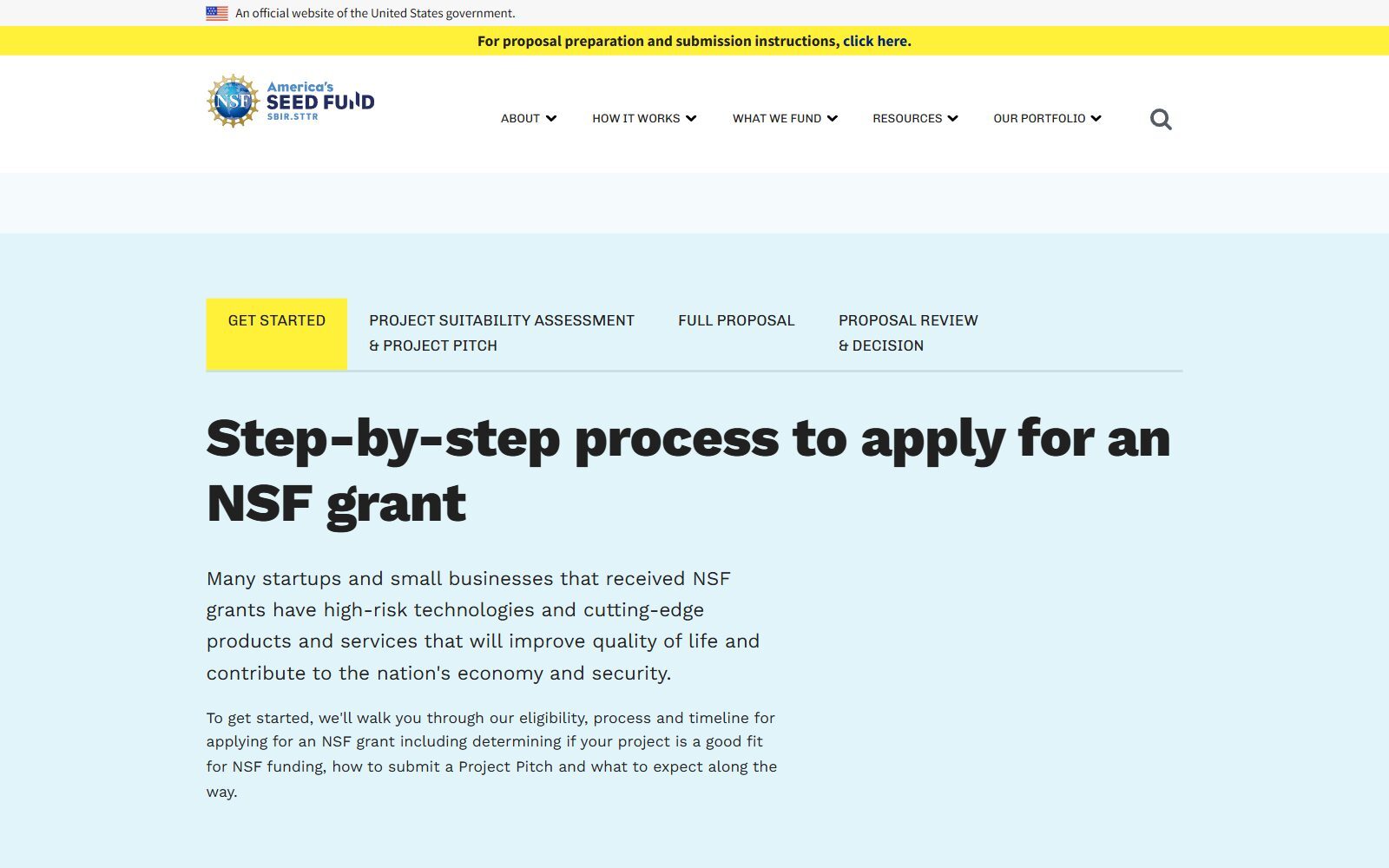
The US is ranked 3rd in the GII 2026 and has by far the most deep science startups. Its main public money for them is the SBIR/STTR programme, which Congress reauthorized through fiscal year 2031 after a lapse; the President signed the bill on 13 April 2026. NSF's America's Seed Fund says it funds startups to build deep technologies, invests up to $2 million in seed funding and takes zero equity. Under its current solicitation, Phase I pays up to $305,000 and Phase II up to $1,250,000; you start with a short Project Pitch, which NSF has accepted again since 2 June 2026. The next full-proposal deadline was set for 4 November 2026, followed by 4 March 2027. Hardware founders can also apply to the two-year Activate fellowship (zero equity); its applications for the US Cohort 2027 closed on 30 October 2026. The full list of US and Canadian programmes is in our guide to deep tech grants in North America, and investors are in deep tech VCs in North America. There is no dedicated startup visa: USCIS's International Entrepreneur Rule gives founders parole, not a visa, of up to 5 years in total if their US startup has raised enough from qualified investors or government grants.
2. South Korea
South Korea is 4th in the GII 2026, and Seoul is the world's 5th-largest innovation cluster. Its flagship scheme for tech startups is TIPS (Tech Incubator Program for Startup), run under the Ministry of SMEs and Startups. A private operator (an accelerator or VC) invests first and the government then matches it with R&D money, plus mentoring and global marketing support. The general track funds R&D for up to two years after an operator investment of at least KRW 200 million (KRW 100 million outside the Seoul capital region); the deep tech track funds R&D for up to three years and requires at least KRW 500 million of follow-on investment. Teams of two or more apply all year through a TIPS operator, and the programme lists 4,588 supported teams. Foreign founders can enter through the K-Startup Grand Challenge (its 2026 call closed in June) or the points-based D-8-4 startup visa via the OASIS programme.
3. Singapore
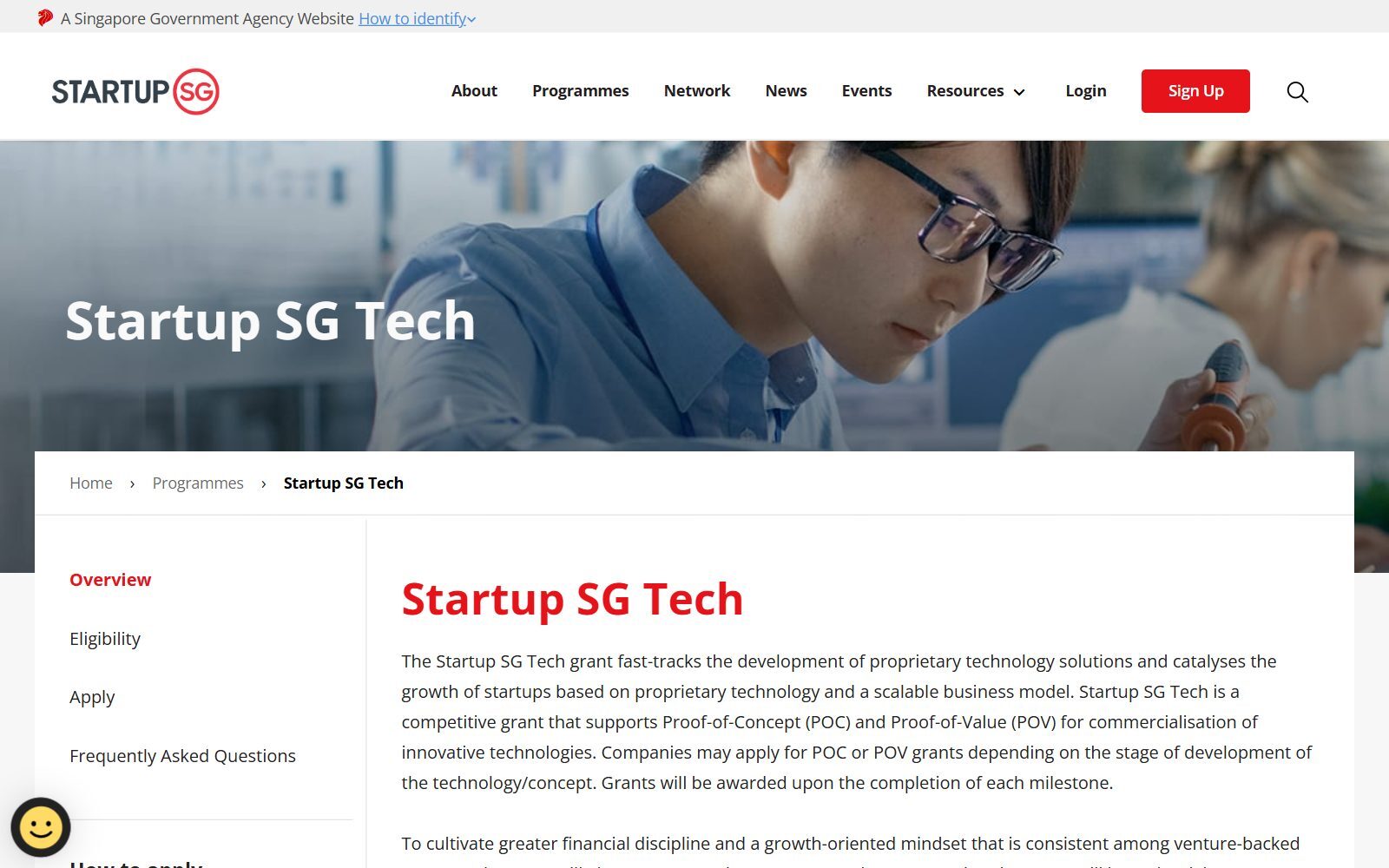
Singapore is 5th in the GII 2026. Its key grant for deep tech is Startup SG Tech from Enterprise Singapore, a competitive grant for proprietary technology. A Proof-of-Concept project can get up to S$400,000 and a Proof-of-Value project up to S$800,000 (both caps were raised on 2 January 2025), paid by milestone. The solution must be a breakthrough-level, commercially viable technology in areas such as robotics, biomedical sciences, clean tech, quantum, space or agritech. The company must be registered in Singapore within the past 10 years, do its core R&D in Singapore and have at least 30% local equity, and Enterprise Singapore gets the right to subscribe for shares worth 50% of the grant at a later funding round. SGInnovate invests in deep tech startups and builds a deep tech community of 190,000+, and the National GRIP programme (NUS and NTU, sponsored by the National Research Foundation) turns university research into startups; it reports 600+ teams incubated. Foreign founders can use the EntrePass. See our guide to startup incubators in Asia.
4. China
China is 10th in the GII 2026 and the only middle-income economy in its top 30. It has the second-largest number of deep science startups (3,466) and three of the world's top 10 innovation clusters: Shenzhen–Hong Kong–Guangzhou, Beijing and Shanghai–Suzhou. On 26 December 2025 China launched a national venture capital guidance fund, set up by the National Development and Reform Commission and the Ministry of Finance with regional funds in Beijing-Tianjin-Hebei, the Yangtze River Delta and the Greater Bay Area. It has a 20-year lifespan, follows the principle of investing early, small, long-term and in hard technology, and will put at least 70% of its capital into seed-stage and early-stage companies in fields such as integrated circuits, quantum technology, biomedicine, brain-computer interfaces, aerospace and AI. Officials expect it to back more than 600 sub-funds. It suits founders already in China; we found no national founder visa for foreigners.
Boost Your SEO with 1,500+ Free Business Directories: increase your DA, get backlinks and traffic.
We've compiled an exclusive list of directories and websites where you can submit your business and start building high-quality backlinks to boost your website traffic and get your SEO snowball rolling.
👉 Submit your startup now!
5. Japan
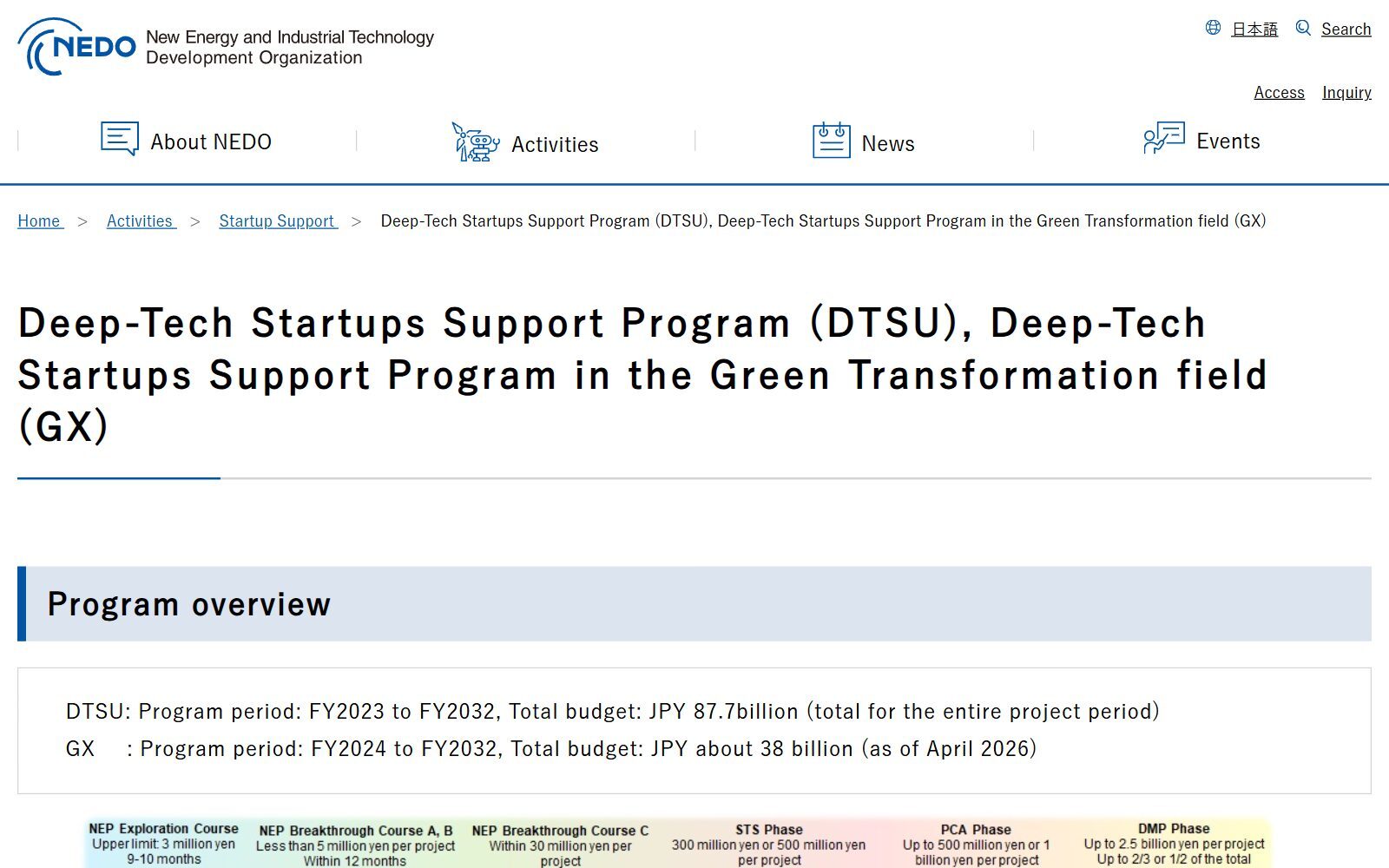
Japan is 12th in the GII 2026, and Tokyo–Yokohama is the world's 2nd-largest innovation cluster (Osaka–Kobe–Kyoto is 10th). Its largest programme for deep tech is NEDO's Deep-Tech Startups Support Program (DTSU), with a budget of JPY 87.7 billion for fiscal years 2023 to 2032, plus a separate green transformation (GX) line of about JPY 38 billion. It funds startups in three phases: up to 300 or 500 million yen in the STS phase, 500 million or 1 billion yen in the PCA phase and 2.5 billion yen in the DMP phase, up to 3 billion yen in total and usually within two-thirds of eligible costs; applicants need investment from VCs or corporates, and calls are open until fiscal year 2027. Smaller teams start with NEDO's entrepreneur courses. METI's J-Startup programme selects deep tech, platform and SDG-oriented startups recommended by top investors and gives them public and private support. Foreign founders can use the Startup Visa through METI-certified local governments, which gives up to 2 years to prepare; since 16 October 2025 the regular Business Manager visa needs at least ¥30 million of capital.
6. Israel
Israel is 15th in the GII 2026. The Israel Innovation Authority's Ideation (Tnufa) incentive gives founders a conditional grant of up to NIS 200,000 over 12 months, covering 80% of the approved budget, repaid through royalties on sales. Foreign technology entrepreneurs can apply for its Innovation Visa, a stay permit for up to 2 years that needs a supporting framework such as an accelerator and an R&D plan in Israel; it comes with no grant money. In January 2026 the Authority also opened access to a national supercomputer (1,000 Nvidia B200 accelerators over the coming years, 70% of them for companies), which matters for AI-heavy deep tech. The Authority's site blocked our direct checks, so these terms come from its pages as read in October 2026.
7. Canada
Canada is 16th in the GII 2026 and regained ground this year. The National Research Council's Industrial Research Assistance Program (IRAP) is the main source of R&D money for small tech firms: according to NRC, a business must be incorporated, for-profit, operating in Canada and have no more than 500 employees, and an industrial technology advisor works out the support with you. The SR&ED tax credit gives most Canadian-controlled private corporations 35% back on qualified R&D up to $6 million of spending, fully refundable on current expenditures. The catch for foreigners: the Start-up Visa stopped taking new applications on 31 December 2025. Canadian programmes are covered in our deep tech startup competitions in North America guide too.
Boost Your SEO by Getting Featured in Our Blogs and get a backlink.
We publish content about startups, education, tech, funding, etc. that ranks well not only in Google but also in Perplexity, ChatGPT, Grok and other AI tools.
👉 Get featured now!
8. Australia
Australia is 20th in the GII 2026, back in the top 20. Its best-known deep tech investor is Main Sequence, whose co-founder is CSIRO, the national science agency; it says it has over $1 billion under management and invests from seed to Series B. For R&D costs, the federal R&D Tax Incentive offsets part of eligible research spending; the government announced changes in the 2026–27 Budget that start on 1 July 2028, and the current rules apply until then. The National Innovation visa is permanent but by invitation only, so it suits proven founders rather than first-timers.
9. United Arab Emirates
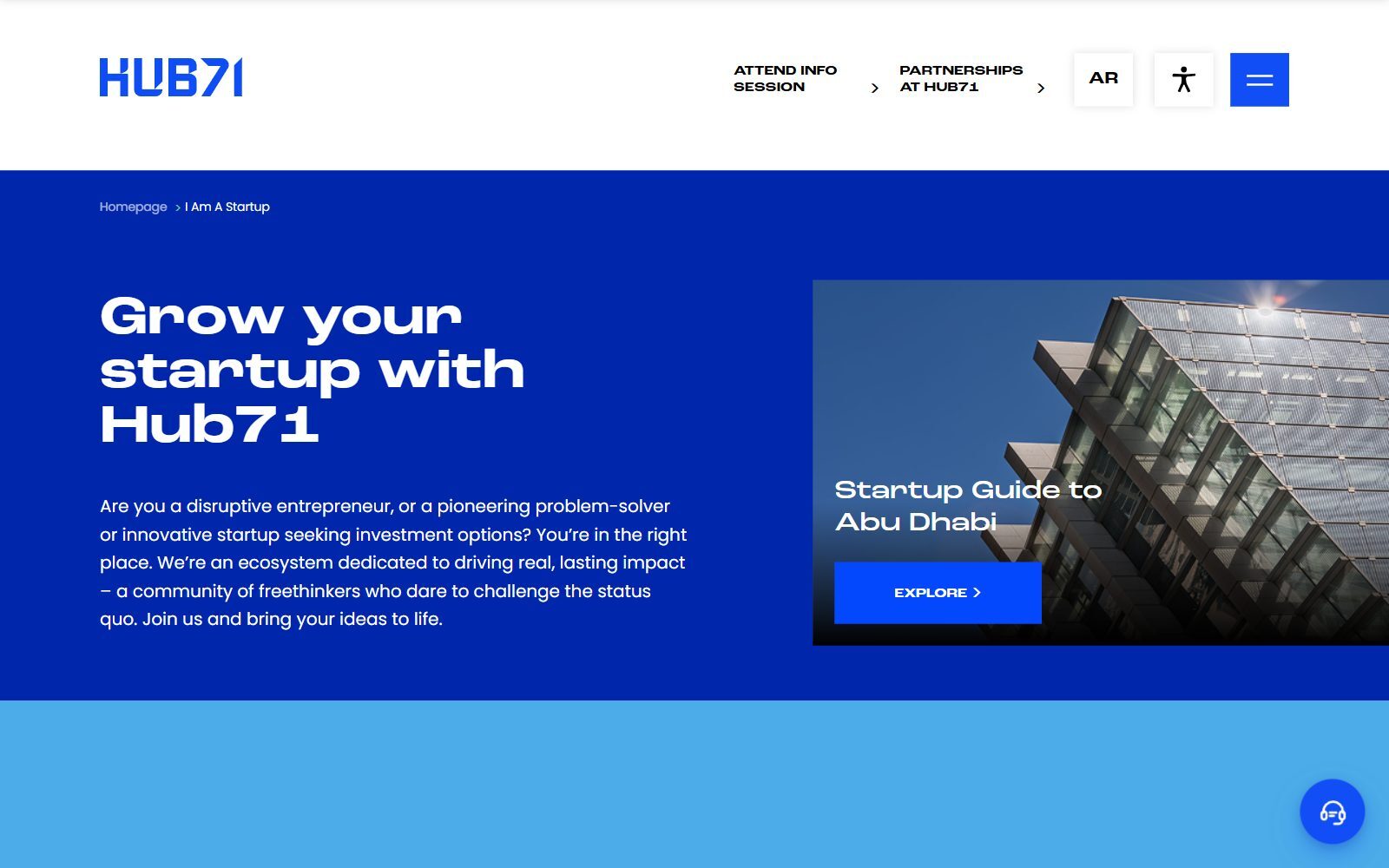
The UAE gained five places to 25th in the GII 2026. In Abu Dhabi, Hub71 offers free housing, office space and health insurance, and runs Hub71+ AI for startups building with AI. Its Access Programme takes pre-seed to Series A startups for 12 months with AED 250,000 of in-kind incentives plus AED 250,000 in cash for equity; at least one founder must move to Abu Dhabi. The Technology Innovation Institute, part of Abu Dhabi's Advanced Technology Research Council, runs research centres in quantum, autonomous robotics, propulsion and space, advanced materials and other fields, which makes it a natural research partner. Founders can apply for the UAE's Golden Visa in its entrepreneur category. Our list of Abu Dhabi startups to watch shows the local deep tech and health startups.
10. India
India is 38th in the GII 2026 but leads Central and Southern Asia, and WIPO names it, with Viet Nam, as an economy that has performed above its development level for 16 years in a row. Deep science startups grew fastest in its region since 2020. In July 2025 the Union Cabinet approved the Research, Development and Innovation (RDI) Scheme with a total outlay of ₹1 lakh crore, of which ₹20,000 crore was earmarked in that year's Budget. The Department of Science and Technology runs it through a Special Purpose Fund in the Anusandhan National Research Foundation, using concessional long-term loans, equity, debt and hybrid instruments through second-level fund managers, in fields such as AI, semiconductors, quantum computing, clean energy, biotechnology and space tech. For very early teams, the Startup India Seed Fund Scheme pays through incubators; its last date for startups was 31 May 2026, so check whether a new round opens. Investors are listed in our guide to early-stage VCs in Asia.
And Europe?
Six of the GII 2026 top 10 are European: Switzerland, Sweden, the United Kingdom, the Netherlands, Finland and Denmark, with Germany 11th and France 13th. They run their own deep tech agencies and funds, from Germany's SPRIND and France's Plan Deeptech to the EU's EIC Accelerator, all compared in our guide to the best deep tech countries in Europe. To choose a city, read deep tech cities in Europe, and for early support, deep tech incubators in Europe.
What Changed Since the 2025 List
- Removed figures: the 2025 version quoted deep tech startup counts and funding totals for the US, China, the UK and India, linked only to the homepages of data and news sites. We could not trace them to a published source, so we replaced them with the Dealroom-WIPO counts from the GII 2026.
- US SBIR/STTR came back: the programmes' authorization ran out on 30 September 2025 and was renewed in April 2026 through fiscal year 2031, and NSF has accepted new Project Pitches again since June 2026.
- Canada's Start-up Visa closed to new applications at the end of 2025, so Canada now suits founders who already live there.
- New money in Asia: China's national venture capital guidance fund (December 2025), India's RDI Scheme (approved July 2025) and higher Startup SG Tech caps in Singapore (January 2025).
- Moved and added countries: the UK, Germany, France, Sweden, the Netherlands, Finland and Belgium are now covered in the Europe guide; Japan and the UAE are new.
Which Country Should a Deep Tech Founder Choose?
- You want the largest equity-free R&D money and the biggest investor market: the United States (NSF SBIR/STTR and other SBIR agencies).
- You have VC backing and need large non-dilutive rounds: Japan (NEDO DTSU) or South Korea (TIPS deep tech track).
- You want a grant plus a light-touch public co-investor: Singapore's Startup SG Tech, if you can meet the 30% local equity rule.
- You are a foreign founder who needs a visa: Singapore (EntrePass), Israel (Innovation Visa), Japan (Startup Visa), South Korea (D-8-4) or the UAE (Golden Visa, Hub71).
- You are already in China or India: watch the national guidance fund's sub-funds in China and the RDI Scheme's fund managers in India.
- You build in Australia: combine the R&D Tax Incentive with deep tech investors such as Main Sequence.
- You need EU equity or the EIC: look at the Europe guide instead.
Join F/MS: Startup Facilitator & Incubator and unlock your startup dreams today! Get your first customers, register you company in the Netherlands and get startup visas for the team.
How Founders Use Country Programmes
Most deep tech founders stack support: an equity-free grant for the first prototype, a public or public-backed investor to anchor the seed round, and a larger non-dilutive programme once the technology works. Compare programmes in our guides to deep tech accelerators and deep tech startup competitions worldwide, then find investors in deep tech VCs. If your technology is AI, read our ranking of the best countries for AI startups; for visas and general startup support, see the best countries for early-stage startups. Before you commit years to a technology, validate your startup idea with real customers, and meet investors at the top deep tech startup events.
FAQ About the Best Countries for Deep Tech Startups
Which country is best for deep tech startups?
The United States, for money and market size: it has 12,752 deep science startups according to the Dealroom-WIPO tracker in the GII 2026, and NSF's America's Seed Fund pays up to $2 million per company without taking equity. Singapore, Japan and South Korea have the most structured state programmes.
Which countries have the most deep tech startups?
According to the Dealroom-WIPO Deep Science Startup Tracker in WIPO's GII 2026, the United States (12,752), China (3,466) and the United Kingdom (2,133). More than 30,000 deep science startups have been created worldwide since 2000.
What is the Global Innovation Index?
WIPO's yearly ranking of about 139 economies on some 80 innovation indicators. In the 2026 edition the top five are Switzerland, Sweden, the United States, South Korea and Singapore.
How much does the US SBIR programme give deep tech startups?
At NSF, Phase I pays up to $305,000 and Phase II up to $1,250,000, up to $2 million per company with no equity taken. SBIR/STTR was reauthorized in April 2026 through fiscal year 2031.
What is NEDO DTSU in Japan?
NEDO's Deep-Tech Startups Support Program: up to 3 billion yen per startup across three phases, usually within two-thirds of eligible costs, for VC-backed deep tech companies. Calls run until fiscal year 2027.
What is TIPS in South Korea?
The Tech Incubator Program for Startup: a private operator invests first and the government matches it with R&D money. Its deep tech track funds R&D for up to three years.
Can foreign founders get Startup SG Tech in Singapore?
Only through a Singapore company registered within the past 10 years with at least 30% local equity held by Singaporeans or permanent residents, and with core R&D in Singapore.
Does China have a deep tech fund for startups?
Yes. The national venture capital guidance fund launched on 26 December 2025 must put at least 70% of its capital into seed-stage and early-stage companies, with a focus on hard technology.
Is Canada still good for deep tech startups?
For companies already in Canada, yes: NRC IRAP and the refundable SR&ED tax credit remain. But the Start-up Visa closed to new applications on 31 December 2025.
Where can European deep tech founders compare countries?
In our separate guide to deep tech countries in Europe, which covers 14 European countries and the EIC Accelerator.
About the Author
Violetta Bonenkamp, also known as MeanCEO, is an experienced startup founder with an impressive educational background including an MBA and four other higher education degrees. She has over 20 years of work experience across multiple countries, including 5 years as a solopreneur and serial entrepreneur. Throughout her startup experience she has applied for multiple startup grants at the EU level, in the Netherlands and Malta, and her startups received quite a few of those. She’s been living, studying and working in many countries around the globe and her extensive multicultural experience has influenced her immensely.
