

Open-Source DALL-E Alternatives: Open-Weight Image Models and the Free Apps That Run Them
DALL-E is gone. OpenAI removed DALL-E 2 and DALL-E 3 from its API in May 2026, and its current image models are paid, closed and run only on OpenAI's servers. If you want to generate product shots, ad visuals or illustrations on your own computer, keep your prompts private and avoid per-image costs, you need two things: an open-weight image model and a free app that runs it. We checked every model and app below on its official page, Hugging Face model card or GitHub repository in October 2026, with one question first: does the licence let a startup use it commercially? Many popular "open" models do not.
Quick answer: for commercial work with a fully permissive licence, start with FLUX.2 [klein] 4B or Z-Image Turbo (both Apache 2.0 and both run on a 16 GB consumer GPU); for images with readable text, such as posters and slides, use Qwen-Image-2512 (Apache 2.0); for an MIT-licensed newcomer, try HiDream-O1-Image. Run them in ComfyUI if you like node workflows or InvokeAI if you want a canvas. Avoid FLUX.2 [dev], Qwen-Image-2.1 and Ideogram 4 for client or product work unless you buy a licence: their weights are non-commercial.
Boost Your SEO by Getting Featured in Our Blogs and get a backlink.
We publish content about startups, education, tech, funding, etc. that ranks well not only in Google but also in Perplexity, ChatGPT, Grok and other AI tools.
👉 Get featured now!
What Happened to DALL-E, and What OpenAI Offers in 2027
According to OpenAI's API deprecations page, developers were told on 14 November 2025 that dall-e-2 and dall-e-3 would be removed from the API on 12 May 2026. OpenAI moved quickly after that: gpt-image-1, the model that replaced DALL-E 3, was shut down on 23 October 2026, and gpt-image-1-mini, gpt-image-1.5 and chatgpt-image-latest are scheduled to shut down on 1 December 2026. The recommended replacements are GPT-Image-2.5 Sunburst, which OpenAI calls its most capable model for image generation and editing, and GPT-Image-2.5 Flare, its fast everyday model. On the OpenAI pricing page (checked October 2026) both cost $8 per million image input tokens and $30 per million image output tokens. None of these models has downloadable weights. That is the gap the tools below fill: you download the model once and generate as many images as your hardware allows.
Open-Source DALL-E Alternatives Compared
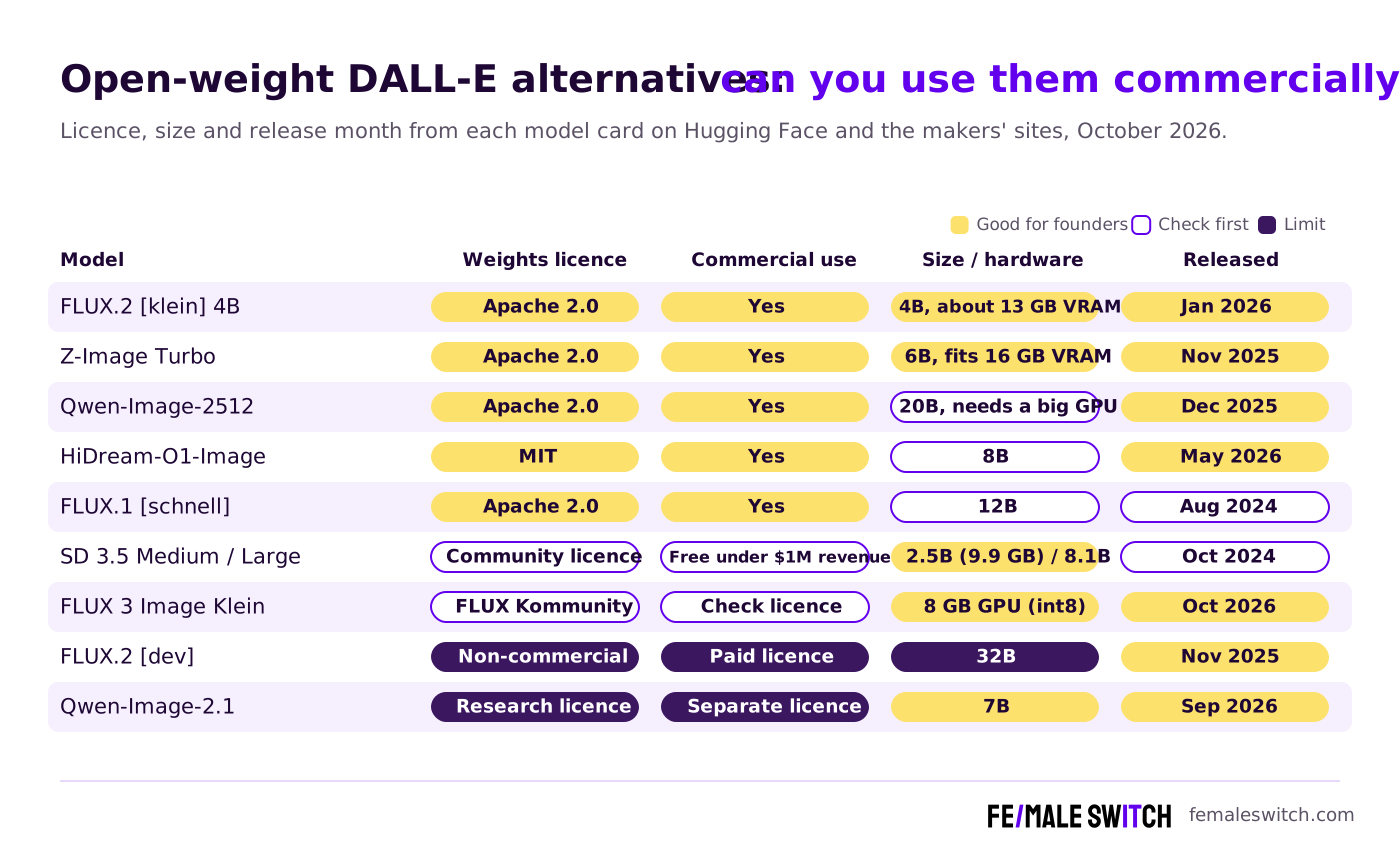
"Open source" is used loosely for image models. The code that runs a model is often open source, while the weights, the trained model you download, carry their own licence. That weights licence decides whether you may use the model for a paid product, client work or marketing. The table lists the models worth knowing in 2027, permissive ones first.
Sources: each model's Hugging Face model card and licence, GitHub repository and maker's website, checked 30 October 2026. This is a summary, not legal advice: read the licence before you ship.
The Best Open-Weight Image Models to Replace DALL-E in 2027
1. FLUX.2 [klein] 4B: the safest commercial pick from Black Forest Labs
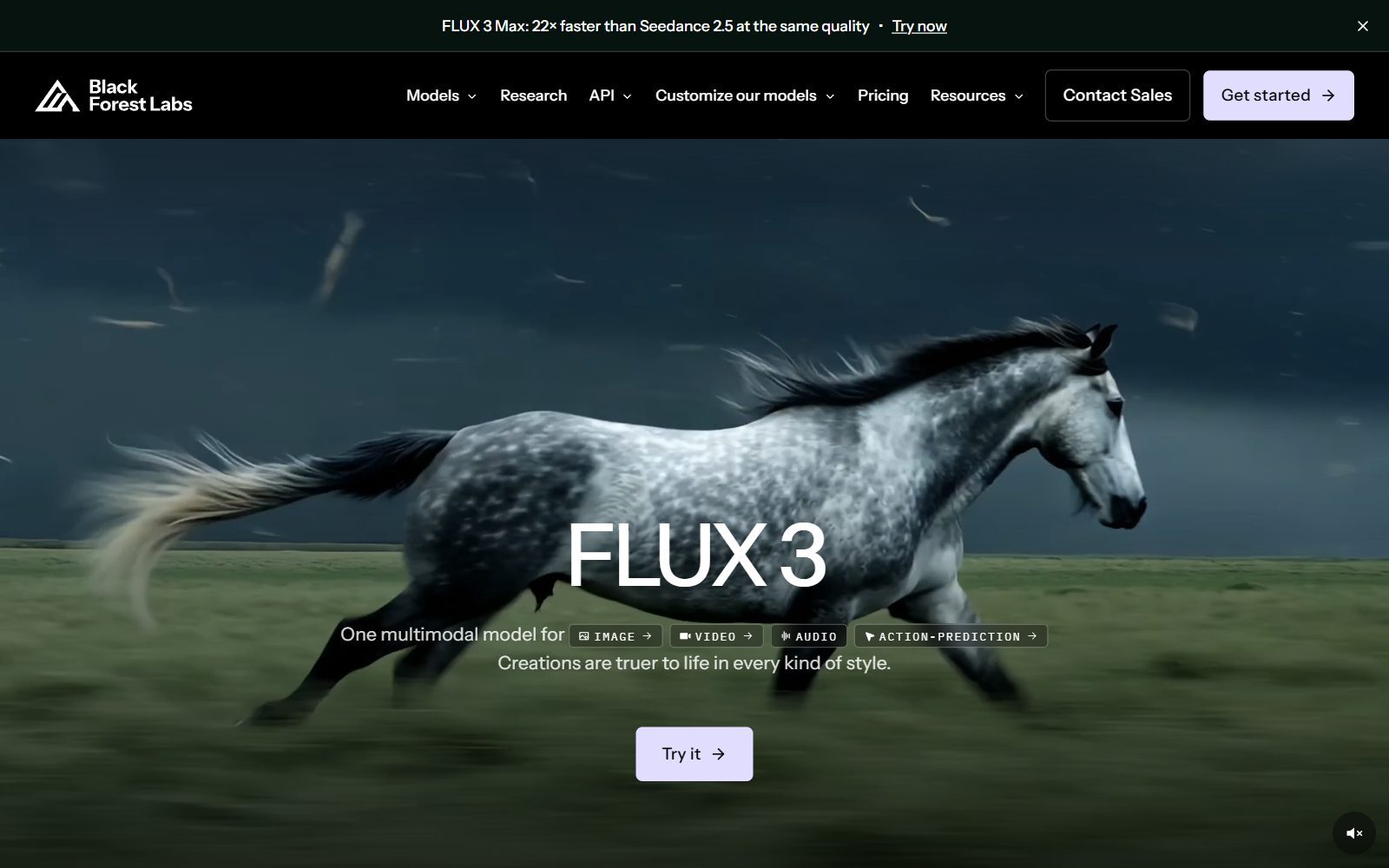
Black Forest Labs publishes several FLUX models, and only some of them are truly open. The FLUX.2 [klein] 4B model card says it is fully open under Apache 2.0 and that the weights are available for commercial use. It is a 4-billion-parameter model for text-to-image, image editing and multi-reference generation, it runs on consumer GPUs such as an RTX 3090 or 4070 with about 13 GB of VRAM, and Black Forest Labs says end-to-end generation can take under a second on suitable hardware. Its larger sibling, FLUX.2 [klein] 9B, and the flagship FLUX.2 [dev] use the FLUX non-commercial licence instead. Black Forest Labs released FLUX 3 Image Klein in October 2026: its code is Apache 2.0, but its weights use the new FLUX Kommunity License, and the company sells self-hosting licences (Builder, Platform, Professional and Enterprise) on its open-weights licensing page. If you want zero licence questions, FLUX.2 [klein] 4B and the older FLUX.1 [schnell] (Apache 2.0, 12B) are the Black Forest Labs models to use.
2. Z-Image Turbo: fast, Apache 2.0 and light enough for a 16 GB GPU
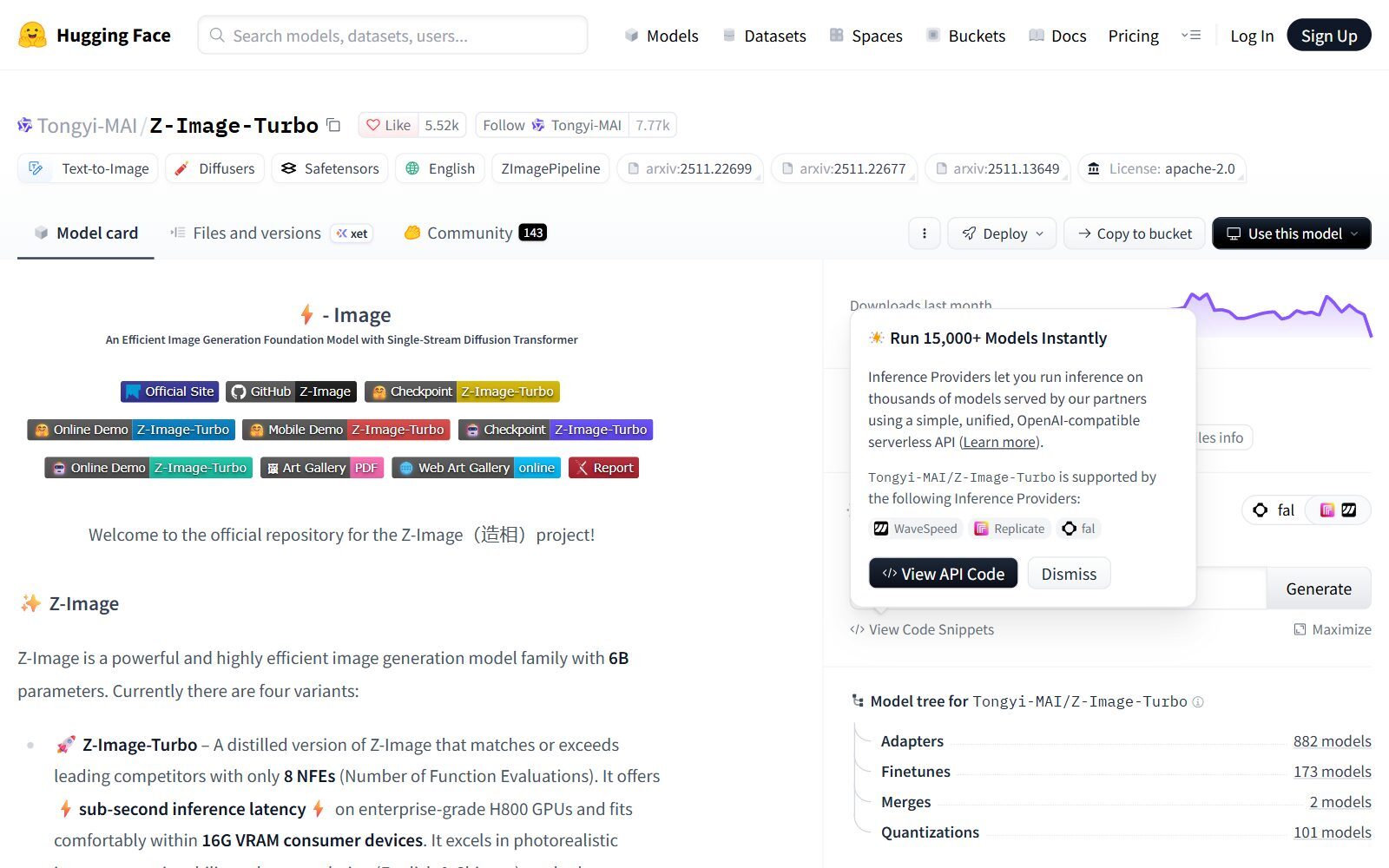
Z-Image Turbo comes from Tongyi-MAI, an Alibaba team, and was published in November 2025 under Apache 2.0. It is a distilled 6-billion-parameter model that needs only 8 model evaluations per image, which its makers say gives sub-second generation on data-centre GPUs while fitting within 16 GB of VRAM on consumer cards. The model card highlights photorealistic images and accurate English and Chinese text inside images. A non-distilled Z-Image base model followed under the same licence, and Z-Image is supported in InvokeAI and the Krita AI plugin, so it is one of the easiest permissive models to try.
3. Qwen-Image and Qwen-Image-2512: best for text inside images
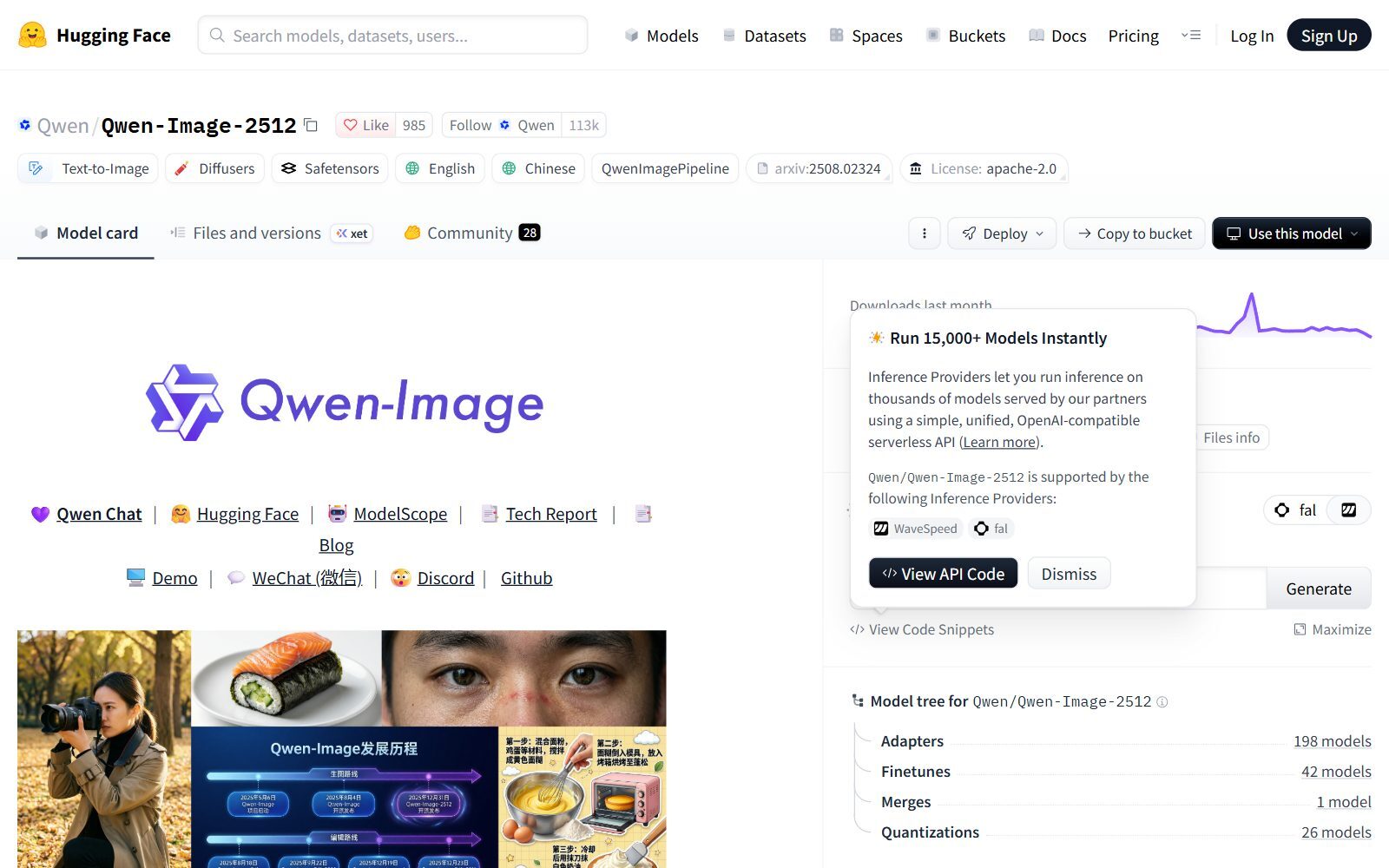
DALL-E 3 was known for putting readable words into pictures. Qwen-Image, a 20-billion-parameter model from Alibaba's Qwen team, was built for exactly that: its model card highlights complex text rendering in alphabetic languages such as English and in Chinese, plus precise image editing through the separate Qwen-Image-Edit models. The weights are Apache 2.0. The December 2025 update, Qwen-Image-2512, makes people look less "AI-generated" and improves text accuracy under the same licence, which makes it a good choice for posters, social graphics and slides. Be careful with the newer Qwen-Image-2.1 (September 2026): it is a unified generation and editing model with a 7B image component, but its weights use the Qwen Research License, which allows non-commercial use only and asks companies to request a separate commercial licence.
4. HiDream-O1-Image: an MIT-licensed model without a VAE
HiDream-O1-Image was open-sourced on 8 May 2026 under the MIT licence, one of the most permissive licences there is. It is an 8-billion-parameter model that works directly on pixels, with no separate VAE or text encoder, and one model handles text-to-image, long text rendering, instruction editing and keeping a character or product consistent across scenes. A built-in prompt agent works out layout and text before the image is generated. HiDream's earlier model, HiDream-I1 (17B, April 2025), is also MIT-licensed, and its model card says generated images can be used commercially. These are large, new models, so check that your app supports them before you download.
5. Stable Diffusion 3.5 and SDXL: the biggest ecosystem
Stable Diffusion 3.5 was released in October 2024 in a Large version (8.1 billion parameters) and a Medium version (2.5 billion), which Stability AI says needs 9.9 GB of VRAM excluding text encoders. It uses the Stability AI Community License: it is free for commercial use if you and your affiliates earn less than US$1 million a year, you must register with Stability AI, and above that you need an enterprise licence. The older SDXL (July 2023) uses the CreativeML Open RAIL++-M licence, which allows commercial use but bans certain harmful uses. SDXL's real strength is its community: thousands of fine-tuned checkpoints and add-ons for styles, faces and poses, and almost every app supports it. Stability AI's newer open releases on Hugging Face are mostly audio models, so Stable Diffusion 3.5 is still its latest open image model.
Validate your startup idea with the unique borrowed authority approach: we publish articles about your product in our blog and you get traffic and testers for your MVP
- Prove Market Demand: See real organic traffic and waitlist conversions
- Unlock High-Potential Keywords: Receive a curated list of top-performing keywords directly from Google Search Console data.
- Estimate Customer Acquisition Cost (CAC): Gain financial foresight with an estimated CAC based on real keyword performance data.
🔗 Start validating your startup now
Free Open-Source Apps That Run These Models
A model is just a large file. To type a prompt and get an image, you need an app. These four are open source, free to self-host and updated in October 2026.
6. ComfyUI: the most powerful, node-based app
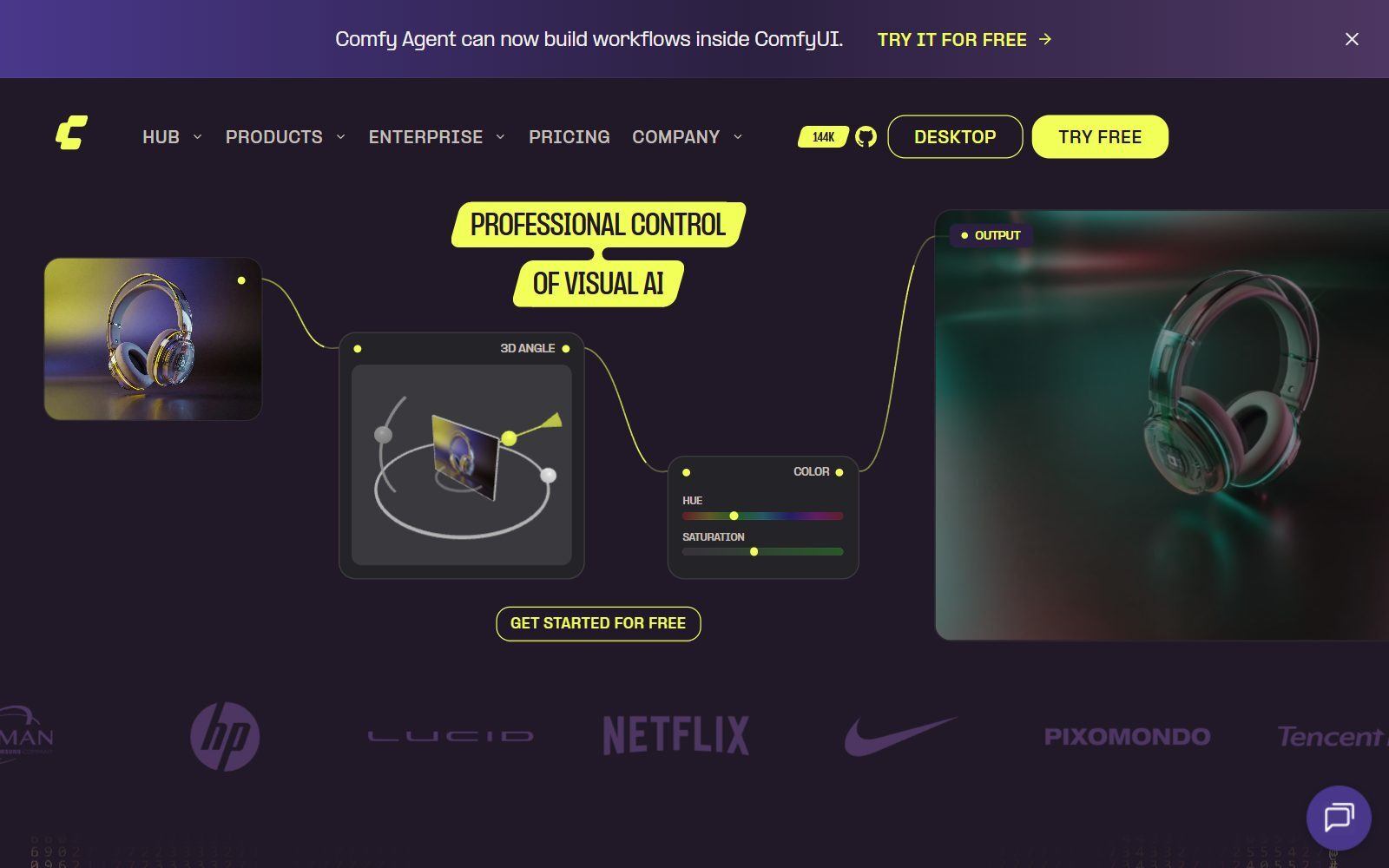
ComfyUI (GPL-3.0 on GitHub) lets you build image pipelines by connecting nodes on a canvas, so you can chain a model, a LoRA, upscaling and editing in one saved workflow. New open models often reach it first: the Qwen team says Qwen-Image-2.1 had native ComfyUI support on release day. You can run it free on your own computer with Comfy Desktop, or use Comfy Cloud if you have no GPU. The learning curve is the steepest here, but templates help. Version 0.43.1 came out in October 2026.
7. InvokeAI: a canvas for designers
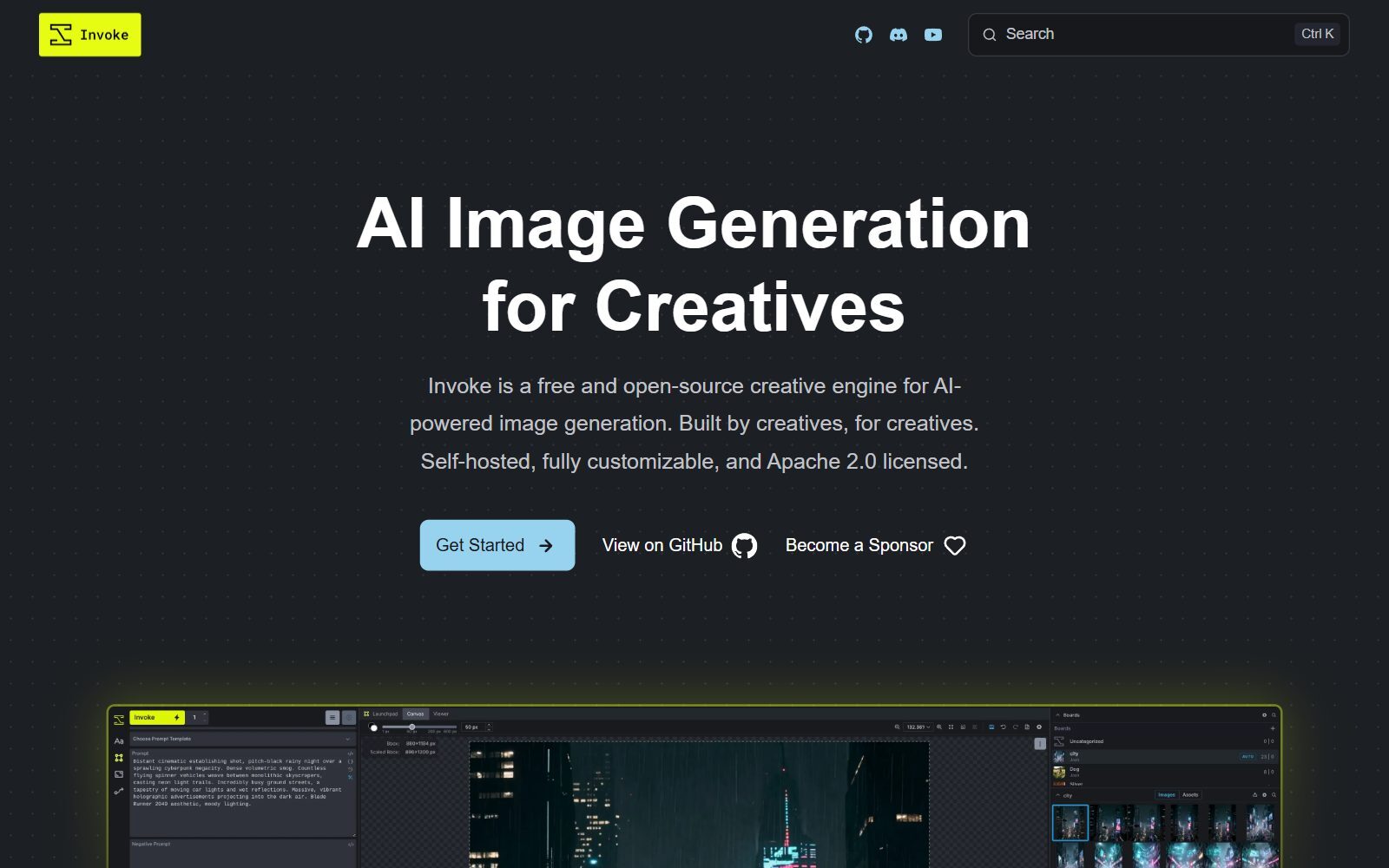
InvokeAI describes itself as a free, open-source creative engine that is self-hosted and Apache 2.0 licensed. Its Unified Canvas works like a design tool, with inpainting, outpainting and brush tools, and it also has node workflows and a gallery with boards. Its supported models include SDXL, Stable Diffusion 3.5, FLUX.1, FLUX.2, Z-Image, Qwen Image and Ideogram 4. A launcher handles the installation. Version 6.14.3 came out on 29 October 2026, and a version 7 alpha is in testing. The old invoke.com address now shows a domain sale page, so use invoke.ai and GitHub.
8. SD.Next: for AMD, Intel and Apple computers too
SD.Next is an Apache-2.0 web interface for generating and editing images and video with a wide range of diffusion models. Its main advantage is hardware support: it runs on NVIDIA, AMD, Intel and Apple Silicon GPUs and even on a CPU, with built-in quantization and offloading to save memory. It manages its own dependencies and updates, and it was updated in October 2026. If you liked the old AUTOMATIC1111 web interface, SD.Next is a maintained web UI worth trying.
9. Krita AI Diffusion: generative fill inside a free painting app
The Krita AI Diffusion plugin (GPL-3.0) adds generative AI to Krita, the free open-source painting program. You select an area to fill, extend or remove objects, paint live while the AI interprets your canvas, upscale to 4K and beyond, and guide results with sketches, line art or poses. It supports FLUX.2, Z-Image, Stable Diffusion 1.5 and SDXL, runs everything locally with your own models, or uses cloud generation if you have no GPU. It is the best choice if you want an image editor with AI, not a prompt box. Version 1.54.0 was in pre-release in October 2026.
DALL-E Alternatives That Are Discontinued, Not Open Source or Changed
The 2025 version of this article listed ten tools. Several no longer belong on an open-source shortlist:
- DeepFloyd IF: its weights use the DeepFloyd licence, which does not allow commercial use, and the code has not changed since June 2023.
- NightCafe: a hosted AI art website that offers other companies' models. It is not open source.
- Craiyon (formerly DALL-E mini): today a hosted generator whose free plan adds a watermark; the original DALL-E mini code was last updated in August 2023.
- Pixray: abandoned; its last code change dates from May 2022.
- OpenJourney, Dreamlike Photoreal 2.0 and Waifu Diffusion: fine-tunes of the 2022 Stable Diffusion 1.x models, last updated in 2023. Dreamlike Photoreal uses a modified licence that allows commercial use of images only for teams of 10 or fewer.
- DreamShaper: still a popular community fine-tune for Stable Diffusion, but it is a style checkpoint, not a separate model, and has its own licence terms.
- AUTOMATIC1111, Forge and Fooocus: the apps many people used in 2023 and 2024 have slowed down. AUTOMATIC1111's main branch has had no code change since July 2024, Forge's last commit is from June 2025, and Fooocus says it is in limited long-term support with bug fixes only and works with SDXL only. Use ComfyUI, InvokeAI or SD.Next for newer models.
- Kolors, Ideogram 4 and HunyuanImage 3.0: open weights with strings attached. Kolors needs registration with Kuaishou for commercial use, Ideogram 4's weights use a non-commercial licence, and Tencent's 80-billion-parameter HunyuanImage 3.0 uses its own Tencent Hunyuan Community License.
Which Open-Source DALL-E Alternative Should You Choose?
- You want images you can sell or use in ads, with no licence worries: FLUX.2 [klein] 4B or Z-Image Turbo (Apache 2.0), or HiDream-O1-Image (MIT).
- You need readable text in images, like DALL-E 3 did: Qwen-Image-2512, or Z-Image Turbo for English and Chinese text.
- You have a laptop or a small GPU: FLUX 3 Image Klein's int8 files on 8 GB (check the licence first), SD 3.5 Medium, or SDXL, run in SD.Next with offloading.
- You want thousands of ready-made styles: SDXL and its community fine-tunes.
- You are a designer: InvokeAI's canvas or the Krita AI Diffusion plugin.
- You want to automate image production: ComfyUI workflows, which you can also call as an API.
- You have no GPU at all: use a hosted version (Comfy Cloud, or an API for an open model) and keep the option to self-host later.
How Founders Use Open-Source Image Generators
For a bootstrapped startup, a local image model replaces part of a stock photo budget and part of a designer's time for early drafts: blog covers, ad variations, product mock-ups, pitch deck illustrations and social posts. Use it to test ten visual directions in an afternoon, then pay a designer to polish the winner. Our list of open-source StockAI alternatives covers AI stock photos, and you can edit the results with open-source Photoshop alternatives, open-source Affinity Photo alternatives or open-source Illustrator alternatives for vector work. If you prefer templates to prompts, see our free Canva Pro alternatives; for 3D product renders, see open-source Blender alternatives.
Want to try AI images before installing anything? Use our free AI image generator, and see how we use AI tools for startup naming and logo design. Open models can replace other paid AI tools too: we have checked open-source ElevenLabs alternatives and open-source voice cloning tools for audio, and open-source GitHub Copilot alternatives for coding. Then turn your visuals into articles that rank with the F/MS AI SEO Tool.
Join ElonaHunt (like ProductHunt but for women) and explore the coolest women-focused startups out there!
Discover your next big inspiration and connect with like-minded female entrepreneurs!
👉 Join the Hunt Here
FAQ About Open-Source DALL-E Alternatives
Is DALL-E still available in 2027?
No. OpenAI removed dall-e-2 and dall-e-3 from its API on 12 May 2026. Its replacement, gpt-image-1, was shut down on 23 October 2026, and OpenAI now recommends GPT-Image-2.5 Sunburst or Flare, which are closed models that run only on OpenAI's servers.
What is the best open-source alternative to DALL-E?
For commercial use, FLUX.2 [klein] 4B and Z-Image Turbo are the best starting points: both are Apache 2.0 and run on a consumer GPU. For readable text in images, Qwen-Image-2512 (Apache 2.0) is the closest match to what DALL-E 3 did well.
Is FLUX open source?
Only some versions. FLUX.1 [schnell] and FLUX.2 [klein] 4B are Apache 2.0. FLUX.1 [dev], FLUX.2 [dev] and FLUX.2 [klein] 9B use a non-commercial licence, and FLUX 3 Image Klein uses the FLUX Kommunity License. Black Forest Labs sells self-hosting licences for commercial use of the restricted models.
Can I use Stable Diffusion images commercially?
Yes, within the licence. SDXL uses the CreativeML Open RAIL++-M licence, which allows commercial use with some use restrictions. Stable Diffusion 3.5 is free for commercial use if your annual revenue is under US$1 million and you register with Stability AI.
What GPU do I need to run an image model locally?
According to the model cards, FLUX.2 [klein] 4B needs about 13 GB of VRAM, Z-Image Turbo fits in 16 GB and Stable Diffusion 3.5 Medium needs 9.9 GB excluding text encoders. FLUX 3 Image Klein's int8 files run on 8 GB GPUs in ComfyUI. SD.Next can also use AMD, Intel and Apple GPUs.
Which app should a beginner use?
InvokeAI has a launcher and a canvas that feels like a design tool. ComfyUI is more powerful and gets new models first, but has a steeper learning curve. If you already paint in Krita, the Krita AI Diffusion plugin is the easiest start.
Is AUTOMATIC1111 still maintained?
Not actively. Its main branch has had no code change since July 2024, so it lacks support for many newer models. SD.Next, ComfyUI and InvokeAI are actively updated alternatives.
Is Craiyon open source?
Craiyon, formerly DALL-E mini, is now a hosted image generator with a free plan that adds a watermark. The original DALL-E mini code is on GitHub but was last updated in August 2023, so it is not a practical open-source alternative today.
Are open-weight models really free?
The weights are free to download, but you pay for the hardware or cloud GPU time, and some licences limit commercial use. Apache 2.0 and MIT models such as FLUX.2 [klein] 4B, Z-Image Turbo, Qwen-Image-2512 and HiDream-O1-Image have no revenue limits.
Where can I get a backlink by writing about my startup?
You can publish a guest post in one of the Fe/male Switch startup blogs, which rank in Google and in AI tools. Get a quality backlink.
About the Author
Violetta Bonenkamp, also known as MeanCEO, is an experienced startup founder with an impressive educational background including an MBA and four other higher education degrees. She has over 20 years of work experience across multiple countries, including 5 years as a solopreneur and serial entrepreneur. Throughout her startup experience she has applied for multiple startup grants at the EU level, in the Netherlands and Malta, and her startups received quite a few of those. She’s been living, studying and working in many countries around the globe and her extensive multicultural experience has influenced her immensely.

