

Open-Source Alternatives to StockAI: Self-Hosted AI Image Generators, Open Image Libraries and Image Search
StockAI was a stock photo site with a twist: every picture in its library was AI-generated, and if the search found nothing, it could generate a new image for a fee. That site is gone. When we checked in October 2026, stockai.com redirected to a GoDaddy page offering the domain for sale. The good news is that you can rebuild the same workflow, search first and generate what is missing, with open-source software and openly licensed image libraries, and own the result.
This 2027 guide replaces the 2025 version of this article, which listed developer libraries and research projects for reverse image search. We now cover three practical routes: self-hosted AI image generators, open image libraries with free licences, and open-source image search for your own photo collection. We checked the licence and latest release of every project on its official site or GitHub repository in October 2026, and we separate what is truly open source from what is only free.
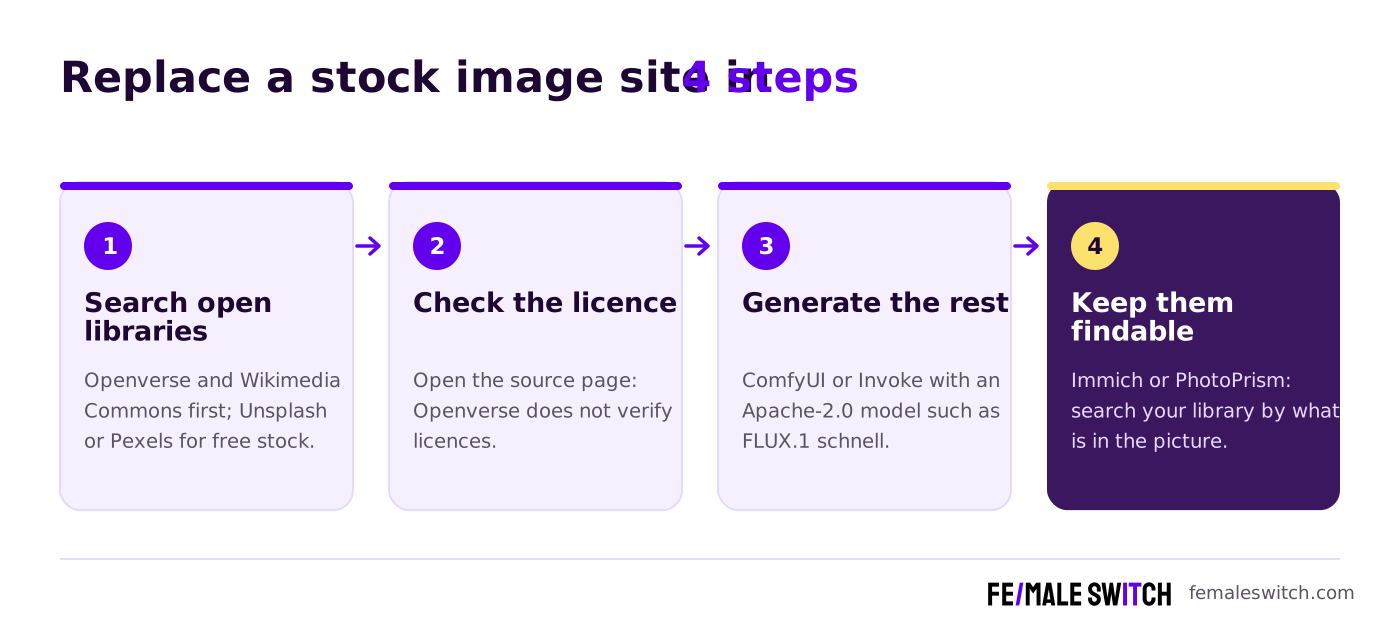
Quick answer: to generate stock-style images on your own computer, use ComfyUI (GPL-3.0) for full control or Invoke (Apache-2.0) for a friendlier canvas, with a model whose licence allows commercial use, such as FLUX.1 [schnell] or Qwen-Image (both Apache-2.0). To find real photos, search Openverse (open source, 800+ million openly licensed works) and Wikimedia Commons (about 150 million freely usable files). To search your own image library by what is in the picture, self-host Immich or PhotoPrism. Unsplash and Pexels are free to use but not open source.
Boost Your SEO by Getting Featured in Our Blogs and get a backlink.
We publish content about startups, education, tech, funding, etc. that ranks well not only in Google but also in Perplexity, ChatGPT, Grok and other AI tools.
👉 Get featured now!
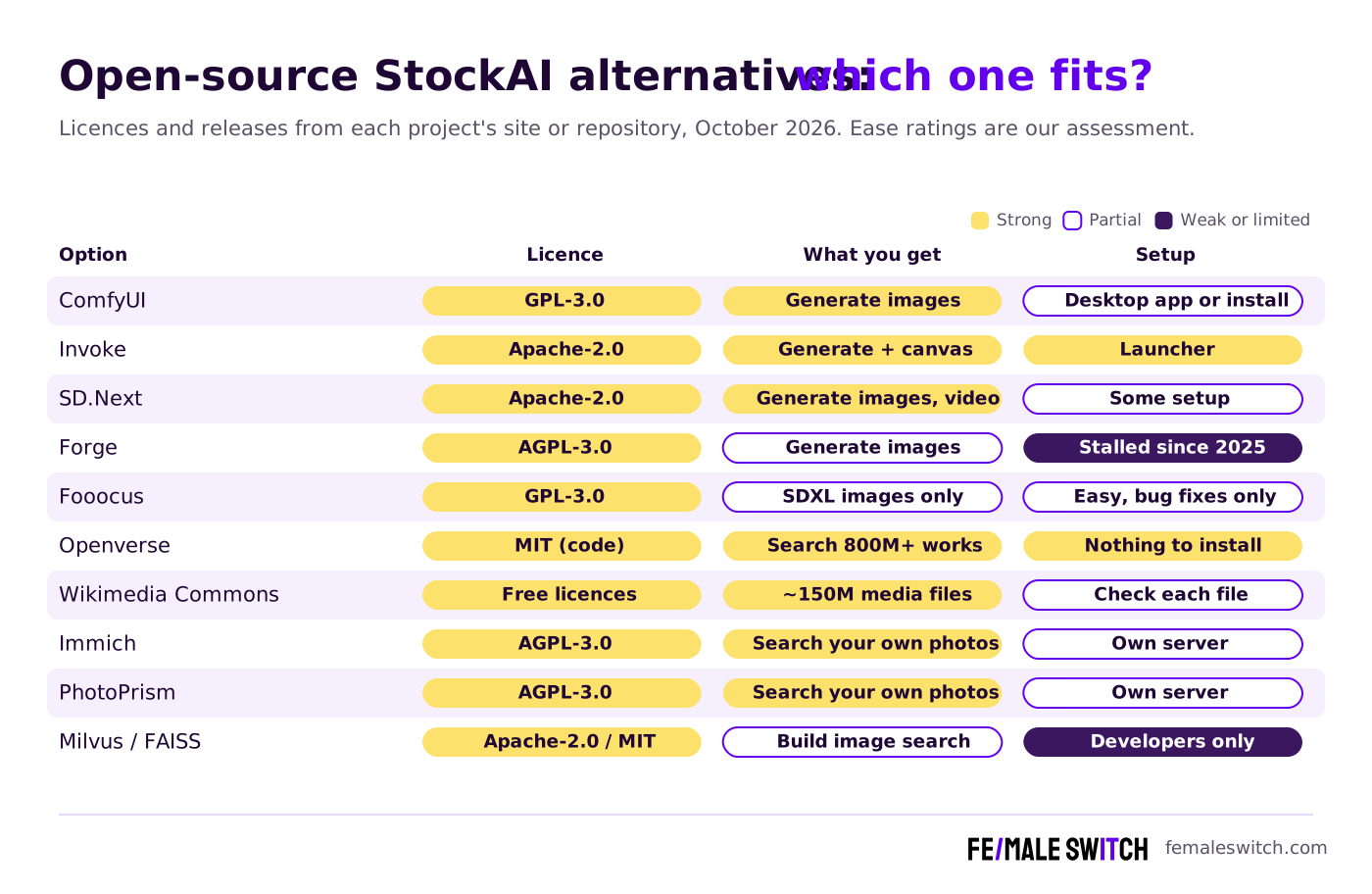
Open-Source StockAI Alternatives Compared
Sources: each project's official site, GitHub repository and releases, checked 26 and 27 October 2026.
Open Source or Only Free? What the Licences Mean
Three different things get called "free" in the stock image world, and they are not the same:
- Open-source software: the code is published under a licence such as GPL, AGPL, Apache-2.0 or MIT, so anyone can run, study and change it. ComfyUI, Invoke, SD.Next, Forge, Fooocus, Openverse, Immich, PhotoPrism, Milvus and FAISS are open source.
- Openly licensed content: the images themselves carry a Creative Commons licence or are in the public domain. Openverse and Wikimedia Commons collect this kind of content, but each licence has its own conditions, such as attribution or share-alike.
- Free under a custom licence: Unsplash and Pexels let you use their photos for free, but under their own licences, and the platforms are not open source. They are a good replacement for stock photos, not for StockAI's AI generation.
For AI generators there is a fourth layer: the model licence. The software can be open source while the model you load into it is not, so check the model before you use its images in a client project or an ad.
The 10 Best Open-Source StockAI Alternatives in 2027
1. ComfyUI: the most flexible self-hosted AI image generator
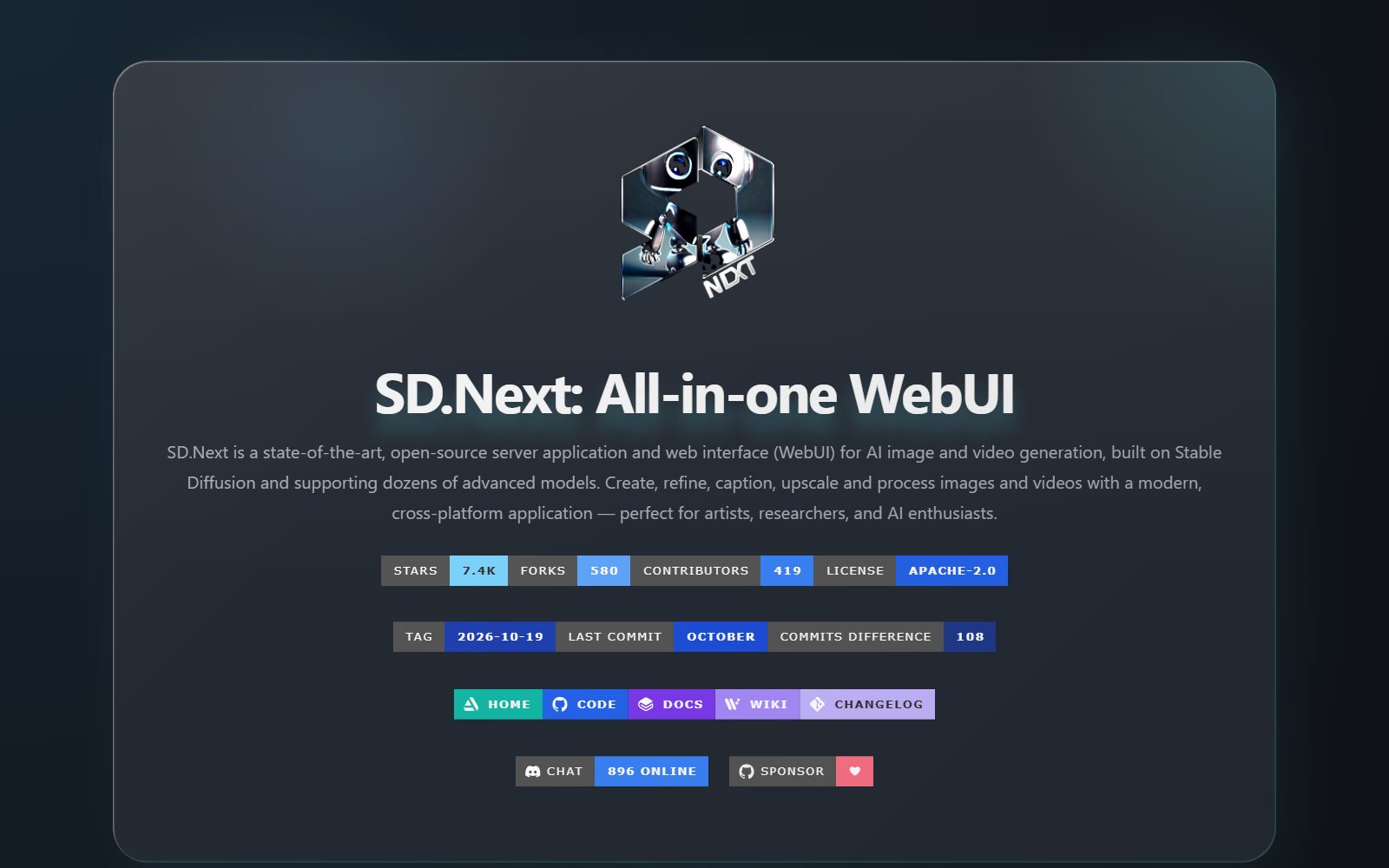
ComfyUI is a GPL-3.0 engine for generating images, video, 3D and audio with a node-graph interface: you connect blocks for the model, prompt, sampler and output, and save the whole pipeline as a reusable workflow. It supports new open models quickly and runs on Windows, Linux and macOS, through a desktop app for Windows and macOS, a portable build, or a manual install for NVIDIA, AMD, Intel and Apple Silicon GPUs. According to its README, it can run even large models on as little as 4 GB of VRAM and 8 GB of RAM by streaming weights. The newest release is v0.42.1, from 19 October 2026. Comfy Org also sells a hosted Comfy Cloud and offers optional partner nodes for closed models, but the local app is free.
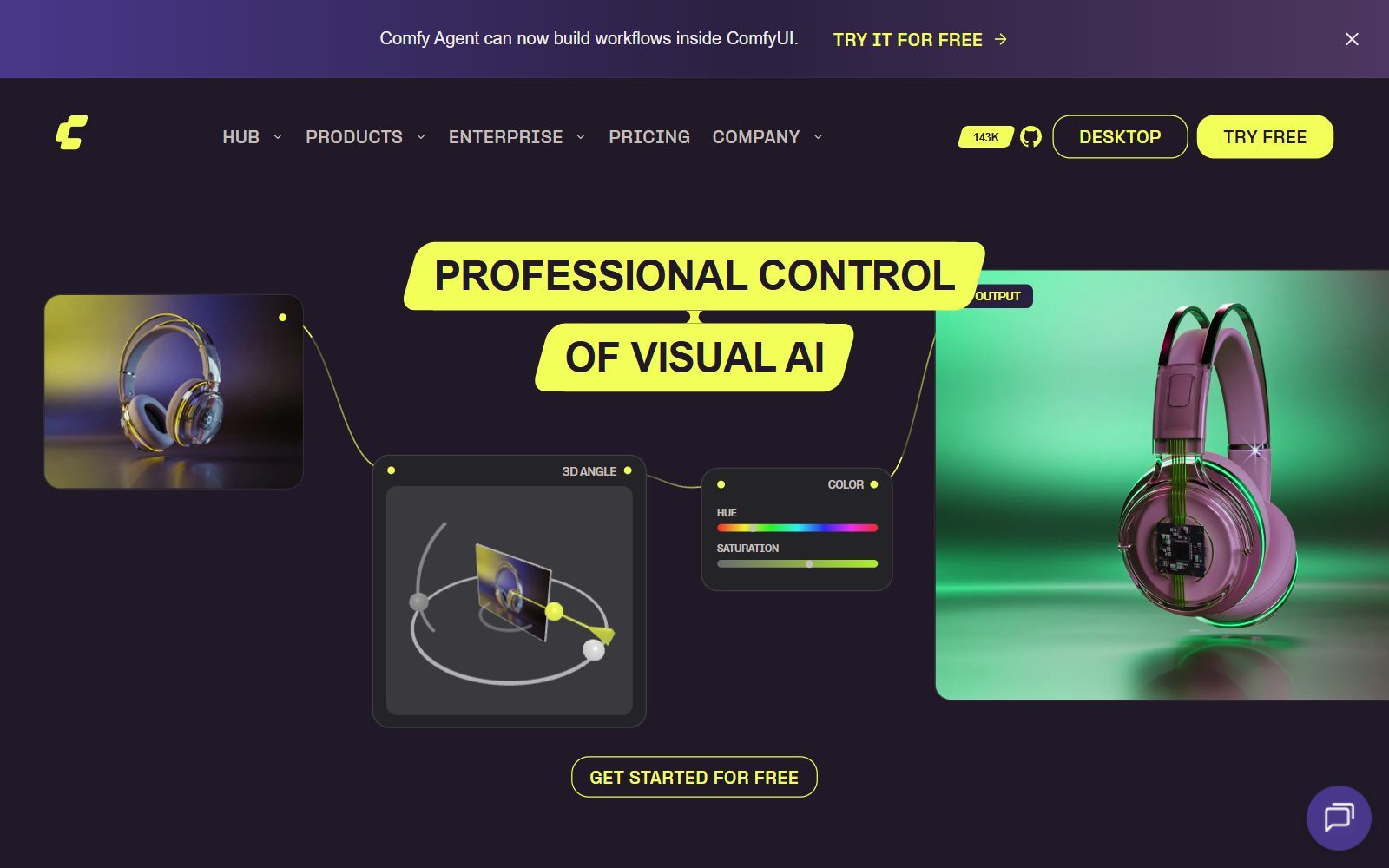
2. Invoke: an open-source creative canvas, now community-run
Invoke (InvokeAI) is an Apache-2.0 image generator with a locally hosted web interface, a layer-based Unified Canvas for inpainting and outpainting, node workflows and a gallery with boards. It suits designers who want to edit and refine a picture, not only prompt it. Its model list covers SDXL, SD 3.5, FLUX.1 and FLUX.2, Qwen Image, Z-Image and more. You install it with a launcher on Windows 10 or later and Linux (NVIDIA or AMD GPU) or on Apple Silicon Macs; Intel Macs are not supported.
The project changed in a big way: the official site says the hosted Invoke platform has been shut down as the founding team joined Adobe, and the open-source project is now maintained by the community, led by long-time maintainers Lincoln Stein and Vic. Development continues: version 6.14.2 came out on 27 September 2026.
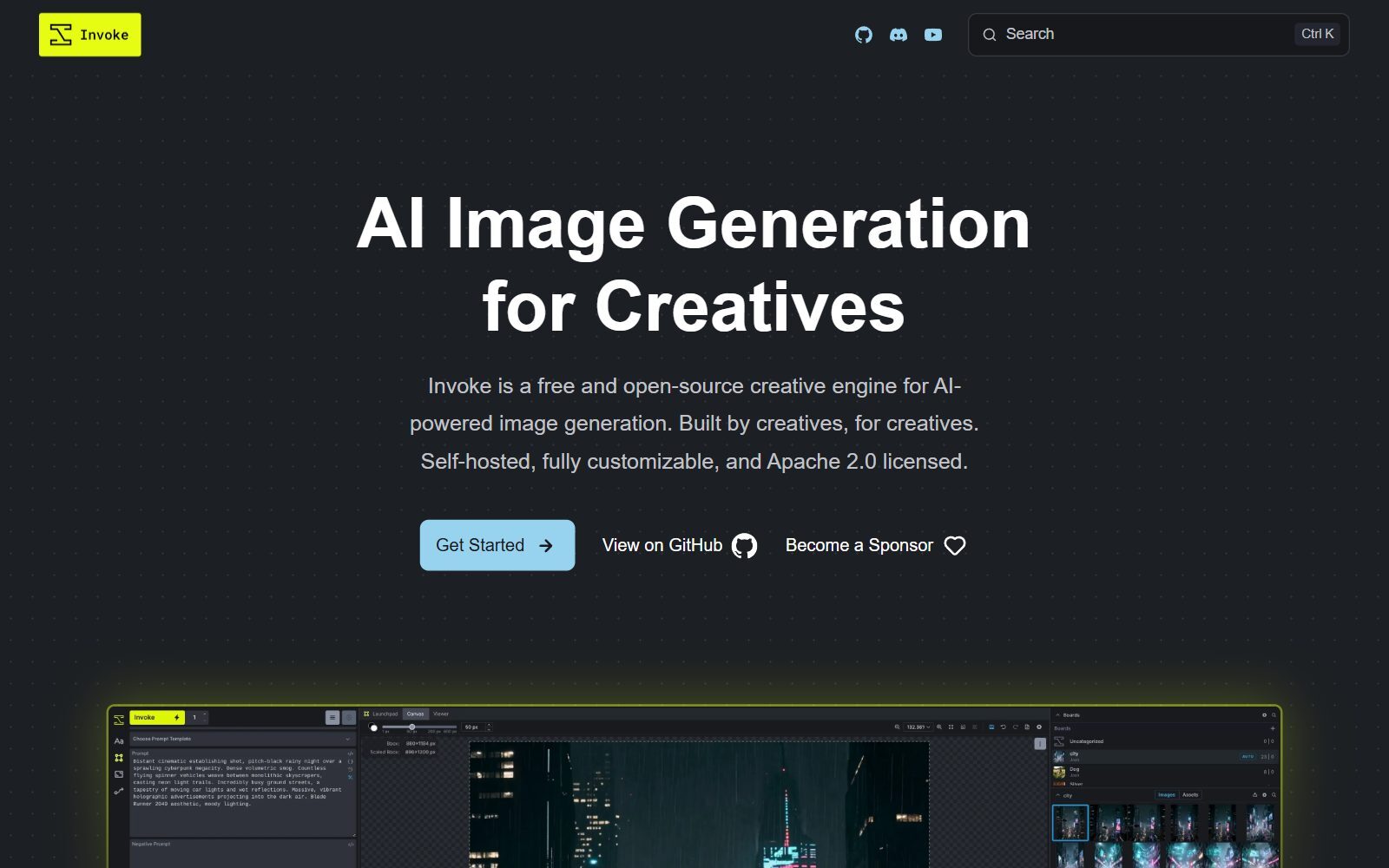
3. SD.Next: an all-in-one web UI for images and video
SD.Next is an Apache-2.0 web interface for generating and editing images and video with a wide range of diffusion models. Its strength is hardware support: it runs on NVIDIA, AMD, Intel and Apple Silicon GPUs, and even on CPU. It is updated very often; the changelog has an update dated 19 October 2026. Pick it if you liked the classic Stable Diffusion WebUI layout but want an actively maintained project with newer models.
4. Stable Diffusion WebUI Forge: popular, but stalled
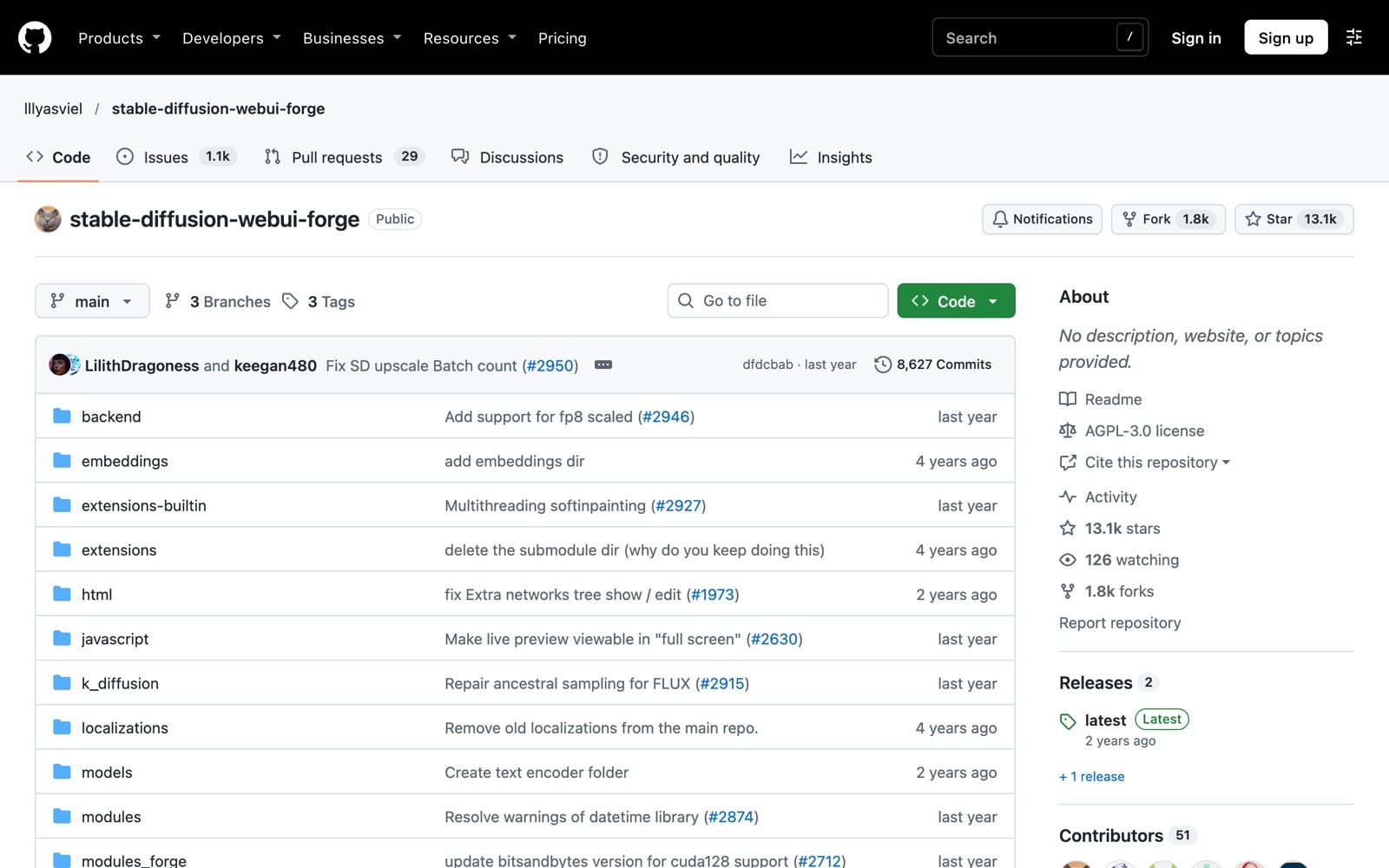
Stable Diffusion WebUI Forge (AGPL-3.0) is a faster, memory-optimised platform built on the original AUTOMATIC1111 Stable Diffusion WebUI, and it later added FLUX support. Many tutorials still use it. But its last code change dates from July 2025, and its own README says the original WebUI is "almost static now". If you want this interface with recent updates, community forks such as Forge Classic (AGPL-3.0, release 2.31 in October 2026) continue the work; for a new setup, ComfyUI, Invoke or SD.Next are safer choices.
5. Fooocus: the simplest local generator, in maintenance mode
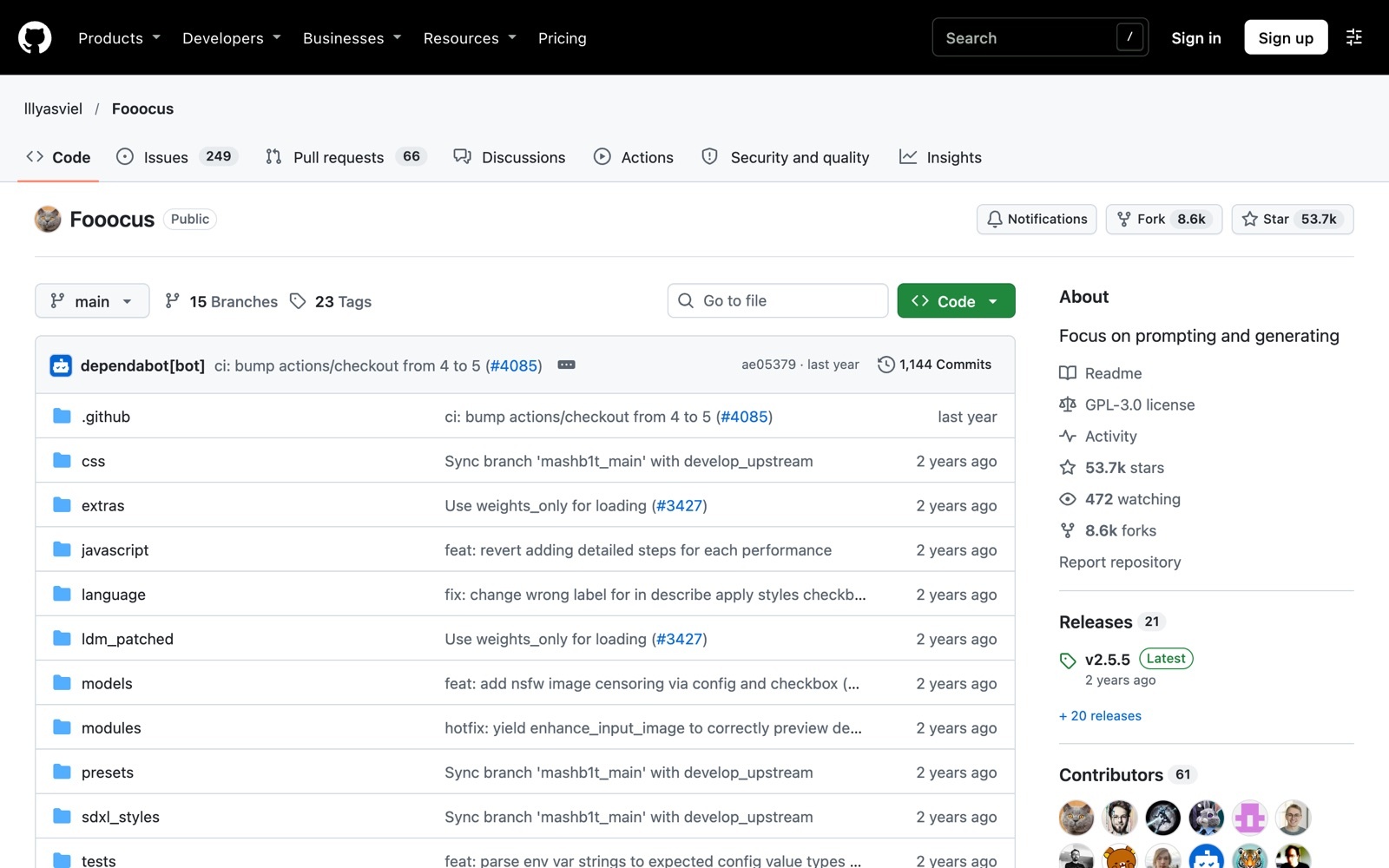
Fooocus (GPL-3.0) was built to feel like Midjourney: you type a prompt and get good images without tuning settings, offline, with a minimum of 4 GB of NVIDIA GPU memory. It is now in limited long-term support with bug fixes only, it works only with Stable Diffusion XL models, and its last release, v2.5.5, dates from August 2024. Its README warns that many fake Fooocus websites exist and that the GitHub repository is the only official source. For newer models, the README itself points to Forge and ComfyUI.
Validate your startup idea with the unique borrowed authority approach: we publish articles about your product in our blog and you get traffic and testers for your MVP
- Prove Market Demand: See real organic traffic and waitlist conversions
- Unlock High-Potential Keywords: Receive a curated list of top-performing keywords directly from Google Search Console data.
- Estimate Customer Acquisition Cost (CAC): Gain financial foresight with an estimated CAC based on real keyword performance data.
🔗 Start validating your startup now
6. Openverse: open-source search for openly licensed images
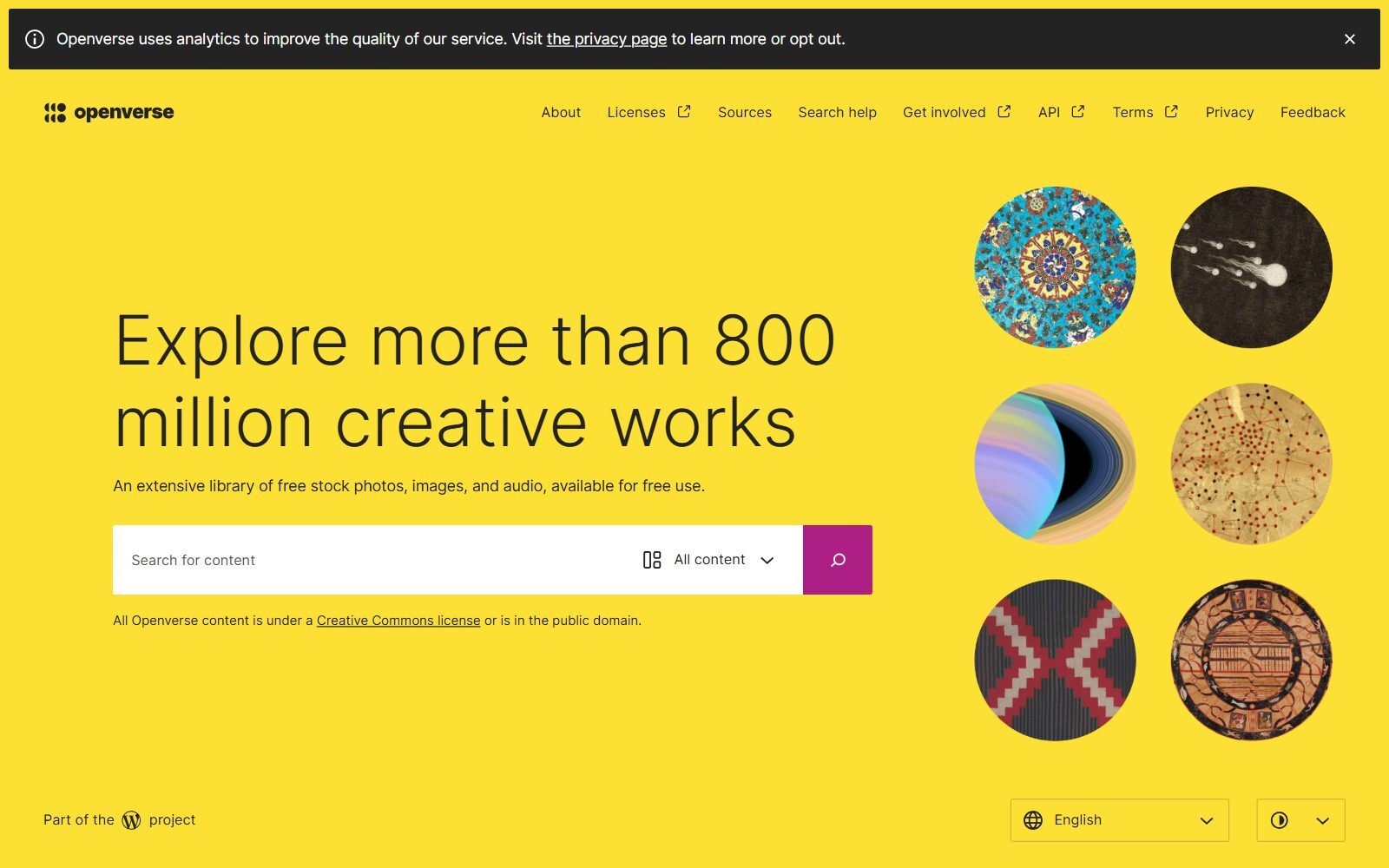
Openverse is the closest open-source replacement for the search half of StockAI. It searches more than 800 million images and audio tracks that are under Creative Commons licences or in the public domain, collected from open APIs and the Common Crawl dataset, and it offers one-click attribution. All of its code is open source (MIT on GitHub). Openverse is the successor to CC Search, launched by Creative Commons, and has been part of the WordPress project since 2021.
One caution matters for business use: Openverse says it does not verify the licence of individual works or whether the generated attribution is complete, so open the source page and check before you publish.
7. Wikimedia Commons: about 150 million freely usable files
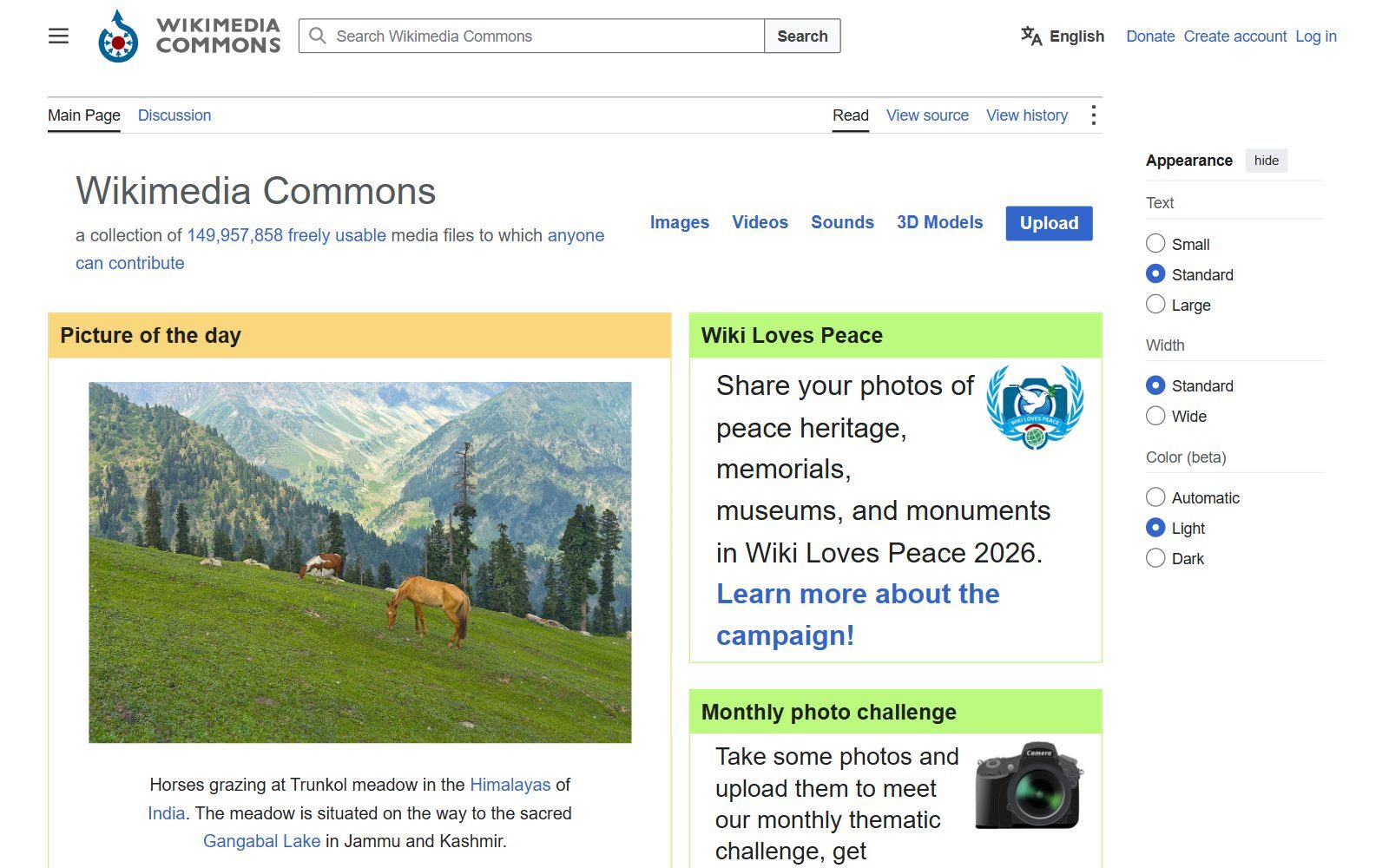
Wikimedia Commons is the media library behind Wikipedia. When we checked in October 2026, its main page counted 149,957,858 freely usable media files, including photos, illustrations, maps, video and 3D models. It is the best free source for real places, buildings, historical images and public figures, the kind of picture an AI generator cannot provide honestly.
Commons says almost all of its media is under a free licence or in the public domain, but each file has its own terms: credit the creator where the licence asks for it, keep share-alike licences on modified versions, and remember that commercial use of photos of people can need their consent.
8. Immich: AI search for your own image library
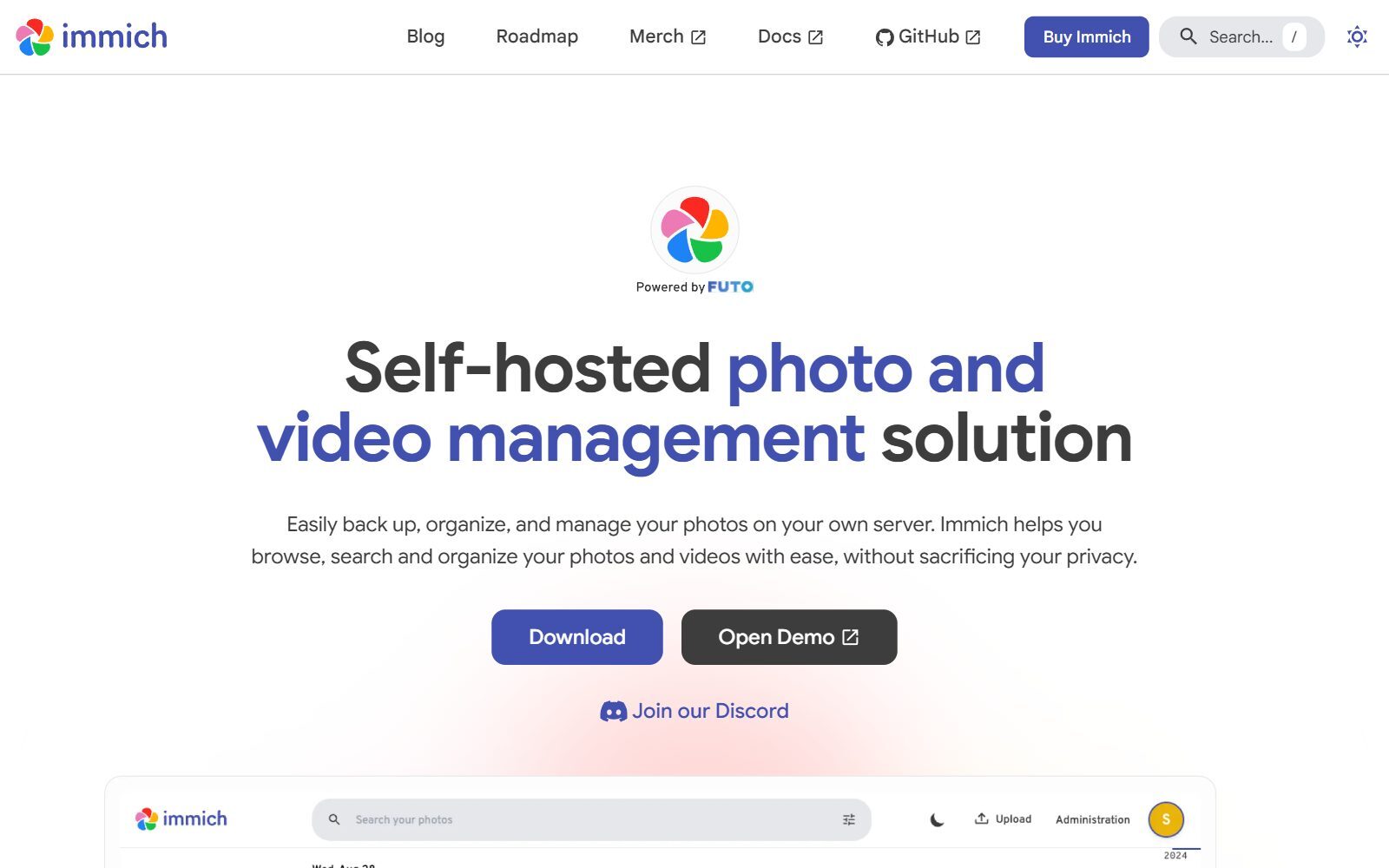
Immich is an AGPL-3.0, self-hosted photo and video library, backed by FUTO. Once your startup has its own collection of product shots, event photos and generated images, it becomes your private stock library. Its smart search uses CLIP machine-learning models, so you can type a description such as "laptop on a wooden desk" and find matching images without tags. You can also search by faces, text inside images (OCR), places, camera, dates and albums. The latest release, v3.3.5, came out on 21 October 2026.
9. PhotoPrism: a self-hosted photo library with AI labels
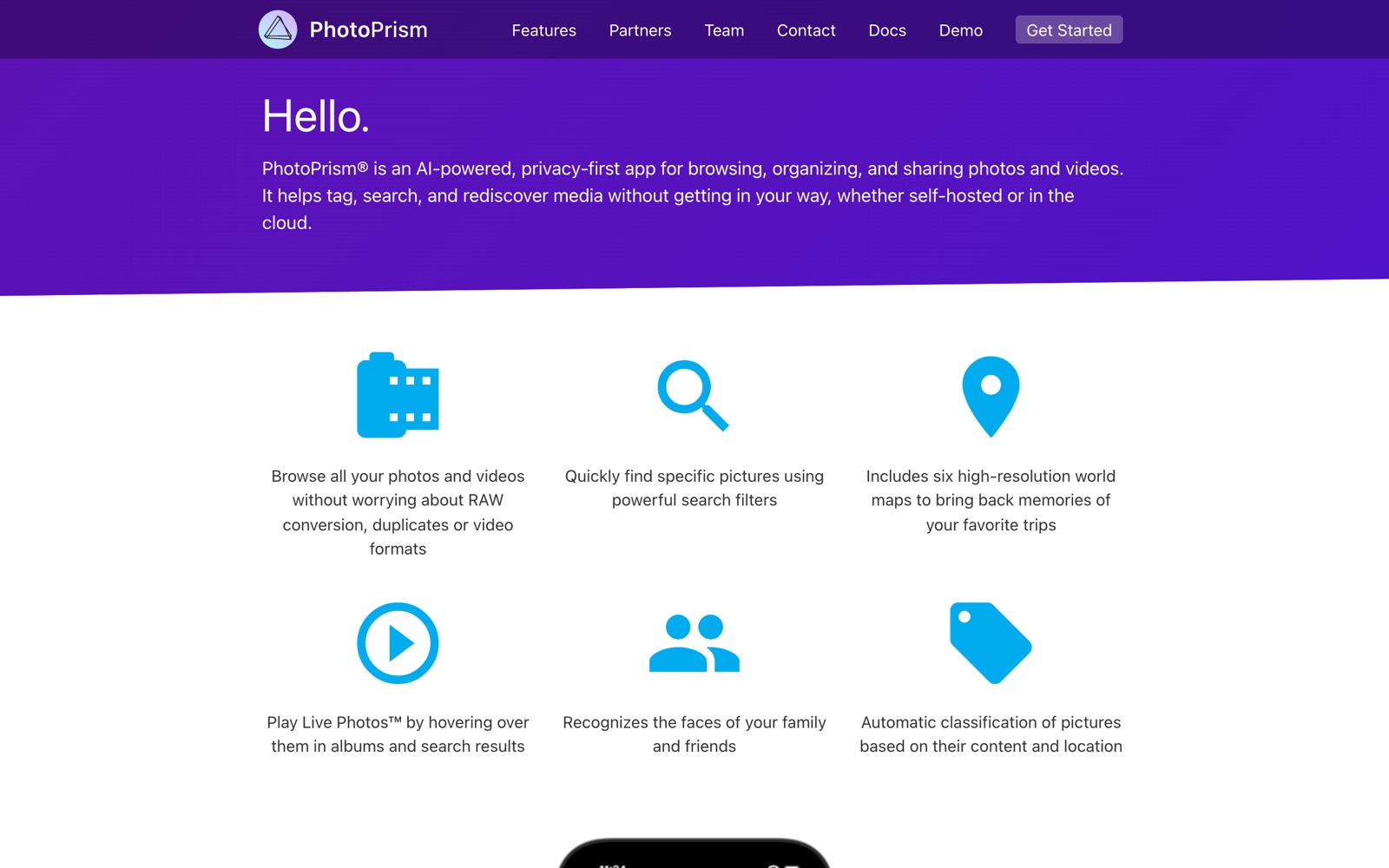
PhotoPrism is a privacy-first app for browsing, organising and sharing photos and videos on your own server. It labels pictures automatically by content and location, recognises faces, and lets you filter by label, place, colour, resolution and quality. The Community Edition is free under the AGPL; paid memberships start at €2 a month. It was in the 2025 list too and is still very active, with a release on 7 October 2026.
10. Milvus, FAISS and clip-retrieval: build your own image search
If you want a StockAI-style "type a description, get matching images" search inside your own product, these are the building blocks. Milvus (Apache-2.0, v3.0.4 in October 2026) is a vector database, and FAISS (MIT, v1.15.1 in September 2026) is Meta's library for fast similarity search. You turn each image into an embedding with a model such as CLIP and search the vectors. clip-retrieval (MIT) packages that pipeline: it computes CLIP embeddings, builds the index and serves a search front end; its last release, 2.45.0, dates from August 2025. These are developer tools, so plan for engineering time.
Which Open AI Image Models Can You Use Commercially?
The generators above are open source, but each model has its own licence. These are the licences on the models' official Hugging Face pages in October 2026:
Sources: model cards on Hugging Face, the FLUX.1 [dev] licence in Black Forest Labs' GitHub repository and the Stability AI Community License, checked October 2026. Licences change: read the current text before commercial use.
The FLUX.1 [dev] licence is a common trap: it says you may use the generated images for any purpose, including commercial ones, but not to train a competing model, while the model itself stays non-commercial. If you want no doubt at all, use an Apache-2.0 or MIT model.
Free but Not Open Source: Unsplash and Pexels
If you mainly need ordinary stock photos, two free libraries cover most needs, but neither is open source and neither uses a Creative Commons licence:
- Unsplash: photos can be used for free, commercially or not, with no permission needed and attribution optional. You may not sell images without significant modification or compile them into a similar or competing service. Unsplash+ images have a separate licence.
- Pexels: all photos and videos are free to use and to modify, and attribution is not required. You may not sell unaltered copies, redistribute them on other stock or wallpaper platforms, show identifiable people in a bad light, imply endorsement or use them in a trademark.
What Happened to StockAI and the Tools From Our Older List
- StockAI: stockai.com now redirects to a GoDaddy domain-for-sale address (checked October 2026). According to The Decoder's launch coverage in 2022, it was a library of AI-generated stock photos by Danny Postma, with paid generation of new images.
- Invoke hosted platform: shut down when the founding team joined Adobe; the open-source app continues under community maintainers.
- Fooocus: bug fixes only, Stable Diffusion XL only. Stable Diffusion WebUI Forge and the original AUTOMATIC1111 WebUI are close to static.
- RevEye and Search by Image: open-source (GPL-3.0) browser extensions for reverse image search. They help you find where a picture is published, not a source of images. Search by Image is still maintained (release in June 2026, 30+ search engines); RevEye's code was last updated in August 2024.
- QISS: a research paper, not software you can install, so we removed it.
- VGG Image Search Engine (VISE): Oxford's visual search tool; its last release dates from 2022.
- Simple Image Search Engine (sis) and the GitHub reverse-image-search project: small demo projects, last updated in November 2021 and May 2025.
- DeepDetect: still maintained, but it is a machine-learning server for developers rather than an image source; Milvus, FAISS and clip-retrieval cover the same need more directly.
Which Open-Source StockAI Alternative Should You Choose?
- You want StockAI-style AI images on your own computer: ComfyUI if you like control, Invoke if you want a canvas, SD.Next if your GPU is not NVIDIA.
- You have no GPU: start with Openverse, Wikimedia Commons, Unsplash or Pexels, or run ComfyUI on a rented cloud GPU.
- You need photos of real places or people: Wikimedia Commons, with the licence checked file by file.
- You need images you can use in ads without doubt: an Apache-2.0 or MIT model (FLUX.1 [schnell], Qwen-Image, Z-Image-Turbo, HiDream-I1) or Pexels and Unsplash photos.
- You want to find images you already own: Immich or PhotoPrism.
- You are building image search into a product: Milvus or FAISS with CLIP embeddings, or clip-retrieval.
Editing the images next? See our guides to open-source Photoshop alternatives, free Photoshop alternatives and open-source Illustrator alternatives for vector graphics, free Illustrator alternatives and free CorelDRAW alternatives.
How Founders Use Open-Source Image Tools
A small startup needs a steady flow of images: blog covers, social posts, landing page heroes, pitch deck slides and product mock-ups. Paying per image adds up, and AI stock sites can disappear, as StockAI did. A practical stack is free photo libraries for real-world pictures, a local generator for the rest, and a self-hosted library so the team can find everything again.
For layouts and social graphics, compare free Canva Pro alternatives and open-source Canva alternatives, and see the top design tools for startups. If you would rather not install anything, our guides to a free AI image generator without a watermark and an online text-to-image generator cover browser tools, and the background removal tool guide helps with product photos. For 3D product renders, see open-source Blender alternatives.
Images are only useful if people see them. Plan your posts with a social media content calendar, schedule them with open-source Buffer alternatives, and build a recognisable look with our guide to personal branding for female founders. Technical founders may also like our list of open-source GitHub Copilot alternatives.
FAQ About Open-Source StockAI Alternatives
Is StockAI still available?
No. When we checked in October 2026, stockai.com redirected to a GoDaddy page offering the domain for sale, so the AI stock photo library is no longer online.
What is the best open-source alternative to StockAI?
For AI-generated images, ComfyUI (GPL-3.0) or Invoke (Apache-2.0) running on your own computer. For searching existing free images, Openverse, whose code is open source and which indexes more than 800 million openly licensed works.
Is Unsplash open source?
No. Unsplash photos are free to use under the Unsplash License, but the platform is not open source and the licence is not Creative Commons. It forbids selling images without significant modification and building a similar or competing service from them.
Is Pexels free for commercial use?
Yes. The Pexels License allows free use and modification without attribution, but you may not sell unaltered copies, redistribute photos on other stock platforms, imply endorsement or use them in a trademark.
Can I sell or use AI images made with FLUX commercially?
FLUX.1 [schnell] and FLUX.2 [klein] 4B are Apache-2.0, so yes. FLUX.1 [dev] is a non-commercial model, although its licence allows commercial use of the outputs; FLUX.2 [dev] and [klein] 9B use the FLUX Non-Commercial License. Read the current licence before commercial use.
Do I need a powerful GPU to generate images locally?
It helps. ComfyUI's README says it can run large models on as little as 4 GB of VRAM and 8 GB of RAM, Fooocus needs at least 4 GB of NVIDIA memory, and Invoke needs an NVIDIA or AMD GPU or an Apple Silicon Mac. Without a GPU, use the free image libraries or a rented cloud GPU.
Is InvokeAI still maintained?
Yes. The hosted Invoke platform was shut down when the founding team joined Adobe, but the Apache-2.0 open-source app is maintained by the community and released version 6.14.2 in September 2026.
Are Openverse images safe to use commercially?
Many are, but not all: some Creative Commons licences forbid commercial use or require share-alike. Openverse does not verify licences, so check the licence on each image's source page.
How can I search my own photos by what is in them?
Self-host Immich, which uses CLIP models for smart search and also searches faces and text in images, or PhotoPrism, which labels photos automatically by content and location.
How can I get my startup featured with real images and real traffic?
Our startup idea validation service publishes articles about your product and reports real traffic and sign-ups, so you test demand before you invest in a big visual campaign.
About the Author
Violetta Bonenkamp, also known as MeanCEO, is an experienced startup founder with an impressive educational background including an MBA and four other higher education degrees. She has over 20 years of work experience across multiple countries, including 5 years as a solopreneur and serial entrepreneur. Throughout her startup experience she has applied for multiple startup grants at the EU level, in the Netherlands and Malta, and her startups received quite a few of those. She’s been living, studying and working in many countries around the globe and her extensive multicultural experience has influenced her immensely.

