

Open-Source FreshBooks Alternatives: Invoicing, Time Tracking and Books You Host Yourself
FreshBooks is popular with freelancers and small service businesses because it bundles invoices, estimates, online payments, time tracking, expenses and a client portal in one cloud app. It is also proprietary and billed per month, with client limits on the cheaper plans and extra fees for each team member. This guide lists open-source tools that take over FreshBooks' jobs, from simple invoicing apps to full accounting systems. We read each project's licence on its official repository and checked its latest release on 9 November 2026. Tools that turned out to be source-available, freeware or abandoned are listed separately.
Quick answer: for the closest match to FreshBooks' invoicing, estimates, expenses and client portal, self-host InvoiceShelf. If you mostly need to send invoices and get paid, SolidInvoice or InvoicePlane (both MIT) are enough. If you bill by the hour, Kimai turns timesheets into invoices. For real double-entry books, choose Bigcapital, Frappe Books or, for project-based service firms, ERPNext or Dolibarr. Akaunting and Invoice Ninja are free to self-host but are not open source.
Boost Your SEO by Getting Featured in Our Blogs and get a backlink.
We publish content about startups, education, tech, funding, etc. that ranks well not only in Google but also in Perplexity, ChatGPT, Grok and other AI tools.
👉 Get featured now!
What FreshBooks Costs and Does in 2027
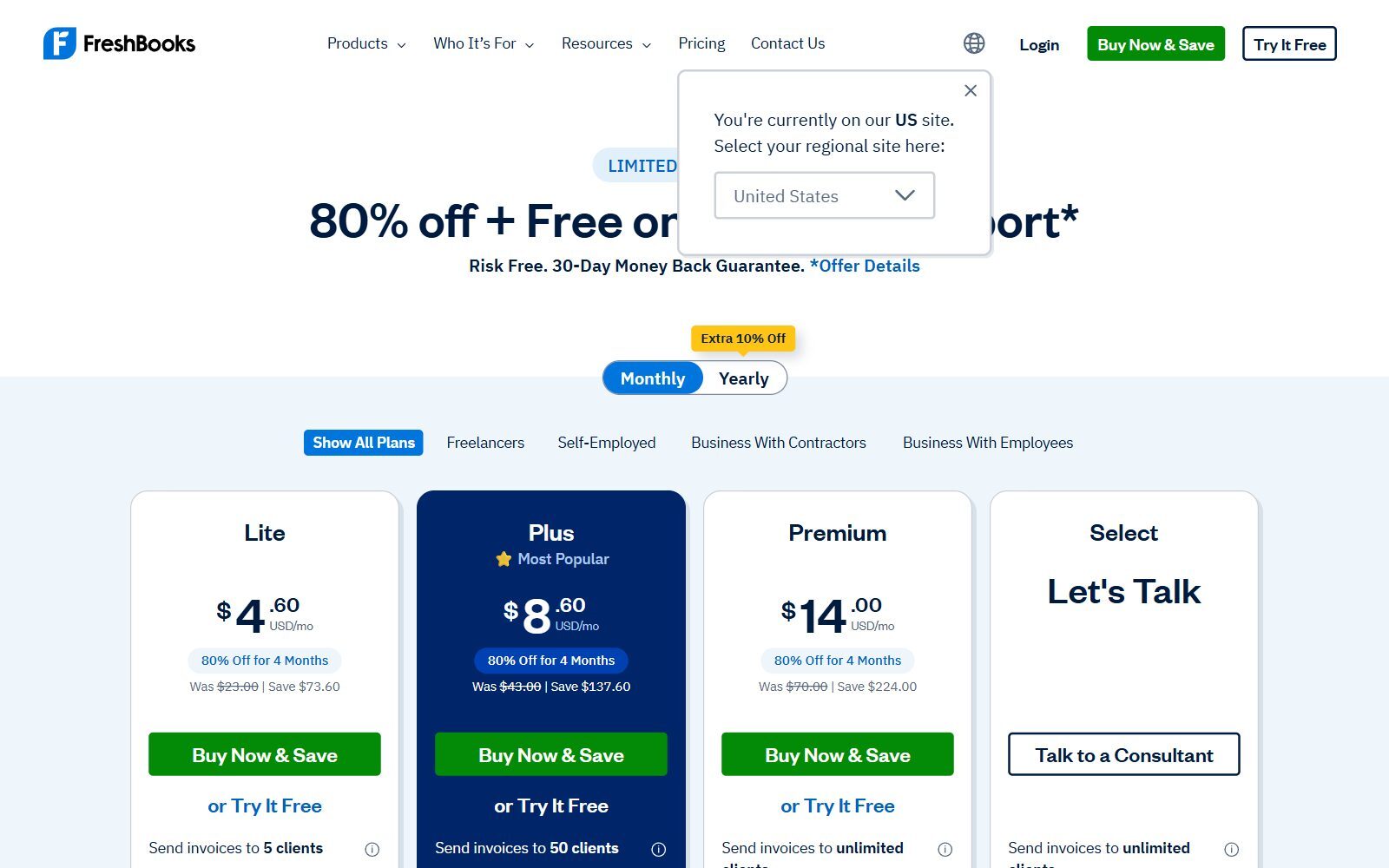
On the FreshBooks pricing page (US site, monthly billing, US dollars, checked 9 November 2026), a limited-time offer showed 80% off for the first 4 months: Lite $4.60 a month (regular price shown as $23), Plus $8.60 ($43) and Premium $14 ($70); Select is priced through sales. Lite lets you bill 5 clients, Plus 50 and Premium an unlimited number. Plus adds proposals, client retainers, accounting reports and accountant access, and Premium adds project profitability. Each extra team member costs $11 a month, and there is a 30-day free trial plus a 30-day money-back promise.
Across the plans, FreshBooks lists a client account portal, unlimited time tracking and expenses, mobile mileage tracking, online card and bank payments, double-entry accounting reports and bank reconciliation. Those are the jobs the open-source tools below have to cover. FreshBooks itself is not open source: you cannot download it, host it yourself or change its code.
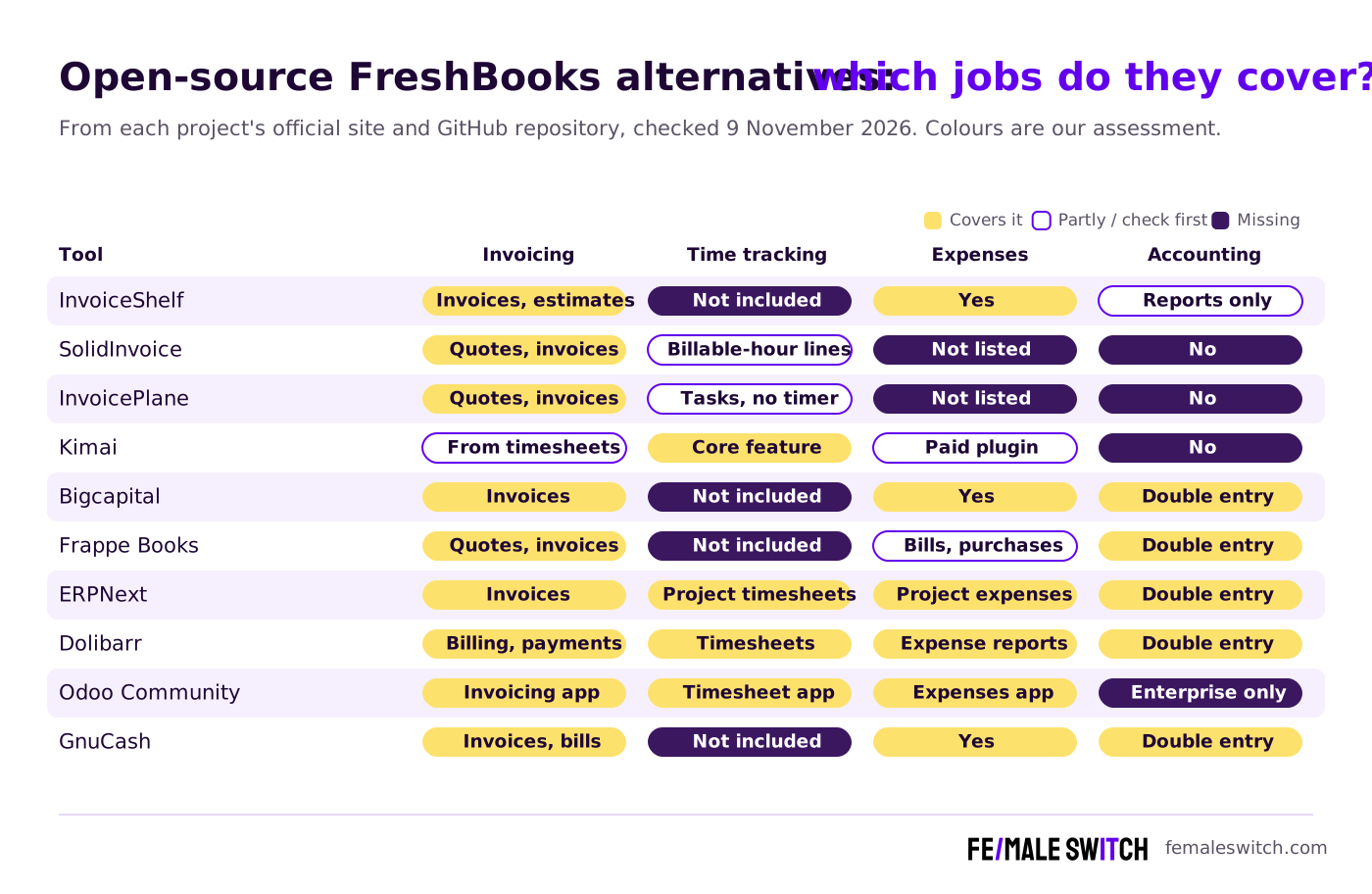
Open-Source FreshBooks Alternatives Compared
Sources: each project's official website, licence file and GitHub releases, checked 9 November 2026. Self-hosting costs no licence fee, but servers, backups and updates do.
Invoicing Apps: Closest to FreshBooks Lite and Plus
1. InvoiceShelf: invoices, expenses and a customer portal
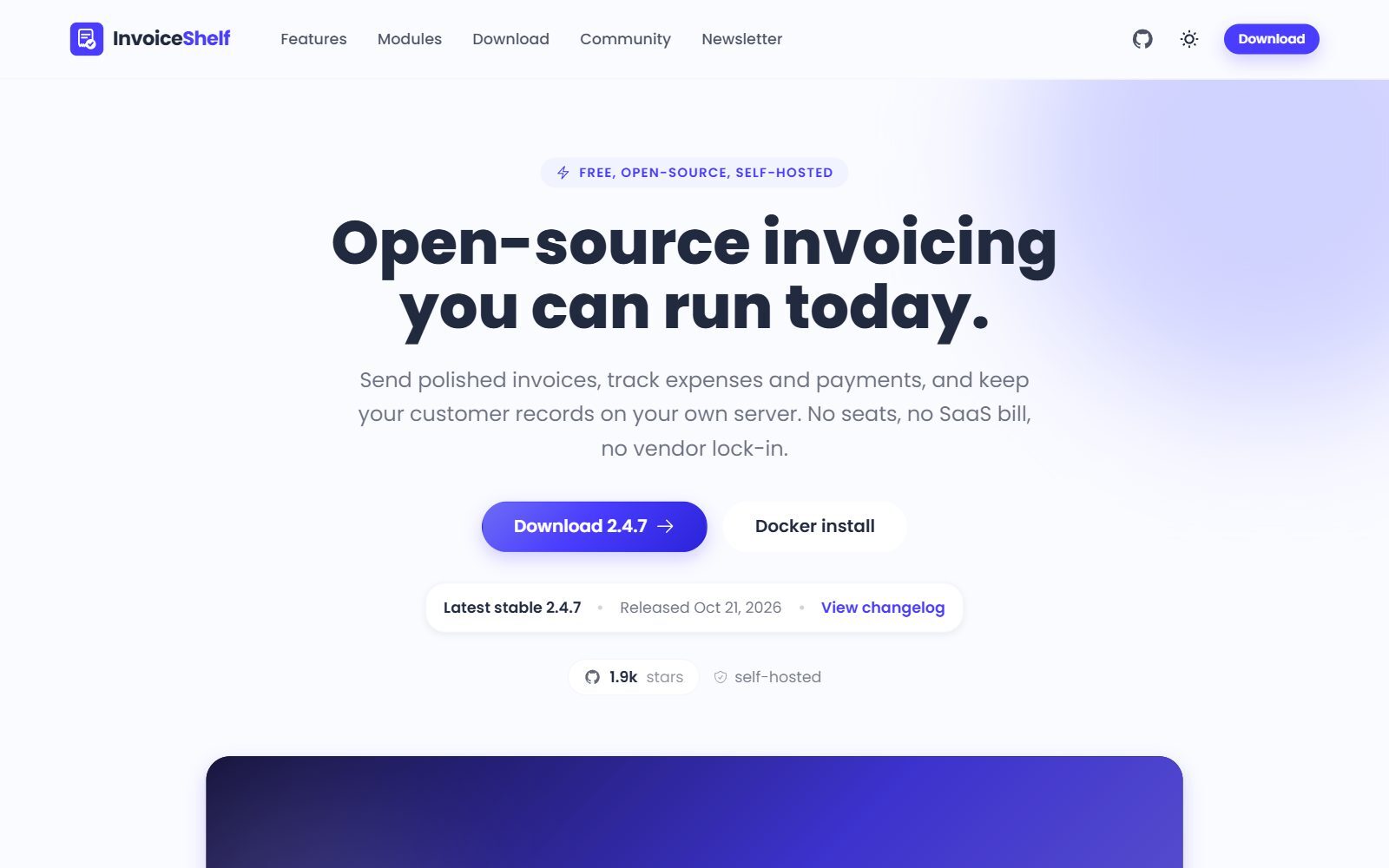
InvoiceShelf describes itself as free, open-source, self-hosted invoicing. You build branded invoices and estimates, schedule recurring invoices for retainers, track expenses and payments, and give clients a portal where they view, download and pay invoices. Its website also lists Stripe checkout for card payments, partial payments and credit notes, automatic email reminders and several companies in one install. The InvoiceShelf repository is AGPLv3, and 2.4.7 came out on 21 October 2026. One thing to plan for: the README says the v2 line gets security patches only until 1 September 2027, while new features go into the next major version.
2. SolidInvoice: MIT invoicing with an optional hosted plan
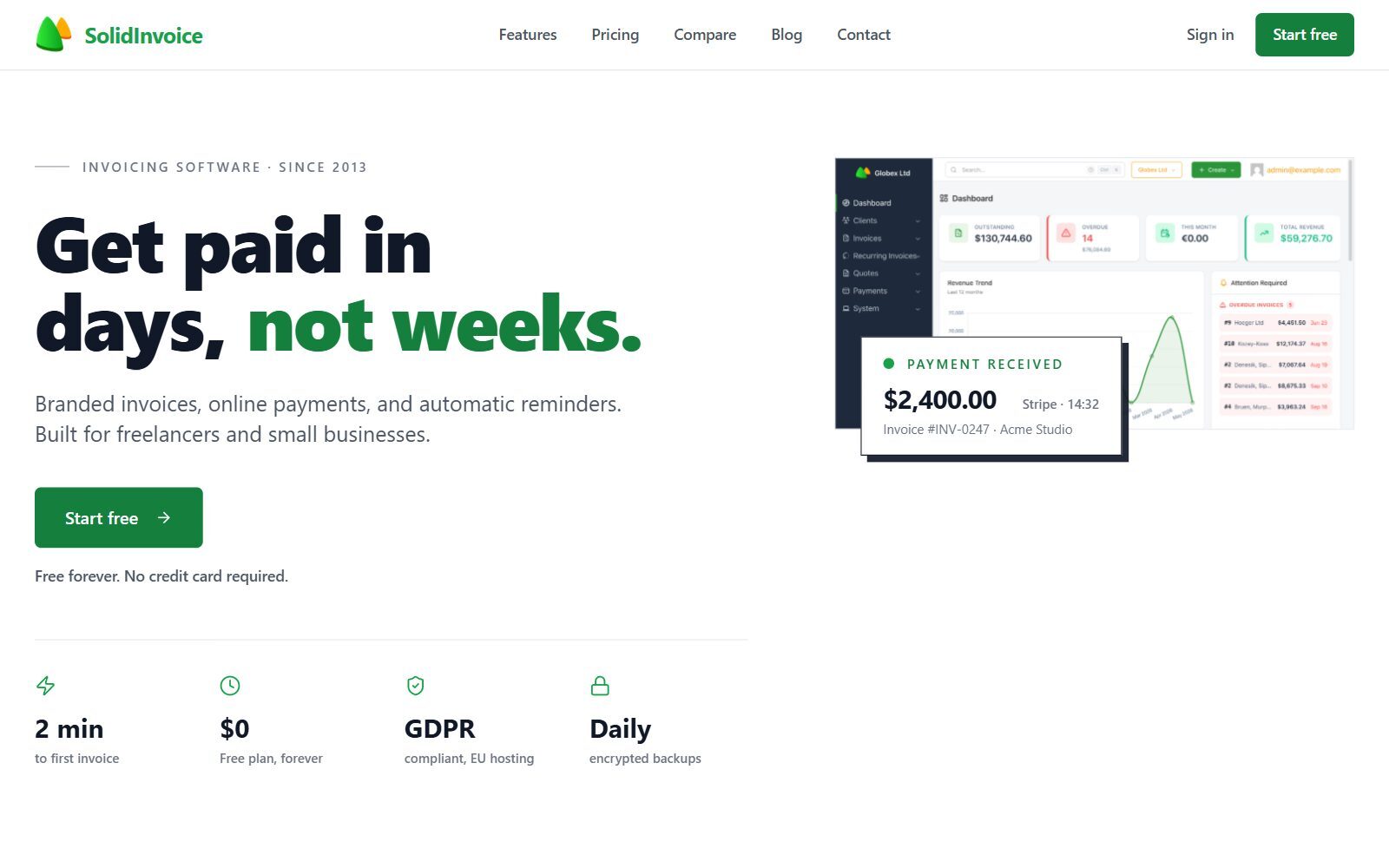
SolidInvoice has been invoicing software for freelancers and small businesses since 2013: quotes that turn into invoices, recurring invoices, multi-currency, billable-hour lines and payments by Stripe, PayPal or bank transfer. Its open-source page says the code is MIT licensed and runs on your own server with Docker; release 3.1.2 came out on 21 October 2026. If you would rather not host it, the hosted plans start with a Free plan for 3 active clients and 5 invoices a month; on annual billing, Solo is $8 a month ($90 a year), Pro $16 ($190) and Business $33 ($390), and Pro can be tried free for 30 days without a card.
3. InvoicePlane: self-hosted quotes, invoices and payments
InvoicePlane is a self-hosted open-source application for quotes, invoices, clients and payments, published under the MIT licence (the name and logo are trademarked). Clients pay online through PayPal or Stripe, you keep client records with notes and custom fields, and basic project and task management is included; since version 1.6.2 it can also create EU e-invoices. Version 1.7.2 came out on 28 August 2026 and the InvoicePlane repository is still active. There is no hosted version and no time tracker or expense module.
Validate your startup idea with the unique borrowed authority approach: we publish articles about your product in our blog and you get traffic and testers for your MVP
- Prove Market Demand: See real organic traffic and waitlist conversions
- Unlock High-Potential Keywords: Receive a curated list of top-performing keywords directly from Google Search Console data.
- Estimate Customer Acquisition Cost (CAC): Gain financial foresight with an estimated CAC based on real keyword performance data.
🔗 Start validating your startup now
Time Tracking and Billing by the Hour
4. Kimai: timesheets that become invoices
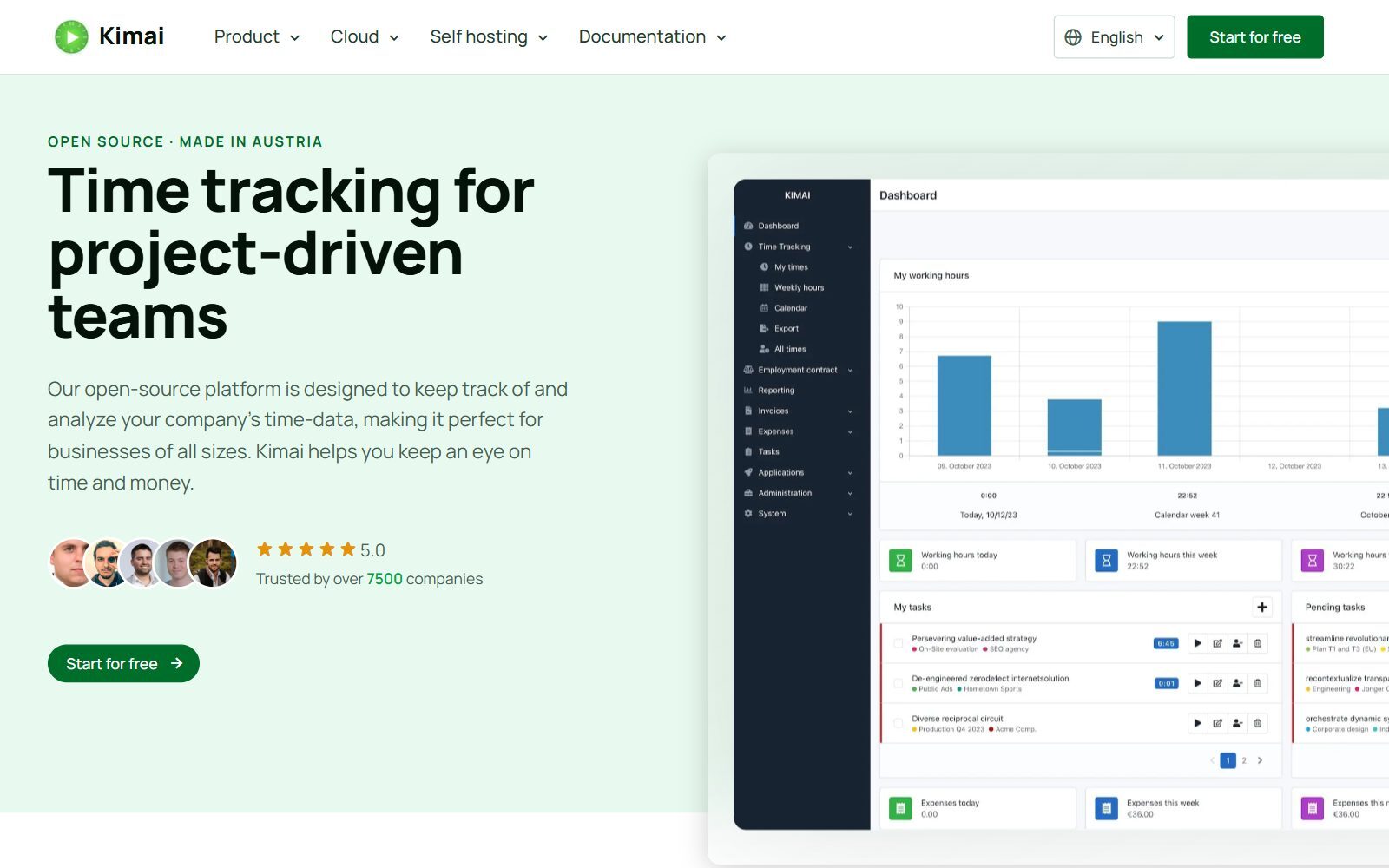
Kimai is a time tracker for project-driven teams, made in Austria and published as 100% open source under the AGPL 3. It replaces FreshBooks' time tracking: you log hours per customer, project and activity, then create invoices from configurable templates as PDF or DOCX, including e-invoices in formats such as XRechnung and ZUGFeRD. Version 2.71.0 came out on 25 October 2026. Self-hosted, expense tracking is a paid plugin. On Kimai Cloud (hosted in Germany, annual billing shown by default, excluding tax) Standard costs €2.99 per user a month with invoicing, and Professional €3.99 adds expenses and a customer portal; there is a 30-day free trial.
Full Accounting: Closest to FreshBooks Premium
5. Bigcapital: web accounting with bank feeds
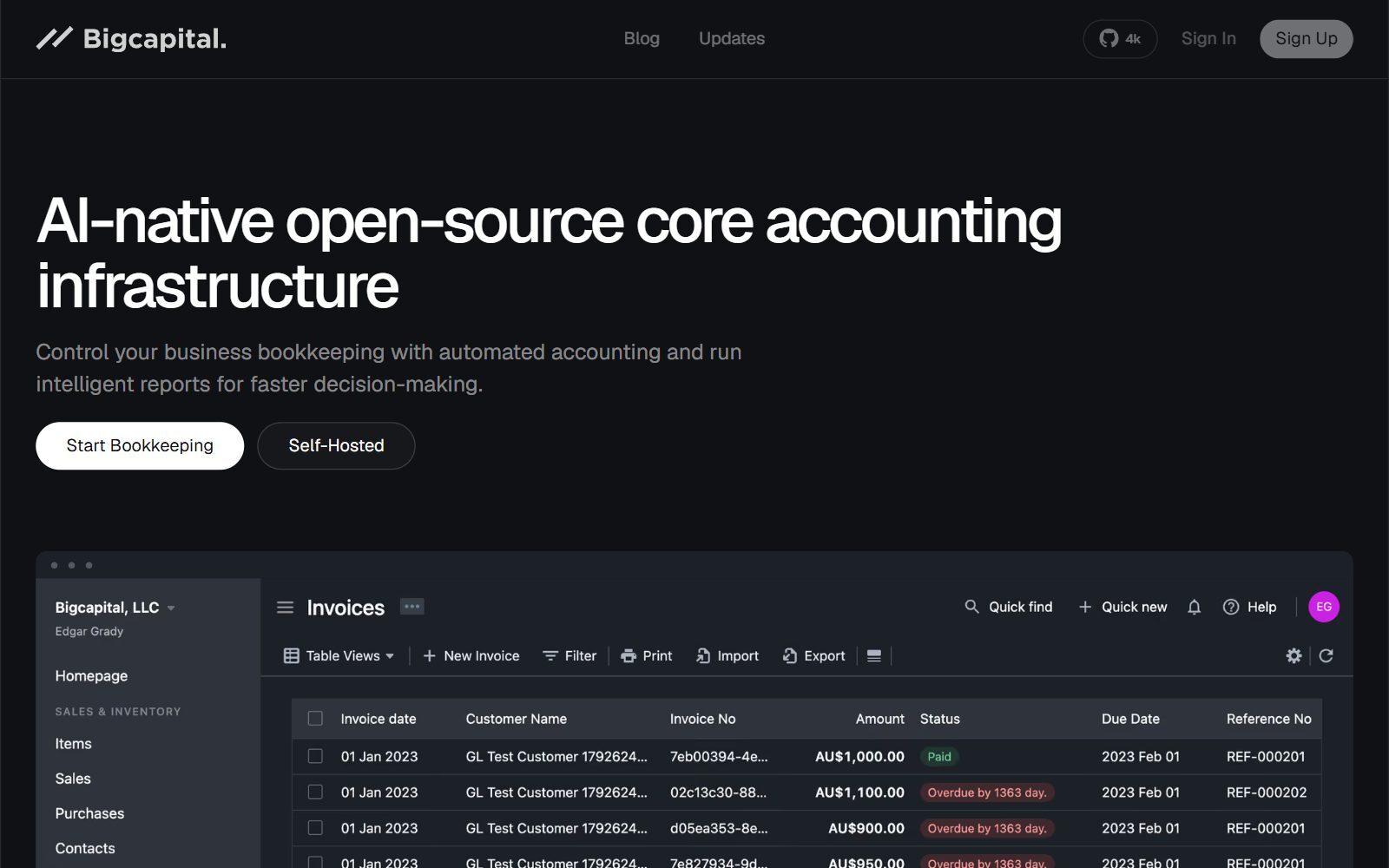
Bigcapital is open-source, AI-native accounting software: sales invoices with custom templates, expenses, inventory, multi-currency, receivables and payables, bank feed syncing and reconciliation, a general ledger and financial reports. The Bigcapital repository is AGPLv3 and shipped v0.25.45 on 23 October 2026. Self-hosting is free; the hosted Bigcapital Cloud is announced as coming soon, and sign-up was disabled when we checked, so plan on Docker. It has no time tracking or client portal, so pair it with Kimai or an invoicing app if you need those.
6. Frappe Books: simple books for small sellers
Frappe Books is free, open-source accounting software from the makers of ERPNext. It now runs on the Frappe Framework on your own server and is used in a browser on a computer or phone; the old desktop app is no longer supported, and its old GitHub repository is archived. You send quotes, turn them into invoices and record payments, with double-entry books, a chart of accounts for your country, profit and loss, balance sheet and India GST reports. The current Frappe Books repository is AGPLv3, with v16.1.1 out on 7 November 2026. It suits product sellers more than hourly billers.
7. ERPNext: projects, timesheets and invoices for service firms
ERPNext is a 100% open-source ERP whose code is GPLv3; v16.54.0 came out on 6 November 2026. For a FreshBooks user the useful part is its projects module: tasks, timesheets, project expenses and project profitability, linked to invoicing and full accounting, plus CRM, HR and payroll. Frappe says it works for consultancies and agencies, and that most small businesses need 2 to 8 weeks to implement it. You can self-host it or pay for hosting on Frappe Cloud, which has no per-user pricing.
8. Dolibarr: modular ERP with timesheets and expense reports
Dolibarr is an open-source ERP and CRM under the GPLv3 for small companies, freelancers and associations; 24.0.2 is the newest tag on its GitHub repository. You switch on only the modules you need. For a FreshBooks user that means billing and payments, timesheets, expense reports and double-entry accounting, next to proposals, projects and tasks, and a CRM. You can run it on your own server or buy a SaaS offer from one of its partners.
9. Odoo Community: invoicing, timesheets and expenses, no full books
Odoo publishes its Community edition under the LGPLv3. Its editions table ticks the Invoicing, Project, Timesheet and Expenses apps for Community, which together cover much of what freelancers use FreshBooks for. The full Accounting app, with the general ledger, bank reconciliation and financial reports, belongs to the paid Enterprise edition, so leave the books to an outside accountant if you stay on Community.
10. GnuCash: free double-entry books on one computer
GnuCash is personal and small-business accounting software under the GNU GPL, for Windows, macOS and Linux; version 5.17 came out on 27 September 2026. It keeps double-entry books with customer and vendor tracking, jobs, invoices and bill payments, and imports bank data as QIF or OFX. It has no online payments, client portal or time tracker, so it suits a solo founder who invoices a handful of clients and wants clean books for tax time.
Not Open Source, Abandoned or Changed
The 2025 version of this article listed ten tools, several of which were not open source. Here is what changed, plus two names that often appear in FreshBooks comparisons:
- Akaunting: free to self-host, but its licence file is the Business Source License 1.1, which limits production use to 2 users, one company and 1,000 invoices and turns each version into GPLv3 only four years later. Not open source by the usual definition, though actively developed (3.3.0 came out on 27 October 2026).
- Invoice Ninja: a popular FreshBooks alternative and actively developed (v5.13.53 came out on 2 November 2026), but its code is published under the Elastic License 2.0, a source-available licence, not an open-source one.
- Crater: the code is AGPLv3, but the last release, 6.0.6, dates from March 2022 and the repository has had no new code since August 2024. We treat it as abandoned.
- Manager.io: free accounting software for Windows, Mac and Linux with a paid Cloud Edition, but it is freeware, not open source: no source code is published.
- Wave and ZipBooks: closed-source cloud services, so they do not belong in an open-source list.
- Open Accounting: the server code is MIT, but its last commit dates from September 2023 and the website offers it free only for single-user personal use.
- SQL-Ledger: the download page still offers 3.2.12 from January 2023; a 3.2.13 release announced for 1 February 2025 never appeared.
Which Open-Source FreshBooks Alternative Should You Choose?
- You want FreshBooks' invoices, expenses and client portal, self-hosted: InvoiceShelf.
- You only send invoices and want an easy hosted fallback: SolidInvoice.
- You want the simplest self-hosted invoicing with an MIT licence: InvoicePlane.
- You bill by the hour: Kimai, on its own or next to an accounting tool.
- You want real books with bank feeds: Bigcapital.
- You run a consultancy or agency with projects: ERPNext or Dolibarr.
- You invoice from a CRM and an accountant keeps the books: Odoo Community.
- You are a solo founder doing your own books on one laptop: GnuCash.
- You do not want to run a server: stay on a hosted plan, such as SolidInvoice's or Kimai Cloud, or compare our free cloud options.
How Founders Replace FreshBooks With Open-Source Tools
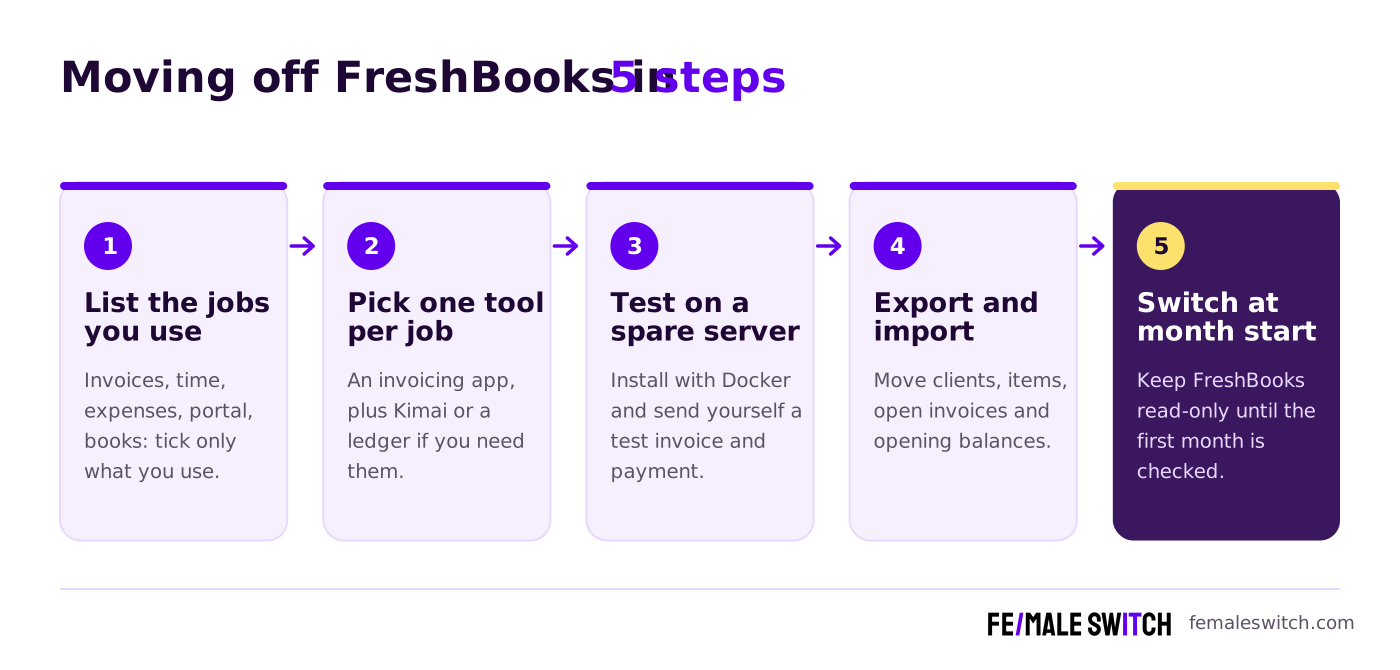
Most founders do not swap one app for one app. A common setup is an invoicing tool (InvoiceShelf or SolidInvoice) or a time tracker (Kimai) for client work, plus one accounting tool (Bigcapital, Frappe Books or ERPNext) or an outside accountant for the books, with one person in charge of updates and backups. Switch at the start of a month or quarter, move clients, items, open invoices and opening balances first, and keep FreshBooks read-only until your accountant has checked the first month. Our guide to setting up estimates and invoices for a service business helps you design the documents, and the best reconciliation software guide covers the step where most switches go wrong.
For the accounting side, compare our open-source Zoho Books alternatives, open-source QuickBooks alternatives and open-source Sage alternatives; if you prefer a hosted free plan, see our free Zoho Books alternatives. For expense claims, read the open-source Expensify alternatives and free Expensify alternatives; to take card payments without a big processor, see the open-source Stripe alternatives.
Running client work also means projects and support. Our open-source ClickUp alternatives and open-source Notion alternatives cover project management, the open-source Zoho Desk alternatives handle support tickets, and the open-source Zapier alternatives connect your invoicing app to the rest. If you freelance, sketch your offer first with this business model canvas for freelancers. Before you spend on any software, validate your startup idea and plan your costs with the marketing budget calculator.
Join ElonaHunt (like ProductHunt but for women) and explore the coolest women-focused startups out there!
Discover your next big inspiration and connect with like-minded female entrepreneurs!
👉 Join the Hunt Here
FAQ About Open-Source FreshBooks Alternatives
Is FreshBooks open source?
No. FreshBooks is proprietary cloud accounting and invoicing software. Open-source alternatives such as InvoiceShelf, SolidInvoice, InvoicePlane, Kimai, Bigcapital and ERPNext can be downloaded, self-hosted and changed.
How much does FreshBooks cost in 2027?
When we checked in November 2026, the US pricing page showed a limited-time offer of 80% off for 4 months: Lite $4.60, Plus $8.60 and Premium $14 a month on monthly billing, against regular prices of $23, $43 and $70. Each extra team member costs $11 a month.
Which open-source tool is most like FreshBooks?
InvoiceShelf: invoices and estimates, recurring billing, expenses, payments and a customer portal, under the AGPLv3. For FreshBooks' time tracking, add Kimai; for full books, add Bigcapital or use ERPNext.
Is there an open-source FreshBooks alternative with time tracking?
Kimai is built for it: track hours per customer and project, then create invoices from them. ERPNext and Dolibarr also include timesheets next to invoicing and accounting, and Odoo Community has a Timesheet app.
Is there a free FreshBooks alternative I do not have to host?
Yes. SolidInvoice's hosted Free plan covers 3 active clients and 5 invoices a month, and the same MIT code can be self-hosted later. Kimai Cloud has a 30-day free trial, then costs from €2.99 per user a month billed annually.
Is Invoice Ninja open source?
No. Its code is public but published under the Elastic License 2.0, which is source-available rather than open source. It is actively developed.
Is Akaunting open source?
Not by the usual definition. Its licence is the Business Source License 1.1, which limits free production use to 2 users, one company and 1,000 invoices.
Is Crater still maintained?
It does not look like it. Its last release, 6.0.6, came out in March 2022, and the repository has had no new code since August 2024.
What does self-hosting an invoicing app cost?
No licence fee, but you pay for a server, backups and your own time for updates and security. SolidInvoice and Kimai let you switch to their hosted plans if that becomes a burden.
Where can I get a backlink by writing about my startup?
You can publish a guest post in one of the Fe/male Switch startup blogs, which rank in Google and in AI tools. Get a quality backlink.
About the Author
Violetta Bonenkamp, also known as MeanCEO, is an experienced startup founder with an impressive educational background including an MBA and four other higher education degrees. She has over 20 years of work experience across multiple countries, including 5 years as a solopreneur and serial entrepreneur. Throughout her startup experience she has applied for multiple startup grants at the EU level, in the Netherlands and Malta, and her startups received quite a few of those. She’s been living, studying and working in many countries around the globe and her extensive multicultural experience has influenced her immensely.

