

Figma AI Alternatives for Teams: Paid AI Design, Prototyping and Prompt-to-App Tools Compared on Price, AI Credits and Handoff
Figma AI now runs on credits: every paid seat includes a monthly allowance, and heavy users of Figma Make or the Figma agent buy more. That makes it worth comparing what you get elsewhere for the same money. This guide is for founders and product teams ready to pay: we compared the paid plans of the main AI design, prototyping and prompt-to-app tools on their own pricing pages in November 2026, with the price and billing period each page shows, how much AI is included, and what you can hand off to developers or export as code. Discontinued and renamed tools from older lists are covered at the end.
Quick answer: if your designers live in Figma, a Figma Professional Full seat ($16 a month billed annually, 3,000 AI credits) is still the default. For code-based prototypes built from your own React components, choose UXPin; for a live marketing site, Framer or Webflow; for a working app from prompts, Lovable, v0 or Bolt; for product prototypes that export to Figma and GitHub, Magic Patterns; and for a Mac design app with no AI add-on to pay for, Sketch. On a zero budget? See our free Figma AI alternatives, including Google's free Stitch.
Boost Your SEO by Getting Featured in Our Blogs and get a backlink.
We publish content about startups, education, tech, funding, etc. that ranks well not only in Google but also in Perplexity, ChatGPT, Grok and other AI tools.
👉 Get featured now!
What Figma's Paid AI Costs in 2027
On the Figma pricing page (prices in USD, annual billing selected by default, checked 13 November 2026) a Professional Full seat costs $16 a month with 3,000 AI credits a month, a Dev seat $12 and a Collab seat $3, each with 500 credits. On the Organization plan, billed annually, a Full seat costs $55 with 3,500 credits; on Enterprise, $90 with 4,250. Viewers and commenters are free on paid plans. The free Starter plan gets 150 AI credits a day, up to 500 a month (the page shows the same figures in euros from Europe).
Credits are spent across Figma Make, the Figma agent, which now includes the old First Draft feature, and AI image tools. Figma's credits guide lists, for example, 1 to 5 credits to remove a background, 5 to 10 to boost an image's resolution and 20 to add prototype interactions, while Make and the agent use a varying amount per request. When a team runs out, admins can buy more through a credit subscription or pay-as-you-go billing; according to Figma's AI credits admin guide, on the Professional plan that subscription runs month to month even if the plan is billed annually. Paid seats also unlock Dev Mode and a larger Figma MCP server allowance (200 tool calls a day on Professional instead of 20 a month on Starter), so AI coding tools can read your designs.
Paid Figma AI Alternatives Compared
Sources: each vendor's own pricing page, default view, checked 13 November 2026. Billing periods differ (annual, yearly or monthly, as shown), prices are in USD unless stated, and taxes are extra.
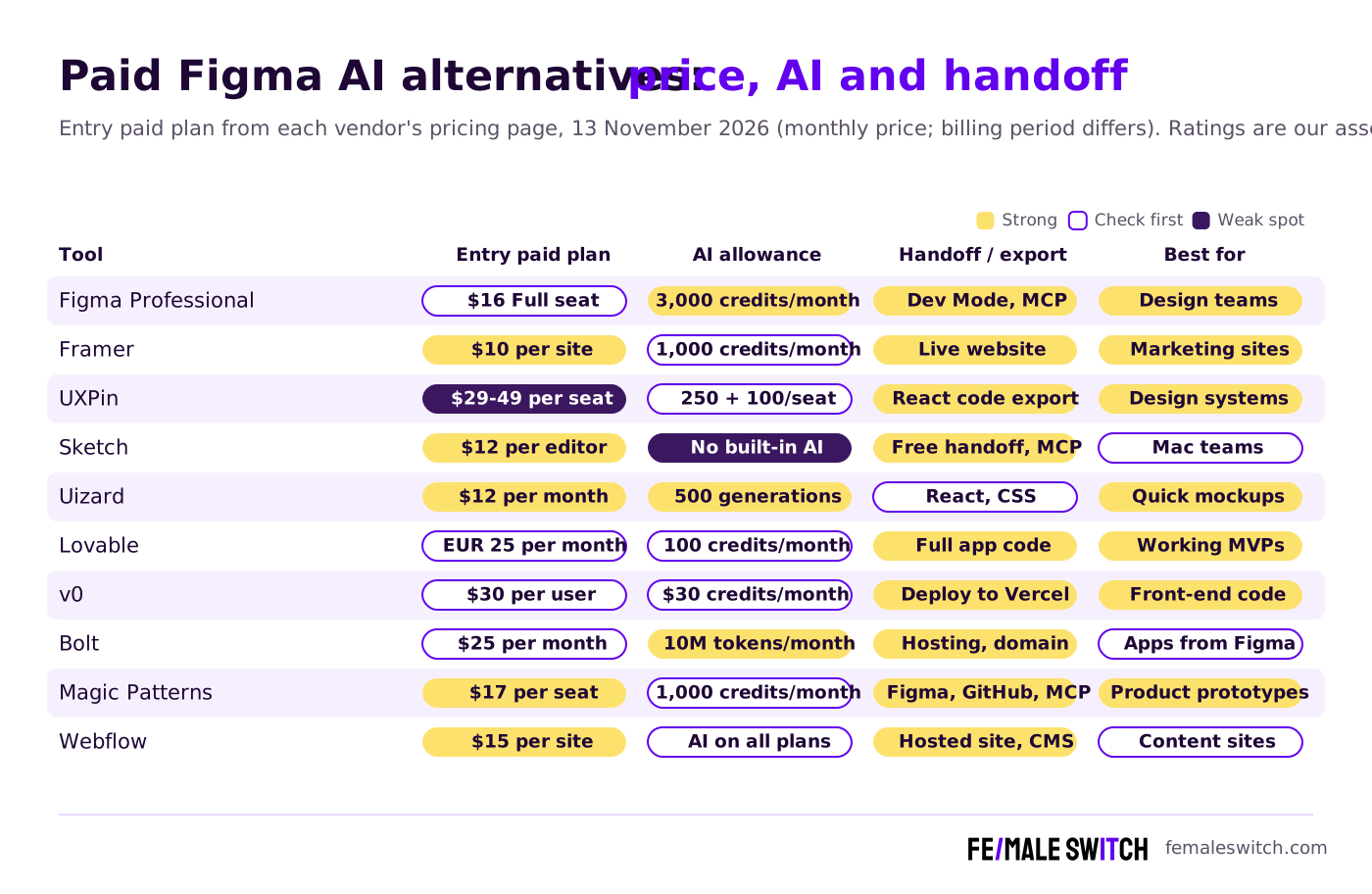
The Best Paid Figma AI Alternatives in 2027
1. Framer: AI website design that goes live
Framer presents itself as a pro website builder with a design agent: you build a site with AI agents and refine it on an editable design canvas, then publish without a developer. On Framer's pricing page (yearly billing shown) Basic costs $10 a month with 1,000 AI credits and a custom domain, and Pro $30 a month with 3,000 credits, a staging environment and branching with previews. Extra editors cost $20 a month, viewers are free and the MCP server is free during its preview. Framer is priced per site, not per designer, so it suits a startup whose main design job is the website. For self-hosted options, see the open-source Framer alternatives.
2. UXPin: AI that designs with your real React components
UXPin is built around code. Its Forge AI designs with real React components from shadcn/ui, MUI, Ant Design, Bootstrap or your own library, and exports production-ready code, so developers do not rebuild the screens from pictures. On UXPin's pricing page Core costs $49 per seat a month billed monthly, or $29 billed annually, with 250 AI credits plus 100 per seat, conditional logic, variables and built-in coded libraries; Growth costs $69, or $40 billed annually, with 600 credits plus 100 per seat, design systems and Storybook integration. Extra AI credits start at 200 for $13 a month, and every plan starts with a 14-day free trial.
3. Sketch: a Mac design app with no AI add-on to pay for
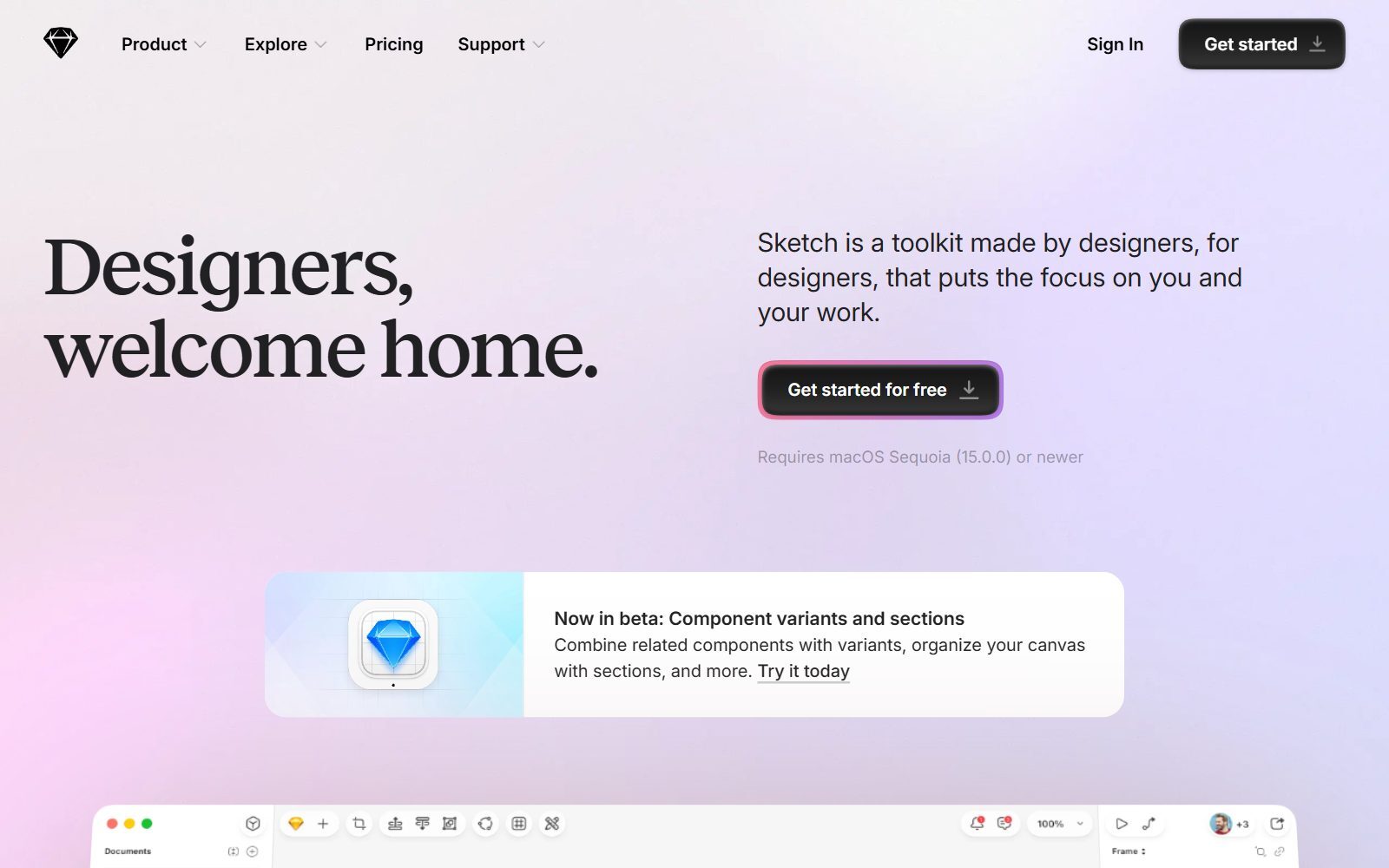
Sketch has no prompt-to-design generator. Instead, its pricing page offers a free MCP server on every plan, so you can connect Claude, Codex, Cursor or another MCP client to your designs with "no AI credits or add-ons". Standard costs $12 per editor a month billed yearly, Professional $24 and Enterprise $44; viewers and developer handoff in the web app are free. If you do not need collaboration, a Mac-only licence costs $120 per seat including one year of updates. Sketch runs only on the Mac and offers a 30-day free trial.
4. Uizard Pro: fast AI mockups at a low price
Uizard, whose logo now carries "miro LABS", turns prompts, screenshots and hand-drawn wireframes into editable mockups. On Uizard's pricing page Pro costs $12 a month billed annually with 500 AI generations a month on Autodesigner 2.0, React and CSS handoff and up to 100 projects; Business costs $39 a month billed annually with 5,000 generations and a custom brand kit. It is the cheapest way here to give a product manager or founder plenty of AI mockups, but it is not a full design system tool.
5. Lovable: from prompt to a working app
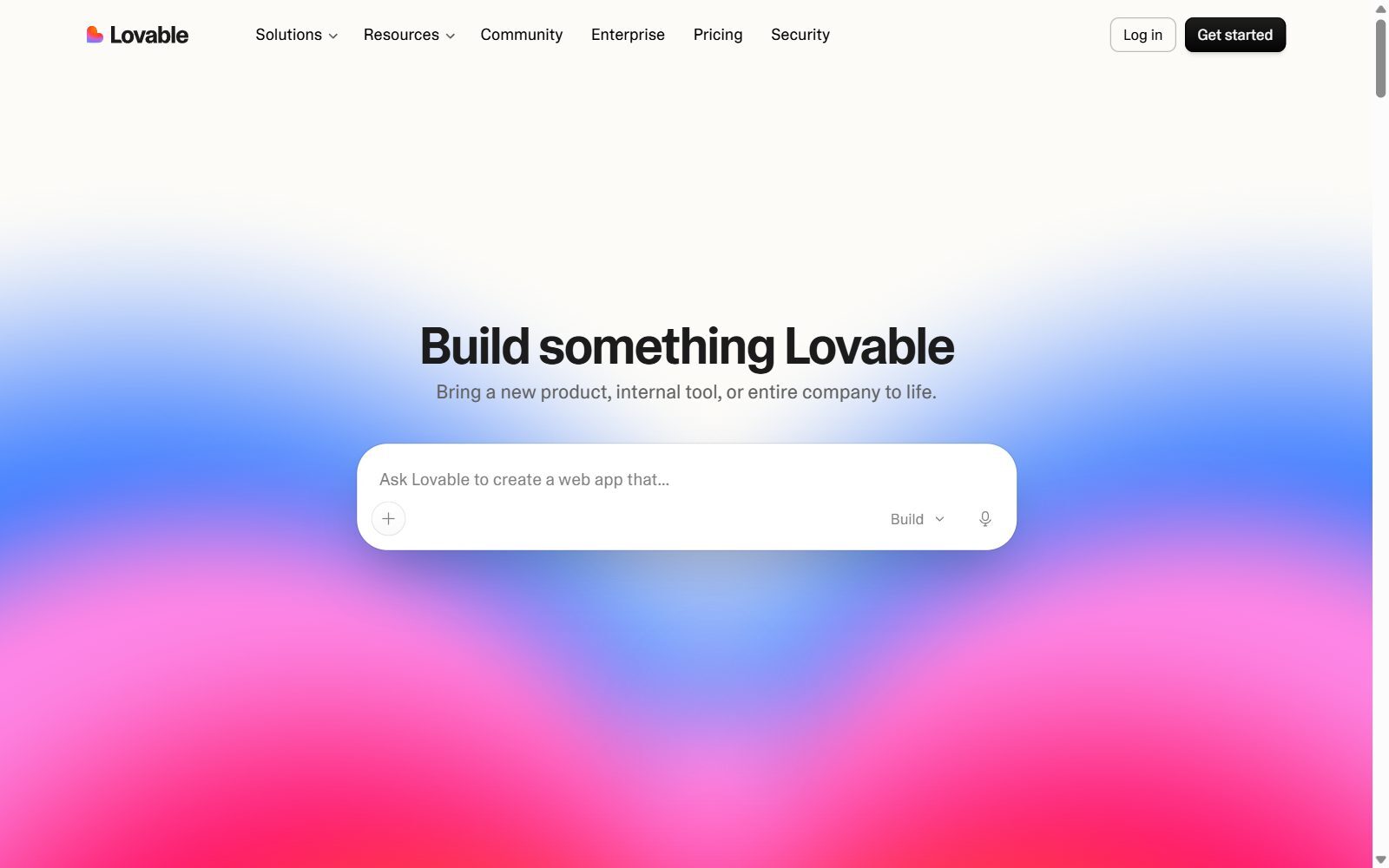
Lovable builds full web apps from a chat, with hosting and backend through its Cloud. From our European location the Lovable pricing page showed Pro at EUR 25 a month (monthly billing selected) with 100 monthly credits, custom domains, badge removal and design systems, and Business at EUR 50 a month with SSO and design templates. Plans are priced by credits, not seats, and a message in Plan mode costs 1 credit. Use it when the goal is a working MVP to put in front of users, not a design file.
6. v0: production-style front-end code for developers
v0 by Vercel generates app interfaces as code you can deploy to Vercel or sync to GitHub. On v0's pricing page (USD, excluding tax) Plus costs $30 per user a month with $30 of included monthly credits and $2 of free credits each day you log in; Business costs $100 per user a month and opts you out of training by default. Usage is billed by tokens at published per-model rates, so complex prompts cost more. v0 fits teams with a developer who will take the code further.
Validate your startup idea with the unique borrowed authority approach: we publish articles about your product in our blog and you get traffic and testers for your MVP
- Prove Market Demand: See real organic traffic and waitlist conversions
- Unlock High-Potential Keywords: Receive a curated list of top-performing keywords directly from Google Search Console data.
- Estimate Customer Acquisition Cost (CAC): Gain financial foresight with an estimated CAC based on real keyword performance data.
🔗 Start validating your startup now
7. Bolt: apps and sites, starting from Figma if you like
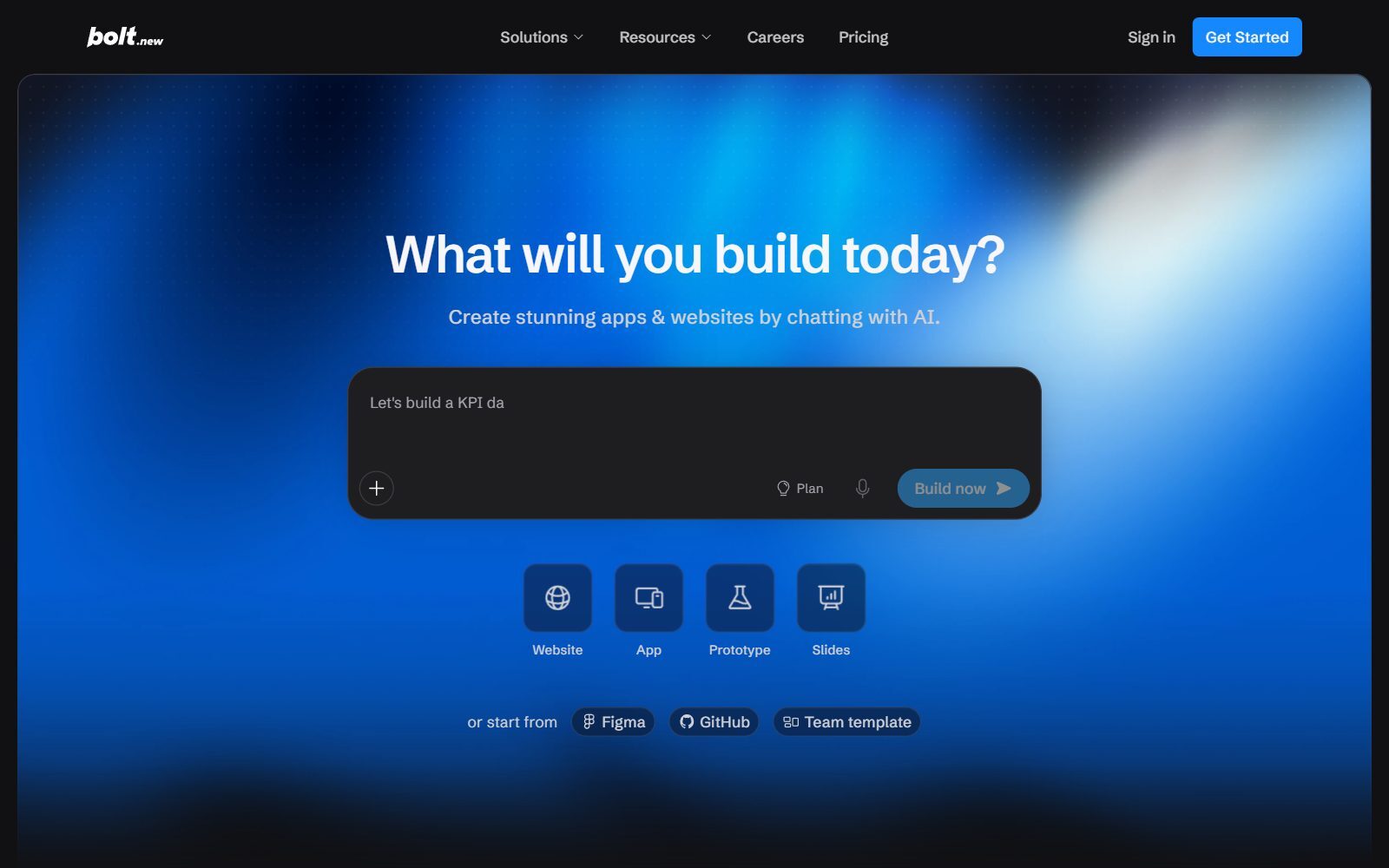
Bolt creates apps and websites by chatting with AI, and its homepage lets you start from a Figma file or a GitHub repository. On Bolt's pricing page Pro costs $25 a month billed monthly, with no daily token limit, from 10M tokens a month, custom domains and no Bolt branding; unused tokens roll over for up to two months. Teams costs $30 per member a month and adds centralised billing, admin controls and design-system knowledge.
8. Magic Patterns: AI prototypes for product teams
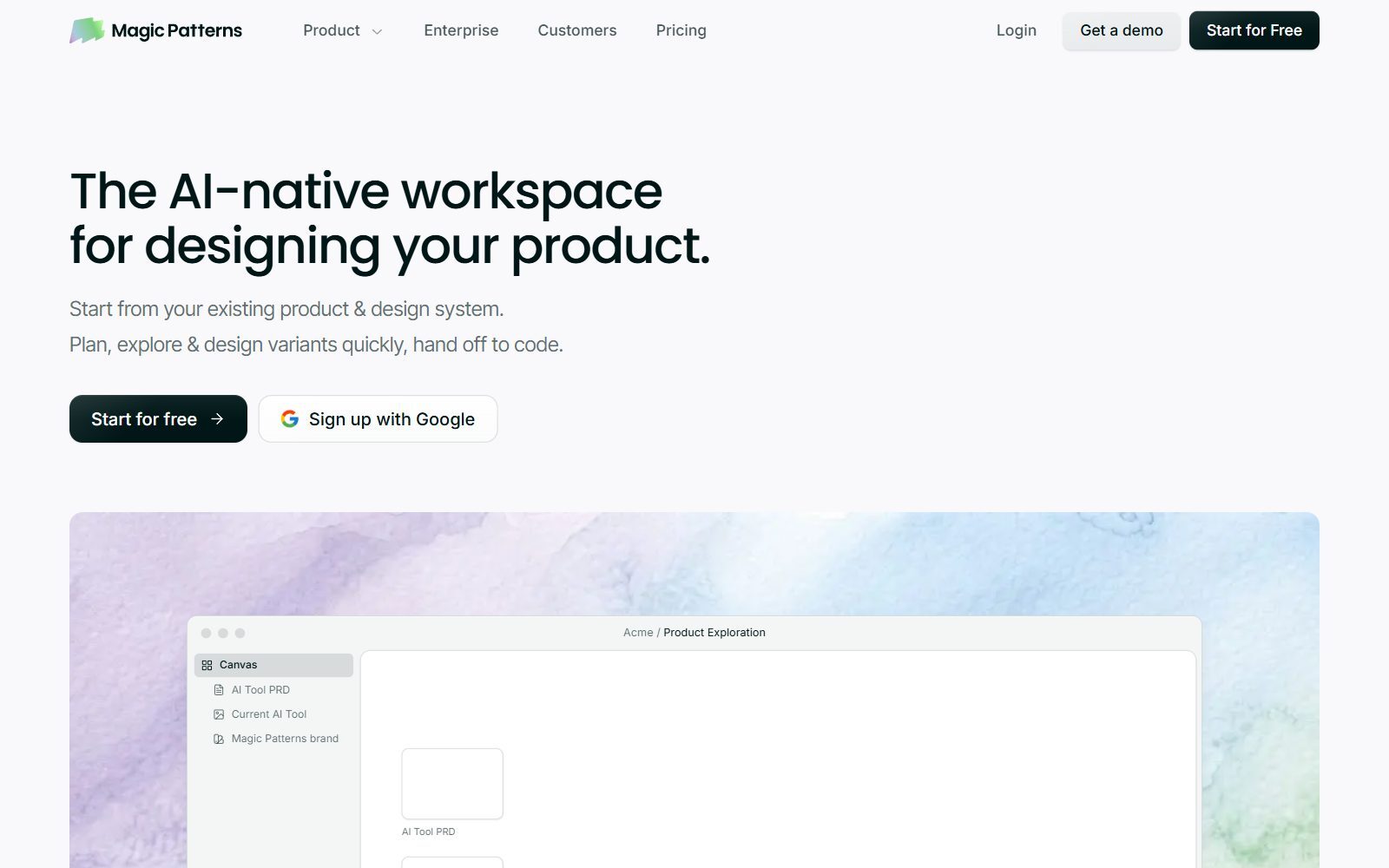
Magic Patterns calls itself an AI-native workspace for designing your product: you start from your existing product and design system, explore variants and hand off to code. On Magic Patterns' pricing page (annual billing selected) Starter costs $17 per seat a month, or $20 monthly, with 1,000 monthly credits, MCP, GitHub sync and exports to Figma; Business costs $85, or $100 monthly, with 5,000 credits and SSO. Unused monthly credits roll over for one month.
9. Webflow: AI on a full website platform
Webflow adds Webflow AI to its visual website builder: it can build a site, modify page designs, generate copy and code, and help optimise for conversions. On Webflow's pricing page (USD per site) Basic costs $15 a month billed yearly and Premium, which adds the CMS, $25 a month billed yearly; Webflow AI and the MCP server are listed on every site plan, including the free Starter plan. Choose Webflow when the site will grow into a content hub with many pages.
10. Relume: AI sitemaps and wireframes, exported to Figma, Webflow or React
Relume generates the sitemap, wireframes and design of a marketing site from your notes, then lets you publish or export the project to Figma, Webflow or React. On Relume's pricing page the Pro AI workspace starts at $24 a month with a 7-day free trial, and Launch hosting on your own domain costs $12 per site a month billed yearly or $16 monthly. Copying the full library of more than 1,000 Webflow or React components needs a paid Site Builder plan, from $18 a month.
What Happened to Adobe XD, Galileo AI and Other Figma AI Alternatives
The 2025 version of this article mixed UI design tools with image and colour tools, and some names have changed since:
- Adobe XD: Adobe's own Adobe XD help pages say XD is in maintenance mode: no ongoing development or new features, but bug fixes and security and privacy updates for existing customers, with a significant notice period before support ends. See our free Adobe XD alternatives and open-source Adobe XD alternatives.
- Galileo AI: its domain, usegalileo.ai, now redirects to Google Stitch, a free Google Labs experiment covered in our free list.
- Adobe Sensei and Firefly: Adobe's AI for images and editing inside its apps, not a UI design or prototyping tool, so removed.
- Designs.ai: now an AI creative workspace for brand images, video, copy and slides, not a UI design tool.
- AutoDraw, Artbreeder and Khroma: drawing, image-generation and AI colour-palette tools. Useful extras, but not Figma alternatives.
- Creatie and Motiff: the creatie.ai domain is listed for sale, and Motiff's website says "Motiff has been discontinued."
- Visily: its website and pricing page now redirect to the app's login screen, so we could not check its paid plans and left it out.
- Canva: strong for marketing graphics, not app screens; see our free Canva AI alternatives.
Which Paid Figma AI Alternative Should You Choose?
- Your designers already use Figma: stay on Figma Professional and buy extra AI credits only if Make becomes a daily tool.
- You have a coded design system: UXPin, so AI output uses your real components.
- Your main design job is the website: Framer for a designer-led site, Webflow for a content-heavy one, Relume to plan it first.
- You want a working product, not a mock-up: Lovable for non-developers, v0 or Bolt if a developer will take over the code.
- You prototype new features on an existing product: Magic Patterns.
- You want cheap AI mockups: Uizard Pro at $12 a month billed annually.
- You design on a Mac and bring your own AI: Sketch with its free MCP server.
How Founders Use Paid AI Design Tools
Paying for AI design pays off once you know what you are building. Validate the problem first with the F/MS Lean Canvas tool and free tools, then spend on the one paid seat that moves you fastest: often a prompt-to-app builder for the first version, and Figma or UXPin once a designer joins. Compare the best AI prototyping tools, the no-code web app builders and our GitHub Copilot alternatives and open-source Replit alternatives if a developer will take the code further.
Moving away from older prototyping tools? Read our InVision alternatives, Marvel alternatives and Whimsical alternatives, and compare Figma vs Miro for whiteboarding. Prefer to own your tools? See the open-source Figma alternatives, open-source Figma AI alternatives and open-source Balsamiq alternatives. For your website, the Squarespace alternatives compare hosted builders, and the F/MS AI SEO Tool helps you write the articles that bring visitors from Google and AI assistants.
Join ElonaHunt (like ProductHunt but for women) and explore the coolest women-focused startups out there!
Discover your next big inspiration and connect with like-minded female entrepreneurs!
👉 Join the Hunt Here
FAQ About Figma AI Alternatives
How much does Figma AI cost in 2027?
Figma AI is included in every seat as AI credits. When we checked in November 2026, a Professional Full seat cost $16 a month billed annually with 3,000 AI credits a month; extra credits are sold as a subscription or pay-as-you-go.
What is the best paid alternative to Figma AI?
It depends on the job: UXPin for code-based design with your own components, Framer for websites, Lovable, v0 or Bolt for working apps, and Magic Patterns for product prototypes.
Which Figma AI alternative exports real code?
UXPin Forge exports React code built from real component libraries, v0 and Bolt produce app code you can deploy or sync to GitHub, Lovable builds full apps, and Uizard Pro offers React and CSS handoff.
Is there a Figma AI alternative from Google?
Yes. Google Stitch, a free Google Labs experiment launched in May 2025, generates UI designs and front-end code and pastes into Figma. It is covered in our free Figma AI alternatives.
Is Adobe XD discontinued?
Not officially. Adobe's help pages say XD is in maintenance mode: no new features, but bug fixes and security and privacy updates for existing customers, with significant notice before support ends.
Does Sketch have AI?
Sketch has no built-in generator, but every plan includes a free MCP server, so you can connect AI tools such as Claude, Codex or Cursor to your designs without paying for AI credits.
How much does UXPin cost?
Core costs $49 per seat a month billed monthly or $29 billed annually, and Growth $69 or $40, each with a 14-day free trial.
Is Lovable or v0 better for founders?
Lovable suits non-developers who want a complete working app; v0 suits teams with a developer who wants clean front-end code to deploy on Vercel. Both have free plans to test first.
What happened to Galileo AI?
Its domain, usegalileo.ai, now redirects to Google Stitch.
Where can I get a backlink by writing about my startup?
You can publish a guest post in one of the Fe/male Switch startup blogs, which rank in Google and in AI tools. Get a quality backlink.
About the Author
Violetta Bonenkamp, also known as MeanCEO, is an experienced startup founder with an impressive educational background including an MBA and four other higher education degrees. She has over 20 years of work experience across multiple countries, including 5 years as a solopreneur and serial entrepreneur. Throughout her startup experience she has applied for multiple startup grants at the EU level, in the Netherlands and Malta, and her startups received quite a few of those. She’s been living, studying and working in many countries around the globe and her extensive multicultural experience has influenced her immensely.

