

The Best Countries in Asia for Deep Tech Startups and the National Programmes Behind Them
A deep tech startup in Asia (chips, quantum, biotech, robotics, space, new materials or climate hardware) picks a country for very practical reasons: which agency pays for the first prototype without taking equity, which public fund can join the seed round, whether a foreign founder can get a visa, and which national labs will partner with you. This guide compares 13 Asian countries and territories on exactly those points, from Singapore, Japan, South Korea and Taiwan to India, China, Hong Kong, Malaysia, Thailand and Viet Nam, plus Israel, the UAE and Saudi Arabia in West Asia. Every programme was checked on its official page in November 2026, and the older funding totals and rankings with no source are gone.
Quick answer: Singapore has the most complete toolkit (Startup SG Tech grants of up to S$800,000, SGInnovate, A*STAR spinouts and the EntrePass). Japan runs the largest deep tech grant (NEDO's DTSU, up to 3 billion yen per startup) and South Korea the most structured co-investment scheme (TIPS, with a deep tech track of KRW 1.5 billion over three years). Taiwan is the place for chips and hardware, India for space, biotech and semiconductors backed by new national missions, and China launched a national venture capital guidance fund for hard technology in December 2025. In West Asia, Israel offers seed grants and an Innovation Visa, and Saudi Arabia and the UAE combine deep tech funds with research institutes.
Write FREE SEO-optimized Blog Articles! Our Article Writer ensures your blog is loved by both Google and your readers, turning those clicks into customers.
👉 Write your article here
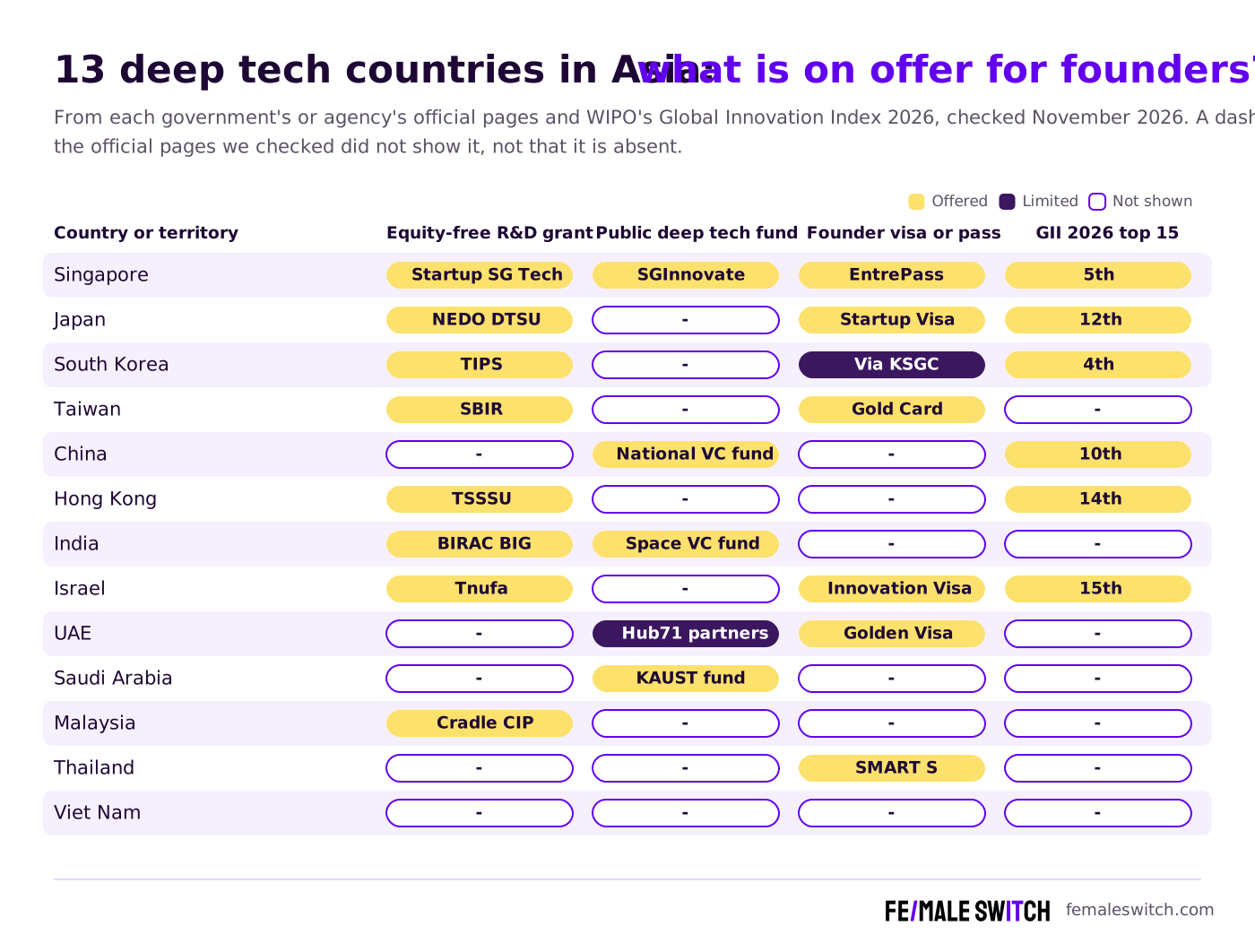
Asia's Deep Tech Countries at a Glance
Sources: the official websites of the agencies and programmes named, and WIPO's Global Innovation Index 2026, checked November 2026. Amounts and dates are quoted from those pages only.
What the Global Data Says About Asia
WIPO's Global Innovation Index 2026 puts South Korea 4th, Singapore 5th and China 10th in the world, with Japan 12th, Hong Kong, China 14th and Israel 15th. Asia also holds six of the world's top 10 innovation clusters: Shenzhen–Hong Kong–Guangzhou (1st), Tokyo–Yokohama (2nd), Beijing, Seoul, Shanghai–Suzhou and Osaka–Kobe–Kyoto. Its new Dealroom-WIPO Deep Science Startup Tracker shows that deep science startups have grown fastest since 2020 in Central and Southern Asia (118%), driven by India, and that India and Malaysia are among the middle-income economies that lead in deep science ventures. Cities are compared in our guide to deep tech cities in Asia, and the technologies themselves in deep tech trends in Asia.
The 13 Best Countries in Asia for Deep Tech Startups in 2027
1. Singapore
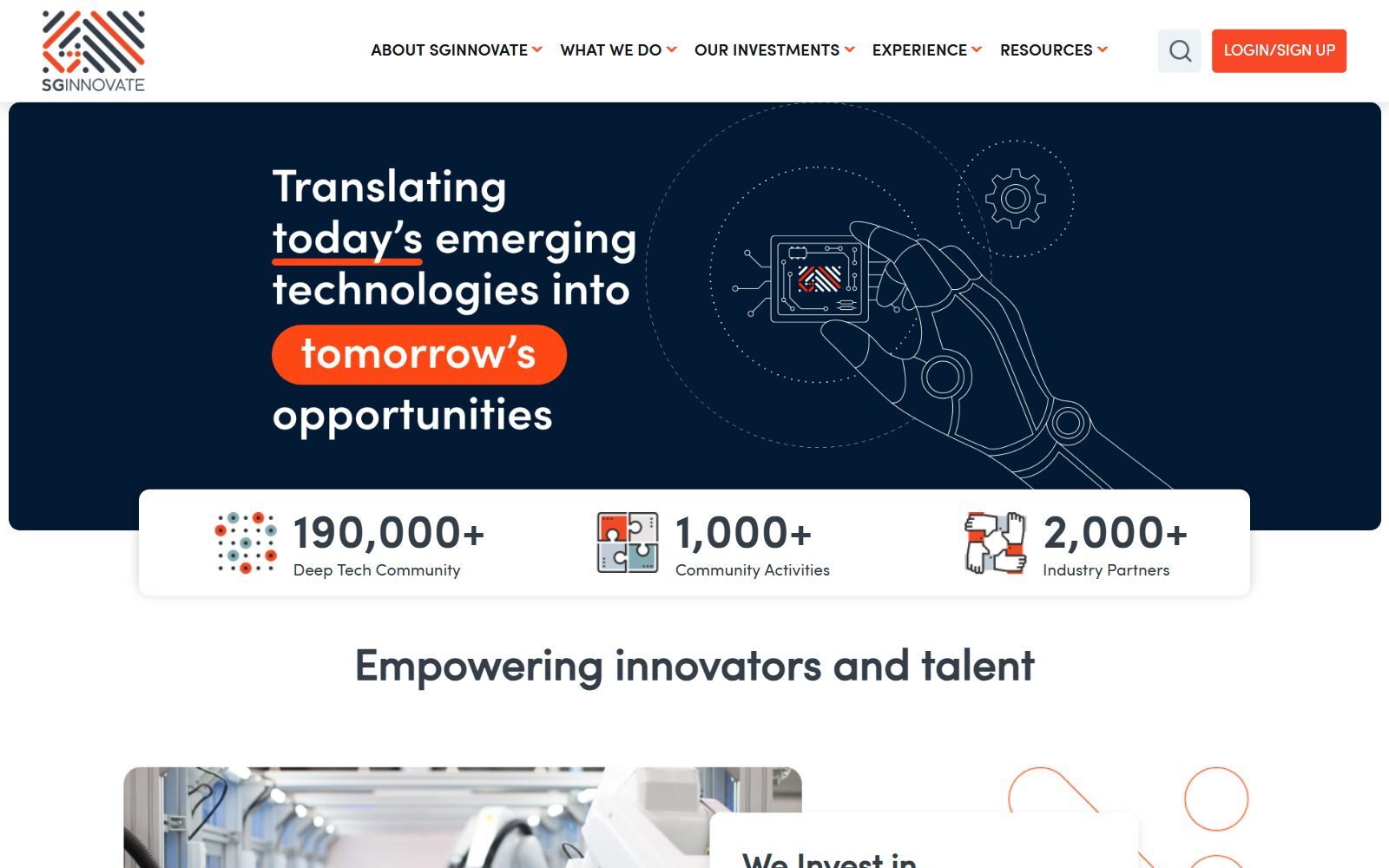
Singapore is 5th in the GII 2026 and has the most complete public toolkit in Asia. Enterprise Singapore's Startup SG Tech grant funds breakthrough-level, proprietary technology: up to S$400,000 for a Proof-of-Concept project and up to S$800,000 for a Proof-of-Value project (both caps were raised on 2 January 2025). The company must be registered in Singapore within the past 10 years, have at least 30% local equity held by Singaporeans or permanent residents, have group turnover of no more than S$100 million or no more than 200 workers, and do its core R&D in Singapore. The research engine is A*STAR, which says more than 70 companies were spun off from its technologies between 2020 and 2025. SGInnovate invests in deep tech startups and runs a deep tech community of 190,000+, and NTU's venture-building programme (part of the national GRIP) gives university teams access to grants of up to S$250,000 and S$500,000. For quantum founders, Singapore committed close to S$300 million over five years to its National Quantum Strategy, announced in May 2024, including a programme to build quantum processors locally. Foreign founders usually apply for the EntrePass.
2. Japan
Japan is 12th in the GII 2026, and Tokyo–Yokohama is the world's 2nd-largest innovation cluster. Its largest deep tech programme is NEDO's Deep-Tech Startups Support Program (DTSU), with a budget of JPY 87.7 billion for fiscal years 2023 to 2032 and a separate green transformation (GX) line of about JPY 38 billion. It funds startups in phases, up to 3 billion yen in total and 2.5 billion yen in the final DMP phase, usually within two-thirds of eligible costs, and it requires investment from VCs, corporate VCs or other operating companies. METI's J-Startup programme certifies deep tech, platform and SDG-oriented startups recommended by top investors and gives them public and private support. Space founders can look at JAXA's Space Strategy Fund, which funds multi-year technology development by startups, companies and universities. Foreign founders can use METI's Startup Visa through certified local governments. Japan's grants are listed in our guide to deep tech grants in Asia.
3. South Korea
South Korea is 4th in the GII 2026, and Seoul is the world's 5th-largest innovation cluster. Its flagship scheme is TIPS, run under the Ministry of SMEs and Startups: a private operator invests first, and the government matches it with R&D money. According to the Ministry's TIPS plan for 2026, published in January 2026, the general track now pays up to KRW 800 million over two years (up from KRW 500 million) after an operator investment of KRW 200 million, and the deep tech track gives startups that graduate from the general track up to KRW 1.5 billion of follow-on R&D over three years. Applications run all year through TIPS operators. The national research hub is Daedeok Innopolis in Daejeon, home of KAIST. Foreign founders enter through the K-Startup Grand Challenge: its 2026 applications closed on 17 June 2026, and its top 20 teams scale in Korea from December 2026 to June 2027 with incorporation and startup visa support. See our list of Seoul startups to watch.
Boost Your SEO by listing your startup and get a FREE backlink.
Create a profile in the F/MS Startup Game, add the link to your website and submit.
👉 List your startup now!
4. Taiwan
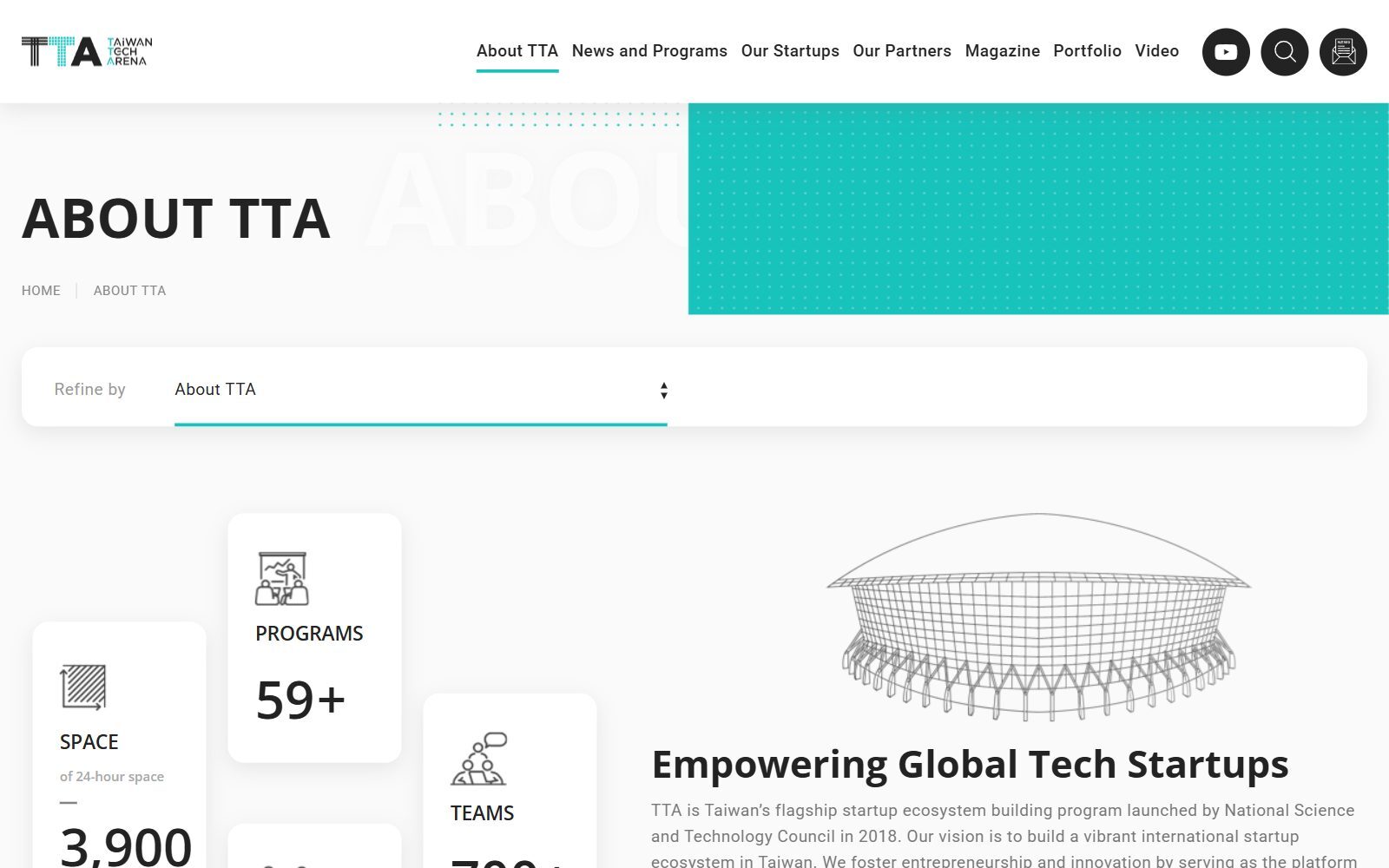
Taiwan is Asia's base for semiconductors and electronics hardware, and its support is built around R&D grants and science parks. Its SBIR programme pays small and medium enterprises in any industry up to NT$1.5 million for a six-month Phase 1, up to NT$6 million for one year or NT$12 million for two years in Phase 2, and up to NT$6 million for Phase 2+; companies with mainland Chinese capital are excluded. Taiwan Tech Arena is the flagship startup programme launched by the National Science and Technology Council in 2018, connecting startups with technology, talent, markets and capital. Hardware teams look to the Hsinchu Science Park bureau, which runs the Hsinchu, Jhunan, Longtan, Tongluo, Yilan and biomedical science parks. Foreign founders and engineers can use the Taiwan Employment Gold Card, an open work permit and residence permit for up to 3 years. See also our Taipei startups to watch.
5. China
China is 10th in the GII 2026 and has three of the world's top 10 innovation clusters (Shenzhen–Hong Kong–Guangzhou, Beijing and Shanghai–Suzhou). On 26 December 2025 it launched a national venture capital guidance fund with a 20-year lifespan, following the principle of investing early, small, long-term and in hard technology. At least 70% of its capital goes to seed-stage and early-stage enterprises, and officials expect it to support more than 600 sub-funds across its three regions. It suits founders who are already building in mainland China; we found no national startup visa for foreign founders, and we quote only central government sources here.
6. Hong Kong, China
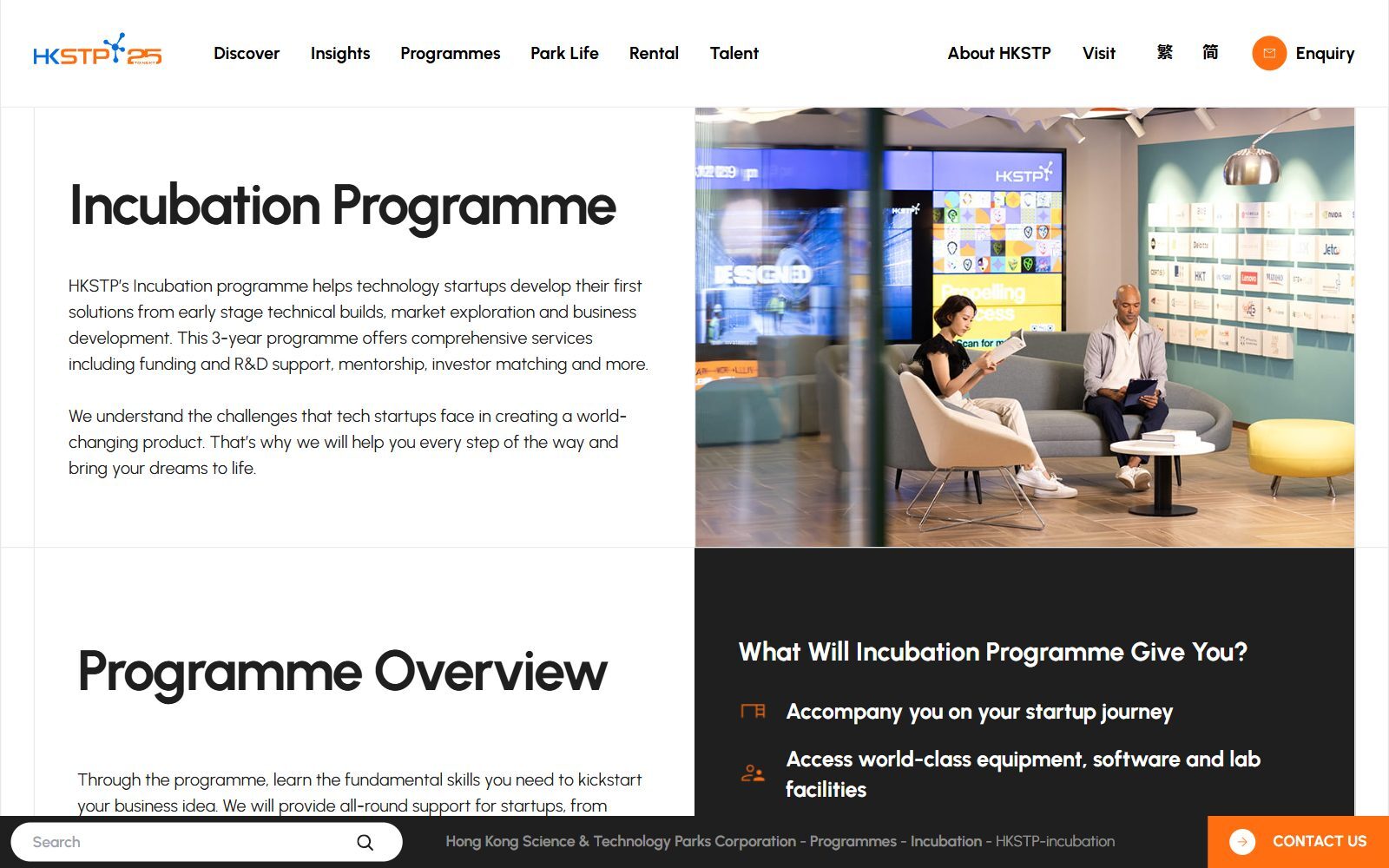
Hong Kong is a Special Administrative Region of China and is ranked separately, 14th, in the GII 2026. The HKSTP Incubation Programme is a three-year programme for technology startups with funding support of up to HK$1.29 million, labs and investor matching. University spinouts can get the Innovation and Technology Commission's TSSSU support: up to HK$1.5 million a year for no more than three years, through six universities. The government's InnoHK research clusters, Health@InnoHK and AIR@InnoHK (AI and robotics), are natural partners for health and robotics founders.
7. India
India leads Central and Southern Asia in deep science startups, and its new national missions give founders concrete doors. The India Semiconductor Mission's Semicon 2.0 has a total fiscal outlay of ₹1,27,500 crore across six pillars, from design and equipment to materials and R&D, with projects of up to six years supported on a pari-passu basis. IN-SPACe promotes, authorises and supervises private space companies, runs a Seed Fund Scheme and a Technology Adoption Fund, and in November 2025 signed the agreement that operationalises a ₹1,000 crore venture capital fund for the space sector with SIDBI Venture Capital. For biotech, BIRAC's Biotechnology Ignition Grant gives up to ₹50 lakh over 18 months to reach proof of concept, with calls on 1 January and 1 July. The National Quantum Mission has ₹6,003.65 crore for 2023-24 to 2030-31 and four thematic hubs, including quantum computing at IISc Bengaluru. For a global view of grants by technology, our sister site has a guide to deep tech grants for AI, quantum and advanced materials.
8. Israel (West Asia)
Israel is in West Asia and is often grouped with Europe in startup rankings; we include it because it sits in Asia geographically. It is 15th in the GII 2026. According to the Israel Innovation Authority's programme page, its Ideation (Tnufa) incentive gives entrepreneurs and new startups a conditional grant of up to NIS 200,000 over 12 months, covering 80% of the approved budget. Foreign founders can apply for its Innovation Visa, which needs a supporting framework such as an accelerator. The Authority's website blocked our direct checks in November 2026, so confirm the current terms there before you apply.
Boost Your SEO with 1,500+ Free Business Directories: increase your DA, get backlinks and traffic.
We've compiled an exclusive list of directories and websites where you can submit your business and start building high-quality backlinks to boost your website traffic and get your SEO snowball rolling.
👉 Submit your startup now!
9. United Arab Emirates (West Asia)
In Abu Dhabi, Hub71 offers startups free housing, office space and health insurance, access to 40+ capital partners and the ADGM regulatory environment, and runs Hub71+ AI for startups building with AI. The Technology Innovation Institute, part of Abu Dhabi's Advanced Technology Research Council, runs nine research centres, including quantum, propulsion and space, autonomous robotics and advanced materials, which makes it the obvious research partner. Founders can apply for the UAE's Golden Visa in its entrepreneur category. See our Abu Dhabi startups to watch.
10. Saudi Arabia (West Asia)
KAUST Innovation Ventures, the venture fund of King Abdullah University of Science and Technology, invests in deep tech startups in health, energy, food, water and AI, from pre-seed to early Series A, with typical tickets of $100,000 to $700,000 through convertible notes and equity, often with co-investors. It looks for startups operating in, incorporated in or willing to relocate to Saudi Arabia, with paying customers and early revenue, and it takes applications all year. KAUST itself, on the Red Sea coast, offers labs and research partners for water, energy and materials startups.
11. Malaysia
Malaysia's main grants for tech startups come from Cradle. CIP Spark is a conditional grant of up to RM150,000 for up to 18 months for development and pre-commercialisation, for companies under five years old with accumulated revenue under RM3 million and IP rights. CIP Sprint pays up to RM600,000 for up to 18 months to commercialise technology, for Sdn Bhd companies (including university and research spin-offs) under seven years old with accumulated revenue under RM5 million. MRANTI runs the Technology Innovation Park Malaysia with labs for AI, drones and robotics and autonomous vehicles, plus R2C bootcamps for researchers who want to commercialise. WIPO's GII 2026 names Malaysia among the middle-income economies that lead in deep science ventures.
12. Thailand
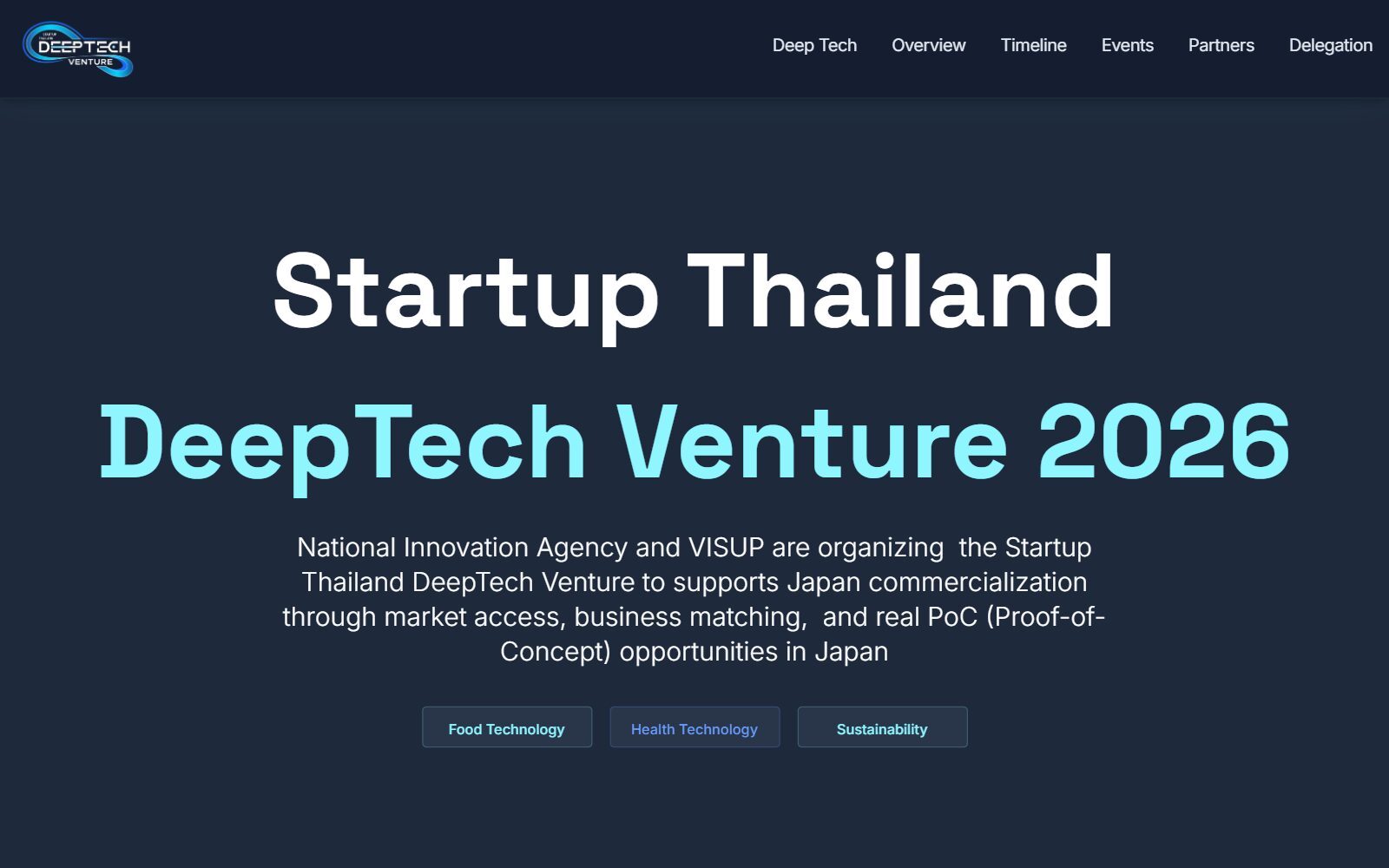
Thailand's National Innovation Agency (NIA) ran the Startup Thailand DeepTech Venture 2026 with VISUP, a programme that helped Thai deep tech startups in food technology, health technology and sustainability enter Japan through market discovery, business matching and proof-of-concept projects. It selected 30 startups for incubation, took them to Tokyo in April and May 2026 and ended with a demo day and proof-of-concept roadmaps in mid-2026, so watch NIA for the next edition. Foreign founders can apply for the SMART S visa for technology-based startup entrepreneurs, which needs a deposit of at least 600,000 baht held for three months and a director role or 25% of the shares in a company in a targeted industry.
13. Viet Nam
Viet Nam is the newest entry. Its Law on Artificial Intelligence took effect on 1 March 2026, according to the Ministry of Science and Technology, making it one of the few countries with a dedicated AI law. AI enterprises are entitled to the highest level of incentives under current rules, including better access to infrastructure, datasets and regulatory sandboxes, and SMEs get help with funding, training and market access. For founders this is a policy door rather than a cheque: the law sets the framework, and the funding calls that follow are worth watching.
What Changed Since the 2025 List
- Removed figures: the 2025 version quoted deal shares and funding totals ("63.7% of ASEAN-6 equity deals", "71% of tech deal value", "$58.6 billion") with only government homepages or placeholder links as sources. We could not trace them to a published source, so we replaced them with programme facts the agencies publish themselves.
- New money: China's national venture capital guidance fund (December 2025), Korea's bigger TIPS amounts for 2026, India's Semicon 2.0 and space VC fund, and higher Startup SG Tech caps in Singapore.
- Countries dropped: Bangladesh, Kazakhstan, Mongolia, Nepal, Sri Lanka, Uzbekistan, Azerbaijan and Brunei. The old text for them was generic, and we did not find a deep tech programme for startups on their official pages in this update.
- Not in the main list this time: Indonesia and the Philippines. Indonesia's research agency BRIN funds research-based startups, and the Philippines' DOST runs AI research programmes, but we could not confirm current startup terms on their official pages, so we leave them out rather than guess.
- Added: Hong Kong as a separate territory, and Israel, the UAE and Saudi Arabia as West Asian countries.
Which Country Should a Deep Tech Founder in Asia Choose?
- You want a grant plus a light-touch public co-investor: Singapore's Startup SG Tech, if you can meet the 30% local equity rule.
- You already have VC backing and need large non-dilutive rounds: Japan (NEDO DTSU) or South Korea (TIPS deep tech track).
- You build chips or electronics hardware: Taiwan (SBIR, Hsinchu Science Park) or India (Semicon 2.0).
- You build space or biotech in South Asia: India (IN-SPACe, BIRAC BIG).
- You build health, energy, water or food tech and can move to the Gulf: Saudi Arabia (KAUST Innovation Ventures) or the UAE (Hub71, TII).
- You are a foreign founder who needs a visa: Singapore (EntrePass), Taiwan (Gold Card), Israel (Innovation Visa), Thailand (SMART S), Japan (Startup Visa) or Korea via the K-Startup Grand Challenge.
- You are an early team in Southeast Asia: Malaysia (Cradle CIP Spark) or Hong Kong (HKSTP, TSSSU for university spinouts).
Boost Your SEO by Getting Featured in Our Blogs and get a backlink.
We publish content about startups, education, tech, funding, etc. that ranks well not only in Google but also in Perplexity, ChatGPT, Grok and other AI tools.
👉 Get featured now!
How Founders Use Country Programmes in Asia
Most deep tech founders stack support: an equity-free grant for the first prototype, a public or public-backed investor to anchor the seed round, and a larger non-dilutive programme once the technology works. Find the money in our guides to deep tech grants in Asia and grants for early-stage startups in Asia, and the investors in deep tech VCs in Asia and early-stage VCs in Asia. Early teams can compare startup incubators in Asia, startup accelerators in Asia and deep tech accelerators. If your technology is AI, read our ranking of the best countries for AI startups in Asia; for visas and general support, see the best countries for early-stage startups in Asia and the best countries for female entrepreneurs in Asia. Outside Asia, compare the best deep tech countries worldwide and in Europe, test your pitch at deep tech startup competitions, and meet investors at the top deep tech startup events. Before you commit years to a technology, validate your startup idea with real customers.
Join F/MS: Startup Facilitator & Incubator and unlock your startup dreams today! Get your first customers, register you company in the Netherlands and get startup visas for the team.
FAQ About Deep Tech Countries in Asia
Which Asian country is best for deep tech startups?
Singapore has the most complete toolkit: Startup SG Tech grants of up to S$800,000, SGInnovate as a deep tech investor, A*STAR as a research partner and the EntrePass for foreign founders. Japan and South Korea have the largest structured grant schemes.
Which Asian countries rank highest for innovation?
In WIPO's Global Innovation Index 2026, South Korea is 4th, Singapore 5th, China 10th, Japan 12th, Hong Kong, China 14th and Israel 15th.
How much does Singapore's Startup SG Tech give?
Up to S$400,000 for a Proof-of-Concept project and up to S$800,000 for a Proof-of-Value project. The company must be registered in Singapore within 10 years, have at least 30% local equity and do its core R&D in Singapore.
What is NEDO DTSU in Japan?
NEDO's Deep-Tech Startups Support Program, with JPY 87.7 billion for fiscal years 2023 to 2032. It funds VC-backed deep tech startups with up to 3 billion yen in total, usually within two-thirds of eligible costs.
What is the TIPS deep tech track in South Korea?
A follow-on R&D track for startups that graduate from the TIPS general track: up to KRW 1.5 billion over three years, according to the Ministry of SMEs and Startups' 2026 plan.
Which country in Asia is best for semiconductor startups?
Taiwan, for its SBIR grants of up to NT$12 million and the Hsinchu Science Park, and India, whose Semicon 2.0 scheme has a total outlay of ₹1,27,500 crore across design, equipment, materials and R&D.
Does China have a deep tech fund for startups?
Yes. The national venture capital guidance fund launched on 26 December 2025 must put at least 70% of its capital into seed-stage and early-stage companies, with a focus on hard technology.
Is Israel part of Asia?
Geographically, yes: it is in West Asia, together with the UAE and Saudi Arabia. Startup rankings often group it with Europe, so we say so and include it here.
Can foreign founders get a startup visa in Asia?
Yes, in several places: Singapore's EntrePass, Taiwan's Employment Gold Card, Israel's Innovation Visa, Thailand's SMART S visa and Japan's Startup Visa, plus startup visa support for K-Startup Grand Challenge teams in Korea.
Where can I submit a guest post about my deep tech startup?
You can publish a guest post in one of the Fe/male Switch startup blogs, which rank in Google and in AI tools. Get a quality backlink.
About the Author
Violetta Bonenkamp, also known as MeanCEO, is an experienced startup founder with an impressive educational background including an MBA and four other higher education degrees. She has over 20 years of work experience across multiple countries, including 5 years as a solopreneur and serial entrepreneur. Throughout her startup experience she has applied for multiple startup grants at the EU level, in the Netherlands and Malta, and her startups received quite a few of those. She’s been living, studying and working in many countries around the globe and her extensive multicultural experience has influenced her immensely.
