
Deep Tech Trends in Asia: 11 Trends for Startups, From Chips and Quantum to Fusion and Space
Deep tech means startups built on hard science or engineering: chips, quantum, robotics, fusion, space and biotech. In Asia these fields move with government programmes more than anywhere else, so the most useful trend list is one that shows where public money, compute and new laws open a door for a young company. This guide covers 11 deep tech trends in Asia for 2027, from India's second semiconductor programme and Hong Kong's AI compute subsidy to Korea's humanoid robot alliance and Japan's matching grants for deep tech startups. Every trend is tied to an official source (a government, agency or company page) that we read on 13 November 2026, and each one ends with what a founder can do with it. The 2025 version of this article listed 20 trends built on consultancy blog posts and numbers nobody could trace; what we removed is listed at the end.
Quick answer: the deep tech trends in Asia that matter most for startups in 2027 are chip programmes moving into design and materials (India's Semicon 2.0, Japan's Rapidus), cheap public AI compute (IndiaAI, Hong Kong's AI Subsidy Scheme), national quantum programmes (Singapore, India), new AI laws (Korea, Viet Nam, Taiwan), robotics and humanoids (Korea, Japan), fusion and space (Japan, India), biomanufacturing (India) and matching funds that pay up to two-thirds of a startup's R&D once a VC has invested (Japan's NEDO, Korea's TIPS).
Write FREE SEO-optimized Blog Articles! Our Article Writer ensures your blog is loved by both Google and your readers, turning those clicks into customers.
👉 Write your article here
Deep Tech Trends in Asia at a Glance
Sources: the official government, agency and company pages linked in each trend below, read 13 November 2026. Programme amounts are the publishers' own figures.
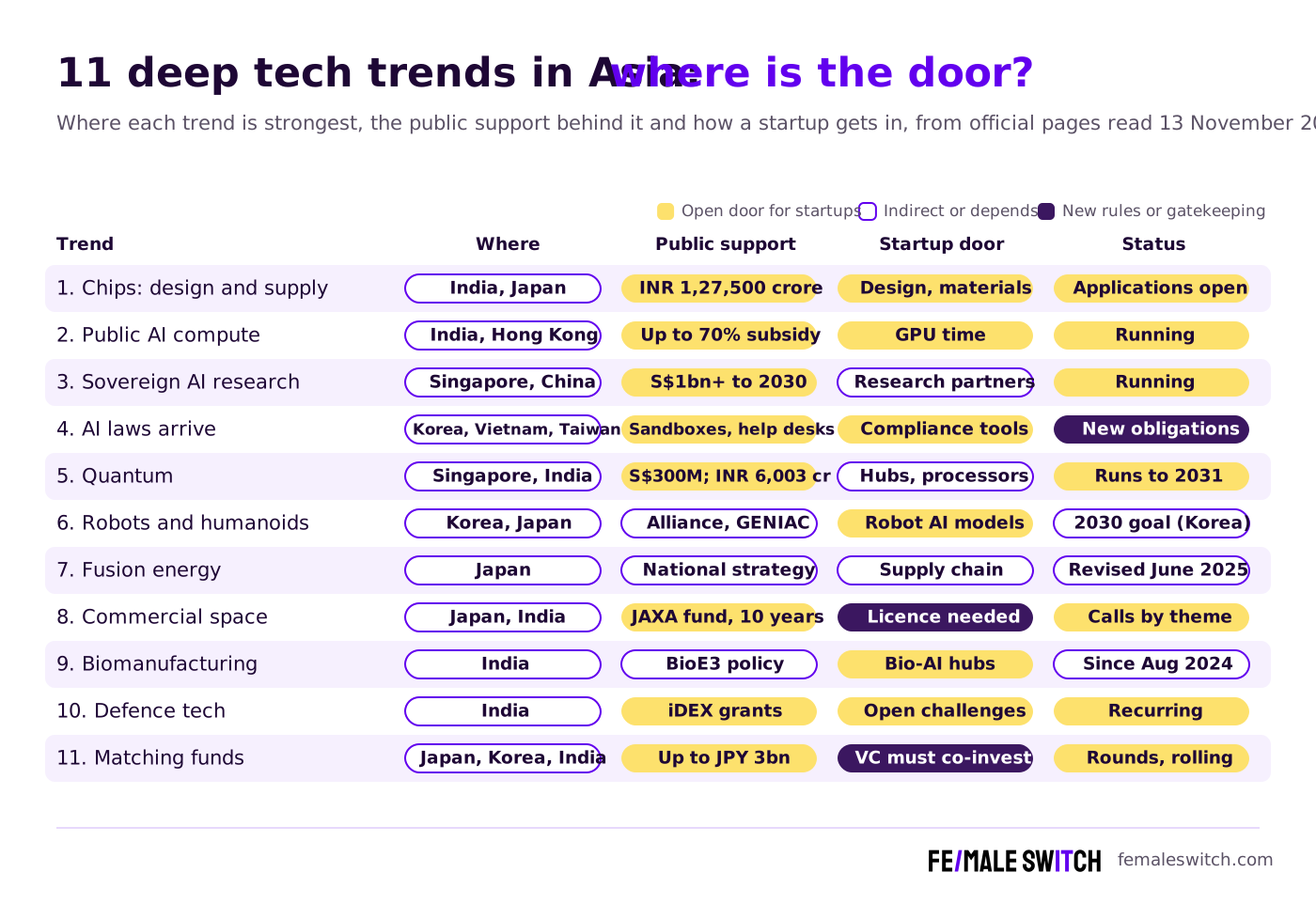
The 11 Deep Tech Trends in Asia for 2027
1. Chip Programmes Move From Fabs to Design and Materials
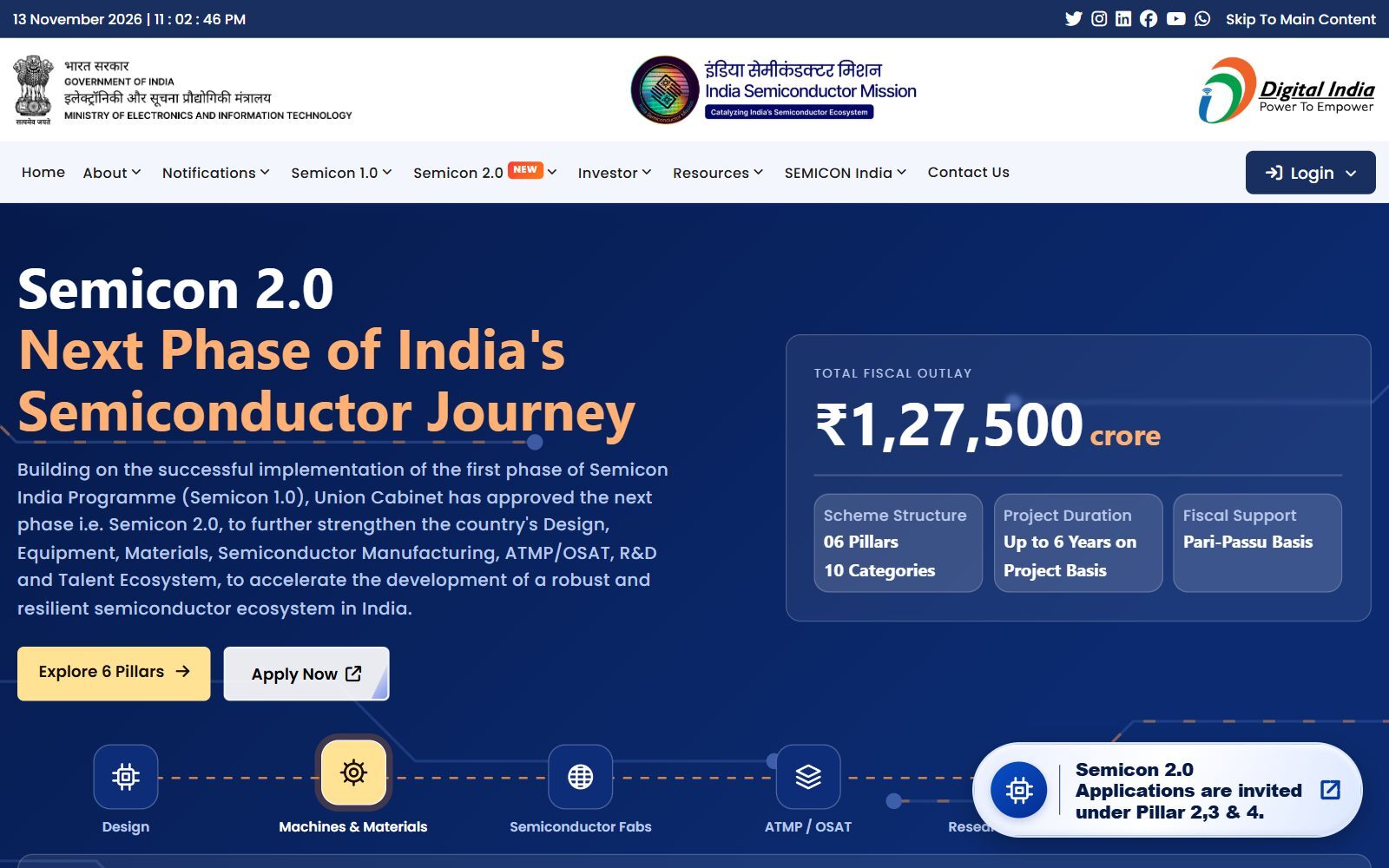
The first wave of Asian chip subsidies paid for factories. The next wave reaches the companies around them. India's Semicon 2.0, approved by the Union Cabinet as the second phase of the Semicon India Programme, has a total outlay of INR 1,27,500 crore across six pillars and ten categories: design, equipment, materials, semiconductor manufacturing, assembly and test (ATMP/OSAT), R&D and talent. Support is paid pari-passu over up to six years per project; the guidelines for pillars 2, 3 and 4 were issued on 16 September 2026, the application portal is live, and the window stays open for three years from the guidelines. In Japan, Rapidus is building its 2nm foundry and R&D base in Chitose, Hokkaido, and is opening an ecosystem around it: in October 2026 it announced Rapidus CORE and a group of Design Solution Associates to help customers with early-stage design, after a July 2026 partnership with Cadence on AI agents for chip design and before an October 2026 partnership with HCLTech. For founders: chip design tools, materials, equipment parts and test services are now startup-sized openings; check which Semicon 2.0 pillar fits before you raise.
2. Public AI Compute Gets Cheaper for Startups
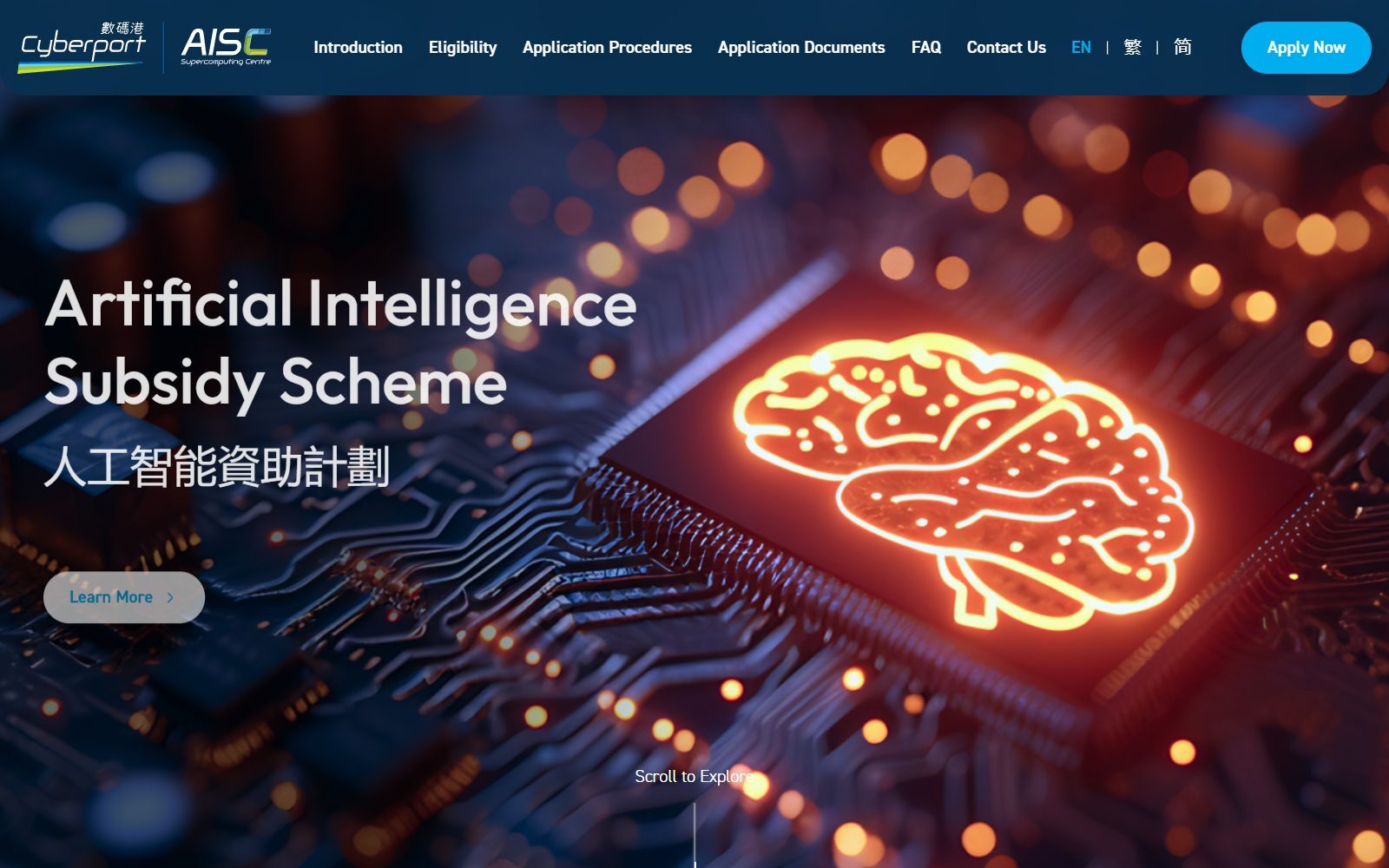
Asian governments now buy GPUs and rent them to startups below market price. India's IndiaAI Mission, approved in March 2024 with an outlay of Rs 10,371.92 crore, set out to build public AI compute of 10,000 or more GPUs, fund indigenous foundation models and finance AI startups from idea to commercialisation. Hong Kong's AI Subsidy Scheme, a HK$3 billion, three-year scheme from the 2024-25 Budget run by Cyberport, has subsidised up to 70% of the list price of computing power at Cyberport's AI Supercomputing Centre since 7 October 2024. For founders: compute is no longer the main barrier to training a model in India or Hong Kong; budget for data and talent instead. Our guide to the best countries for AI startups in Asia compares the access rules.
3. Sovereign AI Research Money, With Startups as Partners
Several Asian governments now fund their own AI research agendas rather than relying only on foreign models. Singapore updated its National AI R&D Plan in January 2026 and, according to its National AI Strategy factsheet, committed over S$1 billion to public AI research and talent from 2025 to 2030, across fundamental research, applied research and talent. China's State Council "AI Plus" guideline of August 2025 targets a penetration rate of new-generation intelligent terminals and AI agents above 70% by 2027 and above 90% by 2030 across six key sectors. For founders: public labs need applied partners; a startup that turns their research into a product can get data, compute and a first customer.
Boost Your SEO by listing your startup and get a FREE backlink.
Create a profile in the F/MS Startup Game, add the link to your website and submit.
👉 List your startup now!
4. AI Laws Arrive Across Asia
2026 was the year Asian AI laws took effect. South Korea's AI Basic Act came into force on 22 January 2026, with a grace period of at least one year and an AI Basic Act Support Desk that advises AI businesses. Viet Nam's AI Law took effect on 1 March 2026; it gives AI enterprises the highest level of incentives, including access to infrastructure, datasets and regulatory sandboxes, and promises SMEs help with funding, training and market access. Taiwan's Artificial Intelligence Basic Act, announced on 14 January 2026, falls under the National Science and Technology Council. For founders: compliance is now a product category (risk assessment, documentation, labelling tools), and the grace periods are the window to sell it.
5. Quantum Moves From Labs to National Hubs
Singapore's National Quantum Strategy, announced in May 2024, invests close to S$300 million over five years in quantum research and talent, according to the Economic Development Board, including efforts to build quantum processors locally. India's National Quantum Mission has Rs 6,003.65 crore for 2023-24 to 2030-31 and aims for quantum computers with 50 to 1,000 physical qubits within eight years. It runs four thematic hubs: quantum computing at IISc Bengaluru, communication at IIT Madras with C-DOT, sensing and metrology at IIT Bombay, and materials and devices at IIT Delhi. For founders: the near-term business is in components, control electronics, sensing and software for these hubs, not in building a full quantum computer.
6. Robots and Humanoids Get National Backing
South Korea's Ministry of Trade, Industry and Energy launched the K-Humanoid Alliance on 10 April 2025 with the goal of making the country a global humanoid robot superpower by 2030. About 350 people from 40 organisations joined the launch, including robot makers Rainbow Robotics and Aeirobot and universities such as Seoul National University, Korea University and KAIST. In Japan, METI's GENIAC programme for generative AI lists robot foundation model research among its tracks. For founders: the openings are in the AI that controls robots, sensors, actuators and the data to train them. See our Seoul startups to watch.
Boost Your SEO with 1,500+ Free Business Directories: increase your DA, get backlinks and traffic.
We've compiled an exclusive list of directories and websites where you can submit your business and start building high-quality backlinks to boost your website traffic and get your SEO snowball rolling.
👉 Submit your startup now!
7. Fusion Energy Becomes Industrial Policy
Japan treats fusion as an industry, not only as science. The Cabinet Office's Fusion Energy Innovation Strategy, first set out in April 2023, was revised on 4 June 2025 by the Integrated Innovation Strategy Promotion Council. For founders: fusion needs suppliers long before it needs power plants: magnets, materials, lasers, remote handling and simulation software. Our global deep tech trends guide covers the US and European fusion programmes for comparison.
8. Commercial Space Opens to Private Companies
Japan's Space Strategy Fund, run by JAXA as a funding agency, supports startups and other private companies, as well as universities, in multi-year technology development of up to ten years across three fields: transport, satellites and exploration. Calls are issued theme by theme. India's Indian Space Policy 2023 allows non-government entities to carry out end-to-end space activities, from building and operating satellites and ground stations to services such as communication, remote sensing and navigation, with IN-SPACe acting as the single window for authorisation. For founders: in Japan, match your product to an open fund theme; in India, plan for IN-SPACe authorisation from the start.
9. Biomanufacturing and Bio-AI
India's BioE3 policy (Biotechnology for Economy, Environment and Employment), approved by the Cabinet on 24 August 2024, supports R&D and entrepreneurship across thematic sectors and sets up Biomanufacturing and Bio-AI hubs and a Biofoundry to move technology from lab to market. For founders: shared biomanufacturing capacity lowers the cost of scaling a lab process, the step where most biotech startups stall. For funding, see our deep tech grants in Asia, which include India's BIRAC grants.
Boost Your SEO by Getting Featured in Our Blogs and get a backlink.
We publish content about startups, education, tech, funding, etc. that ranks well not only in Google but also in Perplexity, ChatGPT, Grok and other AI tools.
👉 Get featured now!
10. Defence Tech Opens to Startups
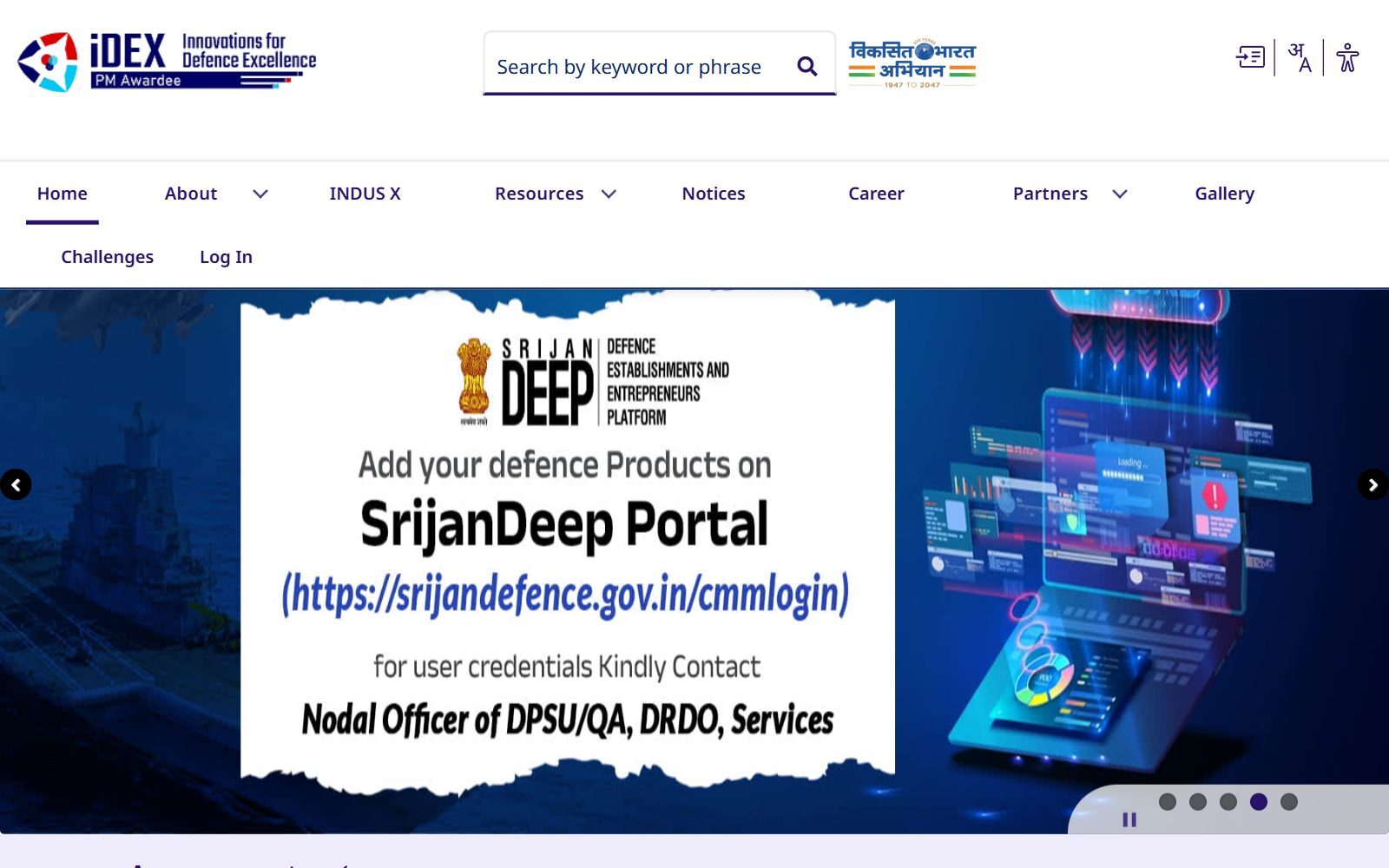
India's iDEX (Innovations for Defence Excellence) runs challenges for startups, MSMEs and individual innovators, including the Defence India Startup Challenge (DISC), the Open Challenge, the Thematic Open Challenge and ADITI, and its site reports more than INR 410 crore in grants approved. Its site lists the armed services and defence public sector companies among its partners and challenge areas such as cryptography. For founders: a defence challenge gives you a defined problem, a government user and a grant, which is rare for an early deep tech team.
11. Matching Funds Reward Startups That Raise Venture Capital
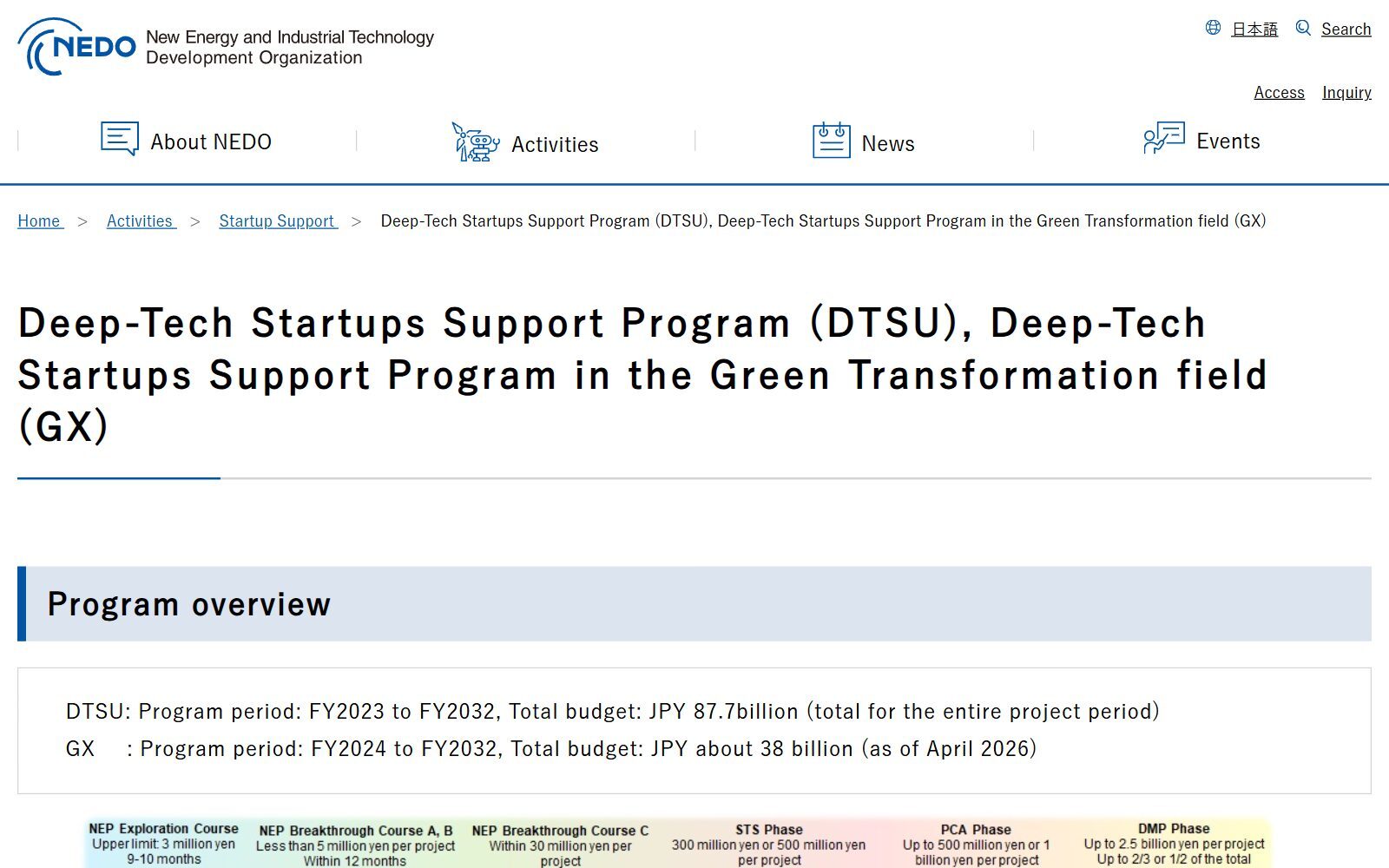
The most practical trend for founders is public money that follows private money. Japan's Deep-Tech Startups Support Program (DTSU) at NEDO runs from FY2023 to FY2032 with JPY 87.7 billion, plus about JPY 38 billion for its green transformation (GX) track; it pays up to two-thirds of eligible costs, from 300 or 500 million yen in the STS phase up to 2.5 billion yen in the DMP phase, and up to 3 billion yen in total, for startups that have VC or corporate investment. South Korea's TIPS programme raised its general track to KRW 800 million over two years in 2026 and now offers graduates a deep tech track of KRW 1.5 billion over three years. India's RDI Scheme, approved in July 2025 with a corpus of Rs one lakh crore, lends at low or nil interest for private R&D, may take equity in startups and will help set up a Deep-Tech Fund of Funds. For founders: raise a seed round from an investor who is accepted by these programmes, then apply; see our deep tech VCs in Asia.
Trends From the 2025 List We Removed
The 2025 version of this article listed 20 "trends" with five "data points" each, linked to consultancy and blog homepages. We kept only what an official source supports:
- Numbers without a traceable source were removed: the "7% to 11%" share of Indian deep tech deals, "14% of deals in Southeast Asia", the "$2.6 trillion" creativity sector, "$58.6 billion" for Chinese startups, "60% of businesses on the cloud" and "169 new deep tech companies a year".
- Not Asia: the "€1.4 billion" European Innovation Council figure is a European programme; it belongs in our deep tech grants and VCs in Europe coverage.
- Not deep tech: consumer customisation, ethical tech, fintech, blockchain, talent retention, "strategic technology investment" and "collaborative ecosystems" were general business themes, not deep tech trends.
- Events are not trends: GITEX Asia is an event; for events see our startup events in Singapore, Tokyo and Bangalore.
- Kept and rebuilt: climate tech, healthtech and biotech, robotics, AI and regional hubs survive as trends 2 to 11, each now tied to a named programme.
Which Deep Tech Trend Should Your Startup Build On?
- You build AI models: start with subsidised compute (trend 2) and plan for the new AI laws (trend 4).
- You build hardware or chips: look at Semicon 2.0 pillars in India and the design ecosystem around Rapidus in Japan (trend 1).
- You come from a university lab: quantum hubs (trend 5), fusion (trend 7) and biomanufacturing (trend 9) reward science-based teams; see our deep tech incubators.
- You need non-dilutive money: matching funds (trend 11) and defence challenges (trend 10); our grants for deep tech startups list covers more.
- You build robots: Korea and Japan are where the alliances and robot AI programmes are (trend 6).
- You are choosing a base: compare the deep tech cities in Asia and the deep tech countries.
Join F/MS: Startup Facilitator & Incubator and unlock your startup dreams today! Get your first customers, register you company in the Netherlands and get startup visas for the team.
How Founders Use These Trends
A trend is useful only when it turns into a customer, a grant or an investor. Most deep tech founders in Asia combine three steps: join a programme, win a non-dilutive grant, then raise from a specialist investor. For programmes, see our startup accelerators in Asia, startup incubators in Asia and deep tech accelerators; for competitions that often lead to them, startup competitions in Asia and deep tech startup competitions.
For investors, compare the early-stage VCs in Asia and the global deep tech VCs; AI founders should also read our grants for AI startups. To see who is already building, read our Hong Kong tech startups, Taipei startups to watch and China startups to watch, and compare the startup cities in Asia.
FAQ About Deep Tech Trends in Asia
What are the biggest deep tech trends in Asia for 2027?
Chip programmes reaching design and materials, cheap public AI compute, sovereign AI research, new AI laws, quantum hubs, robots and humanoids, fusion, commercial space, biomanufacturing, defence tech and matching funds for deep tech startups.
Which Asian country spends the most on semiconductors for startups?
Among the programmes we checked, India's Semicon 2.0 has the largest stated outlay, INR 1,27,500 crore across six pillars that include design, equipment and materials, with applications open for three years from its September 2026 guidelines.
Where can an AI startup in Asia get cheap GPUs?
India's IndiaAI Mission set out to build public compute of 10,000 or more GPUs, and Hong Kong's AI Subsidy Scheme pays up to 70% of the list price of computing power at Cyberport's AI Supercomputing Centre.
Which Asian countries have AI laws in force?
South Korea's AI Basic Act came into force on 22 January 2026 with a grace period of at least one year, Viet Nam's AI Law took effect on 1 March 2026, and Taiwan announced its Artificial Intelligence Basic Act on 14 January 2026.
How much are Singapore and India investing in quantum?
Singapore's National Quantum Strategy invests close to S$300 million over five years, according to the Economic Development Board. India's National Quantum Mission has Rs 6,003.65 crore for 2023-24 to 2030-31.
Is fusion a real startup opportunity in Asia?
Mainly as a supplier. Japan revised its Fusion Energy Innovation Strategy on 4 June 2025 and treats fusion as an industry, which creates demand for components, materials and engineering software.
Can a foreign startup use Japan's NEDO deep tech grants?
DTSU supports deep tech startups that have VC or corporate investment and pays up to two-thirds of eligible costs; check NEDO's eligibility rules for where the company must be registered and do its R&D before you apply.
What is the K-Humanoid Alliance?
A South Korean alliance launched by the Ministry of Trade, Industry and Energy on 10 April 2025 to make Korea a global humanoid robot leader by 2030, with robot makers, universities and research institutes as members.
How is this different from global deep tech trends?
This guide focuses on Asian government programmes and companies. Our global deep tech trends guide covers European and US programmes such as the EIC, DARPA and the Chips Act.
How can I get my deep tech startup in front of more investors?
Get covered where investors and AI assistants look: you can publish a guest post in the Fe/male Switch startup blogs. Get featured and earn a backlink.
About the Author
Violetta Bonenkamp, also known as MeanCEO, is an experienced startup founder with an impressive educational background including an MBA and four other higher education degrees. She has over 20 years of work experience across multiple countries, including 5 years as a solopreneur and serial entrepreneur. Throughout her startup experience she has applied for multiple startup grants at the EU level, in the Netherlands and Malta, and her startups received quite a few of those. She’s been living, studying and working in many countries around the globe and her extensive multicultural experience has influenced her immensely.
